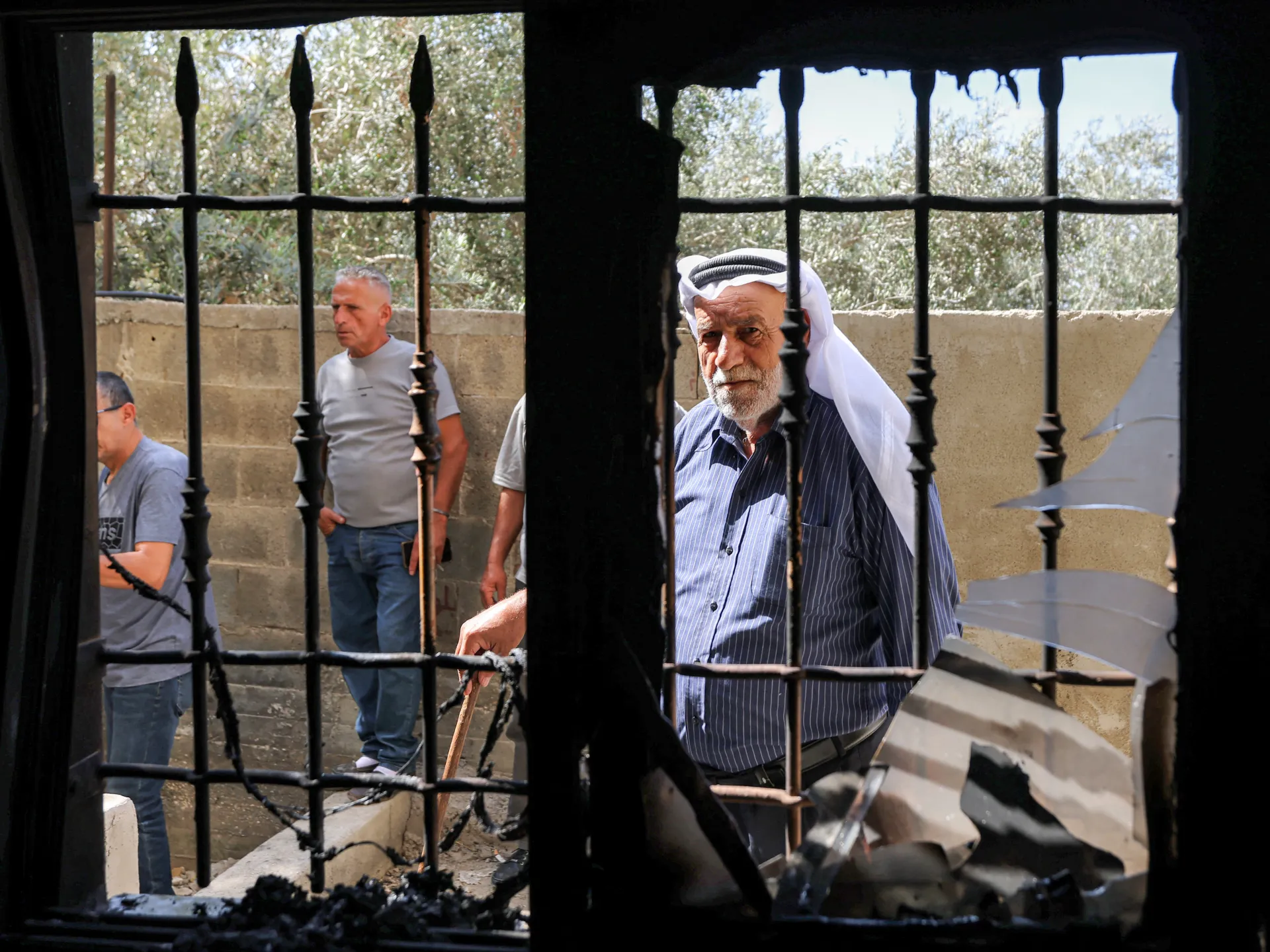
Smotrich told Ynet News that Israel needs to “go to war in Judea and Samaria, to do there what we did in Gaza’.
Published On 27 Sep 202627 Sep 2026
Far-right Finance Minister Bezalel Smotrich says the Israeli military should “go to war” in the occupied West Bank and repeat what it “did in Gaza”.
Using a biblical term for the occupied West Bank, the minister told Ynet News in an interview published on Sunday that Israel needs to “go to war in Judea and Samaria, to do there what we did in Gaza, to dismantle the Palestinian Authority, which is a terror authority”.
Recommended Stories
list of 3 itemsend of list
Smotrich was responding to a question on how Israel should combat the increasing “security tensions” in the occupied West Bank, where Israeli violence against Palestinians has been steadily growing since the eruption of Israel’s genocidal war on Gaza in October 2023, but the attacks have intensified significantly this year.
“We need to tell” Israeli forces, he said, “Just as you dismantled Hamas in Gaza, there won’t be terror infrastructure in Judea and Samaria”. “No terrorists, no weapons, no tunnels.”
The United Nations Office for the Coordination of Humanitarian Affairs (OCHA) recorded more than 1,330 settler-related attacks on Palestinians in the West Bank from January to late July, averaging six a day, the highest rate in about 20 years.
Various settler groups, often supported or protected by Israeli soldiers, have attacked Palestinians in several ways, including shootings, besieging homes and engaging in other forms of communal violence that experts have described as “pogroms“.
Rights groups warn that settlers are increasingly armed with military-issued weaponry and wear military uniforms during attacks, blurring the line between settler and soldier.
Military closure
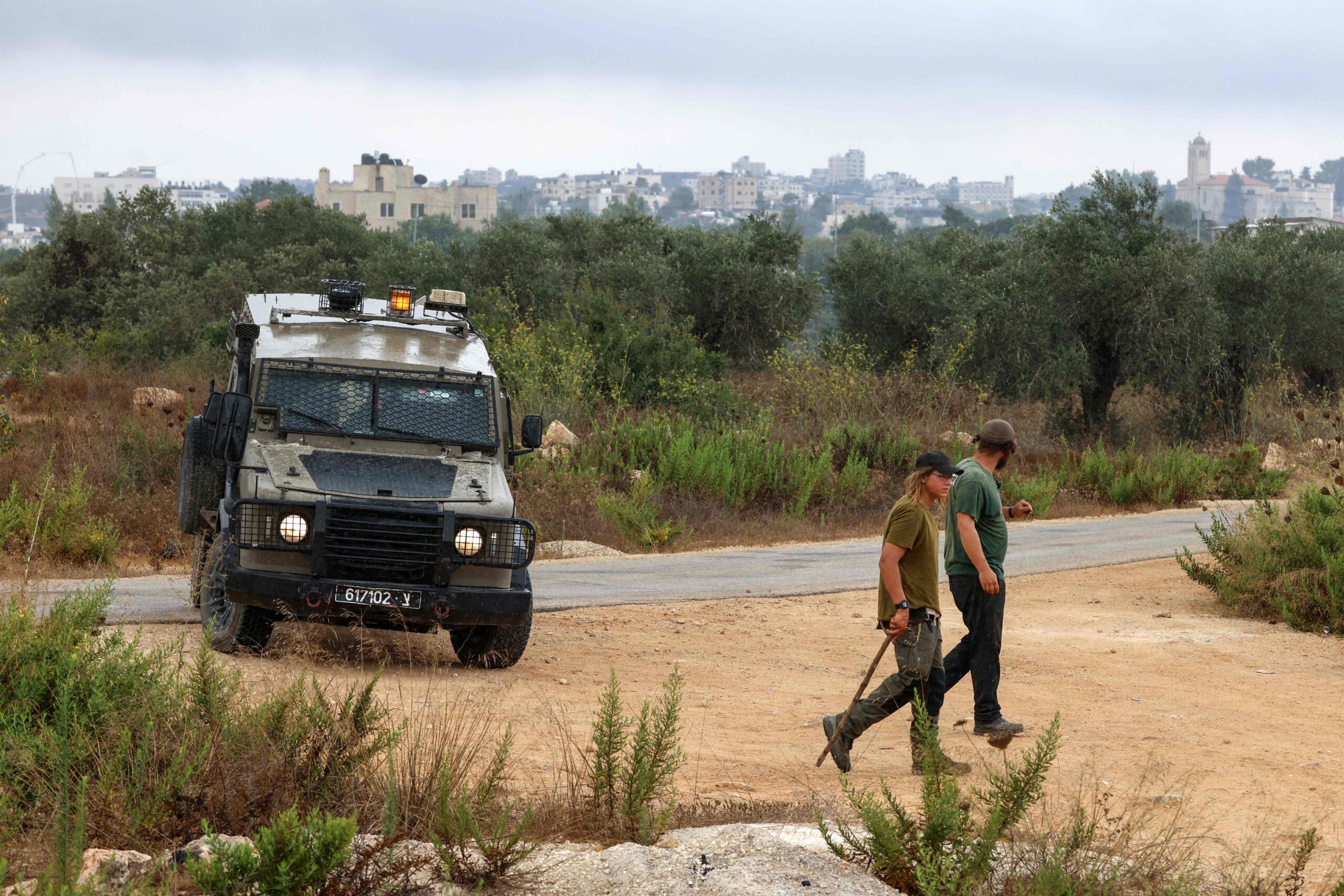
The comments come as Israeli authorities announced a comprehensive military closure across the occupied West Bank, citing the Jewish holiday of Sukkot. The heightened restrictions on the movement of Palestinians are set to remain in place until October 3.
Meanwhile, in occupied East Jerusalem, hundreds of Israelis stormed the courtyards of Al-Aqsa Mosque under heavy protection from Israeli police on Sunday.
Palestinian news agency Wafa reported that the Israelis entered the compound through the Moroccan Gate and performed Talmudic rituals, as Israeli forces increased restrictions around the mosque and across Jerusalem’s Old City.
Israeli bulldozers uprooted olive groves near Ramallah in the occupied West Bank weeks before the annual harvest.
Published On 24 Sep 202624 Sep 2026
Israeli army bulldozers have ploughed through rows of olive trees in a village near Ramallah in the occupied West Bank, just as Palestinian farmers were preparing to begin their annual harvest, residents told the Reuters news agency.
Palestinian farmer and landowner Abd Alfattah Tamimi said the army had destroyed the olive trees planted on his family’s land as well as his neighbours’.
Recommended Stories
list of 3 itemsend of list
The demolition in the village of Deir Nidham started on Monday and continued on Tuesday, the Palestinian news agency Wafa reported.
“They don’t care about anyone, but God is up there, and we are steadfast here with our souls,” he said. “They are uprooting, and we will plant again with the help of God,” he said.
Another farmer, Nather Tamimi, told Reuters the timing of the demolition was designed to inflict maximum damage ahead of harvest season, which traditionally begins in October.
He said that his family produced about 120 drums of olive oil from the land each year.
The Israeli army also “uprooted all kinds of trees even from between the houses”, Nather Tamimi said.
Israeli military machinery uproots olive trees near the Palestinian village of Deir Nidham near Ramallah, in the occupied West Bank, September 23, 2026 [Mohammed Torokman/Reuters]
Israel’s military said it was checking Reuters’ request for comment but had not responded by Wednesday evening.
In the past, Israel has cited the need to clear land of olive trees to prevent security threats or ambushes on troops.
Palestinian human rights groups reject this, saying the destruction in effect deprives Palestinian farmers of income from the sale of olives and olive oil, while uprooting trees they view as a symbol of their connection to the land.
The Palestinian Authority’s Colonization and Wall Resistance Commission said Israeli attacks on agricultural land in August affected 21,508 trees, including 19,375 olive trees.
They estimated this year’s olive production at 21,000 tonnes, compared with local demand of about 15,000 tonnes.
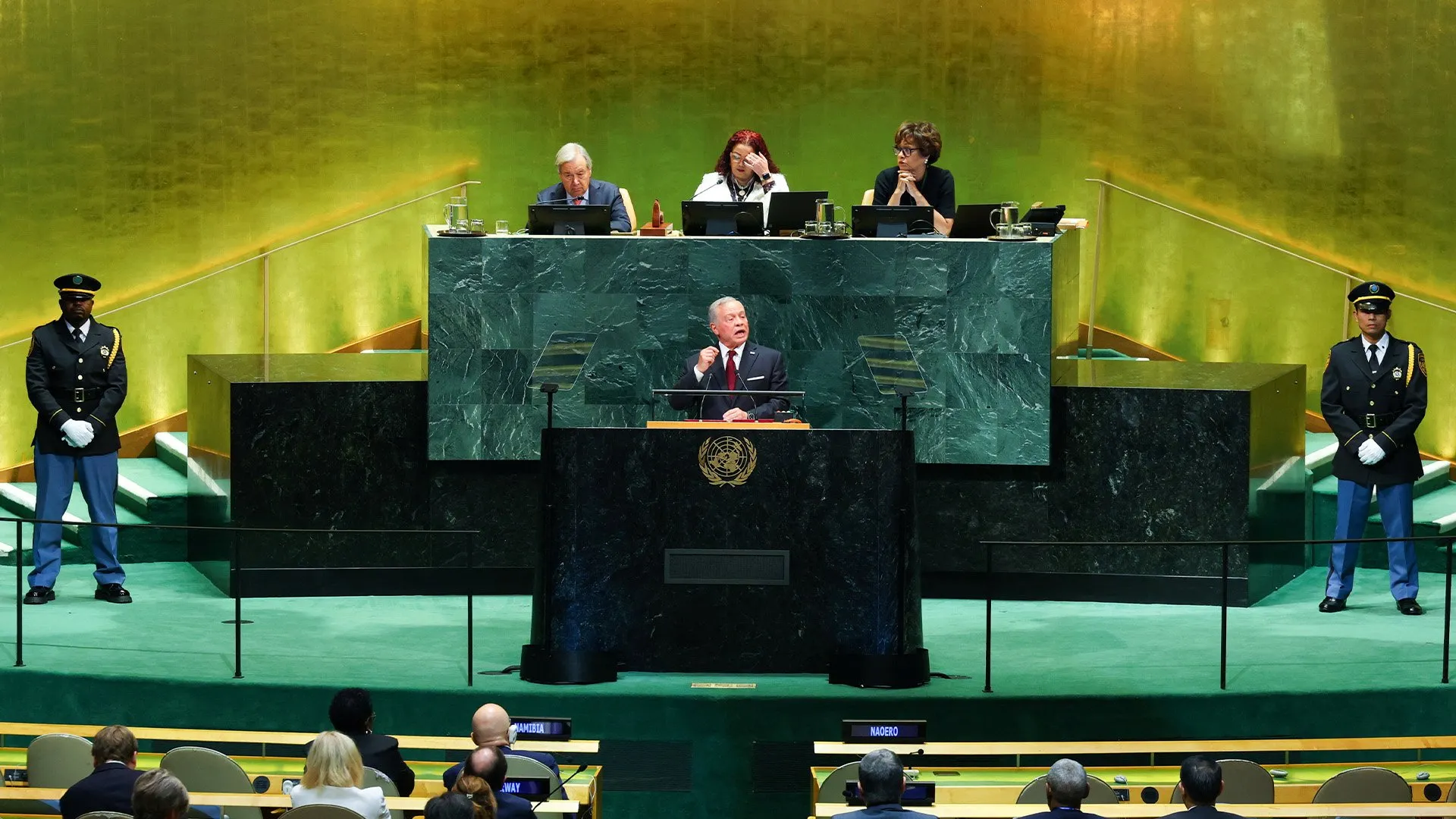
Jordan’s King Abdullah II decried Israeli settler incursions in the occupied West Bank as a strategy of ‘forced displacement’ that should be considered a war crime.
Israeli politicians reacted to sanctions by states including the United Kingdom, France, and Canada on the country’s illegal settlements in the occupied West Bank with self-righteous anger. But what is the latest example of Israel’s international isolation brought on by its treatment of the Palestinian people has not been influential in swaying the electorate in the run-up to October’s elections, analysts tell Al Jazeera.
Responding to the UK Foreign Minister Ed Miliband’s accusation that Israelis were ethnically cleansing the occupied West Bank, Israel’s Gideon Saar accused his counterpart of spreading “outrageous lies” and attempting to interfere in the election through foreign pressure.
Recommended Stories
list of 4 itemsend of list
Israeli President Isaac Herzog also condemned the measures, branding them a “gross interference in the democratic elections” of Israel.
But, in reality, the majority of Jewish Israelis have supported their country’s genocidal war in Gaza and the occupation of the West Bank.
A poll from August, published as the death toll for Palestinians killed in the West Bank had already reached 76 this year, showed that more than half of Jewish Israelis supported retaining the illegal settlements as part of any future agreement on a Palestinian state, while nearly 40 percent supported annexing the territory in defiance of international law.
“People just don’t care that settlements are illegal,” Israeli political analyst Ori Goldberg said.
”Ed Miliband expressed a number of laudable sentiments when announcing the measures,” Goldberg said, referencing the UK foreign secretary’s references to his own Jewish heritage when announcing the cessation of trade with Israel’s illegal outposts. “But we’re at the stage where Israelis aren’t even interested in the truth so much as they are the sentiment.”
Little political impact
Israeli Prime Minister Benjamin Netanyahu goes into the elections at serious risk of losing, with many polls predicting that a coalition of parties opposed to him could win the majority in Israel’s parliament.
But it will not be issues like the settlement-related sanctions that will lose him votes, analysts said.
Public backing for the “government and opposition blocs are pretty hardened, and nobody is going to switch from one side to the other over sanctions arising from [the settlements],” Michael Koplow, chief policy officer at the Israeli Policy Forum, said. He added that the sanctions were unlikely to weigh as heavily with the electorate as “this government’s record and the related feelings people have about Netanyahu”.
“When people were asked what would determine their vote, security came first,” Israeli sociologist Yehouda Shenhav-Shahrabani said.
“I think there are several mechanisms operating simultaneously,” he added.
First, he said, is the normalisation of the settlements. In Israeli public discourse, the occupied West Bank is increasingly referred to by the biblical name “Judea and Samaria” – a shift he said was becoming institutionalised.
“Second, external sanctions don’t necessarily translate into domestic political costs,” Shenhav-Shahrabani said. “And perhaps most importantly, politically foreign pressure can be absorbed into an existing Israeli narrative [of anti-Semitism] rather than [changing how the issue itself is understood].”
No criticism of the voters
None of Israel’s most prominent politicians has criticised the government for its support of the settlements in defiance of international condemnation. Yair Lapid, a former prime minister and one of Netanyahu’s leading opponents, has, instead, focused his ire on the countries condemning Israel. “Imposing boycotts and sanctions on Israel is a grave mistake,” he said. “This is a wrong and dangerous policy, at the wrong time and for the wrong reasons.”
Another of Netanyahu’s principal rivals, Gadi Eisenkot – whose Yashar Party manifesto does not mention either the West Bank or Gaza – has declined to speak on the sanctions directly. Netanyahu has also yet to comment on the sanctions publicly, despite his Likud party having championed settlement expansion for decades.
“The sanctions haven’t particularly hurt Netanyahu, at least not as far as we can see in terms of direct influence on … polling,” said Dahlia Scheindlin, a pollster and public opinion researcher based in Tel Aviv.
Instead, the focus has been on other elements of an eventful electoral cycle, including the emergence of new challengers to Netanyahu on the right.
“We aren’t seeing any real backlash from the sanctions,” Scheindlin said. “Instead, it’s just getting filtered through what people already think of him – his critics dislike him even more, and his supporters basically say, ‘Well, the world hates us no matter what.’”
Palestinians in the occupied West Bank know they shouldn’t ask what time their loved ones are going to make it home.
There’s simply no way to give an accurate answer. What used to be a short ride from one place to another could now take hours, or it might not happen at all.
Recommended Stories
list of 3 itemsend of list
Before driving, Palestinians check dedicated WhatsApp and Telegram groups and channels where people share updates on road conditions. But this isn’t typical traffic news: Instead, chats focus on which Israeli military checkpoints are open, which roads are off limits to Palestinians and whether Israeli settlers are attacking Palestinians as they drive their vehicles.
Sometimes pins are sent to warn people driving near towns where Israeli forces are conducting raids.
And if there’s no time to check the groups, then there’s always Basma FM. The Palestinian radio station, based in Rawabi near Ramallah, carries three traffic updates per hour.
The channel started broadcasting on October 2, 2023 – just days before the Hamas-led attack on Israel on October 7 and the start of Israel’s genocidal war on Gaza, and what has become a pogrom against Palestinians in the West Bank.
“Our idea was to target young people. We wanted to offer entertainment and culture news. But five days later, we realised we couldn’t,” said Fatima Barqawi, Basma FM’s news and traffic director.
The team had originally planned traffic updates as part of their programming. “We thought we could tell parents picking up their children from school to know where there was traffic, but after the war on Gaza started, we had to shift focus,” Barqawi said.
Her department has seven employees who verify information with their sources and provide updates on roadblocks.
“Things change each second. We could say there’s a closed checkpoint and Israeli soldiers decide to reopen it. Or vice versa,” Barqawi explained.
Dangers on the roads
The issue for Palestinians driving through the West Bank isn’t simply being late for appointments or held up for hours – it’s that there is an inherent danger to travelling in the occupied territory.
Palestinians in the West Bank drive white-plated vehicles, making them easily identifiable compared to the yellow-plated cars driven by Israeli settlers.
Israeli soldiers have killed Palestinians near checkpoints after claiming they were conducting ramming attacks, and Israeli settlers often attack Palestinian cars or block them from using certain highways.
These attacks are increasing as illegal Israeli settlements grow at a record pace.
It is hard to miss the large infrastructure projects Israel is implementing, expanding highways to connect Israeli settlements to one another and to Israel. This ends up isolating Palestinian communities, often forcing Palestinians to use poorly paved roads or dangerous mountainous routes to avoid Israeli settlers and roadblocks.
It’s a journey of fear and anxiety, a young Palestinian woman who did not wish to be named told Al Jazeera. “I used to blast my music and drive, now I’m on high alert. Always on edge.”
The woman recounted how Israeli soldiers assaulted her fiancé near a checkpoint in Hebron, in the southern occupied West Bank, because they mistakenly thought he had passed without stopping. A year later, she said, a soldier pointed his rifle at her.
“He was shouting at me. The sun was blocking my view, and I was careful crossing the checkpoint but that wasn’t enough. I saw the green beam [from the gun] and thought that was the end,” she said.
Attacks at checkpoints
Many Palestinians report being assaulted, humiliated and sometimes arrested at these checkpoints and roadblocks.
Israel has long imposed movement restrictions on Palestinians, controlling the road system and Palestinians’ access to the wider world. But since the war on Gaza began, these restrictions have intensified.
As of December 2025, the United Nations documented 925 barriers across the occupied West Bank including East Jerusalem, a 43 percent increase over the 20-year annual average of 647, the UN’s humanitarian affairs agency, OCHA, reported.
Almost all of of the villages and cities in the West Bank have iron gates at their entrances, and Israeli forces close them arbitrarily. Some of the gates are only open during certain hours.
A new report by the Israeli human rights group B’Tselem said the restrictions are used to deliberately fragment Palestinian life, with roadblocks and military checkpoints cutting off people from their work, schools, hospitals and one another.
The report, titled The Elimination Project, says there’s a broad rapid and systematic Israeli assault in the West Bank that aims to dismantle the foundations of Palestinian existence, and road closures are just one of them.
That is why, as Heba Erkat prepared her notes before heading into the studio for Basma FM’s Wednesday afternoon bulletin, she knew the information about to be read out could change rapidly.
Her colleague read the news, and then Erkat started listing updates at 61 checkpoints across the West Bank.
It was a relatively good day: only 12 of the checkpoints were either closed or had long queues.
But, as Erkat noted at the end of the segment, “the situation changes by the minute”.
NEW YORK CITY: About 4,100 Palestinians have been displaced across the West Bank so far this year as a result of demolitions and settler violence, UN deputy spokesperson Farhan Haq said on Thursday.
He warned of a sharp rise in demolitions in the Masafer Yatta area of the southern West Bank in recent days. The Office for the Coordination of Humanitarian Affairs said Israeli authorities demolished 20 homes and other structures, including a water cistern and solar panels, in two Palestinian herding communities there on Tuesday.
This activity, and demolitions in a nearby third community on Wednesday, displaced nearly 60 people, half of them children, and affected a further 30 seasonal residents. Many of the destroyed properties were built with donor support, Haq said.
Masafer Yatta is home to about 1,200 Palestinians in 13 communities, all of whom have been under pressure to leave after Israeli authorities designated the area a “firing zone.”
Haq said humanitarian officials have reported increased violence by Israeli settlers targeting those communities following the establishment in recent years of settlement outposts nearby.
Representatives of the UN and its humanitarian partners visited Masafer Yatta on Tuesday to speak with displaced residents who are receiving emergency shelter, food, hygiene items, baby products and psychosocial support, Haq said.
Across the West Bank, he added, about 1,500 Palestinians have been displaced so far this year as a result of demolitions, and more than 2,600 have been displaced by settler violence and related access restrictions.
Far-right Israeli ministers began more forcefully advocating the wholesale removal of Palestinians in Gaza last week, offering timelines and government mechanisms to conduct illegal forced expulsions while displacement, demolitions and killings continued across Gaza and the occupied West Bank.
Israeli Defence Minister Israel Katz told a conference on Wednesday that removing Palestinians from Gaza is “the only solution”, saying Israel is prepared to do it “by sea, by air and by every way possible”, and that US President Donald Trump has merely “frozen” – not cancelled – his support for the idea.
Recommended Stories
list of 3 itemsend of list
Then, National Security Minister Itamar Ben-Gvir unveiled a seven-year plan, branded “Disengagement 710”, to remove Gaza’s roughly two million residents through what he called “voluntary emigration”.
Ben-Gvir added that, if re-elected, he would establish a Migration Ministry to expel Palestinians.
The US State Department said it “does not support any plan or proposal for the forced displacement, expulsion, or mandatory transfer of the population of Gaza” – but stopped short of directly condemning Katz or Ben-Gvir.
Gaza: Rising death toll amid airstrikes
Gaza’s death toll has continued climbing through near-daily strikes. An Israeli special forces raid near Gaza City’s American hospital on Tuesday killed at least four Palestinians, including two children and a woman, ending with the capture of Moin al-Arabeed, described by Israel as the head of Hamas’s internal security. A drone strike killed a child in Jabalia refugee camp on Wednesday, the same day an attack on a tent in Khan Younis killed one person.
On Thursday, two Palestinians, including a 13-year-old, were shot dead near Beit Lahia after Israel said they had crossed into an Israeli-controlled area, while a separate drone strike killed a man near a church compound in Gaza City’s Remal neighbourhood.
Strikes continued through the week’s end: On Sunday alone, Israel attacked near a school in Gaza City, wounding several, and a separate drone strike on a car near Gaza City’s Hamid intersection killed Youssef Akila and his young daughter, Wafaa.
Before dawn on Monday, at least five more Palestinians in Gaza were killed including three-year-old Saadi Ghalia, who was killed when an artillery shell struck a school in Deir el-Balah sheltering displaced people.
By Monday, the Palestinian Ministry of Health reported that 73,658 people have been killed and 174,622 wounded since October 2023, after 160 additional deaths were certified and added to the casualty figures. Of those, more than 1,340 have been killed since the October 2025 Israeli-Hamas “ceasefire”.
The recovery of bodies has slowly continued alongside the killings.
Families in northern Gaza held funerals on Sunday for around 100 people, including 60 children, whose remains were pulled from the rubble of Gaza City’s Zeitoun neighbourhood, many of them members of the extended Malaka family.
Gaza civil defence chief Raed al-Dahshan told Al Jazeera his teams could recover an estimated 8,000 more bodies still under the rubble within 90 days if given proper heavy equipment, but warned that without it, “this work will continue for years”. Between 10,000 and 14,000 people remain missing under Gaza’s rubble.
In the strip, humanitarian conditions continue to deteriorate without sufficient aid getting in. The World Health Organization warned that water contamination in Gaza has nearly tripled since January. The Palestinian Water Authority reported all five of Gaza’s wastewater plants have shut down entirely, with roughly 55,000 cubic metres of untreated sewage discharged daily.
West Bank: Demolitions and villages under siege
Meanwhile, Israeli forces carried out demolitions this week in the West Bank. In the community of Khirbet al-Tabban in Masafer Yatta, those demolitions were absolute – demolishing all 12 homes left 70 people, including 30 children, homeless.
“It’s wiping the village off the face of the earth,” council head Nidal Younis said. Residents, he added, intend to rebuild.
Israeli forces also destroyed four water wells and several greenhouses in nearby Beit Ummar in Hebron in the occupied West Bank, causing an estimated $60,000 in losses, and demolished a home in Nahalin in Bethlehem governorate.
Around Jenin, the bulldozing of hundreds of farmers’ trees continued along the Arraba-Yabad and Jenin-Nablus roads, part of six military orders issued in August to clear vegetation from across four Jenin-area villages, according to to the Palestinian Wafa news agency.
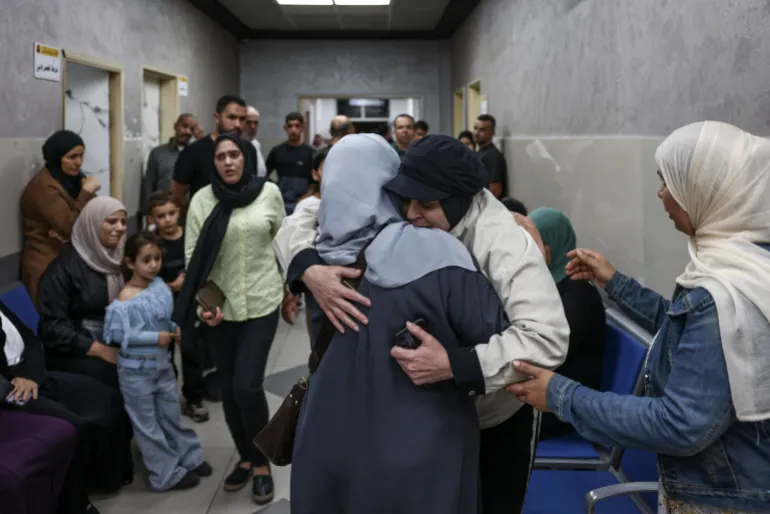
Relatives mourn two Palestinians killed in al-Mughayyir, east of Ramallah, following an Israeli settler attack and subsequent Israeli army raid, at the Ramallah government hospital in the occupied West Bank on September 2, 2026 [AFP]
In occupied East Jerusalem’s al-Bustan neighbourhood, community representative Fakhri Abu Diab said municipal bulldozers demolished a four-apartment building – the 60th demolition there since October 2023. On Monday morning another home was demolished in the East Jerusalem neighbourhood of Beit Hanina, according to Wafa, and authorities forced a Palestinian man in the city’s Jabal al-Mukaber area to demolish his home.
Despite all of the land and property destruction, last week’s most sustained violence centred on al-Mughayyir, northeast of Ramallah. Settlers and soldiers raided the village on the evening of Wednesday after accusing residents of stealing livestock.
Snipers took rooftop positions and opened fire as residents tried to stop settlers stealing sheep, killing Khalil Abu Alia, 16, and Mohammad Nassan, 19.
The Israeli military told the Times of Israel that troops were “securing the retrieval of livestock belonging to Israeli civilians” when a “violent riot” broke out and soldiers “fired at key instigators”. Eyewitnesses said Nasan was shot in the back.
In the days after, mourners were beaten and pepper-sprayed and their vehicle stolen, with an ambulance also attacked.
Wafa also reported late on Sunday that Israeli settlers killed Omar Tubasi, 20, and injured three people when they raided and opened fire on the village of Hajja, east of Qalqilya governorate in the occupied West Bank.
Elsewhere, settlers stormed Umm al-Khair in the South Hebron Hills on Friday, injuring a child. Soldiers who arrived declared the area a closed military zone that was enforced for Palestinians, not the settlers who remained.
In Turmus Ayya north of Ramallah, a settler wearing a T-shirt bearing the logo of the outlawed Kach movement was filmed atop a Palestinian home declaring “this land is Jewish” after US Ambassador Mike Huckabee visited the town and called settler violence “a form of terrorism”.
In Qusra, south of Nablus, a month-long siege of three homes continued, with the army initially blocking roughly 100 peace activists from delivering food and medicine. Settlers also stole water tanks and livestock in the Jordan Valley and sabotaged water lines serving a Bedouin encampment near Tayasir in the northern West Bank, according to reports and photos from local Palestinian activists.
In East Jerusalem’s Old City, Israeli police shot and killed Ibrahim al-Hendi, 33, from Beit Hanina, near Damascus Gate on Friday, claiming he had tried to stab an officer.
Amid the grapevines that once provided a steady income for her family, 56-year-old Palestinian farmer Theeba al-Sabaa spends much of her day guarding her home and farmland in the occupied West Bank from settlers.
From dusk till dawn, she works on her land in the town of Beit Ummar, north of Hebron, known by locals as “Jabal Sabaa”.
Theeba is engaged in a daily battle against the encroaching settler outposts that have emerged among the rolling hills that surround her, and which block access to sections of her land.
“By God, the land has taught me patience, and to cling to my right, for as long as I have a right, I must take it and never let it go,” she told Al Jazeera.
“I will never leave it because I worked hard on it, I toil and sweat on it, so I will not leave my toil and sweat, or the toil of my children and my husband, to go to someone else.”
Weaponising livestock
Since mid-2024, when settlers established new outposts on the nearby hills, every one of Theeba’s moves has been monitored.
Settlers frequently approach the perimeter of her home and deliberately release livestock into the cultivated fields.
“They enter with their sheep into our land after we plow and fix it, grazing in it, trampling the crops, and stomping on them with their sheep, leaving nothing,” Theeba said.
“As soon as they feel any movement or anyone entering the land, you find them attacking us immediately.”
This intimidation extends to the adjacent fields, where 59-year-old Anwar Sabarneh lives with his extended family of seven brothers.
Due to the repeated settler violations, two of his brothers have been forced to abandon their land.
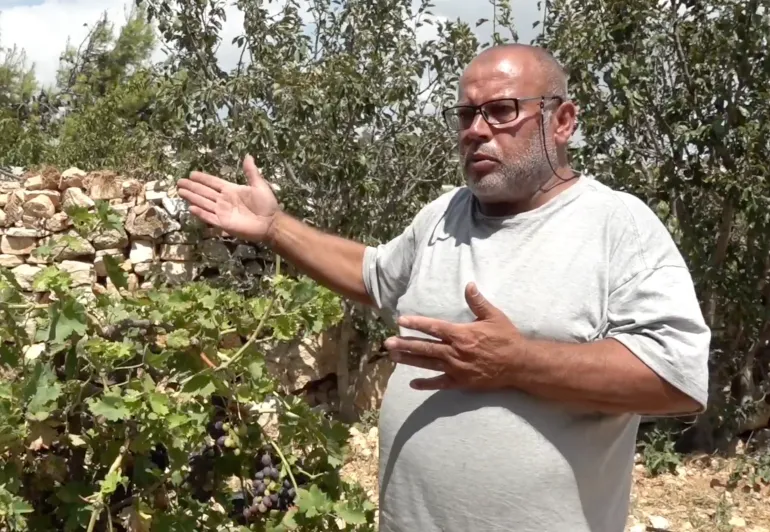
Sabarneh, who supports a family of 14, owns several dunams of vineyards located just 300 metres (980 feet) from his home. With aggressive settlers around, reaching them has become a dangerous ordeal.
Palestinian farmer Anwar Sabarneh, whose sheep have been confined for months, is barred by the Israeli military from accessing his nearby vineyards in Beit Ummar [Screen grab/Aljazeera]
Military complicity
Sabarneh said that the Israeli army even demands permits from Palestinians to work on their own land.
“The army came with the settlers to ask me for a permit so I can work in my home, in front of my house’s door, and on my land where I am the rightful owner,” Sabarneh said.
Farmers are also barred from building anything on their land. Sabarneh’s sheep have also been locked in a barn for over eight months due to the dangers posed by settlers.
“If they see me taking the sheep out, the settlers chase me, kidnap them, and steal them,” he said.
When Sabarneh’s children have tried to retrieve their stolen sheep, Israeli soldiers have arrested and beaten them.
A forced exodus
Repeated pogroms by settlers against Palestinian farmers reflect a broader strategy targeting agriculture across the southern West Bank.
Settlers and the Israeli troops carried out 11,074 attacks in the West Bank during the first half of 2026, according to the Colonization and Wall Resistance Commission. This includes 3,488 carried out by settlers.
Hasan Breijieh, a settlement affairs expert and director at the commission, told Al Jazeera that continuous settlement expansionism, alongside restrictions on Palestinian movement, are the primary reasons that so many Palestinians have been forced to flee their farms.
“Military gates erected at the entrances of Palestinian communities have tightened control over… access to their orchards and vineyards,” he said.
Bypass roads, built by Israel, have also hindered “connectivity between Palestinian communities”, Breijieh said.
Under such restrictions, Palestinian farmers have faced a fourth consecutive season without being able to harvest olives, grapes, or guava. Their lands have been “neither plowed nor pruned”, and have been forcibly abandoned.
In the face of such oppression, Palestinian women like Theeba al-Sabaa have continued to play a pivotal role in protecting their land, particularly when men have been killed or detained by Israeli forces.
“They continue to maintain their leadership role in preserving the family’s agricultural legacy today,” Breijieh said. “This land was historically the primary source of livelihood for families, and a Palestinian cannot leave it voluntarily, no matter the sacrifices.”
He recalled his own grandfather, who went to his fields to bid farewell before dying. “Goodbye, vineyard,” he said to his land.
Israeli forces bar Israeli and Palestinian activists from delivering food and medicine to homes besieged by settlers.
Published On 4 Sep 20264 Sep 2026
Israeli police have killed a Palestinian man in Jerusalem and the Israeli army has blocked humanitarian assistance from reaching an occupied West Bank village besieged by settlers for weeks.
Officers opened fire on a 33-year-old Palestinian near Damascus gate in Jerusalem on Friday. Israeli police said its border guard “neutralised” the man, claiming he was attempting to stab one of them.
Recommended Stories
list of 3 itemsend of list
The Palestinian Wafa news agency identified the man as Ibrahim al-Hendi from East Jerusalem’s Beit Hanina neighbourhood. He was pronounced dead at the scene.
Following the incident, Israeli forces deployed around Damascus Gate and the surrounding area of Jerusalem’s Old City, Palestinian sources told Al Jazeera.
Separately, the Israeli army said that it arrested Palestinians in the town of Qabatiya in the West Bank, alleging they were “planning to carry out an attack” against Israelis and security forces.
Ten other Palestinians were arrested during a 48-hour Israeli army operation in Nablus in the West Bank. The Israeli army said it seized more than “30 weapon production machines used to manufacture weapons” during the operation.
Meanwhile, Israeli settlers and soldiers carried out attacks across the occupied West Bank on Friday, Wafa reported. Settlers stormed the Khirbet al-Hamra community in the northern Jordan Valley and assaulted one resident.
Israeli settlers, accompanied by soldiers, also attacked Khalet a-Nahlah in southern Bethlehem. Israeli forces also fired tear gas and concussion grenades at a crowd of Palestinians who gathered to resist the attacks.
Israeli forces block peace activists carrying food and water from reaching Palestinian families whose homes have been cut off from supplies by Israeli settlers in the village of Qusra on September 4, 2026 [Jaafar Ashtiyeh/AFP]
Blocking access to Qusra
As violence and harassment of Palestinians continues across the occupied territory, the Israeli army on Friday also prevented around 100 peace activists from delivering food and medicine to Palestinians who have been under siege in the town of Qusra for 28 days.
Since August 9, Israeli settlers have besieged three Palestinian homes in the northern occupied West Bank village, while the Israeli army has also prevented the families from entering or leaving them, claiming the area is a “closed military zone”.
“Day 28 of the blockade on Qusra. About 100 activists arrived to deliver supplies to the besieged families,” the Israeli Peace Now movement said in a post on X.
“The army blocked us at first, claiming Qusra was a ‘closed military zone.’ Then let us in but on the way back detained us for ‘violating a closed military zone’,” it added.
Qusra Mayor Abdel Azim Wadi also told the state-run Turkish Anadolu news agency that the Israeli army has been “preventing the delivery of basic necessities to three families trapped on Mount Ras al-Ain”.
US ambassador to Israel Mike Huckabee told Israeli public broadcaster Kan on Friday that settler violence against Palestinians is “damaging the image of Israel as a nation and a people, warning that Israel “needs all the friends it can get” and “doesn’t need more enemies”.
Around 750,000 Israeli settlers live in 156 illegal settlements and 360 settlement outposts in the occupied West Bank, including East Jerusalem, and carry out attacks aimed at forcibly displacing Palestinians, according to Palestinian figures.
Israeli forces have fired tear gas into a mosque in the occupied West Bank, leaving worshippers inside struggling to breathe, hours after settlers tried to set fire to a second mosque in the territory.
The Palestinian Ministry of Religious Affairs condemned the continued pogroms on Tuesday, calling them a flagrant violation of the sanctity of places of worship.
Recommended Stories
list of 3 itemsend of list
Footage, verified by Al Jazeera, showed worshippers at the mosque in Madama, near Nablus, coughing in the aftermath of the tear gas attack.
One elderly man was seen bent over as another tried to help him.
The ministry said Israeli forces “fired tear gas canisters” into the mosque as people gathered for their evening prayers. The attack “resulted in several elderly worshippers suffering from suffocation and caused widespread disruption to the congregation”, it added.
The attack in Madama came hours after Israeli settlers tried to set fire to another mosque in the nearby town of Bazariya.
Photos and videos from Nur al-Din Zanki Mosque showed blackened burn marks around a window of a room and Hebrew phrases sprayed on the exterior walls.
Majed Nasr, who lives near the mosque, said the attack took place early on Tuesday morning. “There was a small explosion that caused a fire inside the mosque building,” he told the AFP news agency. “We managed to contain the blaze before things could get worse and reach the main upper part of the building.”
The Religious Affairs Ministry condemned the “criminal attack” and said some 13 mosques have been “violated” by the Israeli military or settlers since the start of 2026.
Local sources told the Anadolu agency that the racist slogans sprayed at the site included threats against Palestinians and a message to the United States ambassador to Israel, Mike Huckabee, saying: “Huckabee, greetings from the terrorists.”
Last month, Huckabee had described Israeli settlers attacking Palestinians in the town of Qusra and other areas of the occupied West Bank as “terrorists”.
The office of Palestinian President Mahmoud Abbas issued a statement following the Madama attack, warning of “the dangers of the continued and escalating religious war” waged by Israeli forces and settlers against religious sites in the occupied West Bank, including the Al-Aqsa Mosque compound in occupied East Jerusalem.
The “systematic attacks … crossed all red lines and risked triggering a religious conflict with serious consequences for the region and the world”, it said.
Settlers also burned vehicles in the town of Beta, south of Nablus, and set fire to a Palestinian vehicle in Nahalin, west of Bethlehem, on Tuesday, according to media reports and footage posted online.
The attacks come amid a sharp increase in pogroms by Israeli forces and settlers across the occupied West Bank.
The United Nations said in August that at least 76 Palestinians have been killed in the territory this year and that some 3,800 people have been displaced by settler violence, as well as demolitions and evictions.
It also said settler violence had reached “unprecedented levels,” with more than 1,430 attacks resulting in casualties or property damage documented this year.
Elsewhere in the occupied West Bank, Israeli forces arrested at least 14 Palestinians, including five in Rummanah, one at the Anab checkpoint, one in Tammun, three in Hebron, two in Bethlehem and two in Nablus.
Israeli forces also uprooted olive trees near Jenin, demolished greenhouses and issued a demolition notice for a home in the town of Idhna.
US says its forces ‘successfully’ completed a wave of strikes against Iranian targets, accusing the IRGC of attempted attacks on shipping and US service members.

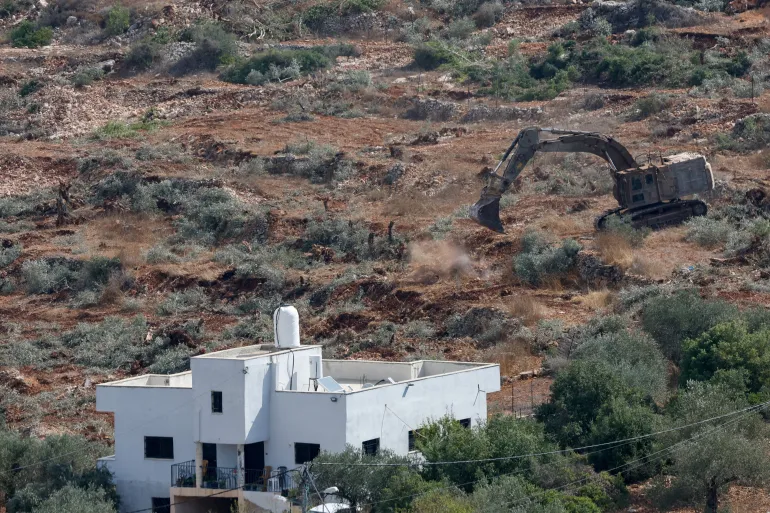
![Israeli military machinery uproots olive trees near the Palestinian village of Deir Nizam near Ramallah, in the occupied West Bank, September 23, 2026 [Mohammed Torokman/Reuters]](https://i0.wp.com/occasionaldigest.com/wp-content/uploads/2026/09/2026-09-23T080030Z_1529122039_RC2VONAGXX8I_RTRMADP_3_ISRAEL-PALESTINIANS-WEST-BANK-OLIVE-TREES-17902.webp?w=640&ssl=1)
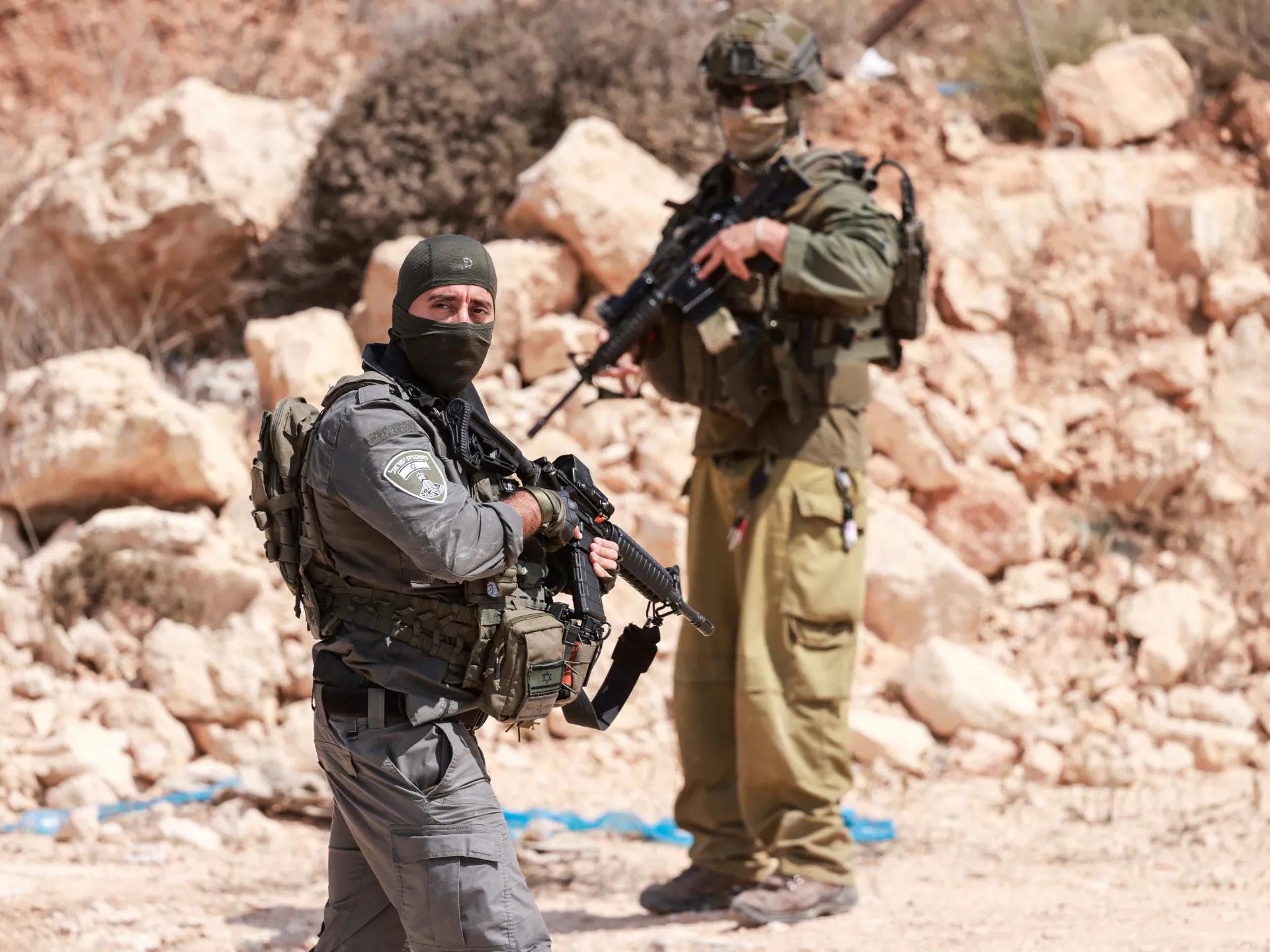



![Palestinian farmer Anwar Sabarneh, whose sheep have been confined for months, is barred by the Israeli military from accessing his nearby vineyards in Beit Ummar.[Screengrab/Aljazeera]](https://i0.wp.com/occasionaldigest.com/wp-content/uploads/2026/09/Screenshot-2026-09-06-at-1.13.28-PM-1788689675.png?w=640&ssl=1)