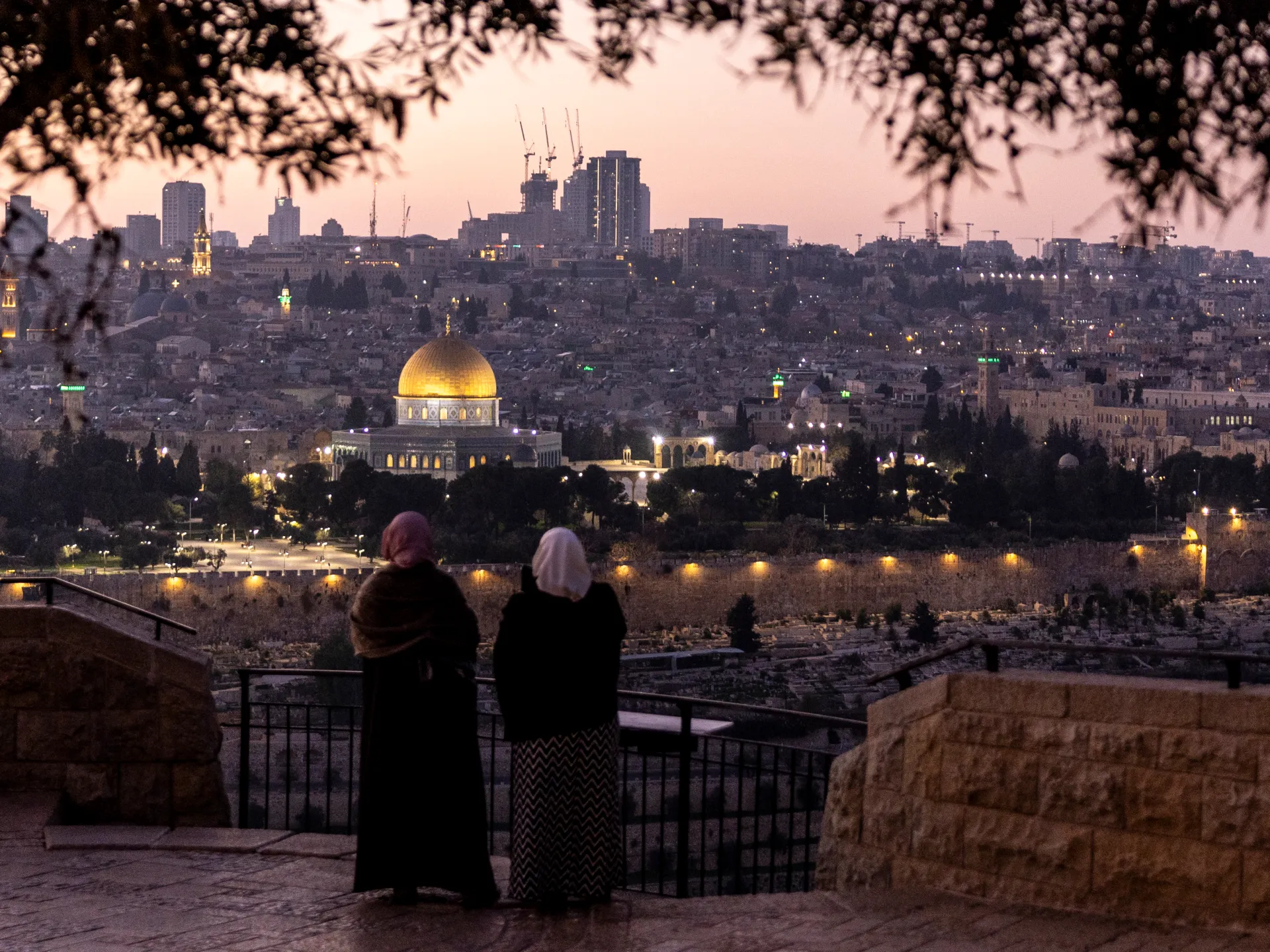
Occupied East Jerusalem

Palestine weekly wrap: Coordinated attacks and evictions in Gaza, West Bank | Israel-Palestine conflict News

There was a time when various developments from this past week – such as the Israeli government spending hundreds of thousands of dollars promoting ultra-nationalist marches, a sanctioned settler leading army-escorted livestock raids on a Palestinian village, and the Israeli finance minister calling for the full military occupation and settlement of Gaza while speaking at once-dismantled occupied West Bank settlements – would have been met with outcry or debate in some corners of Israeli society.

This week, however, they have become routine, as United Nations experts describe Israeli policy as “ethnically cleansing the West Bank through daily attacks resulting in killing, injury, and harassment of women and children, and the widespread destruction of Palestinian homes, farmland and livelihoods”.

Recommended Stories

list of 3 itemsend of list

Against that backdrop, this past week brought intense and coordinated settler attacks on villages near Ramallah, continued Israeli strikes on civilians in Gaza, new evictions and demolitions in occupied East Jerusalem, and US-Hamas diplomatic talks in Cairo that showed some glimmers of progress – while falling well short of what either side has demanded.

Gaza: Strikes, starvation, and a partial offer on weapons

Across the Gaza Strip, Israeli air strikes, gunfire and drone attacks continued throughout the week as the humanitarian crisis worsened.

On April 14, a strike on a police vehicle on al-Nafaq Street in Gaza City killed four people, including three-year-old Yahya al-Malahi, whose father said his family had been leaving a relative’s wedding. A strike on the Shati refugee camp later the same day killed at least five more.

On April 16, brothers Abdelmalek and Abdel Sattar al-Attar were killed in Beit Lahiya in an area that witnesses said fell outside the zone under Israeli military control along the so-called “yellow line”. On April 17, brothers Mahmoud and Eid Abu Warda were shot dead by a drone while trying to get water in Gaza City’s Shujayea neighbourhood; a drone separately struck a water desalination facility in the same area, killing one more. The following day, two civilian contractors delivering water on behalf of the United Nations Children’s Fund (UNICEF) were shot dead by Israeli troops in northern Gaza.

Since the October ceasefire, 777 Palestinians in Gaza have been killed and at least 2,193 injured, as of April 20. Since October 7, 2023, the cumulative death toll stands at 72,553 – a figure revised upwards this week after the Gaza Ministry of Health certified an additional 196 deaths.

Meanwhile, aid access into Gaza remains severely constrained. According to the UN Office for the Coordination of Humanitarian Affairs (OCHA), United Nations and partner aid inflows declined by 37 percent between the first and second three-month periods following the ceasefire. Bakeries have scaled back production due to dwindling flour and fuel, with Palestinians reporting hours-long queues for bread.

Board of Peace envoy Nickolay Mladenov told an Egyptian news channel this week that Israeli restrictions at border crossings remain “the primary obstacle” preventing sufficient aid from reaching Gaza.

On the diplomatic front, direct US-Hamas talks in Cairo this week focused on implementing phase-one commitments before any discussion of disarmament. No official agreement has been reached.

Israeli Finance Minister Bezalel Smotrich, meanwhile, called on Israeli Prime Minister Benjamin Netanyahu to order the military to “immediately prepare for the full occupation of the Gaza Strip” and establish Israeli settlements there if Hamas refuses to disarm entirely. Smotrich made the declaration while attending a ceremony commemorating the re-establishment of the illegal settlement of Sa-Nur, which had previously been dismantled by Israel in 2005 along with settlements in Gaza and several others in the northern West Bank.

Coordinated attacks and killings in the West Bank

The week’s most sustained violence in the West Bank took place across a cluster of villages northeast of Ramallah – Khirbet Abu Falah, al-Mughayyir and Turmus Aya – where three new illegal Jewish outposts have been established in the past two months, all on privately owned Palestinian land in Area B, which is supposed to be under limited administrative control of the Palestinian Authority. One such outpost was built on land from which the Abu Najjeh community – itself already forcibly displaced from Ein Samiya in the summer of 2023 – was recently violently expelled from.

On April 18, settlers launched simultaneous coordinated attacks on all three villages, according to local activists. In Turmus Aya, settlers arriving in more than a dozen vehicles burned a home and a car, with a military force near the outpost refusing to intervene, according to local activists. In Khirbet Abu Falah, dozens of settlers gathered at a newly established outpost before descending on Palestinian homes; soldiers subsequently raided the village themselves, according to locals. In al-Mughayyir, soldiers stopped two small children playing in the street, pushing them to the ground. They drove away before settlers on a government-supplied quad bike attacked a Palestinian driver on the nearby road.

The following morning, settlers raided a sheep pen in al-Mughayyir and stole 70 sheep. When residents pursued them, settlers fired live ammunition, activists said. Israeli military and police then escorted the Or Nachman outpost’s founder, Amishav Malt, back into the village, where he led a raid that he claimed was to recover stolen sheep – a tactic local activists say is routinely used to justify further theft. One Palestinian resident was beaten unconscious by police, according to local activists. Soldiers then enabled Neria Ben Pazi – the founder of another local illegal outpost who is internationally sanctioned by Australia, Belgium, France and Britain – to steal sheep from a restrained Palestinian resident. At least 20 military vehicles subsequently laid siege to the village entrance.

Beyond these villages, settler attacks on shepherds, farmers and residents were documented across numerous communities, including olive trees cut down in Yatma near Nablus, and the theft of livestock and crops in Jifna and several communities in Masafer Yatta. Settlers erected a barbed wire fence on the path that children from Umm al-Khair use to reach their school, blocking their safe access ever since.

On April 16, Israeli forces staged a raid on Beit Duqqu, northwest of Jerusalem, during which they shot dead 17-year-old Mohammed Rayan. Soldiers prevented ambulances from treating him, instead removing his body – denying his family proper Muslim burial rites. Four others were shot with live fire. On April 18, Israeli forces killed Mohammed Suwaiti, 25, in Khirbet Salama, southwest of Hebron, claiming he was approaching the illegal settlement of Negohot.

According to the latest OCHA humanitarian situation report, in 2026, more than 2,500 Palestinians have been displaced by demolitions, settler attacks, and evictions – including more than 1,100 children. Settler attacks now account for 75 percent of all displacement recorded this year, with March recording the highest monthly settler injury toll since documentation began in 2006.

Al Jazeera has reached out to the Israeli military for comment on the incidents reported on this week, but has yet to receive a reply.

East Jerusalem evictions

In occupied East Jerusalem, demolitions and evictions continued at an elevated pace. Israeli authorities demolished the home of 80-year-old cancer patient Abu Kamel Dweik in Silwan’s al-Bustan neighbourhood, at least the eighth demolition in the area this month.

According to OCHA, since January 2026, at least 86 Palestinian-owned structures have been demolished in East Jerusalem, displacing more than 250 people, with roughly half demolished by their owners to avoid additional fines.

In addition to further home demolitions in al-Bustan expected shortly, the extended Basha family – six households comprising 12 people, most over 60, who have lived in the Old City’s Muslim Quarter for nearly a century – now face court-ordered eviction by April 26.

The week also saw reports from Israeli media that the Netanyahu government is allocating approximately 1.2 million shekels ($400,000) to expand the ultra-nationalist Jerusalem Day marches across the country next month – yearly events marked by vulgar, racist slogans and violent attacks on Palestinian neighbourhoods.

With such funding, the marches are being expanded to several mixed Jewish-Arab cities including Lydd (Lod), where Jerusalem Day clashes in 2021 escalated into days of violence. That the state is now directly subsidising such events reflects the broader influence of National Security Minister Itamar Ben-Gvir, whose reach over police operations has itself become the subject of a rare legal challenge.

Israel’s High Court this week ordered Ben-Gvir to reach an agreement with the attorney general to curb his political interference in police work, after his repeated alleged violations of a prior agreement not to do so. Critics say his tenure has radicalised the police’s approach toward Palestinians – a charge given weight by documented incidents of police facilitating settler attacks and, in some cases, participating directly in violence against Palestinian residents.

Source link

Argentina’s Milei backs US-Israel war on Iran in Jerusalem visit | US-Israel war on Iran

NewsFeed

Argentina’s President Javier Milei has reaffirmed strong alignment with the US and Israel during a visit to Jerusalem, backing their war on Iran.

His visit with Prime Minister Benjamin Netanyahu included new agreements and closer ties.

Source link

Israeli police destroy children’s footballs at Al-Aqsa mosque | Israel-Palestine conflict

NewsFeed

Video shows Israeli police confiscating and destroying footballs that were being played with by children in the courtyards of Al-Aqsa mosque in occupied East Jerusalem, in what mosque authorities described as part of ongoing restrictions on Palestinians inside the holy site.

Source link

Muslims hold first Friday prayers at Al-Aqsa Mosque after reopening | Israel-Palestine conflict

NewsFeed

Thousands of Muslims performed Friday prayers at Al-Aqsa Mosque in occupied East Jerusalem after it reopened to worshippers following a 40-day closure by the Israeli army that barred access to Islam’s third-holiest site after the war on Iran began.

Source link

Thousands of Palestinians pray at Al-Aqsa Mosque after Israel’s 40-day ban | Occupied East Jerusalem News

Around 3,000 worshippers entered Al-Aqsa for the morning prayer on Thursday, after Israel lifted restrictions.

The Al-Aqsa Mosque compound in occupied East Jerusalem has reopened to Palestinian worshippers after a 40-day closure by Israel.

Video verified by Al Jazeera showed Palestinians streaming through its gates early on Thursday morning. Around 3,000 worshippers attended  morning prayers.

Recommended Stories

list of 4 itemsend of list

Access had been completely prohibited, or restricted to a few dozen faithful at Christian, Jewish and Muslim sites following the outbreak of the US-Israeli war on Iran on February 28. Israel often imposes restrictions, especially on Palestinian worshippers.

The Islamic Waqf Department in occupied Jerusalem confirmed that the doors of Al-Aqsa would be reopened to all worshippers from dawn. The Jordanian-affiliated religious authority responsible for managing the mosque did not provide further details.

Video from earlier showed volunteers and caretakers in courtyards and prayer areas preparing to receive worshippers and holding religious rites.

Israeli authorities announced the opening of the mosque and the Church of the Holy Sepulchre in occupied Jerusalem on Wednesday evening.

Israeli police attributed the opening of holy sites to what it called “updated instructions from the Israeli Home Front Command”.

The statement noted intensive security reinforcements, including hundreds of police officers and border guards in the alleys of the Old City of Jerusalem and roads leading to the holy sites, aimed at “securing visitors”.

Jerusalem and its holy sites have been subjected to strict security measures and frequent closures during the regional war of the past six weeks.

The restrictions subdued Lent, Passover and Ramadan celebrations for many in some of the holiest sites for Christianity, Islam and Judaism.

Authorities also prevented Eid al-Fitr prayers at Al-Aqsa this year – the first such restriction since Israel’s occupation of East Jerusalem in 1967.

But the bans have been lifted just in time for Orthodox Christians, who celebrate Easter on Sunday, a week after Catholic and Protestants.

No let up in raids in occupied West Bank

Israeli raids have continued across the occupied West Bank.

Israeli forces detained a woman and assaulted a man during an early Thursday raid in Nablus, the Palestinian news agency Wafa reported.

The Ramallah-based Palestinian health ministry separately said Israeli forces fatally shot a Palestinian man near the village of Tayasir in the northern West Bank on Wednesday night.

The ministry said 28-year-old Alaa Khaled Mohammed Sbeih “was shot and killed” by Israeli forces, while the Israeli military said an off-duty soldier fired at a stone-thrower.

Wafa said six young men were detained in a raid on the village of Tayasir, while in Ya’bad, south of Jenin, Israeli troops stormed several homes at dawn, destroying the contents of three houses. Forces also raided the villages of Qusra and Awarta, but no arrests were reported there.

Attacks by Israeli forces across Gaza and the occupied West Bank have continued, along with Israel’s wars on Iran and Lebanon.

The UN Office for the Coordination of Humanitarian Affairs (OCHA) says more than 1,100 Palestinians have been killed by Israeli forces and settlers in the occupied West Bank since 2023, with at least 10,000 forcibly displaced.

Source link

Israeli police bar priest from Jerusalem’s Holy Sepulchre on Palm Sunday | US-Israel war on Iran

NewsFeed

Christians in Jerusalem and Gaza marked Holy Week under wartime restrictions, with Israeli police blocking the Latin Patriarch from the Holy Sepulchre for the first time in centuries. In Gaza, a small Christian community continued Palm Sunday rites despite ongoing attacks and severe shortages of basic essentials.

Source link

Two brothers survive after Israeli troops kill family in occupied West Bank | Occupied West Bank

NewsFeed

Two Palestinian brothers are the only survivors after Israeli troops killed their parents and two siblings in Tammun in the occupied West Bank, according to Palestinian health authorities. The boys say soldiers opened fire on their family car and beat them after the shooting.

Source link

The Palestinians forced to demolish their own homes by Israel | Israel-Palestine conflict News

Occupied East Jerusalem – Basema Dabash sheds tears daily for the home she and her husband, Raed, were forced to demolish in Sur Baher, in the south of occupied East Jerusalem.

For years, the couple lived under the spectre of losing their home, ever since the Israeli authorities issued a demolition order in 2014. In January of this year, the eviction notice came. And then, on February 12, the family were forced to demolish their home. If they didn’t, they would have been forced to pay the municipality to carry out the demolition.

Recommended Stories

list of 3 itemsend of list

“We were forced to start demolishing the house ourselves to avoid the municipality’s demolition fees, which can reach 100,000 shekels [$32,000],” Basema, 51, said. “We started by breaking down the inside of the house and sent the municipality photos to confirm that we had begun the demolition, but they demanded that we demolish it from the outside as soon as possible.”

The family soon completed the demolition of the two houses where eight people, including three children, lived. However, this didn’t waive the fine of 45,000 shekels ($14,600), which will continue to be paid in instalments until 2029.

‘Self-demolition’ haunts Palestinians living in East Jerusalem, which has been controlled by Israel since 1967, and illegally merged with West Jerusalem under one Israeli-run administration.

The choice between self-demolition and paying a further fee to the municipality is a simple one – the vast majority of Palestinians can’t afford to pay the exorbitant amount, and resort to demolishing their own homes, despite the immense pain and profound psychological impact it causes.

‘How did we come to this?’

Basema’s troubles started in 2014, when she received a building violation notice from the Israeli municipality in Jerusalem for the building she and her husband shared with their married son, Mohammed, and his family. They appealed at the time to an Israeli court in an attempt to freeze the demolition order.

For more than a decade, the family was forced to pay accumulated fines in an attempt to keep their home. Then, on January 28, they received an eviction notice, giving them a deadline to vacate the house and have it demolished.

The house slated for demolition was 45 square metres (485sq feet), an extension Basema had added to her existing 45-square-metre home. She had also built a similar-sized residence for her married son on top of the extension. The demolition order targeted both the extension and her son’s residence.

The Dabash family tried to obtain a building permit for the house several times, but their requests were rejected by Israel. Despite this, the municipality fines Palestinians and demolishes their homes under the pretext of lacking permits.

“We chose to demolish our own house not only to avoid the fine, but also because the municipal crews show no mercy to anything around the house and deliberately vandalise the entire area under the pretext of demolition, breaking trees and causing extensive damage that we could have done without,” Basema said.

Basema, along with her husband and one of her sons, Abdelaziz, now lives in what remains of their home. Mohammed has also moved in with them, while his wife and children live in her family’s home. The demolition has thus scattered her son’s family, who haven’t yet been able to find a small house to rent due to the high cost of housing.

The family also incurred significant expenses removing the rubble and redesigning the older section of the house to accommodate everyone, not to mention the psychological toll, which has been devastating.

“I stand to wash the dishes and find my tears falling on their own. How did we come to this? Why are we being subjected to this injustice? The house has become cramped and barely fits us. My grandchildren visit us and then cry bitterly when they leave for their grandfather’s house because we have no space,” Basema said sadly.

Increased demolitions

As illegal Israeli settlements continue to expand in East Jerusalem and the occupied West Bank, with building permits easily obtained, Palestinians say the double standards are obvious.

Human Rights Watch has found that Israeli authorities make it “virtually impossible for Palestinians to obtain building permits”, and the Israeli human rights organisation B’Tselem said planning policies in East Jerusalem make it “very difficult for residents to obtain building permits”.

Marouf al-Rifai, spokesperson for the Palestinian Authority’s Jerusalem Governorate, told Al Jazeera that 15 self-demolitions were carried out last February, five in January, and 104 in December.

Demolitions, in general, escalated to unprecedented levels after October 2023, when Israel’s genocidal war on Gaza began. Al-Rifai said that 400 demolitions were carried out in 2025 in East Jerusalem and its surrounding area, either by municipal crews or by homeowners themselves. Prior to that, the number of demolitions had reached a maximum of 180 per year.

The United Nations has reported that demolitions in 2025 displaced 1,500 Palestinians.

“Even the method of carrying out demolitions changed after the war on Gaza,” al-Rifai said. “Previously, demolitions were only carried out after exhausting all legal avenues and giving residents the opportunity to appeal to the courts and freeze the demolitions.”

But Israeli authorities have taken a more punitive position since demolition policy fell under the influence of far-right Israeli National Security Minister Itamar Ben-Gvir, who began pushing for Israeli army bulldozers to carry out demolitions without even notifying the homeowners, al-Rifai said.

In addition, the Palestinian Authority official said, demolition notices for Palestinian homes in Jerusalem increased from 25,000 before the war to 35,000. The town of Silwan alone has received 7,000 demolition notices since 1967.

Fakhri Abu Diab, a member of the Committee for the Defence of al-Bustan Neighborhood in East Jerusalem, told Al Jazeera that self-demolition is a double punishment and pain for the homeowner after the effort and hardship involved in building the house.

“Israel’s goal is to break the morale of the Palestinians and to brainwash them into becoming tools for implementing its plans to demolish homes. When we demolish our own homes, it’s as if we are demolishing a part of our own body,” he explained.

Israel can only demolish a limited number of Palestinian homes annually due to logistical, financial, budgetary, and logistical constraints. Demolition by Palestinians multiplies the number of homes demolished, thus turning the victim into a “demolition contractor”, as he put it.

“I refused to demolish my house myself because of the negative consequences that I and my family would have to live with for the rest of our lives, and the Israeli bulldozers demolished it. If I had done it myself, it would have remained a nightmare that would haunt me.”

view from above of a demolished home
Saqr Qunbur says he has already received a total of $26,000 in fines for building his house, and so can’t afford to pay more for Israeli crews to demolish it [Ahmad Jalajel/Al Jazeera]

No alternative

But the cost of a demolition carried out by Israeli municipal crews ranges between 80,000 and 120,000 shekels ($26,000-$39,000).

Saqr Qunbur couldn’t pay that, and was forced instead, on December 26, to demolish his 100-square-metre (1,076sq-foot) house in Jabal al-Mukabber under the pretext of lacking a permit. He had built it in 2013 and was immediately issued a building violation notice.

Saqr told Al Jazeera that he had lived in the house with his wife and four-year-old child. Since building the house, he has received a total of 80,000 shekels ($26,000) in fines that he’s still paying despite his home being demolished.

Saqr had nowhere to live after being forced to demolish his house, so his neighbour gave him a dilapidated room to live in while he found a place to rent.

“My child has been suffering psychologically since we demolished the house. Every day he asks me why I demolished it, and I don’t know what to tell him. I say it’s so I can build him a better house, but deep down I know I won’t even be able to rent a suitable place,” he explained with anguish.

Saqr chose to demolish his house himself after he says an Israeli officer threatened him, saying, “Demolish it, or I’ll demolish it over your head”. He also wanted to avoid the humiliation that accompanies demolitions carried out by Israel, where police sometimes fire live ammunition and tear gas at family members and carry out assaults, as documented by human rights groups.

“I developed diabetes and high blood pressure after my house was demolished. The doctor said it was due to anger and grief. This is an occupation that wants to expel us from our land, and we want to stay,” he concluded.

Source link