nunley

Ordered free, still locked up: Judges fume over ICE detentions

Judge Troy Nunley was fed up.

Federal immigration officials had once again flouted his authority by keeping a man locked up in a California City detention center after Nunley ordered him released. When he was finally set free, the man was booted onto the street with no passport, driver’s license or other personal effects. The judge’s demand that the items be returned were met with silence.

And so on Tuesday, Nunley, the chief judge of the Eastern District of California, slapped Department of Justice attorney Jonathan Yu with an official sanction and a $250 fine.

In a scathing order, Nunley laid out why he was compelled to take such a rare step. The fine may have been less than some traffic tickets, but it’s nearly unheard for a judge to formally admonish a government lawyer.

By Yu’s own admission, he was drowning in work. In his order, Nunley recounted the attorney’s claim he’d been assigned more than 300 nearly identical cases in the last three months, all of immigrants in detention who argued they were being held without cause.

Court filings show many California cases involve longtime U.S. residents unexpectedly hauled off to jail after routine check-ins with immigration officials. One was an Afghan who’d helped the American war effort. Another a Cambodian grandmother of eight who fled Pol Pot’s killing fields as a girl nearly 50 years ago.

Until last year, most would have fought deportation on bond after a brief hearing with an immigration judge. Now, their only hope of release is to file a petition for writ of habeas corpus — a legal maneuver once typically reserved for death row inmates and suspected terrorists — inundating the country’s busiest federal courts with thousands of emergency suits.

The Trump administration attorney said he was trying to “triage” the situation, but Nunley found he repeatedly failed to comply, leaving people with the right to walk free stuck behind bars.

“The Court is not persuaded,” he wrote, issuing the sanctions.

The order came days after Nunley took the unusual step of announcing a “judicial emergency” in the district, which covers nearly half of California, stretching from the Oregon border to the Mojave Desert in the inland part of the state, including Fresno, Bakersfield and Sacramento.

In the last year, the Eastern District has received more petitions from immigration detainees than almost any other jurisdiction in the United States: More than 2,700 since January, compared to fewer than 500 last year and just 18 in 2024. Similar crises are playing out elsewhere, with federal courts in Minnesota briefly paralyzed amid the Trump administration’s enforcement blitz there last winter.

People detained are seen behind fences

People detained are seen behind fences at an ICE detention facility in Adelanto, California on July 10, 2025.

(Patrick T. Fallon/AFP via Getty Images)

In an interview with The Times, Nunley said dealing with the surge of activity since last summer has been “like being hit over the head with a bat.”

“We’re up all night doing these cases,” he said.

So far this year, the Eastern District’s six active judges have ordered almost people 2,000 freed.

“The majority of the cases that we see are cases where people should not be detained,” Nunley said. “They should be receiving hearings to determine whether or not they are to remain in this country, and until they receive those hearings, they should be free.”

Since last July, the Department of Homeland Security has ordered that all immigrants it arrests are subject to “mandatory detention” — a policy that had previously only applied to those caught at the border.

The change came four days after President Trump signed a spending bill that earmarked $45 billion to expand the federal network of immigrant lockups.

“This has been a sea change in the way the government has read the law,” said My Khanh Ngo, a senior staff attorney at the ACLU Immigrants’ Rights Project. “Almost every judge who has looked at this has agreed these people should get bond, and yet thousands of people are still sitting in detention.”

high school students protest immigration raids

Elizabeth Vega, 15, right, and Darlene Rumualdo, 15, from Torres High School join labor organizers, clergy leaders and immigrant rights groups to protest immigration raids nationwide at La Placita Olvera in downtown Los Angeles on January 23, 2026.

(Genaro Molina/Los Angeles Times)

Longtime U.S. residents who might once have fought removal from home — where they can more easily gather evidence to support their case and confer with lawyers — are instead being held indefinitely.

Many have no criminal record. Some have been in the U.S. so long that the countries they came from no longer exist.

“People are locked up in the same facilities as people accused of crimes, people who’ve been convicted of crimes … and then you’re telling people, you have no shot of getting out,” Ngo said. “Detaining people and not giving them the chance to get out of detention is a way of coercing people to give up their claims.”

The habeas process can take weeks or months depending on the judge and the district.

“When the immigration cases dropped on our district, we got hit harder than any other outside West Texas,” Nunley said. “Initially we had more cases than anyone else.”

Today, data compiled by ProPublica and legal activist groups including the Immigration Justice Transparency Initiative show almost a quarter of the roughly 30,000 active habeas petitions in the United States are in California courts. Nunley’s own tabulations show half the California cases are in his district, where a perfect storm of stepped-up enforcement, a large population of immigrant workers and a concentration of detention centers produced a flash flood of habeas petitions.

The cases rely on the Constitution’s guarantee of due process before being deprived of life, liberty or property. But according to court filings, in some instances the government has argued “the Fifth Amendment does not apply” to detained immigrants.

DOJ lawyers responding to the bids for freedom now regularly complain they’re being crushed under paperwork.

Judges accustomed to having government lawyers comply with their orders have been left fuming.

In California’s Central District, which includes L.A. and surrounding areas, Judge Sunshine Sykes wrote a fiery decision earlier this year that said the Trump administration is inflicting “terror against noncitizens.”

Sykes is one of several federal judges across the country that have tried to compel the government to resume bond hearings. The 9th U.S. Circuit Court of Appeals blocked that decision in March, leaving the habeas system in place for now. But with challenges or recent decisions across multiple circuits, experts say the fight is fated for the Supreme Court.

“ICE has the law and the facts on its side, and it adheres to all court decisions until it ultimately gets them shot down by the highest court in the land,” a Homeland Security spokesperson said in an email to The Times.

A woman holds a "ICE not welcome here!" sign at a vigil in San Pedro in January.

A woman holds a “ICE not welcome here!” sign at a vigil in San Pedro in January.

(Gina Ferazzi/Los Angeles Times)

The lawyers fighting to free those jailed under the Trump administration’s mandatory detention policy say they were not initially equipped for these legal battles because they used to be exceedingly rare.

Most federal judges had only seen a handful of habeas petitions before last summer — then suddenly they had hundreds of requests for urgent relief, according to Jean Reisz, co-director of the USC Immigration Clinic.

Reisz said there are efforts to get pro bono law groups trained on how to effectively argue habeas cases, “but it takes a while to get up to speed.”

A Federal agent asks residents to move back at the scene of a shooting

A federal agent asks residents to move back after a shooting during an immigration enforcement operation in Willowbrook on January 21, 2026.

(Genaro Molina/Los Angeles Times)

At the same time, Reisz said, lawyers are pushing judges who oversee the cases to act swiftly, since interminable procedural delays ensure people remain incarcerated.

“Most of the habeas petitions include a motion for temporary restraining orders, and that requires emergency decisions from the courts, which requires the courts to act very fast,” Reisz said.

In California’s federal district courts, the backlog remains thousands deep. Nunley said the system is struggling to keep up with the crush of cases.

“There’s nothing that says that noncitizens should not be entitled to due process,” Nunley said. “These are our people, they reside in our district. They’re entitled to the same due process that you and I are entitled to.”

Source link

Judge blocks Nexstar-Tegna deal, throwing $6.2-billion merger into doubt

A federal judge has blocked Nexstar Media Group’s $6.2-billion acquisition of its rival, upending the already consummated union of the nation’s two largest television station groups.

U.S. District Court Chief Judge Troy L. Nunley on Friday issued a preliminary injunction that forbids Nexstar, which owns KTLA-TV Channel 5 in Los Angeles, and its takeover-target, Tegna Inc., from combining operations amid a legal dispute with California Atty. Gen. Rob Bonta and seven other state attorneys general.

The order takes effect Tuesday.

“Nexstar must permit Tegna to continue operating as a separate and distinct, independently managed business unit from Nexstar,” Nunley wrote in his 52-page order. “And Nexstar must put measures in place to maintain Tegna as an ongoing, economically viable, and active competitor.”

The injunction is Nexstar’s latest setback in the controversial deal championed by President Trump.

Bonta and the others are opposed to the merger, arguing it violates a 112-year-old U.S. antitrust law by knocking out a major competitor. The deal would give Irving, Texas-based Nexstar control of 265 television stations across the country, up from 164. And, in dozens of markets, including San Diego and Sacramento, Nexstar would own multiple TV network affiliates.

That duplication has raised concerns about staff consolidations and widespread newsroom layoffs.

“This is a critical win in our case,” Bonta said in a statement. “This merger is illegal, plain and simple. The federal government may have thrown in the towel, but we’ll keep fighting for consumers, for workers, for affordability and for our local news.”

Nexstar, in a statement, said that it will appeal the ruling, but that it has taken steps to comply with the court order.

“For nearly thirty years, Nexstar has provided free over-the-air access to all its broadcast stations — local news, weather, and community-focused programming alongside major network programming,” Nexstar said. “This procompetitive transaction will make local stations stronger and support continued investment in local journalism and fact-based news.”

Bonta and other state attorneys general sued to block the merger March 18. The state officials, all Democrats, alleged the union would create “a broadcast behemoth” with the “power to raise prices for television consumers” and diminish “local news and sports,” their lawsuit stated.

El Segundo-based DirecTV separately sued. It alleged the merger would dramatically tilt the pay-TV playing field, forcing DirecTV to pay dramatically higher fees for the rights to carry Nexstar-Tegna station programming, including local news and NFL football. Those costs, DirecTV said, would be passed along to its 10 million customers.

Trump had been agitating for the deal, writing in a February social media post: “GET THAT DEAL DONE!”

On March 19, the day after the lawsuits, the Trump administration approved the deal. The U.S. Justice Department terminated its antitrust review and the Federal Communications Commission’s Media Bureau authorized the transfer of Tegna’s station licenses to Nexstar.

Within an hour, Nexstar announced that it had finalized the purchase of its McLean, Va.-based rival.

Tegna was dissolved and its stockholders were paid out — raising questions about the fate of Tegna’s stations.

“Nexstar must not influence the management of the held-separate TEGNA business unit,” Nunley wrote. “Tegna personnel must maintain control over Tegna’s decisionmaking, including … negotiations [with pay-TV partners], newsroom personnel, operations and programming, product and service offerings, product development, advertisement sales, and personnel.”

Nexstar has complained about the unusual nature of blocking a transaction after-the-fact. But the plaintiffs noted that Nexstar had been aware of the state attorneys general concerns since at least March 10 — more than a week before DirecTV and the state regulators sued.

Colorado, Connecticut, Illinois, New York, North Carolina, Oregon and Virginia have joined California in the lawsuit.

The merger was not approved by the full FCC commission, prompting two U.S. senators — Ted Cruz (R-Texas) and Maria Cantwell (D-Wash.) — to question the FCC’s handling of the matter.

“This decision raises serious concerns about the Commission’s use of delegated authority in matters involving significant legal, policy, and economic consequences,” the two lawmakers wrote in a March 30 letter to the FCC. “The transaction is unprecedented in scale, resulting in the largest local broadcast television group in U.S. history.”

Nexstar has built itself into a colossus through a series of acquisitions, including its $6.2-billion takeover of Tribune Broadcasting, the longtime owner of KTLA, in 2019 — during the first Trump term.

Opponents have argued that Nexstar’s proposed purchase of Tegna gives Nexstar stations in 44 states covering 80% of the U.S. population — exceeding a 39% ownership cap set by Congress.

DirecTV has argued that the combination of the nation’s two largest television station groups could harm its pay-TV business by raising prices for consumers and potentially increasing programming blackouts.

The judge late last month combined the two lawsuits.

During a two-hour hearing earlier this month, Nexstar attorneys argued against the injunction, saying it had obtained the necessary federal approvals to take control of the Tegna stations.

“Setting aside the unusual FCC clearance process here, the Court does not find Defendants’ arguments persuasive,” Nunley wrote.

Nexstar contends the deal would strengthen TV station economics, allowing stations to bolster their news gathering and expand the number of newscasts. But DirecTV countered that in markets where Nexstar owns two stations, it relies on just one newsroom to program both channels.

“We commend the Court’s decision, which reinforces the coalition of states’ and our shared belief that unchecked station consolidation will force consumers to pay more for less by reducing the quality and variety of local news coverage,” DirecTV said in a statement.

Nexstar attorney Alexander Okuliar said the plaintiffs failed to demonstrate that the merger posed an immediate threat to the public.

Nunley, who was appointed by former President Obama, wrote in his order that the plaintiffs demonstrated they had a path to prevail at a trial due to the merits of their arguments.

Nexstar had asked the judge to require the plaintiffs to post a $150-million bond to compensate it for damages it would suffer from any delays in closing the deal.

But the judge denied that request, writing that Nexstar did not offer a “financial analysis or documentary evidence to support a bond in this amount” or any evidence that it would incur financial losses should the injunction be overturned.

Source link

Federal judge could halt Nexstar-Tegna TV station merger

A federal judge appears willing to block a $6.2-billion merger of two large TV station groups as he evaluates whether Nexstar Media Group’s takeover of a rival violates U.S. antitrust laws.

At the conclusion of a two-hour hearing in Sacramento on Tuesday, U.S. District Court Chief Judge Troy L. Nunley signaled he was preparing to issue a preliminary injunction that would prevent Nexstar and Tegna from combining operations amid an ongoing legal challenge.

Nunley said he would draft a written order, which is expected by Friday.

Previously, Nunley had issued a temporary restraining order to pause the merger.

Last month, Nexstar raced to finalize its blockbuster purchase of Tegnadespite a lawsuit filed by California Atty. Gen. Rob Bonta and seven other state attorneys general. The state officials, all Democrats, claimed the massive merger would give Nexstar too much control over local TV stations, ultimately hurting consumers by diminishing the diversity and quality of their newscasts.

California Deputy Attorney General Laura Antonini argued that when news consolidates, it results in a loss of diverse viewpoints.

“That’s extremely harmful to democracy and to the citizens of this state,” she said at the hearing.

President Trump has championed the Nexstar-Tegna merger, suggesting it would diminish the clout of the major TV networks, including those he often gripes about: ABC and NBC. Nexstar, based in Irving, Texas, owns dozens of network affiliate stations.

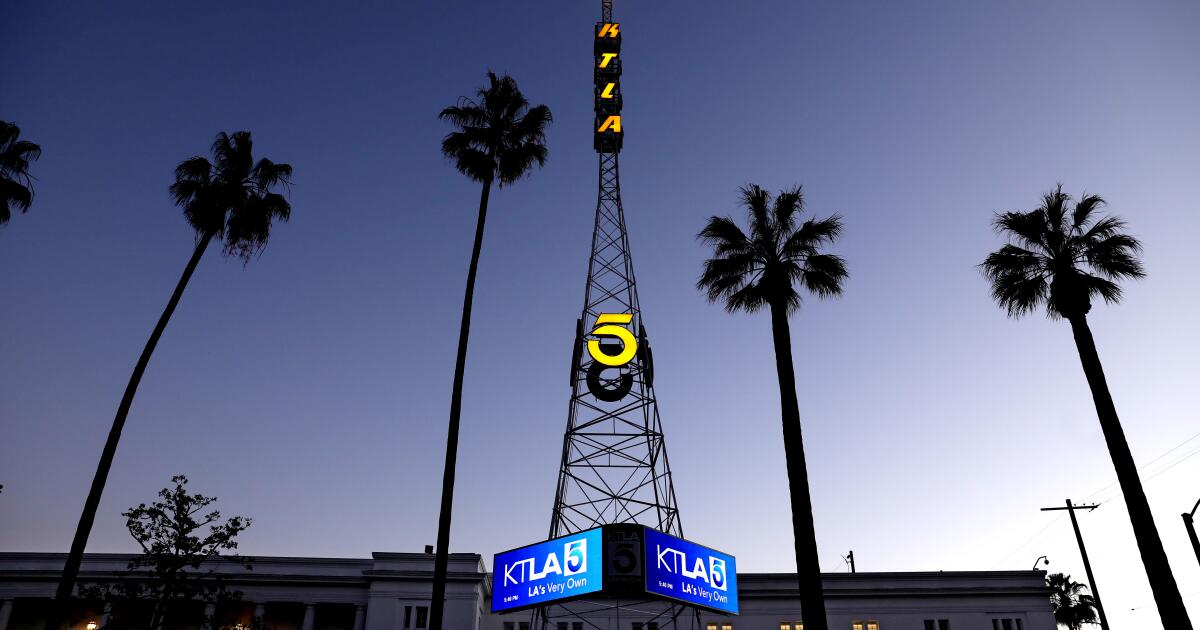
Nexstar, which also owns KTLA-TV Channel 5 in Los Angeles, already is the nation’s largest station group. The deal was expected to reshape the local television industry by extending Nexstar’s reach to 265 television stations, up from 164.

If the acquisition is finalized , Nexstar stations would cover 80% of the U.S. population, exceeding a 39% ownership cap set by Congress.

El Segundo-based DirecTV separately sued, alleging the combination of the nation’s two largest television station groups would do irreparable harm to its pay-TV business by raising prices and potentially increasing programming blackouts.

Representatives of Nexstar, DirecTV and Bonta’s office declined to comment after Tuesday’s hearing.

During the hearing, Nexstar attorney Alexander Okuliar, argued against an injunction, saying the plaintiffs had failed to demonstrate that the merger posed an immediate threat to the public. He said DirecTV and the attorneys general had only offered proposed financial harms.

In court documents, the state attorneys general and DirecTV alleged the deal would give Nexstar multiple TV stations in dozens of markets. That raised concerns about layoffs in an industry that has sustained significant downsizing in recent years as viewers and advertisers migrate to streaming options and social media platforms like TikTok.

Nexstar could “shut down local newsrooms in dozens of markets, reducing the amount, variety, and quality of local broadcast news that Americans rely on for trusted information about their communities,” DirecTV alleged.

For example, Nexstar owns the Fox station in Sacramento, while McLean, Virginia-based Tegna owns the ABC affiliate.

Okuliar pushed back, saying there was no evidence that local newsrooms would be shuttered.

“One of the reasons for this deal is to protect local broadcasters, to protect local journalism,” he told the judge.

Nexstar contends the deal would strengthen TV station economics, allowing stations to bolster their news gathering and expand the number of newscasts. The company cited dozens of awards won by Nexstar journalists, including in Oklahoma City.

In addition to Bonta, the plaintiffs include state attorneys general in Colorado, Connecticut, Illinois, New York, North Carolina, Oregon and Virginia.

Nearly two dozen lawyers attended the hearing on behalf of the other plaintiffs. Eight lawyers represented Nexstar and Tegna.

Nexstar Chief Executive Perry Sook and Chief Operating officer Michael Biard also attended.

In its complaint, DirecTV argued that it would suffer financial harm because Nexstar would use its increased heft to demand significantly higher fees for the rights to carry its network-affiliate stations, which carry local news, primetime shows and professional sports, including NFL football. Such programming disputes can lead to blackouts which infuriate customers.

Nexstar’s lawyers disputed such allegations, telling the judge the merger would ultimately increase the value of content. The company suggested the deal could lower prices for distributors like DirecTV, which has about 10 million customers nationwide.

Nunley recently combined the DirecTV and state attorneys general lawsuits into one.

The judge, who was elevated to the federal bench by President Obama, had already expressed concerns about the merger.

In his March 27 order granting the temporary restraining order, Nunley said DirecTV had demonstrated that it could prevail at a trial due to the merits of its arguments.

He then instructed Nexstar to “immediately cease all ongoing actions relating to integration and consolidation of Nexstar and Tegna.”

Instead, the Tegna unit must continue to operate independently as “an ongoing, economically viable, and active competitor,” the judge wrote.

The Nexstar-Tegna merger took on political overtones in early February after Trump threw his weight behind it, writing in a post on Truth Social that the proposed union was among the “good deals,” because it would provide competition against “THE ENEMY, the Fake News National TV Networks.”

“GET THAT DEAL DONE!” Trump wrote.

The state attorneys general sued to block the merger on March 18, when the transaction was still pending at the U.S. Justice Department, which is tasked with conducting anti-trust reviews, and the Federal Communications Commission, which oversees TV station licenses.

The DOJ and FCC blessed the deal the following day.

Within an hour, Nexstar announced that it finalized the transaction and that Tegna had been disbanded.

“It’s very rare to do what Nexstar did here,” DirecTV’s attorney Glenn Pomerantz said.

Nexstar had asked the judge to require the plaintiffs to post a $150 million bond to compensate it for damages it would suffer from any delays in closing the deal.

Source link