

number

AMC Burbank is the most profitable movie theater in the U.S. and Canada

Maybe it’s the leather seats or the free parking. But out of every movie theater in the U.S. and Canada, AMC Burbank 30 had the most lucrative box office in 2025.

The combined efforts of the three theater locations, less than a mile apart (AMC Burbank 16 and Town Centers 6 and 8), brought in the highest box office numbers, according to Comscore. The AMC in New York’s Lincoln Square came in second place. Overall, the theater chain holds seven of the top 10 highest-grossing box offices in the U.S. and Canada, with four locations in L.A., two in New York and one in Florida.

The L.A. AMC locations at The Grove, Century City and CityWalk ranked at numbers five, six and eight, respectively.

“AMC’s longstanding success in Los Angeles is driven by several factors, including the size of the market, the enthusiasm of the Hollywood community and local audiences for seeing films on the big screen, and AMC’s focus on delivering a high-quality moviegoing experience,” said a spokesperson for the theater chain in a statement to The Times.

“Across the region, AMC locations regularly offer a diverse film slate that spans major studio releases, independent titles, and AMC Artisan Films.”

AMC has had a presence in Southern California since 1969, when it opened its first West Coast location in La Habra. By the mid-1980s, the theater chain grew significantly, opening multiplexes in Burbank and Century City. There are now 36 locations in the greater Los Angeles market.

Daniel Loria, the senior vice president at the Box Office Company, a cinema data analytics firm, said Los Angeles and New York being the most profitable cities isn’t shocking. Many studios and theaters typically use the two largest metros to gauge which markets to expand to and how long a movie will be playing in theaters.

“This industry really relies on the power of those two cities for the entire world to function,” Loria said, referring to the film business.

“These are the capitals of cinema. You see this concentration within that top 10 because of the indexing performance they have, not only on a local level, but on a global level as well.”

The number of movies showing in larger cities also plays a key role in box office gross. Loria said that in some regions of the country, local theaters will only get three or four movies showing at a time. Whereas in bigger markets, there is more diversity in showings and more opportunities to go see a movie, as the theaters are usually bigger and have more screens. Beyond the number of screens, a film‘s visual format is also a major factor in profit and ticket pricing.

When seeing a movie in a premium format, like IMAX or Dolby Cinema 3D, at an AMC, an adult ticket can range between $25 and $30 on a weekend, whereas a standard format would cost around $18. Many movie theaters in Los Angeles have these high-quality screens, which can boost box office gross sales more than other theaters that do not offer a premium viewing experience.

Paul Dergarabedian, the head of marketplace trends at Comscore, said major theater chains usually have more drawing power when their locations have high-quality screenings available.

“What’s striking is how premium formats are driving impressive box office [sales] even in an age of price sensitivity among consumers,” said Dergarabedian. “Savvy moviegoers understand that the upcharge is worth the investment, particularly with films that are epic in scope and are best viewed in the grandest format on offer at their local cinema.”

In recent years, movie membership passes have helped bring audiences into theaters more consistently . AMC’s A-list membership allows subscribers to see up to four movies a week, for the monthly price of $27.99. There are nearly 1 million A-listers.

“The greater Los Angeles area is also home to a highly engaged AMC Stubs A-List membership base that makes theatrical moviegoing a priority,” wrote an AMC spokesperson. “The connection between AMC, Hollywood, and Los Angeles moviegoers continues to benefit our studio partners, filmmakers, and audiences.”

Source link

Newsom counters Trump’s claims about California crime with stats

Gov. Gavin Newsom used his final State of the State address to underscore California’s jaw-dropping crime figures — stats that he said refute the president’s claims about widespread murder and mayhem.

To put in perspective some of the numbers cited by the governor on Thursday:

The last time homicides were this low in Oakland, Rev. Dr. Martin Luther King Jr. was visiting Joan Baez at Santa Rita Jail to commend her on her recent arrest in protest of the Vietnam draft.

Killings haven’t been so rare in San Francisco since superstar Marilyn Monroe wed baseball legend Joe DiMaggio at City Hall.

And violent deaths in the city of Los Angeles fell to rates not seen since the Beatles played Dodgers Stadium, their penultimate public show.

“We have seen double-digit decreases in crime overall in the state of California,” Newsom said. “We’ve got more work to do, but to those with that California derangement syndrome, I’ll repeat — it’s time to update your talking points.”

The governor’s remarks follow reporting by The Times that showed L.A.’s homicide rate is nearing a record low, mirroring trends in other cities nationwide.

With the counts based on data from the LAPD and other law enforcement agencies, President Trump’s insistence that crime in California is out of control has come to seem increasingly bombastic. Recently, the president has modified his message to warn of a possible crime resurgence.

“We will come back, perhaps in a much different and stronger form, when crime begins to soar again,” Trump said on Truth Social in a post announcing an end to his legal battle to maintain National Guard troops in L.A., Portland and Chicago. “Only a question of time!”

In his speech Thursday, Newsom credited the stark drop in violence to a flood of crime-fighting cash unleashed by the California Legislature.

“No one’s walked away from public safety,” Newsom said. “We didn’t turn a blind eye to this, we invested in it. We didn’t talk about it, we leaned in.”

But experts said the reality is more complicated. Those who study the root causes of crime say that it may take years, if not decades, to disentangle the causes of the pandemic-era surge in violence and the precipitous drop that has followed.

Trump hammered lawlessness in California’s streets during the 2024 presidential campaign and throughout his first year back in the White House. He rarely names Newsom without invoking crime and chaos, and regularly threatens to surge armed soldiers back into into the streets.

At the same time, the Trump administration has slashed hundreds of millions in federal funding from school safety grants, youth mentoring programs and gang intervention networks that experts say have been instrumental in improving public safety.

Proponents worry those cuts could threaten L.A.’s patchwork of alternative crisis response programs aimed at easing the city’s reliance on law enforcement. In recent years, scores of groups have sprung up to assist people dealing with homelessness, drug addiction and the symptoms of untreated mental health disorders — all of which can heighten the perception of crime, even when actual numbers go down.

Looming cuts in federal spending could hinder efforts to scale up these initiatives, some warned.

“I just don’t know how we can continue to trend in the right direction without continuing to invest in things that work,” said Thurman Barnes, assistant director of the New Jersey Gun Violence Research Center.

According to data published by the Major Cities Chiefs Assn., homicides were down in San Francisco, San José, Sacramento and Oakland. Other violent crimes, including rape, aggravated assault and robbery, also dropped, with a handful of exceptions.

Property crime was also down, the governor said Thursday.

Street-level disorder and perceptions of widespread lawlessness helped topple progressive administrations across California in 2024 and earned Trump an unexpected windfall in some of the state’s bluest cities.

Those concerns are “at the core” of California voters’ frustrations, Newsom acknowledged Thursday.

“We’re seeing results, making streets safer for everyone,” the governor said.

Jeff Asher, a leading expert in the field of criminology, said it’s hard to say whether the perception gap is closing “because we don’t necessarily track it super systematically.”

But he pointed to a Gallup poll from late last year that showed less than half of Americans believed that crime had gone up — the first time in two decades that that number had dipped below 50%.

“The pandemic broke us in a lot of ways, and we’re starting to not feel as broken,” he said.

Newsom also touted sharp declines in the number of people living on the streets.

Unsheltered homelessness dropped 9% in California and more than 10% in Los Angeles, the governor announced — data he sought to contrast with an 18% rise in homelessness nationwide.

The sight of encampments and people in the throes of psychosis in the streets drives perceptions of lawlessness and danger, studies show. Lowering it soothes those fears.

But California’s overall homeless population remains stubbornly high, with only modest reductions. Federal funding cuts could hamper efforts to further reduce those numbers, experts warned.

Rather than dig into the complexities of crime, Newsom sought to portray the president himself as the driver of lawlessness, calling the first year of his second term a “carnival of chaos.”

“We face an assault on our values unlike anything I’ve seen in my lifetime,” the governor said. “Secret police. Businesses being raided. Windows smashed, citizens detained, citizens shot. Masked men snatching people in broad daylight, people disappearing. Using American cities as training grounds for the United States military.”

“It’s time for the president of the United States to do his job, not turn his back on Americans that happen to live in the great state of California,” Newsom said.

Source link

Alarms raised as Trump’s CDC cuts number of suggested vaccines for children | Health News

Leading medical groups in the United States have raised alarm after the Centers for Disease Control and Prevention (CDC) under President Donald Trump took the unprecedented step of cutting the number of vaccines it recommends for children.

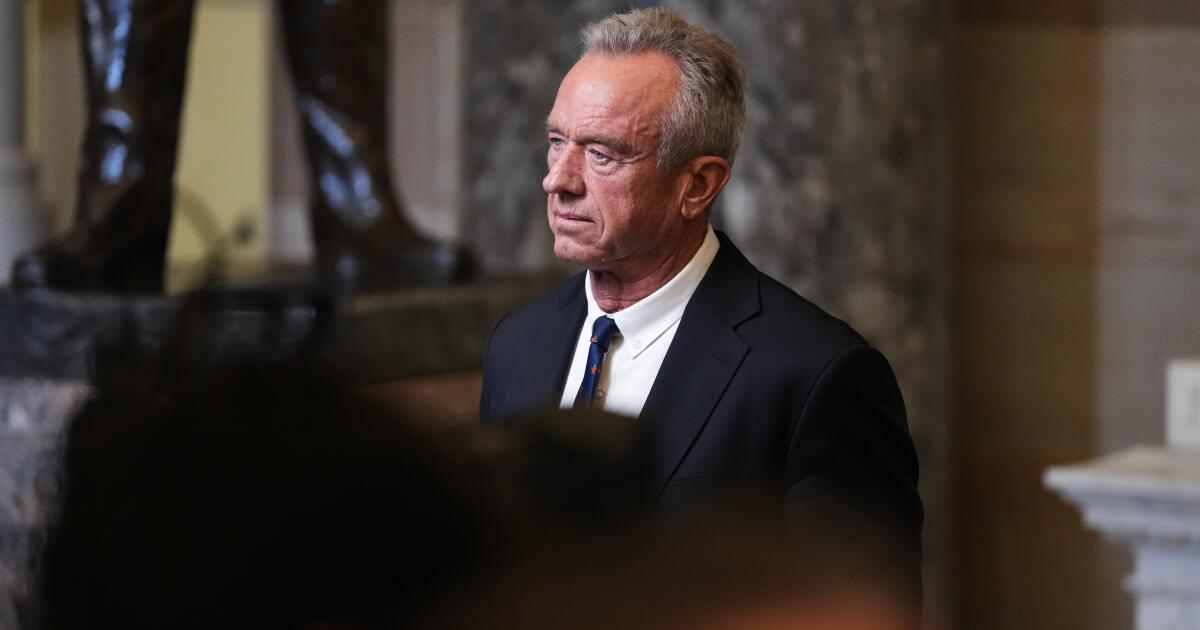
Monday’s sweeping decision, which advances the agenda of Trump-appointed Secretary of Health Robert F Kennedy Jr, removes the recommendation for rotavirus, influenza, meningococcal disease and hepatitis A vaccines for children.

Recommended Stories

list of 3 itemsend of list

It comes as US vaccination rates have been slipping, and the rates of diseases that can be protected against with vaccines, such as measles and whooping cough, are rising across the country, according to government data.

“This decision protects children, respects families, and rebuilds trust in public health,” Kennedy said in a statement on Monday.

In response, the American Medical Association (AMA) said it was “deeply concerned by recent changes to the childhood immunisation schedule that affects the health and safety of millions of children”.

“Vaccination policy has long been guided by a rigorous, transparent scientific process grounded in decades of evidence showing that vaccines are safe, effective, and lifesaving,” Sandra Adamson Fryhofer, a doctor and AMA trustee, said in a statement posted on the group’s website.

She pointed out that major policy changes needed “careful review” and transparency, which are lacking in the CDD’s decision.

“When longstanding recommendations are altered without a robust, evidence-based process, it undermines public trust and puts children at unnecessary risk of preventable disease,” she said.

The change was effective immediately and carried out following the approval by another Trump appointee, CDC acting director Jim O’Neill, without the agency’s usual outside expert review.

The changes were made by political appointees, without any evidence that the current recommendations were harming children, Sean O’Leary, chair of the American Academy of Pediatrics, said.

“It’s so important that any decision about the US childhood vaccination schedule should be grounded in evidence, transparency and established scientific processes, not comparisons that overlook critical differences between countries or health systems,” he told journalists.

Protections against those diseases are only recommended for certain groups deemed high risk, or when doctors recommend them in what’s called “shared decision-making”, the new CDC guidance stated.

States, not the federal government, have the authority to require vaccinations for schoolchildren.

But CDC requirements often influence the state regulations, even as some states have begun creating their own alliances to counter the Trump administration’s guidance on vaccines.

Kennedy, the US health secretary, is a longtime vaccine sceptic.

In May, Kennedy announced that the CDC would no longer recommend COVID-19 vaccines for healthy children and pregnant women, a move immediately questioned by public health experts who saw no new data to justify the change.

In June, Kennedy fired an entire 17-member CDC vaccine advisory committee, later installing several of his own replacements, including multiple vaccine sceptics.

In August, he announced that the US is to cut funding for mRNA vaccine development, a move health experts say is “dangerous” and could make the US much more vulnerable to future outbreaks of respiratory viruses like COVID-19.

Kennedy in November also personally directed the CDC to abandon its position that vaccines do not cause autism, without supplying any new evidence to support the change.

Trump, reacting to the latest CDC decision on his Truth Social platform, said the new schedule is “far more reasonable” and “finally aligns the United States with other Developed Nations around the World”.

Source link

Aaron Wainwright: Wales number eight set to leave Dragons and join Leicester

Wainwright has made 129 appearances for Dragons since making his debut in October 2017 and has only won 29 matches with 93 defeats and seven draws.

He turned down other offers in favour of signing a new Dragons deal in January 2024.

Now Wainwright is expected to decide to try another challenge and link up with fellow Wales back-rowers Tommy Reffell and Olly Cracknell at Leicester.

Wainwright will still be available for Wales because he has 62 international caps.

Welsh rugby’s 25-cap rule says anybody below this tally cannot play international rugby if they sign for a club outside of Wales but Wainwright easily exceeds that bar.

A significant proportion of Steve Tandy’s Wales side already ply their club trade in England with 13 non-home-based players involved in the autumn squad.

Wainwright, Lake and Morgan are joining the likes of Dafydd Jenkins, Louis Rees-Zammit, Tomos Williams, Rhys Carre, Nicky Smith, Nick Tompkins, Jarrod Evans, Max Llewellyn and Freddie Thomas, who all play for English clubs, while lock Adam Beard is at French side Montpellier.

Leicester had also been keen on recruiting Wales fly-half Dan Edwards, but he is close to committing his future to Ospreys.

Edwards, 22, would be ineligible for Wales selection if he went to play in England because he has only played seven internationals.

Source link

A rough year for journalists in 2025, with a little hope for things to turn around

By nearly any measure, 2025 has been a rough year for anyone concerned about freedom of the press.

It’s likely to be the deadliest year on record for journalists and media workers. The number of assaults on reporters in the U.S. nearly equals the last three years combined. The president of the United States berates many who ask him questions, calling one woman “piggy.” And the ranks of those doing the job continues to thin.

It’s hard to think of a darker time for journalists. So say many, including Timothy Richardson, a former Washington Post reporter and now program director for journalism and disinformation at PEN America. “It’s safe to say this assault on the press over the past year has probably been the most aggressive that we’ve seen in modern times.”

Tracking killings and assaults against journalists

Worldwide, the 126 media industry people killed in 2025 by early December matched the number of deaths in all of 2024, according to the Committee to Protect Journalists, and last year was a record-setter. Israel’s bombing of Gaza accounted for 85 of those deaths, 82 of them Palestinians.

“It’s extremely concerning,” said Jodie Ginsberg, chief executive of the Committee to Protect Journalists. “Unfortunately, it’s not just, of course, about the sheer numbers of journalists and media workers killed, it’s also about the failure to obtain justice or get accountability for those killings.

“What we know from decades of doing this work is that impunity breeds impunity,” she said. “So a failure to tackle journalists’ killings creates an environment where those killings continue.”

The committee estimates there are at least 323 journalists imprisoned worldwide.

None of those killed this year were from the United States. But the work on American soil has still been dangerous. There have been 170 reports of assaults on journalists in the United States this year, 160 of them at the hands of law enforcement, according to the U.S. Press Freedom Tracker. Many of those reports came from coverage of immigration enforcement efforts.

It’s impossible to look past the influence of Trump, who frequently seethes with anger at the press while simultaneously interacting with journalists more than any president in memory — frequently answering their cell phone calls.

“Trump has always attacked the press,” Richardson said. “But during the second term, he’s turned that into government action to restrict and punish and intimidate journalists.”

Journalists learn quickly they have a fight on their hands

The Associated Press learned that quickly, when Trump limited the outlet’s access to cover him after it refused to follow his lead to rename the Gulf of Mexico. It launched a court fight that has remained unresolved. Trump has also extracted settlements from ABC and CBS News in lawsuits over stories that displeased him, and is suing the New York Times and Wall Street Journal.

Long angry about a perceived bias against conservatives on PBS and NPR newscasts, Trump and his allies in Congress successfully cut funding for public broadcasting as a whole. The president has also moved to shut down government-run organizations that beam news to all parts of the world.

“The U.S. is a major investor in media development, in independent media outlets in countries that have little or no independent media, or as a source of information for people in countries where there is no free media,” Ginsberg said. “The evisceration of Radio Free Europe, Radio Free Asia and the Voice of America is another blow to press freedom globally.”

Others in his administration take Trump’s lead, like when his press office chose the day after Thanksgiving to launch a web portal to complain about outlets or journalists being unfair.

“It’s part of this overall strategy that we’re seeing from certain governments, notably the United States, to paint all journalists who don’t simply [repeat] the narrative put out by the government as fake news, as dubious, as dodgy, as criminal,” Ginsberg said.

Trump’s defense secretary, Pete Hegseth, has portrayed journalists as dark figures skulking around Pentagon halls to uncover classified secrets as his rationale for enacting restrictive rules for coverage.

That’s led to the most notable example of journalists fighting back: most mainstream news outlets gave up their credentials to work in the Pentagon rather than agree to these rules, and are still breaking stories while working off-site. The New York Times has sued to overturn the rules. The newspaper also publicly defends itself when attacked by the president, such as when he complained about its coverage of his health.

Despite the more organized effort against the press, the public has taken little notice. The Pew Research Center said that 36% of Americans reported earlier this year hearing a lot about the Trump administration’s relationship with the press, compared to 72% who said that at the same point in his first term.

Pew’s polling shows that trust in news organizations has declined over the last decade, and journalists are likely to elicit little sympathy when their work becomes harder.

“Really, the harm falls on the public with so much of this because the public depends on this independent reporting to understand and scrutinize the decisions that are being made by the most powerful office in the world,” Richardson said.

Some reasons for optimism

The news industry as a whole is more than two decades in to a retrenchment caused largely by a collapse in the advertising market, and every year brings more reports of journalists laid off as a result. One of the year’s most sobering statistics came in a report by the organizations Muck Rack and Rebuild Local News: in 2002, there were 40 journalists for every 100,000 people in the United States; by this year, it was down to a little more than eight.

Asked if they could find reasons for optimism, both Ginsberg and Richardson pointed to the rise of some independent local news organizations, shoots of growth in a barren landscape, such as the Baltimore Banner, Charlottesville Tomorrow in Virginia and Outlier Media in Michigan.

As much as they are derided in Trump’s America, reporters at mainstream media outlets are still working hard and able to set the nation’s agenda with their reporting, noted influential Axios CEO Jim VandeHei in a recent column.

As he told the AP: “Over time, people will hopefully come to their senses and say, ‘Hey, the media like anything else is imperfect but, man, it’s a nice thing to have a free press.’”

Bauder writes for the Associated Press.

Source link

Juarno Augustus injury: Ulster back row out for a number of weeks

Ulster back row Juarno Augustus will be sidelined “for a number of weeks” because of the ankle ligament injury he sustained in the United Rugby Championship win over Connacht in Galway.

Augustus left the field midway through the second half of his team’s 29-24 success at Dexcom Stadium and Ulster say the damage is “significant”.

The former Northampton Saints number eight has initially been ruled out of Friday’s URC match with Munster in Belfast.

Meanwhile Ethan McIlroy’s injury woe has continued as he faces a further spell out of action after picking up a rib injury in Ballynahinch’s Senior Cup Final victory over Instonians.

Eric O’Sullivan (hamstring), Matthew Dalton (knee), Iain Henderson (back) and Rob Herring (knee) have all resumed team training and their availability for selection will be assessed through training this week.

Ulster sit fifth in the URC table, three points below second-placed Munster, so have the opportunity to leapfrog their Irish interprovincial rivals in the table with a win at Affidea Stadium.

Source link

The Ashes: Jacob Bethell has “more to do” to remain England’s number three

Jacob Bethell said he wants to remain England’s number three but admitted he has “a lot more to do” to make the position his own.

The 22-year-old was recalled for the fourth Ashes Test and made a crucial 40 in the second innings as England won by four wickets to end an 18-match winless streak in Australia.

Bethell had never batted higher than number four in first-class cricket until he had three Tests for England at number three in New Zealand last year.

The left-hander played only three first-class matches in 2025 before replacing Ollie Pope for the Boxing Day Test.

His impressive 40 actually came at number four after England promoted Brydon Carse as a pinch-hitter in the second-innings run chase of 175. Now Bethell will get the opportunity to stake a claim for a long run in the team in the final Ashes Test in Sydney.

“I like three,” he said. “You come in when the ball is new and in some scenarios the ball’s going all over the shop, but in other scenarios it presents opportunities to score when bowlers are trying to take wickets and the field is attacking there’s loads of gaps.

“I’ve still got a lot more to do to call it my position.”

Bethell’s selection in Melbourne was the culmination of year-long speculation over Pope’s position at number three.

After impressing with three half-centuries in New Zealand last December, Bethell’s international progress was hampered by an injury, a stint at the Indian Premier League (IPL) and Pope’s good form at the start of the home summer.

The Warwickshire man made his first professional century in a one-day international against South Africa in September. Following the Ashes, he will be part of England’s white-ball plans in the new year then will return to the IPL with Royal Challengers Bengaluru.

It could mean Bethell’s next first-class cricket following the tour of Australia is England’s first Test of the home summer against New Zealand in June.

“I’m not thinking too far ahead yet,” said Bethell. “Hopefully next week in Sydney and then we’ve got a lot of cricket to play before next summer.”

Asked about securing the number three spot, he said: “I would like to. I would like to just nail down any role in the team. If you’re in the XI and contributing to winning I’m pretty happy with that.”

Source link

Holiday park operator Haven braced for record number of bookings after Christmas Day surge

A leading staycation operator has highlighted a big rise in people opting to use Christmas Day to make their holiday booking

There was a time when Christmas Day was all about opening the presents, over doing it on the festive feast, then sleeping it off in the front of the telly.

But times changes, and it seems a growing number of people are using the time off to plan ahead. And one emerging trend identified by holiday park operator Haven has been a big rise in the number of advanced bookings it has taken on December 25.

Historically, Christmas Day was quiet for the firm and other holiday companies ahead of a normal rush just after the new year. But Haven says that in recent years bookings have increased steadily, with a 46% leap on Christmas Day last year. While it did not provide exact numbers, bosses said it equated to hundreds of bookings on the day. Given the success last year, Haven says it is now anticipating a record breaking Christmas Day again.

Others will leave it 24 hours, but Boxing Day has also become ever more popular for families thinking of their holidays to come. Haven says Boxing Day bookings last year were up 28%, and it expects to take thousands of bookings over the two peak festive days this year.

Simon Palethorpe, the company’s chief executive, said: “Once the presents are unwrapped, carols sung and turkey stripped, more families are using their time together to book their Easter and summer holidays. Not only is selecting your family holiday on Christmas Day less likely to lead to a row than a board game – booking early with Haven can result in a great deal and big savings compared to those who book later.”

The coming weeks are when many people turn their attention to next summer’s getaway, with the dark months of winter encouraging many to dream of sunshine breaks to come. Experts certainly say that booking early can mean big savings, with operators traditionally launching early bird deals amid a marketing blitz around this time of year.

A peak of bookings is expected on January 3, or what is dubbed ‘Sunshine Saturday’ given the spike in business. Research released by trade body ABTA ahead of 2025’s big day revealed that 68% of people were planning to go abroad this year, and 45% were looking to explore a new country for their holiday.

Trade experts at consumer group Which? has this advice: “Don’t feel pressured into booking in a hurry. Time-limited deals aren’t always everything they promise so take the time to consider your options, and shop around to make sure you’re getting the right holiday for you, at the right price.

“Holiday booking scams are common at this time of year so if something looks too good to be true, always think twice. There are lots of dodgy ‘deals’ on social media, and fake listings can even make their way onto booking sites. Always avoid listings requesting payments by bank transfer, and consider doing a reverse image search on villas or rentals to check the images haven’t been lifted from elsewhere.”

Source link

California counties unsure how how they’ll pay for uninsured

In 2013, before the Affordable Care Act helped millions get health insurance, California’s Placer County provided limited healthcare to some 3,400 uninsured residents who couldn’t afford to see a doctor.

For several years, that number has been zero in the predominantly white, largely rural county stretching from Sacramento’s eastern suburbs to the shores of Lake Tahoe.

The trend could be short-lived.

County health officials there and across the country are bracing for an estimated 10 million newly uninsured patients over the next decade in the wake of Republicans’ One Big Beautiful Bill Act. The act, which President Trump signed into law this summer, is expected to reduce Medicaid spending by more than $900 billion over that period.

“This is the moment where a lot of hard decisions have to be made about who gets care and who doesn’t,” said Nadereh Pourat, director of the Health Economics and Evaluation Research Program at UCLA. “The number of people who are going to lose coverage is large, and a lot of the systems that were in place to provide care to those individuals have either gone away or diminished.”

It’s an especially thorny challenge for states such as California and New Mexico where counties are legally required to help their poorest residents through what are known as indigent care programs. Under Obamacare, both states were able to expand Medicaid to include more low-income residents, alleviating counties of patient loads and redirecting much of their funding for the patchwork of local programs that provided bare-bones services.

Placer County, which estimates that 16,000 residents could lose healthcare coverage by 2028, quit operating its own clinics nearly a decade ago.

“Most of the infrastructure that we had to meet those needs is gone,” said Rob Oldham, Placer County’s director of health and human services. “This is a much bigger problem than it was a decade ago and much more costly.”

In December, county officials asked to join a statewide association that provides care to mostly small, rural counties, citing an expected rise in the number of uninsured residents.

New Mexico’s second-most populous county, Doña Ana, added dental care for seniors and behavioral health benefits after many of its poorest residents qualified for Medicaid. Now, federal cuts could force the county to reconsider, said Jamie Michael, Doña Ana’s health and human services director.

“At some point we’re going to have to look at either allocating more money or reducing the benefits,” Michael said.

Straining state budgets

Some states, such as Idaho and Colorado, abandoned laws that required counties to be providers of last resort for their residents. In other states, uninsured patients often delay care or receive it at hospital emergency rooms or community clinics. Those clinics are often supported by a mix of federal, state and local funds, according to the National Assn. of Community Health Centers.

Even in states like Texas, which opted not to expand its Medicaid program and continued to rely on counties to care for many of its uninsured, rising healthcare costs are straining local budgets.

“As we have more growth, more people coming in, it’s harder and harder to fund things that are required by the state Legislature, and this isn’t one we can decrease,” said Windy Johnson, program manager with the Texas Indigent Health Care Assn. “It is a fiscal issue.”

California lawmakers face a nearly $18-billion budget deficit in the 2026-27 fiscal year, according to the latest estimates by the state’s nonpartisan Legislative Analyst’s Office. Gov. Gavin Newsom, who recently acknowledged he’s mulling over a White House run, has rebuffed several efforts to significantly raise taxes on the ultrawealthy. Despite blasting the bill passed by Republicans in Congress as a “complete moral failure” that guts healthcare programs, the Democrat this year rolled back state Medi-Cal benefits for seniors and for immigrants without legal status after rising costs forced the program to borrow $4.4 billion from the state’s general fund.

H.D. Palmer, a spokesperson for the state’s Department of Finance, said that the Newsom administration is still refining its fiscal projections and that it would be premature to discuss potential budget solutions.

Newsom will unveil his initial budget proposal in January. State officials have said California could lose $30 billion a year in federal funding for Medi-Cal under the new law, as much as 15% of the state program’s entire budget.

“Local governments don’t really have much capacity to raise revenue,” said Scott Graves, a director at the independent California Budget & Policy Center with a focus on state budgets. “State leaders, if they choose to prioritize it, need to decide where they’re going to find the funding that would be needed to help those who are going to lose healthcare as a result of these federal funding and policy cuts.”

Reviving county-based programs in the near term would require “considerable fiscal restructuring” through the state budget, the Legislative Analyst’s Office said in an October report.

No easy fixes

It’s unclear how many people are enrolled in California’s county indigent programs, because the state doesn’t track enrollment and utilization. But enrollment in county health safety net programs dropped dramatically in the first full year of Affordable Care Act implementation, going from about 858,000 people statewide in 2013 to roughly 176,000 by the end of 2014, according to a survey at the time by Health Access California.

“We’re going to need state investment,” said Michelle Gibbons, executive director of the County Health Executives Assn. of California. “After the Affordable Care Act and as folks got coverage, we didn’t imagine a moment like this where potentially that progress would be unwound and folks would be falling back into indigent care.”

In November, voters in affluent Santa Clara County approved a sales tax increase, in part to backfill the loss of federal funds. But even in the home of Silicon Valley, where the median household income is about 1.7 times the statewide average, that is expected to cover only a third of the $1 billion a year the county stands to lose.

Health advocates fear that, absent major state investments, Californians could see a return to the previous patchwork of county-run programs, with local governments choosing whom and what they cover and for how long.

In many cases, indigent programs didn’t include specialty care, behavioral health or regular access to primary care. Counties can also exclude people based on immigration status or income. Before the ACA, many uninsured people who needed care didn’t get it, which could lead to them winding up in emergency rooms with untreated health conditions or even dying, said Kiran Savage-Sangwan, executive director of the California Pan-Ethnic Health Network.

Rachel Linn Gish, interim deputy director of Health Access California, a consumer advocacy group, said that “it created a very unequal, maldistributed program throughout the state.”

“Many of us,” she said. “including counties, are reeling trying to figure out: What are those downstream impacts?”

KFF Health News is a national newsroom that produces in-depth journalism about health issues and is one of the core operating programs at KFF, the independent source for health policy research, polling and journalism.

Source link

Rights groups condemn new record number of executions in 2025

Caroline HawleyDiplomatic correspondent

ESOHR Issam al-ShazlyESOHR

Egyptian fisherman Issam al-Shazly was executed on Tuesday after being convicted of drug-related charges

Saudi Arabia has surpassed its record for the number of executions carried out annually for a second year in a row.

At least 347 people have now been put to death this year, up from a total of 345 in 2024, according to the UK-based campaign group Reprieve, which tracks executions in Saudi Arabia and has clients on death row.

It said this was the “bloodiest year of executions in the kingdom since monitoring began”.

The latest prisoners to be executed were two Pakistani nationals convicted of drug-related offences.

Others put death this year include a journalist and two young men who were children at the time of their alleged protest-related crimes. Five were women.

But, according to Reprieve, most – around two thirds – were convicted of non-lethal drug-related offences, which the UN says is “incompatible with international norms and standards”.

More than half of them were foreign nationals who appear to have been put to death as part of a “war on drugs” in the kingdom.

The Saudi authorities have not responded to the BBC’s request for comment on the rise in executions.

“Saudi Arabia is operating with complete impunity now,” said Jeed Basyouni, Reprieve’s head of death penalty for the Middle East and North Africa. “It’s almost making a mockery of the human rights system.”

She described torture and forced confessions as “endemic” within the Saudi criminal justice system.

Ms Basyouni called it a “brutal and arbitrary crackdown” in which innocent people and those on the margins of society have been caught up.

Tuesday saw the execution of a young Egyptian fisherman, Issam al-Shazly, who was arrested in 2021 in Saudi territorial waters and said he had been coerced into smuggling drugs.

Reprieve says that 96 of the executions were solely linked to hashish.

“It almost seems that it doesn’t matter to them who they execute, as long as they send a message to society that there’s a zero-tolerance policy on whatever issue they’re talking about – whether it’s protests, freedom of expression, or drugs,” said Ms Basyouni.

There has been a surge of drug-related executions since the Saudi authorities ended an unofficial moratorium in late 2022 – a step described as “deeply regrettable” by the UN human rights office.

Speaking anonymously to the BBC, relatives of men on death row on drugs charges have spoken of the “terror” they’re now living in.

One told the BBC: “The only time of the week that I sleep is on Friday and Saturday because there are no executions on those days.”

Cellmates witness people they have shared prison life with for years being dragged kicking and screaming to their death, according to Reprieve.

Reuters Crown Prince Mohammed bin Salman of Saudi Arabia attends the US-Saudi Investment Forum in Washington DC, (19 November 2025)Reuters

Prince Mohammed bin Salman has loosened social restrictions while simultaneously silencing criticism

The de facto ruler of Saudi Arabia, Mohammed bin Salman – who became crown prince in 2017 – has changed the country profoundly over the past few years, loosening social restrictions while simultaneously silencing criticism.

In a bid to diversify its economy away from oil, he has opened Saudi Arabia up to the outside world, taken the religious police off the streets, and allowed women to drive.

But the kingdom’s human rights record remains “abysmal”, according to the US-based campaign group Human Rights Watch, with the high level of executions a major concern. In recent years, only China and Iran have put more people to death, according to human rights activists.

“There’s been no cost for Mohammed bin Salman and his authorities for going ahead with these executions,” said Joey Shea, who researches Saudi Arabia for Human Rights Watch. “The entertainment events, the sporting events, all of it is continuing to happen with no repercussions, really.”

According to Reprieve, the families of those executed are usually not informed in advance, or given the body, or informed where they have been buried.

The Saudi authorities do not reveal the method of execution, although it is believed to be either beheading or firing squad.

In a statement sent to the BBC, the UN’s special rapporteur on extrajudicial, summary or arbitrary executions, Dr Morris Tidball-Binz, called for an immediate moratorium on executions in Saudi Arabia with a view to abolition, as well as “full compliance with international safeguards (including effective legal assistance and consular access for foreign nationals), prompt notification of families, the return of remains without delay and the publication of comprehensive execution data to enable independent scrutiny”.

Amnesty International Abdullah al-Derazi (L) and Jalal al-Labbad (R)Amnesty International

Abdullah al-Derazi and Jalal al-Labbad were executed in October and August respectively after being convicted of crimes they allegedly committed as minors

Among the Saudi nationals executed this year were Abdullah al-Derazi and Jalal al-Labbad, who were both minors at the time of their arrest.

They had protested against the government’s treatment of the Shia Muslim minority in 2011 and 2012, and participated in the funerals of people killed by security forces. They were convicted of terrorism-related charges and sentenced to death after what Amnesty International said were grossly unfair trials that relied on torture-tainted “confessions”. UN human rights experts had called for their release.

The UN also condemned the execution in June of the journalist, Turki al-Jasser, who had been arrested in 2018 and sentenced to death on charges of terrorism and high treason based on writings he was accused of authoring.

“Capital punishment against journalists is a chilling attack on freedom of expression and press freedom,” said Unesco’s Director-General, Audrey Azoulay.

Reporters Without Borders said he was the first journalist to be executed in Saudi Arabia since Mohammed bin Salman came to power, although another journalist, Jamal Khashoggi, was murdered by Saudi agents at the Saudi consulate in Istanbul in 2018.

Human Rights Watch Turki al-JasserHuman Rights Watch

Journalist Turki al-Jasser was executed in June after seven years in detention

Last December, UN experts wrote to the Saudi authorities to express concern over a group of 32 Egyptians and one Jordanian national who had been sentenced to death on drugs charges, and their “alleged absence of legal representation”. Since then, most of the group have been executed.

A relative of one man put to death earlier this year said that he had told her that people were being “taken like goats” to be killed.

The BBC has approached the Saudi authorities for a response to the allegations but has not received one.

But in a letter dated January 2025 – in reply to concerns raised by UN special rapporteurs – they said that Saudi Arabia “protects and upholds” human rights and that its laws “prohibit and punish torture”.

“The death penalty is imposed only for the most serious crimes and in extremely limited circumstances,” the letter stated. “It is not handed down or carried out until judicial proceedings in courts of all levels have been completed.”

Source link

PDC World Darts Championship 2026: David Munyua stuns world number 18 Mike de Decker in first round

Kenyan debutant David Munyua caused a huge shock at the PDC World Championship, coming from two sets down to beat world number 18 Mike de Decker 3-2 at Alexandra Palace.

It was an enthralling encounter to end the afternoon session on Thursday, with Munyua missing darts to win the second set, doing the same in the third but coming back to win it, edging the fourth and coming back to win the fifth.

The 30-year-old, who qualified via the African Darts Group Qualifier, was broken in the first leg of the decider but produced an astounding outer bull-treble 20-bullseye 135 finish to level the fifth set, before holding his nerve to complete victory.

Another debutant, Japan’s Motomu Sakai, looked to have stolen the show earlier in the afternoon session as he beat Thibault Tricole of France in straight sets.

Sakai gained the support of the Alexandra Palace crowd with a long, exuberant walk-on and was a showman who played up to the fans throughout his match.

Elsewhere, world number 24 Ryan Joyce produced a composed display to see off fellow Englishman Owen Bates, averaging 95.27 and hitting nine of his 14 attempts at double.

Thursday’s other winner was world number 42 Callan Rydz, who only dropped three legs as he comfortably won 3-0 against Hungary’s Patrik Kovacs.

Source link

Conservative political analyst joins NewsNation for a new prime-time show

Katie Pavlich, a longtime contributor to Fox News, is leaving the network to join NewsNation.

Pavlich, a conservative political analyst, will have a nightly 10 p.m ET program starting early next year, the Nexstar-owned cable news channel announced Monday.

Pavlich, 37, will replace Ashleigh Banfield, who held down the time period since 2021. Banfield will partner with the network to create digital true crime content, including a podcast.

Pavlich has spent the last 16 years as news editor of the conservative website Townhall.com. She appeared regularly on cable ratings leader Fox News since 2013, appearing as a guest co-host on “The Five” and a fill-in host on its prime-time programs.

Pavlich becomes the latest Fox News alum to join NewsNation. Leland Vittert, a former correspondent for the network, is NewsNation’s 9 p.m. Eastern host. Chris Stirewalt, who was fired from Fox after the 2020 presidential election, is politics editor for the network.

Veteran cable news host Ashleigh Banfield will work on digital true crime content for NewsNation

Veteran cable news host Ashleigh Banfield joined NewsNation in March.

(NewsNation)

NewsNation was launched in 2020 as an alternative to the three major cable news networks at a time when all leaned heavily into opinion programming in prime time. But the network has moved toward political debate since Chris Cuomo became its highest rated host in prime time.

An Arizona native who grew up as an avid hunter, Pavlich is a strong advocate of the 2nd Amendment. She poses with firearms in a number of photos on her Instagram.

Pavlich is the author of several books, including New York Times bestsellers “Fast and Furious: Barack Obama’s Bloodiest Scandal” and “Assault and Flattery: The Truth About the Left and Their War on Women.”

Source link