nuclearpowered

Here Is How Russia’s Skyfall Nuclear-Powered Cruise Missile Actually Works

Russia’s mysterious Burevestnik (also known to NATO as SSC-X-9 Skyfall) cruise missile likely leaves a trail of radioactive material in its wake, making the weapon even more alarming than was first thought. This is the conclusion of two scientists from the Massachusetts Institute of Technology (MIT), who have recently published a detailed analysis of one of the so-called ‘super weapons’ revealed by Russian President Vladimir Putin back in 2018.

The report, from Jake Hecla, an MIT professor who covers aerospace and nuclear science and engineering, and co-author R. Scott Kemp, provides the most compelling analysis so far on how the Burevestnik is actually powered. Uncertainty around this has led to previous questions about whether Russia’s claims of nuclear propulsion for the weapon even stack up.

A view of the Burevestnik test site at Pankovo, on Yuzhny Island in the Novaya Zemlya archipelago, with a missile launcher in the raised position. via X

First, it’s worth recalling what we know about the Burevestnik program’s development milestones, which appear to have been punctuated by accidents.

It is also worth noting that there have been previous efforts to create nuclear-powered aircraft and missiles.

During the 1950s, both the Soviet Union and the United States tested airborne nuclear reactors aboard strategic bombers, the B-36 Peacemaker and the Tu-95 Bear, respectively. Neither of these trials actually saw the reactors drive the aircraft’s engines.

Under Project Pluto, the United States studied a nuclear-powered cruise missile and got as far as testing a reactor on the ground in 1964, before the idea was abandoned. The Pluto concept of operation was somewhat different to the Burevestnik, with the missile intended to fly at treetop level at Mach 3.5 and dispense nuclear weapons at different points along its flight path by performing “pop-up” maneuvers.

Fast forward to 2018, and Putin disclosed the Burevestnik’s existence, when it was presented as one of six ‘super weapons’ that also included hypersonic weapons and a nuclear-powered, nuclear-armed torpedo.

Soon after Putin’s 2018 announcement, the Norwegian-based environmental group Bellona suggested that a radiation spike in the Arctic that same winter may have been caused by a test of the missile.

Later in 2018, a U.S. intelligence report described the loss at sea of a Russian nuclear-powered missile during a 2017 test. The report added that Russia was expected to embark on a search and recovery mission to try to lift the missile’s wreckage from the seabed.

Then, in 2019, an explosion occurred aboard a barge in the White Sea, outside Nenoksa, killing five Rosatom scientists. It also led to a radiation spike in the Russian city of Severodvinsk, as you can read more about here. The explosion has been blamed on a reactor from a Burevestnik recovered from the sea, likely the one that was lost in 2017.

Last October, Russia’s Chief of the General Staff, Valery Gerasimov, announced that a successful test of the Burevestnik had been carried out, high above the Arctic Circle. Gerasimov said that the 15-hour flight “is not the [maximum] limit” for the missile. This appears to have been the first long-endurance test of the missile.

Hecla and Kemp agree that the October 2025 test was a success and that, moreover, it marks the first time a true nuclear-powered aircraft has ever flown for a sustained period.

This leads to the question of how the Burevestnik actually converts energy from its nuclear reactor into propulsive power to keep it in the air.

Hecla and Kemp may well have provided the answer.

Based on data that the researchers gathered, the size, shape, and performance of the Burevestnik indicate a different kind of propulsion system than envisaged for Project Pluto. The U.S. concept involved a ramjet, required to ensure supersonic performance in the atmosphere.

In the 1960s, the U.S. Air Force explored this idea with its Supersonic Low Altitude Missile, or SLAM. This weapon employed a nuclear-powered ramjet along with conventional rocket boosters to kickstart the system. Once at the appropriate speed, the engine would blow air over the reactor, which could have enough fuel to operate for weeks or months on end, and then force it out of an exhaust nozzle to produce thrust.

The Tory II-C nuclear ramjet engine was tested in 1964 and helped inform the abortive Supersonic Low Altitude Missile, or SLAM, program. Public Domain

The Burevestnik is “very obviously a subsonic system,” Hecla told NPR.

By comparing open-source imagery of the Burevestnik, the researchers calculated that the missile is approximately 31 feet (9.5 meters) in overall length, with a wingspan of approximately 18 feet (5.6 meters). It likely flies at a speed of around Mach 0.75.

A size comparison from the report includes the Burevestnik alongside the Russian Kh-101/102 air-launched cruise missiles and the BGM-109A Tomahawk. Modeling the Performance of the Burevestnik Nuclear-Powered Cruise Missile, Jake J. Hecla and R. Scott Kemp.

They conclude that the Burevestnik is “almost certain” to use a direct-cycle air-breathing nuclear propulsion system, which probably drives a turbojet.

In a direct-cycle system, air is drawn from the atmosphere and passes directly through the reactor core. A compressor forces the air through thousands of narrow, tube-like channels surrounding the nuclear fuel, where the heat generated by nuclear fission raises the air’s temperature. As the heated air expands, it exits the rear of the engine to produce thrust.

A grainy screengrab, released in 2018, that may show the nuclear-powered cruise missile during a test flight. via Channel One Russia

This approach differs fundamentally from most nuclear reactors, which use an indirect, closed-loop design. In those systems, a sealed coolant — typically water or another heat-transfer fluid — circulates through the reactor to carry heat away while keeping radioactive materials contained and minimizing radiation exposure.

Comparison of a direct-cycle nuclear turbojet and an indirect-cycle equivalent. Modeling the Performance of the Burevestnik Nuclear-Powered Cruise Missile, Jake J. Hecla and R. Scott Kemp.

While some kind of indirect loop design is not impossible, the researchers consider that it’s highly unlikely, due to the simple fact that these systems are considerably larger, heavier, and more complex and couldn’t be accommodated in what is by no means a huge missile.

This means that the Burevestnik is likely propelled using heated air that is drawn directly through the reactor core.

The resulting powerplant is simpler and more compact, but it comes with a serious drawback: “The direct cycle is very likely to result in a large quantity of radioactive material in the exhaust,” Hecla contends.

Essentially, as clean atmospheric air passes through the tiny tubes in the reactor, it gets irradiated and infused with fission decay products from the nuclear fuel.

The hot air that passes out of the end of the turbojet would be filled with radioactive isotopes of argon, krypton, and carbon, all of which would be scattered in its wake.

A notional Burevestnik concept of operations consists of launch using a kicker, then transitioning to solid rocket booster power. This then allows a slow spool-up to nuclear cruise at high-subsonic speeds. Alternatively, the boosters may be for testing purposes only, and the nuclear engine system may instead use hydrocarbon fuels to slowly taper from conventional power to nuclear power. Modeling the Performance of the Burevestnik Nuclear-Powered Cruise Missile, Jake J. Hecla and R. Scott Kemp.

The longer the missile flies, the more of this harmful waste it would pump into the atmosphere, and onto the surface below.

The researchers highlight another problem, too.

Namely, any kind of prolonged flight is likely to result in corrosion of the reactor core, through a combination of heat and compressed air. This would create yet more radioactive particles.

Based on previous evidence, it seems that Russia might already be battling with the problems inherent in handling, loading, and testing a missile with this kind of propulsion system.

The Russian Ministry of Defense released the video below in 2018, saying that it showed an earlier Burevestnik test launch, as well as examples of the missiles themselves.

Крылатая ракета с ядерным двигателем «Буревестник» thumbnail

Крылатая ракета с ядерным двигателем «Буревестник»


The MIT researchers consider that the fatal 2019 explosion in the White Sea was likely a failed attempt to recover a prototype Burevestnik reactor. The reactor is presumed to have restarted as it was being raised from the seabed, leading to an explosion.

Bearing all this in mind raises the question of why Russia set about developing the Burevestnik, especially when it has so many other ‘novel’ weapons in the works or already fielded.

Ultimately, the major advantage of the Burevestnik is almost unlimited range, something that we have discussed in the past:

“The missile can be launched preemptively and approach its target from any vector long after launch. For example, it could be launched from the Arctic, stay aloft for many hours, and then attack the United States from the south. Once launched, its flight path is entirely unpredictable, and it could exploit holes in defenses and weaker spots in early warning capabilities. It provides another reason why space-based tracking layers, including those that can spot low-flying aircraft, are currently very much on trend.”

On the other hand, the Burevestnik doesn’t appear to be very fast or difficult to intercept once detected.

There is also its inherent inflexibility, since Russia has said it is only envisaged as being used with a nuclear warhead. While this could change, the size and weight of a conventional warhead would be more limited, and it’s questionable if Russia would risk employing such a complex missile to deliver a relatively modest conventional charge, especially since it would leave a potentially lethal radioactive footprint regardless.

“It leaks radiation, making it easy to track; it’s slow and un-stealthy, making it easy to shoot down; and the inside of the missile degrades during reactor operation, calling into question its ‘unlimited’ range,” William Alberque, a former director of strategy, technology and arms control at the International Institute for Strategic Studies (IISS), told TWZ.

“There are so many reasons everyone abandoned this concept in the Cold War,” Alberque added.

Hecla and Kemp assess that Russia’s reason for embarking on the Burevestnik is likely more to do with proving technologies for more ambitious and advanced programs further down the line. These could include nuclear-powered surveillance drones or space-based nuclear systems that would have considerably more military value.

Another possibility is that this is a ‘pet project’ of Putin himself, the Russian leader having been wooed by the idea of a missile with near-limitless range, regardless of the practical utility.

On the one hand, the latest analysis does suggest that the test last October means that the Burevestnik is the first aircraft ever built and flown in a sustained manner using nuclear power.

That is a landmark, but it’s one that’s tempered by very significant questions about the safety of anyone in its vicinity, and the environment at large, not to mention its somewhat limited military value.

Contact the author: thomas@thewarzone.com

Thomas Newdick is a staff writer at TWZ, where he covers military aviation, defense technology, weapons systems, and international security. Based in Berlin, Germany, he reports on conflicts, military modernization efforts, and emerging aerospace technologies around the world, with a particular interest in airpower and its role in contemporary warfare. His reporting is informed by deep expertise in modern and historical airpower, particularly in Europe, with a focus on military aviation, air campaigns, and aerospace developments across the continent and beyond.


Source link

Navy Finally Seeking To Dispose Of USS Long Beach, The World’s First Nuclear-Powered Cruiser

More than three decades after decommissioning the USS Long Beach, the Navy is finally preparing to dispose of what’s left of the world’s first nuclear-powered surface combatant. The cruiser – which already had its distinctive boxy superstructure as well as its bow and stern sections removed – has been moored at Puget Sound Naval Shipyard and Intermediate Maintenance Facility since being decommissioned in 1995.

After a long process to determine what to do with Long Beach, the Navy on Wednesday put out a call for companies willing and able to perform the extremely complex and lengthy operation to transport, dismantle, de-militarize, and dispose of what was once a 721-foot-long ship that displaced 15,540 tons, including its two defueled reactor plants. Long Beach was launched in 1959 and commissioned two years later.

You can read more about the ship, its unique character, armaments and exploits in our two-part interview with a master chief who served on Long Beach here and here.

The USS Long Beach, world’s first nuclear-powered surface combatant, under construction. (USN)

This marks just the second time the Navy has opted to select a commercial yard to dismantle a nuclear-powered warship. The first was the ex-USS Enterprise, the world’s first nuclear-powered aircraft carrier from the same era as Long Beach. It is vastly more complex and expensive to dispose of nuclear-powered vessels than conventionally powered ones because of all the radiological concerns, even long after the reactors have been defueled.

We’ll get into more details about how difficult, time-consuming and costly a process this could be later in this story when we examine the pitfalls of the Enterprise situation, admittedly a much more complex undertaking for various reasons we will explain. However, first we need to understand how Long Beach got to this point.

USS Long Beach. (USN)

The decision to go forward with the Long Beach dismantling process came after a Naval Vessel Historical Evaluation (NVHE) in April determined that the ship was ineligible for listing in the National Register of Historic Places (NRHP) despite its history as the first surface combatant ever to have nuclear propulsion and combat service that ranged from the Vietnam War to Operation Desert Storm.

USS Long Beach (CGN-9) thumbnail

USS Long Beach (CGN-9)


“The ship was deactivated in 1994 and towed to Newport News Shipbuilding where the entire superstructure was removed and the reactors were defueled,” according to the NVHE. “After this work was completed in the winter of 1995, the hull was towed through the Panama Canal to Puget Sound where it has been waiting to be recycled.”

In 2012, the ship was sold for scrap.

“Long Beach had 10,000 tons of steel, 300 miles of electrical cable and 450 tons of aluminum, earning it the voice radio call sign ‘Alcoa’ after the aluminum maker of the same name,” Reuters reported at the time.

“More than a dozen scrap dealers have expressed interest in taking part in sealed online bidding for the hull, with more than 7.35 million pounds (3.33 million kg) of steel, aluminum and copper wiring, galley equipment, tables, chairs, lockers and bunks,” Government Liquidation president Tom Burton told the news outlet.

“It’s a two-year process but it could take 18 to 26 months,” Burton said. “What’s left is an inert hull.”

USS Long Beach CGN-9 thumbnail

USS Long Beach CGN-9


It remains unclear what happened to that scrap sale. We reached out to the Navy for answers.

The Puget Sound Naval Shipyard subsequently completed a limited-scope hull preservation availability in 2015 that resulted in the removal of the bow and stern, according to the NVHE records. It was ultimately decided not to save the ship by placing it on the NRHP because “major alterations have been made in design that do not maintain the historic design of the vessel (loss of the superstructure and major hull elements),” the review found. “Character defining features of USN warship have been lost, such as main armament, superstructure, bow, and stern. Does not evoke the aesthetic of a 20th Century USN warship.”

What’s left of the USS Long Beach. (Google Earth)

Moreover, a 60-day period for stakeholders to comment expired earlier this month with no responses.

USN

With all the hurdles to ultimate destruction now out of the way, the Navy will host an Industry Day meeting on June 24 and 25 in Washington, D.C. for companies interested in learning more about what is involved in the final dismantling of the USS Long Beach.

Screenshot

Whoever gets the job will first have to transport it from Puget Sound to the shipbreaking yard by “dry transport via semi-submersible barge, deck barge, or semi-submersible heavy lift vessel” because the ship’s “current structural condition precludes an open ocean tow,” according to the RFI.

“Dismantling and disposing of ex-Long Beach is necessary in order to comply with Navy policy for inactive nuclear-powered ships stricken from the Naval Vessel Register, and Naval Nuclear Propulsion Program (NNPP) statutory responsibilities,” the RFI explains. “The requirement for disposal includes dismantling, demilitarizing, and recycling the remnant hull sections at an authorized commercial facility in accordance with applicable federal, state, and local laws, and removing and packaging the reactor plant components for transportation and disposal as low‑level radioactive waste (LLRW) at an authorized radioactive waste facility or facilities.”

There are no timelines or cost estimates associated with the RFI, nor is there any guarantee that a request for proposal will be issued. We’ve reached out to the Navy for more details.

Our past reporting offers some insights into the tremendous time and money it takes to dismantle a nuclear-powered warship, as evidenced by the saga of the aforementioned Enterprise. However, it should be noted that there are some big differences between that vessel and Long Beach. The carrier is far larger and more complex, had eight reactors compared to two, and had less prep work done in advance.

Tugs move the USS Enterprise into Newport News Shipbuilding’s yards in 2013. USN

In 2019, the Government Accountability Office found that it could cost the Navy more than $1.5 billion to fully dispose of Enterprise.

The GAO report also stated that a complete process could take more than 15 years to finish.

A trio of nuclear-powered Navy surface warships sail together in 1964. From left to right, the aircraft carrier USS Enterprise, the cruiser USS Long Beach, and the frigate USS Bainbridge. USN

From our previous story about the dismantling of the ship known as the Big E: 

“The Navy officially decommissioned Enterprise, also known by its hull number CVN-65, in February 2017, after more than five decades of service. The ship had already effectively been in mothballs since 2012 and Newport News Shipbuilding completed a lengthy ‘inactivation’ process, which included removing nuclear fuel, mission systems, and other items from the ship, in April 2018.

‘At approximately 76,000 tons, CVN-65 will require an unprecedented level of work to dismantle and dispose of as compared to previous ships,’ GAO’s review, which the congressional office published on Aug. 2, 2018, said. ‘Regardless of the approach the Navy chooses, CVN-65 will set precedents for the processes, costs, and oversight that may be used to dismantle and dispose of nuclear-powered aircraft carriers in the future, such as the Nimitz-class carriers which the Navy will begin to retire in the mid-2020s.’”

An SH-60 Blackhawk helicopter assigned to Helicopter Anti-Submarine Squadron Seven (HS-7) hovers off the bow of the aircraft carrier USS Enterprise CVN 65. The Enterprise and HS-7 are engaged in Composite Training Unit Exercise (COMPTUEX) in the Puerto Rico operating area. (DoD photo by Petty Officer 3rd Class Timothy Smith. (Released))
An SH-60 Blackhawk helicopter assigned to Helicopter Anti-Submarine Squadron Seven (HS-7) hovers off the bow of the aircraft carrier USS Enterprise CVN 65. (DoD photo by Petty Officer 3rd Class Timothy Smith.) Cpl. Madisyn Paschal

The first of those, the USS Nimitz, the Navy’s oldest operational carrier, is scheduled to be inactivated in 2027, the Navy told us.

On March 13, the Navy signed a $95.7 million contract with Huntington Ingalls Inc. “for advance planning and long-lead-time material procurement to prepare and make ready for the accomplishment of the inactivation and defueling of USS Nimitz (CVN 68). Work will be performed in Newport News, Virginia, and is expected to be completed by March 2027.”

The aircraft carrier USS Nimitz underway. (USN)

Meanwhile, the Navy originally projected that it would cost somewhere between $500 and $750 million to scrap the Enterprise, but by 2013, this figure had grown to over $1 billion. The difficulties involved forced the service to push back the start of the process more than once.

The regulatory and logistical picture was equally tangled. The Navy and the NRC disagreed on what standards should apply if a private company did the work, and NRC only has direct authority in 13 states, potentially limiting where the job could even be done. Conducting the work at Puget Sound Naval Shipyard — the Navy’s proven approach — risked worsening an already serious maintenance backlog for active ships. The commercial route could be faster and cheaper, but no private yard had ever handled military nuclear reactors at this scale, and the highly classified nature of U.S. naval reactor design added another layer of complexity. 

You can read more about the challenges involved with breaking up a nuclear behemoth in our deep dive into the problems with the Enterprise effort here.

The Decommissioning Of The USS Enterprise thumbnail

The Decommissioning Of The USS Enterprise


The challenges of disposing of Enterprise, however, continued even after a final decision was made about what to do with the vessel.

On May 30, 2025, the Navy awarded a $536.7 million contract to dismantle the ship to NorthStar Maritime Dismantlement Services, LLC, of Vernon, Vermont, according to Pentagon records. The work was initially expected to be completed in November 2029.

“It was the first time a U.S. nuclear-powered warship will be dismantled through a commercial effort, representing a significant milestone in responsibly and safely closing out the legacy of one of the most iconic nuclear-powered warships,” the Navy noted at the time, according to USNI.

However, the effort unraveled over a legal battle over how the Navy handled final bid submissions, ultimately resulting in the service being “ordered to pause the project and reassess bids, while the appeal now puts the future of the contract back in question,” according to NBC15 News. “The Navy is expected to re-award the contract by June 2026.”

We have reached out to the Navy to find out the status of that contract as well.

USS Enterprise to be dismantled in Alabama thumbnail

USS Enterprise to be dismantled in Alabama


Even as the Navy is working to dispose of its first nuclear-powered surface combatant, it is planning for the newest one. The Navy says its proposed Trump class battleships will be nuclear-powered as well.

It remains to be seen how the complications the Navy has faced trying to dismantle Enterprise will affect the disposal of Long Beach and what lessons will be applied, if any. The answers to some of those questions should come into sharper focus next week when interested parties get to ask the Navy for themselves at the Industry Day.

Contact the author: howard@twz.com

Howard is a Senior Staff Writer for TWZ. He writes frequently about conflict, focusing heavily on the Middle East and Ukraine, and interviews with military and intelligence officials and industry leaders from around the globe. He lives near Tampa, Florida, home of U.S. Central Command, U.S. Special Operations Command.


Source link

South Korea, U.S. align on nuclear-powered subs

South Korean First Vice Foreign Minister Park Yoon-joo speaks during a press conference for South Korean correspondents at the South Korean Embassy in Washington, DC, USA, 20 May 2026. Photo by YONHAP / EPA

June 9 (Asia Today) — South Korea and the United States share the view that Seoul’s push to acquire nuclear-powered submarines would provide an important alliance capability, South Korea’s Foreign Ministry said Tuesday.

The ministry said the issue was discussed last week during the inaugural meeting to implement the South Korea-U.S. joint fact sheet, known as JFS, and that the talks proceeded on the premise that the submarines would be built in South Korea.

A Foreign Ministry official told reporters that the U.S. delegation did not raise any particular objection to domestic construction of the submarines.

U.S. President Donald Trump previously said on social media that South Korea’s nuclear-powered submarines would be built at Philly Shipyard in the United States, but officials from the two countries discussed the project on the premise of construction in South Korea, the official said.

“Both sides share the view that South Korea’s nuclear-powered submarines would be an important alliance capability for South Korea’s leading role in the defense of the Korean Peninsula,” the official said.

The official said the submarine plan is intended to strengthen security in response to conditions on the Korean Peninsula and is not aimed at any specific country.

On South Korea’s push to expand its uranium enrichment and spent fuel reprocessing rights, the official said the two sides agreed that strengthening their nuclear energy partnership serves their common interests and decided to begin full-scale talks on ways to make that happen.

South Korea faces the challenge of overcoming restrictions under its civil nuclear cooperation agreement with the United States, commonly known as the 123 Agreement, to expand enrichment and reprocessing rights.

Diplomatic circles have discussed options including a full or partial revision of the agreement or passage of separate special legislation.

“The joint fact sheet talks are aimed at strengthening South Korea-U.S. nuclear cooperation,” the Foreign Ministry official said. “In broad terms, this can be understood as looking at ways to adjust the current 123 Agreement.”

The launch meeting was held June 2-3 after a delay of about seven months. Foreign Ministry officials described the atmosphere as positive.

One official said the U.S. side gave the impression that it was serious about the talks. Another said the meeting proceeded in a constructive atmosphere.

Foreign Minister Cho Hyun also made an unannounced visit to a working lunch on the second day of the talks to encourage the delegations.

The government remains cautious, however, because of the details of the negotiations, concerns in the United States over nonproliferation norms and uncertainty surrounding Trump’s decision-making style.

“The overall perception of South Korea’s commitment to nonproliferation is the most important thing,” the Foreign Ministry official said. “We must make efforts to avoid sending unnecessary messages.”

President Lee Jae Myung’s remarks at his first-anniversary news conference Monday, where he criticized calls for South Korea to develop nuclear weapons as “truly irresponsible,” were seen as reflecting that concern.

The government is coordinating the schedule for follow-up talks with Washington.

The Foreign Ministry official said the two sides agreed to accelerate consultations. Several more full meetings led by the two countries’ national security councils are expected, along with frequent working-level talks by sectoral delegations.

— Reported by Asia Today; translated by UPI

© Asia Today. Unauthorized reproduction or redistribution prohibited.

Original Korean report: https://www.asiatoday.co.kr/kn/view.php?key=20260609010003009

Source link

S. Korea targets deployment of nuclear-powered submarines in late 2030s

South Korean President Lee Jae Myung (2-R) presides over a defense strategy committee meeting in Changwon, South Gyeongsang Province, South Korea, 26 May 2026. Photo by YONHAP / EPA

May 26 (Asia Today) — The South Korean government said Tuesday it aims to launch its first nuclear-powered submarine by the mid-2030s and deploy the vessel to the Navy in the late 2030s.

The plan was presented during the first meeting of the Future Defense Strategy Committee in Jinhae, South Gyeongsang Province, attended by President Lee Jae-myung.

According to the government, South Korea plans to domestically develop and build the submarines to strengthen the independence and stability of its military procurement, maintenance and operational systems.

The submarines are expected to use low-enriched uranium fuel enriched below 20%, allowing for long operational cycles without frequent refueling.

Defense Minister Ahn Gyu-back briefed Lee on the government’s basic plan for developing nuclear-powered submarines.

The announcement came seven months after Lee said he received support from President Donald Trump during a bilateral summit in October for South Korea’s submarine program.

“Based on the strong South Korea-U.S. alliance, the nuclear-powered submarines we will build symbolize our determination to take responsibility for peace and security on the Korean Peninsula ourselves,” Lee said.

He added that the project would also contribute significantly to strengthening South Korea’s defense industry capabilities.

Lee also emphasized the importance of regaining wartime operational control, known as OPCON, from the United States.

“The recovery of wartime operational control is a core element of self-reliant national defense,” Lee said. “It will serve as an opportunity for South Korea to more clearly establish itself as the main actor in defending the Korean Peninsula.”

He said Seoul and Washington would continue close consultations to finalize a roadmap for the transfer, including the timing of the transition.

Lee also called for integrating advanced science and technology into national defense to build what he described as a “smart military” capable of dominating future warfare.

— Reported by Asia Today; translated by UPI

© Asia Today. Unauthorized reproduction or redistribution prohibited.

Original Korean report: https://www.asiatoday.co.kr/kn/view.php?key=20260527010007660

Source link

S. Korea prepares roadmap for nuclear-powered submarine program after Pacific submarine deployment

Sailors board the ROKS Dosan Ahn Chang-ho, a 3,000-ton South Korean naval submarine, at a naval port in Changwon, South Gyeongsang Province, South Korea, 25 March 2026. The submarine is departing across the Pacific for the first time to take part in joint drills with Canada in June aimed at bolstering maritime security and defense industry cooperation. Photo by YONHAP / EPA

May 24 (Asia Today) — South Korea is preparing to publicly unveil a development roadmap for a nuclear-powered attack submarine program after the successful Pacific deployment of the domestically built Dosan Ahn Chang-ho submarine, according to military and defense officials.

The move signals Seoul’s effort to strengthen what officials describe as the strongest conventional strategic deterrence available to a non-nuclear weapons state in response to North Korea’s advancing nuclear and missile capabilities and growing maritime competition in the region.

Senior military officials said the Ministry of National Defense and the Defense Acquisition Program Administration have completed technical reviews for a South Korean nuclear-powered submarine program and are now coordinating with related ministries, including the Foreign Ministry, on a diplomatic and regulatory strategy.

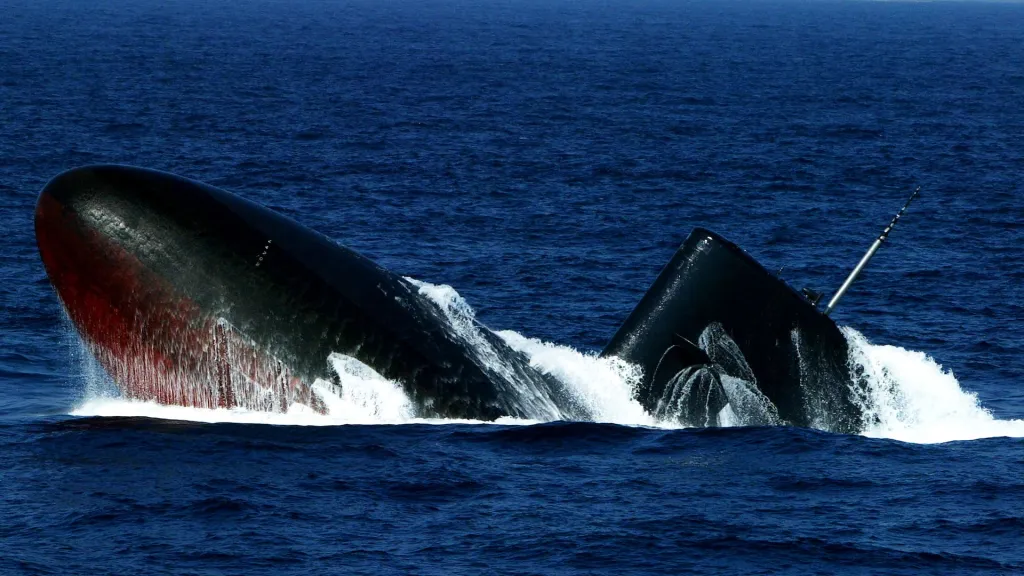
The report follows the recent Pacific deployment of the 3,000-ton Dosan Ahn Chang-ho submarine, which sailed about 14,000 kilometers, or 8,700 miles, from Jinhae through Guam and Hawaii using only domestically developed lead-acid batteries, diesel engines and an air-independent propulsion system.

South Korean officials said the deployment significantly reduced the need for snorkeling operations, in which submarines surface or raise air intake masts to recharge batteries, and demonstrated the vessel’s long-duration underwater operational capability and hull durability.

Officials also said the submarine successfully demonstrated stable operation of its submarine-launched ballistic missile vertical launch system in rough Pacific conditions. The Dosan Ahn Chang-ho class is the world’s first diesel-electric submarine class equipped with vertical launch tubes for submarine-launched ballistic missiles.

Defense experts said the mission simultaneously highlighted the operational limitations of conventional diesel submarines and the strategic advantages of nuclear propulsion.

While diesel-electric submarines must operate at relatively slow underwater speeds to maintain endurance, nuclear-powered submarines can remain submerged for much longer periods and travel underwater at speeds exceeding 40 kilometers per hour, allowing broader operational flexibility, officials said.

The foreign affairs and security publication The Diplomat reported Thursday that South Korea’s pursuit of a nuclear-powered submarine would become “a major test case of non-nuclear deterrence” for a country that does not possess nuclear weapons.

Chung Sung-chang, head of the Korea Nuclear Strategy Forum and a senior researcher at the Sejong Institute, said the submarine under discussion would be a non-nuclear attack submarine that would not carry nuclear weapons.

Chung said South Korea plans to retain the hull design and submarine-launched ballistic missile strike capability proven through the Dosan Ahn Chang-ho program while replacing the diesel propulsion system with a small nuclear reactor.

He said South Korea should first publicly present its nuclear submarine development roadmap before negotiating a bilateral nuclear submarine cooperation agreement with the United States and securing approval from the U.S. Congress.

Chung also said Seoul would need a separate agreement with Washington to secure low-enriched uranium fuel for naval reactors derived from downgraded highly enriched uranium.

Officials are reportedly studying the AUKUS security partnership among the United States, Britain and Australia, under which Australia received access to nuclear-powered submarine technology while remaining within the international nonproliferation framework.

South Korean officials said the success of the Dosan Ahn Chang-ho deployment demonstrated that the country’s technical preparations for a future nuclear-powered submarine program had reached a mature stage, shifting the focus toward diplomatic negotiations and international coordination.

— Reported by Asia Today; translated by UPI

© Asia Today. Unauthorized reproduction or redistribution prohibited.

Original Korean report: https://www.asiatoday.co.kr/kn/view.php?key=20260524010006872

Source link

Nuclear-Powered Trump Class Battleships Will Reverse One Of The Navy’s “Largest Mistakes”: Navy Boss

The U.S. Navy’s near-total abandonment of surface combatants with nuclear propulsion after the end of the Cold War is “one of the largest mistakes” it’s ever made, according to the service’s top officer. Chief of Naval Operations Adm. Daryl Caudle made this remark today while voicing support for the recently announced decision that the future Trump class battleships will be nuclear-powered. He also explicitly highlighted challenges the Navy has faced when it comes to fueling conventionally-powered ships taking part in operations against Iran, something TWZ recently reported on in detail.

Adm. Caudle, as well as Acting Secretary of the Navy Hung Cao and Commandant of the Marine Corps Gen. Eric Smith, testified before members of the House Armed Services Committee today. The focus of the hearing was on the Department of the Navy’s 2027 Fiscal Year budget request. The Navy disclosed that it had decided the Trump class warships will feature nuclear propulsion in its latest long-term shipbuilding plan, which was released on Monday.

Chief of Naval Operations Adm. Daryl Caudle, left, speaks at a separate budget-related hearing before members of the House Appropriations Committee on May 12, 2026. USN

“I know there have been many conversations and questions over the past few days regarding the news that the Trump class battleship will be nuclear powered. And, as you know, Virginia has a long history of nuclear shipbuilding. What specific design plans can you share at this point and can [you] speak to how nuclear power would enable this system to be successful?” Rep. John McGuire, a Virginia Republican and former U.S. Navy SEAL, asked Adm. Caudle directly.

A model of a Trump class battleship. Eric Tegler

“Sir, we walked away from surface nuclear power decades ago, and that was one of the largest mistakes the Navy ever did, and we’re bringing it back,” the Chief of Naval Operations said in response. “We need nuclear-powered surface ships to sustain combat operations with our nuclear-powered aircraft carriers.”

Though a major operator of nuclear-powered submarines, the Navy’s aircraft carriers are currently its only nuclear-powered surface ships. The service previously had a mixture of nuclear-powered surface combatants. This included three one-of-a-kind ships, the cruiser USS Long Beach, the destroyer USS Truxtun (later recategorized as a cruiser), and the frigate USS Bainbridge. There were also two California class and four Virginia class cruisers, the latter not to be confused with the subsequent Virginia class of attack submarines. All of these ships entered service in the 1960s and 1970s. Expensive and complex to operate compared to similar conventionally-powered ships, they were all retired in the 1990s as part of post-Cold War drawdowns across the U.S. military.

A trio of nuclear-powered Navy surface warships sail together in 1964. From left to right, the aircraft carrier USS Enterprise, the cruiser USS Long Beach, and the frigate USS Bainbridge. USN

As Caudle highlighted, the central benefit of nuclear propulsion is functionally unlimited range since naval reactors can operate for decades without needing to be refueled. In the context of modern ships packed with ever-more advanced weapons and other systems, it can also offer an important boost in onboard power generation. As noted, this does come at a cost. Today, Russia is the only country anywhere in the world with a nuclear-powered surface combatant, the Kirov class battlecruiser Admiral Nakhimov. In terms of nuclear-powered surface naval ships of any kind, the French aircraft carrier Charles de Gaulle is the only other example. Russia also has several nuclear-powered icebreakers, but these are operated by the state-run nuclear company Rosatom.

“Imagine what that would have looked like in the Arabian Gulf if I’d had a nuclear-powered battleship there to give the air and defense and fires [sic] power that it could sustain – rotate ships that roll, that need gasoline around it,” Caudle continued today in his response to Rep. McGuire’s question. “So the imperative for this is crucial to develop that level of payload capacity.”

Navy officials have already acknowledged that Iranian attacks on friendly countries in the Middle East in the course of recent operations significantly disrupted established logistics chains. In particular, this impacted how the service delivered fuel to conventionally-powered warships in the region, as you can read more about here.

Threats to fuel supplies would be something the Navy would have to take into account in any future conflict, especially a high-end fight against China across the broad expanses of the Pacific. There are other logistics requirements that nuclear ships do still have in common with their conventionally-powered counterparts, as well, such as food for the crew and fuel for any embarked aircraft. Even with nuclear propulsion, maintenance and other requirements mean that ships cannot stay at sea indefinitely.

One of the US Navy’s conventionally-powered Arleigh Burke class destroyers receives fuel during a replenishment-at-sea operation. USN

“We intend to, with all we can do, use pull-through technologies, [including] things from that we’ve worked on with DDG(X),” the Navy’s top officer added, speaking about the plans for the Trump class specifically. “It will have the SPY-6 radar. It will have the Baseline 10 Aegis combat system. It will pull through, of course, the A1B Ford class reactor plant and all the design that goes with that. The only thing inherently new to it will be the actual hull itself, and so most of the fixtures in it. And I would say the directed energy [weapons] and up gunning, that will also be new.”

Caudle had first shared the A1B reactor detail at another budget-related hearing earlier this week. It was previously known that the Trump class battleship program would leverage prior work done in relation to the now-defunct DDG(X) next-generation destroyer.

Multiple types of laser-directed energy weapons, as well as an electromagnetic railgun, are core elements of the planned armament package on the future Trump class warships. They are also set to be loaded with a mix of nuclear and conventional missiles, including hypersonic types, in several large vertical launch system (VLS) arrays, and have a pair of traditional 5-inch naval guns.

An annotated graphic highlighting various capabilities set to be found on the Trump class design. Note that the mention here of “28 Mk 41 VLS” cells appears to be a typo, as other official information from the US Navy says the ships will have 128 such cells. USN via USNI News

The Navy has previously stated that the battleships, now also referred to as BBGNs, will displace approximately 35,000 tons. This is very roughly three times that of the newest Flight III subvariant of the Arleigh Burke class destroyer. The Trump class vessels are expected to be between 840 and 880 feet long, have a beam (the widest point in the hull) between 105 and 115 feet, and be able to reach a top speed greater than 30 knots, as well.

It is worth noting here that Caudle’s comments today represent a huge change in tone from how he had previously talked about the prospect of nuclear propulsion for the Trump class. Speaking to the press at the Surface Navy Association’s (SNA) main annual symposium back in January, he had notably appeared to downplay the possibility.

“I think it’s a logical question to think, hey, here’s a big capital ship. It’s going to be carrying a lot of load, you know, in places that we don’t necessarily need a strike enforcement air wing as a large ship there that’s in command of a flotilla,” he said at that time. “Wouldn’t it be logical to be nuclear powered? And that brings a tail to the construction of that that [sic] just really fell outside the scope of what we want to do on the speed to get this thing in the water. And so what you trade off with, with persistency that only nuclear power can do, is you end up having, you know, the ability to go produce that — it pushes the battleship into a timeframe that just didn’t meet the operational need of the ship.”

A rendering of a future Trump class battleship. White House/USN

Just last month, former Secretary of the Navy John Phelan had also said making the Trump class ships nuclear-powered was unlikely, citing the need to balance cost and complexity against aggressive schedule demands. Phelan was fired unexpectedly just two days after making those comments. There have been reports that disagreements over plans for the battleships, specifically, as well as other friction within the Trump administration, factored into his dismissal.

“He’s a very good man. I really liked him, but he had some conflict with, not necessarily with [Secretary] Pete [Hegseth], but with some other[s],” President Trump said about Phelan while speaking to the press on April 23. “He’s a hard charger, and he had some conflicts with some other people, mostly as to building and buying new ships. I’m very aggressive in the new shipbuilding.”

BREAKING: President Trump speaks about the firing of Navy Secretary John Phelan:

“He’s a very good man. I really liked him, but he had some conflict, not necessarily with Pete. He’s a hard charger, and he had some conflicts with some other people, mostly as to building and… pic.twitter.com/xJOhYygka4

— Fox News (@FoxNews) April 23, 2026

As it stands now, the Navy still does not expect to order the first Trump class battleship until Fiscal Year 2028 and or see that ship enter service before Fiscal Year 2036. The first example, at least, currently has an estimated unit cost of around $17 billion, which is considerably more than the projected price tag of any of the next four Ford class aircraft carriers.

Even before the nuclear propulsion decision was announced, TWZ had raised numerous questions about the plans for these warships, including their exact operational utility, as well as the costs and risks involved. Caudle’s comments today about leveraging pull-through notwithstanding, nuclear-powered ships are inherently complex and expensive, which are the tradeoffs for the aforementioned boost in capability. A specialized workforce and supply chains are required to build such vessels. Newport News Shipbuilding in Virginia, a division of Huntington Ingalls Industries, is the only yard in the United States currently building surface ships with nuclear propulsion, in the form of new Ford class carriers, all of which have suffered delays.

Enterprise (CVN 80) Construction Update thumbnail

Enterprise (CVN 80) Construction Update


There are two more yards in the country that make nuclear-powered submarines, both of which are already under strain to meet Navy demands. There is a particular need to keep on schedule with the new Columbia class nuclear-powered ballistic missile submarines to avoid any gap in capacity when it comes to the sea leg of America’s nuclear deterrent triad. Additional plans now to supply Virginia class submarines to the Royal Australian Navy, which Adm. Caudle said today he vehemently supports, can only further add to that workload.

The U.S. naval shipbuilding industry, collectively, has other demands to keep churning out conventionally-powered warships like Arleigh Burke class destroyers, as well. This is an industry that has contracted to a worrisome degree, overall, since the end of the Cold War, especially when compared to the completely opposite trend that has been observed in China. Efforts to reinvigorate America’s shipyards, and the continued challenges the Navy is facing in doing so, were key points of discussion at today’s House Armed Services Committee hearing.

Adm. Caudle’s broad statement of support today for a nuclear-powered surface Navy raises the additional question now of whether the service might be interested in expanding this capability beyond the Trump class. Some of the Navy’s prior nuclear-powered surface combatants were derived from conventionally-powered designs. At the same time, any such decision would run up against the same shipbuilding capacity and other questions facing the new battleships.

Just when it comes to the Trump class, the plans for the ships could easily still evolve further, or even come to an end entirely. The timeline laid out now has the battleship program continuing well into the next presidential administration, where the fortunes of a new nuclear-powered surface navy could change dramatically.

Contact the author: joe@twz.com

Joseph has been a member of The War Zone team since early 2017. Prior to that, he was an Associate Editor at War Is Boring, and his byline has appeared in other publications, including Small Arms Review, Small Arms Defense Journal, Reuters, We Are the Mighty, and Task & Purpose.


Source link