US president’s comments came after he was asked why North Korea can have nuclear weapons when Iran cannot.
Published On 30 Sep 202630 Sep 2026
United States President Donald Trump has described North Korean leader Kim Jong Un as “a friend” and played down concerns about Pyongyang’s nuclear arsenal, saying, “as long as I’m around, he’s going to be fine”.
Trump made the remarks in Washington, DC, on Tuesday after a reporter asked him why North Korea could have nuclear weapons but Iran could not.
Recommended Stories
list of 3 itemsend of list
“That’s interesting. You know why? Because you had a different president, and they could have stopped him,” he said, referring to previous US administrations.
“He happens to be a friend of mine, Kim Jong Un, he’s a friend of mine. He likes Trump, doesn’t like a lot of other people. I’m about the only person in the entire world that he likes, and I like him,” he said.
He said North Korea’s nuclear capacity was “pretty large” but “not like us”.
“You know what, as long as I’m around, he’s going to be fine,” he added. “You know why? Because he respects me and he likes me.”
South Korea’s Defence Minister Ahn Gyu-back said last week that its northern neighbour possessed between 80 and 120 nuclear warheads. The figure is significantly higher than Trump’s recent assertion that Pyongyang has 57 nuclear weapons.
Trump is seeking to re-engage with Kim and secure a win on the international stage as the US and Israel’s war on Iran enters its eighth month.
The US president launched the war along with Israel on February 28, saying Iran could not have a nuclear weapon. Iran has denied seeking a weapon, noting it had signed an agreement with world powers in 2015 that curbed its nuclear programme in exchange for sanctions relief. But Trump abandoned the agreement during his first term in 2018.
The US-Israel war on Iran has disrupted global energy supplies, raised fuel costs and hurt Trump’s popularity ahead of the November midterm elections.
Trump held summits with North Korea’s Kim in 2018 and 2019, but diplomacy broke down over US demands that Pyongyang give up its nuclear weapons. Since then, Kim has expanded his arsenal of nuclear-capable missiles and strengthened his diplomatic footprint by aligning with Russia over its war in Ukraine and tightening relations with China.
Trump had earlier said he planned to hold in-person talks with Kim before the end of the year.
America’s nuclear weapons deterrent and how it is controlled is increasingly critical in the face of the rapidly-expanding arsenals across multiple adversaries. A new fleet of E-4C nuclear-hardened survivable airborne operations center aircraft is now in development, as is the U.S. Navy E-130J, which will provide next-generation communications with nuclear ballistic missile submarines deep beneath the waves. Focus is also turning to a mission that’s dedicated to emergency communications with the U.S. nuclear forces in times of crisis, a role known as Operation Looking Glass, which is also poised for updating under a program dubbed Looking Glass-Next.
The comprehensive modernization of America’s nuclear strike muscle involves three major elements – new B-21 Raider stealth bombers, the LGM-35A Sentinel intercontinental ballistic missile (ICBM) program to replace Minuteman IIIs, and new Columbia-class nuclear ballistic missile submarines. A fourth facet that ties all these new elements, as well as existing ones, together is the next generation nuclear command, control, and communications (NC3) architecture. It securely connects nuclear weapons systems to decision-makers. Without it, America’s nuclear deterrent isn’t a deterrent at all.
A USAF E-4B assigned to the 595th Command & Control Group at Offutt Air Force Base, Nebraska. USAF/TSgt Codie Trimble
America’s nuclear modernization is set against a backdrop of rapidly-developing nuclear strength across adversaries and pacing threats, which could threaten not only U.S. fighting forces, but also the existing aging NC3 infrastructure. This could impede the collective responsiveness and effectiveness of the American nuclear enterprise. For example, a coordinated attack on NC3 could degrade the National Command Authority chain, which could prevent communications that are necessary to conduct a retaliatory strike.
If fixed underground command posts are targeted and rendered inoperable, the current strategy would involve turning to a set of highly-survivable air assets that are designed to be on hand to execute emergency war orders. This includes the U.S. Air Force’s E-4B National Airborne Operations Center (NAOC) “Nightwatch” aircraft, and the E-6B Mercury that is operated by the U.S. Navy.
A major recapitalization effort is already underway for the NAOC E-4Bs, which are being superseded under the E-4C Survivable Airborne Operations Center (SAOC) contract. It is being led by defense contractor SNC. The new SAOC aircraft are based on the far more modern 747-8i, and are planned to have a much broader mission set than the four E-4B Nightwatch types they are set to replace, as you can read more about here.
The Navy’s E-6B Take Charge and Move Out (TACAMO) aircraft have a primary role of strategic connectivity with the ballistic missile submarine fleet. These converted 707s also execute another mission known as the Airborne National Command Post (ABNCP), more recently renamed “Looking Glass.” For this they are manned by U.S. Air Force missileers and U.S. Strategic Command (USSTRATCOM) battle managers who are responsible for running the airborne nuclear NC3 systems.
An E-6B Mercury flies over U.S. and UK submarines during a joint exercise. U.S. Navy
The joint service team on Looking Glass mirrors some operations performed by USSTRATCOM’s underground command posts, and a small portion of what the NAOC executes. The Looking Glass mission is really focused on performing an airborne backup mission solely for USSTRATCOM to ensure another means of communicating with fielded nuclear bombers, their assigned tankers, ICBMs and deployed nuclear submarines. It is best known for its ability to supply airborne communications connectivity to the USAF’s ICBM force on the ground and can command remote launches of those weapons if necessary.
Additional NC3-related modernization is coming on the heels of SAOC, with the new E-130J set to assume the Navy’s TACAMO role from the ageing E-6Bs, assuming strategic connectivity for nuclear ballistic submarines. It means that at some point roughly two-thirds of the E-6 current mission will go to the new E-130J aircraft – raising the question of what will fulfill the critical Looking Glass mission.
Since the E-130J is not planned to take on the Looking Glass role, the USAF is in the early stages of what’s dubbed Looking Glass-Next (LG-N), which presents the future pathway for USSTRATCOM’s mobile contingency operations. This could take on a number of forms, including NC3 communications functions being increasingly moved to space-based assets and more distributed operations across the ground, although an air platform is still likely to form a major part of the overall capability.
The need to modernize America’s NC3
Brian Golden is a retired USAF colonel who intimately understands nuclear command and control (NC2) and the associated NC3 equipment and processes from both a service and industry perspective. As a subject matter expert for SNC, he draws on his extensive experience as a former E-4B NAOC commander and he commanded much of the USAF’s multi-domain NC3 systems, including the Airborne Launch Control System onboard the current E-6B Looking Glass. He is also extremely familiar with all the nation’s continuity of government and continuity of operations missions for both Congressional and executive branches of the U.S. government.
“Everyone referred to the nuclear triad as the platforms that were controlled through the NC3 architecture,” Golden told TWZ during a detailed discussion. “Those platforms received their messages and executed their missions. But this isn’t just about that platform triad. The U.S. nuclear enterprise has four primary pillars, and nuclear command, control, and communications is a critical part of it. Without a robust NC3 system, it’s like having a brand new Bugatti Veyron but without the keys! It looks awesome on the driveway, but you can’t drive it.”
Secretary of War Pete Hegseth working aboard an E-4B Nightwatch. USAF/SrA Madelyn Keech
Golden explains that the current NC3 enterprise consists of a series of exquisite systems that are extremely reliable, but that are in need of modernization to stay ahead of the steepening threat curve, and stay in front of supply chain constraints. “What we have currently is very reliable, robust, and very survivable, but it can be difficult to maintain some of our legacy systems. Additionally, as threats evolve we must ensure our communications pathways also evolve.
“Our nation’s industrial base engineers figured out extremely robust methods of nuclear communications when these systems were fielded. Looking at the overall command and control [NC2], and then the NC3 communications pathways, any new systems that we introduce must be sustainable, scalable and modular.”
The U.S. nuclear enterprise is facing greater threats than ever with adversaries challenging U.S. nuclear infrastructure in multiple domains: space, cyber, ground, air. Because of this, NC3 demands a continuous process of improvement.
Going forward, the NC3 enterprise will likely need to integrate upgraded proven legacy systems with all-new technology. “Sometimes the physics of radio waves may dictate the need for a legacy approach with upgraded systems, such as communicating with a submarine that’s very deep in the ocean.”
Golden’s view is that NC3 requires a layered, open architecture approach as modernization is evaluated. “Applying those same physics and then adding new layers such as artificial intelligence may determine a better way of doing things.”
Upgrading to SAOC
Golden points to the SNC-led E-4C SAOC program as a clear example of critical NC3 modernization, while emphasizing that the NC2 mission is far from being the primary role of the E-4B and its forthcoming successor. “Nuclear command and control is only a fraction of what the current NAOC does and what the future SAOC will do for our nation and our allies and partners.”
An E-4B Nightwatch at Yokota Air Base, Japan. USAF/A1C David S. Calcote
The E-4B initially featured just a handful of communications systems, which have grown over time, leading to what Golden calls the “King Kong” of communication capabilities today. The E-4 is not a battlefield communications platform, its mantra is all about supporting Presidential-level requirements across the board. It does possess an extensive NC3 suite, but it also serves the White House Communications Agency (WHCA) and the Department of Homeland Security, through the Federal Emergency Management Agency (FEMA), in many other crisis roles. Another mission the E-4B fleet performs is to safely transport the Secretary of War on trips within the United States and abroad.
The E-4B NAOC and Looking Glass are two complementary tiers of the same survivable architecture. The NAOC (and future SAOC) is designed to anchor national-level decision-making and government continuity from the very top, while Looking Glass provides USSTRATCOM with the dedicated airborne command and battle-management capacity required to direct forces. Both roles are critical and non-negotiable.
An artist’s rendition of the new E-4C SOAC. SNC
“The new E-4C SAOC, like the E-4B before it, will deliver an expansive communications suite and increased capacity supported by a larger fleet,” Golden explains. “SAOC is built to ensure the President and national leadership can direct the entire country through any crisis. Looking Glass supports an equally vital and highly specialized mission. It is dedicated to USSTRATCOM’s operational needs, connecting directly to bombers, ICBMs and submarines. Attempting to merge these unique missions on a single airframe would compromise the unique, essential role that each was created to perform.”
Looking Glass-Next
The Looking Glass role and the platform that fulfills it is not classified as a national-level mission. As Golden alluded to earlier, it’s not assigned to the Chairman of the Joint Chiefs or to the Secretary of War. It’s exclusively assigned to USSTRATCOM; however, without the Looking Glass mission being upgraded soon, America has a gaping hole in its nuclear architecture.
An E-6B Mercury flying over Colorado. USAF/Greg L. Davis
The commander of USSTRATCOM is the customer and ultimately the decision-maker when it comes to Looking Glass-Next, and the USAF has been tasked by the Secretary of War to develop and field it. SNC is looking at several options for the requirement, with some sort of air platform at its core, which Golden refers to as an “E-6C.” He endorses that the current E-6B is one of the “cogs in the wheel that has to be replaced,” but adds that this doesn’t mean the next-generation Looking Glass is just an aircraft.
“At SNC, we have significant expertise and experience with mission system integration,” says Golden, adding that SNC is evaluating what he calls “aggressively creative options,” for the modernization requirement. He further noted that the modern threat is driving a requirement for Looking Glass-Next to be very difficult to target and must be dispersed.
“Having an aircraft as the only option for this USSTRATCOM mission is a legacy mindset,” Golden states. “We have advanced multi-domain capabilities, including numerous space capabilities available through the Sierra Space Corporation. Future mission resilience requires a creative and integrated approach.”
“We believe a creative approach to provide NC3 options will ensure a robust, reliable, survivable and cost-effective solution.”
Golden endorses this approach to creativity and development and indicated that SNC will continue to inform and respond to the ongoing Looking Glass-Next requests for information that may result in a future program.
One of the 747-8is that is being modified by SNC in Dayton, Ohio, to become an E-4C SAOC. SNC
“SNC has leaned heavily into the nuclear command, control, and communications architecture and it’s a natural fit for us, building on our work with the Department of War and our subcontractors on the E-4C SAOC. Our Looking Glass-Next responses and inputs will leverage relevant work and experience gained from SAOC, but we are also focused on being creative. We’re small enough to be agile, but big enough to deliver. That’s why we think we’re very well positioned in the NC3 space.”
The majority of SNC’s work on the E-4C SAOC is being completed at the NC3 Center of Excellence, housed in the Aviation Innovation and Technology Center (AITC) in Dayton, Ohio.
Golden believes the timing couldn’t be better to deliver bold and creative NC3 solutions. “The USAF is already asking the right questions, and industry is really able to innovate, which will result in a transformational era for nuclear command, control and communications.”
NEW YORK CITY: A UN Security Council committee tasked with overseeing sanctions on Iran remained blocked for a fourth consecutive quarter on Thursday.
Council members traded accusations over the panel’s inertia, against a backdrop of intensifying US-Iran hostilities and a landmark decision by the UN’s nuclear watchdog to refer Tehran back to the council for the first time in 20 years.
The 1737 Sanctions Committee has not met in the year since it was reestablished with the backing of most council members, and no report on its activities was presented during Thursday’s session after China and Russia once again blocked it.
The impasse has also stalled the appointment of experts to a panel, the mandate for which is due to expire on Sept. 27, that is intended to support the sanctions-monitoring work of the committee.
The dispute dates back to August 2025 when France, Germany and the UK triggered a so-called “snapback” mechanism under the 2015 Joint Comprehensive Plan of Action, commonly known as the Iran nuclear deal, to reimpose pre-2015 UN sanctions on Tehran.
China and Russia dispute the legality of that move, arguing that all sanctions lapsed on Oct. 19, 2025, with the scheduled expiration of the deal, and so the council’s consideration of the Iranian nuclear file was effectively ended.
Against this backdrop of an unresolved procedural fight, the Security Council session on Thursday was dominated by more recent developments: the International Atomic Energy Agency’s formal referral of Iran to the Security Council and the General Assembly this week; and the continuing military exchanges between Iran and the US.
The agency’s board of governors voted 23-3 on Wednesday to refer Iran over its noncompliance with international nuclear safeguards, the first such referral in two decades. China, Niger and Russia voted no and eight countries abstained.
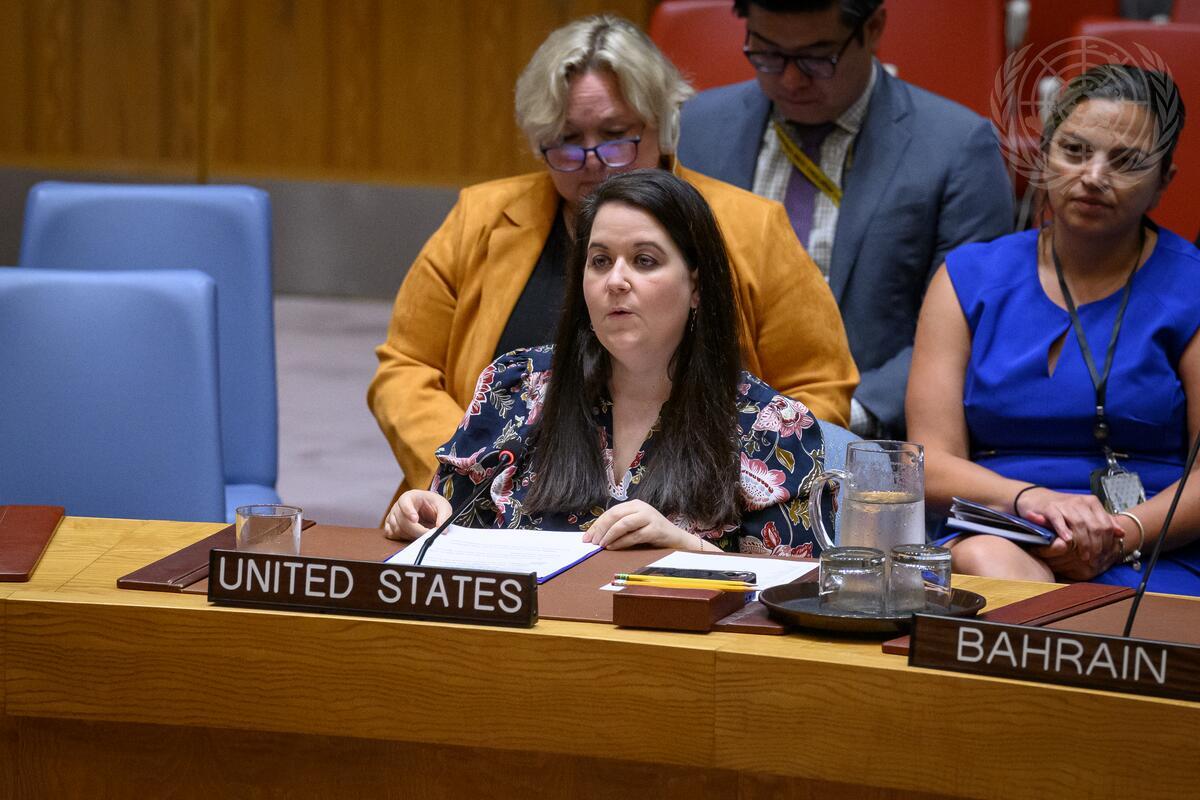
Ambassador Jennifer Locetta, the US alternate representative for special political affairs, told the council that the IAEA “has not received information from Iran regarding the status of its declared nuclear materials or facilities” and has been denied access to carry out verification procedures.
The agency’s director general, Rafael Mariano Grossi, has again urged Tehran to engage constructively with the process, she added. Locetta dismissed Iranian claims that inspections were being blocked as a result of security concerns, noting that “Ukraine has been a worse and more constant war zone” and yet IAEA inspectors had still been able to work there throughout the conflict.
Washington, she said, would “look to partners in the coming days to weigh options” for strengthening the sanctions regime.
China’s deputy permanent representative, Sun Lei, voted against the meeting’s agenda and placed the blame for the deteriorating situation squarely on Washington. He said the US strikes and campaign of “maximum pressure” on Iran were the “primary causes” of the crisis.
A memorandum of understanding between the US and Iran in June was “undermined shortly after it took effect” by renewed military clashes, he added, and Washington had since “intensified unilateral sanctions” and “launched a new round of military strikes” against Tehran.
Beijing, he said, opposed further use of force and called for a return to efforts to reach a political and diplomatic settlement based on “equality and mutual respect.”
France’s ambassador to the UN, Jerome Bonnafont, said Iran’s stockpile of more than 440 kilograms of uranium enriched to 60 percent had “no credible civilian justification” and was sufficient for about 10 nuclear devices.
He cited the latest report by Grossi as saying the situation “raises an issue of proliferation and should be addressed with the greatest urgency.”
France backed a US-drafted resolution for the renewal of the expert panel’s mandate, Bonnafont added. He called for the full reopening to international shipping of the Strait of Hormuz, and offered a French naval presence there, alongside the UK, to help secure freedom of navigation.
Pakistan’s permanent representative, Asim Iftikhar Ahmad, told the council that the “upsurge of violence in the Middle East in the last few days” was “unsettling for the prospects of peace,” and said Islamabad was engaged in back-channel diplomacy to encourage de-escalation.
He urged “all sides to exercise restraint” and voiced concern over the continuing divisions within the council.
A memorandum of understanding between Washington and Tehran in June, which paused hostilities and set a 60-day window for a final nuclear agreement, expired on Aug. 17 without any deal.
The Strait of Hormuz remains effectively closed to international shipping, attacks on vessels have continued, and the US has revoked sanctions waivers on Iranian oil exports. A Security Council vote on renewal of the Iran sanctions expert panel’s mandate is scheduled for Sept. 17.
Question about the Clippers’ attempt to evade the NBA salary cap: Did they really think they could get away with it?
One rule I’ve developed in years of writing about financial scandals is that, as bad as a scheme appears at first, it’s more likely than not that the facts will turn out to be nastier than they appeared at first.
Case in point: The scandal swirling around the Los Angeles Clippers of the National Basketball Assn. and their billionaire owner, former Microsoft Chief Executive Steve Ballmer.
The story was initially broken one year ago by sports podcaster Pablo Torre, who reported on a suspect endorsement deal between a sustainability company named Aspiration and All-Star forward Kawhi Leonard that smelled like an attempt to circumvent the NBA’s strict salary cap. (Torre won a Pulitzer Prize for his reporting.)
I have no idea why we’d do this.
— Aspiration executive questioning its “endorsement” deal with Kawhi Leonard
By Sept. 2, when the NBA issued a series of nuclear sanctions against the team and Ballmer, it had become much bigger. The team, according to an investigative report the league released, actually orchestrated endorsement deals for Leonard with four companies that had been angling for business arrangements with the team, not just one, and took steps to hide the deals from public view.
Because of the extent to which these deals violated league rules and perhaps because the Clippers are repeat offenders (they were fined $250,000 in 2015 for a similar endorsement scheme involving then-free agent DeAndre Jordan), the league hit the team with its maximum penalties.
Get the latest from Michael Hiltzik
Commentary on economics and more from a Pulitzer Prize winner.
By continuing, you agree to our Terms of Service, which include arbitration and a class action waiver. You agree that we and our third-party vendors may collect and use your information, including through cookies, pixels and similar technologies, for the purposes set forth in our Privacy Policy such as personalizing your experience and ads.
It fined the team $30 million and took away its first-round draft picks for five years, 2029-2033 (the team already had ceded its first-round picks for the next two years in trade deals). It suspended Ballmer from any league or team activities for one year and imposed a one-year suspension on Gillian Zucker, the team’s president of business operations, and a six-month ban on Lawrence Frank, its president of basketball operations.
The Clippers said they “vehemently reject” the accusations and called them the product of a “heavily biased investigation.” They said they would appeal the sanctions, though it’s unclear how they could do that.
Leonard, who appears to be on his way back to the Toronto Raptors, from whence he came to the Clippers in 2019, issued a statement accepting “full responsibility for lapses in judgment by people within my inner circle.” That’s an apparent reference to Dennis Robertson, his business manager and uncle, who the investigators said was a key figure pushing the Clippers to find “off-court income” for Leonard.
The report released by the NBA’s investigators at the law firm of Wachtell, Lipton, Rosen & Katz portrays Ballmer and the team as treating the league’s salary cap rules not as strict mandates, but as obstacles to be evaded, like traffic cones. And it describes efforts at subterfuge that seemed to reach a Gilbert & Sullivan-esque level of absurdity.
Ballmer is called out to an extent that one almost never sees when applied to the millionaires and billionaires who own most professional sports teams. That’s even more remarkable given his status in the NBA: With a reported net worth of more than $150 billion, he is the richest team owner by an enormous margin, outranking the next-place owners, the Adelson family, owners of the Dallas Mavericks, by about $115 billion.
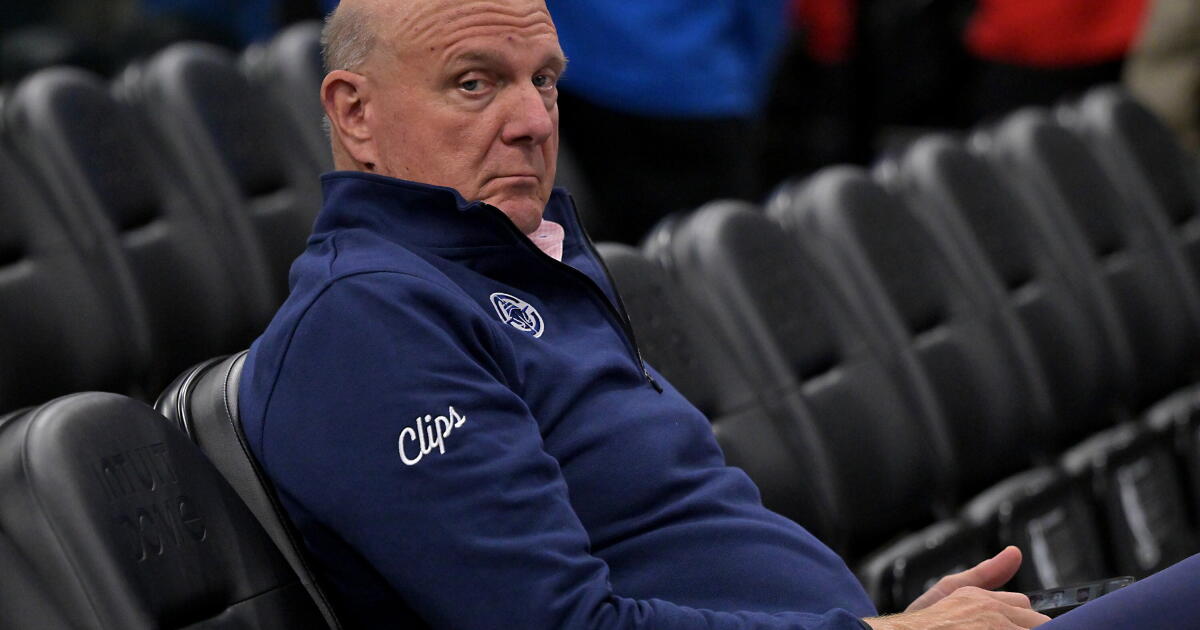
The other NBA owners were reportedly stunned by the sheer arrogance of the Clippers’ behavior. That’s saying something, since one would expect that those in the billionaire class have had plenty of rannygazoo paraded past their eyes in the course of their business careers. Ballmer, who can often be seen bouncing around like a hyper-caffeinated party animal in the Clippers’ home arena, Intuit Dome, is no shrinking violet — he was known as a ferociously hard-charging, hands-on leader at Microsoft. The NBA faults him for being “knowingly” engaged in the team’s dealings with Leonard and creating its anything-goes culture.
The NBA values its salary cap as a key to a competitive balance, enabling even mid-market teams to reach the Finals — over the last 10 seasons, eight teams have reigned as champs. Its rules bar teams from initiating endorsement deals or other such arrangements for players by interpreting them as an underhanded breach of the cap; if teams are approached by a potential endorsement partner for a player, they can refer the partner to a player’s representatives but can’t participate in the dealmaking. They’re also required to report any such overtures to the league. The Clippers violated those rules, the investigators say.
The investigators say the team tried to circumvent the initiation clause via emails Zucker sent to three companies in 2020, implying that she was responding to their requests for introductions to Leonard.
The investigators found “no documentary evidence” that the companies genuinely initiated the requests. They viewed the emails merely as efforts to “create the appearance” that the Clippers were complying with the rules. The companies were Boingo, a wi-fi company at which Zucker’s husband was then chairman; Daktronics, a maker of scoreboards and video displays; and Lockton, an insurance brokerage.
All three were seeking to launch business relationships with the Clippers. The investigators asserted that the team implied to them that participating in its scheme to make illicit payments to Leonard by signing him to endorsement deals would help them win the contracts. They also found that the Clippers essentially assured the companies that it would cover their payments for the endorsement deals via their other contracts.
The investigators called these multi-year, multimillion-dollar endorsement deals, totaling $18 million, “peculiar.” None of the companies had ever signed an endorsement deal “of remotely the same financial magnitude” as these, nor have they done so since.
None of the deals was publicly announced, even though the whole point of signing a pro player to represent your company is to shout it from the rooftops. In any case, Leonard was nothing like a big, popular star—the investigators charitably referred to his “relatively insubstantial endorsement profile.” That hardly mattered, since the deals didn’t require Leonard to actually do anything for the money.
The key deal was with Aspiration, which was guided by the Clippers into paying Leonard $48 million over four years. When Joseph Sanberg, Aspiration’s co-founder and a board member, presented the deal to top executives, they were dumbfounded. “I have no idea why we’d do this,” one wrote in an email, according to the investigators.
But Sanberg assured them that the Clippers would adjust their contract with Aspire to cover the expense. Seeing that the deal was “cashflow neutral,” as an executive observed, they agreed.
Inside the Clippers’ front office, the contract for Aspiration to provide environmental services was seen as “super shady,” according to a text from one executive to another cited in the report.
Ballmer maintained in at least one interview that the endorsement deal was initiated by Aspiration: “They were off to the races on their own,” he told a television interviewer. “We weren’t involved.”
In fact, the investigators say, the Clippers initiated the contact with Aspiration, put the firm in touch with a business agent who was already a team contractor, and provided the agent with proposed deal terms. The investigators found that the endorsement deal was such a departure for Aspiration that Sanberg needed to be educated about what it should require from Leonard in return for his fees. Sanberg “doesn’t really know what to ask for,” the agent told his associates.
Ballmer maintains that he was the victim in this arrangement. He points the finger at Sanberg, who he says enticed him into investing $60 million in his failing firm, thereby causing him “reputational harm.” But Sanberg might be viewed as a target of convenience, given that he pleaded guilty last year to federal fraud charges associated with the collapse of Aspiration and has been sentenced to 14 years in prison. (The NBA investigators told the court in a pre-sentence letter that Sanberg “substantially assisted our investigation”—though in the investigative report they said they “remained cautious in relying on Mr. Sanberg’s information” unless it was “corroborated by other evidence.”)
Where does this leave the Clippers? Nowhere good. Ballmer’s acquisition of the team in 2014 was seen as a major step toward ending its years-long record of futility, dating to its origin as the Buffalo Braves in 1970. The team still has never played in the NBA Finals. Leonard hasn’t lived up to expectations — injuries have kept him off the court for nearly half of his games as a Clipper, as my colleague Mirjam Swanson notes.
Basketball mavens see the NBA sanctions as condemning the Clippers to as long as 10 more years in John Bunyan’s Slough of Despond. For a brief moment, Ballmer got Southern California fans excited about the team. Ten years from now, will anyone even remember they exist?
UN watchdog says Syria ‘failed to report nuclear material, facilities and activities’ under Bashar al-Assad’s rule.
Published On 2 Sep 20262 Sep 2026
The United Nations nuclear watchdog has confirmed that Syria tried to construct a nuclear reactor in the eastern province of Deir Az Zor under ousted former President Bashar al-Assad.
The International Atomic Energy Agency (IAEA), in a confidential report seen by news agencies on Tuesday, said it visited several sites in Syria in August and carried out verification work.
Recommended Stories
list of 4 itemsend of list
Based on observations at the Deir Az Zor site, the agency said it confirms “that the cooling infrastructure which has now been uncovered is consistent with that of a nuclear reactor”. The agency said it would continue to monitor the activities at the site “as the excavation work progresses”.
Syria was believed to have operated an extensive undeclared nuclear programme under al-Assad that included a nuclear reactor built by North Korea in Deir Az Zor.
The site only became public knowledge after Israel launched air strikes in 2007 that destroyed the facility. Syria later levelled the site and never responded fully to the IAEA’s questions about it.
Israel is believed to have its own undeclared atomic weapons programme that makes it the only country in the Middle East with nuclear bombs. Israel neither confirms nor denies having atomic weapons.
Syrian Foreign Minister Asaad Al-Shaibani speaks during a joint news conference with Rafael Grossi, director general of the International Atomic Energy Agency (IAEA), in the former presidential Tishreen Palace in Damascus, Syria, August 18 [Mohamed Al Rifai/EPA]
Following al-Assad’s removal in early December 2024, the new government agreed to give IAEA inspectors access to suspected former nuclear sites.
The agency took samples at the site in 2024 and reported last year that they contained uranium particles.
In its Tuesday report, the IAEA said it was also able to “establish that the former Syrian authorities had failed to report nuclear material, facilities and activities”.
Besides the nuclear reactor under construction at Deir Az Zor, the IAEA listed a fuel fabrication plant, where the nuclear fuel for the reactor was manufactured, and a location where the nuclear fuel, as well as uranium scrap and waste, were stored.
During the visit to Syria, IAEA Director General Rafael Grossi and a team of senior inspectors also visited a previously undeclared site.
The new Syrian administration notified the agency of the site’s existence in a July 17 letter and invited the IAEA “to cooperate with the Syrian authorities in the inspection and verification of the site and of any nuclear material to be potentially found”.
The IAEA said in its report that this new site contained “natural uranium metal in the form of fuel rods with cladding”.
The agency verified the material and confirmed “the presence of around 73 tonnes of natural uranium metal”. The agency reported that “all of this nuclear material is currently subject to Agency containment and surveillance measures”.
The new Syrian authorities have also expressed an interest in developing a civilian nuclear energy programme and said any nuclear material found in the country would remain in Syria’s custody under international safeguards.
The IAEA said lack of information and access to facilities to verify Iran’s nuclear material is a proliferation concern.
Published On 1 Sep 20261 Sep 2026
The International Atomic Energy Agency (IAEA) has called for “utmost urgency” to address the lack of access to Iran’s nuclear sites.
In a quarterly report seen by news agencies on Tuesday, the United Nations nuclear watchdog labelled its “lack of information about this nuclear material and access to facilities to verify it is a matter of proliferation concern”.
The US has claimed preventing Iran from acquiring a nuclear weapon – an ambition that Tehran continues to deny – as the motivation for the war that it launched in March. However, Tehran has been successful in shifting the focus of the hostilities to control of the strategic Strait of Hormuz waterway.
In particular, the IAEA report raised concerns over the lack of access to the Isfahan plant, which was targeted several times by the US and Israel over the past year or so.
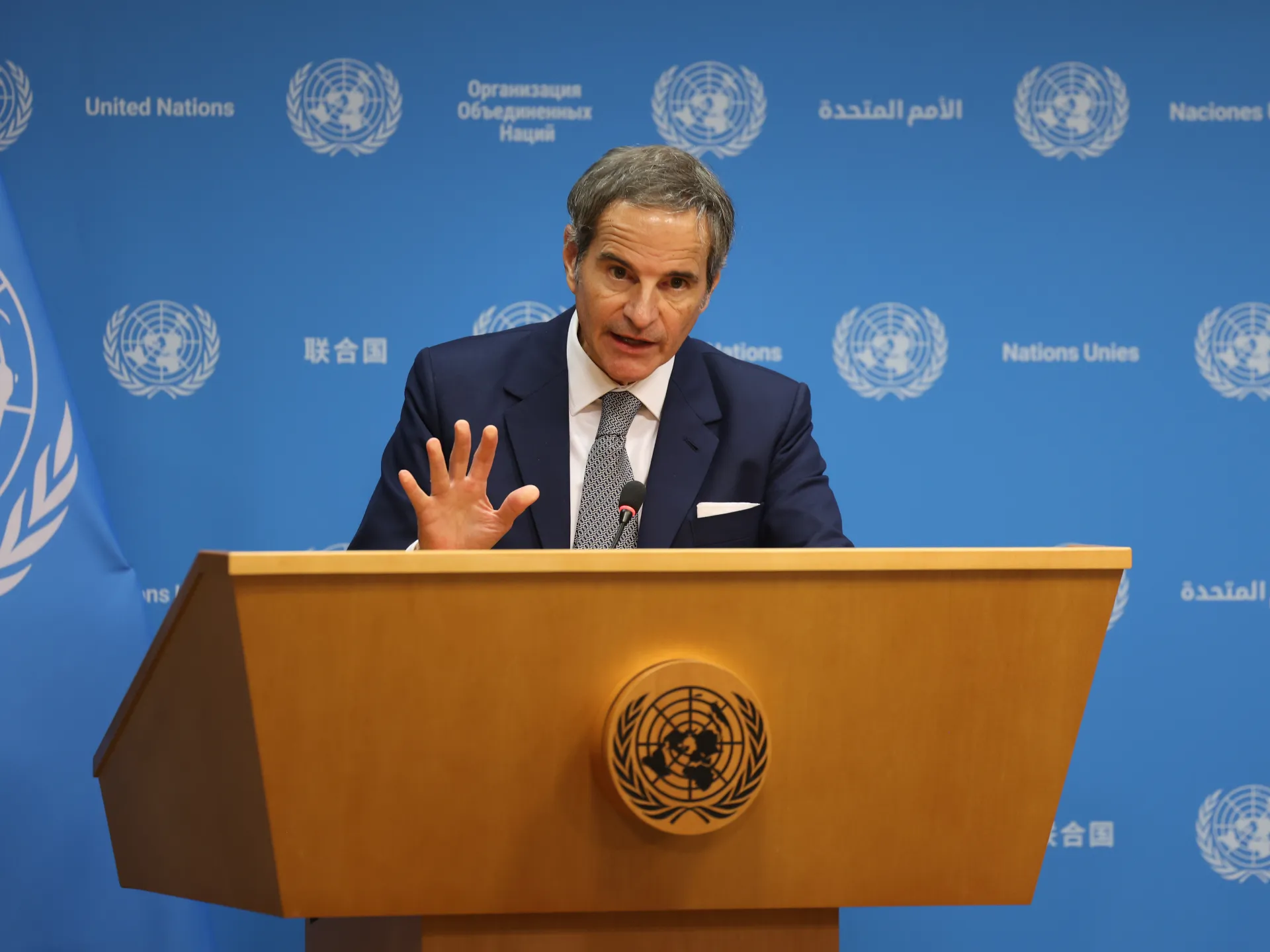
In the report, IAEA Director General Rafael Grossi expressed his “conviction that the long-standing problems and recurrent crises surrounding these issues must be resolved through a long-lasting, verifiable diplomatic agreement”.
However, Iran has said that access to the sites that have been struck by military action must be arranged via special arrangement.
The head of Iran’s Atomic Energy Organization, Mohammad Eslami, said on August 26 that the IAEA “cannot seek to inspect these centres until it develops specific criteria and protocols for inspecting sites targeted by military attacks”.
Tehran suspended cooperation with the UN nuclear watchdog following US and Israeli attacks on Iran in June 2025 that included strikes on nuclear sites before saying in September 2025 it would allow the UN agency’s inspectors to return.
However, access to the nuclear sites that have been bombed has not yet been granted. Despite US President Donald Trump having claimed last year that the US had destroyed the facilities and crippled Tehran’s nuclear programme, Iran’s stores of enriched uranium remain unaccounted for.
Tehran has repeatedly denied any military ambition linked to its nuclear programme, insisting on its right to the technology for civilian purposes.
However, the IAEA, whose latest report will be discussed at its board of governors meeting from September 21-25, has reported in the past that the level of Iran’s enrichment of its uranium reserves is well above that needed for civilian purposes, although neither is it at the level of weapons grade.