Nuclear Weapons

Trump puts onus on Iran’s authorities as they project hardened stance | Conflict News

Tehran, Iran – Iran’s authorities and state media project that they are less interested than before the war in negotiations with the United States if they go beyond their accepted terms, as mediated talks failed to materialise in Pakistan.

Foreign Minister Abbas Araghchi met senior Pakistani officials in Islamabad on Saturday and left for Oman, to be later bound for Russia. The top diplomat, who was not joined by Parliament Speaker Mohammad Bagher Ghalibaf like in a previous round of negotiations earlier this month, said he was “yet to see if the US is truly serious about diplomacy”.

Recommended Stories

list of 3 itemsend of list

Envoys Steve Witkoff and Jared Kushner had been expected in Pakistan after the White House said Iran asked for a second round of direct negotiations, but US President Donald Trump cancelled the trip and said, “we have all the cards, they have none” while reiterating his claim about “infighting and confusion” among Iran’s leadership.

“If they want to talk, all they have to do is call!!!” Trump wrote in an online post, continuing to put the onus on Iran’s leadership.

Amid a state-imposed near-total internet shutdown in Iran, nearing two months, officials and the supporters of the Islamic Republic emphasise that they are united in opposing any concessions to Trump.

The US president said earlier this week he was in “no rush” to reach an agreement with Iranian leadership, whom he claimed, without evidence, were “fighting like cats and dogs” among themselves.

Since Trump highlighted the perceived fractures, military, security, judiciary and government authorities in Iran have been releasing synchronised messages with near-identical wording to proclaim absolute unity.

The messages, circulated through state media and even using similar graphics and fonts but with different colours, claim that everyone in the country is “revolutionary” and exercises “complete obedience” to Supreme Leader Mojtaba Khamenei.

The authorities also claim that more than 30 million people – a third of Iran’s total population – have registered in a state-run campaign to express readiness to “sacrifice” their lives if necessary, but they have not provided any documentation to prove this.

The Khatam al-Anbiya Central Headquarters of the Islamic Revolutionary Guard Corps (IRGC) said on Saturday afternoon that armed forces would retaliate against the US if it continues its “blockade, banditry and piracy” in Iran’s southern waters.

“We are prepared and determined to monitor the behaviour and movement of the enemies in the region and maintain management and control of the strategic Strait of Hormuz, and to inflict more severe damages on the American-Zionist enemies in case of another aggression,” read its statement.

The IRGC on Saturday took a state television presenter to broadcast near two vessels seized days earlier in the strait to report that Iran exercised “total control” over the waterway.

Police officers stand guard behind a barricade near Serena Hotel, as Pakistan prepares to host the U.S. and Iran for the second round of peace talks, in Islamabad, Pakistan, April 25, 2026. REUTERS/Asim Hafeez
Police officers stand guard behind a barricade near Serena Hotel, as Pakistan prepares to host the US and Iran for the second round of peace talks, in Islamabad, Pakistan, April 25, 2026 [Asim Hafeez/Reuters]

Iranian authorities continue to call on their supporters, including paramilitary forces, to take to the streets every night in order to maintain control.

In a rally in downtown Tehran on Friday night, Meysam Motiei, a prominent state-backed religious singer with links to the supreme leader’s office, told the crowds that anyone stuck in factional infighting during times of war “has not grown up yet”.

“If anyone from any group or faction, especially in the name of being a revolutionary, tries to disturb the unity of the people, they will get a slap in the face by the people,” he asserted.

But in ultraconservative Mashhad in northeast Iran, where a shrine considered holy for Shia Muslims is located along with powerful religious and economic foundations, some were still preaching aggressively against the possibility of former reformist and moderate leaders retaking power.

“They have instructed us to keep unity with incumbent officials, not these two people,” a speaker told a gathering crowd on Friday night in a clip shared by state-linked media, in reference to former President Hassan Rouhani and his foreign minister, Mohammad Javad Zarif.

“We are not afraid of B-2s and B-52s; we are afraid of dishonourables who have no concern for the homeland. Wherever Trump makes a mess, Zarif comes and blabbers away,” he said, about the diplomat who led nuclear talks that led to a now-expired landmark accord with world powers in 2015.

Iran’s judiciary continues to execute dissidents, and on Saturday announced the hanging of Erfan Kiani, who was arrested during the nationwide protests in January when thousands were killed.

The judiciary described him as “Mossad’s hired knife-wielder” and said he was accused of destroying property, arson and more in downtown Tehran.

Iranian Foreign Minister Abbas Araqchi meets Pakistan’s Army Chief, Field Marshal Asim Munir
Iranian Foreign Minister Abbas Araghchi meets Pakistan Army Chief Field Marshal Asim Munir, in a location given as Islamabad, Pakistan, released April 25, 2026 [Seyed Abbas Araghchi via Telegram/Handout via Reuters]

No nuclear talks?

Iranian state media reports indicate that the US naval blockade of Iran’s ports is undermining the ceasefire extended by Trump and allowing the more hardline voices in Tehran to come out on top.

The Tasnim and Fars news agencies, affiliated with the IRGC, argued against allowing any nuclear negotiations to take place with the US, even though Trump and Israel’s Prime Minister Benjamin Netanyahu started the war with the predominant goal of preventing a nuclear-armed Iran. Tehran has consistently stressed that its nuclear programme is peaceful, although some Iranian leaders have called for the development of a bomb.

“The negotiations with the US are strictly to end the war, and Iran does not consider the nuclear issue to be part of the talks,” Tasnim said, claiming that time was not on Washington’s side due to the tumult in global markets resulting from the war.

Khamenei has not directly commented on more negotiations, but Ali Khezrian, another representative of Tehran in the hardline-dominated parliament, told state media on Thursday that Khamenei was “opposed to any extension of negotiations” under threats from the US and Israel.

Israel’s Defence Minister Israel Katz earlier this week adopted Trump’s apocalyptic messaging, and said armed forces are awaiting a greenlight from the US to “return Iran to the age of darkness and stone by blowing up central energy and electricity facilities and crushing national economic infrastructure”.

There are currently three US aircraft carriers and their supporting vessels in the Middle East region, according to the US military, which marks the first time this has happened since the buildup to the 2003 invasion of Iraq.

But Mahmoud Nabavian, a senior black-turban cleric and hardline member of parliament who was a part of the large Iranian delegation in the first round of talks, said it was a “strategic mistake” to even include the nuclear issue.

He told state media that this allowed the US to raise demands like a 20-year suspension of enrichment, and shipping Iran’s buried high-enriched uranium abroad.

“From now on, entering any negotiations with the US is pure damage and has no interest for the Iranian nation,” he said earlier this week, adding that oil sales were providing the government with a “full hand”.

Mohammad Saeedi, the Friday prayer imam of ultraconservative Qom, located south of Tehran, said in reference to the US that it would be “meaningless and unfair to sit down behind the negotiating table with a symbol of corruption”.

Iranian flags with photo of mojtaba
Women hold Iranian flags and a portrait of Supreme Leader Ayatollah Mojtaba Khamenei during a state-organised rally in support of the supreme leader marking National Girl’s Day in Tehran, Iran, Friday, April 17, 2026 [Vahid Salemi/AP]

Civilian infrastructure in danger

The government of relatively moderate President Masoud Pezeshkian has signalled concern about the potential impacts of systematic targeting of more civilian infrastructure, especially power plants, in case the war continues.

“We have a simple request from the people: to reduce their consumption of power and energy. For now, we have no need for these dear people to sacrifice their lives, but we need to control consumption,” the president said on Saturday. “They have hit our infrastructure and blockaded us, so the people become dissatisfied.”

Mohammad Allahdad, the head of Tavanir, the government-owned mother company for development and operation of Iran’s power grid, told state television that it would pay a reward to citizens who would report any theft and illegal use of electricity.

First Vice President Mohammadreza Aref said, “We will build Iran back more glorious” through unity after previous infrastructure attacks that hit oil and gas facilities, steel producers, petrochemical firms, aluminium factories, energy facilities, as well as airports, naval ports, bridges and railway networks.

The government reopened Tehran’s Imam Khomeini Airport for limited foreign-bound flights on Saturday, including those taking people to the Hajj pilgrimage in Saudi Arabia, despite the potential of war resuming.

Source link

What is uranium enrichment and how quickly could Iran build a nuclear bomb? | US-Israel war on Iran News

United States President Donald Trump has claimed that a new nuclear deal being negotiated with Iran will be “far better” than the 2015 Joint Comprehensive Plan of Action (JCPOA), which the US withdrew from in 2018 during his first term.

On Tuesday, Trump extended the two-week ceasefire with Iran a day before it was set to expire, with hopes for a second round of talks in Islamabad, Pakistan.

Key among the US demands is that Iran stop all enrichment of uranium.

Iran has always insisted its nuclear programme is for civilian use only, such as for power generation, which requires uranium enrichment of between 3 percent and 5 percent. To build nuclear weapons, uranium needs to be enriched to 90 percent.

In this explainer, we visualise what uranium is, how it is enriched and how long it could take Iran to make a nuclear weapon.

What is uranium, and which countries have it?

Uranium is a dense metal used as a fuel in nuclear reactors and weapons. It is naturally radioactive and usually found in low concentrations in rocks, soil and even seawater. About 90 percent of the world’s uranium is produced in just five countries: Kazakhstan, Canada, Namibia, Australia and Uzbekistan. Reserves of uranium have also been found in other countries.

Uranium is extracted either by digging it out of the ground or, more commonly, through a chemical process that dissolves uranium from within the rock.

INTERACTIVE - update_Where is uranium found map nuclear-1776865649

Before it can be used as nuclear fuel, uranium is processed through several different forms, including:

  • Yellowcake: Mined ore is crushed and treated with chemicals to form a coarse powder known as yellowcake, which, irrespective of its name, is usually dark green or charcoal in colour, depending on how hot it has been treated.
  • Uranium tetrafluoride: Yellowcake is then treated with hydrogen fluoride gas, which turns it into emerald-green crystals known as uranium tetrafluoride or green salt.
  • Uranium hexafluoride: Green salt is further fluorinated to create a solid white crystal known as uranium hexafluoride. When heated slightly, this crystal turns into a gas, making it ready for enrichment.
  • Uranium dioxide: The gas is spun in a centrifuge machine, which chemically converts it into a fine, black powder.
  • Fuel pellets: The black powder is pressed to form black ceramic pellets, which can then be used in a nuclear reactor.

INTERACTIVE How uranium turns into fuel nuclear reactor-1776853142

How is uranium enriched?

Natural uranium exists in three forms, called isotopes. They are the same element, with the same number of protons but different numbers of neutrons.

Most naturally occurring uranium (99.3 percent) is U-238 – the heaviest and least radioactive – while about 0.7 percent is U-235 and trace amounts (0.005 percent) are U-234.

To generate energy, scientists separate the lighter, more radioactive U-235 from the slightly heavier U-238 in a process called uranium enrichment. U-235 can sustain a nuclear chain reaction while U-238 cannot.

To enrich uranium, it must first be converted into a gas, known as uranium hexafluoride (UF₆). This gas is fed into a series of fast-spinning cylinders called centrifuges. These cylinders spin at extremely high speeds (often more than 1,000 revolutions per second). The spinning force pushes the heavier U-238 to the outer walls, while the lighter U-235 stays in the centre and is collected.

A single centrifuge provides only a tiny amount of separation. To reach higher concentrations – or “enrichment” – the process is repeated through a series of centrifuges, called a cascade, until the desired concentration of U-235 is achieved.

INTERACTIVE - How does uranium enrichment work centrifuge_updated-1776865507

What are the different levels of uranium enrichment?

The higher the U‑235 percentage, the more highly enriched the uranium is.

Small amounts (3-5 percent) are enough to fuel nuclear power reactors, while weapons require much higher enrichment levels (about 90 percent).

The International Atomic Energy Agency (IAEA) considers anything below 20 percent to be low-enriched uranium (LEU), while anything above 20 percent is considered highly-enriched uranium (HEU).

Low enriched – less than 20 percent

  • Commercial grade – 3-5 percent: This is the standard fuel for the vast majority of the world’s nuclear power plants
  • Small modular reactors – 5-19.9 percent: Used in more modern reactors and advanced research reactors

Highly enriched – More than 20 percent

  • Research grade – 20-85 percent: Used in specialised research reactors to produce medical isotopes or to test materials
  • Weapons grade – above 90 percent: This is the level required for most nuclear weapons
  • Naval grade – 93-97 percent: Used in the nuclear reactors that power submarines and aircraft carriers

Depleted uranium, which contains less than 0.3 percent U‑235, is the leftover product after enrichment. It can be used for radiation shielding or as projectiles in armour‑piercing weapons.

How long does it take to enrich uranium?

The effort it takes to enrich uranium is not linear, meaning it is much more difficult to go from 0.7 percent natural uranium to 20 percent LEU than it is to go from 20 percent to 90 percent HEU. Once uranium reaches 60 percent enrichment, it becomes much quicker to reach 90 percent weapons grade.

The effort it takes to enrich uranium is measured in separative work units (SWU).

According to the IAEA, Iran is believed to have about 440kg (970lbs) of uranium enriched to 60 percent – enough to theoretically build 10 or 11 low-technology atomic bombs if refined to 90 percent.

fordo
The then-President Mahmoud Ahmadinejad inspecting the Natanz nuclear plant in central Iran, March 2007 [Handout/Iran President’s Office via EPA]

Ted Postol, professor emeritus of science, technology and international security at the Massachusetts Institute of Technology (MIT), told Al Jazeera that before the US attack on Iran’s nuclear facility at Fordow, the country had at least 10 cascades of 174 IR-6 centrifuges in operation – meaning 1,740 IR-6 centrifuges.

The IR-6 is one of Iran’s most advanced centrifuge models. The country also has tens of thousands of older centrifuges.

Little is known about the conditions of these centrifuges or the stocks of uranium hexafluoride, which are still believed to be buried underground.

Postol has calculated that Iran’s cascade of centrifuges could produce 900 to 1,000 SWUs annually.

“Getting from natural uranium to 60 percent enrichment, which Iran has already achieved, takes roughly five years, and about 5,000 SWUs using Iran’s cascades.”

“If I want to go from 60 to 90 percent, I only need 500 SWUs. So, instead of five years, [by] starting with the 60 percent here, this might take me four or five weeks. Because I am already very enriched,” Postol said.

Using an analogy of a clock, Postol explained: “Let’s say it takes seven minutes to get 33 percent enrichment, and then eight minutes to get to 50 percent enrichment. It only takes me one minute to get to total [90 percent] enrichment.”

INTERACTIVE - How long does it take to enrich uranium_updated-1776865509

How easy would it be for Iran to build a nuclear weapon?

Postol said Iran’s stockpile is held underground, meaning a military strike would not necessarily eliminate the nuclear threat.

A single centrifuge cascade capable of enriching weapons-grade uranium could take up “no more floor space than a studio apartment, making it easily hidden in a small laboratory”, he said, estimating the area at 60sq metres (600sq feet).

“A single Prius Compact Hybrid car can produce enough electric power to run four or more of these cascades at a time,” Postol added, meaning “Iran can covertly convert its 60 percent uranium into weapons-grade uranium metal”.

“What they have done is put themselves in a position where anybody who thinks about attacking them with nuclear weapons has to know that they could be sitting in those tunnels after such an attack, refining [and] enriching the final step they need to build atomic weapons and converting it to metal, and building a nuclear weapon, and that they have the means to deliver it,” Postol said.

“They would have all of the technical equipment they need to build the atomic weapons. And they have the missiles, which are also in the tunnels and can be manufactured in addition to what they already have. And the atomic weapon would not need to be tested, because uranium weapons do not need to be tested before they’re used.”

What does the NPT say about enrichment?

The Treaty on the Non-Proliferation of Nuclear Weapons (NPT), established in 1968, is a landmark international agreement aimed at preventing the spread of nuclear weapons and promoting peaceful uses of nuclear energy. Iran is a signatory to this pact.

The treaty supports the right of all signatories to access nuclear technology and enrich uranium for peaceful purposes, including energy, medical or industrial purposes, with precise safeguards to ensure it is not diverted to make weapons.

Under the NPT, nuclear-weapon states agree not to transfer nuclear weapons or assist non-nuclear-weapon states in developing them. Non-nuclear-weapon states also agree not to seek or acquire nuclear weapons.

Despite this, most nuclear powers are currently modernising their arsenals rather than dismantling them.

Most of the countries are signatories, except five: India, Pakistan, Israel, South Sudan and North Korea.

INTERACTIVE - Nuclear weapons NPT members-1776853134

What agreements has Iran made about its nuclear programme in the past?

In 2015, under the Obama administration, Iran struck a deal with six world powers — China, France, Germany, Russia, the United Kingdom and the US — plus the European Union, known as the JCPOA.

Under the pact, Tehran agreed to scale down its nuclear programme, capping enrichment to 3.67 percent, in exchange for relief from sanctions.

“The Iranians agreed to it, and they were following the treaty. There was no problem with the treaty at all, absolutely no problem,” Postol said.

“They were allowed to have 6,000 centrifuges, which, if they had natural uranium, they could probably build a bomb within a year if they were secretly using these centrifuges, but that was all under inspection. They were just simply going to enrich to 3.67 percent, which is for a power reactor. They’re allowed to do that by the Non-Proliferation Treaty.”

But in 2018, Trump pulled out of the deal, calling it “one-sided” and reimposing sanctions on Iran. Iran responded by eventually resuming enrichment at Fordow.

After the US killed Iran’s General Qassem Soleimani in January 2020, Tehran stated it would no longer follow the set uranium enrichment limits.

Former President Joe Biden made attempts to revive the deal, but it never came to fruition due to disagreements over whether sanctions should be lifted first or Iran should rejoin the JCPOA first.

Trump has repeatedly said Iran should not have the ability to produce nuclear weapons. It has been one of Washington’s red lines during talks with Iranian officials over the past year, and was also the central justification that Washington used when it bombed Iranian nuclear facilities during the 12-day US-Israel war on Iran last year.

In the current negotiations, Iran has said it is willing to “downblend” its 60 percent enriched uranium to about 20 percent – the threshold for low-enriched uranium. The process of downblending involves mixing stocks with depleted uranium to achieve a lower percentage of enriched U-235 overall.

“From the point of view of showing goodwill, I think it’s good, it shows that the Iranians are thinking of ways to address what the Americans claim are their concerns,” Postol said.

INTERACTIVE - TImeline of Iran nuclear programme JCPOA-1776853136

Which countries have nuclear weapons?

Nine countries possessed roughly 12,187 nuclear warheads as of early 2026, according to the Federation of American Scientists. Approximately two-thirds are owned by two nations – Russia (4,400) and the US (3,700), excluding their retired nuclear arsenals.

Some 9,745 of the total existing nuclear weapons are military stockpiles for missiles, submarines and aircraft. The rest have been retired. Of the military stockpile, 3,912 are currently deployed on missiles or at bomber bases, according to the Federation of American Scientists. Of these, some 2,100 are on US, Russian, British and French warheads, ready for use at short notice.

While Russia and the US have dismantled thousands of warheads, several countries are thought to be increasing their stockpiles, notably China.

The only country to have voluntarily relinquished nuclear weapons is South Africa. In 1989, the government halted its nuclear weapons programme and began dismantling its six nuclear weapons the following year.

Israel is believed to possess nuclear weapons, with a stockpile of at least 90. It has consistently neither confirmed nor denied this, and despite numerous treaties, it faces little international pressure for transparency.

INTERACTIVE - which countries have nuclear weapons-1776853140

Source link

What was the Iran nuclear deal Trump dumped in search of ‘better’ terms? | US-Israel war on Iran News

United States President Donald Trump has said a nuclear agreement currently being negotiated with Iran will be “far better” than the 2015 Joint Comprehensive Plan of Action (JCPOA), which he withdrew from in 2018 during his first term in office.

The original 2015 accord took roughly two years of negotiations to reach and involved hundreds of specialists across technical and legal fields, including multiple US experts. Under it, Iran agreed to restrict the enrichment of uranium and to subject itself to inspections in exchange for the relaxation of sanctions.

Recommended Stories

list of 3 itemsend of list

But Trump took the US out of that pact, calling it the “worst deal ever”. Before the initial US-Israeli strikes on Iran at the end of February, the US had made new demands – including additional restrictions on Tehran’s nuclear programme, the restriction of its ballistic missiles programme and an end to its support for regional armed groups, primarily in Lebanon, Yemen and Iraq.

Trump’s latest remarks come amid growing uncertainty about whether a second round of talks will proceed in the Pakistani capital Islamabad, as a two-week ceasefire between the US-Israel and Iran approaches the end in just a day.

So, what was the JCPOA, and how did it compare to Trump’s new demands?

What was the JCPOA?

On July 14, 2015, Iran reached an agreement with the European Union and six major powers – China, France, Russia, the United Kingdom, the US, and Germany – under which these states would roll back international economic sanctions and allow Iran greater participation in the global economy.

In return, Tehran committed to limiting activities that could be used to produce a nuclear weapon.

These included reducing its stockpile of enriched uranium by about 98 percent, to less than 300kg (660lb), and capping uranium enrichment at 3.67 percent – far below weapons-grade of 90 percent, but high enough for civilian purposes such as power generation.

Before the JCPOA, Iran operated roughly 20,000 uranium-enriching centrifuges. Under the deal, that number was cut to a maximum of 6,104, and only older-generation machines confined to two facilities, which were subject to international monitoring.

Centrifuges are machines which spin to increase the concentration of the uranium-235 isotope – enrichment – in uranium, a key step towards potential bomb-making.

The deal also redesigned Iran’s Arak heavy water reactor to prevent plutonium production and introduced one of the most intrusive inspection regimes ever implemented by the global nuclear watchdog, the International Atomic Energy Agency (IAEA).

In exchange, Iran received relief from international sanctions which had severely damaged its economy. Billions of dollars in frozen assets were released, and restrictions on oil exports and banking were eased.

The deal came to halt when Trump formally withdrew Washington from the nuclear deal in 2018, a move widely criticised domestically and by foreign allies, and despite the IAEA saying Iran had complied with the agreement up to that point.

“The Iranian regime supports terrorism and exports violence, bloodshed and chaos across the Middle East. That is why we must put an end to Iran’s continued aggression and nuclear ambitions. They have not lived up to the spirit of their agreement,” he said in October 2017.

He reimposed crippling economic sanctions on Tehran as part of his “maximum pressure” tactic. These targeted Iran’s oil exports, as well as its shipping sector, banking system and other key industries.

The goal was to force Iran back to the negotiating table to agree to a new deal, which also included a discussion about Tehran’s missile capabilities, further curbs on enrichment and more scrutiny of its nuclear programme.

What has happened to Iran’s nuclear programme since the JCPOA?

During the JCPOA period, Iran’s nuclear programme was tightly constrained and heavily monitored. The IAEA repeatedly verified that Iran was complying with the deal’s terms, including one year after Trump announced the US’s withdrawal from the agreement.

Starting in mid-2019, however, Iran began incrementally breaching the deal’s limits, exceeding caps on uranium stockpiles and enrichment levels.

In November 2024, Iran said it would activate “new and advanced” centrifuges. The IAEA confirmed that Tehran had informed the nuclear watchdog that it planned to install more than 6,000 new centrifuges to enrich uranium.

In December 2024, the IAEA said Iran was rapidly enriching uranium to 60 percent purity, moving closer to the 90 percent threshold needed for weapons-grade material. Most recently, in 2025, the IAEA estimated that Iran had 440kg (970lb) of 60-percent enriched uranium.

What are Trump’s latest demands for Iran’s nuclear programme?

The US and its ally, Israel, are pushing Iran to agree to zero uranium enrichment and have accused Iran of working towards building a nuclear weapon, while providing no evidence for their claims.

They also want Iran’s estimated 440kg stock of 60pc enriched uranium to be removed from Iran. While that is below weapons-grade, it is the point at which it becomes much faster to achieve the 90 percent enrichment needed for atomic weapons production.

Iran has insisted its enrichment effort is for civilian purposes only. It is a signatory to the 1970 Treaty on the Non-Proliferation of Nuclear Weapons (NPT).

In March 2025, Tulsi Gabbard, the US director of national intelligence, testified to Congress that the US “continues to assess that Iran is not building a nuclear weapon”.

On Sunday, Iranian President Masoud Pezeshkian, in a strongly worded statement, said Trump had no right to ⁠⁠”deprive” Iran of its nuclear ⁠⁠rights.

INTERACTIVE- NPT
(Al Jazeera)

What else is Trump asking for?

Restrictions on ballistic missiles

Before the US-Israel war on Iran began, Tehran had always insisted negotiations should be exclusively focused on Iran’s nuclear programme.

US and Israeli demands, however, extended beyond that. Just before the war began, Washington and Israel demanded severe restrictions on Iran’s ballistic missile programme.

Analysts say this demand was at least partly triggered by the fact that several Iranian missiles had breached Israel’s much-vaunted “Iron Dome” defence system during the 12-day war between the two countries in June last year. While Israel suffered only a handful of casualties, it is understood to have been alarmed.

For his part, Trump has repeatedly warned, without evidence, about the dangers of Iran’s long-range missiles, claiming Iran is producing them “in very high numbers” and they could “overwhelm the Iron Dome”.

Iran has said its right to maintain missile capabilities is non-negotiable. The JCPOA did not put any limits on the development of ballistic missiles.

However, a United Nations resolution made when adopting the nuclear agreement in July 2015 did stipulate that Iran could not “undertake any activity related to ballistic missiles designed to be capable of delivering nuclear weapons”.

Ending support for proxy groups

The US and Israel have also demanded that Iran stop supporting its non-state allies across the Middle East, including Hezbollah in Lebanon, the Houthis in Yemen and a number of groups in Iraq. Together, these groups are referred to as Iran’s “axis of resistance”.

In May last year, Trump said Tehran “must stop sponsoring terror, halt its bloody proxy wars, and permanently and verifiably cease pursuit of nuclear weapons”, during a GCC meeting in Riyadh.

Three days before the war on Iran began in February, during his State of the Union address to Congress, Trump accused Iran and “its murderous proxies” of spreading “nothing but terrorism and death and hate”.

Iran has refused to enter a dialogue about limiting its support for these armed groups.

Can Trump really get a new deal that is ‘much better’ than the JCPOA?

According to Andreas Kreig, associate professor of Security Studies at King’s College, London, Trump is more likely to secure a new deal that closely resembles the JCPOA, with “some form of restrictions on enrichment, possibly with a sunset clause, and international supervision”.

“Iran might get access to frozen assets and lifted sanctions much quicker than under the JCPOA, as it will not agree to a long drawn-out, gradual lifting of sanctions,” Krieg pointed out.

However, he warned that the political landscape in Tehran has hardened. “Iran now is a far more hardline and less pragmatic player that will play hardball at every junction. Trump cannot count on any goodwill in Tehran,” he said.

“The IRGC is now firmly in charge… with likely new powerful and tested levers such as the Strait of Hormuz,” he said, referring to the Islamic Revolutionary Guard Corps, which operates as a parallel elite military force to the army and has a great deal of political and economic power in Iran. It is a constitutionally recognised part of the Iranian military and answers directly to the supreme leader.

Overall, Krieg stressed, the US-Israel war on Iran “leaves the world worse off than had Trump stuck to the JCPOA”, even if a new compromise is eventually reached.

Moreover, since the revocation of the JCPOA, the US and Israel have waged two wars on Iran, including the current one. The 12-day war in June last year included attacks on Iran’s nuclear sites and killed more than 1,000 people.

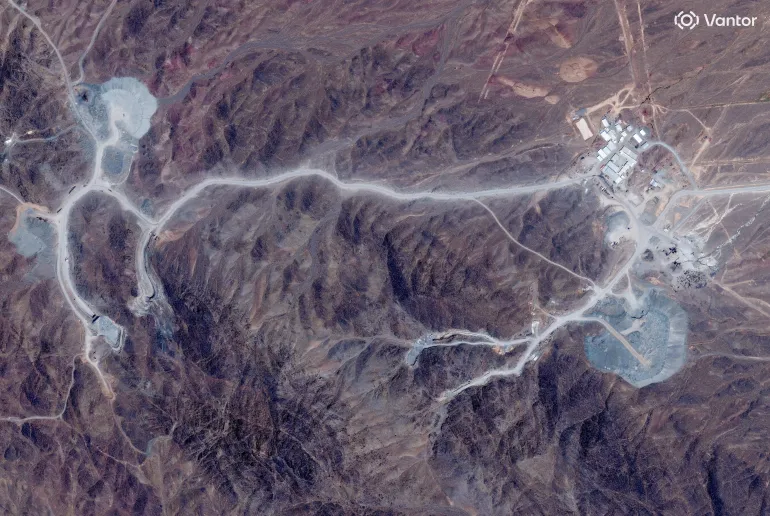
Attacks on Iran’s nuclear infrastructure have continued since the latest war began on February 28, including on the Natanz enrichment facility, Isfahan nuclear complex, Arak heavy water reactor, and the Bushehr nuclear power plant.

Iran nuclear facilities

Nevertheless, King’s College’s Krieg said there is still room for a negotiated outcome if Tehran and Washington scale back their demands.

“Both sides can compromise on enrichment thresholds, and on temporary moratoriums on enrichments. But Iran will not surrender its sovereignty to enrich altogether, and the Trump administration will have to meet them halfway,” he said.

“While the Iranians will commit on paper not to develop a nuclear weapon, they will want to keep R&D [research and development] in this space alive.”

Economic incentives will be central, he added. “Equally, Iran would want to get immediate access to capital and liquidity. Here, the Trump administration is already willing to compromise.”

Source link

Japan lifts ban on lethal weapons exports in major shift of pacifist policy | Weapons News

Japan could soon sell weapons overseas, including fighter jets, in major shift from pacifist policies introduced after World War II.

The cabinet of Japanese Prime Minister Sanae Takaichi has lifted a ban on exporting lethal weapons, including fighter jets, in a major shift to Japan’s pacifist post-World War II constitution.

In a post on X announcing the changes on Tuesday, Takaichi did not specify which weapons Japan would now sell overseas. However, Japanese newspapers said the changes would encompass fighter jets, missiles and warships, which Japan has recently agreed to build for Australia.

Recommended Stories

list of 4 itemsend of list

“With this amendment, transfers of all defence equipment will in principle become possible,” Takaichi said, adding that “recipients will be limited to countries that commit to use in accordance with the UN Charter”.

“In an increasingly severe security environment, no single country can now protect its own peace and security alone.”

At least 17 countries will be eligible to buy weapons manufactured in Japan under the changes, Japan’s Chunichi newspaper reported, adding that this list may be expanded if more countries enter into bilateral agreements with Japan.


Previous rules, introduced in 1967 and enacted in 1976, had limited Japanese military exports to non-lethal arms, such as those used for surveillance and mine sweeping, Japan’s Asahi newspaper reported.

Asahi also reported that Japan will still restrict exporting weapons to countries where fighting is currently taking place, but exemptions are allowed under “special circumstances” where Japan’s national security needs are taken into account.

Countries interested in buying Japanese-made weapons include Australia, New Zealand, the Philippines and Indonesia, which recently signed a major defence pact with the United States, Chunichi reported, citing Japan’s Ministry of Defence.

Tokyo’s change in policy comes soon after Japan and Australia signed a $7bn deal that will see Japan’s Mitsubishi Heavy Industries build the first three of 11 warships for the Australian navy.

Takaichi sends offering to controversial war shrine

The changes announced by Takaichi on Tuesday come amid reports that the Japanese prime minister had sent a ritual offering to the notorious Yasukuni Shrine in Tokyo on the occasion of its spring festival.

Built in the 1800s to honour Japan’s war dead, the shrine includes the names of more than 1,000 convicted Japanese war criminals from World War II, including 14 who were found guilty of “Class A” crimes.

Visits by Japanese officials to the shrine have long been considered insensitive to the people of China, South Korea, and other countries that Japanese soldiers brutalised during the war.

After the defeat of Axis countries, including the bombing of Japan’s Hiroshima and Nagasaki at the end of World War II, Japan introduced a new constitution renouncing participation in war.

However, Takaichi, considered a China “hawk” and sometimes referred to as Japan’s “Iron Lady”, is among a number of recent Japanese leaders to have pushed back against the country’s pacifist stance.

TOKYO, JAPAN - AUGUST 15: People visit the Yasukuni Shrine on August 15, 2025 in Tokyo, Japan. Japan marked the 80th anniversary of its surrender in World War II today. (Photo by Tomohiro Ohsumi/Getty Images)
Nationalists visit the Yasukuni Shrine in 2025 in Tokyo, Japan [Tomohiro Ohsumi/Getty Images]

Source link

Pakistan expecting ‘major breakthrough’ tied to Iran’s nuclear programme | US-Israel war on Iran

NewsFeed

A source has told Al Jazeera that Pakistan is expecting a breakthrough tied to Iran’s nuclear programme as Islamabad helps negotiate an end the US-Israeli war on Iran. Pakistani military and government officials met with Iranian and Saudi leaders on Wednesday.

Source link

Democrats clash with US Energy Secretary over Iran war and gas prices | US-Israel war on Iran News

Watch the moment a Democratic congresswoman tells the US Energy Secretary he is ‘living in a different world’ after his response to whether he’d adequately warned the White House that a war on Iran would have global consequences.

Source link

Why is Iran’s Bushehr nuclear power plant being attacked? | US-Israel war on Iran

The WHO has warned of ‘catastrophic’ risks if radioactive release occurs.

Iran’s Bushehr Nuclear Power Plant has been targeted four times since the United States-Israel war on Iran began more than a month ago.

And the World Health Organization (WHO has warned of “catastrophic” risks if a radioactive release occurs.

Recommended Stories

list of 3 itemsend of list

Tehran has accused the United Nations’ nuclear watchdog of inaction – an allegation that the International Atomic Energy Agency (IAEA) rejects. But it does acknowledge that the situation is of deep concern.

Why are the attacks happening, and what risks do they pose?

Presenter: James Bays

Guests:

Tariq Rauf – Former head of verification and security policy coordination at the IAEA

Abas Aslani – Senior research fellow at the Center for Middle East Strategic Studies

Alicia Sanders-Zakre – Head of policy at the International Campaign to Abolish Nuclear Weapons

Source link

The war in Iran: Key takeaways from Al Jazeera’s interview with Marco Rubio | US-Israel war on Iran News

US Secretary of State Marco Rubio has said that talks with Iran are under way through intermediaries and that Washington will continue its military campaign until Tehran abandons its nuclear and missile programmes.

He warned on Monday that the Strait of Hormuz will be kept open “one way or another” and that US war objectives could be achieved “in weeks, not months”.

Recommended Stories

list of 2 itemsend of list

He also said the United States would welcome political change in Iran if the opportunity arose, but said it was not an official objective. Rubio criticised some NATO allies for refusing US access to bases during the war, and said Washington is closely watching developments in Cuba and Venezuela.

Here are the key takeaways from Rubio’s exclusive interview with Al Jazeera’s Hashem Ahelbarra:

Marco Rubio says talks with Iran are happening

Much of the communication between Tehran and Washington is indirect and through intermediaries, but Rubio insisted that it is ongoing.

He said there are “messages and some direct talks going on between some inside of Iran and the United States, primarily through intermediaries”, adding that the US president “always prefers diplomacy, always prefers an outcome”.

His comments come as US President Donald Trump escalated his rhetoric on social media, threatening to “obliterate” Iran’s energy infrastructure if a ceasefire is not reached soon, Al Jazeera’s Kimberly Halkett reported from Washington.

“Taken together, Rubio’s statements and Trump’s posts suggest the US is pursuing a dual-track approach: keeping diplomatic channels open through intermediaries while simultaneously increasing military and economic pressure on Iran,” she said.

US demands Iran abandon nuclear and missile programmes

Rubio said Iran must abandon its nuclear weapons ambitions and stop producing missiles and drones that can threaten countries across the Gulf region, and insisted “The Iranian regime can never have nuclear weapons.”

He said Iran’s missile programme poses a direct threat to countries across the Gulf, and claimed “These short-range missiles that they’re launching, they only have one purpose, and that is to attack Saudi Arabia and the UAE and Qatar and Kuwait and Bahrain.”

Rubio said Iran could pursue civilian nuclear energy, but not in a way that would allow it to quickly develop a nuclear weapon.

“What they cannot have is a system that allows them to quickly weaponise it,” he said. “They have to abandon all these weapon programmes and all their nuclear ambitions.”

However, Hassan Ahmadian, an assistant professor at the University of Tehran, questioned the narrative that Iran poses an offensive threat in the region.

“When was the last time Iran attacked its neighbours over three centuries?” Ahmadian asked, arguing that Iran’s military strategy is shaped by deterrence in an asymmetric conflict.

“Why is it doing this now? Because it’s the underdog in an asymmetric war that it wants to shield itself by expanding.”

Ahmadian added that Iran has been a central focus of US policy for years.

“With the break of two wars in less than a year, we have experienced, Iran has been on the table in different US administrations – all options are on the table,” he said.

Strait of Hormuz will be kept open ‘one way or another’

Rubio said the US would not accept Iran claiming sovereignty over the Strait of Hormuz and warned that the waterway would remain open regardless of Iran’s actions.

“Not only is the sovereignty over the Strait of Hormuz not acceptable to us, it won’t be acceptable to the world.”

“It sets an incredible precedent … nations can now take over international waterways and claim them as their own.”

“The Strait of Hormuz will be open … It will be open one way or another,” he said, adding that otherwise, Iran would “face real consequences” from the US and other countries.

Iranian analysts suggested the closure of the strait is a temporary wartime measure and could be reversed once the conflict ends.

“It’s opened partially,” Ahmadian said, adding “I think there is no Iranian interest to not open it beyond the war.”

“It’s an asymmetric way of putting pressure on Americans, just as they are bombing Iran, and so after the war there would be no need,” Ahmadian explained. “There will be an arrangement, according to the Iranians, with the GCC [Gulf Cooperation Council] countries to reopen it and see how things are managed.”

War objectives will be achieved ‘in weeks, not months’

Rubio said the US military campaign is progressing quickly and outlined the military objectives Washington is trying to achieve.

“Those objectives are the destruction of their air force, which has been achieved, the destruction of their navy, which has largely been achieved.”

“A significant reduction in the number of missile launchers… and we are going to destroy the factories that make those missiles and those drones.”

“We are well on our way or ahead of schedule.”

“We will achieve them in weeks, not months.”

“That’s a matter of weeks. I’m not going to tell you exactly how many weeks, but a matter of weeks, not months.”

Rubio says status of Iran’s new supreme leader is uncertain

Asked by Al Jazeera about his thoughts on Iran’s new Supreme Leader, Mojtaba Khamenei, Rubio said his status remains unclear.

“We don’t even know he’s in power. I know they say he’s in power. No one has seen him. No one has heard from him,” Rubio said.

“It’s very opaque right now. It’s not quite clear how decisions are being made inside of Iran.”

Iran’s leadership change is not an objective of the military operation

The US secretary of state suggested the US would welcome political change in Iran, though he said it was not the official objective of the military operation.

“We would always welcome a scenario in which Iran was led by people that had a different view of the future,” Rubio said. “If that opportunity presents itself, we’re going to take it.”

He said the Iranian people “deserve better leadership” and indicated Washington would not oppose a change in government if it occurred.

“Do we think the people of Iran deserve better leadership than what they’ve gotten from the clerical regime? One hundred percent,” Rubio said. “Would we be heartbroken if there was a change in leadership? Absolutely not.”

He also suggested the US would be willing to play a role if political change became possible.

“If there’s something we could do to facilitate that, would we be interested in participating? Of course.”

However, analysts said Washington’s position on regime change appears to have shifted over time.

“Originally bringing down the government was the goal; there has been a constant drawdown from that,” Paul Musgrave, a professor of government at Georgetown University in Qatar, told Al Jazeera.

“And now we have President Donald Trump on Truth Social saying he is negotiating with elements of what could become a new regime, so there is a lot of confusion here, but it is no longer the number one goal. It’s not something they are laying out,” he noted.

Rubio criticises NATO allies and warns alliance may be reviewed

Rubio said some NATO countries denied the US use of airspace and bases during the conflict and suggested Washington may need to reassess the alliance after the war.

“We have countries like Spain, a NATO member that we are pledged to defend, denying us the use of their airspace and bragging about it, denying us the use of their bases.”

“And so you ask yourself, well, what is in it for the United States?”

“If NATO is just about us defending Europe from attack, but them denying us basing rights when we need them, that’s not a very good arrangement.”

“All of that is going to have to be re-examined.”

Source link

Iran strikes towns near Israel’s nuclear site in escalating tit-for-tat | US-Israel war on Iran News

An Iranian missile has struck the southern Israeli cities of Dimona, home to the country’s main nuclear facility, and nearby Arad, wounding dozens of people and causing significant damage, in one of the most dramatic escalations since the US-Israel war on Iran began.

Iranian state television quickly reframed Saturday’s strikes as a “response” to what it said was a strike on Iran’s Natanz nuclear enrichment complex earlier in the day, marking a stark new phase of tit-for-tat targeting in the conflict, now in its fourth week.

Recommended Stories

list of 2 itemsend of list

Nearly 100 people were wounded in the attacks, according to Israel’s emergency services, including a 10-year-old boy who paramedics said was in critical condition with multiple shrapnel wounds. Seven others are also in critical condition.

An Israeli military spokesman said Israel’s air defence systems activated during the attacks, but failed to intercept some of the missiles, even though they were not “special or unfamiliar”.

The country’s Prime Minister Benjamin Netanyahu, addressing the attacks which wounded nearly 100 people, called it a “difficult” evening for Israel, and again vowed to continue attacking Iran.

The International Atomic Energy Agency (IAEA) said it had received no indication of damage to the Shimon Peres Negev Nuclear Research Center at Dimona itself, and that no abnormal radiation levels had been detected in the area.

The nuclear watchdog said it was closely monitoring the situation, with Director General Rafael Grossi urging that “maximum military restraint should be observed, in particular in the vicinity of nuclear facilities”.

Al Jazeera’s Nour Odeh, reporting from Ramallah in the occupied West Bank, said that three separate impact sites had been identified across Dimona, with one three-storey building having completely collapsed and several fires breaking out.

Witness footage verified by Al Jazeera, which is banned from operating inside Israel, showed a missile striking the city, followed by a large explosion.

Arad, another town near the nuclear facility, was also directly attacked, Israel’s firefighting service said in a statement, with extensive damage reported in the city centre.

“In both Dimona and Arad, interceptors were launched that failed to hit the threats, resulting in two direct hits by ballistic missiles with warheads weighing hundreds of kilograms”, firefighters said.

School in the surrounding Ramat Negev Regional Council was cancelled for the following day.

Earlier on Saturday, the Israeli military announced it had struck a research and development facility at Tehran’s Malek Ashtar University, which it said had been used to develop components for nuclear weapons and ballistic missiles.

The military said it “will not allow the Iranian regime to acquire nuclear weapons”.

Iran said that the US and Israel had targeted its Natanz enrichment complex that morning, though it reported no radioactive leakage.

An unnamed Israeli official, quoted by the Associated Press news agency, denied that Israel was responsible for the Natanz strike, but the Israeli army has not released a full statement on the matter.

Dimona has been at the heart of Israel’s nuclear programme since its research centre, built in secret with French assistance, opened there in 1958.

Eye-for-an-eye approach

Israel is believed to have developed nuclear weapons by the late 1960s. Its policy of deliberate ambiguity, neither confirming nor denying their existence, was part of a deal quietly struck with Washington, which judged that an open declaration would risk triggering a regional arms race.

Abas Aslani, a senior fellow at the Centre for Middle East Strategic Studies in Tehran, told Al Jazeera that Iran has been pursuing an eye-for-an-eye approach designed to re-establish deterrence.

“Tehran wants to reduce the gap between words and actions,” he said, adding that Iran’s goal was to make its threats credible enough to underpin a new long-term security arrangement, not to simply force a ceasefire, but establish deterrence.

The attacks came as the broader war grinds through its fourth week.

More than 1,400 people have been killed in Iran since the US and Israeli strikes began on February 28, including more than 200 children.

Iran has retaliated across the region, launching what it described as its 70th wave of attacks on Saturday, targeting Israeli and US military positions, as millions of Iranians marked the Persian New Year, Newroz, and Eid al-Fitr under the shadow of war.

Source link

Trump says it’s a ‘good thing’ counterterrorism director resigned over Iran | Nuclear Energy

NewsFeed

US President Donald Trump has reacted to the resignation of the US National Counterterrorism Centre’s director, Joe Kent, saying that he couldn’t work with somebody who didn’t believe Iran was a threat. Trump also said his decision to bomb Iran avoided a ‘nuclear holocaust’.

Source link

Trump claims strikes on Iran prevented nuclear war | Donald Trump

NewsFeed

Offering another rationale for the US-Israeli war on Iran, Donald Trump claimed he ordered strikes to prevent a nuclear conflict that would have turned into World War III. He also said not even the “greatest experts” thought Iran would retaliate with attacks on Gulf states.

Source link