The WHO has warned of ‘catastrophic’ risks if radioactive release occurs.
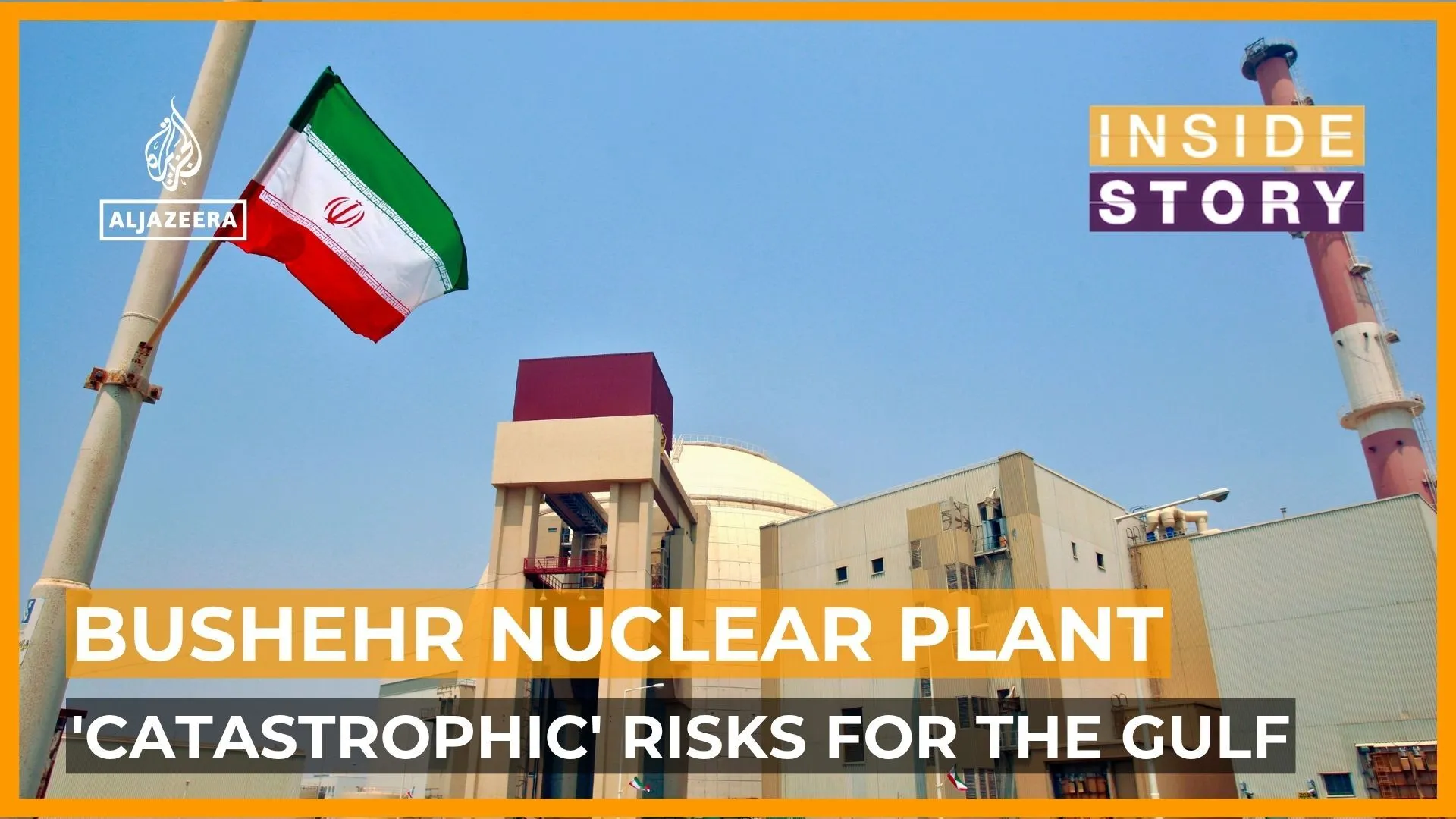
Iran’s Bushehr Nuclear Power Plant has been targeted four times since the United States-Israel war on Iran began more than a month ago.
And the World Health Organization (WHO has warned of “catastrophic” risks if a radioactive release occurs.
Recommended Stories
list of 3 itemsend of list
Tehran has accused the United Nations’ nuclear watchdog of inaction – an allegation that the International Atomic Energy Agency (IAEA) rejects. But it does acknowledge that the situation is of deep concern.
Why are the attacks happening, and what risks do they pose?
Presenter: James Bays
Guests:
Tariq Rauf – Former head of verification and security policy coordination at the IAEA
Abas Aslani – Senior research fellow at the Center for Middle East Strategic Studies
Alicia Sanders-Zakre – Head of policy at the International Campaign to Abolish Nuclear Weapons
US President Donald Trump has issued a direct ultimatum to Iran: reopen the Strait of Hormuz by 8pm Eastern Time in the United States on Tuesday, April 7 (midnight GMT on April 8), or face the destruction of national power plants and bridges.
This echoes an earlier March 21 ultimatum in which he threatened to attack Iran’s power plants – “the biggest one first” – if the strait was not fully reopened within 48 hours.
President Trump has since extended that deadline several times, citing progress in negotiations he claims the US is having with Iran to end the ongoing war. Iran denies it is holding direct talks with the US.
While Trump has made grand statements such as “they’re going to lose every power plant and every other plant they have in the whole country”, he has not mentioned specific targets.
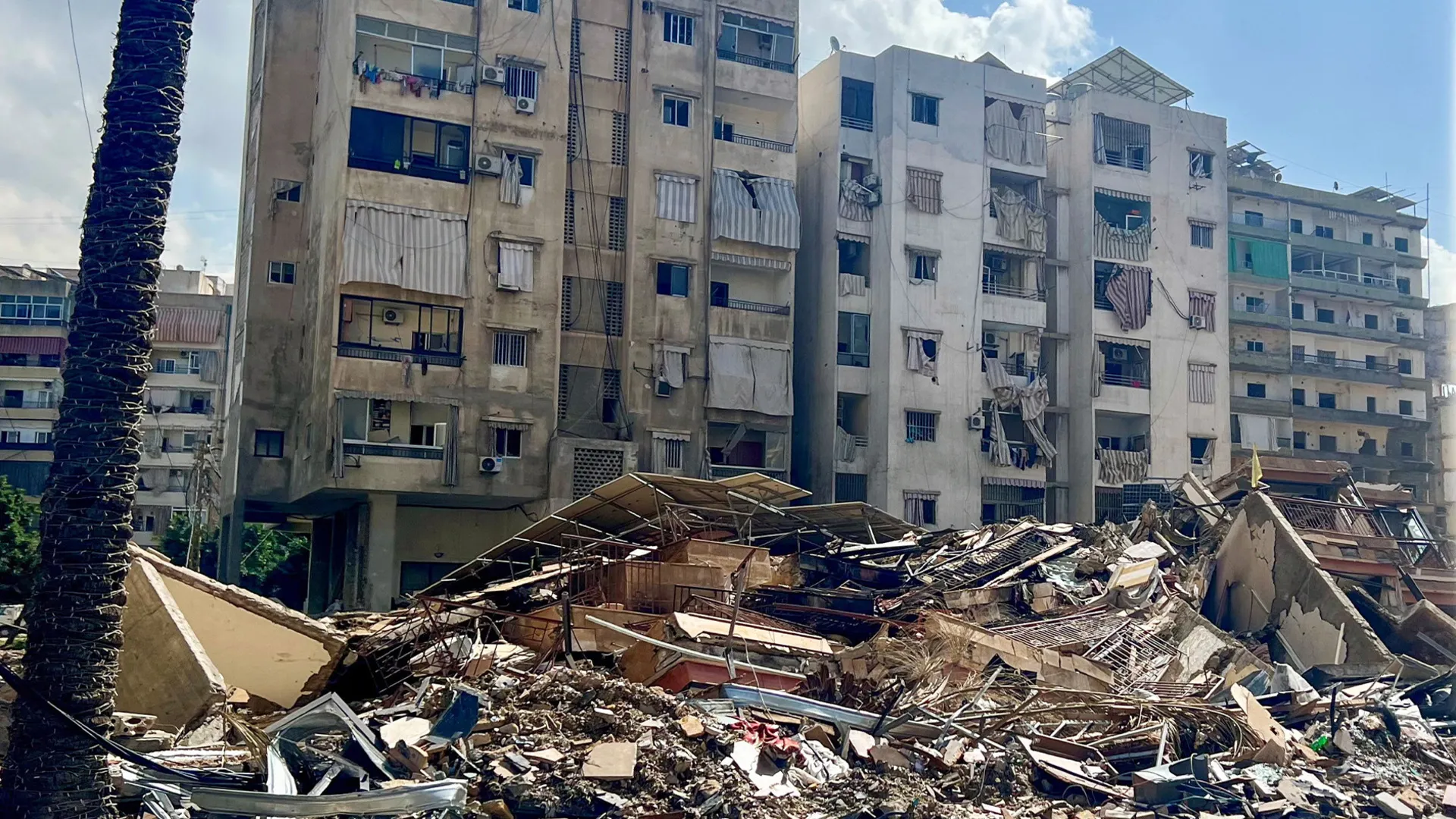
The US president has also threatened to destroy the country’s bridges. Over the weekend, a US-Israeli strike hit the B1 bridge in the city of Karaj, west of Tehran. The major highway link, described as the tallest bridge in the Middle East, had been scheduled to be inaugurated soon. It sustained significant damage in the strike.
Legal experts say that targeting civilian sites amounts to “collective punishment”, which is prohibited under the laws of war.
Where are Iran’s power plants?
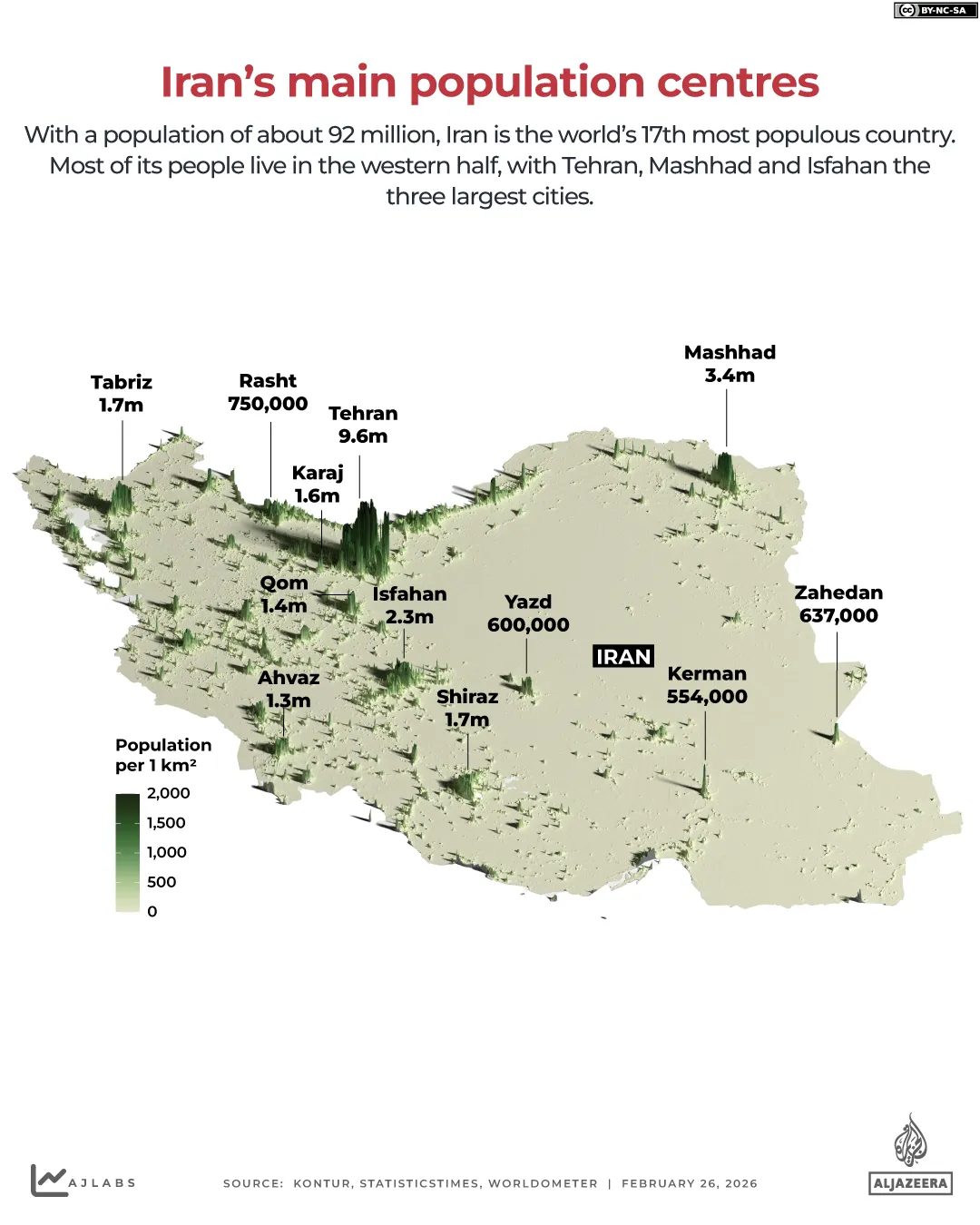
Iran operates hundreds of power plants which, together, form one of the largest electricity systems in the Middle East, supplying energy to 92 million people.
Most of the country’s power plants are close to major population centres and industrial hubs. The majority of Iran’s population lives in the western half of the country, with Tehran, Mashhad and Isfahan the three largest cities.
(Al Jazeera)
Iran has a mixture of gas, coal, hydro, nuclear and oil-fired power plants, but most are gas-fired. In the north and centre of the country, clusters of gas-fired plants supply electricity to the country’s largest population centres, including Tehran, Karaj, Isfahan and Mashhad.
Another major concentration of power plants lies along the Gulf coast. These plants sit close to major gasfields and ports, allowing large thermal stations to run on abundant natural gas.
The coast is also home to the Bushehr Nuclear Power Plant, Iran’s only nuclear power facility, which has a capacity of 1,000MW. The US and Israel have repeatedly hit this nuclear power plant, raising risks of radioactive contamination far beyond Iran’s borders, the state-run Atomic Energy Organisation of Iran (AEOI) has warned.
A satellite image shows new reactors under construction at the Bushehr site in Iran in this handout image dated January 1, 2025 [Maxar Technologies/Handout via Reuters]
Iran also operates a handful of hydropower dams concentrated along the Karun River, the country’s most important source of hydroelectric generation.
Electricity generated from all these plants is fed into a national transmission network operated by Iran Grid Management Company, which distributes power to cities, industries and homes across the country.
The map below shows all of Iran’s power stations with a capacity of 100MW or more.
A 100MW power plant can typically supply electricity to roughly 75,000 to 100,000 homes, depending on consumption patterns.
Iran’s largest power plant by capacity is the Damavand Power Plant located in the Pakdasht area, roughly 50km (31 miles) southeast of Tehran, with a capacity of some 2,900MW, enough to power more than two million homes.
Which are Iran’s most important power plants?
Iran’s largest power plants include:
Damavand (Pakdasht) Power Plant – Near Tehran. Fuel: Natural gas (combined-cycle). Capacity: 2,868MW.
Shahid Salimi Power Plant – Neka, along the Caspian Sea coast. Fuel: Natural gas. Capacity: 2,215MW.
Shahid Rajaee Power Plant – Near Qazvin. Fuel: Natural gas. Capacity: 2,043MW.
Karun-3 Dam – Khuzestan Province. Fuel: Hydropower. Capacity: 2,000MW.
Kerman Power Plant – Kerman. Fuel: Natural gas. Capacity: 1,912MW.
Other smaller but strategically important power plants include:
Ramin Power Plant – Ahvaz, Khuzestan. Fuel: Gas. Capacity: 1,903MW.
Bushehr Nuclear Power Plant – On the Gulf. Fuel: Nuclear. Capacity: 1,000MW.
Bandar Abbas Power Plant – Near the Strait of Hormuz. Fuel: Oil. Capacity: 1,330MW.
How does Iran generate its electricity?
Iran’s electricity system relies heavily on large thermal power plants fuelled by natural gas. The country has one of the world’s largest natural gas reserves, and this fuel forms the backbone of its power system.
In 2025, 86 percent of Iran’s electricity came from natural gas.
Oil-fired plants provide a smaller share, generating roughly seven percent of electricity. Some power stations switch to diesel or fuel oil when natural gas supplies are tight, especially during winter demand peaks.
(Al Jazeera)
Hydropower accounts for about five percent of electricity. Large dams on rivers such as the Karun River generate power by using flowing water to spin turbines.
Nuclear energy contributes around two percent of the country’s electricity, mainly from the Bushehr Nuclear Power Plant, Iran’s only operational nuclear reactor.
Renewables such as solar and wind play a very small role, together accounting for less than one percent of electricity generation.
Overall, more than 90 percent of Iran’s electricity comes from fossil fuels, making it one of the most gas-dependent power systems in the world.
Tehran says it is the fourth attack near the nuclear plant amid the US-Israel war on Iran.
Published On 4 Apr 20264 Apr 2026
One person has been killed by projectile fragments after United States-Israeli strikes targeted a location close to Iran’s Bushehr nuclear plant, according to the International Atomic Energy Agency.
The agency, citing confirmation from Iranian authorities, said in a statement on X that there was “no increase in radiation levels” after Saturday’s attack.
Recommended Stories
list of 4 itemsend of list
Later on Saturday, Iran’s Foreign Minister Abbas Araghchi claimed the Bushehr facility had been “bombed” four times since the war erupted, criticising what he described as a lack of concern for its safety.
The strike comes as the US and Israel escalate their targeting of Iranian industrial sites, even as experts warn of the high risks of striking nuclear or petrochemical facilities.
IAEA Director General Rafael Grossi expressed “deep concern about the reported incident and says [nuclear] sites or nearby areas must never be attacked, noting that auxiliary site buildings may contain vital safety equipment”, the statement read.
Grossi also reiterated a “call for maximum military restraint to avoid risk of a nuclear accident,” the IAEA added.
The Atomic Energy Organization of Iran (AEOI) confirmed the incident, also in a post on X.
An “auxiliary” building on the site was damaged, but the main sections of the power plant were not affected by the strike, the government agency said, adding that the person killed was a member of security personnel.
It’s the fourth time the site has been attacked since the start of the US and Israel’s war on Iran, the AEOI noted.
The Bushehr plant is Iran’s only operational nuclear power plant. It is located in Bushehr city, home to 250,000 people, and is one of Iran’s most important industrial and military nodes.
Meanwhile, US and Israeli strikes on Saturday hit several petrochemical plants in the southern Khuzestan region, an important energy hub, according to Iranian media.
At least five people are reported injured.
Explosions were heard, and smoke was also seen rising after missiles hit several locations across the Mahshahr Petrochemical Special Economic Zone.
The state-run Bandar Imam petrochemical complex, which produces chemicals, liquefied petroleum gas (LPG), polymers and a range of other products, was struck and sustained damage, Iran’s Mehr news agency reported.
A provincial governor in Khuzestan added that the Fajr 1 and 2 petrochemical companies, as well as other nearby facilities, were also hit, according to the Fars news agency. The extent of damage is unclear.
Iran’s Islamic Revolutionary Guard Corps (IRGC) claimed it shot down an MQ-1 drone over central Isfahan province on Saturday, hours after authorities said they forced down two US warplanes.
Isfahan, which houses an underground uranium conversion and a research site, was one of three facilities bombed during US and Israeli strikes on Iran last June.
Israel has been trying to make the case for its war on Iran by portraying the country as a threat to European cities, warning Iranian missiles could reach capitals like London and Paris.
Former NATO official William Alberque says 440 kg of missing Iranian uranium is blocking a US victory claim. He warns that despite strikes on Natanz Nuclear Facility, the risk of proliferation remains.
US President Donald Trump has reacted to the resignation of the US National Counterterrorism Centre’s director, Joe Kent, saying that he couldn’t work with somebody who didn’t believe Iran was a threat. Trump also said his decision to bomb Iran avoided a ‘nuclear holocaust’.
Israeli Prime Minister Benjamin Netanyahu said several Iranian nuclear scientists were killed in Israeli strikes. He also said a “new path of freedom” for Iran was approaching and told Iranians the country’s future ultimately depends on them.