Strikes hit a major bridge in the Ukrainian capital as leaders push for ‘direct discussions’ to end the war.
Published On 27 Oct 202627 Oct 2026
Russia has attacked transport infrastructure in Ukraine’s capital, targeting a major bridge, as the leaders of Finland and Norway held a rare call with Russian President Vladimir Putin and a separate one with Ukrainian President Volodymyr Zelenskyy.
Officials in Kyiv said the South Bridge was hit in overnight attacks on the city that included 16 ballistic missiles and more than 280 drones. Zelenskyy said Russian forces struck again while emergency crews were still dealing with the aftermath of the initial strikes.
Recommended Stories
list of 3 itemsend of list
“This is a serious escalation in Russia’s campaign targeting our logistics,” he said.
A resident walks under a bridge damaged by shrapnel during an overnight Russian missile strike, in Kyiv, Ukraine, October 27, 2026 [Valentyn Ogirenko/Reuters]
Russian attacks also caused deaths and injuries in the cities of Kharkiv and Pavlohrad.
Russia’s Defence Ministry said on Telegram that its forces had targeted transport infrastructure in Kyiv and a logistics hub in the Kharkiv region, along with industrial sites and cargo vessels it said were serving military purposes.
Officials in the Russian-controlled part of Ukraine’s southeastern Zaporizhzhia region said a drone strike on a bus killed one person and injured 30 others.
One person was also killed and six others were wounded in a drone attack on the Russian city of Bryansk, near the Ukrainian border.
The attacks come as the warring sides prepare for talks. On Friday, Kyiv and Moscow said they had agreed to hold United States-mediated technical meetings in Abu Dhabi in early November.
Finnish President Alexander Stubb and Norwegian Prime Minister Jonas Gahr Store called Putin from Helsinki on Tuesday to convey messages on future negotiations ahead of the Abu Dhabi meetings, according to a statement from both governments.
Zelenskyy, who spoke to the pair afterwards, said on X that they had told Putin real steps were needed to de-escalate attacks on Ukraine’s energy facilities and infrastructure. He said they also discussed preparations for the November talks.
“There must be peace, de-escalation is needed, and Russia must stop dragging out the war,” he said.
In the Finnish-Norwegian statement, Stubb said the war’s outcome would directly affect the security of Finland and Norway, both of which border Russia, and of Europe more widely.
“Ending the war requires direct discussions,” he said.
Finnish President Alexander Stubb [File: Ludovic Marin/Reuters]
Store said the two leaders had stressed the importance of de-escalation during the call.
Both leaders said they spoke for their own countries, not Europe, and that Finnish and Norwegian support for Ukraine would continue.
Most Western European leaders have avoided direct contact with Putin since Russia’s full-scale invasion of Ukraine began in February 2022.
The calls come amid a renewed US push to end the war. The two governments described Tuesday’s call, held in consultation with Ukraine, as a follow-up to talks in Oslo on October 20 with Zelenskyy and US special envoy Steve Witkoff.
Witkoff met Putin in St Petersburg the next day, after which the Kremlin said it was ready to resume US-mediated talks with Kyiv that stalled in February.
US President Donald Trump has also credited his wife, First Lady Melania Trump, with securing a localised ceasefire in the southern Kherson region, which took effect on Tuesday to allow aid into the Russian-controlled town of Oleshky.
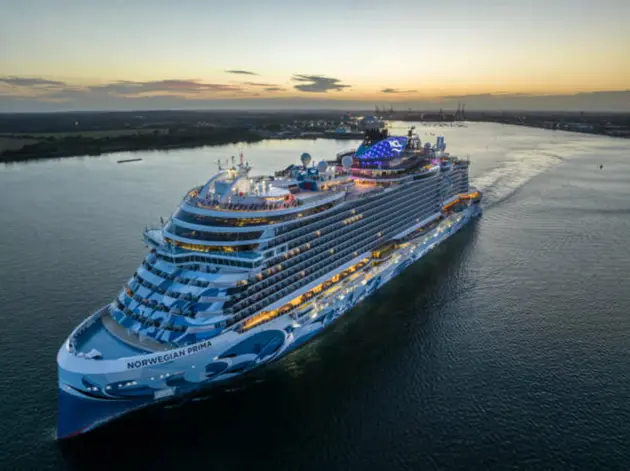
Like the rest of the sector and other industries heavily dependent on fuel, Norwegian Cruise Line Holdings (NCLH) faces pressure on its bottom line that will be only partially offset by higher passenger spending.
A teenager who travelled from Norway to the UK to carry out a “hit” for an organised crime group has been sentenced to 20 years’ detention.
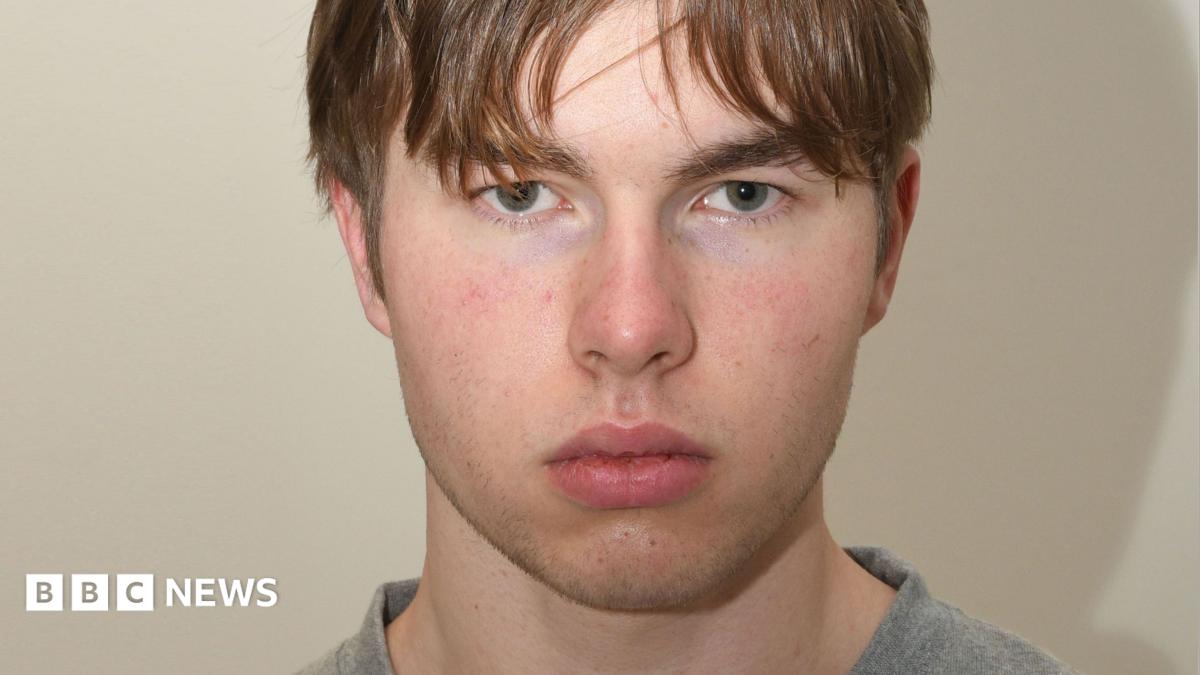
Johannes Natland, 19, was arrested in a hotel room in Huddersfield, West Yorkshire, with two working guns and 19 rounds of live ammunition in March 2025, the Old Bailey previously heard.
During his retrial, a jury heard the teen was “recruited” by the Foxtrot Network, which was described as a Swedish organised crime group backed by the Iranian regime.
Natland, who had admitted to possession of the firearms and ammunition, was unanimously found guilty of conspiracy to murder and sentenced at Woolwich Crown Court on Friday.
The Foxtrot Network has been sanctioned by both the UK and the US for its close links to the Iranian government, with Natland’s target remaining unclear.
Commander Helen Flanagan, head of Counter Terrorism Policing London, said: “We haven’t been able to establish exactly who the intended victim was.”
The Foxtrot Network is known for pioneering a relatively new phenomenon of hiring teenage killers that Europol has called “violence-as-a-service” (VaaS).
At the sentencing hearing, Mrs Justice Cheema-Grubb told Natland: “The Foxtrot Network is an organised crime group which has developed an arm’s-length method of recruiting young people to carry out violent crimes.
“You were recruited to travel to England to kill an unidentified target.”
Natland flew into Manchester Airport on an emergency passport on 17 March 2025, shortly after his 18th birthday.
He was guided by videos on the messaging app Signal to Huddersfield, where the guns, a stolen car and a stash of cash were hidden.
He was prevented from carrying out the hit after Norwegian police arrested the teenager who had recruited him for the Foxtrot Network and found messages about the UK plot on his phone.
There was then a race against time to find Natland before he located his unknown target in England.
Addressing Natland, the judge said: “At the heart of this case is a stark fact. You agreed to assassinate another human being, a stranger to you, in a foreign country.
“You knew nothing of that person’s life or circumstances. You were just 18 years old when you placed yourself in readiness to murder for money.”