What should be a little more straightforward is giving Kieron Bowie another start.
The Sassuolo striker was sacrificed just over 10 minutes into his first Scotland start to make space for Welsh in defence.
His partnership with Oli McBurnie showed promising signs in the 20 minutes or so they were together in Slovenia, but there was little time to build on that cameo against the Swiss. Surely he and the Hull City striker will get another chance?
If there were any concerns McBurnie wasn’t up for the fight – five years on from his last international involvement – they have been quashed in these past two games.
His work-rate as a largely solo striker – hauling his team up and holding the ball in – was commendable. If only Bowie was still on the field for the flurry of flick-ons he won in the first half.
Pocognoli has inherited one of the overriding problems Clarke wrestled with during his spell – scoring goals. That’s four games now without one, and the Scots are just 25 minutes away from setting a new – unwanted – record for failing to score.
In 1970-71, they went 447 minutes without finding the back of the net – it’s been 422 minutes of football since McGinn’s deflected strike against Haiti in Boston.
The body of a newborn baby has been found along a shoreline in north Wales.
North Wales Police have appealed for the mother who maybe “extremely vulnerable” to come forward.
A member of the public found the remains on the Menai Strait shoreline near Siliwen Road on Sunday shortly before 17:00 BST.
During a press conference, Director of Midwifery and Women’s Services for Betsi Cadwaladr health board Fiona Giraud has appealed directly to the mother to come forward.
“I want you to know that our immediate concern is for your health, safety and wellbeing. We recognise that you may be feeling frightened, overwhelmed or unsure about what to do next,” she said.
Giraud said they “have real concerns for the health of the mother”.
“We recognise that she is likely to be extremely vulnerable. She may be fearful of seeking the support she needs through fear of identifying herself.
Speaking directly to the mother, she added: “You may feel you have nowhere to turn, or that you cannot speak to anyone about what has happened. Please do not feel that you have to face this alone.
“We don’t yet know all the circumstances surrounding your baby’s death but what is important right now is that we find you, make sure you are safe, and ensure you receive any medical attention and support you may need.
“I am asking you personally, to please get in touch with us. You can speak to a healthcare professional, approach a police officer or attend a police station.
“If you are watching or listening to this appeal, please know that we want to hear from you. Please take the first step and contact us. There are people to help you.”
This breaking news story is being updated and more details will be published shortly. Please refresh the page for the fullest version.
South Korea has accused North Korea of planting mines that caused an explosion in the Demilitarized Zone last week, injuring two South Korean personnel and violating the armistice agreement that ended the Korean War.
South Korean Defence Minister Kang Shin-chul told a parliamentary committee on Tuesday that the mines were North Korean and appeared to have been planted as part of Pyongyang’s efforts to strengthen its border defenses near the Military Demarcation Line that divides the DMZ.
Kang said the incident warranted a response from Seoul, although he declined to specify what measures the South Korean military might take.
Seoul Blames North Korea for the DMZ Explosion
“The responsibility lies with North Korea, so we will take corresponding measures,” Kang said, adding that the military had several response options and would implement them in stages.
Stay ahead of the geopolitical week.
MD Briefing delivers expert analysis across five global fronts — the Indo-Pacific, energy, geoeconomics, European security, and the Middle East — every Monday morning. Free.
He said a key question was whether North Korea had planted the mines knowing that South Korean troops could enter the area and potentially be injured.
The South Korean Joint Chiefs of Staff said an investigation conducted jointly with the United Nations Command had also uncovered another North Korean resin anti personnel mine close to the site of the September 21 explosion.
The newly discovered mine was different from those believed to have caused last week’s blast.
Another Mine Found South of the Military Line
JCS Vice Chairman Kwon Dae-won said the mines did not appear to have drifted into the area where they were discovered.
The United Nations Command assessed that the additional mines were clearly located south of the Military Demarcation Line, according to South Korean officials.
The findings have heightened concerns about the dangers created by North Korea’s ongoing efforts to fortify its side of one of the world’s most heavily militarized borders.
The DMZ has remained a highly sensitive area since the 1953 armistice, with even limited incidents carrying the potential to trigger a broader military confrontation.
A New Mine Incident Revives Memories of 2015
The latest blast has echoes of a 2015 confrontation, when North Korean mines seriously injured South Korean soldiers inside the DMZ.
South Korea responded by restarting loudspeaker broadcasts aimed at North Korea across the border. Pyongyang condemned the broadcasts, and tensions escalated into a military standoff before the two sides reached a high level agreement.
The current incident is unfolding under different political circumstances, however, as Seoul is simultaneously attempting to reopen dialogue with Pyongyang.
South Korea’s Dialogue Push Faces a Fresh Challenge
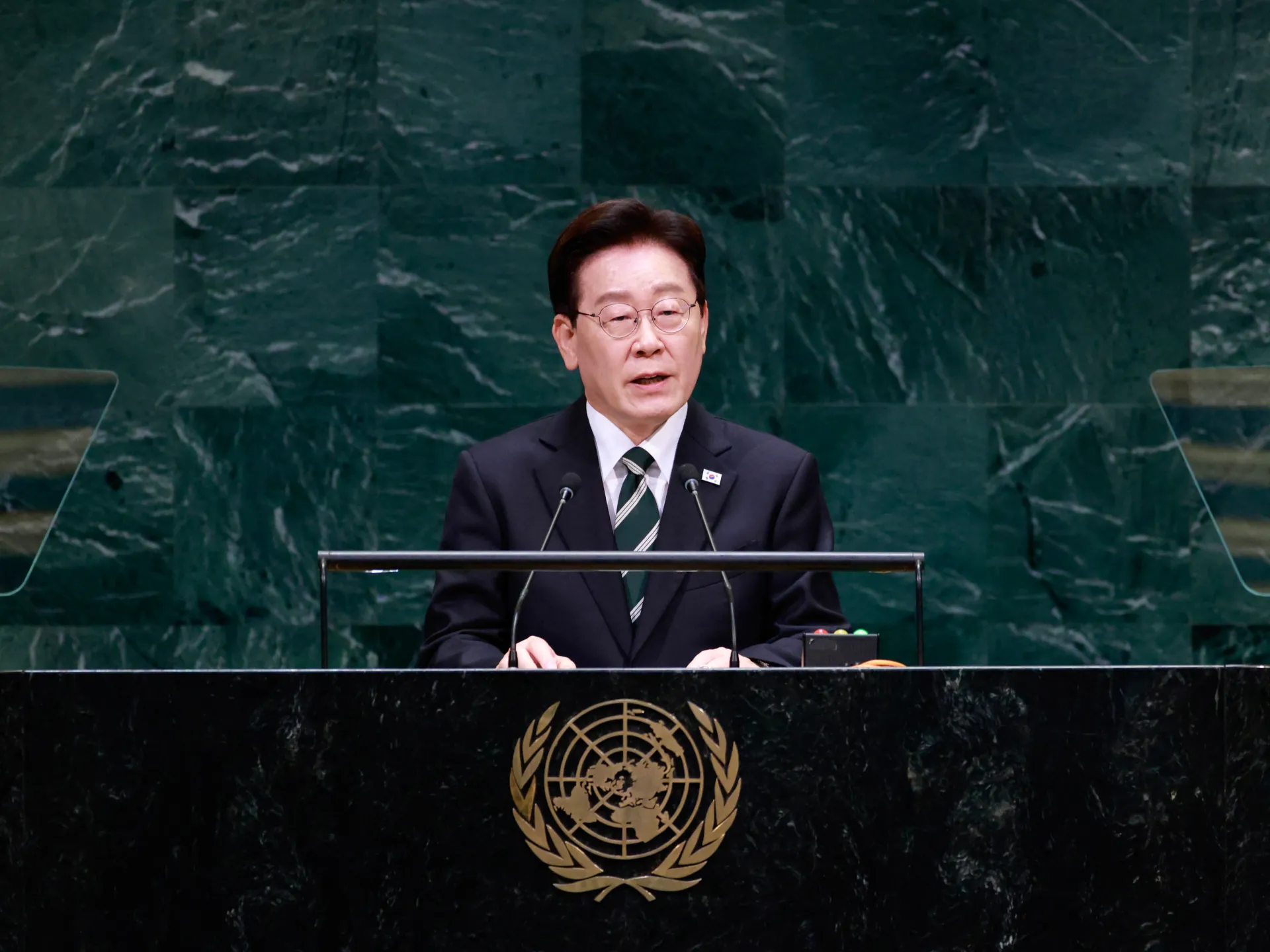
South Korean President Lee Jae Myung has sought to encourage North Korea to return to dialogue after years of worsening relations.
Pyongyang has instead moved in the opposite direction, declaring South Korea an enemy state and abandoning its previous policy goal of peaceful reunification.
That shift has made military incidents along the border increasingly sensitive.
For Seoul, the challenge is to respond to the alleged mine deployment while avoiding measures that could further damage its efforts to restore communication with Pyongyang.
North Korea Remains Silent as Seoul Warns of a Response
North Korean state media has not publicly commented on the explosion or South Korea’s accusations.
North Korea’s mission to the United Nations and its embassies in Beijing and Singapore also did not immediately respond to requests for comment.
With the South Korean military warning that it will take corresponding measures, the incident could become another source of confrontation between the two Koreas.
The immediate priority is preventing further injuries and dealing with the mines around the Military Demarcation Line. But the larger concern is whether the latest explosion will trigger another cycle of military responses at a time when relations between Seoul and Pyongyang are already deeply strained.
The blast therefore carries significance beyond the two injured personnel. It has placed South Korea’s attempt to pursue dialogue with North Korea alongside the more immediate question of how Seoul responds to what it considers a violation of the armistice.
South Korea’s presidential office criticises Ukraine for denying POW nondisclosure agreement.
Published On 27 Sep 202627 Sep 2026
The South Korean president’s office has expressed “strong regret” over Ukraine’s disregard for a nondisclosure agreement with Seoul in the transfer of two North Korean prisoners of war (POWs) to Seoul, South Korean media reported.
Last week, Ukraine’s President Volodymyr Zelenskyy said in an address to the United Nations General Assembly (UNGA) that his country transferred two North Korean POWs to South Korea.
Recommended Stories
list of 3 itemsend of list
President Lee Jae Myung’s office “expresses strong regret over Ukraine’s unilateral disclosure [of the transfer] and its subsequent false announcement that there had not been a non-disclosure agreement”, the Yonhap news agency quoted Seong Ghi-hong, South Korea’s senior presidential secretary for public relations, as saying in a statement on Sunday.
The office said the nondisclosure agreement aimed to safeguard the soldiers from dangers they could face if their transfer were to be disclosed, in accordance with international law and humanitarian principles.
According to Yonhap, a South Korean media outlet, the Ukrainian presidential office said it had disclosed the transfer of the POWs without extensive details on the process, claiming that it would have been strange to keep the entire transfer a secret. Ukrainian media outlets reported a Ukrainian presidential source as denying the existence of a confidentiality agreement with Seoul, Yonhap said.
The South Korean presidential office said the Ukrainian presidential office’s “false” denial of the confidentiality agreement “seriously hampers” bilateral trust and causes serious disruptions to bilateral friendship.
Seong Ghi-hong said the government was considering additional measures over the issue, if necessary, Yonhap added.
North Korean POWS
Ukrainian forces captured the two North Korean soldiers in Russia’s Kursk region in January 2025.
Mounting evidence, including from intelligence reports and testimonies of defectors, has indicated that North Korean soldiers resorted to self-detonation or other forms of suicide rather than be captured.
In his UN address, Zelenskyy said, “These guys are not easy to capture alive.” He added, “One of them, when he realised he was going to be taken prisoner, tried to kill himself. And he was shocked that fate did not let him die.”
South Korean media reported that the two captured soldiers had expressed their desire to defect to South Korea.
The issue of North Korean prisoners of war was a key topic during the NATO summit in Ankara, Turkiye, where Lee met Zelenskyy in July.
Senior presidential spokesperson Kang Yu-jung stated afterwards that both leaders agreed to resolve the status of North Korean POWs in accordance with international law. This built on a prior agreement reached during the South Korea-Ukraine foreign ministers’ meeting in March, where both nations pledged to cooperate on the POW issue.
According to South Korean intelligence, North Korea is estimated to have deployed approximately 14,000-15,000 soldiers to support Russia’s efforts in its war with Ukraine since 2024, primarily in the Kursk border region. South Korean, Ukrainian and Western officials said they suffered heavy casualties, with more than 6,000 North Korean soldiers killed in the fighting.
The transfer comes as South Korea has backed efforts to revive dialogue with North Korea, while United States President Donald Trump has renewed his willingness to engage with Pyongyang.
North Korea has released imagery of what appears to be a flight test of an updated version of its Hwasong-11Ma hypersonic missile, nearly a year after the weapon first appeared publicly at a military technology exhibition in Pyongyang.
Launch of a Hwasong-11Ma-1 missile from the test facility in Anbyon County, south of Wonsan. North Korean State Media
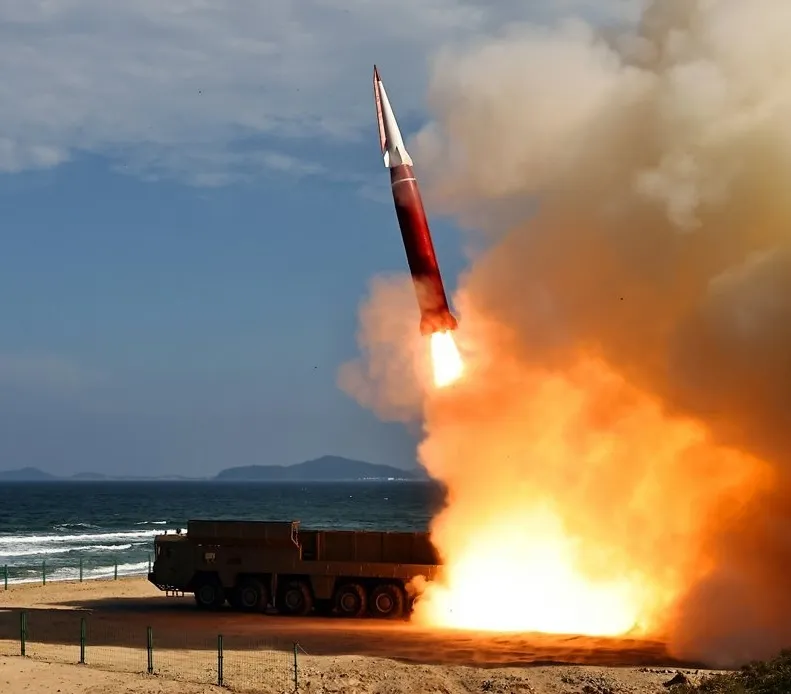
The September 20 test involved a short-range ballistic missile (SRBM) booster fitted with a hypersonic glide vehicle, according to photographs released by North Korean state media. A display screen visible in the imagery identifies the weapon as the Hwasongpho-11Ma-1, or Hwasong-11E-1 in the equivalent English-language designation.
The test was conducted from the east coast near Anbyon County, south of Wonsan, an area North Korea has repeatedly used for missile testing. The launch site allows missiles to be fired eastward over the Sea of Japan, providing a relatively controlled area for testing short- and medium-range systems.
Another two views of the launch of the Hwasong-11Ma-1 missile. North Korean State Media
South Korean and Japanese authorities say they detected two launches on September 20, with the first occurring at approximately 3:00 p.m. local time and the second several hours later.
North Korean photographs show the missile being launched from a coastal location, with Kim Jong Un and senior missile officials observing the test. Kim’s daughter, Kim Ju Ae, also appears in the imagery.
Kim Jong Un and Kim Ju Ae monitor the progress of the Hwasong-11Ma-1 test. North Korean State Media
North Korea displayed a mock-up of what it called the Hwasong-11Ma at its Defense Development-2025 exhibition in October 2025. The design uses the basic architecture of the Hwasong-11 family, known in the West as the KN-23 family, but substitutes a distinctive glide wedge-shaped vehicle for the conventional warhead arrangement.
The Hwasong-11Ma, among other weapons, on display at the weapons exhibition in Pyongyang in October 202. North Korean State Media
North Korea claimed another hypersonic missile test that same month, but did not release launch imagery clearly connecting that test to the Hwasong-11Ma. The missile was subsequently shown again during a military parade in Pyongyang.
Hwasong-11Ma missiles on five-axle TELs at last October’s military parade in Pyongyang. North Korean State Media
The latest “-1” designation suggests an iterative evolution of the Hwasong-11Ma, although Pyongyang has not explained what modifications it represents.
Based on the imagery, the new configuration also includes a modified launcher, with the missile carried on a six-axle transporter-erector-launcher (TEL). When the Hwasong-11Ma was first shown, it was mounted on a five-axle TEL. The latest vehicle also appears to incorporate modified retractable covers around the missile.
It remains unclear whether the new TEL represents a standardized operational vehicle or a test configuration.
As with previous North Korean weapons announcements, the country’s state media claims need to be treated very cautiously. Pyongyang has a long record of publicizing weapons systems and test results that cannot be independently verified, while some of its purported hypersonic tests have left outside analysts unable to determine whether the advertised maneuvering performance was actually demonstrated.
Perhaps the most revealing test-related imagery comes from a display screen photographed at the launch site.
Kim Jong Un and his daughter can be seen watching the screen, which shows the apparent flight trajectory of the Hwasong-11Ma-1. The displayed path initially follows a ballistic trajectory before descending and then performing a pull-up maneuver, regaining altitude before continuing toward the target area.
That type of trajectory is consistent with the basic concept behind a hypersonic glide vehicle. The booster provides the initial velocity and altitude, after which the unpowered glide body follows a relatively shallow, atmospheric flight path at hypersonic speeds, while maneuvering rather than following a simple ballistic path.
The graphic is useful for understanding what Pyongyang says the weapon is designed to do, but it does not independently demonstrate that the missile actually followed the depicted trajectory.
The flight data visible on the display provides some unusually specific figures.
Enhancing the original image released by North Korea allows for an excellent view of the HS-11Ma hypersonic glide missile trajectory, providing altitude and speed data. Note: Slight inaccuracies in the numbers may occur due to the use of AI tools. pic.twitter.com/M4LkfF5VYu
According to the North Korean imagery, the missile traveled 908.2 kilometers (564.3 miles), reached an altitude of 35.8 kilometers (22.2 miles), and remained in flight for approximately 445 seconds, or 7.4 minutes.
The display gives a velocity of 2,146 meters per second, equivalent to roughly 4,800 mph. That is hypersonic velocity in the aerodynamic sense, but speed alone is not what makes a hypersonic glide weapon particularly challenging to defend against. More consequential parameters include sustained controlled flight, maneuverability, guidance, and accuracy.
Other portions of the display appear to show additional points along the flight, including different times, altitudes, and speeds. None of these figures have been independently verified.
The TEL raises one of its two Hwasong-11Ma-1 missiles into the launch position. North Korean State Media
The claimed range is particularly noteworthy because it does not match the publicly reported tracking data from South Korea and Japan.
South Korea’s Joint Chiefs of Staff said North Korea launched two SRBMs from the Wonsan area on September 20. The missiles were assessed to have traveled approximately 450 and 600 kilometers, respectively.
Japan similarly reported two launches, assessing the first at approximately 440 kilometers and the second at approximately 590 kilometers, with maximum altitudes of roughly 60 and 70 kilometers.
Those figures are substantially different from the 908.2-kilometer distance shown on North Korea’s display.
The Hwasong-11Ma-1 climbs after launch. North Korean State Media
The discrepancy does not necessarily establish that either side’s data are incorrect. The North Korean figure could represent a different measurement of the flight path, or could correspond to a portion of the test that was not reflected in the public South Korean and Japanese assessments. It is also possible, if not highly probable, that Pyongyang selectively presented or altered the data.
South Korean analysts have already raised questions about the unusually long distance displayed by North Korea. Yonhap reported that experts suggested Pyongyang may have altered the figure to portray the test as more successful.
Regardless of the range actually achieved in this test, the Hwasong-11Ma/Ma-1 is significant because it represents an attempt to combine a relatively compact SRBM with a maneuvering hypersonic glide vehicle.
The underlying Hwasong-11 family is a well-established North Korean missile design. In its KN-23 configuration, members of the family have also been used by Russia against Ukraine. By placing a glide vehicle on this type of booster, Pyongyang could potentially give a regional strike weapon a flight profile substantially different from that of a conventional ballistic missile. The Hwasong-11Ma/Ma-1 also uses a solid-fuel booster, allowing for faster launches than earlier liquid-fuel designs.
The original North Korean Hwasong-11 short-range ballistic missile. North Korean State Media
In principle, the Hwasong-11Ma/Ma-1 could give North Korea an additional hypersonic strike option against more heavily defended targets in South Korea. Having road-mobile TELs would also provide greater operational flexibility despite their relatively limited range, while making it more difficult for adversaries to locate and track the launchers.
A genuine boost-glide weapon creates significant challenges for defending forces since the sheer speed of the weapon bypasses most air defenses. Its trajectory can also become less predictable after the boost phase. Maneuvering at lower altitudes could also reduce the time available to detect, track, and engage the weapon.
A close-up look at the Hwasong-11Ma’s boost-glide-vehicle. North Korean State Media
However, the available imagery does not establish the extent of the vehicle’s maneuverability, its ability to maintain controlled flight, its accuracy, or the reliability of the complete missile system.
North Korea has made similar claims about its hypersonic weapons in the past.
The challenge is not simply reaching hypersonic speed. A weapon has to sustain controlled flight and maneuverability under extreme thermal loads, while also overcoming demanding materials-science, guidance, and navigation requirements. The terminal phase is harder still. Accurately finding and striking a moving target, particularly a ship, requires a highly capable seeker and guidance system. Integrating a nuclear warhead introduces another layer of engineering and weapons-design challenges.
Those demands have made hypersonic weapons a major technological challenge for the United States and other major powers. China is currently widely regarded as the leading country in deploying and developing operational hypersonic systems, although important questions remain about the capabilities and maturity of individual weapons.
Pyongyang said it first flight-tested a wedge-shaped hypersonic glide vehicle in 2021 aboard the liquid-fuel Hwasong-8, before pairing a similar-looking vehicle with the solid-fueled Hwasong-16B intermediate-range ballistic missile (IRBM) in 2024.
VIDEO: Korean Central Television (KCTV) broadcasted footage of North Korea successfully testing the new “Hwasong-16B” hypersonic intermediate-range ballistic missile (IRBM) on Tuesday. pic.twitter.com/VNdhLAeyyK
In its coverage of the latest test, North Korean state media initially avoided identifying the weapon, describing the event as a successful trial of a “new-type weapon” that it said was significant for the rapid development of weapons technology.
Kim said the development would give adversaries an “incurable headache” and deliver what he described as a “cruel and unavoidable blow.”
Tal Inbar, the head of the Space and UAV Research Center at Israel’s Fisher Institute for Air and Space Strategic Studies identifies the Hwasong-11Ma/Ma-1 as a “very significant weapon, bringing hypersonics to the operational/tactical arena and [posing] a challenge to … air and missile defense systems.”
Whatever the exact achievements of the test, the imagery points to continued development of a weapon North Korea first publicly displayed nearly a year ago. The appearance of a new, six-axle TEL, a potentially modified missile, combined with the apparent flight test, suggests that the Hwasong-11Ma/Ma-1 program has progressed since its initial public unveiling.
What remains uncertain is how much of that progress represents a genuine improvement in operational capability.
The latest test therefore provides another indication of the resources and attention Pyongyang is devoting to hypersonic weapons, but the available evidence is still insufficient to determine how closely the Hwasong-11Ma-1’s actual performance matches the capabilities depicted by North Korean state media.
The Gulf war is bringing Syria back onto the MENA business map.
Syria’s coast is gaining new strategic importance as investors look to build trade routes linking Gulf countries and Iraq to North Africa and the rest of the Mediterranean, and to avoid the Strait of Hormuz.
Traffic at Syrian ports has increased at least 25% since March 2026. According to recent data from Syria’s General Authority for Borders and Customs, 945 ships carrying 8 million tons of cargo have passed through the country’s ports in the first half of 2026.
In Tartus, Dubai-based logistics giant DP World has invested $800 million in a 30-year concession to develop and operate port facilities. Three harbor cranes delivered this summer are expected to boost cargo-handling capacity by 40% and allow larger vessels to dock.
“By investing in world-class infrastructure, technology and our people, we are creating a modern gateway that will strengthen supply chains, attract new trade opportunities and contribute to the country’s long-term economic recovery,” said Fahad al-Banna, CEO of DP World Tartus, in a press conference.
Further north, French shipping and logistics major CMA-CGM – whose founding Saadé family has roots on the Syrian coast – secured a similar $265 million contract to modernize and run maritime infrastructure in Latakia. In May, the group also signed to operatedry ports near Damascus and Aleppo, strengthening road and rail connections between Syria’s two largest cities and maritime hubs.
Infrastructure Construction Begins
New infrastructure is emerging to knit Syria’s coast into the wider region including airport renovations, pipelines, and data cables. In August, U.S. firm UNIFI signed a deal for 149-mile submarine cable connecting Cyprus and Tartous, helping data flow from the Gulf to Europe.
The projects are part of wider billion-dollar investment pledges across Syria, following the fall of former president Bashar al-Assad’s regime and the end of the 14-year civil war.
“The coast is shifting from a military geography to a commercial one” comments Benjamin Feve, senior consultant at Karam Shaar Advisory Limited. “Tartus was once the Russian naval foothold; today, it is a concession operated by global port operators”. In August, Moscow agreed to return all civilian infrastructure to the Syrian state and said its military bases will be turned into joint training centers.
Since he seized power in December 2024, President Ahmad al-Charaa has secured broad international support, notably from U.S. President Donald Trump who called him a “real leader.” Late August, Washington removed Syria from its list of state sponsors of terrorism, the latest in a series of measures unwinding decades of sanctions on Damascus.
On the ground, Gulf states are the biggest backers of Syrian reconstruction with billions of announced investments, but few projects have yet materialized, and many in Syria fear the momentum could slip away.
“High oil prices give Riyadh and Abu Dhabi greater budget flexibility, which is certainly an opportunity for Syria, but not necessarily a fundamental shift,” said Feve. “Gulf capitals are buying an option on Syria’s geography, but trade volumes are only about one-fifth of pre-2011 levels. So, while new activity is real, it remains weak and once the war is over, maybe the Strait of Hormuz will regain its role as a key transit route, and GCC countries will look away from Syria again”
Despite appearances of restored peace, the Syrian coast remains a tricky place to do business. In 2025, deadly clashes between the new government and allies of Assad killed nearly 1,500 people.
As President Trump tries to convince voters that Democrats have let crime run amok, he’s digging into the country’s political past to cite one of the most controversial campaign advertisements that relied heavily on racist tropes.
During a campaign stop Wednesday in Gastonia, N.C., to stump for Republican U.S. Senate candidate Michael Whatley, Trump resurrected a 1988 George H.W. Bush presidential campaign ad featuring Willie Horton, a Black man convicted of rape and assault after his release through a Massachusetts prison furlough program.
A grainy black-and-white prison photo of Horton was used in the ad targeting then-Massachusetts Gov. Michael Dukakis, who was ahead of Bush in the polls. On Wednesday, Trump evoked the Horton ad in an effort to convince voters Democratic former Gov. Roy Cooper, Whatley’s opponent in the Senate race, is soft on crime.
“Willie Horton was a bad guy, really bad guy,” Trump said, before comparing Dukakis’s release of Horton to the pretrial release of a Black man who faces a murder charge for last year’s killing of a white Ukrainian refugee in Charlotte, N.C.
But Cooper was not the governor when the man was released or when he was later charged with killing the refugee.
“Same thing as this, same as, same exact thing,” the president told the crowd in Gastonia.
It’s the second time Trump has invoked Willie Horton while campaigning for his party. Last month during a speech in Las Vegas, Trump called the Charlotte killing a “Willie Horton — modern day” tragedy.
“After the Willie Horton ad dropped, Bush established a lead in the polls and never looked back,” said Andra Gillespie, a political scientist at Emory University outside Atlanta. “They showed the picture, and you ascribed race onto it. It wasn’t sufficiently condemned as racism.”
A spokeswoman for the Republican National Committee, which organized the Gastonia campaign rally, defended Trump’s reference to Horton.
“Roy Cooper emptied prisons and released thousands of violent monsters onto North Carolina streets,” RNC National Press Secretary Natalie Baldassarre said in a statement to the Associated Press. “The results had deadly consequences, and every Democrat who supports abolishing or defunding the police, paroling criminals, and implementing lax bail policies will have to answer for their dangerous records in November.”
Trump paints North Carolina as a ‘dangerous state’
Wednesday’s rally cited the Aug. 22, 2025, killing of white 23-year-old Iryna Zarutska on a commuter train in Charlotte.
Decarlos Brown Jr., who is Black, faces murder and other charges in Zarutska’s stabbing, which was captured on video. Court records showed that at the time of the attack, Brown had 14 prior cases in Mecklenburg County, including serving five years for robbery with a dangerous weapon. Doctors had diagnosed him with schizophrenia.
Republicans and other influential voices in Trump’s Make America Great Again movement claimed the attack showed how Democratic elected leaders in large cities across the U.S. failed to protect residents, while some conservative commentators suggested Democrats were ignoring an unfounded “black-on-white” crime problem.
“He should have been locked up for many, many years,” Trump said Wednesday of Brown.
“Nobody used to think of North Carolina as a dangerous state, criminally dangerous,” Trump added while blaming Cooper. “It was apple pie, right? Now, it’s one of the most violent, one of the worst in the whole nation.”
According to 2024 FBI crime data, North Carolina ranked 19th for statewide violent-crime rates in a 50-state comparison.
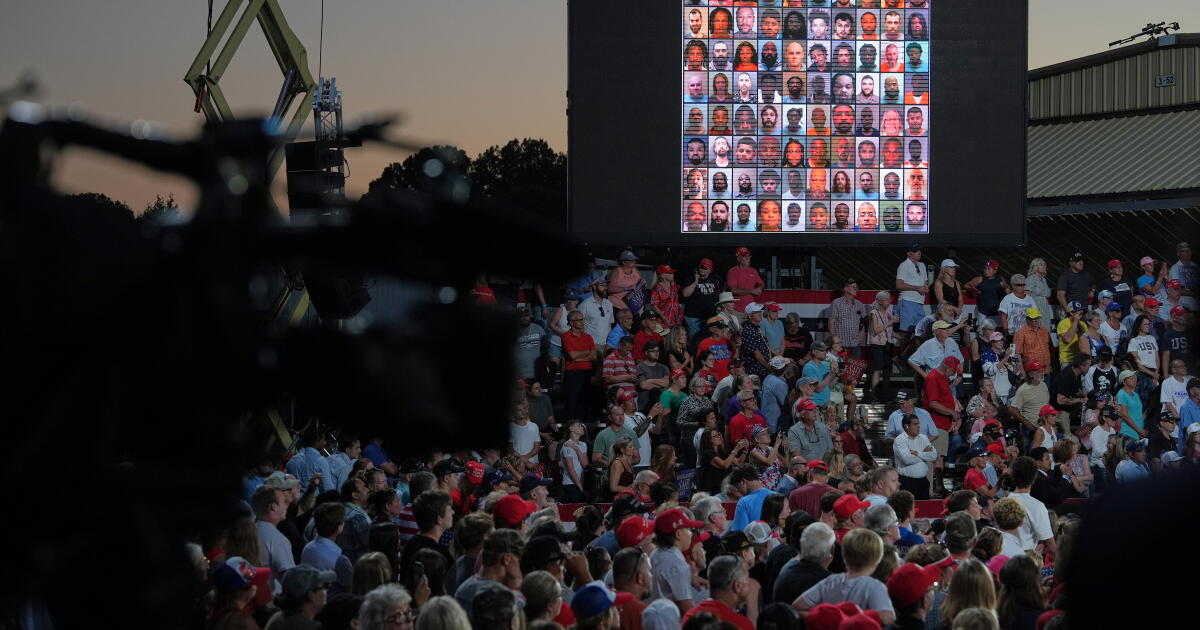
During the Gastonia rally, a mosaic of mug shots was displayed on a large screen for the crowd. Trump claimed Cooper had cut a deal with “radical activists” to release “some of the worst criminals in the nation into North Carolina.”
“He released these people. This is just a small group of them,” the president said, pointing to the mug shots that overwhelmingly featured Black people.
Although it is unclear under what circumstances the people in the mug shots were released, state corrections officials have said Brown was not released early from prison or under Cooper’s COVID-era prisoner-release settlement that Trump referenced.
Before fatally stabbing Zarutska, according to court records, Brown had been on a pretrial release over a misdemeanor offense that was ordered by a magistrate after Cooper left office.
‘Tapping into anger’
Republicans are under pressure to win over swayable voters as the November midterms approach with Democrats pushing to gain control of the House, the Senate, or both. Some political strategists say part of the ploy of adding Horton to the North Carolina Senate campaign is to rile up Trump’s base.
“He’s tapping into the anger to remind Republican voters of what he thinks their first principles are in hopes that will be successful for Republican candidates,” Gillespie said.
“He’s doing this to try and divert attention away from criticism of how he’s governing at the moment,” she added. “Democrats want to make the story of this election Trump’s low approval numbers, the war in Iran, inflation, being preoccupied with things that don’t make a whole lot of sense when there are really serious things going on in the country.”
Dewey Clayton, professor emeritus of political science at the University of Louisville, said Trump and other Republicans may be thinking that what worked before in the 2016 and 2024 elections presumably will work again in this year’s midterms.
“It was very effective,” Clayton said. “You do not necessarily have to look at it as racial, in and of itself, although [race] clearly becomes a component. In 2026, talking about ads going back in the 1980s? I’m sure he had consultants that were basically saying this is tried and true.”
The GOP may need the push in November, Gillespie warns. “I think the motivation by going back to these old strategies is there is real concern about Republican enthusiasm and you might see lower Republican turnout,” she said.
Rhetoric attempts to divert voters’ attention from rising costs
The tactic speaks to desperation by Trump and the Whatley campaign, according to Morgan Jackson, a partner with Nexus Strategies in Raleigh.
“Trump brings up Willie Horton to stoke racial division, something he’s used for the last 10 years,” said Jackson, who is chief strategist for Cooper’s campaign. “It is very clear from the president’s speech last night their only goal is to sow division and hate and lies. Michael Whatley doubles down in support of that effort.”
Jackson also said Trump and Whatley are trying to change the election’s message of “rising inflation and the cost of everything.”
“They want to use inflammatory rhetoric, hate speech and lies to sow division in a chance to win an election,” he said. “By referencing Willie Horton, they are showing their hand very clearly.”
The AP sent an email Thursday seeking comment from Whatley’s Senate campaign.
Williams writes for the Associated Press. Williams reported from Detroit. AP videojournalist Erik Verduzco in Gastonia, N.C., contributed to this report.
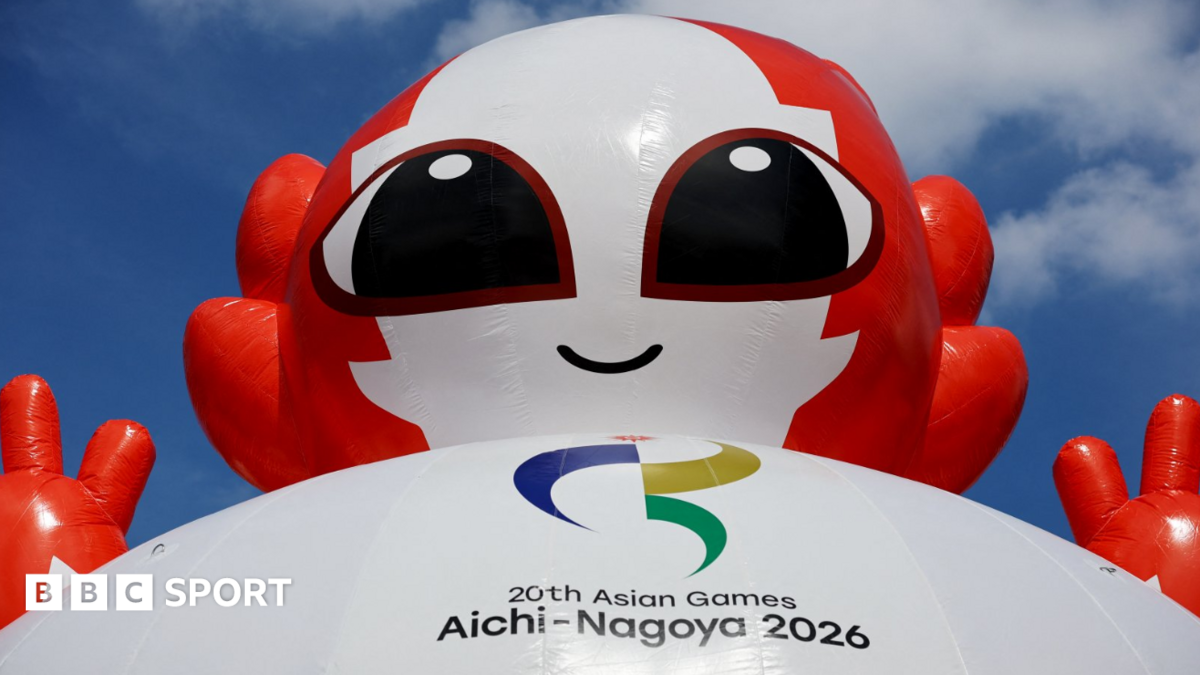
Organisers have apologised for playing the North Korean national anthem for the South Korean men’s hockey team at the Asian Games in Japan.
South Korea, who thrashed Bangladesh 5-0, looked confused as the incorrect national anthem was played.
South Korea’s Yonhap news agency reported that Bangladesh’s national anthem followed before South Korea’s actual anthem was played.
A stadium announcer did apologise for the mistake.
“This is a really serious problem. When we protested, they said, ‘We’re sorry. It wasn’t that it wasn’t prepared; there was a mistake on the part of those responsible for playing it’,” South Korea coach Min Tae-seok said.
“But this is something that simply should never happen.”
North Korea’s national anthem, along with other symbols of the secretive state, are banned in South Korea.
The two countries are still technically at war, after the 1950-53 conflict between the two ended without a peace treaty.
The build-up to the Asian Games, which officially starts on Saturday, has already seen complaints from teams about the quality and amount of accommodation.
A member of the South Korea basketball team posted a video of a leaking pipe and soaked floor in his room, with the caption: “Please help me.”
Some teams were also stranded at the airport for up to six hours when they landed this week.
Field hockey at the Asian Games started on Friday and runs until 3 October.
North Korea, enjoying support in the stands, were up 7-0 by half-time and are the favourites for the gold.
Published On 14 Sep 202614 Sep 2026
North Korea’s formidable women’s football team, cheered on by several hundred pro-Pyongyang fans in Osaka, Japan, launched their Asian Games campaign with a 10-0 hammering of Bangladesh.
The North Koreans have enjoyed stunning international success at the youth level and start among the favourites for gold in Japan.
Recommended Stories
list of 4 itemsend of list
They were far too hot for Bangladesh to handle and were seven goals ahead by half-time on Monday.
Striker Ri Song-a, who was born and raised in Japan, was in North Korea’s starting lineup and scored in the second half.
North Korea were cheered on by a large group of red-clad fans, who sang and chanted throughout the match.
The men’s and women’s football teams were welcomed by supporters waving flags as they arrived for the games last week wearing white blazers and pink ties.
More than 100 North Koreans are set to compete in 14 sports at the games, which take place in Nagoya-Aichi and officially open on September 19.
North Korea suspended participation in international sporting competitions during the COVID-19 pandemic, but returned at the Asian Games in China in 2023 and also took part in the Paris Olympics.
North Korea’s women face South Korea in a Group F grudge match on September 21.
The men’s team begin their campaign against China on Wednesday.
North Korean fans cheer for their team during the women’s group B football match [AFP]
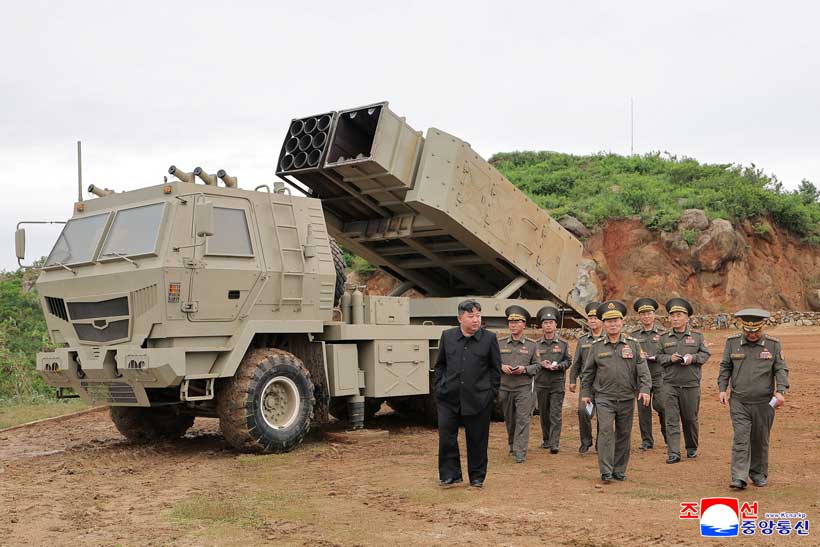
SEOUL: North Korea said Monday it conducted a joint live-fire drill involving missiles, artillery and drones that it claimed demonstrated “huge destructive power.”
The test included firing different types of weapons simultaneously, likely aiming at developing the ability to overwhelm South Korean and U.S. air defenses.
Experts say North Korea is not slowing its testing activities even after U.S. President Donald Trump recently scaled back a military exercise with South Korea in an apparent effort to revive diplomacy with leader Kim Jong Un.
The North’s official Korean Central News Agency said Saturday’s drill was meant to practice the operations of an integrated weapons control system. South Korea’s military earlier said it detected short-range ballistic missile launches from North Korea’s eastern coastal Wonsan area on Saturday morning.
After observing the firing drill, North Korean Marshal Pak Jong Chon said the drill would “improve the level of specialization to bring down the enemy’s armed forces organizationally and structurally once an order is issued.” He added that the weapons systems mobilized demonstrated “the huge destructive power of concentrated fire,” according to KCNA.
It’s extremely difficult to independently verify North Korean claims on its weapons tests. South Korea’s Joint Chiefs of Staff said several missiles fired Saturday each flew about 250 kilometers (155 miles) toward North Korea’s eastern waters. The flight distances signal that the weapons are designed to strike targets in South Korea including U.S. military bases.
The firing drill, which included North Korea’s first public ballistic missile launches in about three weeks, came a day after the United States, South Korea and Japan wrapped up a trilateral military exercise that North Korea views as a provocation.
In August, Trump ordered the Pentagon to “substantially reduce” a major bilateral military exercise with South Korea, citing what he called a good relationship with Kim. But North Korea rebuffed Trump’s overture, saying that shortening the drill didn’t change its “provocative, aggressive nature.” The Ulchi Freedom Shield exercise eventually ended six days earlier than originally scheduled.
Buoyed by his advancing nuclear arsenal and deepened ties with Russia and China, experts say Kim likely thinks he has greater leverage in possible diplomacy with the U.S. than when he first met Trump in 2018-2019.
Kim said earlier this year that he could return to talks if the U.S. drops its “hostile policy” against his country and respects what he calls the North’s status as a nuclear state.
SEOUL: North Korea said Monday it conducted a joint live-fire drill involving missiles, artillery and drones that it claimed demonstrated “huge destructive power.”
The test included firing different types of weapons simultaneously, likely aiming at developing the ability to overwhelm South Korean and U.S. air defenses.
Experts say North Korea is not slowing its testing activities even after U.S. President Donald Trump recently scaled back a military exercise with South Korea in an apparent effort to revive diplomacy with leader Kim Jong Un.
The North’s official Korean Central News Agency said Saturday’s drill was meant to practice the operations of an integrated weapons control system. South Korea’s military earlier said it detected short-range ballistic missile launches from North Korea’s eastern coastal Wonsan area on Saturday morning.
After observing the firing drill, North Korean Marshal Pak Jong Chon said the drill would “improve the level of specialization to bring down the enemy’s armed forces organizationally and structurally once an order is issued.” He added that the weapons systems mobilized demonstrated “the huge destructive power of concentrated fire,” according to KCNA.
It’s extremely difficult to independently verify North Korean claims on its weapons tests. South Korea’s Joint Chiefs of Staff said several missiles fired Saturday each flew about 250 kilometers (155 miles) toward North Korea’s eastern waters. The flight distances signal that the weapons are designed to strike targets in South Korea including U.S. military bases.
The firing drill, which included North Korea’s first public ballistic missile launches in about three weeks, came a day after the United States, South Korea and Japan wrapped up a trilateral military exercise that North Korea views as a provocation.
In August, Trump ordered the Pentagon to “substantially reduce” a major bilateral military exercise with South Korea, citing what he called a good relationship with Kim. But North Korea rebuffed Trump’s overture, saying that shortening the drill didn’t change its “provocative, aggressive nature.” The Ulchi Freedom Shield exercise eventually ended six days earlier than originally scheduled.
Buoyed by his advancing nuclear arsenal and deepened ties with Russia and China, experts say Kim likely thinks he has greater leverage in possible diplomacy with the U.S. than when he first met Trump in 2018-2019.
Kim said earlier this year that he could return to talks if the U.S. drops its “hostile policy” against his country and respects what he calls the North’s status as a nuclear state.
South Korea said it boosted its surveillance posture and was closely exchanging information on the launches with the US and Japan.
Published On 12 Sep 202612 Sep 2026
North Korea has fired ballistic missiles towards the sea off its eastern coast, according to South Korea’s military.
South Korea’s Joint Chiefs of Staff (JCS) said that it detected several missiles launched from North Korea’s eastern coastal area of Wonsan about 5:20am on Saturday (20:20 GMT on Friday), which flew about 250 kilometres (155 miles). It added that it is closely exchanging information on the launches with the United States and Japan.
Recommended Stories
list of 4 itemsend of list
South Korea’s presidential National Security Office said it held an emergency security meeting with the Defence Ministry, the JCS and other relevant agencies following the launch.
The US Pacific Command said North Korea’s launch event does not pose an immediate threat to US territory or to its allies, adding that Washington remains committed to the defence of South Korea and its other allies in the region.
The missiles were launched a day after South Korea concluded five days of joint maritime drills with the US and Japan that were focused on North Korea.
Hours after the exercises began on Monday, North Korea’s defence minister, Kim Song Gi, criticised the exercise and warned North Korea was capable of taking “strong and reflective countermeasures from the standpoint of power”.
Late last month, North Korea slammed plans for the so-called Freedom Edge exercises in international waters off South Korea as a “threat” to Pyongyang and other countries in the region.
The North also fired a barrage of missiles into the sea on August 20, despite an overture from US President Donald Trump, who said he planned to meet this year with North Korean leader Kim Jong Un.
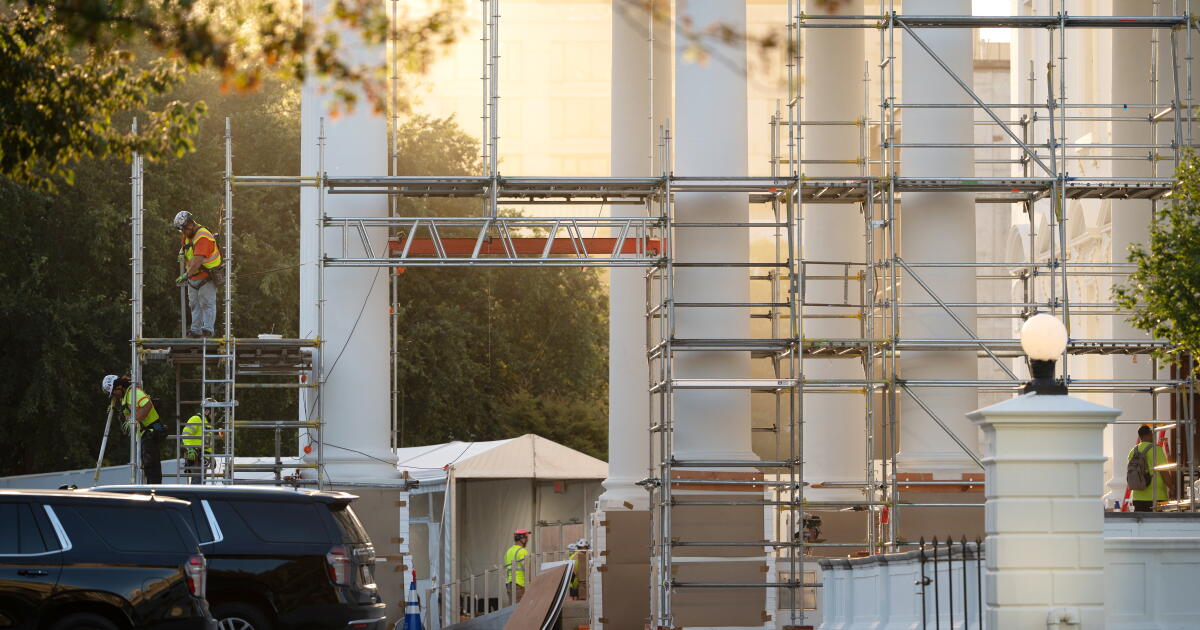
WASHINGTON — Work on the White House North Portico appears to be nearing completion before Chinese President Xi Jinping’s state visit to the United States in late September.
Scaffolding was being taken down Tuesday after workers over Labor Day weekend removed a shroud that had obscured the work. The Executive Mansion’s front columns had been covered since July. The work, ordered by President Trump, began in June.
The portico was first completed in 1830 during Andrew Jackson’s presidency. Administration officials said previously that stonework and plaster on the structure were being refurbished because of routine damage from age and weather exposure.
Trump has said he noticed it was in “deplorable condition” before insisting on repairs. The work is part of the president’s sweeping overhaul of the White House and other federal property in the nation’s capital — with most of his more ambitious moves drawing lawsuits and criticism from preservationists.
Trump said last week that workers finished construction of a helipad on the South Lawn.
His signature project, a White House ballroom and underground bunker, continues as legal fights play out. Multiple lawsuits were filed after Trump demolished the East Wing before going through the usual regulatory steps for major work on historic federal buildings in Washington. The massive project will add more square footage than what the existing White House footprint comprises.
That means Trump must host Xi’s state dinner, scheduled for Sept. 24, in existing spaces and in a construction zone — a circumstance that will afford the president a new opportunity to extol his ballroom project.
Barrow and Martin write for the Associated Press. Barrow reported from Atlanta.
Leader Kim Jong Un says vessel will form part of Pyongyang’s nuclear response system, strengthen naval forces.
Published On 7 Sep 20267 Sep 2026
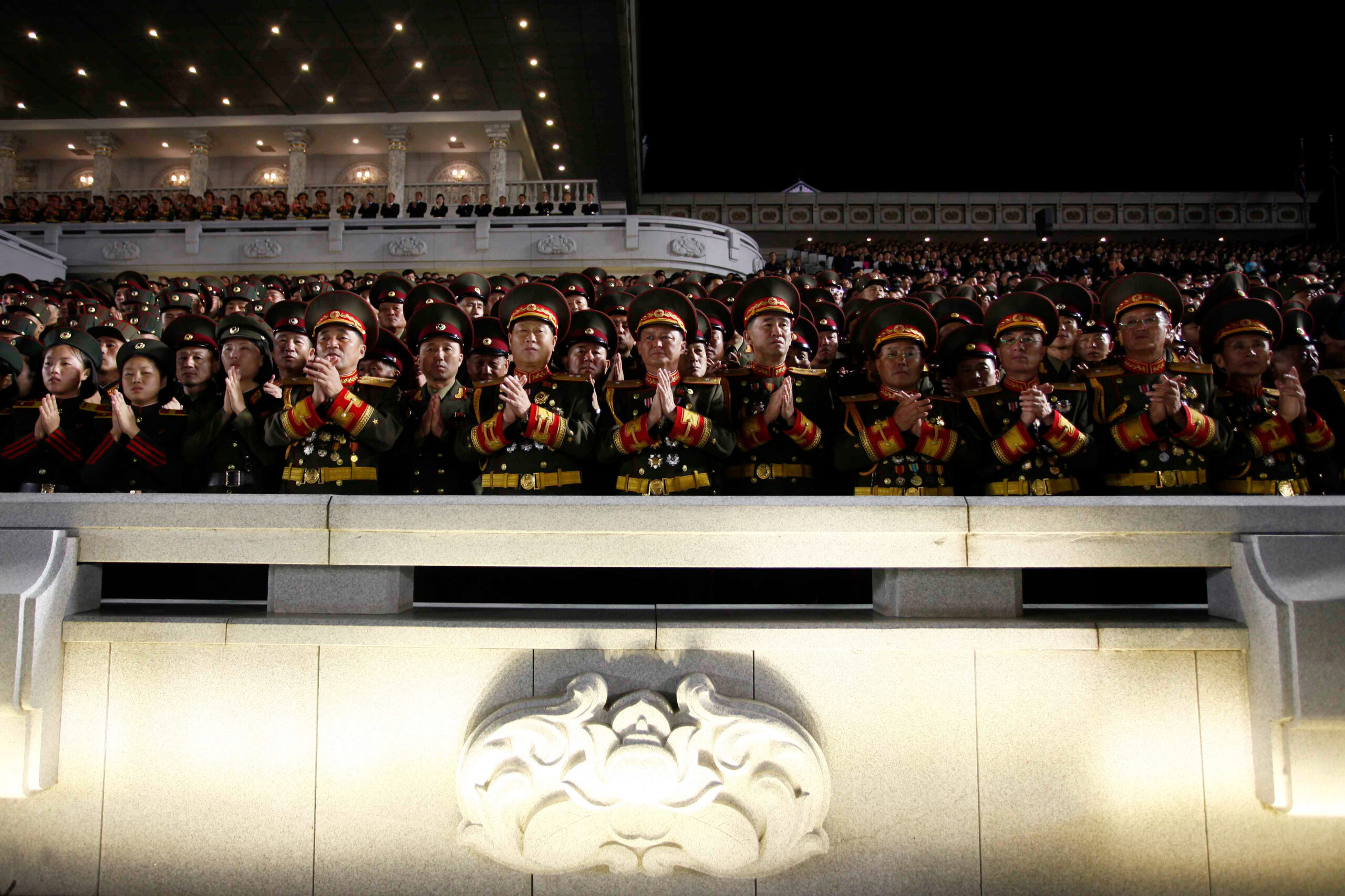
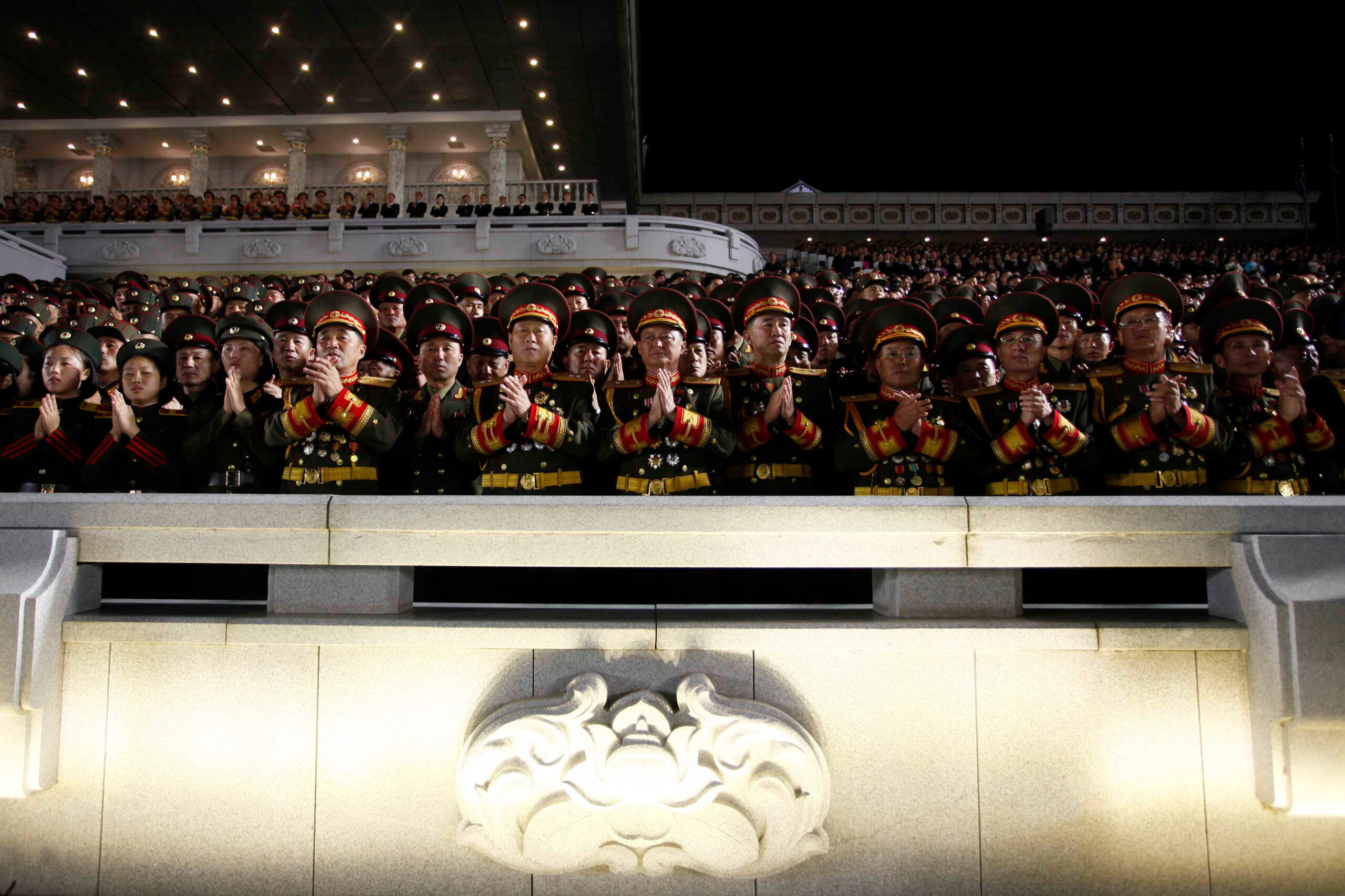
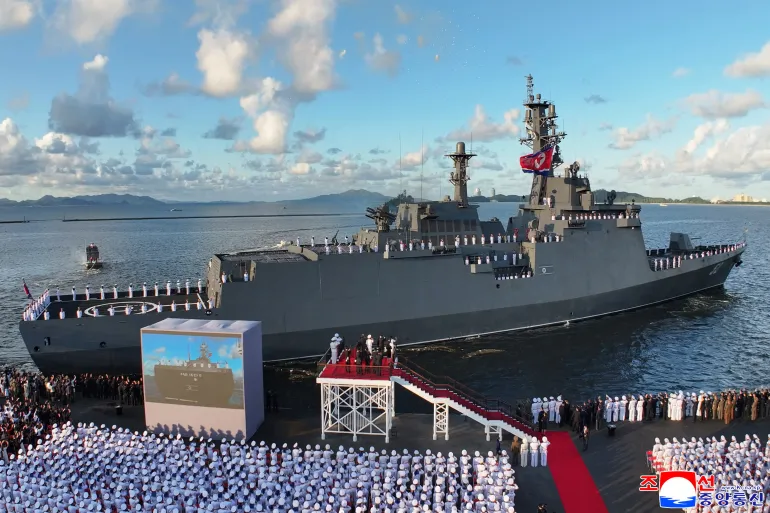
North Korean leader Kim Jong Un attended the commissioning of a warship he said could deliver “annihilating retaliatory strikes on an enemy”, citing “constant threats”, according to the state-run Korean Central News Agency (KCNA).
The Kang Kon, named after the North Korean military leader who was killed in action during the Korean War, was formally deployed at a ceremony at the eastern Wonsan Port in Kangwon Province on Sunday.
Recommended Stories
list of 3 itemsend of list
In his address, Kim said the warship “represents the self-respect and will” of North Korea to defend its rights and interests, KCNA reported.
“The time has come for us to exercise our sovereignty at sea and under water,” Kim said, according to KCNA.
He said that “dangerous shadows must be erased” and that North Korea was under constant threat in the “sea east of the Korean Peninsula and nearby waters”, KCNA reported.
KCNA did not specify what weapons systems might be deployed on the Kang Kon, but said it has the same weapons systems as the 5,000-tonne warship Choe Hyon launched in June.
A previous KCNA report said Choe Hyon-class destroyers can carry a range of weapons, including missiles that analysts say are capable of carrying a nuclear payload.
The commissioning ceremony of the destroyer ‘Kang Kon’, at Wonsan Port, North Korea, September 6, 2026 [KCNA/Reuters]
Sunday marks the third launch of the Kang Kon; the destroyer partially capsized during the first commissioning in May 2025 before it was repaired and relaunched the following month. It underwent further repairs and sea trials before completing weapons testing in July this year.
Kim said he would demonstrate another stage of North Korea’s naval buildup in eight months, KCNA said, without giving details.
North Korea has accelerated efforts to modernise its navy as Kim pursues a broader expansion of the country’s nuclear-capable forces.
He also said the construction of naval bases on North Korea’s east coast was under way and that the country would create new naval units and build different classes of warships.
Pyongyang, which calls itself an “irreversible” nuclear state, frames the build-up as deterrence against Washington and Seoul. The Korean Peninsula remains technically at war, and Kim has accused the allies of driving the region “to the brink of a nuclear war”.











![The commissioning ceremony of the destroyer "Kang Kon", at Wonsan Port, North Korea, September 6, 2026, in this picture released by North Korea's official Korean Central News Agency [KCNA/Reuters]](https://i0.wp.com/occasionaldigest.com/wp-content/uploads/2026/09/2026-09-06T221129Z_337993451_RC2XDNAY9M33_RTRMADP_3_NORTHKOREA-WARSHIP-1788736575.jpg?w=640&ssl=1)