North Wales

Man buys pint in ‘UK’s worst seaside town’ and is stunned when bill arrives

YouTuber Danny from the Honest Places channel visited different boozers in Rhyl in North Wales — a former tourist hotspot now dubbed one of Britain’s worst seaside resorts

A YouTuber who travelled to one of the so-called worst seaside resorts in Britain claimed he felt completely at ease there, where traditional boozers brimming with character were packed with locals enjoying affordable pints.

Danny, who operates the Honest Places channel, was visiting Llandudno and Rhyl in North Wales, with the latter having earned the nickname “Costa Del Dole”.

The resort is littered with abandoned buildings and establishments which have closed down permanently. Despite once being a magnet for holidaymakers, the pier, funfair and shopping centre have long since faded into memory.

The Telegraph listed it amongst the worst seaside resorts in Britain three years ago and described it as “Blackpool after a neutron bomb”. Danny, however, labelled it “Britain’s saddest seaside town” in his YouTube headline before speaking about it affectionately upon arrival.

He commented: “We have come to Rhyl because I felt a bit too out of place (in Llandudno). I feel actually at home in Rhyl.

“This is the front — it is such a contrast to Llandudno. I know people say British seaside towns have gone to s***. But they have been s*** for ages. This is a real British seaside town. Most of them are s*** and that is a real seaside town.

“So Whitby is a seaside town but it’s not a real British seaside town because the real ones are the ones that are like this, like Blackpool.

“But the main reason I came here, I didn’t want to go to another pub in Llandudno because it is just a bit tepid really.”

He continued: “There are some proper tasty pubs I went into last time where the barman and bar staff were just shouting at the customers and stuff like that.”

The first establishment he and a friend visited was Victory Club on Queen Street which has been welcoming drinkers for more than 70 years.

He wasn’t particularly taken with his pint of Caffrey’s Stout but remarked: “The gaff is alright though isn’t it?” His companion responded: “Yeah, tidy and reasonably cheap.”

Yet, if they considered paying £4 a pint reasonable value, they were in for a pleasant shock at their next destination.

They were drawn to The Bodfor and after hearing the booming music from within, Danny chuckled: “It does look good in there, doesn’t it? It reminds me a bit like Benidorm!”

He continued: “People will watch this back and say you should have went in but I’ve got a better boozer for you.”

Danny then headed towards the Imperial Hotel pub and described it as being like stepping into somebody’s front room.

Whilst at the bar, he announced that he had never sampled a pint of Fosters in his life, before deciding to try one.

And staring at his drink, he commented: “That head is beautiful! I don’t think I’ve had better head.”

After taking a gulp, he then remarked it was “fitting” to have a Fosters in Rhyl, before his friend responded: “Absolutely, for what it is, it’s a good pint. You want a fizzy, cold, tasteless pint. That’s what you get.”

Danny then admitted he was enjoying it more than anticipated before he enquired how cheap it was. After discovering the pint was just £2.70, he enthused: “Granted, it’s Fosters. But at that price, you can’t kick off. That’s got to be a 10/10.”

His friend then suggested that one could have a smashing night out in Rhyl with just a tenner and some loose change.

Stepping outside post-pints, Danny remarked: “We got some nice little tasty pubs, we saw Rhyl, it hasn’t changed. I don’t think it will change.”

Last year, reports suggested that Rhyl, which boasts four beaches, would undergo transformation thanks to £200million invested over the past decade, as per Denbighshire County Council.

The town also benefited from a £20million injection from the government’s Levelling Up fund three years ago.
Source link

UK village with Mediterranean architecture and sub-tropical gardens ‘feels like Italy’

A travel content creator believes this enchanting village is worthy of your holiday bucket list, with pastel buildings, sub-tropical gardens and stunning architecture that will transport you to the Mediterranean

Next time you’re planning a UK break, you might want to take note of a travel content creator who insists she’s discovered a picture-perfect spot that will make you “feel like you’re in Italy”.

After visiting the location, Amy Hulley described the captivating British village as thoroughly deserving of a place on your holiday “bucket list” as she posted an update to Instagram for her followers. “For a moment I genuinely forgot I was in the UK,” she confessed in a video. Visitors can purchase an entrance ticket to explore the village for the day, or book accommodation in one of its charming hotels and cottages.

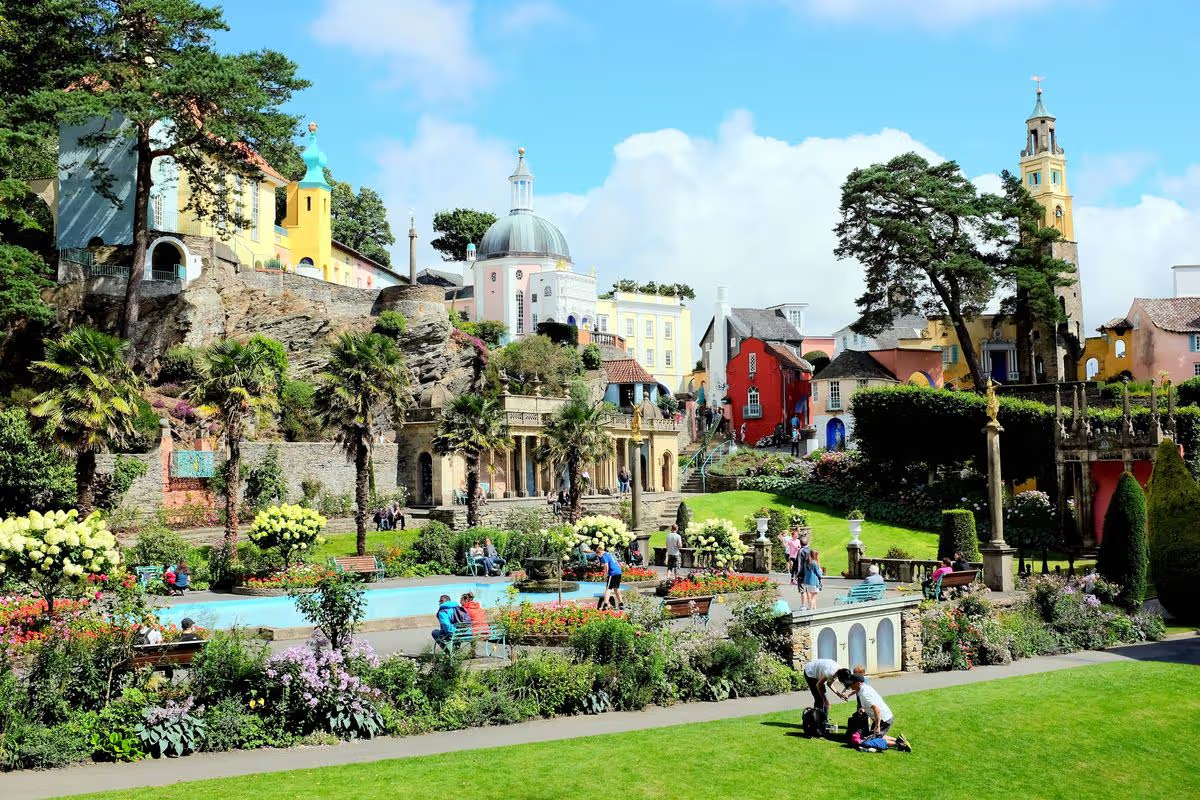
The destination? Portmeirion in Gwynedd, North Wales on the border of Snowdonia National Park.

Content cannot be displayed without consent

Amy added: “Pastel buildings. Arches and domes. Palm trees overlooking the water. It felt Mediterranean, almost cinematic.”

She also disclosed her visit happened to coincide with a steampunk festival, with period dress and live entertainment only contributing further to the “fun atmosphere”.

Discussing the village’s exotic gardens and remarkable architecture, Amy continued: “Sir Clough Williams-Ellis began creating it in 1925 to prove that colourful, theatrical design could sit beautifully within nature rather than damage it. Every building was carefully positioned to frame the estuary and protect the woodland around it.”

Writing in response, one past tourist praised: “A wonderful place to visit, a little expensive but worth it!”

A second person admitted: “Wow I can’t believe this is in the UK, Amy. Stunning Italian vibes.” A third enthused: “Can’t wait to visit here! So picturesque.”

While a fourth Instagram user gushed: “This is beautiful, it’s definitely on my bucket list now.”

Meanwhile, Portmeirion’s official tourism website proudly states: “Experience the magic of staying in Portmeirion. See the dawn break over the mountains of Meirionnydd; watch the tide fill the Dwyryd estuary from shore to shore.

“Stay in one of two luxury 4-star hotels or in a suite in the middle of the village. Portmeirion also offers self-catering accommodation on the picturesque North Wales coast. Situated on the southern flank of its own private peninsula, Portmeirion is a place apart.”

The village also features multiple cafes alongside an Italian-style gelateria serving genuine home-made gelato. “There are three shops in the village The Prisoner Shop with souvenirs of the famous series filmed here in 1966-67, the Rob Piercy Gallery and The Ship Shop with gifts, toys, housewares and Portmeirion Pottery best-ware, Portmeirion Pottery seconds as well as preserves, wines, and confectioneries,” the website continues.

It also served as the filming location for the 1960s cult classic series, The Prisoner, starring Patrick McGoohan. “It was probably one of the most influential pieces of television of the 1960’s not only in the UK and USA, but also in France, Australia, and many other countries,” according to the site.

The website elaborates: “The series is rich in imagery and visual impact. The surreal architecture of the village with its Mediterranean atmosphere coupled with the high-tech interiors, tannoys, surveillance cameras and piped music create a bizarre combination.”

Ensure our latest headlines always appear at the top of your Google Search by making us a Preferred Source. Click here to activate or add us as your Preferred Source in your Google search settings.

Source link

‘I own the smallest house in Britain and the last tenant was too tall to live there’

Owning the smallest house in Britain comes with its fair share of history and responsibility, but the owner’s ancestor only bought it for a mere £20

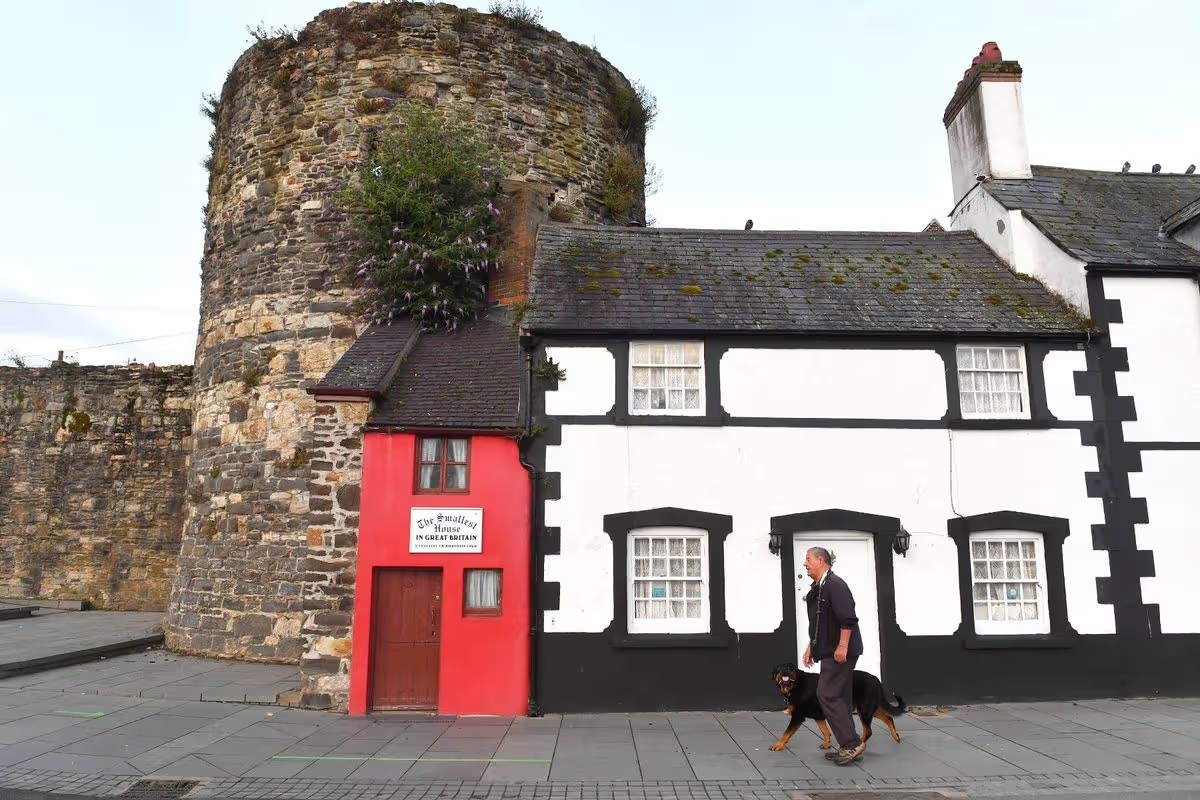
Year in, year out, tourists flock to this seaside village to see what is known as Britain’s tiniest home, and day in, day out, its owner is still in shock at just how much attraction it continues to gain.

Jan Tyley inherited the little red house in Conwyn, Wales, from her mother’s cousin back in 2015, and over 10 years later, she is heading up a small business that continues to boom, all thanks to its unusually small size.

Measuring just 72 inches wide and 122 inches high, it holds the official World Record of being the smallest house within the British Isles – a phenomenon that draws in roughly 50-60,000 visitors each year.

The origins of the place sit way back in her family, when her great-great-grandfather bought it in 1891 as a letting property with a sitting tenant. Jan shared: “He was called Robert Jones, and the sitting tenant was called Robert Jones, which has created a lot of confusion over the years.”

Tenants of the past

Robert, the tenant, was a six-foot-three fisherman who was living there up until 1899, when the local council decided that it was not, in fact, a house fit for human habitation.

“I’m 5’7″, and I have to duck to go in, and I frequently forget to come out again,” Jan joked. “So you can imagine what a sore back he must have had.”

Best holiday cottage deals in Wales

This article contains affiliate links, we will receive a commission on any sales we generate from it. Learn more
Sykes Cottages

From £35 per night

Sykes Cottages

See the deals

Wales is renowned for its stunning mountains, picturesque coastline and rich Celtic history. Sykes has a wide and varied collection of holiday cottages, houses and apartments across the country. Prices start from £35 per night with current deals.

There was no toilet, but instead a shared toilet with the cottages beside it, and so, they threatened to tear it down.

Disheartened and unsure what to do, the landlord was chatting to his friends at the pub, one of whom was the editor of the North Wales Weekly News, Roger Dawson, who suggested it may be the smallest in the country. This led them on a wild pursuit in which they travelled across the UK measuring numerous houses, after advertising the quest in newspapers.

In turn, the council agreed for it to stay put, but that nobody could actually live in it. “So being the enterprising chap, um, my great-great-grandfather said, ‘Well, I’ll turn it into a tourist attraction,'” Jan explained. In May 1900, it became a tourist attraction, and the family never looked back.

The building remains dressed as it was when it was last lived in in 1900, Jan confirmed. Unfortunately, being open to the public has meant they have seen a few items go missing over the years.

While it’s bursting with humorous stories and tales of those who once lived in this tiny abode, the reasoning for them inhabiting such an uncomfortably small space is a lot darker.

“It’s a real testament to the shortage of property in Conwy and how people wanted to live in a house of their own, because sadly the alternative was a poorhouse,” Jan explained.

“When Robert Jones, the last tenant, had to move out, that’s where he ended up. He was in the poorhouse, and sadly that’s where he died. So that’s why, although it’s tiny, people didn’t have a problem living there.”

During the 18th and 19th centuries in Wales, poorhouses were institutions designed for the less fortunate, with conditions made to be ‘prison-like’ in a bid to deter those in financial need from seeking help. Inhabitants were forced into rigid, segregated and often unsanitary living conditions, and so while the cottage was small, it was somewhere people could call their own.

According to records, there was shockingly a family of six all living within the tiny home – a mum and dad and four children. The little one’s beds were believed to be hammocks, which hooked on to the walls and sat in between the beams.

The house today

While the property remains in Jan’s hands, and with no looming threats from the council anytime soon, it continues to be a tourist attraction.

However, the one shift she has noticed in recent years is a rather unusual request, not from landlords or the council, but from YouTubers hoping to immerse themselves in the 1800s experience and share it online.

“I’ve had lots of YouTubers who say, ‘Oh, can we stay the night?’ and they think they’re the first one to think about it. Except, I probably get three or four of them a year.”

Although the house is closed during the winter, from March it is open seven days a week, from 10am right up until 4pm, and Jan has a team of people helping to keep the whole thing running.

“I have a team of eight lovely ladies who do the shift. So, we have two shifts a day. I take my turn on the door as well, but I live about half an hour’s drive away.”

Originally, Jan was living in Oxford, but after inheriting the property, she moved closer to the North Wales spot to take on its wealth of responsibilities.

But for her, it seems a worthwhile decision. She said: “It never ceases to surprise me how many people come to see it each year and from all over the world, which is amazing.

“I’m still amazed at how many people do come through our doors. We probably could get more if we were bigger, but then that wouldn’t be the point.”

Ensure our latest headlines always appear at the top of your Google Search by making us a Preferred Source. Click here to activate or add us as your Preferred Source in your Google search settings.

Source link

Britain’s tiniest church holds just 6 people and overlooks peaceful beach

The idyllic Welsh seaside town of Rhos-on-Sea is home to a remarkable landmark – a tiny chapel that holds the title for being the smallest in the British Isles

This picturesque seaside town in Conwy, Wales provides a far more tranquil coastal retreat for those seeking respite by the shore – whilst also being home to a remarkable UK landmark.

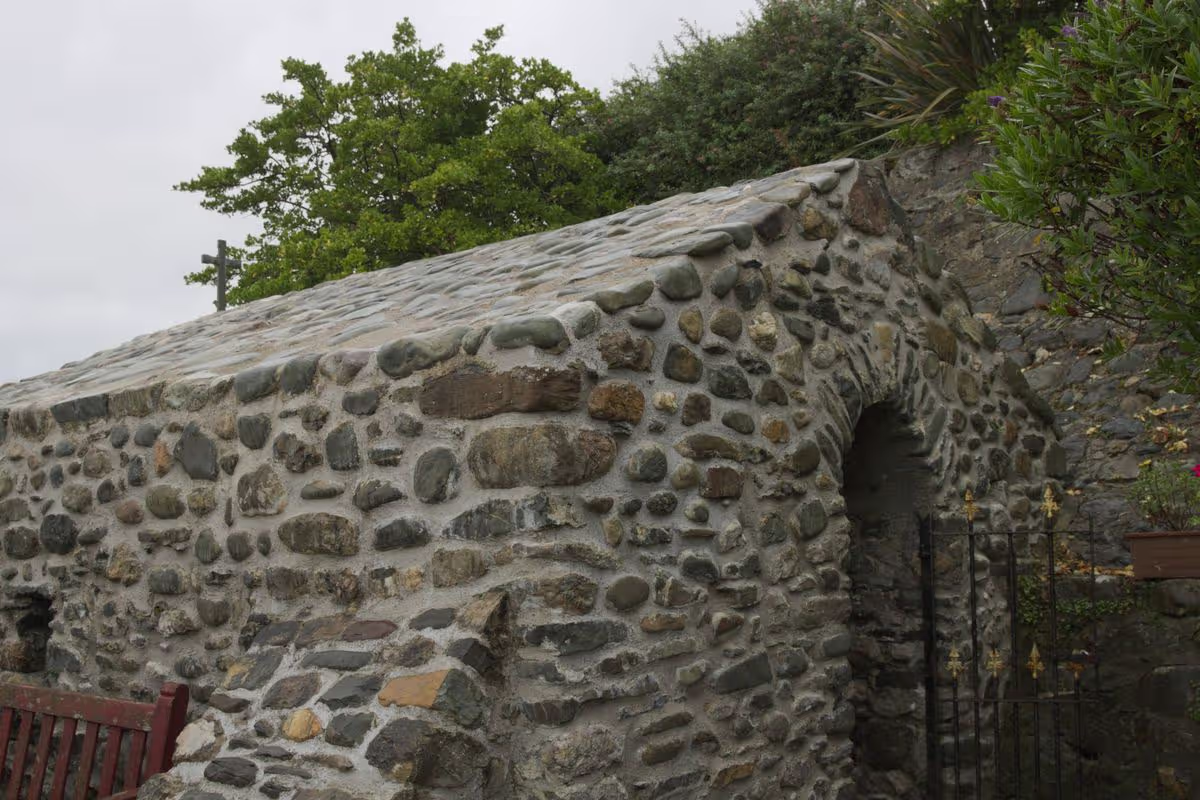
Nestled discreetly along a coastal path boasting breathtaking vistas of the Welsh coastline, sits a diminutive chapel in Rhos-on-Sea, so minute that it claims the distinction of being the smallest throughout the entire British Isles.

St Trillo’s Chapel is so compact that it can accommodate merely six worshippers at once, and astonishingly, communion services continue to be held there.

The chapel takes its name from St Trillo, a 6th-century saint who is believed to have constructed his cell on this very site.

Best holiday cottage deals in Wales

This article contains affiliate links, we will receive a commission on any sales we generate from it. Learn more
Sykes Cottages

From £35 per night

Sykes Cottages

See the deals

Wales is renowned for its stunning mountains, picturesque coastline and rich Celtic history. Sykes has a wide and varied collection of holiday cottages, houses and apartments across the country. Prices start from £35 per night with current deals.

History

When St Trillo established his cell, research indicates it was probably fashioned from timber and wattle, with the possibility that the saint collected and erected a stone barrier to shield it from harsh winds.

However, it was the natural spring within the chapel, furnishing the saint with fresh water, which rendered this location ideal for his dwelling. The well persists to this day, positioned before the altar, and is believed to possess considerable historical significance.

This very spring subsequently provided water for countless baptisms throughout the mediaeval parish of Llandrillo and is regarded as possessing curative properties.

The water is thought to flow westward underneath the floor straight from the well, which ‘carries the blessed soul’ from the altar towards the congregation.

While we have a good understanding of its structure today, there’s no specific date attributed to the chapel due to numerous repairs carried out over the centuries. Despite its diminutive size and stone roof, it retains the essence of the saint’s original space.

Present day

St Trillo’s Chapel is nestled next to Marine Drive, a scenic route that stretches from Colwyn Bay along the tranquil seafront. From the road, the chapel is almost hidden from view, but a small signpost will guide you to its location.

The most convenient place to park would be Trillo Avenue, located on the inland side of Marine Drive. From here, you can stroll back to Marine Drive and make your way towards the chapel. It’s just a few metres north of the junction and is accompanied by a small garden, overlooking the sea.

One visitor shared their experience on TripAdvisor, writing: “Stumbled across this as I was walking along the promenade. It was so cute, and I was surprised to see it was open.

“It was quite cold outside, so it was a relief to get out of the wind. Very peaceful inside with two candles burning, and it was well kept. Useful sign nearby detailing its history.”

Another visitor added: “I have been fascinated with this tiny little chapel ever since I read about it on TripAdvisor. Took ages to find but so worth it.

“I could of sat there for ages as it had a comforting and peaceful atmosphere. It is wonderful that it’s kept open for visitors and so well looked after. The little garden is beautifully kept. A magical place on the beach.”

The beach

Beyond the iconic chapel, visitors find themselves surrounded by the stunning scenery of Rhos-on-Sea Beach. A well-loved promenade for walkers and cyclists curves along the golden sands, dotted with numerous cafes, pubs and other establishments perfect for enjoying refreshments whilst overlooking the ocean.

The beach sits within easy reach of the town centre and forms part of the considerably longer three-mile Colwyn Bay coastline. Boasting sweeping sea vistas, it proves particularly popular with families during the summer months who flock here to sunbathe, paddle in the waves or enjoy various water sports.

One recent visitor described it as a “traditional seaside town”. They wrote: “Lovely traditional seaside resort. Clean beach, plenty of car parking, plenty of little cafes and little ice cream and gift shops, like seaside resorts used to be.”

Bear in mind that whilst parking spaces line the promenade, charges do apply. Additionally, dog walking restrictions are enforced on specific sections of the beach during the period between May and September.

Ensure our latest headlines always appear at the top of your Google Search by making us a Preferred Source. Click here to activate or add us as your Preferred Source in your Google search settings.

Source link

Abandoned quarry village forgotten in time at the end of the world

The isolated quarry village of Nant Gwrtheyrn was once a thriving community before it was abandoned. But it was given a new lease of life as a beloved Welsh language centre

Nestled between the Irish Sea and the Eifl mountains at the very edge of civilisation, this tiny village was once frozen in time before its thriving mining heritage was brought back to life.

The quarry at Nant Gwrtheyrn launched operations in 1861, adjacent to Porth y Nant, which now serves as a cherished language centre at the forefront of campaigns to revitalise the Welsh language.

In this remote community, residents’ existence centred around extracting and transporting Nant Gwrtheyrn stone for road surfacing – dispatching materials primarily via the Irish Sea, which resulted in scant interaction with the wider world, according to Nant Gwrtheyrn.

History.

When demand plummeted during the early stages of World War Two, the quarry closed, abandoning the local community to desolation. The worldwide conflict brought production to a standstill, reports Wales Online.

Best holiday cottage deals in Wales

Sykes Cottages

From £35 per night

Sykes Cottages

See the deals

Wales is renowned for its stunning mountains, picturesque coastline and rich Celtic history. Sykes has a wide and varied collection of holiday cottages, houses and apartments across the country. Prices start from £35 per night with current deals.

The villagers left and their homes fell to ruin. Apart from a brief spell in the 1860s when a handful of outsiders attempted to rejuvenate the settlement, the village stood deserted.

Visitors can step back in time to the era when quarry labourers lived in the local cottages by exploring the quarryman’s cottage. This dwelling and all its contents have been recreated to demonstrate how a quarryman and his family would have existed in 1910.

Subsequently, the location received an injection of funding that would construct a new school – which was eventually taken over by a local trust, spearheaded by Dr Carl Clowes, who established it to create a Welsh language centre.

Tre’r Ceiri.

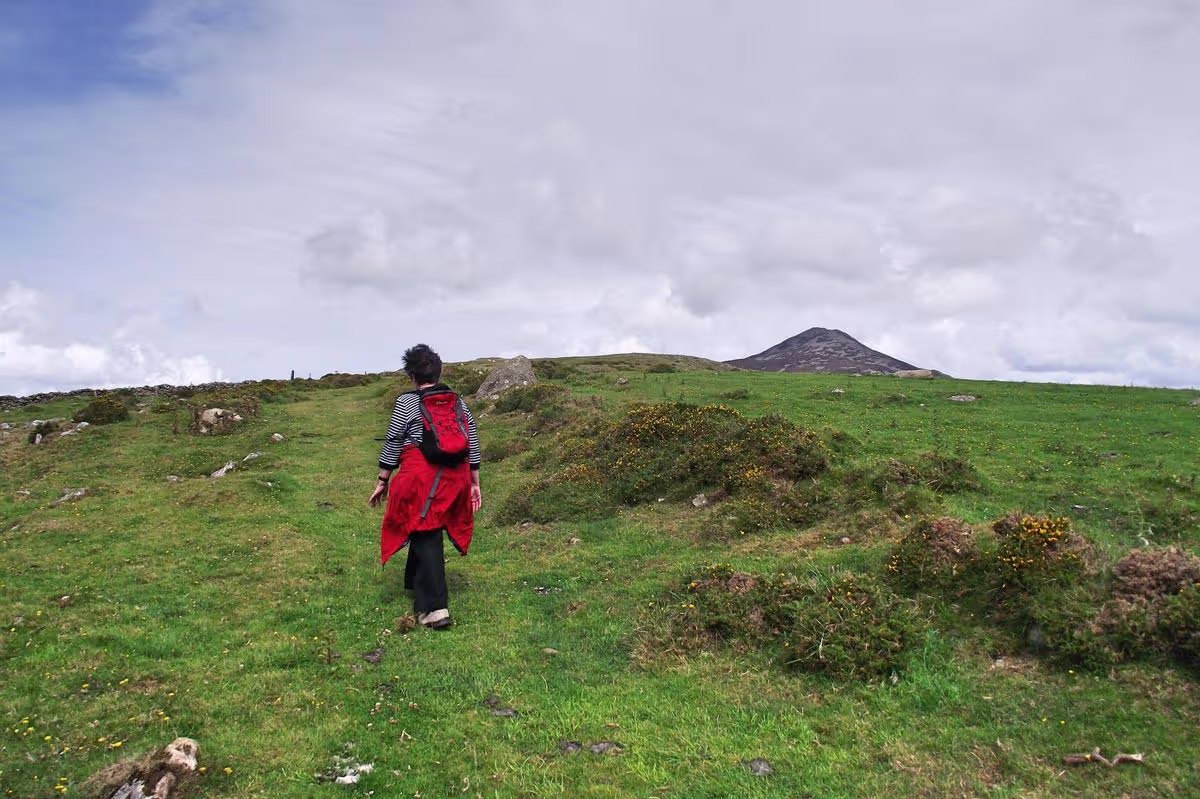
Close by stands Tre’r Ceiri – among Wales’ most impressive ancient sites.

Initially documented by Thomas Pennant, the renowned author of ‘Tours of Wales’, this represents some of the earliest archaeological proof of existence within the Iron Age hillforts scattered across the elevated terrain surrounding Nant Gwrtheyrn.

Both Tre’r Ceiri and Yr Eifl saw habitation from 150 BC through to 400 AD – our knowledge of them remains limited, though we understand they relied substantially on locally sourced iron, which was traded and exported.

Debs wrote on Trip Advisor: “What a fabulously tranquil place. We spent several hours here, walking and enjoying the peace and quiet. Found the history of Nant Gwrtheryn fascinating.

“We sampled the tasty cakes in the cafe. Would highly recommend a visit. We will most certainly return.”

One visitor said: “What a beautiful place. The Welsh Language Centre. The story behind the revival of this village is inspirational. The vision on a local doctor and the surrounding communities is worthy of a Hollywood film.

“The views are breathtaking and the road down is incredibly steep but worth it.

“We had breakfast in the cafe. Highly recommended good quality produce and full flavoured coffee. Another great plus was the indoor seating where we could have food with our dog.

“The lady who greeted us was so welcoming and friendly too. Just a beautiful place great walks too.”

Source link