North Korea

Why is Chinese President Xi Jinping visiting North Korea now? | International Trade News

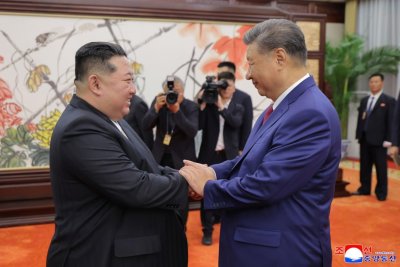
Chinese President Xi Jinping’s meeting with North Korea’s Kim Jong Un in Pyongyang on Sunday is significant for one reason.

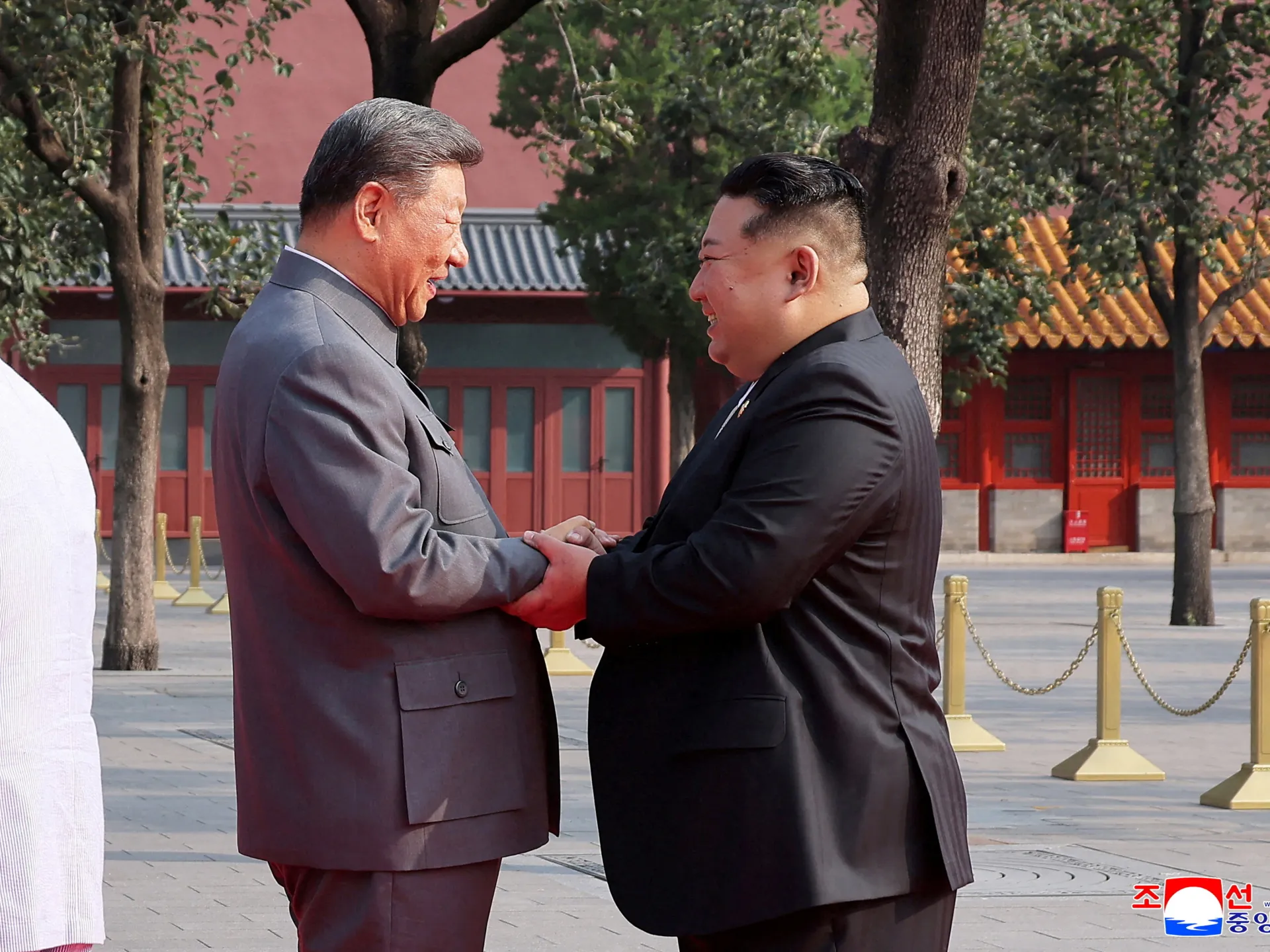
It’s not that they are meeting: The two men met in Beijing just a year ago when China held a massive military parade to mark 80 years since Japan surrendered unconditionally to Allied forces, bringing an end to the second world war.

Recommended Stories

list of 4 itemsend of list

What’s surprising is that Xi is travelling at all.

The Chinese leader has not travelled to Pyongyang since 2019, having steadily cut down his travel in recent years, and world leaders like US President Donald Trump and Russian leader Vladimir Putin generally come to him these days.

“We need to remember that Xi Jinping has not really travelled abroad that much,” William Yang, Crisis Group’s senior analyst for Northeast Asia, told Al Jazeera. “The growing trend is foreign leaders heading to Beijing to meet with him.

“For Xi Jinping to be the one who decides to travel to Pyongyang, it shows the level of significance that China attaches to this trip.”

Xi averaged about 14 trips a year between 2013 and 2019, but dropped to approximately six a year between 2022 and 2025, according to the Asia Society. In 2020, he made just one overseas trip, and in 2021, he made none, as China grappled with the COVID-19 pandemic.

He may be travelling now, though, amid concerns about North Korea’s relationship with Russia, Yang said.

Senior partner no more?

Traditionally, Beijing played the role of senior partner in the China-North Korea relationship, with North Korea heavily dependent on China for as much as 95 percent of its trade, according to one 2022 estimate from the National Committee on North Korea, a US-based nonprofit.

That dynamic has been changing since Russia’s 2022 invasion of Ukraine, however. North Korea has provided Russia with critical weapons, artillery and manpower and is credited by observers with helping to keep Moscow’s war machine going.

South Korea’s Institute for National Security Strategy, a government-funded research institute, estimates that since 2023, Moscow has paid North Korea as much as $14.4bn for troop deployments and the export of “artillery, shells, and guided and ballistic missiles”.

The report said that North Korea may only have received between $580m and $1.5bn of that in the form of “goods”, which means there is a “significant possibility that the majority of the payment from Moscow was in the form of ‘sensitive military technology or related precision parts and materials that are difficult to observe via satellite’,” according to a translation.

Although China shares a mutual defence treaty with North Korea, it is still wary of North Korea acquiring new military technology, Yang said.

“Beijing has always been very careful about providing military assistance to North Korea because they do not see a militarily stronger North Korea as necessarily in its favour,” he said. “A North Korea that is militarily emboldened through its relationship with Russia could be a potential source of disruption to the balance of power and status quo on the Korean Peninsula.”

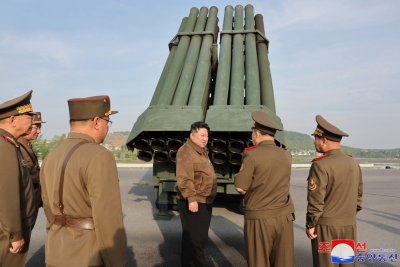
North Korea has already carried out eight missile launches since the start of the year, and in May unveiled a new AI-guided tactical cruise missile, according to North Korean media and the US Naval Institute.

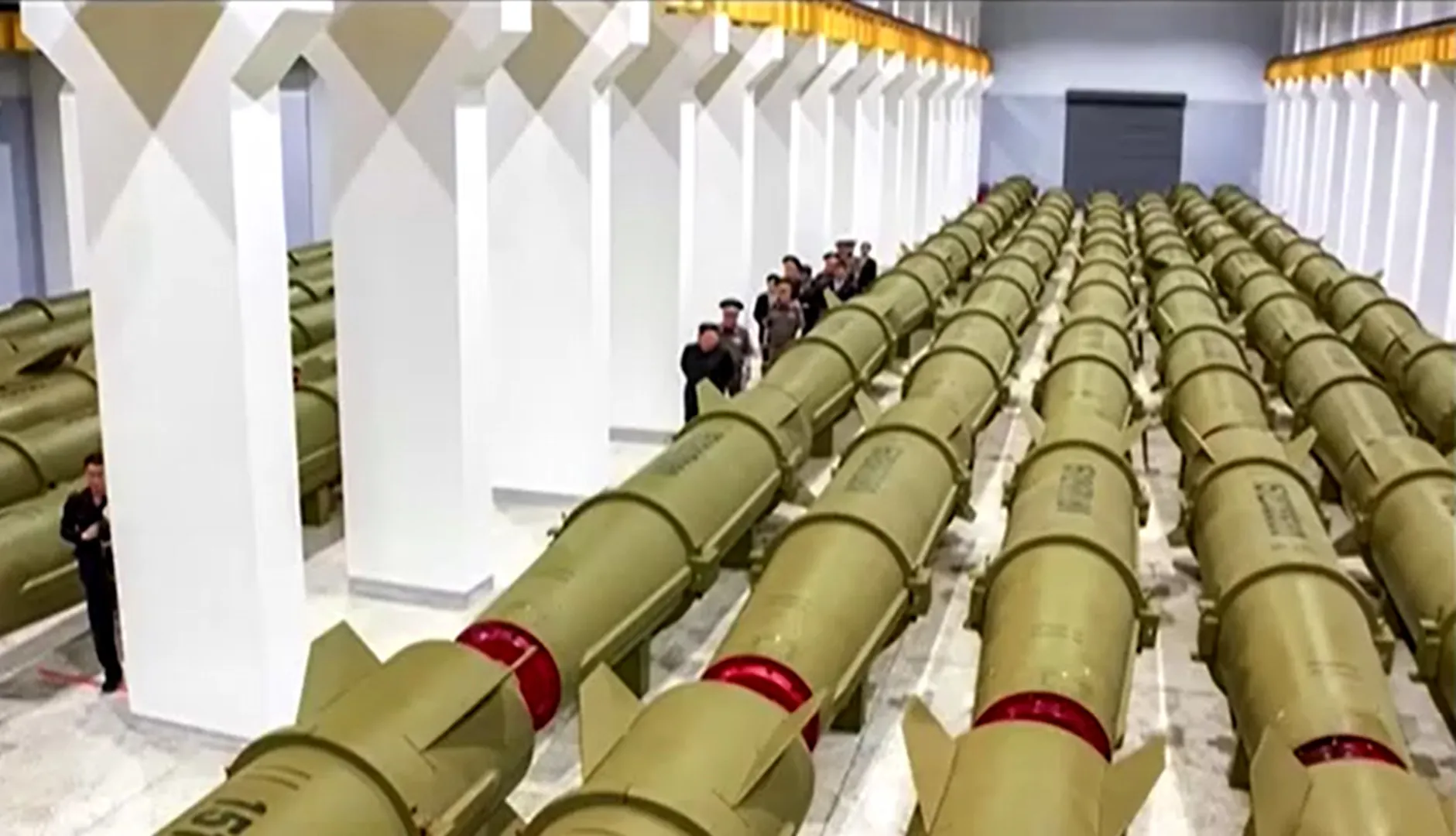
Earlier this week, North Korean state media also released photos of Kim touring a new “weapons-grade nuclear materials” factory, which would be used to expand Pyongyang’s nuclear capability at an “exponential rate”.

Fluctuating tensions

North Korea has technically been at war with South Korea since 1950, with the conflict suspended by a 1953 armistice agreement. The two countries are divided by a 250-kilometre-long (155-mile-long) Demilitarized Zone, splitting the Korean Peninsula.

Tensions have fluctuated dramatically over the years, reaching a recent low point in 2024 when Kim abandoned the long-term goal of Korean unification.

He has largely cut off communications ever since, according to observers. On Friday, South Korea’s Ministry of Foreign Affairs said that it hopes that Xi’s trip will “play a constructive role in addressing issues related to the Korean Peninsula” – suggesting that Seoul may have lobbied the Chinese leader to try to smooth over relations.

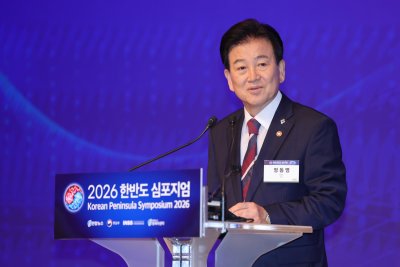
South Korean Minister of Unification Chung Dong-young separately told reporters last month that he expects the two leaders to discuss a possible meeting between Kim and Trump later in the year.

Xi may also be alarmed by other security developments in East Asia, including news of a possible military-logistics ‌‌‌‌‌‌‌‌support pact between South Korea and Japan, which was raised at the Shangri-La Dialogue of regional defence officials in Singapore last weekend.

While China and South Korea’s relationship fluctuates, its ties with Japan are acrimonious due to longstanding grievances dating back to Imperial Japan’s occupation of China in the 1930s and 1940s. Beijing has also objected to recent moves by Tokyo to expand its de facto military.

Source link

Xi Jinping to visit North Korea next week in first trip since 2019

Chinese President Xi Jinping (R) will visit North Korea next week, state media from both countries reported Friday. This photo shows North Korean leader Kim Jong Un and Xi shaking hands during a meeting at the Great Hall of the People in Beijing in September 2025. File Photo by KNCA/EPA

SEOUL, June 5 (UPI) — Chinese President Xi Jinping will visit North Korea next week, state media in both countries reported Friday, marking his first trip to the isolated state since 2019.

Xi will make the visit on June 8-9 at the invitation of North Korean leader Kim Jong Un, China’s official Xinhua News Agency reported. North Korea’s Korean Central News Agency also reported the upcoming trip, but neither outlet provided further details.

The trip will be Xi’s second to North Korea. He last made a two-day state visit in June 2019.

It comes amid a stretch of renewed high-level engagement between the longtime allies. Kim traveled to Beijing in September for a military parade marking the 80th anniversary of the end of World War II, where he held summit talks with Xi.

China has long been North Korea’s largest trading partner, and international observers say it continues to help Pyongyang skirt punishing economic sanctions. Ties had appeared to cool in recent years, however, as North Korea deepened military cooperation with Russia following Moscow’s invasion of Ukraine.

In exchange for providing troops and munitions to Russia, North Korea is believed to be receiving economic support and advanced military technology for its weapons programs, reducing its dependence on China and giving Kim greater leverage in dealings with Beijing.

The announcement of Xi’s visit comes one day after North Korea unveiled a new uranium enrichment facility used to produce fissile material for nuclear weapons, with Kim calling for an “exponential” increase in the country’s nuclear arsenal.

The visit also comes amid growing uncertainty over Beijing’s approach to North Korea’s nuclear ambitions.

After Xi met with U.S. President Donald Trump last month, the White House said the two leaders had reaffirmed their shared commitment to the denuclearization of North Korea. China’s Foreign Ministry, however, said only that the leaders had “exchanged views” on the Korean Peninsula.

Some analysts have suggested that China increasingly views North Korea’s nuclear capabilities as a “geopolitical asset” that helps constrain Washington as competition between the two powers intensifies.

The visit will be closely watched in Seoul, where President Lee Jae Myung has sought to ease tensions with Pyongyang since taking office last year.

Unification Minister Chung Dong-young on Thursday proposed a four-way dialogue involving the two Koreas, the United States and China aimed at establishing a peace regime on the peninsula.

South Korea’s Foreign Ministry said Friday that it hopes Xi’s visit will “play a constructive role in addressing issues related to the Korean Peninsula,” according to Yonhap News Agency.

Source link

Unification minister to be probed over alleged leak of N. Korean nuclear info

Unification Minister Chung Dong-young, seen here on May 12 at the Catholic Conference of Korea, will face an investigation over allegations that he leaked classified information related to North Korea’s nuclear facilities, prosecutors said Thursday. File Photo by Yonhap

Unification Minister Chung Dong-young will face a prosecution investigation over allegations that he leaked classified information related to North Korea‘s nuclear facilities.

The Seoul Southern District Prosecutors Office said Thursday that it received the case from the Seoul Central District Prosecutors Office on May 21 and assigned it. Chung is accused of violating laws governing the disclosure of official secrets.

During a parliamentary committee session on March 6, Chung said North Korea is operating another uranium enrichment facility in the northwestern region of Kusong, along with previously reported ones in Yongbyon and Kangson.

The government has previously officially identified Yongbyon and Kangson as the main locations hosting the North’s uranium enrichment facilities, with Kusong being identified as a site for the first time.

At the time, the United States was reportedly said to have conveyed its concerns through South Korean diplomatic, security and intelligence agencies.

The unification ministry responded that Chung’s remarks were based on comments by the head of the International Atomic Energy Agency and reports and analyses released by research institutions, as well as media outlets.

The ministry said Thursday the prosecution’s assignment of the case was merely a procedural step following the complaint and should not be interpreted as the formal launch of an investigation.

Copyright (c) Yonhap News Agency prohibits its content from being redistributed or reprinted without consent, and forbids the content from being learned and used by artificial intelligence systems.

Source link

N. Korea to hold key party meeting in late June: KCNA

North Korea will convene a plenary meeting of the ruling Workers’ Party of Korea next month, state media reported Monday. In this February photo, leader Kim Jong Un speaks during the opening of the ninth party congress. File Photo by KCNA/EPA

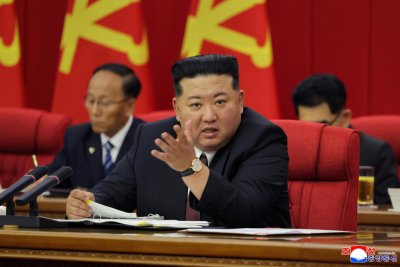
North Korea will convene a plenary meeting of the ruling Workers’ Party of Korea (WPK) next month for an interim review of state and party policies for this year, state media reported Monday.

The WPK’s political bureau has decided to hold the second plenary meeting of the ninth central committee in late June, according to the Korean Central News Agency (KCNA).

The meeting will be convened “in order to have an interim review of the implementation of the party and state policies for 2026 and discuss the work in the second half of the year and a series of important issues,” the KCNA said, without providing further details.

The North has recently been holding plenary meetings regularly at the end of June and December, while also convening them when important issues need to be discussed.

It remains to be seen whether North Korea will make major decisions regarding its policy stance against South Korea or the United States at the upcoming meeting, amid speculations Chinese President Xi Jinping may visit the North soon.

The planned June meeting comes as North Korea seeks to implement follow-up measures for decisions made at the ninth party congress held in late February.

The following month, the North revised its constitution to add a new territorial clause, defining its territory as the land bordering China and Russia to the north and South Korea to the south, while removing all references to unification with South Korea.

Copyright (c) Yonhap News Agency prohibits its content from being redistributed or reprinted without consent, and forbids the content from being learned and used by artificial intelligence systems.

Source link

Chinese President Xi likely to visit N. Korea as early as next week: sources

Chinese President Xi Jinping (R) will likely visit North Korea as early as next week, sources said Wednesday. In this photo, Xi shakes hands with North Korean leader Kim Jong Un during a meeting in Beijing. File Photo by KCNA/EPA

Chinese President Xi Jinping will likely visit North Korea as early as next week, sources said Wednesday.

“We have obtained intelligence indicating that President Xi Jinping will visit North Korea soon,” a high-ranking government official told Yonhap News Agency.

Another government official also said there is a high possibility of Xi visiting North Korea later this month or early next month, noting Chinese Foreign Minister Wang Yi‘s visit to Pyongyang last month and the recent trips by Xi’s security guards and ceremonial staff to the North Korean capital.

During the meeting with Wang, North Korean leader Kim Jong-un expressed willingness to strengthen high-level exchanges and enhance strategic communication with Beijing, as he recalled his visit to China last year.

The two nations mark the 65th anniversary of signing a comprehensive treaty on cooperation this year.

Xi’s possible visit to the reclusive regime also follows summit talks with U.S President Donald Trump in Beijing last week. During the talks, the two leaders reaffirmed their shared goal of denuclearizing North Korea.

A separate government source said the Chinese leader could seek to mediate relations between North Korea and the United States.

During his state visit to China in January, South Korean President Lee Jae Myung asked Xi to help mediate inter-Korean relations, and the Chinese leader responded positively to the request, according to the source.

Copyright (c) Yonhap News Agency prohibits its content from being redistributed or reprinted without consent, and forbids the content from being learned and used by artificial intelligence systems.

Source link

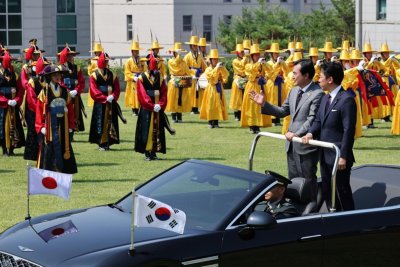
Japan PM Takaichi arrives in S. Korea ahead of summit with Lee in Andong

President Lee Jae Myung (R) welcomes Japanese Prime Minister Sanae Takaichi at a hotel in Andong, about 190 kilometers southeast of Seoul, on Tuesday, ahead of their summit. Photo by Yonhap

Japanese Prime Minister Sanae Takaichi arrived Tuesday at an airport in the South Korean city of Daegu for a two-day trip that will include a summit with President Lee Jae Myung in his hometown of Andong.

Lee and Takaichi are scheduled to hold talks in Andong, about 190 kilometers southeast of Seoul, later in the day, which are expected to cover a wide range of bilateral and regional issues, including North Korea and the prolonged U.S.-Iran war in the Middle East.

Takaichi’s trip reciprocates Lee’s visit to her hometown of Nara Prefecture in January when the two last met in person as part of the neighboring countries’ ongoing “shuttle diplomacy.”

As military guards of honor welcomed her, Second Vice Foreign Minister Kim Jina received her before an escorted vehicle took her toward a hotel in Andong, where she is scheduled hold talks with Lee.

Around 170 police officers and 40 patrol cars and motorcycles were deployed at and around the airport to ensure safety during Takaichi’s arrival.

Shortly after her arrival in Andong, Lee welcomed Takaichi with a hug at the entrance of a hotel, wearing a light sky-blue tie matching the color of the Japanese leader’s suit.

“You have gone to great trouble to come all the way to this small city,” Lee told Takaichi before ushering her into the hotel, according to a pool report.

Following her summit with Lee later in the day, the two leaders will make a joint press announcement on the results of their meeting, followed by a banquet dinner and a performance.

The Japanese prime minister is scheduled to return home Wednesday morning via the Daegu airport.

Copyright (c) Yonhap News Agency prohibits its content from being redistributed or reprinted without consent, and forbids the content from being learned and used by artificial intelligence systems.

Source link

Unification white paper pivots to peaceful ‘two-state’ coexistence with N. Korea

South Korea’s Unification Ministry on Monday released a new white paper focusing on peaceful coexistence with North Korea. This photo shows the Unification Bridge in Paju, across the border from the North, on Oct. 26, 2025. File Photo by Yonhap

The Lee Jae Myung government has shifted its focus to a peaceful “two-state” coexistence with North Korea, rather than pressure and confrontation, the unification ministry’s white paper showed Monday, striking a markedly different tone from its predecessor.

The annual paper reflects the push by the Lee government, which took office in June last year, to repair the strained inter-Korean relationship based on building mutual trust.

The previous conservative Yoon Suk Yeol government sought to bring about change in North Korea through pressure and the influx of outside information.

The latest white paper laid out three key guiding principles: Seoul respects North Korea’s system, does not pursue unification by absorption and does not engage in hostile activities.

Built on these principles, the government has framed its overarching policy as one of “peaceful coexistence and mutual growth on the Korean Peninsula.”

In particular, regarding Pyongyang’s “two hostile states” policy, the document specified the ministry’s stance that highlights the need for a transition to a “peace-oriented two-state relationship” aimed at achieving unification.

At a year-end party meeting in December 2023, the North Korean leader declared inter-Korean relations as those between “two states hostile to each other” and has since pursued hostile policies toward Seoul.

“Considering the reality that the South and the North exist as two de facto states, we intend to develop inter-Korean relations into a relationship of peaceful coexistence while still aiming for unification,” the ministry said.

Critics said the ministry’s “peace-oriented two-state relationship” narrative runs counter to the long-held stance that inter-Korean ties are a “special relationship” tentatively formed in the process of seeking unification, not as state-to-state relations.

Among the measures cited is the Lee government’s decision to halt the sending of anti-Pyongyang leaflets to North Korea and stop loudspeaker broadcasts along the border as steps to ease military tension and rebuild trust.

The paper also outlines plans to revive the Sept. 19 inter-Korean military agreement, signed by former President Moon Jae-in and North Korean leader Kim Jong-un in 2018, and pursue a bilateral accord to establish a systematic foundation for peaceful coexistence.

The shift in policy priorities is visible in the paper’s language. References to “peace” and “peaceful coexistence” surged to 196 from 29 and mentions of “meeting” or “dialogue” rose to 58 from 16.

By contrast, the section on North Korean human rights has been significantly scaled back. The term “North Korea’s human rights” dropped to 26 from 156, and “freedom” fell to three from 43. Mentions of “North Korean defectors” plummeted to just 10 from 203.

In a foreword message for the paper, Unification Minister Chung Dong-young stated, “Peace on the Korean Peninsula is not a choice for us, but a lifeline.”

“As we practice peace through actions rather than words, I hope that the South and the North can sit down together once again as neighbors peacefully coexisting with each other,” he added.

Despite Seoul’s olive branch, inter-Korean relations remain virtually frozen. There has been no inter-Korean human exchange in five years and no economic exchange whatsoever, the paper showed.

Pyongyang, meanwhile, has doubled down on its two-state policy, revising its constitution to remove all references to unification and cutting off remaining ties with Seoul.

Copyright (c) Yonhap News Agency prohibits its content from being redistributed or reprinted without consent, and forbids the content from being learned and used by artificial intelligence systems.

Source link

North Korea’s Kim calls for ‘impregnable fortress’ at southern border

SEOUL, May 18 (UPI) — North Korean leader Kim Jong Un convened a meeting with commanding officers from across the country’s armed forces and called for strengthening frontline defenses along the border with South Korea to create an “impregnable fortress,” state-run media reported Monday.

Kim held the meeting at the headquarters of the ruling Workers’ Party Central Committee on Sunday, the official Korean Central News Agency said. It was the first known gathering of all division and brigade commanders since Kim took power in 2011.

Kim called for the “rapid modernization of the military and technical equipment of our army” and stressed the need to adapt military training to the changing nature of modern warfare, KCNA said.

He emphasized the country’s “territorial defense” policy, including “strengthening the first-line units in the southern border and turning the border line into an impregnable fortress,” according to the report.

KCNA said Kim outlined plans to reorganize the military structure and bolster frontline and other major units with upgraded weapons and technology as part of efforts to strengthen deterrence.

Earlier this month, North Korea announced plans to deploy new 155 mm self-propelled howitzers to three battalions assigned to long-range artillery units along the southern border this year.

The meeting comes as Pyongyang hardens its military posture toward Seoul and formally abandons decades-old reunification language.

North Korea recently revised its constitution to remove all references to reunification with South Korea, cementing Kim’s push to redefine inter-Korean ties as relations between two separate states.

The two Koreas remain technically at war because the 1950-53 Korean War ended in an armistice rather than a peace treaty.

South Korea’s Unification Ministry assessed Monday that the meeting appeared aimed at encouraging the military while reinforcing ideological discipline and modernization efforts.

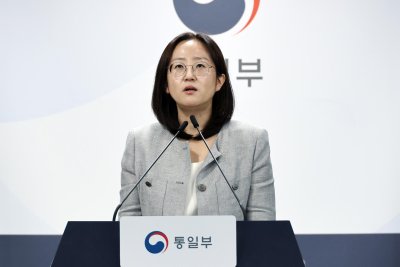
“North Korea has adopted a two-state stance, and there appear to be trends in that regard,” ministry spokesman Yoon Min-ho said at a regular press briefing. “We will continue to closely monitor related trends in the future.”

Asked whether the North’s latest moves could escalate the situation along the border, Yoon said Seoul would continue efforts to reduce military tensions and build trust on the Korean Peninsula.

South Korean President Lee Jae Myung has sought to reduce tensions since taking office in June, including by dismantling border propaganda loudspeakers and calling for renewed dialogue, but Pyongyang has largely ignored the overtures while continuing to expand its military capabilities.

On Monday, the Unification Ministry released its annual white paper, which defined Seoul’s new “Korean Peninsula peaceful coexistence policy.”

The policy is based on principles President Lee outlined in August, including respecting North Korea’s system, rejecting unification by absorption and avoiding hostile acts.

Source link

U.S., N.K. appear unprepared for summit, but possibility cannot be ruled out: Seoul official

This photo, taken June 30, 2019, shows U.S. President Donald Trump and North Korean leader Kim Jong Un meeting at the House of Freedom in the inter-Korean border village of Panmunjom. File Photo by Yonhap

Preparations for a summit between U.S. President Donald Trump and North Korean leader Kim Jong-un appear almost nonexistent on the occasion of Trump’s ongoing visit to China, but the possibility cannot be ruled out, a senior South Korean government said Thursday.

“At this stage, the possibility of a U.S.-North Korea summit cannot be ruled out. However, our understanding is that almost no preparations have been made. We shall have to wait and see,” the foreign ministry official said on the chances of a meeting between Trump and Kim.

Trump traveled to Beijing on Wednesday for a three-day visit, marking his first trip to China since November 2017. He and Xi last met in person in Busan, South Korea, in late October on the margins of the Asia-Pacific Economic Cooperation summit.

The U.S. president has repeatedly expressed his desire to reengage with Kim despite concerns about Pyongyang’s advancing nuclear and missile programs.

Trump held three in-person meetings with Kim during his first term — the first in Singapore in February 2018, the second in Hanoi in February 2019 and the last one at the inter-Korean truce village of Panmunjom in June that year.

The Seoul official noted there can “always be unpredictable developments” regarding summit meetings involving Trump. “Since the visit has already begun, we will have to watch closely.”

Regarding the U.S.-China summit, the official said South Korea has received relatively detailed explanations of the meeting from both Washington and Beijing.

The ministry official also said Seoul and Washington have been in consultations over security issues behind the scenes, including South Korea’s bid to acquire nuclear-powered submarines, and uranium enrichment and reprocessing capabilities, despite delays in formal meetings due to scheduling issues on both sides.

“There will be significant progress before the U.S. midterm elections,” the official said.

Regarding the resumed “shuttle diplomacy” between the leaders of South Korea and Japan, the official suggested another summit could take place in the near future.

Copyright (c) Yonhap News Agency prohibits its content from being redistributed or reprinted without consent, and forbids the content from being learned and used by artificial intelligence systems.

Source link

U.N. commissioner says engagement with North Korea must focus on rights

United Nations High Commissioner for Human Rights Volker Turk, seen here at a press conference in Seoul on Wednesday, called for a heightened focus on human rights issues in North Korea. Photo by Thomas Maresca/UPI

SEOUL, May 13 (UPI) — United Nations High Commissioner for Human Rights Volker Turk on Wednesday called for an “all hands on deck” response to North Korea’s human rights crisis, saying efforts to address peace and security on the Korean Peninsula “need to be anchored in human rights.”

“The situation in the DPRK is a human rights crisis and it is high time the international community treats it as such,” Turk said at a press conference in Seoul, using the official acronym for North Korea.

“My office has continued to document patterns of ongoing gross human rights violations, some of which may amount to crimes against humanity,” he said.

Turk is on a three-day trip to South Korea, where he is meeting with civil society groups, North Korean escapees and senior government officials. It is the first visit by a U.N. human rights chief since 2015.

A 2014 U.N. Commission of Inquiry report found North Korea’s abuses to be “without parallel in the contemporary world” and recommended referring the country’s leadership to the International Criminal Court.

A follow-up assessment released last year by the U.N. human rights office said conditions in North Korea “have not improved over the past decade and, in many instances, have degraded,” citing worsening food shortages, forced labor and severe restrictions on movement and expression.

“It is clear that there needs to be accountability in all its forms, including non-judicial forms, for the grave violations that have plagued the DPRK for decades,” Turk said.

“It is equally clear that we need all hands on deck to craft fresh solutions for the way forward,” he added. “Peace and security on the Korean peninsula need to be anchored in human rights.”

Turk’s trip comes as South Korean President Lee Jae Myung pursues improved ties with Pyongyang through confidence-building measures such as restricting activist groups from sending anti-North Korean propaganda leaflets across the border.

Lee’s administration has also taken a cautious approach to North Korean rights concerns, including dissolving a Unification Ministry office focused on the issue and suspending publication of an annual rights report. Advocacy groups have criticized the moves as a “troubling shift away from support for the victims of North Korean government repression.”

Turk pushed back against the notion that dialogue with Pyongyang requires softening criticism of its rights record.

“There is no paradox in engaging while addressing human rights issues,” he said. “Engagement cannot come at the expense of human rights. That was obviously a very important part of my dialogue with the authorities here.”

In March, South Korea joined 49 other countries in co-sponsoring a U.N. Human Rights Council resolution condemning North Korea’s abuses, despite speculation Seoul might withhold support.

Turk also addressed the case of two North Korean prisoners of war captured by Ukrainian forces in January 2025 after being deployed to support Russia’s war effort.

The soldiers have expressed a desire to go to South Korea rather than return to the North, where rights groups say they could face severe punishment.

Turk said international human rights law was “very clear” on the issue.

“The obligation not to send them back to areas where they could end up being harmed” applies in their case, he said.

Turk said his office continues to seek opportunities for dialogue with North Korean officials and called next week’s visit by a North Korean women’s soccer team to South Korea “encouraging.”

“Urgent steps are needed to find ways to exchange letters, resume family contacts and reunions, and release information clarifying the whereabouts and fate of disappeared and abducted people,” he said.

On Thursday, Turk is scheduled to travel to Gwangju to deliver a keynote address at the World Human Rights Cities Forum.

Wreathes are seen amongst the statues at the Korean War Veterans Memorial during Memorial Day weekend in Washington on May 27, 2023. Memorial Day, which honors U.S. military personnel who died while in service, is held on the last Monday of May. Photo by Bonnie Cash/UPI | License Photo

Source link