North-Central

Displaced Survivors of Kwara Massacre Recount a Night of Terror

Hauwa Abdulkarim was inside her house when the violence began. 

As evening settled over Woro, a village in Kaiama Local Government Area (LGA) of Kwara State, North Central Nigeria, on Feb. 3, the terrorists descended on motorcycles like a sudden storm. What began as a seemingly ordinary evening quickly turned into chaos, with about 170 people killed, their homes set ablaze, celebrations interrupted, and families forced to flee.

“Most of the youths were at the field playing football [on a school field close to the house]. Then we saw people running back home with the news that kidnappers had entered the town,” Hauwa recounted. 

At first, she did not panic. The terrorists had sent word days earlier, a letter to the district head saying they were coming to “preach”. When the motorcycles rolled in, there was confusion and fear.

Then the shooting started. 

“Upon entering the village [around 5 p.m.], they started shooting at people,” she said. The football field emptied in seconds. Inside her house, Hauwa and her husband tried to gather their children, counting them quickly and realising some were still outside.

“We were thinking about some of our children who were outside and those that went to the football field. The shooting continued until 5 a.m., the next day,” Hauwa added. 

But the terror was not continuous. It came in waves.

“When it was time for the call to prayer, they suddenly stopped,” she recalled. “They made the call to prayer for Maghrib and called out people to pray.”

The silence was almost as frightening as the gunfire. After the prayer, the shooting resumed. “They did the same for the late-night prayer, stopping briefly to make the call to prayer and observe it. Afterwards, they resumed shooting through the night,” Hauwa told HumAngle.

Two women in vibrant pink and purple hijabs sit side by side on a bench against a textured concrete wall.
Hauwa’s mother, Hajiya Aisha (in pink), and her neighbour also escaped the massacre in Woro. Photo: Isah Ismaila/HumAngle.

Later that night, everything suddenly became quiet: the gunshots stopped. That was when the residents began to hear the call to come out and extinguish the blazing fires.

Many were confused and afraid, unsure whether to come out to help put out the flames, flee, or stay hidden. 

Hauwa and her husband came out with other residents, but they were ambushed. “We thought they had gone, so we came out with buckets to save our homes. That was when they opened fire again. It was a trap and my husband was almost killed in that encounter. He hid in a ditch, as I ran inside to stay with my children,” she recounted. 

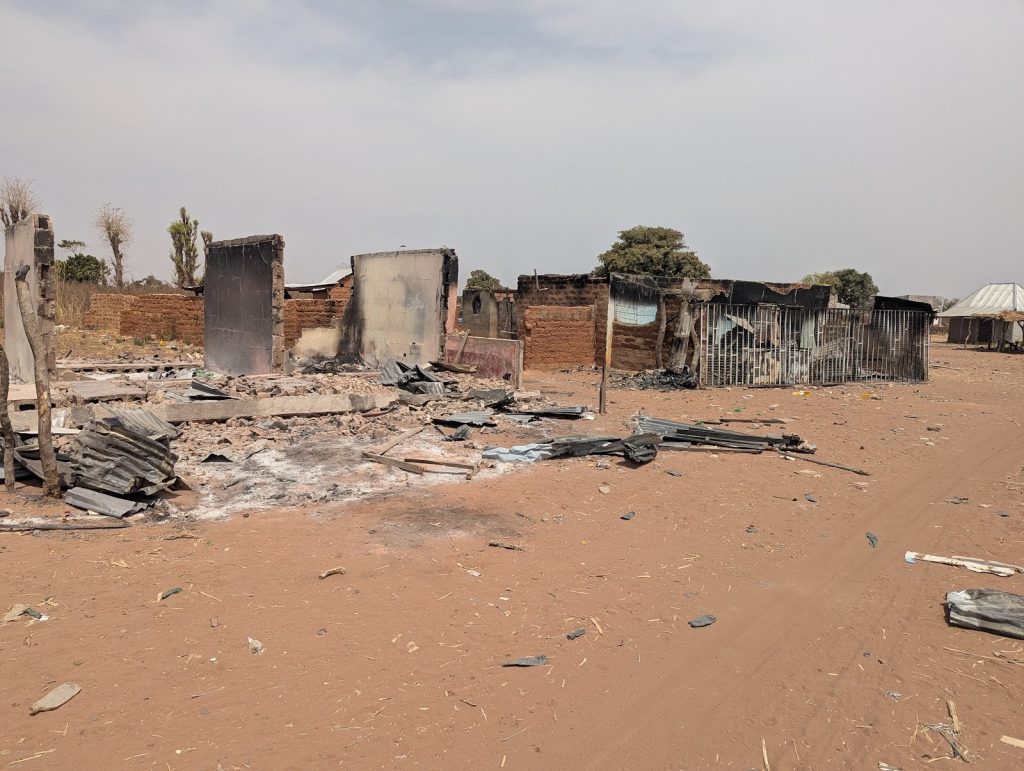
By dawn, the village was scarred by destruction — dead bodies with gunshot wounds to the head and cuts to their necks, houses reduced to ashes, the district head’s residence consumed by fire, and families shaken by the night’s events. 

The alternating rhythm of violence and prayer created a chilling atmosphere that has left Hauwa to grapple with both physical loss and psychological trauma. She described the ordeal as a mix of terror and deception, designed to lure people into vulnerability. 

The attack on Woro and neighbouring Nuku communities has displaced at least 941 persons and exposed glaring intelligence failures, despite prior warnings, and the growing influence of terror groups operating from the Kainji Lake National Park axis. HumAngle met with some of the survivors in Wawa, a town in nearby Niger State. 

A woman and three children sit on sacks under a tree, surrounded by people in a sunny outdoor setting.
Victoria and her children fled Woro on the night of terror. They walked 42 kilometres before reaching Wawa town. Photo: Isah Ismaila/HumAngle.

Ibrahim Ismail Dan’umar, a community leader in Wawa who serves as the coordinator of the displaced persons, told HumAngle that the community has been providing the families with relief materials and accommodation, as there is no designated camp for them. 

“On our records, we have people from Plateau, Nasarawa, Kebbi, Kwara, and Niger,” he noted. “We decided to organise a breakfast for them and announced that anyone offering shelter to the displaced should bring them to the gathering. On the first day, we had 381 people, even though we only projected for 200.”

“The next day, we distributed food items, and by the third day, the Emir of Borgu and representatives of Kaiama Local Government came with support, which we shared among them. Now, we have 941 displaced persons — adults and children — here in Wawa,” he explained.

Amnesty International, a global human rights organisation, described the killings as evidence of systemic neglect of rural communities. In a statement, the organisation condemned the attacks as “vicious” and criticised the Nigerian government for leaving rural communities at the mercy of rampaging terrorists.

People gather under a tree near parked motorcycles in a rural setting, engaging in various activities.
One of the hosts of displaced persons from Woro, Oga Pepe at his residence in Wawa town. Photo: Isah Ismaila/HumAngle.

Following the deadly attacks, the Nigerian military has formally launched a multi-agency offensive  in Kwara and Niger states, code-named ‘Operation Savannah Shield’, designed to dismantle terrorist networks and restore security in the region. 

The initiative was flagged off on Thursday, Feb. 19 at Sobi Barracks in Ilorin by the Chief of Defence Staff, General Olufemi Oluyede, the Chief of Army Staff, Lieutenant General Waidi Shaibu, and the Kwara State Governor, AbdulRahman AbdulRazaq. 

Unmasking those behind the terror

This attack is one of the deadliest this year.

In the weeks leading up to the Woro massacre, Sadiku’s faction of Boko Haram had already reached out to the community.  

According to the village head, Salihu Umar, a letter dated Jan. 8 — written in Hausa and bearing the signature of JAS (Jama’atu Ahlis Sunna Lidda’adati wal-Jihad) — was delivered to him. The message requested a “private” meeting with local leaders for preaching and assured residents that no harm would come to them.  

Umar said he made copies of the letter and forwarded them to both the Kaiama Emirate and the Department of State Services (DSS) office in Kaiama. Despite this warning, no preventive measures were taken, raising questions about Nigerian security intelligence.

However, security sources revealed that the killings are part of a jihadist campaign commanded by Malam Sadiku, a notorious terrorist whose influence has steadily expanded across multiple parts of Nigeria’s North Central region. 

HumAngle has extensively documented how Sadiku, once closely aligned with Boko Haram founder Muhammad Yusuf and later Abubakar Shekau, has re-emerged at the forefront of a dangerous wave of insurgency. 

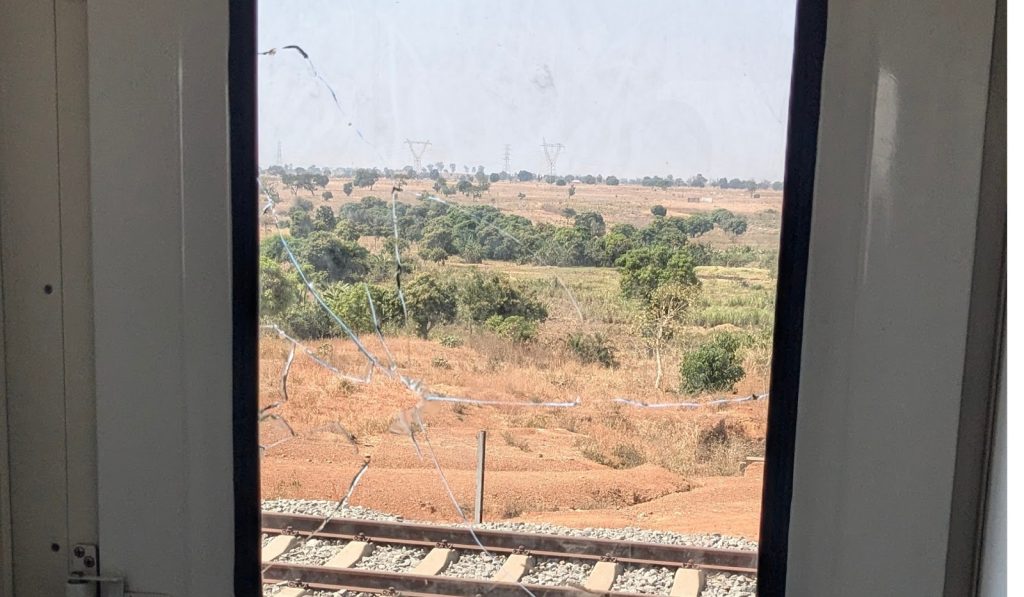
After a stint with the Darul Islam sect, he returned to Boko Haram with renewed zeal, positioning himself as one of Shekau’s most loyal comrades. Sadiku’s financial windfall from the infamous Kaduna train abduction gave him the means to expand his influence, strengthen his network, and spread Boko Haram’s radical ideology across Niger State and neighbouring states. 

With resources and reputation firmly behind him, Sadiku built a growing base of followers and fighters. Under his leadership, extremist teachings were not only revived but embedded into local communities, turning quiet rural villages into recruitment and indoctrination centres.

His trajectory, security analysts such as Yahuza Getso of Eagle Integrated Security note, reflects a long-term strategy of territorial control and ideological entrenchment, with this latest attack underscoring both the scale of his operations and the devastating impact on local communities. 

But he is not alone.

Malam Mahmuda, the leader of the Mahmudawa (an Ansaru faction), has also turned the Kainji Forest into a safe haven for his fighters. Despite previous arrests of their leaders, the group has replenished its ranks and rearmed its foot soldiers. 

According to Ahmad Salkida, HumAngle’s founder, who is one of the foremost experts on the protracted Boko Haram insurgency and the complex conflicts in the Lake Chad region, “The relocation of Sadiku and Umar Taraba, both veteran jihadist operatives, to the Kainji axis in 2024 marked a shift. Their presence injected technical expertise into a space previously dominated by loosely organised armed groups.”

He added that they are fragmented into smaller camps: some closer to the Benin border, acting as brokers linking criminal networks of jihadist actors. The Mahmudawa are said to facilitate training, arms movement, ransom negotiations, and sanctuary for fighters arriving from outside the region.

“Official claims regarding the arrest of their leader, Malam Mahmuda, remain unconfirmed in border communities, where continued attacks and coordinated leadership are still attributed to the group,” he noted

“If the Mahmudawa are brokers, the Lakurawa are enforcers. With an estimated 300 fighters, they have become one of the most active jihadist–terrorist hybrids affecting […] border communities. Operating from within and around Kainji Lake National Park, they routinely launch incursions into Bagudo and Suru LGAs, combining attacks on military targets with ideological messaging aimed at delegitimising the Nigerian state.”

Security sources and community accounts indicate that Sadiku’s group and Mahmudawa, linked to jihadist networks across West Africa, have long operated in the dense Kainji Lake National Park and Borgu Reserve, straddling Niger and Kwara states. According to the sources, this is an attempt to create another Sambisa: a hotbed for Boko Haram in the North East.

Local residents have repeatedly warned authorities about the presence of terrorist camps in the forest, but responses have been slow. Between September and December 2025, the Federal Government carried out aerial and ground operations in the area, yet the group remains influential. The forest’s vast terrain and porous borders have provided cover for training, recruitment, and staging raids. 

Getso believes that Sadiku’s Boko Haram has rebranded and reorganised remnants of Ansaru and JNIM cells, consolidating them into a formidable force in North Central Nigeria. He also revealed that the Woro massacre underscores the growing threat posed by Sadiku’s network. 

“Nigeria’s current counter-terrorism strategy is insufficient. There is a need for a comprehensive review of military doctrine and intelligence operations,” Getso noted.

A dream on hold

At just 22 years old, Ibrahim Ishaq Woro had recently graduated from the School of Health in New Bussa, Niger State. He had only returned home to Woro a year earlier and was in the process of applying for jobs when the attack shattered his community.  

On the day of the assault, Ibrahim was sitting at a tea stall when he spotted the terrorists approaching. Recognising them from a previous encounter, he fled — but minutes later, gunfire erupted across the village. 

That day was meant to be joyous, with three weddings taking place, including his cousin’s. Instead, the celebrations turned into a massacre. 

“The wedding was taking place at our house. Yahaya, my cousin, was killed. His wife and children were abducted and taken to the forest,” Ibrahim recalled.  

Like Hauwa, who described how false calls to prayer lured residents into ambushes, Ibrahim witnessed the same deception. “Those who hid inside were warned: ‘you either come outside or burn in your houses.’ Those who opened their doors out of fear were kidnapped,” he said.  

By dawn, Ibrahim returned to find the bodies of women, children, and men scattered across the community. His closest friends — Zakari, Habib, and Shamsudeen — were among the dead. 

Man in patterned outfit sitting in front of a doorway, with people in colorful attire sitting and standing nearby.
Ibrahim witnessed the massacre before fleeing to a nearby forest. His mother and three siblings are among those who were abducted. Photo: Isah Ismaila/HumAngle.

His mother, three siblings, and several family members who came for the wedding were taken captive. “Personally, we lost 20 people from my extended family and about 50 are still missing,” he said quietly, while looking away. 

Like Hauwa, Ibrahim and other survivors fled Woro to Wawa and other neighbouring communities, with their belongings in wheelbarrows and on their heads, trekking for about 42 kilometres with swollen feet in search of refuge.   

Now displaced, their only plea is for the government to secure the release of kidnapped women and children, and restore safety so families can return home. 

“For those we have lost, we can only pray for eternal peace. But we need our loved ones back. That is why we are afraid to even return home,” Ibrahim said.

Officials in Wawa town, speaking on condition of anonymity, said discussions are ongoing with the district head to facilitate the safe return of displaced residents. The move, they explained, would allow survivors to access federal and state-level interventions more effectively once back home.

Source link

Kainji Lake and the Dangerous Redrawing of Nigeria’s Security Map

The routine of gently but skillfully pushing wooden canoes into the water body at the shores of Kainji Lake each dawn has been part of the lives of generations of fishermen in North-central Nigeria

The lake was not always calm – vigorously exhaling and flooding the banks, then intermittently receding – but was inevitably connected to the lives that many communities have held firmly to across Kebbi, Niger, and Kwara states.

Today, that ancestral connection between the communities and the lake is evaporating rapidly. And it is not merely ecological. In some villages where government presence is absent, and terrorists have assumed authority, fishermen now wait for permission from non-state actors before casting their nets. In other areas within the Kainji region, they pay informal levies to armed groups operating from the forests. For decades, Nigeria’s national parks were imagined as spaces apart: buffers of nature against human pressure and political failure. Sambisa Forest shattered that illusion long ago when the Boko Haram terror group took control of it, transforming from a conservation zone into the most notorious symbol of jihadist insurgency in the country. Now, further west, a quieter but no less consequential transformation is unfolding.

The Kainji Lake National Park (KLNP), sprawling across three states and bordering Benin, has slipped from a wildlife sanctuary into a strategic corridor where poverty, climate stress, criminal enterprises, violence, jihadist ideology, and Sahelian militancy intersect.

Map highlighting Niger region in Nigeria, bordered by Kebbi, Kaduna, Kwara, Benin, and inset showing its location within the country.
Kainji Lake National Park spans three states in Nigeria’s northern region and borders two countries. Map illustration: Mansir Muhammed/HumAngle.

A corridor

Security analysts increasingly describe Sambisa as a “fortress-base” model of insurgency: entrenched, ideological, territorially assertive. Kainji Lake fits a different and more elusive pattern—a “corridor-node” model.

Here, armed actors do not raise flags or announce governance structures. They pass through, networking, training, recruiting, and trading, before vanishing. The park links Nigeria’s troubled North West to the Middle Belt and, increasingly, to the destabilised Sahel. It connects Kebbi to Benin Republic’s Alibori and Atacora regions, Niger State to Niger Republic’s Tillabéri zone, and local grievances to transnational jihadist ambitions.

This distinction matters. Sambisa attracted relentless military pressure for more than a decade because it became a visible symbol of territorial breach. Kainji Lake did not. It appeared peripheral, quiet, manageable. In that absence of sustained attention, the park matured into something arguably more dangerous: a fluid connector for multiple armed actors rather than a single-group stronghold.

Communities along the lake, from Yauri and Ngaski in Kebbi to Borgu in Niger State and Kaiama in Kwara, depend on a fragile interweaving of fishing, floodplain farming, pastoralism, and cross-border trade. Fishing sustains thousands of households. Smoked and dried fish move through informal networks to Ilorin, Ibadan, southern Niger, and beyond. Seasonal farming follows the lake’s unpredictable pulse: millet, sorghum, maize, rice, and cowpea are cultivated on land that appears and disappears with the water’s rise and fall.

Map showing fishing communities near Kainji Lake National Park with settlements marked and an aerial view highlighting fishing boats.
Fishing sustains thousands of households. Map illustration: Mansir Muhammed/HumAngle

Pastoralism runs through it all. Herders move cattle along routes that long predate colonial borders, grazing across Nigeria, Benin Republic, and Niger Republic as if the lines on maps were suggestions rather than laws. Weekly markets in Bagudo, Wawa, Babana, Kaiama, and Borgu draw traders from Benin’s north and Niger’s Tillabéri. Grain, livestock, fuel, kola nuts, dried fish, and cloth circulate through these hubs. Some of it is smuggling.

These networks matter because armed groups do not need to invent new pathways. They insert themselves into existing ones. The same tracks used by herders and traders now carry militants, arms couriers, recruiters, and ideological emissaries. 

Climate stress as an accelerant

Climate change has exacerbated existing security vulnerabilities around Kainji Lake. 

Erratic rainfall patterns and fluctuating water levels have made fishing yields unpredictable. Floodplains that once reliably supported seasonal farming now vanish early or arrive late. Pasture availability shifts without warning, intensifying competition between herders and farmers. Each shock further compresses livelihoods, forcing households to adapt through debt, migration, or risk-taking.

In this environment, armed groups offer something deceptively valuable: predictability. Access to grazing land. Protection from rivals. Permission to fish or farm. Even informal dispute resolution. Where the state provides uncertainty – sporadic enforcement, unclear rules, delayed response – armed actors provide immediate answers, enforced by violence if necessary.

Climate stress, in this sense, is not just an environmental issue but a governance crisis multiplier. 

Fieldwork conducted by HumAngle across several local government areas in Kebbi, Niger, and Kwara states identified at least five active extremist factions operating within and around the park. These include the Mahmudawa (Mahmuda faction), Lakurawa, elements of Ansaru and Jama’atu Ahlis Sunna Lidda’awati wal-Jihad (JAS) led by Sadiku and Umar Taraba, and a newly emerged cell linked to Jama’at Nusrat al-Islam wal-Muslimin. 

The groups do not operate in isolation. Many originate from northwest Nigeria and southern Niger, with local cover, as they undertake terror attacks in distant locations and return to their various hideouts within the region. What has emerged is a hybrid threat ecosystem where ideology, criminality, climate stress, and grievance reinforce one another.

Brokers, enforcers, and ideologues

The Mahmudawa illustrate the new logic of this ecosystem. Despite sustained air and ground operations by the Federal Government between September and December 2025, the group remains influential. Fragmented into smaller camps, some closer to the Benin border, they act as brokers linking criminal networks of jihadist actors. They facilitate training, arms movement, ransom negotiations and sanctuary for fighters arriving from outside the region.

Official claims regarding the arrest of their leader, Malam Mahmuda, remain unconfirmed in border communities, where continued attacks and coordinated leadership are still attributed to the group.

If the Mahmudawa are brokers, the Lakurawa are enforcers. With an estimated 300 fighters, they have become one of the most active jihadist–terrorist hybrids affecting Kebbi’s border communities. Operating from within and around KLNP, they routinely launch incursions into Bagudo and Suru LGAs, combining attacks on military targets with ideological messaging aimed at delegitimising the Nigerian state.

Their leadership shows signs of Sahelian exposure. Their fighters are drawn from local nomadic tribal networks and northwest terrorist pools. Kebbi, long considered peripheral, is now firmly part of the frontline.

The relocation of Sadiku and Umar Taraba, both veteran jihadist operatives, to the Kainji axis in 2024 marked a shift. Their presence injected technical expertise into a space previously dominated by loosely organised armed groups.

IED knowledge, structured training, and a sharper focus on high-value targets followed. Collaboration with criminal terrorist groups deepened. The abduction of foreign nationals near Bode Sa’adu illustrated this fusion starkly: JAS elements, Mahmudawa fighters, and allied terrorists executing a single operation where ideology and profit were indistinguishable.

JNIM’s shadow on the lake

The most alarming development emerged in late November 2025: the appearance of a group believed to be affiliated with JNIM along the Kebbi–Benin border corridor.

Witnesses describe predominantly foreign fighters, many believed to be Tuareg, moving at night in disciplined formations, wearing military-style uniforms with turbans on their heads, and engaging communities with a calculated restraint unfamiliar to local armed groups. So far, they have avoided major attacks.

That restraint is likely strategic.

Their presence suggests Kainji Lake could become a staging ground for Sahelian expansion into northwestern Nigeria — a shift that would fundamentally alter the region’s security calculus. Unlike local groups, JNIM brings external financing, battlefield experience, and a long-term vision.

Communities adapting under pressure

Communities in the lake basin are not passive observers. They are recalibrating in real time. Some negotiate access quietly to avoid displacement. Others maintain layered loyalties, sharing information selectively as a survival strategy. Vigilante groups that once patrolled forest edges retreat under sustained pressure. Traditional rulers face coercion or marginalisation. In certain settlements, schools and community buildings are repurposed by armed actors for operational use.

Access to fishing grounds, farmlands, and trade routes increasingly depends on permissions issued by commanders operating from forest camps rather than on decisions by local councils or chiefs. Authority has shifted, not through formal declaration, but through incremental control of movement and livelihoods.

How conservation and governance hollowed the ground

The transformation of Kainji Lake into a security corridor is as much the product of ideology as it is the cumulative outcome of governance failure layered over decades.

The creation of Kainji Lake National Park in 1976 displaced communities and restricted access to land and water without meaningfully integrating residents into conservation planning. Fishing zones were closed, grazing was curtailed, and farming was criminalised in places where alternatives did not exist. Promised livelihoods rarely materialised.

Park rangers – tasked with enforcing vast conservation boundaries – were underpaid, poorly equipped, and often absent. Their presence, when felt, was frequently punitive rather than protective.

Local governments in Bagudo, Suru, Kaiama, Borgu, and Ngaski remain chronically weak. 

When armed violence escalated across the northwestern region, security deployments focused on Zamfara, Katsina, and parts of Niger State. Kebbi’s borderlands were treated as peripheral, stable, and low-risk. That assumption proved costly.

Border governance failed as well. Coordination with Benin and the Niger Republics remains distant, reactive, and politicised. Joint patrols are rare. Intelligence sharing is uneven. Communities know this. Armed actors understand it better.

Armed groups arrived first as guests, then as protectors, and finally as power brokers, filling gaps the state created—sometimes violently, sometimes persuasively.

Poverty caused by the absence of authority

In the absence of legitmate sate authority, people seek alternative systems of order. Armed groups exploit this vacuum expertly. They tax, regulate, punish, and reward. In some communities, the question is no longer whether armed groups are legitimate, but whether they are avoidable. Increasingly, they are not.

Map of Kainji Axis showing major attacks from 2025-2026, including church bombing, mass abduction, and more.
The Kainji axis experienced seven major attacks between 2025 and Feb. 2026: The Nov. 2025 abduction of 303–315 students from St. Mary’s School in Papiri (Niger State); the market raid in Kasuwan Daji that claimed the lives of about 30-42 people on Jan. 3, 2026; the Jan. 23 park ambush killing six; the Feb. 1 raids in Agwara and Mashegu (dynamiting a police station and church), and the Feb. 4 massacre in Kaiama. Map illustration: Mansir Muhammed/HumAngle.

Once a symbol of Nigeria’s conservation ambition, KLNP has become a largely ungoverned hub exploited by a mix of violent actors: jihadist cells, armed terrorist factions, and transnational militants with roots beyond Nigeria’s borders.

From the northwest’s perspective – particularly Kebbi State – the park functions as a rear operational hub. Armed groups operating in border local governments use it for recruitment, logistics, training, and cross-border movement into the Benin Republic. Its sheer size, rugged terrain, and weak oversight enable a dangerous convergence: criminal armed groups blending with jihadism.

This shift carries national implications

Kainji’s forests and waterways provide mobility, with the lake economy providing revenue streams and border proximity offering escape and reinforcement routes.

While Sambisa became synonymous with territorial insurgency, Kainji signals the maturation of a corridor-based conflict economythat binds Nigeria’s northwest to wider Sahelian instability through forest reserves and lake communities.

When conservation spaces double as conflict connectors, the impact extends beyond biodiversity loss. Human buffers weaken first as communities negotiate survival under parallel authorities. Ecological buffers follow as enforcement fractures and resource exploitation become embedded in armed group financing.

Map showing village and settlement density around Kainji Lake National Park; black dots represent density, key included.
Communities adapt under the rule of local armed terror groups in the absence of state and local government authorities. Density map of settlements in the Kainji axis where terrorists control.  

The lake basin lies close to Kainji dam, a critical energy infrastructure, touches sensitive international borders, and anchors trade and livelihood systems that extend deep into the country’s interior.

In 2026, the geographic corridor surrounding the lake and its forest reserves recorded some of the highest levels of mass killings and large-scale abductions in Nigeria. Armed groups operate with increasing confidence, widening their reach across rural settlements and mobility routes connecting Niger State to Kebbi, Zamfara, and beyond toward the Sahelian belt.

The warning signs are not limited to a single park

In April 2025, the Conservator-General of Nigeria’s National Park Service, Ibrahim Musa Goni, told HumAngle that six national parks across the country were overrun by terrorists. Two years earlier, the federal government had created 10 additional parks to prevent further takeovers. However, only four of those new parks are currently operational. In addition to the seven existing parks, only eleven national parks are currently functioning nationwide.

Even where reclamation has occurred, the process is complex. The Conservator General pointed to Kaduna State as an example, describing what he termed a “mutual understanding” between authorities and armed groups. 

“They have agreed to resolve their issues,” he said. “[As a result], most of the forest and game reserves, and even the national park in Kaduna State, have today been freed of banditry.” This, he argued, has brought “relative peace” and enabled forest and game guards, including officers in Birnin Gwari, to resume operations.

The National Park Service has also redefined its institutional posture. “The government classified the National Park Service as a paramilitary organisation,” Goni explained. “And as a paramilitary organisation, the act provides that we can bear arms.” Rangers affiliated with the Service have received training from the United Nations Office on Drugs and Crime to address wildlife crime and respond to terror-related takeovers. According to Goni, this training has strengthened Nigeria’s capacity to confront forest-based criminality linked to armed groups and insurgents.

The approach is not solely security-driven. The Service engages surrounding communities through alternative livelihood programmes, skills training, and starter packs intended to reduce dependence on park resources. “This has, in a great deal, diverted the attention of most of them from the resources of the national parks,” Goni said, adding that it has helped contain hunting and wildlife trafficking.

Yet resource limitations remain significant. “Apart from managing wild animal resources and the plants, we also have to manage the human population,” he acknowledged, noting that the Service cannot meet the needs of every community bordering the parks.

Around Kainji, these gaps are visible.

Source link

Displaced Children in Nigeria’s Capital Dream of Education

Ali Juwon’s future shattered at the same time his father’s leg did. The year was 2012, and the 9-year-old, hand in hand with his mother, was fleeing his home in Borno State, northeastern Nigeria. Boko Haram members had stormed their community in Gwoza, killing neighbours and burning buildings Ali had known his entire life. 

As he and his mother ran, a familiar voice cried behind them. Both turned to see that Ali’s father had crashed to the ground, crushing his leg in the process. Yet, with all the odds stacked against them, the three managed to make it out with their lives. 

The family travelled for half a day to Nigeria’s federal capital, Abuja, and sought refuge in the Durumi IDP camp like many survivors at the time. 

The camp, with the flurry of Borno survivors, was overcrowded, but Ali’s mother promised him it would not be home, only a resting place before they could find their footing again. Over 14 years later, the Juwon family continue to reside there. 

Ali, now 23, explained how the situation derailed his life, “Before fleeing, my father had a business and was able to afford all my needs. Since he broke his leg, he hasn’t been able to work, and because we couldn’t get him properly treated, his leg never healed well. He hasn’t walked since the fall. Suddenly, all the luxuries we could afford before have vanished.”

Being the only child in his family, Ali took it upon himself to care for his parents. The only thing he needed was a decent education that would lead to a business or accounting degree. He planned to join whatever lucrative fields these courses would thrust him into and use his money to get himself and his parents a place away from the camp.

But Ali quickly learnt that he was no longer in Borno, dependent on his well-to-do father. His education now rested in the hands of IDP leaders, non-profit donors,  government promises, and his own hustle. As the years wore on, he learnt that even with seemingly more helpers, his chances of finishing school had dimmed significantly.

In the Durumi IDP camp, displacement does not end with fleeing violence. For many, it continues in the classroom. While primary education is often supported by NGOs or private donors, secondary school is where the system collapses. 

According to camp leaders, the girls in the camp are often married off after their basic education ends, as secondary education is no longer attainable without sustained government intervention. Hundreds of displaced boys, on the other hand, are forced to choose between survival and schooling, a gap that is reshaping their futures and deepening Nigeria’s long-term social and economic vulnerabilities.

No way past secondary school

“In primary school, things were okay. NGOs sponsored my schooling, but once I got to secondary school, that was where the real problem began. No one sponsored secondary schooling for us,” Ali explained. 

Liyatu Yusuf, the woman leader of the Durumi camp, finds the schooling situation distressing.

“We had certain sponsors who do everything for these children. Usually, it’s from an individual with a good heart. We used to do their secondary school education in the camp as well, but due to a lack of teachers and overcrowding, we had to stop it.”

According to her, over 1,000 students occupy the less spacious class, forcing them to have seven different sessions in just one class. But that’s not just the problem. There is a lack of teachers, too.

“The teachers we have are university volunteers. They would come three times in a week, but then refuse to come the next week because no one was paying them or giving them transport money,” Liyatu said.

Covered concrete space with metal roof, support beams, and painted handprints on walls. Scattered debris on floor, open view to greenery.
A classroom meant to hold more than 2oo standing students at a time. Photo: Rukkaya Saeed/HumAngle.

Liyatu says the children never receive government sponsorship, and that many of the people who help the children through primary school are good-natured individuals or NGOs. Despite record education budgets announced in Abuja, camp leaders say they have not seen much implementation, especially for the displaced children like those in Durumi.

In a 2025 press release by the Presidential State House Villa, Nigeria’s Vice President, Kashim Shettima, called for collaboration between the government and the private sector to invest in education, as the burden of educating children cannot fall entirely on the government’s shoulders. But in the Durumi IDP camp, help has come mainly from the camp leaders and individual sponsors. 

So, with no one to help him through secondary school, Ali did what several boys in the camp chose to do: work and fund his education in tandem. This way, he would be able to pay for school with the money he made and leave some for his unemployed parents. 

But this was not an easy route, and soon the stress of paying for so much caught up with the boys. Salim Aliyu, for example, now runs a small provision shop near Durumi, as his education ended in Senior Secondary (SS) 1.

“I’m 25 now,” he said. “I stopped at SS1 because it was too expensive. Transport alone was about ₦1,000 every day. How much was I earning to pay that?”

At the time, Salim did menial jobs, sweeping houses and cleaning compounds to survive. Eventually, the numbers stopped adding up. “One day, I realised I couldn’t continue. I just had to leave school.” His story is common in the camp. For many boys, the challenge is not only tuition fees but the impossible balance between earning and learning.

Sulieman Nobo repeated SS3 three times after running out of money repeatedly. By his final attempt, anxiety had overtaken ambition. “In junior secondary school, I learned a lot,” he said. “But in senior secondary, I was focused on passing, not learning. I didn’t have time to retain anything.”

School ended by mid-afternoon. Work began soon after. By nightfall, he was too exhausted to revise his notes. Despite the strain, Sulieman managed above-average grades. Others were not as fortunate.

“I was funding my education myself,” Usman Selman, another young man in the camp, told HumAngle. “My school fees were ₦20,000 a year, so I had to work. But the stress became too much.”

The dual burden affected his concentration. “No matter how hard I tried to listen in class, the only thing on my mind was money.” For some, the pressure pushed them out entirely. Aliyu Usman began paying his own fees at 15. By 17, even ₦3,000 per semester proved unsustainable.

“I was tailoring while in school,” he said. “But I couldn’t cope with fees and transport. I dropped out in SS2. Now I do laundry. It feeds my family.” He paused before adding, “If I could go back to school, I would. But I know in my heart I can’t.”

Salim, now financially stable enough to run his shop, no longer sees school as essential.

“Even if I had the chance, I wouldn’t go back,” he said. “Everything I need for business, I learned here. And after school, where is the job? Unless you already have money, there’s nothing waiting.”

For the few who make it through secondary school, graduation does not guarantee anything. Umar borrowed ₦87,000 to register for the West African Examinations Council (WAEC) exam, one the final secondary school tests that qualify one for further education in the university and other higher insitututions. It took him half a year to repay the debt. In those six months, he was forced to cut back on food. “After all that, I still didn’t get a job,” he said. “If university graduates are struggling, who am I with only a WAEC certificate?” 

The repeated disappointments take a toll. According to Liyatu, who coordinates the camp, more than half of the 1,000 boys there are currently out of school and unemployed. “If they even register for WAEC, we are lucky,” she said. “Most cannot finish secondary school. When they see there’s no support, they lose hope.” She worries about the ripple effects.

“With no school and sometimes no work, small arguments turn into fights. I saw boys punch each other over ₦200. I don’t excuse it, but I understand the frustration.”

Humanitarian worker Mohammed Abubakar, who has spent over a decade in Nigeria’s humanitarian sector, says prolonged educational exclusion carries broader consequences. “When young people are cut off from opportunity, their productivity drops,” he said. “They become more vulnerable to exploitation and manipulation.” He cautions that marginalisation, not ignorance alone, creates risk. “If society neglects them, others will step in, sometimes with harmful intentions. That is how cycles of insecurity and poverty sustain themselves.”

Beyond security, he points to economic cost. “When you underinvest in education, your population becomes less competitive. It affects productivity, innovation, even GDP. The impact goes far beyond one camp.”

Yet, despite the barriers, many of the boys continue to dream. Sulieman plans to register for JAMB, hoping for a scholarship. If that fails, he wants to join the armed forces.

“My dream is simple,” he said. “To live a better life and take my parents out of this camp.”

Umar still hopes to study computer engineering. Aliyu once imagined becoming a doctor. Sadiqi Shauku, 18, who left school in SS2, says he would return “if someone helped.” And Ali Juwon, still carrying the weight of his family’s survival, has not let go. “If there is anyone who can help me continue my education, I will continue,” he said. “I want to study something that will help me start a business or work in government. I want to be a better man.”

For now, he survives on friends’ support and periodic food distributions. Hope remains, but evidence of escape is scarce.

“Since I started primary school, I have never seen anyone gather enough money to leave this camp,” Sulieman said. “I believe in my future. But no one has gotten out.”

Source link

Scores Missing After Niger Terror Attacks That Killed 32

At least 32 people were killed when terrorists invaded villages of the Borgu Local Government Area (LGA) in Niger State,  North Central Nigeria. The attack occurred around 7:30 a.m. on Saturday, Feb. 14, lasting for about three hours.

Umar Abdulkarim, the village chief of Konkoso in the Borgu LGA, was identified as one of the victims of the terrorist attack. The attackers set homes ablaze, leaving people displaced and fearful of further raids. 

“We ran with nothing,” a resident who asked not to be named for security reasons, said. “Our houses and police station were burnt, including the houses of Sarkin Samari and his brother.”

Another resident, who is also related to the Konkoso village chief, revealed that the assailants had hung around the community until around 1 a.m. before carrying out the attack, which lasted till about 10 a.m.

“Before the attack, I spoke with him, and he confirmed that the terrorists were approaching the community. After about thirty minutes, they started shooting. As for yesterday, we were able to retrieve 30 dead bodies, which were shot and slaughtered. This morning, we recovered two more,” the local said, noting that the assailants kidnapped an unspecified number of women and children, while some ran away for safety. 

Although residents insisted there has been no assistance from security agencies since the onset of the attack, Wasiu Abiodun, the Niger State police spokesperson, claimed military forces were being deployed to the area.

This incident is part of an escalating wave of violence linked to terrorists who have taken control of the Kainji Forest Reserve, instilling fear in rural communities across the region. The terror group, led by the notorious leader Mallam Sadiqu, engages in merciless killings and kidnaps individuals for ransom, often for mass executions. 

At least 32 people were killed in an attack by terrorists on villages in Borgu Local Government Area, Niger State, North Central Nigeria, on February 14. The attack, which lasted about three hours starting at 7:30 a.m., left homes and a police station burned, and many villagers displaced or kidnapped.

Residents reported a lack of immediate assistance from security agencies despite claims of military deployment by the police spokesperson. The attack is part of a rising trend of violence linked to terrorists occupying Kainji Forest Reserve, led by Mallam Sadiqu, known for executing mass killings and kidnappings for ransom.

Source link

HumAngle Foundation Holds Roundtable with Plateau Peacebuilding Actors

HumAngle Foundation, a sister organisation of HumAngle Media, has convened 17 peacebuilding actors, including civil society organisations, government institutions, and security agencies, for a two-day multi-stakeholder roundtable on local peacebuilding efforts in Plateau State, North Central Nigeria.

The roundtable, supported by the National Endowment for Democracy (NED), was held from February 5 to 6 in Jos, the Plateau State capital. It forms part of the Advancing Peace and Security through Journalism (APSJ) Project, launched by the Foundation in 2024 to strengthen the technological capacity of journalists and community-based organisations to promote peacebuilding, accountability, and good governance in conflict-affected areas.

Plateau State has, for decades, experienced recurrent communal violence driven by a complex mix of farmer–herder tensions, identity-based disputes, land ownership conflicts, and political grievances. The state has also suffered terror attacks by armed groups, further compounding insecurity, displacement, and trauma among affected communities. These overlapping forms of violence have resulted in significant loss of lives, widespread displacement, and deep-seated mistrust, underscoring the need for inclusive, locally driven peacebuilding approaches.

Speaking at the event, Angela Umoru-David, the Foundation’s Programme Director, said the roundtable was designed to bridge gaps between stakeholders who often work in isolation. 

“Our objective is to deepen collective understanding of local peacebuilding efforts in Plateau state and promote knowledge exchange on innovative approaches to curbing violent conflict,” she said. “As the project progresses, we intend to also create linkages to journalists so that civil society organisations (CSOs) and community-based organisations (CBOs) can engage with media practitioners in a meaningful way and contribute to journalism for peace.”

Participants discussed emerging trends, persistent gaps, and new opportunities within Plateau State’s peacebuilding ecosystem. Describing the engagement as timely, Nanmak Bali, President of the Plateau Peace Practitioners Network, an umbrella body for peacebuilding organisations in the state, noted that the discussions would improve coordination among actors. “The roundtable is apt, and it is coming at the right time,” he said. “These conversations will strengthen our approach to information sharing and guide how we design and implement our interventions.”

Bwemana Hailey Adanchin, an officer at the Mediation and Dialogue Unit of the Plateau Peace Building Agency, also highlighted the value of collaboration fostered by the meeting. “Participating in this roundtable has been very impactful, especially the lessons on collaboration,” she told HumAngle. “It reinforces the fact that no single institution can build peace alone.”

The roundtable featured plenary sessions and breakout discussions, during which participants examined the progress and limitations of existing peacebuilding interventions in the state. 

Alfred Alabo, spokesperson of the Plateau State Police Command, said security agencies were increasingly recognising the limits of force-based responses to conflict. “There is a growing understanding that peace cannot be achieved through kinetic approaches alone,” he said. “When we engage more deeply, we realise that dialogue and community engagement are essential. In many cases, civil society organisations are already on the ground before we arrive, and we work together to resolve issues.”

A police officer presents at a workshop, surrounded by participants. A banner reads "HumAngle Foundation" and relates to peacebuilding efforts.
Plateau State Police Command’s spokesperson presenting findings from a group discussion during the Roundtable. Photo: HumAngle

Other participants echoed similar sentiments, emphasising the importance of early engagement, coordinated responses, and the responsible use of information in conflict-sensitive environments, and collaboration.

Fatima Suleiman, Executive Director of the Islamic Counselling Initiative of Northern Nigeria, described the roundtable as a moment of self-reflection. “This engagement has made me think more critically about stakeholder mapping and inclusion,” she said. “It highlighted gaps in how we identify and engage relevant actors in peacebuilding.”

Similarly, Kangyang Gana, Executive Director of Claire Aid Foundation, said the sessions helped her reassess her organisation’s interventions. “The discussions helped me identify gaps in our current interventions,” she said. “It has given me clarity on what needs to be adjusted to make our peacebuilding efforts more effective.”

Aliyu Dahiru, HumAngle’s Head of the Extremism and Radicalisation Desk, led a dedicated session on extremists’ use of media for propaganda, radicalisation, and recruitment. He stressed the role of journalists and peace actors in countering harmful narratives. 

People sitting around a table in a meeting room, engaged in discussion. Nameplates and notepads are visible on the table.
A cross-section of participants during the Multi-stakeholder Roundtable. Photo: HumAngle

“Violent groups understand the power of information,” he said. “Our responsibility is to ensure that media and community voices are not exploited to inflame tensions but are instead used to promote understanding, resilience, and peace.”

In another session, Abdussamad Ahmad, HumAngle’s Human Security and Policy Analyst, introduced participants to in-house tools, including the HumAngle FOI Hub and Maps.HumAngle, designed to help civil society organisations and local communities strengthen advocacy and accountability efforts.

“Our hope is that over time, stronger multistakeholder networks that understand their local contexts will be built and sustained,” Angela added. 

Since its launch, the APSJ Project has hosted similar roundtable discussions in northwestern Nigeria. The initiative has also trained journalists and awarded grants to those reporting on grassroots peacebuilding efforts across the country, particularly in Adamawa, Borno, Cross River, Lagos, and Taraba states. 

HumAngle Foundation organized a two-day multi-stakeholder roundtable in Plateau State, Nigeria, gathering civil society organizations, government institutions, and security agencies to address local peacebuilding efforts in the region.

Supported by the National Endowment for Democracy, this event forms part of the Advancing Peace and Security through Journalism (APSJ) Project aimed at enhancing peacebuilding, accountability, and governance in conflict-affected areas by strengthening technological capacities.

The roundtable addressed recurring communal violence in Plateau State, emphasizing the need for inclusive, locally-driven peacebuilding approaches. Discussions focused on emerging trends, persistent gaps, and new opportunities, emphasizing information sharing, and collaboration. The dialogue recognized the limits of force-based responses to conflict and highlighted the value of early engagement and coordinated efforts for effective peacebuilding.

Participants like Nanmak Bali and Fatima Suleiman, emphasized the importance of collaboration and self-reflection on stakeholder inclusion. Sessions led by Aliyu Dahiru and Abdussamad Ahmad highlighted the media’s role in countering harmful narratives, while introducing advocacy tools for community organizations.

Overall, the roundtable aimed to foster sustainable networks for peace and has previously hosted similar discussions in other Nigerian states to advance grassroots peacebuilding efforts.

Source link