How streaming platforms reignited the YA boom: TSITP to Heated Rivalry
The “Heartstopper” universe began as a small web comic that gained traction on Tumblr nearly a decade ago. It’s now a global phenomenon.
Alice Oseman’s fictional world, where LGBTQ+ teenagers freely explore love, friendship and identity, expanded first to graphic novels before being turned into a hugely popular Netflix series.
The rom-com, which debuted in 2021, is part of a growing portfolio of young adult book adaptations that have flooded streaming platforms in recent years. Hulu’s college drama “Tell Me Lies” and HBO Max’s hockey romance “Heated Rivalry” have become pop culture sensations, joining hits like Amazon Prime Video’s “The Summer I Turned Pretty” and the “To All the Boys” trilogy on Netflix.
“We really thought it was going to be quite a niche show that was seen by a specific group of people,” Oseman said of “Heartstopper.” “It kind of blasted up beyond our expectations.”
After three seasons on the streaming giant, the British coming-of-age series will conclude with a film later this year.

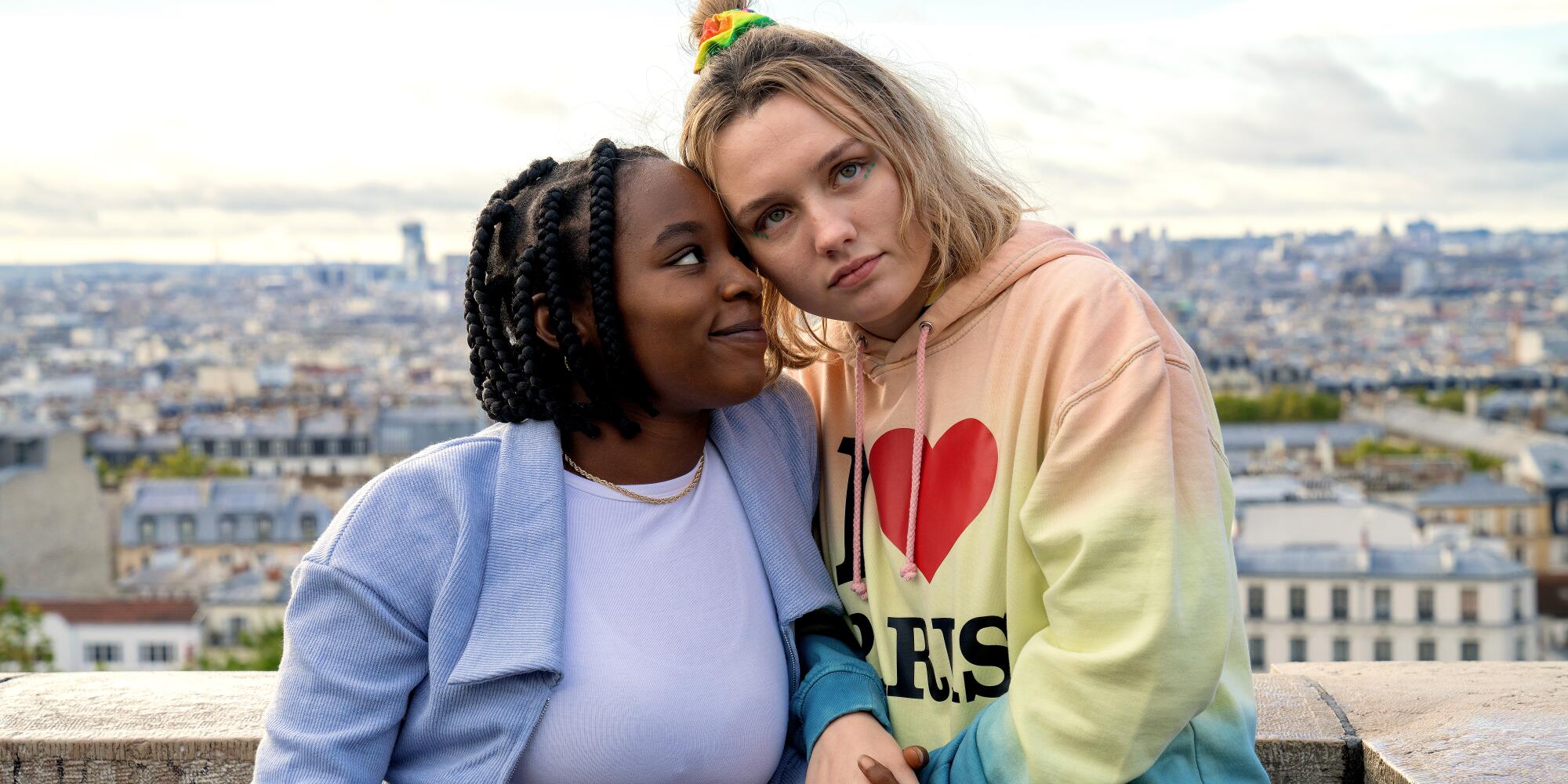
Corinna Brown and Kizzy Edgell starred in Alice Oseman’s queer romance “Heartstopper.”
(Teddy Cavendish / Netflix)
These adaptations often tell tales as old as time of young love and emotional turmoil, but it’s the diverse representation that draws audiences in, said Yalda T. Uhls, founder and chief executive of UCLA’s Center for Scholars & Storytellers.
Audiences gravitate toward authenticity, Uhls added. Young people increasingly want to see stories that reflect their lives, according to a survey administered by Uhls’ nonprofit last year.
“It has to resonate and feel authentic to the time,” Uhls said. “This generation really sees stereotypes pretty quickly … they’ll see inappropriate behavior quickly, and they will call it out.”
Viewers are hungry for diverse casting and storylines across Hollywood. Last year, audiences showed up to the theater at higher rates for movies that had people of color in the cast, according to the annual UCLA Hollywood Diversity Report, released in March.
Netflix’s focus on YA adaptations has paid off, driving more than 1.2 billion total views worldwide in 2025. Audiences are drawn to the platform’s fresh and inclusive interpretations of the genre, said Jinny Howe, Netflix’s head of scripted series for the U.S. and Canada.
“It is still harder to get marginalized stories sort of made and seen by people, but ‘Heartstopper’ is part of that journey,” said Oseman, who also serves as series creator and executive producer.

Lovie Simone plays track star Keisha Clark in “Forever,” a reimagining of Judy Blume’s 1975 novel.
(Elizabeth Morris / Netflix)
“Forever,” a reimagining of Judy Blume’s 1975 book that debuted on Netflix last year, follows two young Black protagonists who fall in love in Los Angeles. The audience had “such a fervent passion for that story, I think, because of the specificity of those perspectives,” Howe said. “Los Angeles was really seen through these eyes.” The show’s second season will reportedly start filming in May.
Prime Video has leaned heavily into the genre, platforming hits like “Maxton Hall,” “Red, White & Royal Blue” and “The Summer I Turned Pretty,” which wrapped up a three-season run last year and has a film in the works.
Young adult adaptations are at the core of the platform’s broader efforts to champion diversity in storytelling, said Peter Friedlander, Prime Video’s head of global TV.
“We’re always looking for shows that give a reflection or a window into other people’s stories,” said Friedlander, also former head of U.S. and Canadian scripted series at Netflix. “This business has been building for a long time, and it’s exciting to see what’s coming out of it.”
Representation in these shows, however, is still far from perfect, said Nicholas Rickards, a doctoral candidate at Brock University in Ontario, Canada, whose research focuses on YA adaptations. Many shows that center a woman of color often still feature white male love interests, he said.
“Studios aren’t totally prepared to tell that story yet,” he said.
Filling a YA void
Streaming platforms’ focus on YA adaptations came as cable TV, which previously dominated the genre, tapered off.
YA retellings had long captivated audiences, finding widespread success during the 2010s. Networks like the CW and Freeform reigned then, airing now-classic teen dramas like “Pretty Little Liars” and “The Vampire Diaries.” The “Twilight” and “Hunger Games” universes and John Green book adaptations also dominated the box office.
Then the entertainment landscape changed. Social media and streaming became preferred modes of content consumption for young audiences, paving the way for platforms like Netflix, Prime Video, Hulu, Disney+ and HBO Max. Diverse storylines, coupled with the global reach of streaming platforms, have reignited an explosion of YA adaptations, and it’s a race that isn’t slowing down.
Younger generations are often difficult to attract, and YA reimaginings are just one way platforms are trying to break into the teenage demographic, said Jennifer Hessler, an assistant professor of cinema and media studies at the University of Southern California.

Lola Tung’s Belly is in a love triangle with Gavin Casalegno’s Jeremiah and Christopher Briney’s Conrad in “The Summer I Turned Pretty.”
(Erika Doss / Prime Video)
Netflix’s initial breakout success in the genre came with the release of “To All the Boys I’ve Loved Before,” a movie trilogy adapted from books written by Jenny Han, who’s also behind “The Summer I Turned Pretty.” The movies became massive hits and continue to drive viewership, drawing more than 55 million views globally last year, nearly eight years after the first film’s release, according to Netflix.
Younger generations are the target demographic of YA series at Prime Video, but the shows attract audiences of all ages, Friedlander said. Identifying and helping cultivate fresh storylines driven by relatable characters are integral to that success.
“If you really make the best version of a story, it can ripple out among different fandoms,” Friedlander said. “I do think that’s the ability of what streaming platforms can achieve as well, because you can really introduce the narrative to wider audiences.”
Made for streaming
Netflix doesn’t have a formula for a breakout success, Howe said, but strong voices that feel universal must be at the show’s core.
Jeff Norton, whose work focuses on book-to-screen adaptations, said he looks for characters he can fall in love with when choosing books to pitch for development.
“That’s the most important thing — to find a main character or a set of characters that I think the audience will resonate with,” said Norton, who is an executive producer of Netflix’s “Geek Girl,” which was greenlit for a second season.
The structures of young adult novels “lend themselves really nicely” to short TV series, Howe said, because it allows fans “to have more time as they’re living inside of these worlds and these experiences — it’s just that much more enriching.”
Streaming platforms usually release shorter seasons, often with six to 10 episodes — about half the episode order of a typical cable TV series.
Balancing the expectations of a book’s existing fandom while trying to attract a new audience is a major component of Friedlander’s role, he said, adding that “the television medium will often demand that you do change some of the journey along the way so it fits the rhythm.”
Norton, the showrunner of Netflix’s “Finding Her Edge,” said much of that show’s plot diverges from Jennifer Iacopelli’s novel. However, he focused on maintaining the book’s tone and found “the readership is actually very forgiving if you keep the characters whole and intact, but give them more to do.”
Oseman’s shift from novelist to TV writer — and now screenwriter — came with a steep learning curve. The growing pains were worth it, she said, because her story reached audiences who might never have picked up her books. Visual media has been crucial in bridging that gap.
“I want young queer people to be able to see themselves in the stories that they’re consuming,” she said. “I really hope that the existence of ‘Heartstopper’ will encourage people who are commissioning TV and movies … to take a chance.”