6 nonfiction Emmy contenders to watch this season
Nonfiction films and series are among some of the most-watched (and most-discussed) programming on TV. As Emmy season heats up, the directors of six notable contenders share thoughts about their projects.
‘The Yogurt Shop Murders’ (HBO)

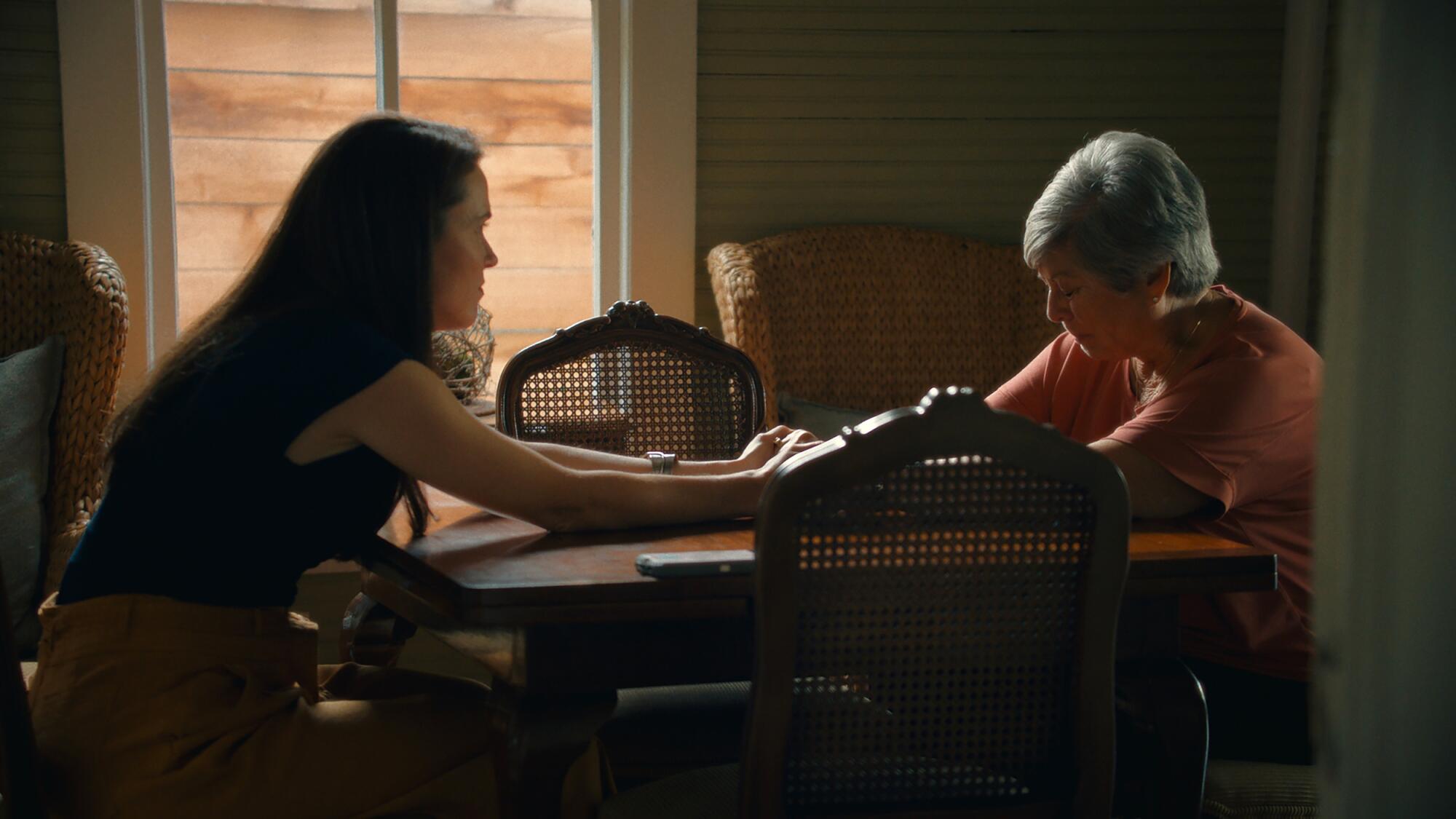
“It’s just a famous, famous story in Texas, but particularly Austin,” director Margaret Brown says of the bewilderingly complex case of four teenage girls slain at a yogurt shop in the state’s capital in 1991. “You heard about it all the time at parties. My best friend was like, ‘That story is rabbit hole upon rabbit hole upon rabbit hole — no one knows what really happened. It’s impossible to figure out.’ I liked the idea of something that was impossible to figure out. But when I started doing the interviews, I was like, ‘This is dark, this is deep trauma.’ I’d never watched or done true crime before. I didn’t realize what it would be like to sit with people who hadn’t known what happened to their siblings and children for over 30 years. I remember [thinking], ‘I’ve got to get this right. I can’t mess this up. There’s just too much pain here.’”
‘The American Revolution’ (PBS)

“Leading up to it, I said I just don’t want us drowning in fife-and-drum treacle,” director Ken Burns says of his expansive treatment of America’s origin story, which draws out the experiences of Native Americans and enslaved people as well as the era’s atmosphere of civic discord. “Clearly it’s not, because we’re so existentially challenged by the moment. But the revolution gives us a sense of perspective. Times were more challenging then. More division. More division in the Civil War. More division in Reconstruction. Yes, the threats are unprecedented, but they’re not totally unfamiliar. Mark Twain is supposed to have said history doesn’t repeat itself, but he’s [also] supposed to have said it rhymes. I love that. So like Odysseus, I tie myself to the mast and resist the temptation to put a little neon sign in the film saying, ‘Isn’t this so much like today?’”
‘Sean Combs: The Reckoning’ (Netflix)

“There was so much noise,” says director Alexandria Stapleton, who tracks hip-hop mogul Sean “Diddy” Combs’ rise and shocking fall in this series, executive produced by 50 Cent. “I’m scared for my safety, I’m scared for my career. Then there was every journalist, every giant corporation, trying to chase the same story. Because there was a feeding frenzy, there were a lot of people that were not truthful. It was making sure that we were going after the right people to speak with, and then … making sure that they felt safe emotionally. No one knew who I was interviewing while I was making it. In making a project about a man who’s very connected in media and very good at whatever he wants his narrative to be, there was a very deliberate decision to not drop this project until we literally were a week out.”
‘Ocean With David Attenborough’ (National Geographic)

(Keith Scholey / Silverback Films and Open Planet / National Geographic)
“It’s been weird, because I’ve got older, and he sort of stayed the same, like the Dorian Gray picture,” says Keith Scholey, one of the film’s directors, of the 100-year-old broadcasting legend and naturalist. “He’s still got that huge power and presence and commitment. It comes from the heart. He’s got a huge depth to him, in terms of knowledge, experience, personality … but he’s also very self-effacing. The most boring thing in the world for David Attenborough is David Attenborough. He’s interested in every aspect of the truth, and he loves uncovering that and passing that on to the world. He knows how to present in a way that it’s a performance, but it’s not a performance.”
‘Neighbors’ (HBO)

“Neighbor disputes are a great leveler,” says Harrison Fishman, who co-directs this gonzo excursion into neighborhood feuds with Dylan Redford. “If you think about class and race and politics, all that stuff gets thrown out the window when people are dealing with such small, concrete problems. You quickly start learning why people care so much about the things that they’re fighting for. It becomes a bit like a Trojan horse into learning about aspects of America and things about people that have nothing to do with the dispute. Those tangents are so valuable to us, because it gives context to the dispute. But it also helps people understand who everybody is in our country.”
‘Mr. Scorsese’ (Apple TV)

“We would get together and have these very long conversations,” says director Rebecca Miller, who interviewed American cinema’s great poet of tortured masculinity over five years. “But then in terms of the other voices, I thought, ‘Who knows him best?’ There was this wonderful movie called ‘Crumb,’ by Terry Zwigoff. He interviewed [cartoonist R. Crumb’s] ex-girlfriend at a certain point, and I felt like I got a view into the person, not in a gossipy way, but … trying to get a rounded view. If you only get the front-facing part, you’re not going to get a full sense of who they are. It was very important to me that we hear from the daughters or his wife, that there’s a sense of a person in there.”