Column: Three ballot measures on housing, medical research but only one no-brainer
SACRAMENTO — Three state bond measures are on California’s November ballot. You probably haven’t paid much attention to them. So here’s my read on these big-ticket proposals.
One is a no-brainer “yes.” It would help middle-class Californians buy a new home by allowing them to borrow most of the down payment. And it wouldn’t cost taxpayers a dime. That’s Proposition 37.
Another housing measure is probably worthwhile, but gives me pause because it accommodates too many interests in order to attract broad political support. And it burns a barrel of money. That’s Proposition 1.
The third proposal would fund important medical research. But I wince because it was written to largely benefit one institute that was co-founded and is headed by the measure’s chief backer. That’s Proposition 38.
Propositions 1 and 38 combined would add $18.4 billion to the state’s general fund bond debt, which already is about $80 billion, according to the nonpartisan Legislative Analyst‘s Office.
Plus, there is $40 billion in previously authorized bonds waiting to be sold. The new bond proposals would cost the state at least $1 billion annually for 20 to 25 years. Taxpayers are paying about $6 billion annually to retire state bonds.
Bonds are boring, but they’re also tax eaters. So we should pay some attention before voting on them.
“People think about bonds as free money. And, of course, they’re not,” says Mark Baldassare, polling director for the Public Policy Institute of California. “People don’t think bonds are going to raise their taxes.”
But most bonds are repaid by the state’s general fund, the main cash box that finances major programs such as education, healthcare, prisons and fighting wildfires. Bond debt has No. 1 dibs on the money. When revenue runs short — a common dilemma in Sacramento — other programs must be cut or taxpayers are hit harder. So bonds aren’t necessarily tax-free.
Baldassare released a PPIC poll last week that found a majority of likely voters supporting all three bond measures — especially Proposition 37 to ease homebuyers’ down payments.
The pollster noted that fall election campaigns are just starting and opposition arguments could reduce support for the measures.
But there’s no organized opposition to the two housing proposals. And although the medical research measure has some outspoken critics, there’s no money for an opposition campaign.
OK, a few specifics on each measure.
Proposition 37 is a taxpayer freebie, a $25-billion bond repaid solely by homebuyer beneficiaries. Here’s how it would work:
Middle-income people could pay 3% down on their home purchases rather than the normal 20%. They’d borrow the other 17% as a second mortgage and repay it along with the first mortgage.
The proposition defines middle class as household income that’s less than double the median for the area. Statewide, that income ceiling would be around $200,000 but would vary greatly by locale.
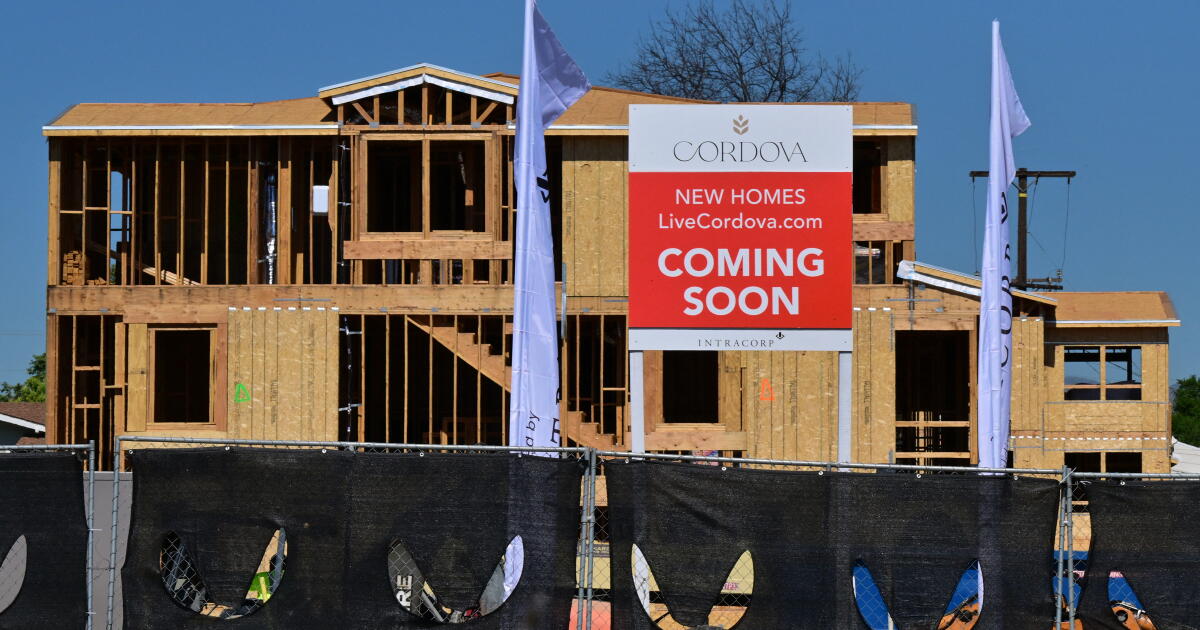
The purchased dwelling must be a brand-new home, whether stand-alone or a condo. That’s to increase the housing supply and create construction jobs. Politically, it gains the support of developers and unions.
No vacation home. It must be owner-occupied full-time. And the buyer must be a California resident.
The state’s sale of revenue bonds would create the down-payment pot. Regular lending institutions would arrange the loans and charge minimum fees. Loan repayments would replenish the pot and make it self-sustaining.
This was the brainchild of Bob Hertzberg, a former Democratic Assembly speaker and Senate majority leader from the San Fernando Valley.
Hertzberg tried several times to sell his proposal to the Legislature, but lawmakers wanted to juice it up with their own pet ideas. “I couldn’t get something just focused on the middle class,” he says. So he crafted this citizen initiative.
Proposition 1 proposes $11.25 billion in bonds for a smorgasbord of affordable housing.
This is the political establishment’s creation — Gov. Gavin Newsom, the Democratic-controlled Legislature and housing interests. There’s no organized opposition.
It was dressed up with $1.25 billion in popular CalVet loan bonds for military veterans. They repay their home loans through mortgages, costing the state nothing.
But the remaining $10 billion in bonds would be repaid through the state general fund, costing at least $500 million annually for 25 years.
The measure is mainly designed to generate affordable rentals for poor people. But to assure legislative passage, money was added for affordable student and farmworker housing, plus other goodies.
It’s a lot of money and makes only a small dent in California’s unaffordable housing plague. Moreover, it seems too scattershot.
But it could spare more people from becoming homeless — living in their cars or on sidewalks, ultimately costing taxpayers even more.
Then there’s Proposition 38, the problematic $8.4-billion general fund bond for medical research, including cures for cancer, heart disease and Alzheimer’s.
The hang-up for me and others is that the ballot initiative was crafted to virtually assure that half the bond money would go to one outfit, the UCLA-affiliated California Institute for Immunology and Immunotherapy. The institute was co-founded and is headed by the proposition’s originator and chief backer, billionaire Gary Michelson.
“I know opponents want to create a billionaire boogeyman, but isn’t curing cancer and other terrible diseases exactly what we want billionaires to spend their money on?” says Robin Swanson, a campaign spokesperson.
Sure. But being backed by a billionaire isn’t the problem. It’s being written to substantially benefit one research institute that’s led by the billionaire.
Two cancer survivors and political opposites — conservative consultant Jon Fleischman and liberal consultant Steve Maviglio — co-authored an op-ed that declared:
“Imagine either major political party proposing to borrow billions of dollars and writing the qualifications so narrowly that an organization founded and chaired by a principal campaign benefactor appears positioned to collect half the money. The other party would rightly howl. So should voters.”
They should at least be skeptical.
What else you should be reading
The must-read: California health clinics accuse influential union and its leader of racketeering in civil lawsuit
Danger zone: Newsom creates panel on AI safety regulation, suggests possible ‘kill switch’
The L.A. Times Special: Union power vs. MAGA politics in California’s schools superintendent race
Until next week,
George Skelton
—
Was this newsletter forwarded to you? Sign up here to get it in your inbox.