nightmare

I visited ‘world’s most walkable city’ but it’s actually a nightmare for pedestrians

There is no better way to explore a city than by foot, but not all places are as suitable for an adventure as others, as I found out during a recent visit to the world’s most walkable city

There is no better way to explore a city than on foot. Once touched down in a city, bag in the hotel and a fresh pair of socks on, the first thing I do is go for a walk.

It is impossible to get a feel for a place from the back of a taxi or from the elevated vantage point of a coach. You’ve got to start pounding the pavement, ideally without a destination in mind, and see where you end up.

On a recent trip to Rome, I set out from my central station hotel and marveled at the carnage of the Trevi Fountain queues, crossed the Ponte Sant’Angelo, and witnessed a coordinated group of ball-under-cup scammers sweatily fail to take anyone’s money. Last spring, I headed out into Benidorm, finding myself an impossibly cheap roast, a seafront pint of Guinness, and a ‘Good boys go to heaven, bad boys go to Benidorm’ t-shirt.

And so, in April, I applied the same approach to Seoul, a city recently named the most walkable in the world.

Do you have a story to share? Email webtravel@reachplc.com

I was convinced I'd hate £55 Wetherspoons hotel - I was completely wrong

Each year, Time Out conducts an annual city survey, this time around quizzing 24,000 people on how easy or not it is to discover given cities on foot. The ranking is based on the highest percentage of locals who rated their city’s walkability ‘good’ or ‘amazing’, and the South Korean capital tops the list.

“A city doesn’t have to be small to be walkable. In fact, Seoul is one of the largest cities on the list by surface area and population, but its impressive 93 percent approval rating from locals has secured the South Korean capital joint-first position. Why? Well, the city has a reputation as an exceedingly safe place to stroll by day and night, and is home to neighbourhoods such as Myeongdong, Insadong, and Hongdae, which are all primed for exploring on foot,” writes Time Out.

“Then there are the innovative pedestrian walkways, like Seoullo 7017, an 1074m-long elevated ‘sky garden’ which has seen an old inner city highway revamped into a stroll-worthy green space, home to 24,000 different plants. In downtown Seoul, the Cheonggyecheon Stream is flanked by a walkway that not only links many of the city’s central metro stations, but also landmarks such as Gwanjang Market, Jongmyo Shrine and Gyeongbokgung Palace.”

I could not disagree more.

Seoul is a fantastic city. It’s alive with a kind of youthful, optimistic energy that feels far removed from most places I’ve visited; it’s fearlessly trendy, and it’s centered on an urban mountain blanketed with cherry blossoms come the spring.

But walkable it is not. Seoul is a car city.

The almost unbelievably cheap cost of an Uber (we’re talking around £5 for a half-hour ride) means that hopping in a cab is far more common than in the UK, while the wide, four and six-lane roads that dominate much of the city encourage motoring. And produce a lot of fumes.

According to NASA, Seoul is one of the world’s cities with the worst air pollution, beating Los Angeles, Tokyo, Paris, and London. You can certainly feel it. On one crisp morning, I walked up Namsan, the 170-meter-tall hill in Seoul’s center. The view from the top would be spectacular, were it not for the heavy, shimmering cloud that hung over everything.

Walking back down, I started to get the vague feeling I’d done something wrong. I hadn’t accidentally offended a waiter or lost my hotel pass; it was the signs. Seoul is a city of signs. From the expected ‘no smoking’, to the less typical ‘no archery’, to the possibly unique ‘no hiking without a flashlight’, everywhere you look, some kind of rule is being transmitted to you. It doesn’t leave you with a feeling of freedom and exploration, nor do the CCTV cameras placed on tall metal poles in the city’s woodland.

It’s a place that’s big on rules and completely opposed to bins. Having finished a snack, I walked for two hours without finding a trash can. South Koreans are expected to take their rubbish home with them – a system that says a lot about the population’s diligent character, but one I find inherently anti-social.

As I do the lack of pavements that had me regularly sliding down alleyway walls to give way to cars, and the complete, frustrating prohibition of jaywalking. Couple all of this with the fact that the city lacks an obvious centre and is exhaustingly massive, and its status as one of the world’s least walkable cities is clear.

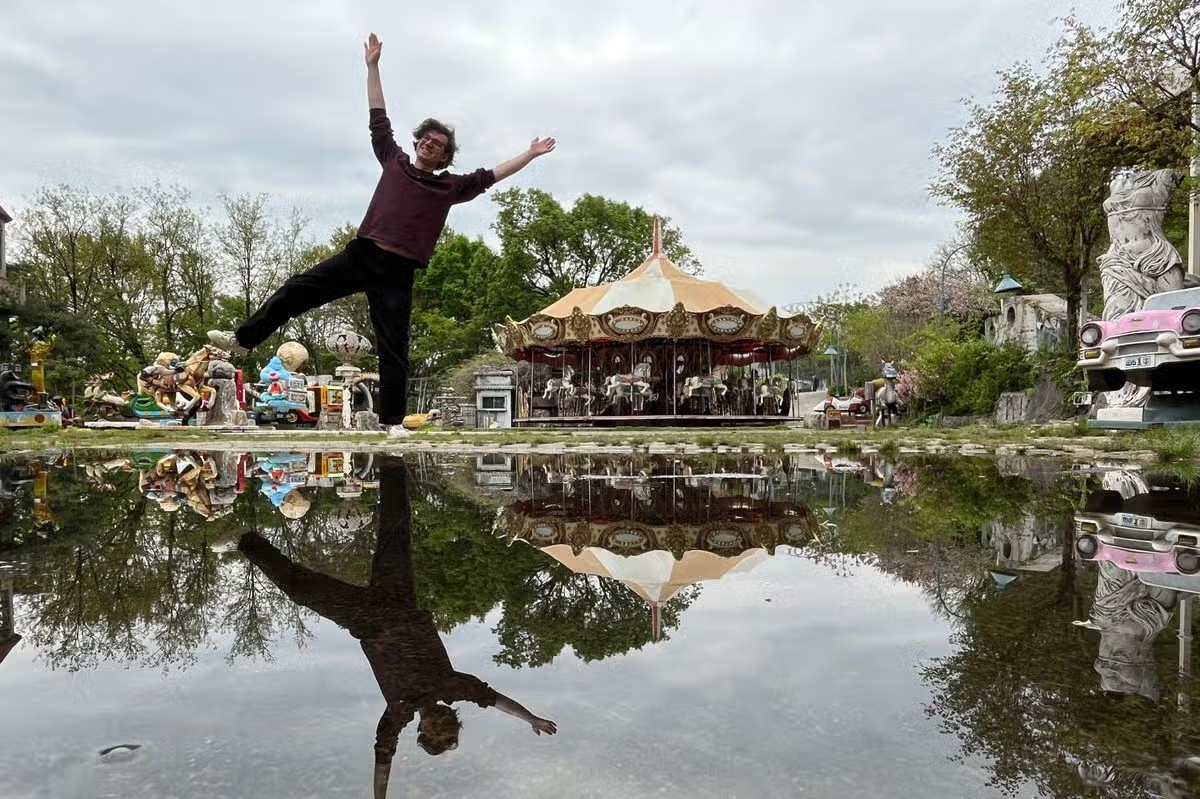
Given my love of treading the tarmac, it says a lot about how fantastic the rest of Seoul is that I left in love with the place. From the fish-filled waters of Cheonggyecheon River, the rusty octopus of Yongma Land, and the impossibly cheap but high-grade cosmetics, it’s a fascinating place that feels like it’s at the centre of the world. Just prepare to order a cab.
Source link

Frankie Muniz says he’s living a ‘nightmare’ in wake of divorce

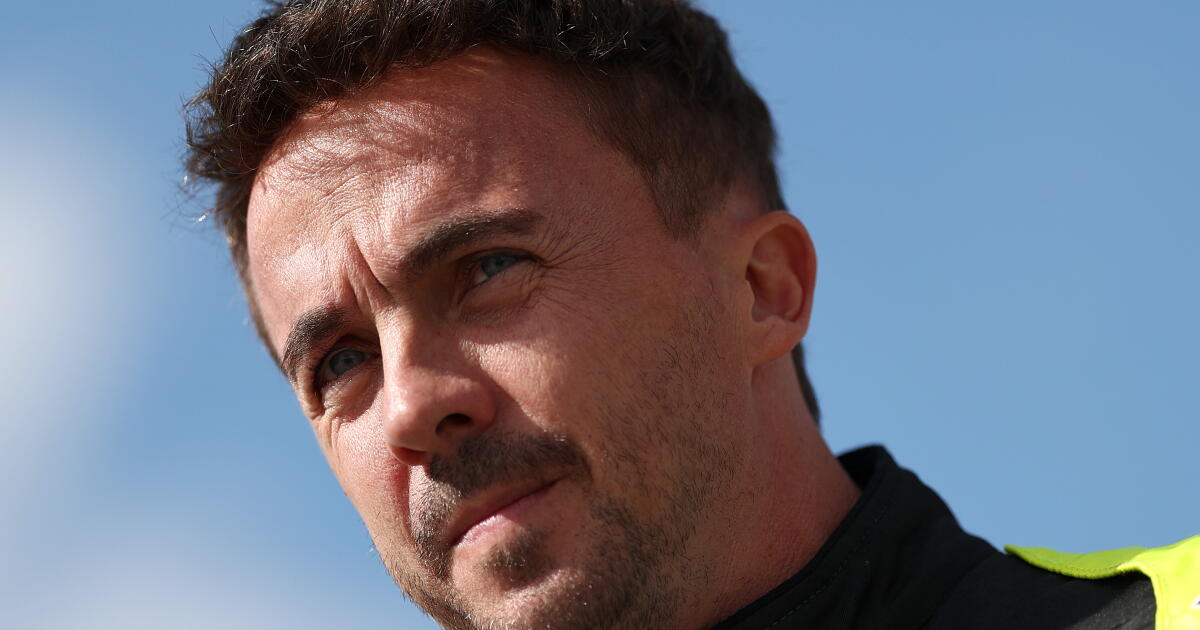
Frankie Muniz had a vulnerable moment on social media Friday, revealing he’s hit rock bottom following the announcement of his split from wife Paige Price.

The “Malcolm in the Middle” star announced he and Price were calling it quits after seven years of marriage in July, and now the actor is revealing he’s experienced some painful introspection in recent weeks.

“The last 6 weeks of my life have been a nightmare I’m praying to wake up from,” he wrote on Instagram. “Everything felt heavy, unclear, and like it was falling apart at the same time. I wouldn’t wish this season on anyone.”

He continued that despite the painful experience, “the unexpected gift in the middle of it is that I’ve had nowhere to hide.”

The actor-turned-race car driver said he’s spent the last several weeks reflecting and can now see the areas of his life where he thinks he can improve.

“I want to become a better version of me. Not the polished version I show the world … the actual one,” he wrote.

“I read that sometimes hitting rock bottom is the thing that wakes you up. It forces the changes you needed to make all along so you can live the best life possible. That idea has been sitting with me. In five years I believe I’ll look back at this exact low point and feel grateful for it, because the high I’ll be standing on then only exists because I went through this.”

He told his followers that this period isn’t the end of the story, but the catalyst for change.

“It’s the part where I start doing the work … the uncomfortable, unglamorous, necessary work. I’m choosing to treat this season as the foundation, not the finish line.”

Shortly after Muniz’s post, Price posted an Instagram story with a message that some followers speculated may be a response to the actor’s admission.

“Life is all about perspective. If you ask the grass, the zebra is the monster and the lion is the protector,” Price wrote.

Muniz is best known for his titular starring role in the beloved Fox sitcom “Malcolm in the Middle,” which ran for seven seasons in the early aughts. In April, the series returned for a four-episode reunion arc on Hulu starring returning fan favorites Bryan Cranston as Hal, Jane Kaczmarek as Lois and a couple of Malcolm’s TV siblings.

In 2006, when “Malcolm in the Middle” wrapped, Muniz transitioned away from acting and pursued race car driving.


Source link

Escape to the Country buyer in home nightmare as he admits ‘you’ve made it harder’

An Escape to the Country buyer was left torn between two dream Nottinghamshire homes but there was a huge issue

An Escape to the Country guest was left facing a difficult decision.

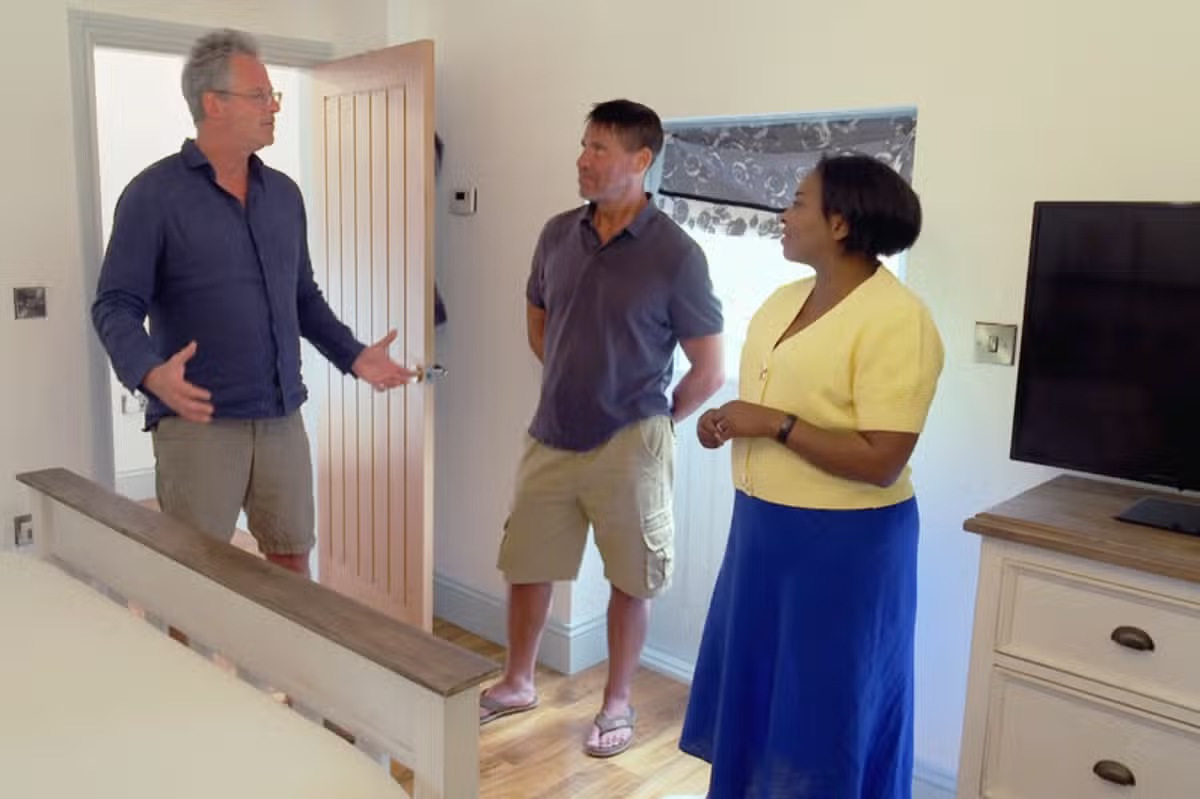
The buyer fell in love with two very different properties in Nottinghamshire but was left unable to put an offer in for any of them. During Friday’s (September 4) episode of the popular BBC show, presenter Denise Nurse was tasked with helping Shane with swapping his busy life in Greenwich, south-east London, for a quieter life in the Nottinghamshire countryside.

The former investment banker, who was born in Canada, was joined by his friend Chris, who was on hand to offer a second opinion during the property hunt.

Shane had a hefty budget of £1.1 million and a clear idea of what he was looking for. He wanted a spacious property with a modern interior and at least three bedrooms, as well as a garden big enough for his two dogs.

As he travels a lot, good transport connections to London were also important, while he wanted to live somewhere where he could become part of a community.

Denise arranged a number of properties for Shane to view, but it was the first two homes that really stole the show. Property number one was not what Shane initially thought he wanted. Having specifically asked for a modern home, he was surprised to discover just how much he liked the traditional property.

The 18th-century property was on the market for offers over £1 million and featured six bedrooms, four bathrooms and almost half an acre of land. Inside, the property had a huge kitchen and plenty of space, while the substantial grounds offered the kind of outdoor space Shane was looking for.

Despite initially believing a modern property was essential, Shane found himself seriously considering the traditional home. Then came property number two, which appeared to tick almost every box Shane had originally given Denise. The striking contemporary home was also on the market for offers over £1 million and offered spacious, modern living.

It featured a large open-plan kitchen and an impressive main bedroom with a split-level en-suite. The property was also energy efficient and had a high EPC rating, while outside there was a secure landscaped garden which was ideal for Shane’s two dogs.

When it came to making a decision, Shane admitted that Denise had made his choice considerably more difficult.

He said: “Country living is different for me, especially property number one. When I said I wanted something modern in a country setting, I was pretty sure that I wanted modern but property number one surprised me, how much I really liked it.

“You’ve given me a lot to think about that I wouldn’t have previously thought about, which for me has been the biggest takeaway. You’ve made it harder in a lot of ways, so thank you very much for that.” Denise quickly replied: “That was not the plan.”

Shane said his next step would be to explore the villages surrounding both properties before making a final decision. It was later revealed that Shane went back to view both property one and property two. Although the traditional first property had made a huge impression on him, property number two was the front runner.

However, there was one major problem standing in his way. Despite finding the home he appeared to favour, Shane was unable to put an offer forward because he had yet to sell his current property in London. His dream move to Nottinghamshire was therefore left hanging in the balance.

You can stream Escape to the Country on BBC iPlayer.

Source link

Arte Moreno finally sells Angels. Anaheim’s long nightmare is over.

Texts lit up my phone this morning from friends who had wasted most of their lives rooting for the Angels: Arte Moreno finally was selling the team.

“First order of business: it’s the Anacrime Angels,” Nelson Rodriguez cracked before sending a meme of Stringer Bell in “The Wire” wearing an old-school California Angels cap and saying, “I want you to put the word out there that we back up.”

“This news honestly made my year,” texted Anaheim City Councilmember Natalie Rubalcava, who graduated a year ahead of me from Anaheim High and whose daughter works at my wife’s restaurant. “Excited to leave the controversy and negativity behind and look forward to a new era of Anaheim baseball.”

“Shame this didn’t happen when [Shohei] Ohtani was an Angel,” the Mountain shared on a group text thread of childhood friends who call each other by long-standing nicknames — I’m the Consigliere.

“I get invited to the games but hell no,” replied the Butcher, who’s been a fan since the days of Hall of Famer Nolan Ryan in the 1970s.

“I’ll finally go back” to a game in person, my cousin Plas added. “A Trumper [Latino] what could’ve gone wrong …” he wrote, referencing Moreno, before asking if Kurt Suzuki was still manager because “that’s how little I’ve kept up with the team.”

Those are the texts I can print in a family newspaper.

Moreno is selling to Los Angeles Rams owner Stan Kroenke, whose company also owns perennial contenders in the NBA (Denver Nuggets), NHL (Colorado Avalanche) and England’s Premier League (Arsenal). Sources told my colleagues that the price was $4 billion, which would be a baseball record and speaks to the Halos’ untapped potential.

Major League Baseball still needs to approve the deal, but I guarantee that Commissioner Rob Manfred and the 29 other team owners are reacting with the silly swaying dance that Dodgers players do every time they get on base.

“The Moreno Family has been honored to steward the Angels for 23 years,” the soon-to-be-ex-Angels owner said in a statement.

You stewarded nada, Arte: You destroyed.

You started with so much hope and ended up with fans like my friends shooting venom at you like pissed-off cobras. There’s a reason why you’ll leave as one of the most loathed owners in baseball history. Your underperforming reign makes the McCourts of Dodgers infamy seem as amazing and beloved as the O’Malleys.

Los Angeles Angels' Shohei Ohtani gestures during a spring training baseball workout.

Not even Shohei Ohtani, at spring training when he played for the Angels in 2023, could change the team’s fortunes under Moreno.

(Morry Gash/Associated Press)

The Tucson native, who made his billions in the billboard industry, bought the Angels from Disney in 2003, the year after they won their sole World Series championship. At a festive press conference, Moreno handed a sombrero to then-skipper Mike Scioscia to wear, then announced that the first order of business was to cut beer prices.

The new owner quickly signed the best players in baseball — slugger Vladimir Guerrero and pitcher Bartolo Colón. Moreno walked Angel Stadium during games to ask fans what they wanted, what they needed, what they dreamed of. That first decade, he made the Angels what they never had been for a prolonged period: winners.

Fans packed the stands — more than 3 million each year from 2003 to 2019, the third-longest streak in baseball. Anaheimers donned Halos jerseys and hats like never before. More incredibly, Moreno was at the cusp of the impossible: convincing a generation of Latino baseball fans in Orange County to side with the Halos instead of the Dodgers.

But there were always signs that something was off.

Moreno renamed the team the Los Angeles Angels two years after he bought them, a ridiculous moniker that made them a national punchline. The renaming also cost Anaheim millions of dollars in legal fees after the city unsuccessfully sued to force Moreno to keep my hometown in the team’s name.

Moreno openly talked about moving the Angels to a city that would build him a new stadium. He also fell into the terrible habit of signing conservative-leaning, past-their-prime ballplayers like Josh Hamilton, Albert Pujols and Anthony Rendon to massive contracts that weighed down the team for years, like one of Angel Stadium’s legendary cinnamon rolls.

Die-hards like my pals trudged on, buoyed by generational talent Mike Trout and the occasional flash-in-the-pan prospect. But even they were turned off by the last three years.

Former Anaheim mayor Harry Sidhu pleaded guilty in 2023 to federal tax evasion charges stemming from accusations that he solicited an illegal $1-million campaign donation for an attempted sale of city-owned Angel Stadium to a Moreno-led company.

That same year, the Halos let Ohtani — who was on his way to a second most valuable player award and already had established himself as one of the most talented baseball players ever — walk away as a free agent while gaining nothing in return.

This season kicked off with Moreno telling the Orange County Register about a survey supposedly revealing that winning wasn’t “a top priority” for Angels fans. The Angels hadn’t made the playoffs in 11 years, hadn’t finished with a winning record since 2015, had landed in last place in their division for the last two years — and that’s what he offered as a speck of hope? No wonder the team is on pace to lose 100 games for the first time in franchise history. No wonder disgusted fans have protested both inside and outside Angel Stadium all summer.

At the only game I went to this year — a sparsely attended afternoon snoozer against the Chicago White Sox — I found the stadium more beat-up than ever: peeling paint, beat-up seats, tinny PA system. For about $25 each, my friends and I bought tickets behind the first-base dugout that would have cost hundreds of dollars at Dodger Stadium.

Billboards along Southern California freeways have broadcast the Angels’ desperate attempts to draw in fans via pathetic promotions. Fireworks every Saturday. A bobblehead giveaway of light-hitting shortstop Zach Neto, who never has made an All-Star team. A “yard sale” that sounds like a giant casting off of crappy memorabilia a week away from the trash can.

Angels fans wave signs and urge owner Arte Moreno to sell the team during a protest on Saturday at Angel Stadium.

Angels fans wave signs and urge owner Arte Moreno to sell the team to an ownership group willing to invest more in winning during a pregame protest at Angel Stadium.

(Joaquin Ruiz / For The Times)

I never cared for the Angels, but I always wanted them to do well. Any success they achieved rubbed off on my hometown, as it did during that magical 2002 run.

I also wanted Moreno, the first Latino to own a major professional sports team, to succeed, so his fellow Trump supporters might know that our kind can excel at the highest echelons of American society, if only we get the chance.

But for the last few years, I cheered each time the Angels lost. I wanted them to tank, to forever seal Moreno’s legacy as a loser. To serve as a warning to all professional sports owners that they can abuse a host city and its fan base for only so long before people revolt by just not caring.

Good luck to Kroenke as he tries to resuscitate a franchise deader than a stump in the Petrified Forest.

Source link

Brits rock up to beautiful beach only to find ‘hellish’ nightmare crammed with thousands

Balos Beach in Chania, Crete, was inundated with tourists at the end of August, many of them struggling to keep steady among the intense throngs attracted to the pretty spot

A beautiful Greek beach has gone viral for all of the wrong reasons.

Some people are bucket-and-spade beachgoers. Others prefer to relax on the sand, enjoying a glass of wine. Some can spend hours splashing about in the waves.

However you prefer to enjoy a day at the beach, it’s unlikely your ideal seaside trip involves getting crushed by hundreds of fellow sunseekers scrabbling not to fall into the water.

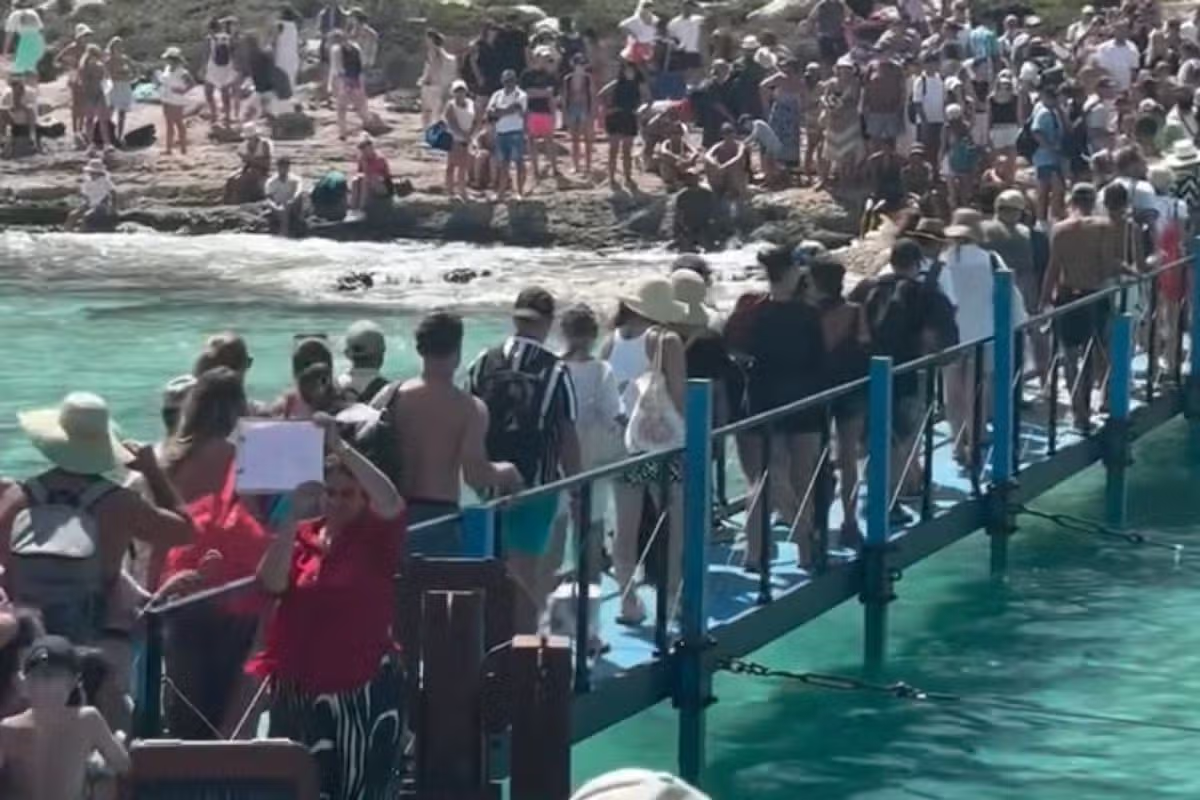
That was the scene at Balos Beach in Crete at the end of August. Footage taken at the beautiful coastal spot shows it inundated with tourists, many struggling to keep steady among the intense throngs.

Do you have a travel story to share? Email webtravel@reachplc.com

Content cannot be displayed without consent

In the roasting hot Greek weather, beachgoers were unable to move, packed as they were onto an increasingly popular beach on the north-east of the island. More tourists kept arriving by boat, even as it became apparent that Balos was full.

A video of the beach shared on Instagram has attracted more than a million views and hundreds of comments, many of them despairing about the crowds.

“I get that it’s beautiful and everyone wants to see this… BUT it’s a protected area! Maybe just let a few groups of people at a time go … and not a whole invasion … I’m Greek and this makes me sad … so please if you visit… respect that beautiful place,” one person wrote.

Another added: “Poor Balos. In a few years, this beautiful natural environment will be destroyed.” A third wrote: ” Pathetic. At least leave an unspoilt corner for us Greeks and go to Mykonos. Please.”

Efforts have been made to protect some of Crete’s best-loved beaches from the impacts of overtourism.

Balos Lagoon, Elafonisi and Falassarna are all protected under the European Union’s Natura 2000 network due to their ecological importance and rich biodiversity, according to Kathimerini.

Balos is known for its shallow turquoise waters and white and pink-tinged sand.

Giorgos Koukourakis, a special environmental adviser to the Municipality of Kissamos, told the publication: “We have had a problem with overpopulation for the past three or four years. Because these areas have such a good reputation, too many people go there.”

Some steps have already been taken, including limiting the number of sun loungers at Balos to 150, down from 400.

“But even this measure is not enough. When you have to manage 4,000 to 5,000 people a day, it is frightening,” Koukourakis added.

There are now proposals to control beach visits through an online booking system. Officials hope to have it ready next year.

Source link

UK seaside town locals say overcrowding is a ‘nightmare’ and they ‘can’t walk down the street’

Locals say overcrowding and soaring property prices have made it a “nightmare” to live in the town

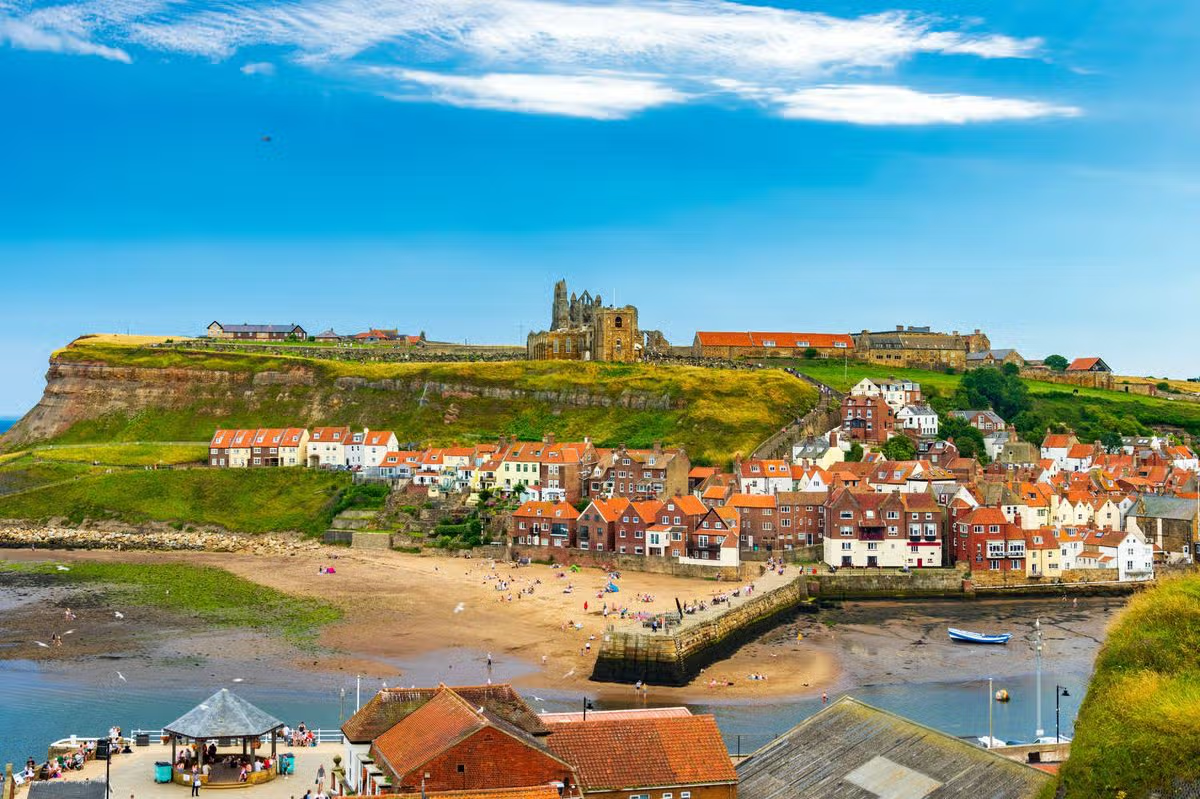
One historic seaside town on the Yorkshire coast, loved for its dramatic coastal views, traditional seaside charm and fascinating history has been hit by a mass of tourism. Research by HeyDiscount previously ranked Whitby among the UK’s most overcrowded tourist spots.

In a town with just 13,000 residents, Whitby has an estimated 3,275 commercial holiday lets, according to research carried out for the town’s Neighbourhood Plan. So it is no wonder that this has had an impact on housing and affordability.

Why is Whitby famous?

The town is perhaps best known for Whitby Abbey, the striking Gothic ruins perched high on the East Cliff overlooking the harbour and coastline.

Visitors can reach the abbey by climbing the famous 199 Steps, one of Whitby’s best-known landmarks and a popular spot for taking in views across the town.

The history of the site stretches back to 657 AD, when the first monastery was founded there. The medieval abbey that later stood on the site was eventually destroyed during the Dissolution of the Monasteries in the 16th century.

Meanwhile, Bram Stoker visited Whitby in 1890 and drew inspiration from the town for his famous novel Dracula. Its Gothic links have since become a major part of Whitby’s identity and appeal.

Alan Cuthbert, a lifelong Whitby resident and fisherman said: “You can’t walk down the street without bumping into someone with a camera or a bag of fish and chips.

“For us locals, it’s a nightmare. Traffic’s worse, parking’s a joke, and the peace we used to have is long gone.”

Tourists and second-home purchasers have driven property prices to new heights, forcing locals to move out.

Mr Cuthbert added: “Houses that used to be for families like mine are now being snatched up as holiday lets or second homes. Prices have gone through the roof. I’ve got friends who’ve had to move out of Whitby altogether because they can’t afford to live here anymore.”

Former Mayor Linda Wild told MailOnline: “Where I live, 90% of the neighbouring houses are holiday lets or second homes. Every Friday night, I can hear the rattle of suitcase wheels on the pavement.”

According to Rightmove figures, the average house property price in Whitby is £239,777.

The majority of properties sold in Whitby during the last year were semi-detached properties, selling for an average price of £227,143. Terraced properties sold for an average of £234,090, with detached properties fetching £336,614.

Tourism

Despite these challenges, tourism undeniably brings benefits to local businesses.

Between one and two million tourists visit Whitby each year, according to the BBC.

Sarah Bennett, a café owner in the town centre, acknowledges that tourism has been crucial to her livelihood. She said: “My café gets more visitors, which helps keep the business going year-round, not just in the summer.”

Yet she is equally candid about the downsides, particularly the strain placed on local services. She added: “Tourism has definitely put pressure on local amenities. It can be harder to get a doctor’s appointment or find a spot in local schools. The challenge is making sure that the benefits of this investment reach everyone, not just the tourists.”

While some residents cash in on the tourism boom, others are left picking up the pieces.

Neil Swannick, a Labour councillor for Whitby Streonshalh ward, summed up this rift, saying last year: “There are certainly people that have done well out of tourism in Whitby, but that benefit hasn’t been evenly spread across the residents of the town.”

North Yorkshire Council has identified parking, transport and housing as some of the key challenges facing Whitby as visitor numbers continue to grow.

The council now plans to limit new holiday lets and has drafted a Neighbourhood Plan which proposes a Principal Residence Policy. This means new open-market homes could be used as permanent residences rather than second homes or holiday lets.

Meanwhile, traffic and parking is another issue. The council says Whitby’s historic streets were not designed to cope with the volume of traffic brought by the town’s popularity, particularly during busy periods. Improving parking is therefore among the priorities outlined in its emerging Town Investment Plan.

There are also plans to make Whitby more pedestrian-friendly, with proposals to routinely pedestrianise the Whitby Swingbridge and surrounding harbourside.

North Yorkshire Council says the changes could improve safety during busy tourist periods, reduce pollution and make it easier for pedestrians to travel between the two sides of the town.

Source link