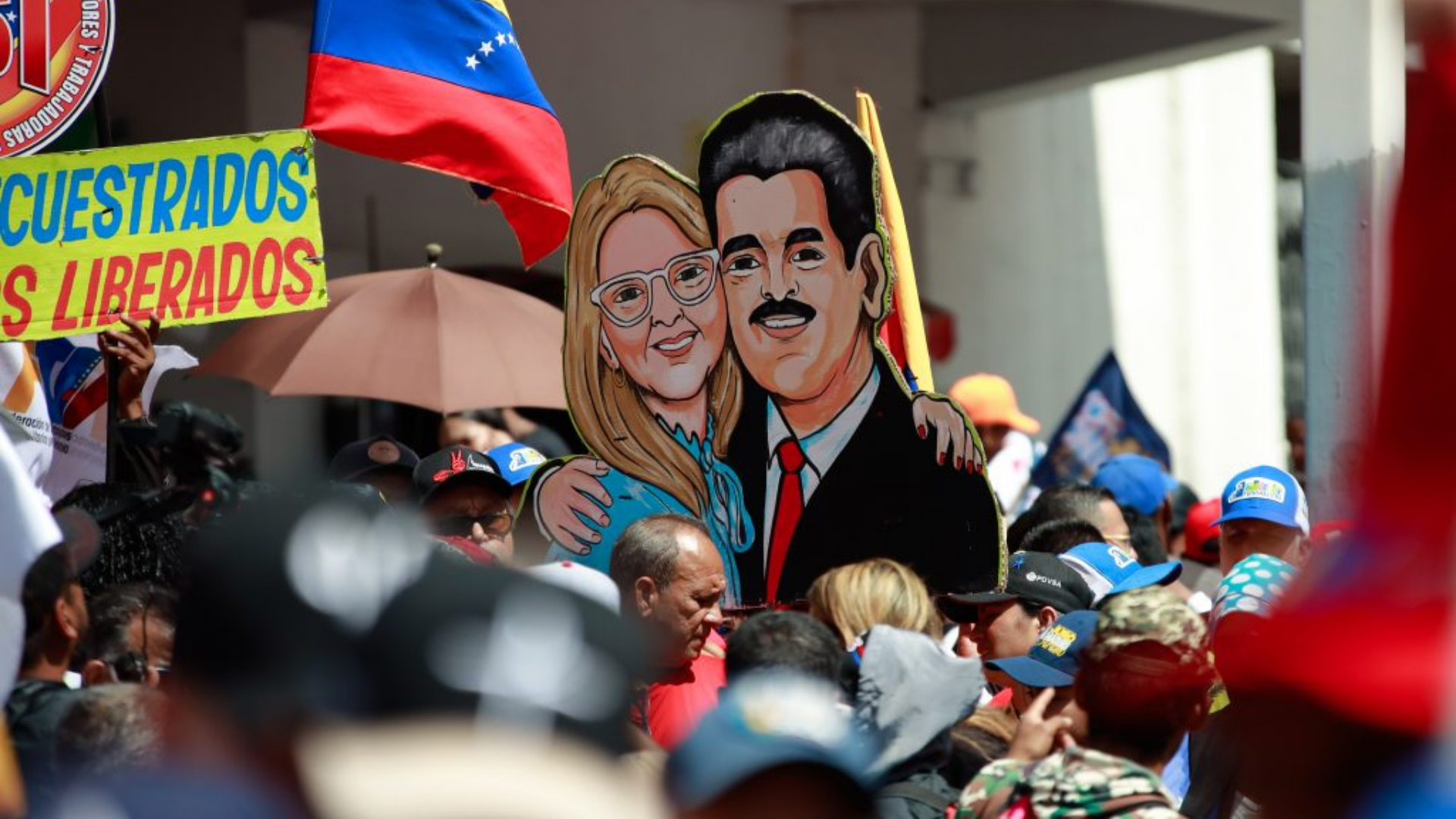
Nicolas Maduro

Cuban airports face jet fuel, landing systems crises

An operational notice from the international NOTAM system Sunday confirmed that Havana’s José Martí international airport will not have Jet A-1 fuel, the standard for commercial aviation, for one month between Tuesday and March 11. File Photo by Ernesto Mastrascusa/EPA

Feb. 9 (UPI) — The fuel shortage in Cuba began to simultaneously impact air transportation and tourism after an international aviation alert reported that Havana’s José Martí airport will not have fuel for one month.

The government also began to close hotels and relocate tourists as part of an emergency plan in the face of one of the worst energy crises in the island’s history, worsened by the end of oil shipments from Venezuela and pressure from the government of Donald Trump on crude oil supplies.

An operational notice from the international NOTAM system Sunday confirmed that Havana’s José Martí international airport will not have Jet A-1 fuel, the standard for commercial aviation, for one month between Tuesday and March 11, digital outlet CiberCuba reported.

The notification not only warns of the fuel shortage, but also of temporary limitations in landing aid systems, in addition to the inoperability of the runway visual range system, which is used to measure visibility when weather conditions are unfavorable.

The restriction is not limited to the capital. Similar notifications indicate fuel shortages at the country’s nine other airports.

Aviation authorities warned airlines that reserves could run out within a short period if supplies are not restored.

The measure compromises commercial, charter, cargo and executive aviation flights, and forces companies to arrive with extra fuel, make refueling stopovers in other countries or reschedule operations, reported Cuba Noticias 360.

This situation contrasts with recent statements by Transport Minister Eduardo Rodríguez Dávila, who had said operations at ports and airports remain guaranteed.

So far, international airlines have not communicated how they will deal with the contingency.

The impact is projected directly on tourism, the island’s main source of foreign currency.

Cancellations, delays and reduced air connectivity threaten the arrival of visitors from key markets such as Canada, Russia and Europe, in a context in which traveler confidence already shows signs of deterioration.

According to official figures, the arrival of international tourists to Cuba fell to 1.8 million in 2025, 17.8% less than in 2024. The result fell well short of the government target of 2.6 million visitors and marked one of the lowest records in more than two decades.

The energy crisis has as its backdrop the interruption of oil supplies from Venezuela, the island’s main supplier, following the capture of Nicolas Maduro.

This was compounded by the recent decision of the United States to declare a national emergency regarding Cuba and warn that it could impose tariffs on countries that supply oil to the Caribbean nation, in an escalation of pressure that has further complicated Havana’s access to fuel.

In parallel with the airport problem, the government has begun to close hotels in key tourist destinations and relocating foreign guests. The measure is part of an emergency plan to reduce energy consumption and reorganize facilities.

At least eight hotels closed in Cuba’s main tourist destinations and their clients are being relocated to other resorts amid the worsening national crisis and the shortage of fuel and supplies, Diario de Cuba confirmed from the island.

The hotel closures are occurring in the middle of the high season but amid travel advisories over the deterioration of internal conditions. The reduction of flights, energy uncertainty and hotel reorganization add pressure to an industry that is strategic for the Cuban economy.

Vice Prime Minister and Minister of Foreign Trade and Foreign Investment Oscar Pérez-Oliva Fraga said on state television that the executive branch “has designed a plan in tourism to reduce energy consumption, compact tourist facilities and take advantage of the high season,” digital outlet Cuba LLama reported.

Sources from the sector indicated that destinations such as Varadero and the northern cays concentrate much of these measures, where international chains operate.

Authorities are maintaining an emergency plan that includes broader energy restrictions, a reduction of state activities and measures to manage available fuel.

Cuban President Miguel Díaz-Canel said Thursday he was willing to initiate a negotiation process “without pressure” with the United States to help economic difficulties facing the island.

He acknowledged that the lack of Venezuelan oil has placed the country in a “complex” energy situation, affecting not only electricity generation, but also the population’s basic economic activities.

While the United States has sent more than $5.95 million in humanitarian aid managed by the Catholic Church, a measure criticized by Havana because of its “grossly opportunistic political purposes,” it has insisted on the blockade regarding hydrocarbons.

Meanwhile, countries have sent assistance. China was behind a financial package of about $81 million and a food shipment of 60,000 tons of rice in January. Mexico, sent two Navy vessels Sunday loaded with 800 tons of humanitarian aid.

Source link

Venezuela’s National Assembly approves amnesty bill in first of two votes | Human Rights News

An amnesty law that would provide clemency to political prisoners in Venezuela has passed an initial vote unanimously in the National Assembly, stirring hopes among the country’s opposition.

On Thursday, members of both the governing socialist party and the opposition delivered speeches in favour of the new legislation, known as the Amnesty Law for Democratic Coexistence.

Recommended Stories

list of 3 itemsend of list

“The path of this law is going to be full of obstacles, full of bitter moments,” said Jorge Rodriguez, the head of the National Assembly.

But he added that it would be necessary to “swallow hard” in order to help the country move forward.

“We ask for forgiveness, and we also have to forgive,” Rodriguez said.

But critics nevertheless pointed out that the text of the bill has yet to be made public, and it offers no clemency for individuals accused of serious crimes, including drug trafficking, murder, corruption or human rights violations.

Instead, media reports about the legislation indicate that it focuses on charges often levelled against protesters and opposition leaders.

Jorge Rodriguez speaks into a microphone and holds up a picture of Nicolas Maduro
Venezuela’s National Assembly President Jorge Rodriguez holds a picture of late Venezuelan President Hugo Chavez as he speaks on February 5 [Leonardo Fernandez Viloria/Reuters]

What does the bill say?

The bill would grant amnesty to individuals accused of crimes like treason, terrorism, rebellion, resisting authorities, instigation of illegal activities, and spreading hate, if those crimes were committed in the context of political activism or protest.

Opposition leaders like Maria Corina Machado would also see bans on their candidacy for public office lifted.

In addition, the legislation specifies certain events that would qualify for amnesty, including the demonstrations that unfolded in 2007, 2014, 2017, 2019 and 2024.

That period stretches from the presidency of the late President Hugo Chavez, founder of the “chavismo” movement, through the presidency of his handpicked successor, Nicolas Maduro.

Both Chavez and Maduro were accused of the violent suppression of dissent, through arbitrary arrest, torture and extrajudicial killings.

But on January 3, the administration of United States President Donald Trump launched a military operation in Venezuela to abduct Maduro and his wife, Cilia Flores. They have since been transported to New York City, where they await trial on charges related to drug trafficking.

While members of Venezuela’s opposition have cheered the military operation as a long overdue move, experts have argued that the US likely violated international law as well as Venezuela’s sovereignty in removing Maduro from power.

Nicolas Maduro Guerra walks past a portrait of his father
Nicolas Maduro Guerra, son of ousted president Nicolas Maduro, walks by portraits depicting late Venezuelan President Hugo Chavez and independence hero Simon Bolivar on February 5 [Leonardo Fernandez Viloria/Reuters]

Weighing Maduro’s legacy

Images of Chavez were a common sight during Thursday’s debate at the National Assembly, which has been dominated since 2017 by members of the chavismo movement.

That year, Venezuela’s top court dissolved the opposition-led National Assembly and briefly absorbed its powers, before re-establishing a legislature stacked with Maduro supporters.

In 2018 and again in 2024, Maduro claimed victory in contested elections that critics say were marred by fraud.

In the July 2024 vote, for instance, the government refused to release voter tallies, as was previously standard practice. The opposition, however, obtained copies of nearly 80 percent of the tallies, which contradicted the government’s claims that Maduro had won a third six-year term.

After Maduro’s abduction last month, the remnants of his government remained in power.

Within days, his vice president — Delcy Rodriguez, the sister of the National Assembly leader — was sworn in as interim president.

She used her inaugural speech to denounce the “kidnapping of two heroes who are being held hostage: President Nicolás Maduro and First Lady Cilia Flores”.

Rodriguez has nevertheless cooperated with US demands, including by supporting a bill to open Venezuela’s nationalised oil industry to foreign investment.

On the floor of the National Assembly on Thursday, her brother Jorge raised a photo of Chavez holding a crucifix while he spoke. Maduro’s son, National Assembly member Nicolas Maduro Guerra, also presented remarks.

“Venezuela cannot endure any more acts of revenge,” Maduro Guerra said as he appealed for “reconciliation”.

Venezuela’s opposition reacts

Still, opposition members in the National Assembly expressed optimism about the bill.

National Assembly representative Tomas Guanipa, for instance, called it the start of a “new, historic chapter” in Venezuelan history, one where political dissidents would no longer be “afraid to speak their minds for fear of being imprisoned”.

Nearly 7.9 million Venezuelans have left the country in recent decades, fleeing political persecution and economic instability.

But there have been lingering concerns about the human rights situation in Venezuela in the weeks following Maduro’s abduction — and whether it is safe to return home.

President Rodriguez has pledged to release political detainees and close the infamous prison El Helicoide, where reports of torture have emerged. But some experts say the number of people released does not match the number the government has reported.

The human rights group Foro Penal, for instance, has documented 383 releases since January 8.

That figure, however, is lower than the 900 political prisoners the government has claimed to have released. Foro Penal estimates 680 political prisoners remain in detention.

Opposition figures also allege that the government continues to intimidate and harass those who voice sympathy for Maduro’s removal and other opinions that run contrary to the chavismo movement.

Still, the head of Foro Penal, Alfredo Romero, applauded the initial passage of the amnesty law as a step forward.

“Amnesty is the framework that will ensure… that the past does not serve to halt or derail transition processes,” Romero told the news agency AFP.

A second vote is expected to be held on Tuesday next week.

Source link

Venezuelans Stage Mass Rally, Demand Maduro Liberation and Return

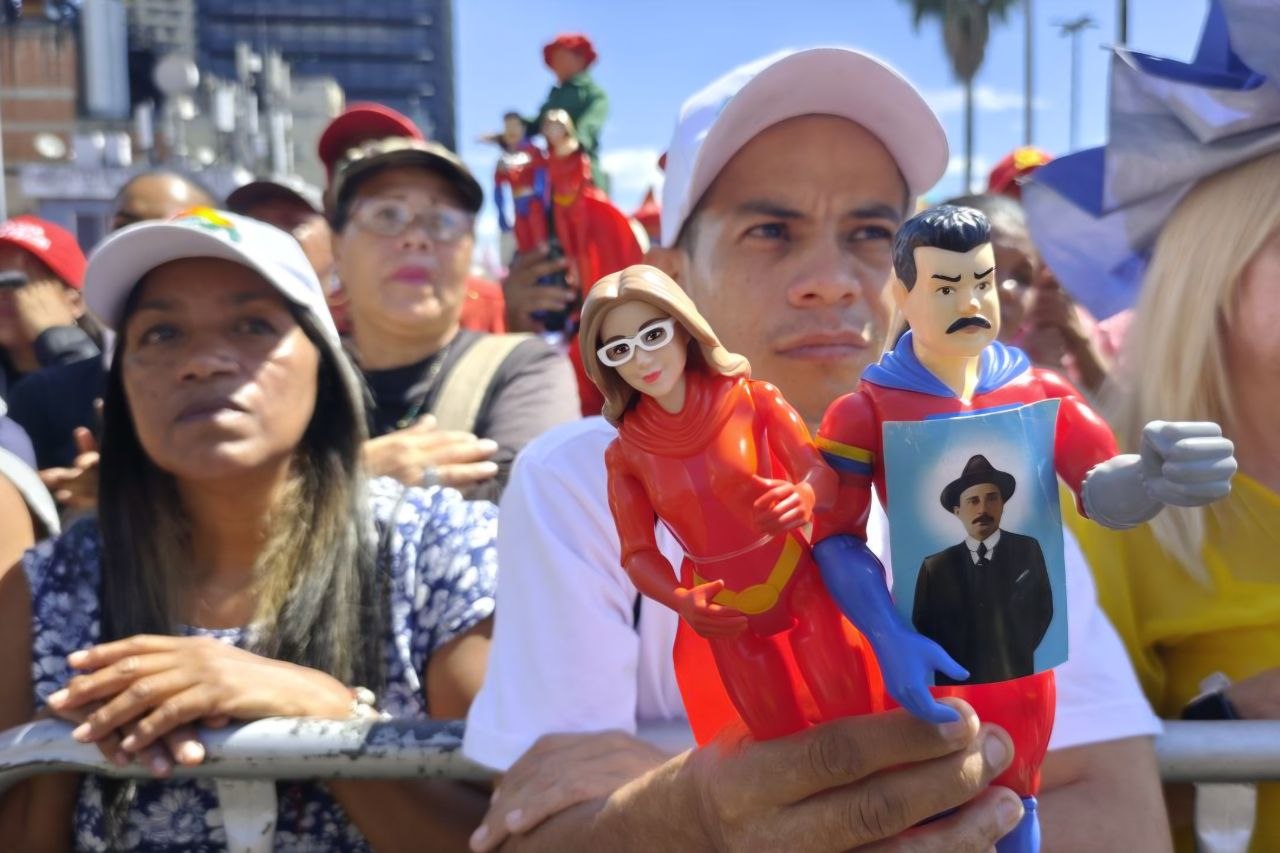
Venezuelan government supporters have taken to the streets to protest against the US attack and presidential kidnapping. (Presidential Press)

Caracas, February 4, 2026 (venezuelanalysis.com) – Chavista supporters filled the streets of Caracas on Tuesday to demand the release of President Nicolás Maduro and First Lady and Deputy Cilia Flores.

The rally marked one month from their kidnapping on January 3 as part of a US military attack against Venezuela.

“We, as an organized people, are making a call to the international community. We work every day to build a country with sovereignty and we will maintain our demand. We will continue protesting,” activist Jonas Reyes told reporters. He also paid tribute to the Venezuelan and Cuban civilians and military personnel killed during the bombing.

Venezuelan government leaders also announced plans to mobilize on February 14, Valentine’s Day, to celebrate what they described as “the profound love of Maduro and Cilia,” as well as on February 27 and 28 to commemorate the 1989 popular uprising known as El Caracazo.

On Tuesday evening, Venezuela’s acting president, Delcy Rodríguez, said that over the past 30 days Venezuela has “transformed and matured” the impact of US aggression into “tranquility,” while promoting national dialogue.

“It is a great victory for the people that there is stability,” Rodríguez told media, adding that “there is a national outcry” for the freedom of Maduro and Flores. She spoke from the Miraflores Palace alongside National Assembly President Jorge Rodríguez and Interior Minister Diosdado Cabello.

The pair’s kidnapping took place amid a US attack involving 150 aircraft, including electronic warfare jets, bombers, assault helicopters, and drones invading Venezuelan airspace.

On January 5, Maduro and Flores were arraigned in New York on charges including drug trafficking conspiracy. Both pleaded not guilty, and Maduro stated before judge Alvin Hellerstein that he is “a prisoner of war.”

The next court hearing, originally scheduled for March 17, was postponed until March 26 following a request from the US Justice Department.

US prosecutors argued that the extension would allow “the ends of justice to outweigh the interests of the public and the defendants in a speedy trial.”

February 3 also saw US-bases solidarity gather outside the Metropolitan Detention Center (MDC) in Brooklyn where Maduro and Flores are being held.

In slogans and posters, activists described the Venezuelan president and first lady as “victims of kidnapping” and demanded that the US government cease its “political persecution.”

“They are innocent of all charges. The guilty parties are the same ones who have been violating the sovereignty of Venezuela and so many countries of Our America,” activist and academic Danny Shaw told reporters. “This has nothing to do with a war on drugs. We have suffered from fentanyl and heroin, and that has nothing to do with Venezuela, much less with its president.”

Shaw vowed that solidarity movements would continue to rally and expressed confidence in the legal efforts of Maduro and Flores’ defense teams.

A separate demonstration in solidarity with the Venezuelan people and denouncing US aggression also took place in New York’s Times Square and some 60 cities around the world.

For her part, Acting President Delcy Rodríguez said she has held direct phone conversations with US President Donald Trump and Secretary of State Marco Rubio, which she said were guided by “interpersonal respect.”

Rodríguez has defended a fast diplomatic rapprochement with the Trump administration, arguing that the two nations can solve “differences” through diplomacy.

Washington’s new chargé d’affaires, Laura Dogu, is already in Venezuela and visited the presidential palace on Monday, February 2.

Edited by Ricardo Vaz in Caracas.

Source link

Thousands march in Venezuela to demand US free President Maduro, wife | Nicolas Maduro News

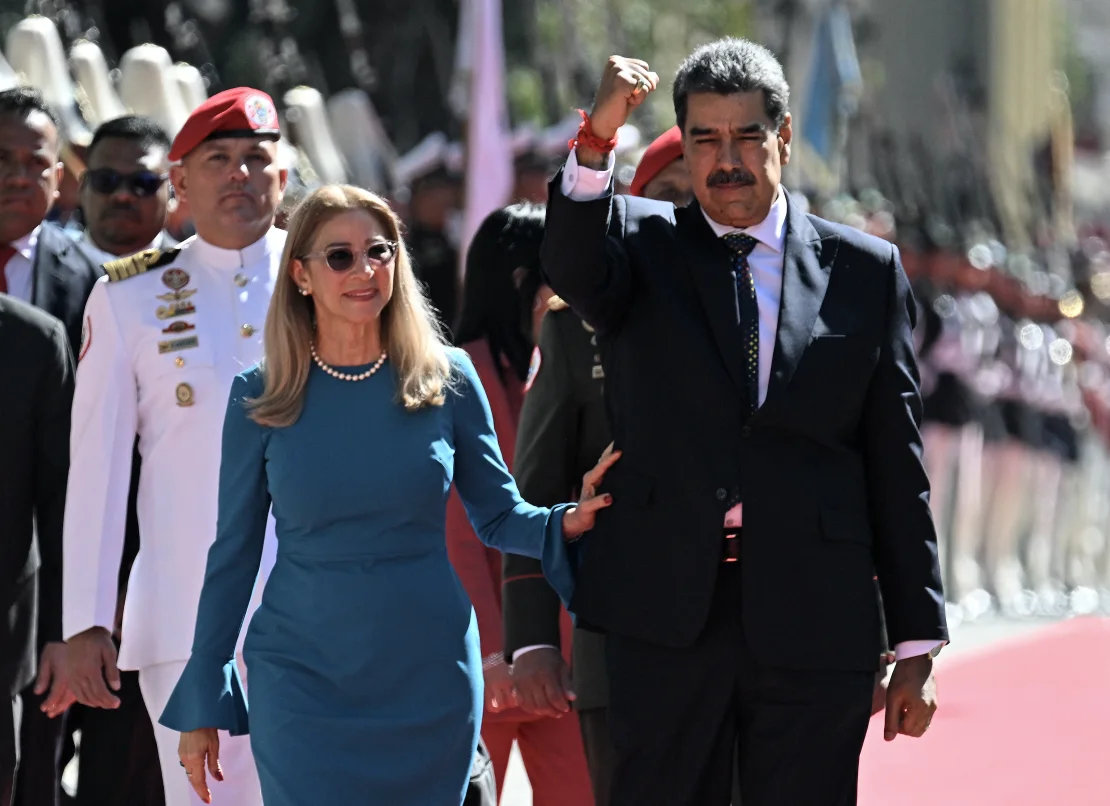
Thousands of people marched through Venezuela’s capital, Caracas, demanding the release of President Nicolas Maduro and his wife, Cilia Flores, exactly one month since US forces abducted the couple in a bloody nighttime raid.

“Venezuela needs Nicolas!” the crowd chanted in Tuesday’s demonstration, titled “Gran Marcha” (The Great March).

Recommended Stories

list of 4 itemsend of list

Thousands carried signs in support of the abducted president, and many wore shirts calling for the couple’s return from detention in a US prison.

“The empire kidnapped them. We want them back,” declared one banner carried by marchers.

Nicolas Maduro Guerra, the detained president’s son and a member of Venezuela’s National Assembly, addressed the crowds from a stage, stating that the US military’s abduction of his father on January 3 “will remain marked like a scar on our face, forever”.

“Our homeland’s soil was desecrated by a foreign army”, Maduro Guerra said of the night US forces abducted his father.

The march, called by the government and involving many public sector workers, stretched for several hundred metres, accompanied by trucks blaring music.

A supporter of Venezuela's government holds placards during a rally to demand the release of ousted President Nicolas Maduro and his wife, Cilia Flores, one month after their capture by the U.S. during recent U.S. strikes on the country, in Caracas, Venezuela, February 3, 2026. REUTERS/Maxwell Briceno
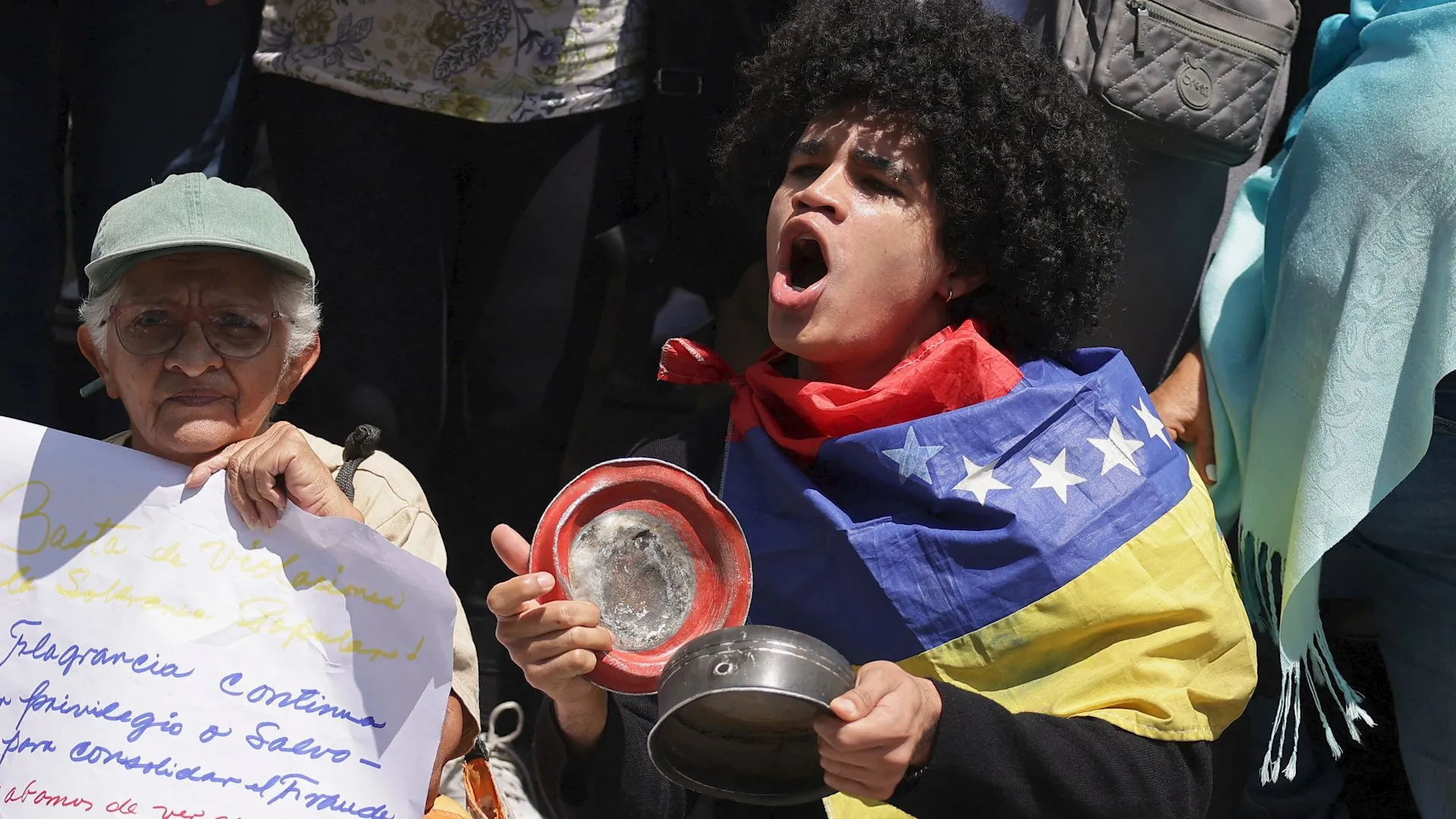
A demonstrator holds a placard during a rally to demand the US releases abducted Venezuelan President Nicolas Maduro and his wife, Cilia Flores, in Caracas, Venezuela [Maxwell Briceno/Reuters]

Local media outlet Venezuela News said the march was part of a “global day of action” to demand the couple’s release. Protesters showed their solidarity around the world, demonstrating under banners with slogans like “Bring them back” and “Hands off Venezuela”.

The international event united voices “from diverse ideological trends”, who agreed “that the detention of President Maduro and Cilia Flores represents a flagrant violation of international law and a dangerous precedent for the sovereignty of nations”, the news outlet said.

“We feel confused, sad, angry. There are a lot of emotions,” said Jose Perdomo, a 58-year-old municipal employee, who marched in Caracas.

“Sooner or later, they will have to free our president”, he said, adding that he also backed Venezuela’s interim leader, Delcy Rodriguez.

Rodriguez has been walking a thin line since taking over as acting president, trying to appease Maduro’s supporters in government and accommodating the demands being placed on Caracas by US President Donald Trump.

Trump has said he is willing to work with Rodriguez, as long as Caracas falls in line with his demands, particularly on the US taking control of Venezuela’s vast oil reserves.

Striking a conciliatory tone with Washington, and promising reform and reconciliation at home, Rodriguez has already freed hundreds of political prisoners and opened Venezuela’s nationalised hydrocarbons sector to private investment.

Earlier on Tuesday, hundreds of university students and relatives of political prisoners also marched in the capital, calling for the quick approval of an amnesty law promised by Rodriguez that would free prisoners from the country’s jails.

Legislation on the amnesty has not yet come before parliament.

Source link

These exiled Venezuelans dream of returning home. What’s stopping them? | Nicolas Maduro News

The ‘test’ of a new country

This longing is shared by Angelica Angel, a 24-year-old student activist in exile.

She had grown up with tear gas and police beatings in Venezuela. After all, she had started protesting at age 15.

“They’ve pointed their guns at me, beaten me and almost arrested me. That’s when you realise that these people have no limits: They target the elderly, women and even young girls,” Angel said.

But the increasing political repression ultimately made her life in Merida, a college town in western Venezuela, untenable.

After 2024’s disputed presidential election, Angel decided to voice her outrage on social media.

Maduro had claimed a third term in office, despite evidence that he had lost in a landslide. The opposition coalition obtained copies of more than 80 percent of the country’s voter tallies, showing that its candidate, Edmundo Gonzalez, had won the race.

Protests again broke out, and again, Maduro’s government responded with force.

Military and security officers detained nearly 2,000 people, including opposition leaders, journalists and human rights lawyers.

When Angel denounced the arbitrary detentions on TikTok, she began receiving daily threats.

By day, anonymous phone calls warned her of her impending arrest. By night, she heard pro-government gangs on motorcycles circling her home.

Fearing detention, she fled to Colombia in August 2024, leaving her family and friends behind.

But living outside Venezuela gave her a new perspective. She came to realise that the threats, persecution and violence she had learned to live with were not normal in a democratic country.

“When you leave, you realise that it isn’t normal to be afraid of the police, of unknown phone calls,” said Angel, her voice trembling. “I’m afraid to go back to my country and to be in that reality again.”

For exiled Venezuelans to return safely, Angel believes certain benchmarks must be met. The interim government must end arbitrary detention and allow opposition members, many of whom fled Venezuela, to return.

Only then, she explained, will Venezuela have moved past Maduro’s legacy.

“Exiles being able to return is a real test of whether a new country is taking shape,” she said.

Source link

Mexico to send humanitarian aid to Cuba amid Havana-Washington tensions

Mexican President Claudia Sheinbaum, seen speaking in a November 2024 press conference, announced on Sunday plans to send humanitarian aid to Cuba. File Photo by Isaac Esquivel/EPA-EFE

Feb. 2 (UPI) — President Claudia Sheinbaum of Mexico announced over the weekend plans to send humanitarian aid to Cuba amid rising tensions between Havana and Washington.

Since President Donald Trump oversaw last month’s U.S. military seizure of Venezuela’s authoritarian leader, Nicolas Maduro, he has focused on Cuba, warning that the nation is on the precipice of failing. Last week, Trump declared a national emergency in relation to Cuba and announced a mechanism to impose sanctions against any nation that provides the island nation with oil.

In the southwestern city of Guaymas, Sonora, on Sunday, Sheinbaum said Mexico plans to send food, household goods and essential supplies to Cuba through the Secretariat of the Navy while seeking to address the shipment of oil to the Caribbean island via “diplomatic channels,” according to a readout from her office.

“We are already doing all the work necessary to send humanitarian aid that the Cuban people need — other household items and supplies,” Sheinbaum said.

“That is important.”

Commenting on whether she has addressed Trump about the issue of shipping Mexican oil to Cuba, Sheinbaum said her secretary of Foreign Affairs, Juan Ramon de la Fuente, has discussed it with his American counterpart, Secretary of State Marco Rubio.

“And as I’ve said, we are exploring all diplomatic avenues to be able to send fuel to the Cuban people, because this is not a matter of governments but of support to prevent a humanitarian crisis in Cuba,” she said.

“In the meantime, we will send food and other important aid to the island.”

Mexico is an important supplier of fuel to Cuba, and even more so since the Trump administration cut off oil Venezuelan oil exports.

Last week, Sheinbaum paused oil shipments to Cuba, but said it was “a sovereign decision.”

Trump and Sheinbaum spoke on the phone for about 40 minutes Thursday and had what the American president called “a very productive conversation” about border-related issues, drug trafficking and trade.

On Thursday night, Trump declared a national emergency in relation to Cuba and the threat of tariffs, heightening uncertainty over Washington’s next steps toward the socialist island nation.

Sheinbaum was reportedly taken by surprise by this announcement, telling reporters during a Friday press conference that “We did not touch on the topic of Cuba,” directing her secretary of Foreign Affairs to get more information from the U.S. State Department.

“The imposition of tariffs on countries that provide oil to Cuba could create a far-reaching humanitarian crisis.”

The United States already enforces a decades-old embargo against Cuba that restricts most industries, while secondary sanctions penalize foreign companies that do business with Havana.

Source link

Venezuela rights activist Javier Tarazona freed amid prisoner release | Nicolas Maduro News

Tarazona freed after four years in prison on ‘terrorism’ and conspiracy charges.

Venezuelan rights ‍activist Javier Tarazona has been freed ‍in a prisoner release, his family says, more than four years since he was arrested.

“After 1675 days, 4 years and 7 months, this long-awaited day has arrived. My brother Javier Tarazona is free,” Jose Rafael Tarazona posted on X on Sunday. “One person’s freedom is everyone’s hope.”

Recommended Stories

list of 3 itemsend of list

Legal rights group Foro Penal said several other prisoners had been released with Tarazona from the Helicoide detention centre in Caracas. The group said it has ​verified more than 300 political prisoners freed since the government announced a series of releases on January 8.

Venezuelan interim President Delcy Rodriguez on Friday unveiled a proposed “amnesty law” covering hundreds of prisoners and said the Helicoide prison – long condemned by rights groups as a site of prisoner abuse – will be transformed into a sports and social services complex.

Translation: Today, #1Feb, after 1675 days, 4 years and 7 months, this long-awaited day has arrived. My brother Javier Tarazona is FREE. THANKS BE TO GOD ALMIGHTY. Thank you to everyone who made this moment possible. One person’s freedom is everyone’s hope. #FreeToLiberate

Tarazona is the director of FundaRedes, which tracks alleged abuses by Colombian armed groups and the Venezuelan military along the countries’ border. He was arrested in July 2021 and accused of “terrorism” and conspiracy.

Government officials – who deny holding political prisoners and say those jailed have committed crimes – have given a much higher figure for the releases, saying there have been more than 600, but have not been clear about the timeline and appear to be including releases from previous years. The government has never provided an official list of how many prisoners will be released or who they are.

Families of prisoners said the releases have progressed too slowly, and Foro Penal said more than 700 political prisoners remain jailed, an updated ​count including prisoners whose fearful families had not previously reported their detentions.

Families and rights advocates have long ‌demanded the charges and convictions against detainees who are considered political prisoners be revoked.

Opposition politicians, journalists and rights activists have long been subject to charges like “terrorism” and treason, which their families have called unjust and arbitrary.

The proposed amnesty law could affect hundreds of detainees who remain behind bars in the ‌South American country as well as former prisoners who have already been conditionally released.

The releases were announced as the top United States envoy for Venezuela arrived in the Venezuelan capital, Caracas, to reopen a US diplomatic mission seven years after ties were severed.

Last month, the US abducted Venezuelan President Nicolas Maduro from the presidential palace in Caracas on the orders of US President Donald Trump.

Maduro was then taken to a prison in New York and is facing drug trafficking and “narcoterrorism” conspiracy charges.

Source link

Peter Kornbluh: Is Trump pushing a new imperialism in Latin America? | Nicolas Maduro

Peter Kornbluh speaks to Marc Lamont Hill on Trump’s abduction of Venezuela’s president and the fallout for Latin America.

Following United States forces’ abduction of Venezuelan President Nicolas Maduro, a new set of questions is emerging as to how far Donald Trump is prepared to go in pushing US power abroad through direct intervention.

But is this a real break with past policy – or the latest iteration of the US’s longstanding interventionist power play in Latin America?

And with Cuba back in the administration’s sights, will Trump push for further action in the region?

This week on UpFront, Marc Lamont Hill speaks with Senior Analyst at the National Security Archive, Peter Kornbluh.

Source link

Venezuela’s acting President Delcy Rodriguez announces prisoner amnesty | Prison News

Rodriguez calls for healing ‘wounds left by political confrontation’ while announcing notorious El Helicoide prison to shut down.

Venezuela’s interim President Delcy Rodriguez has announced an amnesty bill that could lead to the release of hundreds of prisoners, her latest major reform since the US military abducted the country’s President Nicolas Maduro and his wife earlier this month.

“We have decided to push ahead with a general amnesty law that covers the whole period of political violence from 1999 to the present day,” Rodriguez said on Friday.

Recommended Stories

list of 4 itemsend of list

Speaking at a gathering of justices, magistrates, ministers, military officials and other government leaders, the acting president said the National Assembly would take up the amnesty bill with urgency.

“May this law serve to heal the wounds left by the political confrontation fuelled by violence and extremism,” Rodriguez said in the prerecorded televised event.

“May it serve to redirect justice in our country, and may it serve to redirect coexistence among Venezuelans,” she said.

Rodriguez also announced the shutdown of El Helicoide, a notorious secret service prison in Caracas, where torture and other human rights abuses have been documented by independent organisations.

El Helicoide, she said, will be transformed into a sports, social and cultural centre for the surrounding neighbourhoods.

Rodriguez made her announcement before officials whom former prisoners and human rights watchdogs have accused of overseeing El Helicoide and other detention facilities.

The Venezuelan-based prisoners’ rights group Foro Penal estimates that 711 people are in detention in facilities across Venezuela over their political activities. Of those, 183 have been sentenced, the group said.

Foro Penal President Alfredo Romero welcomed the planned amnesty but said it must apply to all prisoners “without discrimination”.

“A general amnesty is welcome as long as its elements and conditions include all of civil society, without discrimination, that it does not become a cloak of impunity, and that it contributes to dismantling the repressive apparatus of political persecution,” Romero wrote in a post on social media.

Foro Penal has calculated that some 302 prisoners have been released by Rodriguez’s government in the aftermath of the abduction of Maduro by the US.

The organisation later released a video clip on social media of what is said showed the moment that human rights worker Eduardo Torres was released from prison on Friday night, following his detention since May 2025.

Translation: Our colleague from @proveaong Eduardo Torres has been released from prison, human rights defender, former political prisoner.

Families and rights advocates have long demanded that charges and convictions against detainees who are considered political prisoners be dropped.

Government officials – who ⁠deny holding political prisoners and say those jailed have committed crimes – report that more than 600 people have been released from prison, but they have not been clear on the timeline and appear to be including prisoners released in previous years.

Source link

Lula, Trump discuss ‘Board of Peace’, agree to meet in Washington: Brazil | Donald Trump News

Brazil’s President Lula criticises US actions in Venezuela, calling the capture of Maduro an unacceptable line against regional stability.

‍Brazilian ‍President Luiz Inacio Lula da Silva has held a ⁠phone call ​with his US ‍counterpart Donald Trump and agreed ‍to ⁠visit Washington soon, the Brazilian government said in a statement.

The two leaders on Monday discussed several issues during the 50-minute call, including the situation in Venezuela, Trump’s proposed “Board of Peace” for Gaza, and the fight against organised crime.

“Lula and Trump ​exchanged ‌views on the situation in Venezuela, and the ‌Brazilian president stressed ‌the importance of ⁠preserving peace and stability in the region,” ‌the statement said.

Regarding Venezuela, the Brazilian president stressed the importance of “preserving peace and stability in the region”, the statement said.

Lula has criticised the ‍US abduction of ⁠Venezuelan President Nicolas Maduro, who was deposed earlier this month and taken to New York to face drug-trafficking charges. The Brazilian president had condemned the move as crossing “an unacceptable line”.

Lula emphasised to Trump on Monday the need to work for the welfare of ​the Venezuelan people.

The Brazilian government’s statement did not say whether Lula accepted Trump’s ‍invitation to join the initiative.

Board of Peace

Lula also ‌requested that Trump’s new proposal for a Board of Peace “be limited to the issue of Gaza and include a seat for Palestine”, as global powers worry the initiative launched last ‌Thursday could assume a wider role and rival the United Nations.

Lula also urged the “comprehensive reform of the United Nations, including the expansion of the permanent members of the Security Council”.

On Friday, Lula, 80, accused Trump, 79, of trying to create “a new UN where only he is the owner”, with his proposed “Board of Peace” following the October 10 ceasefire in the Israel-Palestine war.

Although originally intended to oversee Gaza’s rebuilding, the board’s charter does not appear to limit its role to the Palestinian territory and seems to aim to rival the United Nations.

Traditional US allies, including France and Britain, have also expressed doubts.

‘Unacceptable line’

Lula and Trump have been in contact several times since their first official meeting in October, which ushered in improved ties after months of animosity between Washington and Brasilia.

As a result, Trump’s administration has exempted key Brazilian exports from 40 percent tariffs that had been imposed on Brazil, and lifted sanctions on a top Brazilian judge.

Earlier this month, Lula said the US attack on Venezuela to abduct President Maduro crossed “an unacceptable line”.

The presidency said the visit would take place after Lula’s trips to India and South Korea in February, and that a date would be set “soon”.

The veteran leftist Lula has held phone calls in recent days with Russian President Vladimir Putin and Chinese President Xi Jinping.

Source link