Nicolas Maduro

U.S. seizes second oil tanker near Venezuela amid blockade

A U.S. military helicopter hovers over an oil tanker seized early Saturday morning in international waters near Venezuela. Photo Courtesy of the U.S. Coast Guard

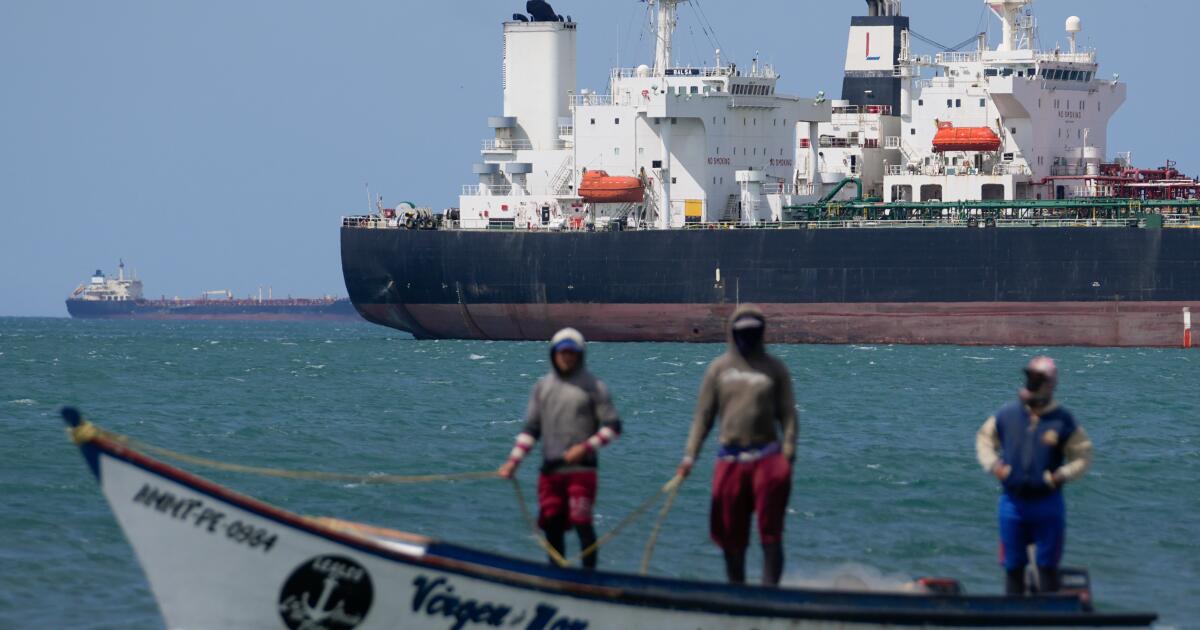
Dec. 20 (UPI) — The U.S. Coast Guard led another seizure of an oil tanker in international waters near Venezuela on Saturday after President Donald Trump declared a blockade of Venezuela.

The U.S. Navy and other federal entities participated in the seizure of the oil tanker, which is not among those sanctioned by the federal government, the Wall Street Journal, CBS News and CNN reported.

Armed U.S. personnel on military helicopters descended onto the tanker’s deck during the early morning hours on Saturday and seized it, Homeland Security Sec. Kristi Noem said in a social media post.

No one aboard the oil tanker resisted, and the United States seized it for carrying sanctioned Venezuelan oil.

The seized tanker displayed a Panamanian flag and was carrying Venezuelan oil that it was to offload in Asia.

Much of Venezuela’s oil is shipped to China, which has privately owned teapot refineries that often buy and refine illicit oil from Venezuela, Iran and other sanctioned nations.

The president on Tuesday ordered a “total and complete blockade” of all sanctioned oil tankers as they enter or leave Venezuelan waters.

Saturday’s raid shows the blockade could affect any vessel that carries Venezuelan oil, as affirmed by Noem.

The United States on Wednesday seized a sanctioned oil tanker after it departed a Venezuelan port and diverted it to Texas, where Trump said the United States could keep the oil in its hold.

That tanker, The Skipper, was flying the flag of Venezuela’s neighbor, Guyana, officials for which said the vessel is not among those registered there.

Such activities are typical of a shadow fleet that uses deceptive tactics to hide where respective vessels are located and transport illicit oil, which often benefits Iran, Russia and other sanctioned states.

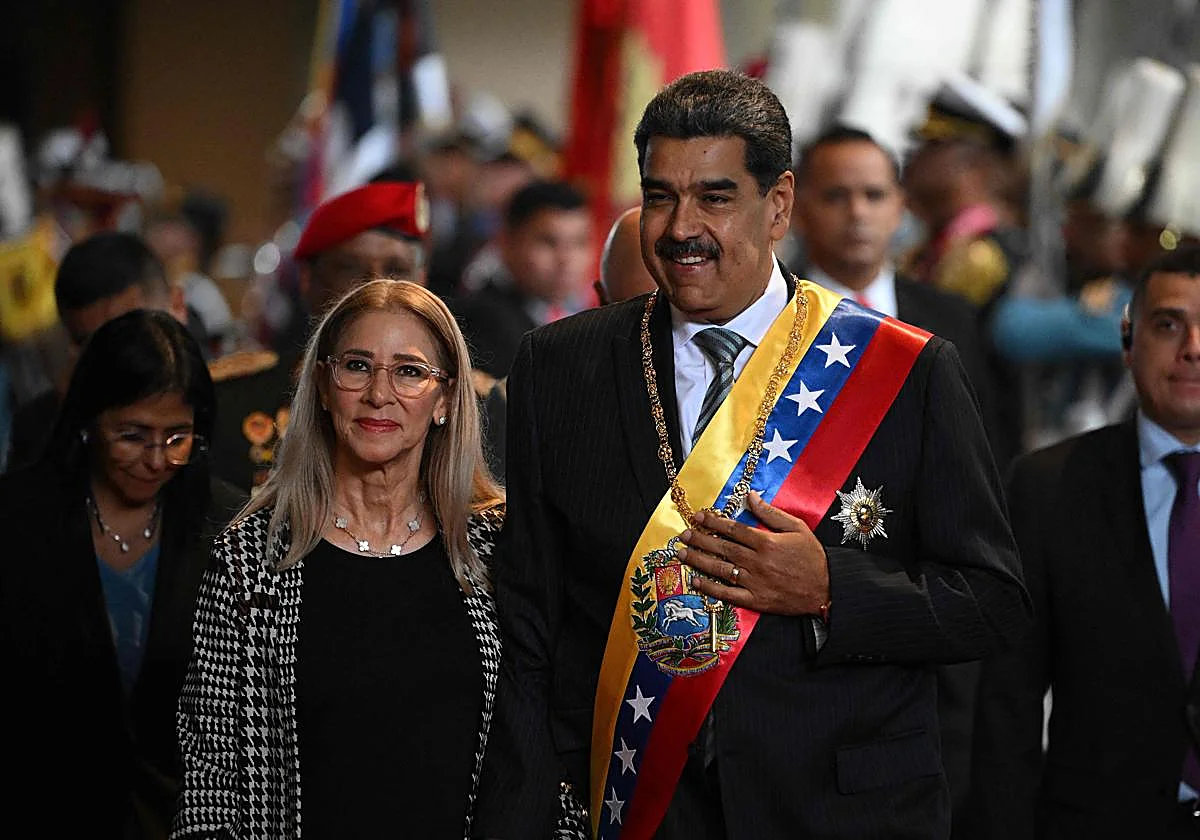
Venezuelan President Nicolas Maduro‘s government called The Skipper’s seizure an act of “piracy” and “robbery” and said the blockade is a “grotesque threat” that violates international law, according to CBS News.

Maduro’s regime accuses the United States of trying to “appropriate the oil, land and minerals of the country through gigantic campaigns of lies and manipulations.”

The blockade and tanker seizures are in addition to U.S. military strikes on alleged drug boats carrying illicit drugs destined for the United States and Europe.

Both tactics are efforts to isolate the Maduro regime, which Trump seeks to force out of power by depriving it of its primary revenue sources.

Former President Joe Biden presents the Presidential Citizens Medal to Liz Cheney during a ceremony in the East Room of the White House in Washington, on January 2, 2025. The Presidential Citizens Medal is bestowed to individuals who have performed exemplary deeds or services. Photo by Will Oliver/UPI | License Photo


Source link

Uruguay’s FM on US claims to police Latin America and rising tensions | Nicolas Maduro

Mario Lubetkin on Washington’s revived sphere-of-influence doctrine, Venezuela, and China’s growing footprint.

The United States is reviving a policy first set out in the 1800s that treats Latin America as its strategic sphere of influence. As Washington expands maritime operations in the Caribbean and eastern Pacific, critics warn of legal violations and rising regional instability.

Uruguay’s Foreign Minister Mario Lubetkin joins Talk to Al Jazeera to discuss US strikes, Venezuela, migration pressures, and China’s growing role in the region — and whether diplomacy can still prevent escalation in a hemisphere shaped once again by power politics.

Source link

US sanctions more relatives, associates of Venezuelan President Maduro | Donald Trump News

The United States Department of the Treasury has announced new sanctions on several family members and associates of Venezuelan President Nicolas Maduro, as the Trump administration increases pressure on Caracas and continues to build up US forces on Venezuela’s borders.

The sanctions announced on Friday come as the US military continues attacks on boats off the country’s coast, which have killed more than 100 people. The US military has also seized a Venezuelan oil tanker and imposed a naval blockade on all vessels arriving and departing from Venezuelan ports that are under US sanctions.

Recommended Stories

list of 4 itemsend of list

Announcing the new sanctions, US Secretary of the Treasury Scott Bessent said in a statement that “Maduro and his criminal accomplices threaten our hemisphere’s peace and stability”.

“The Trump Administration will continue targeting the networks that prop up his illegitimate dictatorship,” Bessent added.

The new sanctions target seven people who are family members or associates of Malpica Flores, a nephew of Maduro, and Panamanian businessman Ramon Carretero, who were named in an earlier round of US sanctions that also targeted six Venezuela-flagged oil tankers and shipping firms, on December 11.

Flores, who is one of three of Maduro’s nephews by marriage, dubbed “narco-nephews” by the US Treasury Department, is wanted because he “has been repeatedly linked to corruption at Venezuela’s state-run oil company, Petroleos de Venezuela, SA”, the Treasury said in a statement.

It was not immediately clear how Flores’s role in Venezuela’s state-run oil company related to “propping up Nicolas Maduro’s rogue narco-state”, which Bessent said in his statement was the reason for widening sanctions to additional family members and associates of the president.

The US has claimed that tackling drug trafficking is the primary reason for its military escalation in the region since September, including the strikes on vessels in the eastern Pacific and Caribbean, which international law experts say amount to extrajudicial killings.

Despite the Trump administration’s repeated references to drug trafficking, its actions and messaging appear increasingly focused on Venezuela’s oil reserves, which are the largest in the world. The reserves have remained relatively untapped since sanctions were imposed on the country by the US during the first Trump administration.

Homeland Security adviser and top Trump aide Stephen Miller said last week that Venezuela’s oil belongs to Washington.

“American sweat, ingenuity and toil created the oil industry in Venezuela,” Miller claimed on X. “Its tyrannical expropriation was the largest recorded theft of American wealth and property,” he added.

US sanctions, particularly those targeting Venezuela’s oil industry, have contributed to an economic crisis in the country and increased discontent with Maduro, who has governed Venezuela since 2013.

For his part, Maduro has accused the Trump administration of “fabricating a new eternal war” aimed at “regime change” and seizing Venezuela’s vast oil reserves.

The European Union has also imposed targeted sanctions on Venezuela, which it renewed last week until 2027.

The European sanctions, first introduced in 2017, include an embargo on arms shipments to Venezuela, as well as travel bans and asset freezes on individuals linked to state repression.

INTERACTIVE - Crude oil reserves vs exports-1756989578


Source link

Trump orders ‘total and complete’ naval blockade of Venezuela

Dec. 16 (UPI) — President Donald Trump on Tuesday ordered “a total and complete blockade” of all sanctioned oil tankers going to or from Venezuela, raising already high tensions between Washington and Caracas by going after the South American nation’s main revenue source.

Trump has sought to oust Venezuela’s authoritarian president Nicolas Maduro since his first term and has ratcheted up the pressure on the socialist leader since returning to the White House in January.

He has accused Maduro of sending an invasion of criminals to the United States and of being the leader of a narcotics trafficking organization, allegations that U.S. intelligence agencies have not publicly supported.

An armada of U.S. naval vessels has been deployed to waters near Venezuela, and the U.S. military has been attacking civilian ships in the region the Trump administration alleges are trafficking drugs to the United States, drawing domestic and international condemnation.

“Today, I am ordering A TOTAL AND COMPLETE BLOCKADE OF ALL SANCTIONED OIL TANKERS going into, and out of, Venezuela,” Trump announced in a statement on his Truth Social media platform.

“America will not allow Criminals, Terrorists or other Countries, to rob, threaten or harm our Nation, and, likewise, will not allow a Hostile Regime to take our Oil, Land or any other Assets, all of which must be returned to the United States IMMEDIATELY.”

It was not immediately clear what U.S. land or assets Trump was referring to, though he has repeatedly stated that the United States has been wrongly denied access to Venezuela’s oil reserves.

“Venezuela is completely surrounded by the largest Armada ever assembled in the History of South America. It will only get bigger, and the shock to them will be like nothing they have ever seen before — Until such time as they return to the United States of America all of the Oil, Land and other Assets that they previously stole from us,” Trump said.

Trump accused Maduro in the statement of using oil revenues to finance drug terrorism, human trafficking and murder.

Venezuela rejected Trump’s demands and called on the residents of the United States and the rest of the world to do likewise, saying the South American nation will “never again be a colony of any empire or foreign power.”

“The President of the United States intends to impose, in an absolutely irrational manner, a so-called blockade on Venezuela with the aim of stealing the wealth that belongs to our Homeland,” Venezuela’s foreign ministry said in a statement.

Source link

Trump orders ‘total’ blockade of sanctioned Venezuela oil tankers | Donald Trump News

BREAKING,

The order comes a week after the US military seized an oil tanker off Venezuela’s coast.

United States President Donald Trump has ordered “a total and complete” blockade of all US-sanctioned oil tankers entering and leaving Venezuela.

“Venezuela is completely surrounded by the largest Armada ever assembled in the History of South America,” Trump said in a post on his social media platform Truth Social.

Recommended Stories

list of 4 itemsend of list

“For the theft of our Assets, and many other reasons, including Terrorism, Drug Smuggling, and Human Trafficking, the Venezuelan Regime has been designated a FOREIGN TERRORIST ORGANIZATION,” Trump said.

“Therefore, today, I am ordering A TOTAL AND COMPLETE BLOCKADE OF ALL SANCTIONED OIL TANKERS going into, and out of, Venezuela,” he said.

Trump’s comments come a week after US forces seized a sanctioned oil tanker off the coast of Venezuela and as Washington has ordered a huge build-up of US military forces off the Venezuelan coast in an operation said to target drug smuggling.

The US military has killed at least 90 people since September in attacks on dozens of vessels in the eastern Pacific Ocean and Caribbean Sea near Venezuela, in what international law experts have criticised as extrajudicial killings.

Washington claimed the vessels were involved in drug trafficking but has provided no evidence to support its allegations.

Caracas has long said the deployment of US forces to the region was aimed at allowing “external powers to rob Venezuela’s immeasurable oil and gas wealth“.

Despite holding the world’s largest proven oil reserves, Venezuela has faced severe restrictions on its exports in recent years under US sanctions first imposed during the first Trump presidency.

This is a breaking news story. More to follow shortly.

Source link

Venezuelan opposition leader Machado injured on covert Nobel Prize trip | Nicolas Maduro News

President Maduro’s rival was hurt as she sped on a boat through choppy waters in secret escape from hiding to reach Oslo ceremony.

Venezuelan opposition leader Maria Corina Machado was injured as she made a clandestine dash to collect her Nobel Peace Prize last week, her spokesperson has said.

Claudia Macero said late on Monday that the right-wing opposition figure fractured a vertebra during a choppy boat ride that had formed part of a risky cloak-and-dagger journey to reach the Norwegian capital, Oslo, for the Nobel award ceremony.

Recommended Stories

list of 4 itemsend of list

Machado has been in hiding since she was banned from running in Venezuela’s July 24 presidential election, fearing that her life is under threat from long-time Venezuelan President Nicolas Maduro.

“The vertebra fracture is confirmed,” Macero told the AFP news agency, adding that no further details would be released beyond what had been reported in the Norwegian daily Aftonbladet.

The newspaper had earlier reported that the 58-year-old Machado sustained the fracture while crossing the sea in a small fishing boat battered by high waves.

The opposition leader was examined by doctors at Oslo University Hospital during her time in the city.

Dangerous dash

Media reports in the United States said Machado’s escape last week involved wearing a disguise, including a wig, and travelling from a small Venezuelan fishing village on a wooden boat to the island of Curacao, before boarding a private plane to Norway.

Machado has said she feared for her life during the voyage, which saw US forces situated in the Caribbean alerted to avoid a strike on the vessel.

Several similar boats have been attacked in recent months in a campaign that the Trump administration asserts is a bid to avert drug smuggling into the US.

Maduro has accused Washington of seeking to engineer regime change in the hope of seizing Venezuela’s large oil reserves.

The leader of the opposition Vente Venezuela party was attempting to reach the ceremony at which she was due to be presented with the Nobel Peace Prize.

She was announced the winner of the prestigious award in October, with the selection committee praising her role in the country’s opposition movement and her “steadfast” support for democracy.

‘Broken soul’

Despite her speedy trip, Machado failed to reach Oslo in time for the ceremony. Her daughter received the award on her behalf and delivered a speech that slammed Maduro and warned of the need to fight for democracy.

Hours after the ceremony, early on Thursday morning, Machado greeted supporters from an Oslo hotel balcony in what was her first public appearance in a year.

Despite the fracture, she climbed over a barrier to greet supporters outside the hotel, AFP reported.

Machado said authorities in Venezuela would have attempted everything possible to prevent her journey to Norway.

Appearing set to challenge Maduro in the vote, the opposition leader was barred from running in the country’s presidential election in July last year.

She then announced that she would be going into hiding within Venezuela due to fear for her life while Maduro is in power.

The Venezuelan president commented dismissively on the reports of Machado’s injury on television on Monday.

Machado “says she has a broken vertebra”, he said. “What’s broken is her brain and her soul because she’s a demon – she hates Venezuela.”

Source link

Oil tanker warrant unsealed; Cuba denounces seizure

Dec. 13 (UPI) — U.S. officials unsealed the warrant issued for the seizure of the shadow fleet oil tanker The Skipper, which the U.S. military seized in international waters earlier this week.

A federal magistrate judge with the U.S. District Court for the District of Columbia signed the seizure warrant on Nov. 26, which U.S. forces presented upon its seizure on Wednesday in the operation led by the Coast Guard.

“As the premier United States Attorney’s office leading efforts to intercept ghost vessels as well as sanctioned products, we remain committed to legally supporting President [Donald] Trump’s efforts to make the world a safer place,” U.S. Attorney Jeanine Pirro said in a news release on Friday.

Pirro called the tanker’s seizure an “enforcement action.”

The seizure led Cuban officials to denounce the action as an “act of piracy and maritime terrorism” that is a “serious violation of international law,” The Guardian reported.

“This action is part of the U.S. escalation aimed at hampering Venezuela’s legitimate right to freely use and trade its natural resources with other nations, including the supplies of hydrocarbons to Cuba,” officials with Cuba’s Foreign Ministry said Friday in a statement.

The tanker’s seizure negatively impacts Cuba and “intensifies the United States’ policy of maximum pressure and economic suffocation” against the island nation, the Cuban officials said.

The Skipper’s captain had listed its destination as Cuba’s port of Matanzas, but the vessel offloaded about 50,000 barrels of oil to another ship, which carried that oil to Cuba as The Skipper sailed east toward Asia, according to The New York Times.

About 80% of Venezuelan oil shipments go to China, but Venezuelan President Nicolas Maduro and former President Hugo Chavez have shipped oil to Cuba for decades.

In exchange for low-cost Venezuelan oil, Cuban officials provide security personnel for Maduro and thousands of medical staff and sports instructors to Venezuela.

Most of the oil sent to Cuba does not stay there and instead is sold to China to help fund the Cuban government, The Times reported.

The vessel is associated with Iran’s Islamic Revolutionary Guard Corps and is part of a shadow fleet affiliated with a Russian oligarch.

The vessel was sanctioned by the United States and flying a Guyana flag when it was seized, but Guyana government officials said they have no record of the vessel being registered there.

U.S. officials said they will keep the oil carried by the 1,092-foot tanker, which is being taken to Galveston, Texas.

Source link

Southern Command leader Adm. Alvin Holsey relinquishes command

Admiral Alvin Holsey relinquished his leadership of U.S. Southern Command on Friday ahead of his pending retirement after serving 37 years in the Navy. Photo by Mariano Macz/EPA

Dec. 12 (UPI) — U.S. Southern Command leader Adm. Alvin Holsey relinquished his command on Friday amid his pending retirement from the Navy after 37 years of service.

Holsey announced his pending retirement in October without giving a reason, CBS News reported.

He relinquished his command over military forces in South America during a ceremony Friday at Southern Command headquarters.

“We have worked hard and tirelessly to build relationships and understand requirements across the region,” Holsey said during a command-change ceremony.

“That work must continue across the whole government to deliver at the point of need to respond to shared threats in our neighborhood — the time is now.”

Joint Chiefs of Staff Chairman Gen. Dan Caine bestowed the Defense Distinguished Service Medal upon Holsey during the ceremony and included a citation that was signed by Defense Secretary Pete Hegseth.

“One of Adm. Holsey’s most significant achievements was the transformation of USSOUTHCOM into a more agile, capable and operationally present force,” U.S. Southern Command officials said Thursday in a news release, as reported by The Hill.

“Under his leadership, the command expanded from roughly 3,500 personnel to nearly 15,000 personnel in direct support of operations in the region,” the release said.

“The operational impact was immediately felt, with the expanded U.S. presence across the region, improving responsiveness and strengthening deterrence.”

Holsey initially was scheduled to lead Southern Command for four years, but stepped down amid the U.S. military buildup in the region after taking command in November 2024.

Holsey and Hegseth have had disagreements regarding strikes on alleged drug vessels and other actions that have raised tensions between the United States and Venezuelan President Nicolas Maduro, according to CBS News.

The U.S. military has targeted at least 22 vessels in strikes that have killed at least 87 crew members deemed “narco-terrorists” by the Trump administration and Hegseth since the strikes began in September.

Hegseth also accused Holsey of moving too slowly in developing options to ensure the United States has unhindered access to the Panama Canal, which President Donald Trump has said the nation should reclaim from Panama, according to The Wall Street Journal.

Air Force Lt. Gen. Evan Pettus is scheduled to replace Holsey as acting commander of Southern Command.

Source link

US sanctions family of Venezuela’s Maduro, 6 oil tankers in new crackdown | Nicolas Maduro News

The Trump administration has imposed new sanctions on Venezuela, targeting three nephews of President Nicolas Maduro’s wife, Cilia Flores, as well as six crude oil tankers and shipping companies linked to them, as Washington steps up pressure on Caracas.

Two of the sanctioned nephews were previously convicted in the United States on drug trafficking charges before being released as part of a prisoner exchange.

Recommended Stories

list of 3 itemsend of list

The US is also targeting Venezuela’s oil sector by sanctioning a Panamanian businessman, Ramon Carretero Napolitano, whom it says facilitates the shipment of petroleum products on behalf of the Venezuelan government, along with several shipping companies.

The US Treasury Department said on Thursday that the measures include sanctions on six crude oil tankers it said have “engaged in deceptive and unsafe shipping practices and continue to provide financial resources that fuel Maduro’s corrupt narco-terrorist regime”.

Four of the tankers, including the 2002-built H Constance and the 2003-built Lattafa, are Panama-flagged, with the other two flagged by the Cook Islands and Hong Kong.

The vessels are supertankers that recently loaded crude in Venezuela, according to internal shipping documents from state oil company PDVSA.

‘An act of piracy’

In comments on Thursday night, Trump also repeated his threat to soon begin strikes on suspected narcotics shipments making their way via land from Venezuela to the US.

His remarks followed the US seizure of an oil tanker off Venezuela’s coast.

White House Press Secretary Karoline Leavitt said the US would take the tanker to a US port.

“The vessel will go to a US port, and the United States does intend to seize the oil,” Leavitt said during a news briefing. “However, there is a legal process for the seizure of that oil, and that legal process will be followed.”

Maduro condemned the seizure, calling it “an act of piracy against a merchant, commercial, civil and private vessel,” adding that “the ship was private, civilian and was carrying 1.9 million barrels of oil that they bought from Venezuela”.

He said the incident had “unmasked” Washington, arguing that the true motive behind the action was the seizure of Venezuelan oil.

“It is the oil they want to steal, and Venezuela will protect its oil,” Maduro added.

Maduro’s condemnation came as US officials emphasised that the latest sanctions also targeted figures close to the Venezuelan leader.

Nicolas Maduro
Venezuela’s President Nicolas Maduro holds a sword which belonged to Ezequiel Zamora, a Venezuelan soldier [FILE: Leonardo Fernandez Viloria/Reuters]

Maduro’s relatives targeted

Franqui Flores and Efrain Antonio Campo Flores, nephews of Venezuelan first lady Cilia Flores, were also sanctioned. The two became known as the “narco nephews” after their arrest in Haiti in 2015 during a US Drug Enforcement Administration sting.

They were convicted in 2016 on charges of attempting to carry out a multimillion-dollar cocaine deal and sentenced to 18 years in prison, before being released in a 2022 prisoner swap with Venezuela.

A third nephew, Carlos Erik Malpica Flores, was also targeted. US authorities allege he was involved in a corruption scheme at the state oil company.

Maduro and his government have denied links to criminal activity, saying the US is seeking regime change to gain control of Venezuela’s vast oil reserves.

Beyond the individuals targeted, the US is also preparing to intercept additional ships transporting Venezuelan oil, the Reuters news agency reported, citing sources.

Asked whether the Trump administration planned further ship seizures, White House spokesperson Leavitt told reporters she would not speak about future actions but said the US would continue executing the president’s sanctions policies.

“We’re not going to stand by and watch sanctioned vessels sail the seas with black market oil, the proceeds of which will fuel narcoterrorism of rogue and illegitimate regimes around the world,” she said on Thursday.

Wednesday’s seizure was the first of a Venezuelan oil cargo amid US sanctions that have been in force since 2019. The move sent oil prices higher and sharply escalated tensions between Washington and Caracas.

White House Press Secretary Karoline Leavitt
White House Press Secretary Karoline Leavitt holds a news briefing [Jonathan Ernst/Reuters]

Source link

Venezuela’s Machado taunts Maduro government after dramatic exit to Oslo | Nicolas Maduro News

Venezuelan opposition leader and Nobel Peace laureate Maria Corina Machado has declared that authorities in her home country would have attempted everything possible to prevent her journey to Norway, after she emerged publicly for the first time in nearly a year.

Machado greeted supporters from an Oslo hotel balcony in the early hours of Thursday following a high-risk exit from Venezuela, where she had been in hiding since January.

Recommended Stories

list of 2 itemsend of list

The journey, which purportedly included navigating 10 military checkpoints and crossing the Caribbean by fishing vessel, brought her to the Norwegian capital to collect her Nobel Peace Prize.

During a news conference at Norway’s parliament, the 58-year-old right-wing opposition figure delivered sharp criticism of President Nicolas Maduro’s administration, asserting that the government deploys national resources to suppress its population.

When questioned about an oil tanker seized by Washington on Wednesday, she argued this demonstrated how the regime operates. Asked whether she would support a United States invasion, Machado claimed Venezuela had already been invaded by Russian and Iranian agents alongside drug cartels.

“This has turned Venezuela into the criminal hub of the Americas,” she said, standing alongside Norwegian Prime Minister Jonas Gahr Stoere.

“What sustains the regime is a very powerful and strongly funded repression system. Where do those funds come from? Well, from drug trafficking, from the black market of oil, from arms trafficking and from human trafficking. We need to cut those flows.”

The trip reunited her with family members she had not seen in almost two years, including her daughter, who accepted the Nobel Peace Prize on her behalf at Wednesday’s ceremony.

Aligned with Trump 

The political leader has welcomed international sanctions and US military intervention in Venezuela, a move her critics say harkens back to a dark past.

The US has a long history of interference in the region, particularly in the 1980s, when it propped up repressive right-wing governments through coups, and funded paramilitary groups across Latin America that were responsible for mass killings, forced disappearances and other grave human rights abuses.

Venezuelan authorities cited Machado’s support for sanctions and US intervention when they barred her from running for office in last year’s presidential election, where she had intended to challenge Maduro. Machado has accused Venezuela’s president of stealing the July 2024 election, which was criticised by international observers.

Praising the Trump administration’s approach, Machado said the president’s actions had been “decisive to reach the point where we are right now, in which the regime is weaker than ever.”

She insisted she would return home but did not say when. “I’m going back to Venezuela regardless of when Maduro goes out. He’s going out, but the moment will be determined by when I’m finished doing the things that I came out to do,” she told reporters.

Her escape comes as tensions between Washington and Caracas have intensified sharply. The Trump administration has positioned major naval forces in the Caribbean and conducted strikes against alleged drug vessels since September. The US seized what Trump called a “very large” oil tanker off the coast of Venezuela, on Wednesday.

Machado has aligned herself with right-wing hawks close to Trump who argue that Maduro has links to criminal gangs that pose a direct threat to US national security, despite doubts raised by the US intelligence community.

The Trump administration has ordered more than 20 military strikes in recent months against alleged drug-trafficking vessels in the Caribbean and off Latin America’s Pacific coast, killing more than 80 people.

Human rights groups, some US Democrats, and several Latin American countries have condemned the attacks as unlawful extrajudicial killings of civilians.

The Wall Street Journal (WSJ) reported that Machado’s two-month escape operation involved wearing a disguise and departing from a coastal fishing village on a wooden boat bound for Curacao before boarding a private aircraft to Norway.

US forces were alerted to avoid striking the vessel, the WSJ reported, as they had one with similar boats in recent months. Machado confirmed receiving assistance from Washington during her escape.

Maduro, in power since 2013 following the death of Hugo Chavez, says Trump is pushing for regime change in the country to access Venezuela’s vast oil reserves. He has pledged to resist such attempts.

A United Nations report released on Thursday accused Venezuela’s security forces of crimes against humanity over more than a decade.

Venezuelan Minister of the Interior Diosdado Cabello said Machado left the country “without drama” but provided no details.

Source link

Venezuelan opposition leader Maria Corina Machado makes first public appearance in a year

Nobel Peace Prize laureate Maria Corina Machado reacts from the balcony at the Grand Hotel in Oslo, Norway, on Thursday, December 11, 2025. She received the Nobel Peace Prize 2025 for her work promoting democratic rights for the people of Venezuela and for her struggle to achieve a just and peaceful transition from dictatorship to democracy. Due to the situation in Venezuela, she was unable to attend the award ceremony. Photo by Lise Aserud/EPA

Dec. 11 (UPI) — Venezuelan opposition leader Maria Corina Machado has made her first public appearance in over a year early Thursday, just hours after winning the Nobel Peace Prize.

Machado was greeted by cheering supporters in the streets of Oslo.

A video of the scene was posted to her X account, showing a smiling Machado from the balcony of the Grand Hotel waving to a group of hundreds outside.

Pictures of her greeting and embracing supporters on the street were also published on her X account.

“The hug that all of Venezuela needs,” she wrote in a caption accompanying the photos.

Machado, 58, made the appearance at around 2:30 a.m. local time, The New York Times reported.

Her appearance in the Scandinavian country follows more than a year of her hiding from the regime of Venezuela’s authoritarian president, Nicolas Maduro.

Machado led an opposition movement that many Venezuelans and international observers believe outpolled Maduro in last year’s elections. She won the opposition primary but was barred from appearing on the general election ballot by the Maduro regime, a move widely condemned.

She then backed presidential candidate Edmundo Gonzalez in the race who is believed by the opposition and many observers to have won the election. Maduro, however, responded by intensifying repression and human rights abuses against political opponents and public dissent, while his government-controlled National Electoral Council declared him the winner.

Her appearance came as she traveled to Oslo to participate in the Nobel Prize Ceremony as she was this year’s recipient of the Nobel Peace Prize.

In a phone call released by the organization, Machado said she was on her way to Oslo, stating she was grateful for all those who risked their lives to make it happen.

“This is a measure of what this recognition means to the Venezuelan people,” she said, before boarding a plane.

She was unable to reach Oslo in time to receive the award, with her daughter, Ana Corina Sosa, taking the diploma and medal on her mother’s behalf at Oslo’s City Hall.

And she read her mother’s acceptance speech.

“My dear Venezuelans, the world has marveled at what we have achieved. And soon, it will witness one of the most moving sights of our time: our loved ones coming home — and I will stand again on the Simon Bolivar bridge, where I once cried among the thousands who were leaving, and welcome them back into the luminous life that awaits us,” Sosa said on her mother’s behalf.

“Because in the end, our journey towards freedom has always lived inside us. We are returning to ourselves. We are returning home.”

Source link

‘Largest tanker ever seized’ held by U.S. off the coast of Venezuela

Dec. 10 (UPI) — The United States seized a large oil tanker off the coast of Venezuela amid ongoing tensions between President Donald Trump and Venezuelan President Nicolas Maduro.

The tanker was seized during a “judicial enforcement action on a stateless vessel” that had docked in Venezuela, Bloomberg reported.

“Today, the Federal Bureau of Investigation, Homeland Security Investigations and the United States Coast Guard, with support from the Department of War, executed a seizure warrant for a crude oil tanker used to transport sanctioned oil from Venezuela and Iran,” Attorney General Pam Bondi said in a late-afternoon post on X.

U.S. officials sanctioned the oil tanker several years ago due to its “involvement in an illicit oil shipping network supporting foreign terrorist organizations,” Bondi explained.

“This seizure, completed off the coast of Venezuela, was conducted safely and securely — and our investigation alongside the Department of Homeland Security to prevent the transport of sanctioned oil continues.”

U.S. military personnel seized the tanker by fast-roping from a helicopter to board it, Bloomberg reported.

Trump earlier confirmed the tanker’s seizure at the start of a 2 p.m. EST roundtable at the White House.

“We’ve just seized a tanker off the coast of Venezuela — the largest tanker ever seized,” Trump said at the start of the roundtable meeting.

He said “it was seized for a very good reason” and the “appropriate people” would address the matter when asked for more information by a reporter.

The vessel’s seizure occurred as the Trump administration has been applying pressure on Maduro, whom Trump has accused of being a narco-trafficker and of stealing the country’s 2024 presidential election by declaring himself the winner.

The Trump administration has designated Cartel de los Soles aka Cartel of the Sun a foreign terrorist organization that includes many Venezuelan military and government officials among its leadership.

Defense Secretary Pete Hegseth has ordered a carrier strike group to join other U.S. Navy vessels in the Caribbean Sea amid ongoing strikes against small craft departing Venezuela and other nations that are alleged tobe carrying illicit drugs.

The oil tanker’s seizure and the presence of the U.S. military in international waters near Venezuela are likely to discourage oil companies from transporting Venezuelan crude oil.

“Shippers will likely be much more cautious and hesitant about loading Venezuelan crude going forward,” Kpler oil analyst Matt Smith told CNBC.

Rystad Energy’s Jorge Leon, who is in charge of the firm’s geopolitical analysis, told Bloomberg the U.S. seizure of a “Venezuelan tanker” is a “clear escalation from financial sanctions to physical interdiction.”

The seizure “raises the stakes for Caracas and anyone facilitating its exports,” Leon said.

The Trump administration also has advised international airlines to be cautious when approaching Venezuela, which has caused many to suspend operations there.

President Donald Trump walks on the South Lawn of the White House after arriving on Marine One in Washington on Tuesday. Trump said people were “starting to learn” the benefits of his tariff regime. Photo by Graeme Sloan/UPI | License Photo


Source link