nexstar

Paramount, pushing to buy Warner Bros., girds for legal challenges

Is Paramount making a Tony Soprano move?

David Ellison’s media company appears to be girding for a big battle with California Atty. Gen. Rob Bonta and fellow state attorneys general who may team up to file a lawsuit aiming to block Paramount’s proposed $111-billion takeover of Warner Bros. Discovery.

Last week, Paramount hired powerhouse antitrust attorney Jeffrey Kessler to help defend its proposed takeover of Warner, which owns CNN, TBS, HBO and the prestigious Burbank film and television studios.

Kessler — co-executive chairman of Winston & Strawn in New York — is one of the nation’s top antitrust lawyers. He most recently led the state attorneys’ case against concert promoter and ticketing firm Live Nation, resulting in a monumental win for the states, including California.

Now Kessler may be on the opposite side, potentially going after the government to help Paramount build a behemoth that would include CNN and CBS News, two historic film studios and four streaming services.

The states have not indicated whether they plan to go to court to block Paramount’s takeover of Warner, but Bonta has said Ellison’s proposed consolidation, which is widely expected to lead to layoffs, is problematic.

Paramount declined Tuesday to discuss Kessler’s remit. Kessler was not immediately available for comment.

Hiring an attorney who is more commonly aligned against big companies prompted at least one observer to postulate that Paramount could be angling to remove a big name from the legal chessboard to prevent him from joining the other side, in the vein of TV mob boss Tony Soprano.

During the HBO show’s fifth season, Soprano spent months consulting with top divorce attorneys, creating a potential conflict of interest that prevented those lawyers from representing his wife Carmela in the dispute.

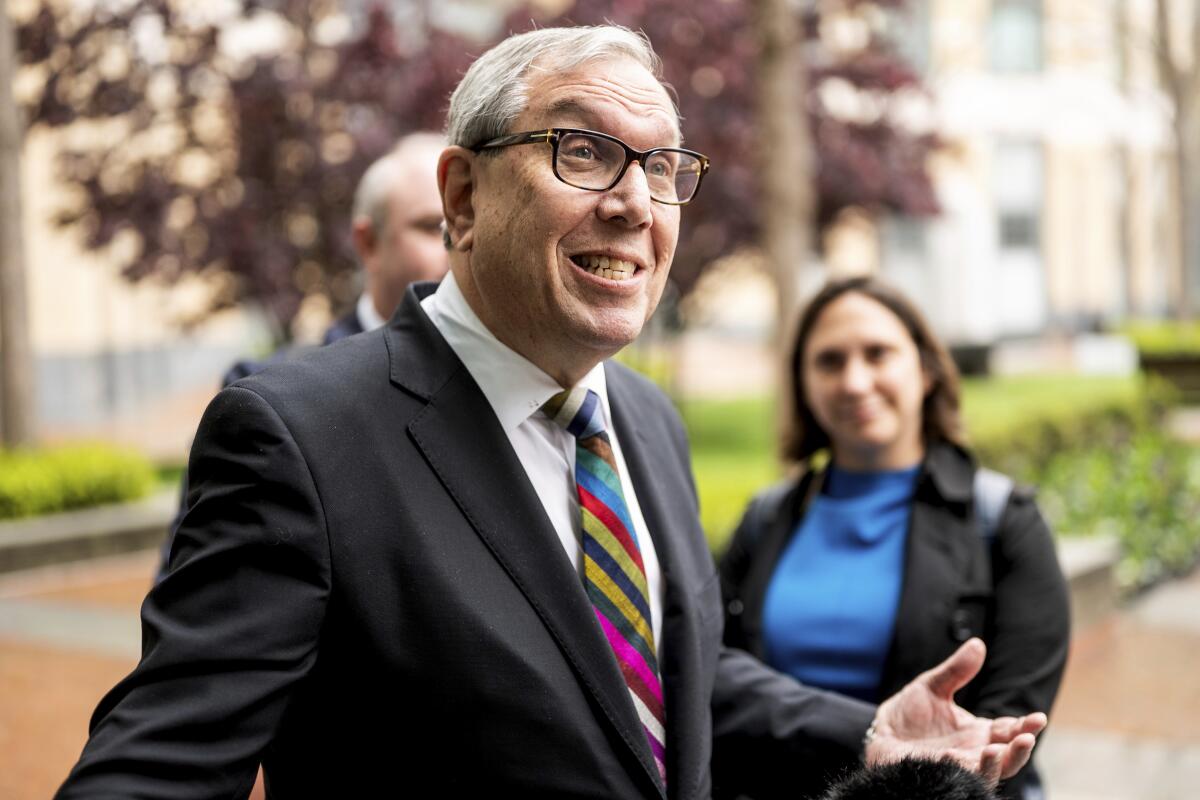
Jeffrey Kessler arriving at federal court in Oakland in 2025

Attorney Jeffrey Kessler arrives at federal court in Oakland in a file photo.

(Noah Berger/Associated Press)

Kessler also knows the ins and outs of a courtroom as well as antitrust settlements, which could benefit Paramount as it seeks to avoid a bruising court challenge.

More than 5,000 artists and other entertainment industry workers already have signed an open letter that urges Bonta to take action to upend the Paramount and Warner Bros. deal.

Ellison and his team have vowed to make $6 billion in cuts following the merger. The combined company would have to contend with $79 billion in deal debt.

Adding Kessler comes as state attorneys general have been taking a more aggressive role in waging anti-trust fights. Many believe the U.S. Justice Department has been sitting on the sidelines to allow deals favored by President Trump to sail through their legally mandated regulatory reviews.

Trump favors Paramount’s takeover of CNN and other Warner properties.

Paramount Chief Legal Officer Makan Delrahim has made several savvy tactical moves since joining Ellison’s Melrose Avenue firm last fall.

Delrahim, who was Trump’s antitrust chief during his first term, filed paperwork to win the U.S. Justice Department’s blessing in December — soon after Netflix had clinched the bidding war for Warner Bros.

Netflix ultimately bowed out of the auction in late February. And Delrahim’s move gave Ellison’s Paramount a head start in the regulatory approval process.

The company is waiting for confirmation that the Justice Department will consent to its Warner Bros. purchase. It is separately responding to issues raised by regulators in Europe.

It’s not clear when Bonta or his fellow attorneys general might decide whether to bring a case against Paramount, although the deadline is approaching because Ellison wants to get his deal wrapped up by September.

Attorneys general also could opt for negotiating a settlement agreement with Paramount, which might be willing to bend to concessions to get the deal approved.

Bonta is leading a challenge against another big merger — TV station owner Nexstar Media Group’s $6.2-billion purchase of rival company Tegna Inc. Nexstar owns KTLA-TV Channel 5 in Los Angeles and more than 100 other stations.

Nexstar initially argued that Bonta’s action came too late — after Nexstar had gained its federal approvals for the deal. Nexstar also was in the process of consolidating Tegna’s operations and top Tegna executives had cashed out.

The move backfired on Nexstar as a federal judge in Northern California issued a preliminary injunction, ordering Nexstar to halt the Tegna consolidation.

U.S. District Judge Troy Nunley ruled Tegna must be managed as a separate company pending the outcome of a trial.

On Tuesday, Tegna announced that it hired a former Fox TV station executive, Patrick Paolini, as its chief executive. Beginning next week, Paolini will be responsible for “Tegna’s daily operations, revenue-generating business strategies, local journalism and production, and growth initiatives,” according to a corporate statement.

Paolini will report to Tegna’s board — not Nexstar.

Source link

Legal battle to halt Nexstar-Tegna TV station merger expands with five new states

California Atty. Gen. Rob Bonta has enlisted new allies in his legal battle to unravel Nexstar Media Group’s takeover of rival television station group Tegna Inc.

Late Thursday, Bonta announced that five additional states have joined his coalition that is suing to block the $6.2-billion merger. With the additional plaintiffs, the group of top state law enforcement officers has grown to 13 — and the campaign now is a bipartisan effort.

“Antitrust enforcement is not political — it’s about protecting working families and helping ensure the benefits of a vibrant economy are for everyone, not just well-connected corporations,” Bonta said in a statement. “We welcome our sister states into the fray and look forward to fighting alongside them.”

The new states are Indiana, Kansas, Massachusetts, Pennsylvania and Vermont. They have joined existing the plaintiffs that represent the people of California, Colorado, Connecticut, Illinois, New York, North Carolina, Oregon and Virginia.

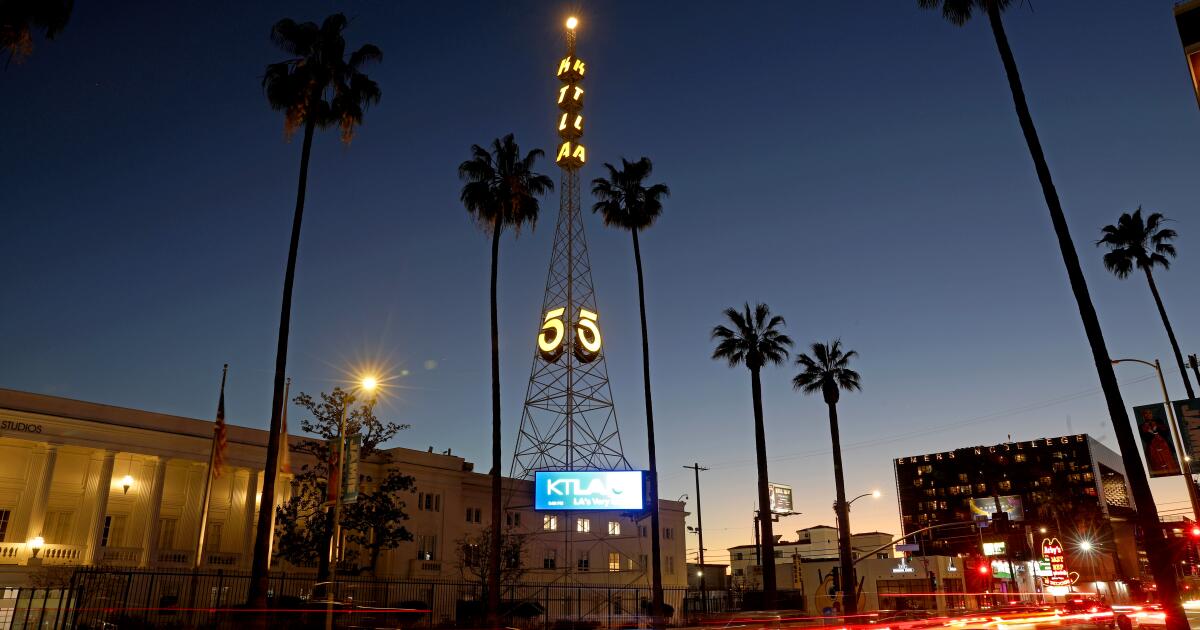
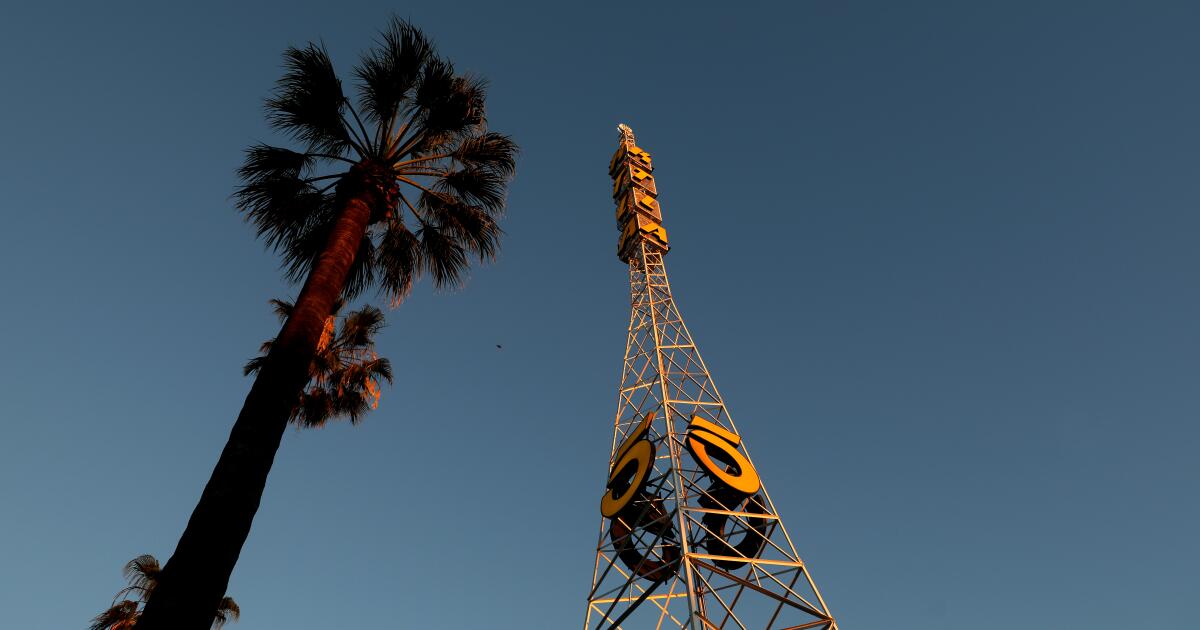
Nexstar owns KTLA-TV Channel 5 in Los Angeles.

U.S. District Judge Troy Nunley two weeks ago granted a request by the attorneys general to issue a preliminary injunction halting the merger as the legal case proceeds. The proposed merger — which Nexstar rushed to complete despite opposition from the states — would create the nation’s largest broadcast station group with 265 television stations, up from 164 that Nexstar currently controls.

In dozens of markets, including San Diego and Sacramento, Nexstar would own multiple major TV network affiliates. That duplication has raised concerns about staff consolidations and widespread newsroom layoffs.

“State attorneys general nationwide understand just how important robust antitrust enforcement is to American life — and what a rotten deal this is for consumers, for workers, for affordability, and for our local news,” Bonta said.

El Segundo-based DirecTV separately filed a lawsuit to block the deal, saying the Nexstar-Tegna consolidation would harm their business by forcing DirecTV to pay significantly higher fees for the rights to carry their stations as part of its programming lineup.

A Nexstar representative was not immediately available for comment.

Nexstar contends the deal would strengthen TV station economics, allowing stations to bolster their news gathering and expand the number of newscasts. But DirecTV countered that in markets where Nexstar owns two stations, it relies on just one newsroom to program both channels.

Nexstar’s proposed purchase of Tegna would give the Irving, Texas-based Nexstar stations in 44 states covering 80% of the U.S. population.

The federal judge ruled there was sufficient merit in the antitrust arguments brought by Bonta and the others to pause Nexstar’s takeover of Tegna until a trial can be held to decide whether the merger is illegal.

“Nexstar must permit Tegna to continue operating as a separate and distinct, independently managed business unit from Nexstar,” Nunley wrote in his 52-page order on April 17. “And Nexstar must put measures in place to maintain Tegna as an ongoing, economically viable, and active competitor.”

Source link

As primary election nears, top candidates for California governor debate tonight

With the California governor’s race quickly approaching, six candidates will face off Wednesday evening in the first debate since former Rep. Eric Swalwell dropped out of the race in the aftermath of sexual assault and misconduct allegations.

The debate takes place at a critical moment in the turbulent contest to replace termed-out Gov. Gavin Newsom. Ballots will start landing in Californians’ mailboxes in less than two weeks, and voters are split by a crowded field of eight prominent candidates. The debate also takes place after former state Controller Betty Yee ended her campaign because of a lack of resources and support in the polls.

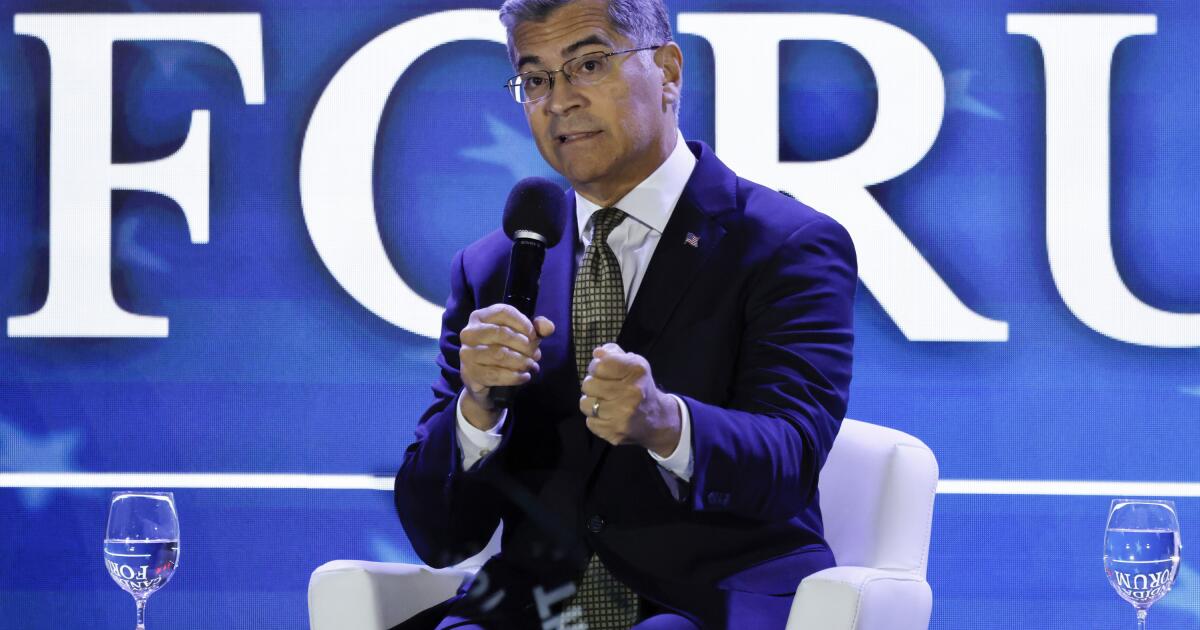
Two Republicans — Riverside County Sheriff Chad Bianco and conservative commentator Steve Hilton — and four Democrats — billionaire Tom Steyer, former Biden administration Secretary Xavier Becerra, former Orange County Rep. Katie Porter and San Jose Mayor Matt Mahan — will take the stage at Nexstar’s KRON4 studios in San Francisco. Former Los Angeles Mayor Antonio Villaraigosa and state Supt. of Public Instruction Tony Thurmond, both Democrats, were not invited to participate because of their low polling numbers.

As the candidates strive to distinguish themselves in a crowded field, the debate could include fiery exchanges about the role of money in politics and potential heightened attacks on Becerra, who has surged in the polls since Swalwell dropped out. With the debate taking place on Earth Day, environmental issues are also likely to be raised.

The Wednesday night gathering is the first televised debate in the gubernatorial contest since early February. Last month, USC canceled a debate hours before it was set to begin over mounting criticism that its criteria excluded all major candidates of color.

The 7 p.m. debate is hosted by Nexstar and will be moderated by KTXL FOX40 anchor Nikki Laurenzo and KTLA anchor Frank Buckley. It can be viewed on KRON4 (San Francisco), KTLA5 (Los Angeles), KSWB/KUSI (San Diego), KTXL (Sacramento), KGET (Bakersfield) and KSEE (Fresno). NewsNation will also air the debate.

Source link

Judge blocks Nexstar-Tegna deal, throwing $6.2-billion merger into doubt

A federal judge has blocked Nexstar Media Group’s $6.2-billion acquisition of its rival, upending the already consummated union of the nation’s two largest television station groups.

U.S. District Court Chief Judge Troy L. Nunley on Friday issued a preliminary injunction that forbids Nexstar, which owns KTLA-TV Channel 5 in Los Angeles, and its takeover-target, Tegna Inc., from combining operations amid a legal dispute with California Atty. Gen. Rob Bonta and seven other state attorneys general.

The order takes effect Tuesday.

“Nexstar must permit Tegna to continue operating as a separate and distinct, independently managed business unit from Nexstar,” Nunley wrote in his 52-page order. “And Nexstar must put measures in place to maintain Tegna as an ongoing, economically viable, and active competitor.”

The injunction is Nexstar’s latest setback in the controversial deal championed by President Trump.

Bonta and the others are opposed to the merger, arguing it violates a 112-year-old U.S. antitrust law by knocking out a major competitor. The deal would give Irving, Texas-based Nexstar control of 265 television stations across the country, up from 164. And, in dozens of markets, including San Diego and Sacramento, Nexstar would own multiple TV network affiliates.

That duplication has raised concerns about staff consolidations and widespread newsroom layoffs.

“This is a critical win in our case,” Bonta said in a statement. “This merger is illegal, plain and simple. The federal government may have thrown in the towel, but we’ll keep fighting for consumers, for workers, for affordability and for our local news.”

Nexstar, in a statement, said that it will appeal the ruling, but that it has taken steps to comply with the court order.

“For nearly thirty years, Nexstar has provided free over-the-air access to all its broadcast stations — local news, weather, and community-focused programming alongside major network programming,” Nexstar said. “This procompetitive transaction will make local stations stronger and support continued investment in local journalism and fact-based news.”

Bonta and other state attorneys general sued to block the merger March 18. The state officials, all Democrats, alleged the union would create “a broadcast behemoth” with the “power to raise prices for television consumers” and diminish “local news and sports,” their lawsuit stated.

El Segundo-based DirecTV separately sued. It alleged the merger would dramatically tilt the pay-TV playing field, forcing DirecTV to pay dramatically higher fees for the rights to carry Nexstar-Tegna station programming, including local news and NFL football. Those costs, DirecTV said, would be passed along to its 10 million customers.

Trump had been agitating for the deal, writing in a February social media post: “GET THAT DEAL DONE!”

On March 19, the day after the lawsuits, the Trump administration approved the deal. The U.S. Justice Department terminated its antitrust review and the Federal Communications Commission’s Media Bureau authorized the transfer of Tegna’s station licenses to Nexstar.

Within an hour, Nexstar announced that it had finalized the purchase of its McLean, Va.-based rival.

Tegna was dissolved and its stockholders were paid out — raising questions about the fate of Tegna’s stations.

“Nexstar must not influence the management of the held-separate TEGNA business unit,” Nunley wrote. “Tegna personnel must maintain control over Tegna’s decisionmaking, including … negotiations [with pay-TV partners], newsroom personnel, operations and programming, product and service offerings, product development, advertisement sales, and personnel.”

Nexstar has complained about the unusual nature of blocking a transaction after-the-fact. But the plaintiffs noted that Nexstar had been aware of the state attorneys general concerns since at least March 10 — more than a week before DirecTV and the state regulators sued.

Colorado, Connecticut, Illinois, New York, North Carolina, Oregon and Virginia have joined California in the lawsuit.

The merger was not approved by the full FCC commission, prompting two U.S. senators — Ted Cruz (R-Texas) and Maria Cantwell (D-Wash.) — to question the FCC’s handling of the matter.

“This decision raises serious concerns about the Commission’s use of delegated authority in matters involving significant legal, policy, and economic consequences,” the two lawmakers wrote in a March 30 letter to the FCC. “The transaction is unprecedented in scale, resulting in the largest local broadcast television group in U.S. history.”

Nexstar has built itself into a colossus through a series of acquisitions, including its $6.2-billion takeover of Tribune Broadcasting, the longtime owner of KTLA, in 2019 — during the first Trump term.

Opponents have argued that Nexstar’s proposed purchase of Tegna gives Nexstar stations in 44 states covering 80% of the U.S. population — exceeding a 39% ownership cap set by Congress.

DirecTV has argued that the combination of the nation’s two largest television station groups could harm its pay-TV business by raising prices for consumers and potentially increasing programming blackouts.

The judge late last month combined the two lawsuits.

During a two-hour hearing earlier this month, Nexstar attorneys argued against the injunction, saying it had obtained the necessary federal approvals to take control of the Tegna stations.

“Setting aside the unusual FCC clearance process here, the Court does not find Defendants’ arguments persuasive,” Nunley wrote.

Nexstar contends the deal would strengthen TV station economics, allowing stations to bolster their news gathering and expand the number of newscasts. But DirecTV countered that in markets where Nexstar owns two stations, it relies on just one newsroom to program both channels.

“We commend the Court’s decision, which reinforces the coalition of states’ and our shared belief that unchecked station consolidation will force consumers to pay more for less by reducing the quality and variety of local news coverage,” DirecTV said in a statement.

Nexstar attorney Alexander Okuliar said the plaintiffs failed to demonstrate that the merger posed an immediate threat to the public.

Nunley, who was appointed by former President Obama, wrote in his order that the plaintiffs demonstrated they had a path to prevail at a trial due to the merits of their arguments.

Nexstar had asked the judge to require the plaintiffs to post a $150-million bond to compensate it for damages it would suffer from any delays in closing the deal.

But the judge denied that request, writing that Nexstar did not offer a “financial analysis or documentary evidence to support a bond in this amount” or any evidence that it would incur financial losses should the injunction be overturned.

Source link