
Live: Hamas continues search for captives’ remains as Israel blocks aid | Israel-Palestine conflict News
Gaza residents say they fear a return to Israel’s full-scale bombing as they struggle to find food, water and medicine.
Published On 2 Nov 2025
Gaza residents say they fear a return to Israel’s full-scale bombing as they struggle to find food, water and medicine.
Published On 2 Nov 20252 Nov 2025
Share

The battle over Ukraine’s Pokrovsk rages as both Russia and Ukraine continue to hit each other’s energy infrastructure.
Published On 2 Nov 20252 Nov 2025
Share
Here is how things stand on Sunday, November 2, 2025:



Nov. 1 (UPI) — As daylight saving time ends overnight Saturday, a large majority of Americans will turn their clocks back and gain an extra hour of sleep early Sunday morning.
Many clocks will self-adjust at the appropriate time, such as the clocks on computers and cell phones, but others still must be changed manually.
The official time to turn the clocks back is 2 a.m. in states that participate in daylight saving time, which many view as an opportunity to get in an extra hour of celebration in states and locales that require bars to close at 2 a.m. or later.
Most of Canada and northern Mexico also will change their clocks as daylight saving time ends for them.
The purpose is to add an hour of daylight during the morning hours during the winter months and an extra hour of daylight during the evening hours during the summer months, according to USA Today.
Most of Arizona and all of Hawaii do not follow daylight saving time, though, which means clocks will remain the same as the rest of the nation joins them on standard time.
Arizona, with the exception of the Navajo Nation, forgoes daylight saving time due to the summers there being so hot.
Hawaii does not participate in daylight saving time due to its close proximity to the Equator and relatively consistent daylight hours throughout the year.
The U.S. territories of American Samoa, Guam, Puerto Rico, the Northern Mariana Islands, U.S. Minor Outlying Islands and the U.S. Virgin Islands likewise do not participate in daylight savings time due to their relatively stable hours of sunlight.
Daylight saving time started this year on March 9, and Sunday marks its earliest end since the Energy Policy Act of 2005 changed the end date from the last Sunday in October to the first Sunday in November, starting in 2007.
The act also changed its start date to the second Sunday in March, which extended daylight saving time by about four weeks per year.
Daylight saving time returns at 2 a.m. on March 8, 2026.
Germany was the first nation to adjust its clocks in 1916 during World War I, with the goal of reducing its energy usage.
Other nations, including the United States, soon followed.
Daylight saving time became a requirement in the United States upon the adoption of the Uniform Time Act of 1966, but states have the ability to opt out.
No state, however, has the option of permanently setting their clocks on daylight saving time.
Acceptance of the annual fall and spring time changes is not universal.
A CBS/YouGov poll in 2022 showed 80% of respondents favored keeping daylight saving time in effect all year, and the Senate that year passed the Sunshine Protection Act.
The measure died in the House of Representatives, however, as it chose not to bring it up for a vote.
Nineteen states, though, are prepared to eliminate the time change if Congress passes enabling legislation to do so.
A measure that would do so has been introduced in the Senate, but it has not been put up for a vote.
Follow our live build-up, team news, score and text commentary stream from the final in Navi Mumbai at 09:30 GMT.

Published On 2 Nov 20252 Nov 2025
Share


An image created by drones depicting the funerary mask of Tutankhamun lights up the sky above the Grand Egyptian Museum during the opening ceremony in Giza, Egypt, on Saturday. Photo by Mohamed Hossam/EPA
Nov. 1 (UPI) — The Grand Egyptian Museum in Giza, Egypt, is one of the world’s largest and opened on Saturday after decades of delays and a cost of more than $1 billion.
The 5 million-square-foot museum features exhibits and artifacts ranging across 7,000 years, from prehistory to about 400 A.D., according to CBS News.
It also is the world’s only museum that is dedicated to one culture, which is ancient Egypt.
“It’s a great day for Egypt and for humanity,” Nevine El-Aref told CBS News. “This is Egypt’s gift to the world.”
El-Aref is the media advisor to Egypt’s Tourism and Antiquities Minister Sherif Fathy.
“It’s a dream come true,” El-Aref added. “After all these years, the GEM is finally and officially open,” he said.
The triangular structure is located about a mile from the pyramids of Giza, which makes it a can’t miss for those who want to experience Egyptian antiquities up close with tours of the pyramids and a visit to the museum.
The GEM’s construction initially was budgeted for $500 million, but that price more than doubled over the past three decades amid delays and cost overruns.
Egyptian sources and international contributions covered the building cost.
The museum first was proposed in 1992, but significant events occurred between then and now, including the 2011 “Arab Spring” revolution in Egypt, a military coup d’etat in 2013 and the COVID-19 pandemic of 2020, delaying its completion, CNN reported.
The GEM’s main entrance features a 53-foot-tall obelisk suspended overhead and is viewable from below via a glass floor.
A grand staircase containing 108 steps enables visitors to access the museum’s main galleries and view large statues from top to bottom.
The GEM has 12 main halls for exhibits and encompasses a combined 194,000 square feet that can hold up to 100,000 items, according to the museum.
The museum also two galleries that are dedicated to the pharaoh Tutankhamun and contain 5,300 pieces from his tomb, NBC News reported.
Those galleries and others will exhibit items that never have been made available for public viewing.
It’s also the first time that all of the young pharaoh’s items have been exhibited under the same roof since British archaeologist Howard Carter discovered King Tut‘s tomb in the Valley of the Kings in 1922.
The museum’s walls and slanted ceilings mimic the lines of the nearby pyramids, but the structure does not exceed them in height.
The museum’s opening prompted the Egyptian government to declare a national holiday on Saturday.
How it ranks with the world’s other iconic museums remains to be seen, but it likely will rank favorably with its unique collection of ancient Egyptian artifacts and other attractions.
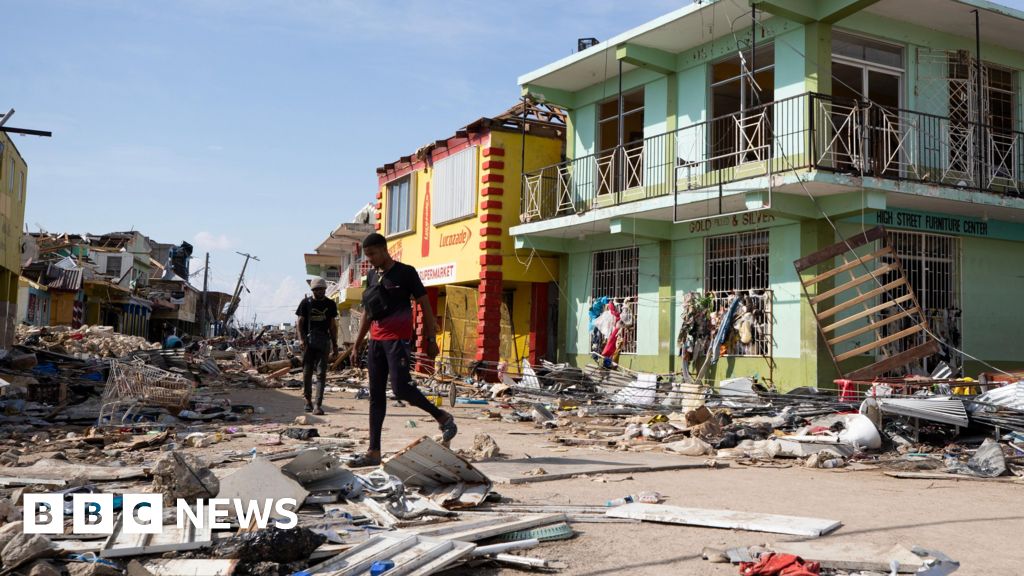
A chartered flight from the UK government evacuating British nationals from Jamaica in the wake of Hurricane Melissa is due to land at London’s Gatwick Airport on Sunday.
The flight, which left Kingston’s Norman Manley International Airport, comes after the UK flew aid in earlier in the day as part of a £7.5m regional emergency package.
Some of the funding will be used to match public donations up to £1m to the International Red Cross and Red Crescent – with King Charles and Queen Camilla among those who have donated.
Despite aid arriving in Jamaica in recent days, blocked roads have complicated distribution after Hurricane Melissa devastated parts of the island, killing at least 19 people.
The hurricane made landfall in Jamaica on Tuesday as a category five storm and was one of the most powerful hurricanes ever measured in the Caribbean.
Melissa swept across the region over a number of days and left behind a trail of destruction and dozens of people dead. In Haiti, at least 30 people were killed, while Cuba also saw flooding and landslides.
Jamaica’s Information Minister Dana Morris Dixon said on Friday “there are entire communities that seem to be marooned and areas that seem to be flattened”.
Around 8,000 British nationals were thought to have been on the island when the hurricane hit.
The UK foreign office has asked citizens there to register their presence and also advises travellers to contact their airline to check whether commercial options are available.
The UK initially set aside a £2.5m immediate financial support package for the region, with an additional £5m announced by Foreign Secretary Yvette Cooper on Friday.
Cooper said the announcement came as “more information is now coming through on the scale of devastation caused by Hurricane Melissa, with homes damaged, roads blocks and lives lost”.
The British Red Cross said the King and Queen’s donation would help the International Federation of Red Cross and Red Crescent (IFRC) “continue its lifesaving work” – which includes search and rescue efforts in Jamaica as well as ensuring access to healthcare, safe shelter and clean water.
The Red Cross said that 72% of people across Jamaica still do not have electricity and around 6,000 are in emergency shelters.
Until the Jamaican government can get the broken electricity grid back up and running, any generators aid agencies can distribute will be vital.
So too will tarpaulins, given the extent of the housing crisis.
Meanwhile, with so many in need of clean drinking water and basic food, patience is wearing thin and there are more reports of desperate people entering supermarkets to gather and give out whatever food they can find.
The BBC has seen queues for petrol pumps, with people waiting for hours to then be told there is no fuel left when they reach the front of the queue.
Some people are seeking fuel for generators, others for a car to reach an area in which they can contact people, with the power down across most of the island.
The country’s health minister, Dr Christopher Tufton, on Saturday described “significant damage” across a number of hospitals – with the Black River Hospital in St Elizabeth being the most severely affected.
“That facility will have to be for now totally relocated in terms of services,” he said.
“The immediate challenge of the impacted hospitals is to preserve accident and emergency services,” Dr Tufton added. “What we’re seeing is that a lot of people are coming in now to these facilities with trauma-related [injuries] from falls from the roof, to ladders, to nails penetrating their feet”.
The minister said arrangements had been made for the ongoing supply of fuel to the facilities as well as a “daily supply of water”.
Although aid is entering the country, landslides, downed power lines and fallen trees have made certain roads impassable.
However, some of the worst affected areas of Jamaica should finally receive some relief in the coming hours.
At least one aid organisation, Global Empowerment Mission, rolled out this morning from Kingston with a seven-truck convoy to Black River, the badly damaged town of western Jamaica, carrying packs of humanitarian assistance put together by volunteers from the Jamaican diaspora community in Florida.
Help is also coming in from other aid groups and foreign governments via helicopter.
It remains only a small part of what the affected communities need but authorities insist more is coming soon.

Will Smith’s 11th-inning home run allows LA Dodgers to win Game 7 against Toronto Blue Jays and record seventh World Series title in franchise history.
Published On 2 Nov 20252 Nov 2025
Share
Will Smith homered in the 11th inning after Miguel Rojas connected for a tying drive in the ninth, and the Los Angeles Dodgers beat the Toronto Blue Jays 5-4 in Game 7 on Saturday night to become the first team in a quarter century to win consecutive Major League Baseball (MLB) World Series titles.
Los Angeles overcame 3-0 and 4-2 deficits and escaped a bases-loaded jam in the ninth to become the first repeat champion since the 1998-2000 New York Yankees, and the first from the National League since the 1975 and ’76 Cincinnati Reds.
list of 4 itemsend of list
Smith hit a 2-0 slider off Shane Bieber into the Blue Jays’ bullpen, giving the Dodgers their first lead of the night.
Yoshinobu Yamamoto, who threw 96 pitches in the Dodgers’ win on Friday, escaped a bases-loaded jam in the ninth and pitched 2 2/3 innings for his third win of the Series.
He gave up a leadoff double in the 11th to Vladimir Guerrero Jr, who was sacrificed to third. Addison Barger walked, and Alejandro Kirk grounded to shortstop Mookie Betts, who started a title-winning 6-4-3 double play.

With their ninth title and third in six years, the Dodgers made an argument for their 2020s teams to be considered a dynasty. Dave Roberts, their manager since 2016, boosted the probability that he will gain induction to the Hall of Fame.
Bo Bichette put Toronto ahead in the third with a three-run homer off two-way star Shohei Ohtani, who was pitching on three days’ rest after taking the loss in Game 3.
Los Angeles closed to 3-2 on sacrifice flies from Teoscar Hernandez in the fourth off Max Scherzer and Tommy Edman in the sixth against Chris Bassitt.
Andres Gimenez restored Toronto’s two-run lead with an RBI double in the sixth off Tyler Glasnow, who relieved after getting the final three outs on three pitches to save Game 6 on Friday.
Max Muncy’s eighth-inning homer off star rookie Trey Yesavage cut the Dodgers’ deficit to one run, and Rojas, inserted into the lineup in Game 6 to provide some energy, homered on a full-count slider from Jeff Hoffman.
Toronto put two on with one out in the bottom half against Blake Snell, and Los Angeles turned to Yamamoto.
He hit Alejandro Kirk on a hand with a pitch, loading the bases and prompting the Dodgers to play the infield in and the outfield shallow. Daulton Varsho grounded to second, where Rojas stumbled but managed to throw home for a force-out as catcher Smith kept his foot on the plate.
Ernie Clement then flied out to Andy Pages, who made a jumping, backhand catch on the centre-field warning track as he crashed into left fielder Kike Hernandez.
Seranthony Dominguez walked Mookie Betts with one out in the 10th, and Muncy singled for his third hit. Hernandez walked, loading the bases. Pages grounded to shortstop, where Gimenez threw home for a force-out. First baseman Guerrero then threw to pitcher Seranthony Dominguez covering first, just beating Hernandez in a call upheld in a video review.
The epic night matched the Marlins’ 3-2 win over Cleveland in 1997 as the second-longest Series Game 7, behind only the Washington Senators’ 4-3 victory against the New York Giants in 1924.


The TWZ Newsletter
Weekly insights and analysis on the latest developments in military technology, strategy, and foreign policy.
Perhaps the most extraordinary-looking aircraft to have taken to the air in many years, the X-59 Quiet Supersonic Technology experimental test aircraft, or QueSST, has made its first flight. Much is resting on the test program that has now been kicked off, with the future of supersonic passenger flight arguably dependent on its successful outcome.
The first flight took place at the U.S. Air Force’s Plant 42 in Palmdale, California. Photographer Matt Hartman has shared pictures with us of the X-59 after its departure from Plant 42, as seen at the top of this story and below.


It has been planned that after the X-59’s first flight, it will be moved to NASA’s Armstrong Flight Research Center, which is collocated with Edwards Air Force Base in California, for further test flights.
Ahead of the first flight, NASA had outlined its plans for the milestone sortie. This would be a lower-altitude loop at about 240 miles per hour to check system integration. It will be followed by the first phase of flight testing, focused on verifying the X-59’s airworthiness and safety. During subsequent test flights, the X-59 will go higher and faster, eventually exceeding the speed of sound.
Although there were no public announcements, the first flight had been expected earlier this month but was scrubbed for unknown reasons. TWZ has reached out to NASA for more information in relation to today’s flight.
A product of Lockheed Martin’s famed Skunk Works advanced projects division, the X-59 was rolled out at the Skunk Works facility within Palmdale in January 2024.

“In just a few short years, we’ve gone from an ambitious concept to reality,” NASA Deputy Administrator Pam Melroy said at the time. “NASA’s X-59 will help change the way we travel, bringing us closer together in much less time.”
The first flight was preceded by integrated systems testing, engine runs, and taxi testing.
Taxi tests began at Palmdale this summer, marking the first time that the X-59 had moved under its own power. NASA test pilot Nils Larson was at the controls for the aircraft’s first low-speed taxi test on July 10, 2025.


The X-59 project was kicked off back in 2016, and NASA had originally hoped that the aircraft would take to the air for the first time in 2020. The targeted first flight then slipped successively to 2023, to 2024, and then to this year.
Among other issues, NASA blamed the schedule slip on “several technical challenges identified over the course of 2023,” which the QueSST team then had to work through.
Once at Armstrong, the X-59 will be put through its paces as the centerpiece of NASA’s Quiet Supersonic Technology mission. This is an exciting project that TWZ has covered in detail over the years.

The main goal of QueSST is to prove that careful design considerations can reduce the noise of a traditional sonic boom to a “quieter sonic thump.” If that can then be ported over to future commercial designs, it could solve the longstanding problem of regulations that prohibit supersonic flight over land.
The only genuinely successful supersonic airliner was the Anglo-French Concorde. Even that aircraft had an abbreviated career, during which it struggled with enormously high operating costs and an ever-shrinking market.
Even before Concorde entered service, however, commercial supersonic flight over the United States had been prohibited, under legislation introduced in 1973. Even the U.S. military faces heavy restrictions on where and when it can operate aircraft above the speed of sound within national airspace. Similar prohibitions on supersonic flight exist in many other countries, too.

NASA’s test program aims to push the X-59 to a speed of Mach 1.4, equivalent to around 925 miles per hour, over land. At that point, it’s hoped that its unique design, shaping, and technologies will result in a much quieter noise signature.
The second phase of the QueSST program will be about ensuring that the core design works as designed and will include multiple sorties over the supersonic test range at Edwards Air Force Base.
The third and final phase will be the Community Response Study, in which the X-59 will be flown over different locations in the United States. Individuals in those different communities will provide feedback on the noise signature via push notifications to cell phones.

At one time, the third phase was planned to take place between 2025 and 2026, but, as previously outlined, the program as a whole has now been delayed.
In the past, we have looked at some of the remarkable features that make the X-59 a test jet like no other.
Most obviously, there is its incredibly long nose, which accounts for around a third of its overall length of 99.7 feet. Meanwhile, its wingspan measures just under 30 feet. The idea behind the thin, tapering nose, which you can read about in detail here, is that the shock waves that are created in and around the supersonic regime will be dissipated. It is these shock waves that would otherwise produce a very audible sonic boom on the ground.

The X-59’s nose also dictates its unusual cockpit arrangement, with the pilot being located almost halfway down the length of the aircraft, with no forward-facing window at all. The pilot instead relies on the eXternal Vision System (XVS), which was specially developed for the aircraft, to see the outside world. This makes use of a series of high-resolution cameras that feed into a 4K monitor in the cockpit, something that we have also discussed in depth in the past.


Another noteworthy feature is the location of the X-59’s powerplant, on top of the rear of the fuselage, which ensures a smooth underside. This is another part of the jet that has been tailored to address supersonic shockwaves, helping prevent them from merging behind the aircraft and causing a sonic boom. The powerplant itself is a single F414-GE-100 turbofan, a variant of the same engine found on the F/A-18E/F Super Hornet.


Meanwhile, various items found on the X-59 are more familiar. For example, the canopy and elements of the pilot’s seat are taken from the T-38 Talon, the landing gear is borrowed from an F-16, and the life-support system is adapted from that used in the F-15 Eagle.
If all proceeds as planned with the QueSST program, NASA should be able to demonstrate that the rules that currently prohibit commercial supersonic flight over land, both in the United States and elsewhere, can be adjusted.
However, whether that potential regulatory change is enough to spur the successful development of future commercial high-speed aircraft designs remains a big question.
After all, aside from Concorde, the quest to successfully introduce a supersonic passenger transport is one that has otherwise been littered with failures. Many will now be pinning their hopes on the X-59 helping to reverse that trend.
Update: 4:20 PM Eastern –
Lockheed Martin has now put out a press release about the X-59’s first flight. As planned, the aircraft has now arrived at NASA’s Armstrong Flight Research Center.
“The X-59 performed exactly as planned, verifying initial flying qualities and air data performance on the way to a safe landing at its new home,” according to the release. “Skunk Works will continue to lead the aircraft’s initial flight test campaign, working closely with NASA to expand the X-59’s flight envelope over the coming months. Part of this test journey will include the X-59’s first supersonic flights, where the aircraft will achieve the optimal speed and altitude for a quiet boom. This will enable NASA to operate the X-59 to measure its sound signature and conduct community acceptance testing.”

“We are thrilled to achieve the first flight of the X-59,” O.J. Sanchez, Vice President and General Manager of Lockheed Martin’s Skunk Works, said in a statement. “This aircraft is a testament to the innovation and expertise of our joint team, and we are proud to be at the forefront of quiet supersonic technology development.”
“X-59 is a symbol of American ingenuity. The American spirit knows no bounds. It’s part of our DNA – the desire to go farther, faster, and even quieter than anyone has ever gone before,” Sean Duffy, Secretary of Transportation and acting NASA Administrator, also said in a statement. “This work sustains America’s place as the leader in aviation and has the potential to change the way the public flies.”
Contact the author: [email protected]


Supporters of Tanzania’s President Samia Suluhu Hassan attend the launch of her presidential campaign in Dar es Salam on August 28. She was declared the winner Saturday in the election. File photo by Anthony Siami/EPA
Nov. 1 (UPI) — Tanzania’s President Samia Suluhu Hassan on Saturday was declared the winner of the presidential election amid unrest in the African nation over her candidacy and exclusion of her rivals.
Samia, 65, received 31.9 million votes, which was 97.66% of the total in Wednesday’s election among 17 parties, the electoral commission said.
Almost 87% of the country’s 37.6 million registered voters turned out, in sharp contrast with the 50% who voted in 2020.
Tanzania, which has a population of 71 million, is in eastern Africa and is bordered by the Indian Ocean on the east and south of the Equator.
“We thank the security forces for ensuring that the violence did not stop voting,” Samia, who came into office in 2021 as Tanzania’s first female president, said in a victory celebration in Dodoma. “These incidents were not patriotic at all.”
Although the politician from Zanzibar said the election was “free and democratic,” election observers and European Parliament members say the election was rife with irregularities, according to The New York Times.
Samia’s two main opposition contenders were barred from running.
Tundu Lissu, of the Party for Democracy and Progress, is being held on treason charges, which he denies, and Luhaga Mpina of the Alliance for Change and Transparency was excluded on legal technicalities.
During the unrest, Internet nationwide was been shut down and a curfew is in place.
On Friday, United Nations Secretary General Antonio Guterres called for “a thorough and impartial investigation into all allegations of excessive use of force” and Tanzanian authorities to uphold accountability and transparency in the post-election unrest.
There were no protests on Saturday, one day after demonstrators in several cities took to the streets, tearing down Samia’s posters and attacked police and polling stations.
Foreign Minister Mahmoud Kombo Thabit said the violence was a “few isolated pockets of incidents here and there.”
And electoral commission chief Jacobs Mwambegele said the election was run smoothly.
“I would like to thank all election stakeholders, especially political parties, candidates for various positions, your friends and members for conducting civilized campaigns and maintaining peace and tranquility throughout the campaign,” he said.
Tanzania’s semi-autonomous archipelago of Zanzibar elects its own government.
Hussein Mwinyi, who is the incumbent president, won with nearly 80% of the vote.
Sania was vice president and became president when John Magufuli died on March 17, 2021, of a heart condition at 61.
Her ruling party, Chama Cha Mapinduzi, and its predecessor, Tanu, have dominated the country’s politics and have never lost an election since independence from Britain.
The mainland territory of Tanganyika gained independence in 1961 and the islands of Zanzibar became independent as a constitutional monarchy two years later.
In 1964, they merged to become the United Republic of Tanzania.

Latin America’s political landscape has seen sweeping shifts in recent years. On one hand, a so-called “second Pink Tide” has returned left-of-centre governments to power in key countries – Lula in Brazil, Petro in Colombia, and the broad left in Mexico – inspiring hopes of renewed democracy and social reform. On the other hand, strongman leaders like El Salvador’s Nayib Bukele (a populist outsider not usually labelled “leftist”) and Venezuela’s Nicolás Maduro (an entrenched Chavista) have consolidated control in ways critics call authoritarian. The question looms: are these developments evidence that the region is sliding back toward autocracy, cloaked in progressive rhetoric? Or are they legitimate shifts reflecting popular will and necessary reform? Recent trends in Brazil, Mexico, Colombia, El Salvador, and Venezuela, show serious democratic backsliding, populist leadership styles, and the uses (and abuses) of leftist language to consolidate power rather than give it back to the people.
Brazil’s democracy was violently tested in early 2023 when Jair Bolsonaro’s supporters stormed Congress, the Supreme Court, and the presidential palace. The crisis – and the swift legal response by institutions – helped vindicate Brazil’s checks and balances. When former President Luiz Inácio Lula da Silva (Lula) won the 2022 election, many Brazilians breathed a sigh of relief as they felt and agreed that a second Bolsonaro term would have propelled Brazil further into autocracy, whereas Lula’s coalition blocked that outcome. Polls showed Brazilians rallying to defend democracy after the Jan. 8 insurrection, and Lula himself has repeatedly proclaimed Brazil a “champion of democracy” on the world stage. Under Lula, Brazil has indeed reversed some of Bolsonaro’s more extreme policies, especially on the environment and social welfare, and the Supreme Court remains independent and active.
At the same time, Brazil still grapples with brutal crime and controversial security policies. In October 2025 a massive police raid in Rio de Janeiro’s favelas – involving roughly 2,500 officers – killed at least 119 people (115 suspected traffickers and 4 officers). Human rights groups denounced the operation as a massacre, reporting that many of the victims were killed execution-style. President Lula’s justice minister stated that Lula was horrified by the death toll and had not authorised the raid, which took place without federal approval. Rights investigators noted that in 2024, approximately 700 people were killed in police actions in Rio—nearly two per day, even before this incident. The episode underscored the persistence of militarised and largely unaccountable security practices, rooted in decades of mano dura policing. Lula’s administration, however, has publicly condemned the use of excessive force and pledged to pursue meaningful reforms in public security policy.
In short, Brazil’s picture is mixed. Bolsonarismo (Bolsonaro’s movement) still holds sway in many state capitals, and violence remains high. But Lula’s presidency so far shows more emphasis on rebuilding institutions and fighting inequality than on authoritarian control. Brazil’s democracy has shown resilience: after the coup attempt, support for democracy actually peaked among the public. Lula himself has publicly affirmed free speech and criticised right-wing attacks, reversing some of Bolsonaro’s polarising rhetoric. Thus, we can view Brazil as democratic, albeit fragile. The major ongoing concerns are police brutality and crime – which are treated as security policy issues more than political power grabs by the president.
However, although Lula’s third term has been marked by a renewed emphasis on social justice, labour rights, and environmental protection, it has also been coupled with a discourse that often frames politics as a moral battle between the people and entrenched elites. This populist tone has reinforced his image as a defender of ordinary Brazilians while simultaneously deepening political polarisation and straining institutional checks and balances. His leadership style tends to concentrate moral and political authority around his persona, blending pragmatic governance with an appeal to popular sentiment. Even though Lula continues to operate within democratic frameworks, this personalisation of power highlights the persistent tension between populist mobilisation and institutional restraint in Brazil’s fragile democracy.
Mexico’s case is more worrisome. Andrés Manuel López Obrador (AMLO, 2018–2024), a self-declared leftist populist, implemented a dramatic concentration of power. By 2024 his ruling Morena party controlled the presidency, both houses of Congress, and most state governorships. His government pushed through constitutional amendments that bolstered the executive and weakened independent checks. By the end of his term, his party had achieved full control of the executive branch, both chambers of Congress, and most subnational states, and it overhauled the judiciary and strengthened the military through reforms aimed at executive aggrandisement and weakening checks and balances. In plain terms, AMLO used his majority to rewrite rules in his favour.
AMLO’s populist rhetoric was central to this process. He constantly framed his campaign as a fight against corrupt “elites” and the “old” political order. Slogans like “Por el bien de todos, primero los pobres” (For the good of all, first the poor) became rallying cries. On the surface, that populist welfare agenda – pensions for seniors, higher minimum wage, social programmes – delivered what could be perceived as real results. Poverty fell sharply: by 2024 over 13.4 million fewer Mexicans lived below the poverty line, a historic 26% drop. These benefits helped AMLO maintain high approval from his base. Yet a closer look reveals a more complex picture. Independent analyses show that much of this reduction is linked to temporary cash transfers and post-pandemic economic recovery rather than structural improvements in wages, education, or healthcare. Inequality and informality remain deeply entrenched, and millions continue to rely on precarious, low-paid work. Moreover, Mexico’s social spending has not been matched by investments in institutional capacity or transparency, raising concerns that short-term welfare gains may mask longer-term fragility. In this sense, López Obrador’s populist social model contrasted starkly with its narrative of transformation: it has lifted incomes in the immediate term but done little to strengthen the foundations of sustainable, equitable development.
Also the same rhetoric that promised to empower the poor also justified undermining institutions. AMLO’s blend of social policy with authoritarian tactics created a downward trend in freedoms. He openly clashed with autonomous agencies and critical media, called judges “traitors,” and even moved to punish an independent Supreme Court justice. AMLO began implementing his unique brand of populist governance, combining a redistributive fiscal policy with democratic backsliding and power consolidation. In 2024’s Freedom Index, Mexico plummeted from “mostly free” to “low freedom,” reflecting accelerated erosion of press freedom, judicial independence, and checks on the executive.
For example, AMLO mused about revoking autonomy of the election commission (INE) and packed federal courts with loyalists. He oversaw a lawsuit that temporarily replaced the anti-monopoly commissioner (though this was later reversed). Controversial judicial reforms were rammed through Congress with MORENA’s (National Regeneration Movement) supermajority. In the name of fighting corruption, AMLO and his party sidestepped democratic norms. By the time he left office, many prominent dissidents had been labelled enemies of the people, and civil-society watchdogs reported increasing self-censorship under fear of government reprisals.
Legitimate reforms vs. power grabs: Of course, AMLO’s administration did achieve significant social gains. His policies tripled the minimum wage and expanded social pensions for the elderly and students. From the left’s point of view, these are overdue redresses of inequality after decades of neoliberal policy. Nevertheless, one can also say that AMLO pursued these at the expense of Mexico’s democracy.
AMLO’s successor, Claudia Sheinbaum has largely extended the populist and centralising model of her predecessor. Her government has expanded the same welfare policies – including pensions for the elderly, youth scholarships, and agricultural subsidies – which continue to secure her strong approval ratings. At the same time, she has pursued a more nationalist economic strategy, favouring the state over private or renewable investment, a move seen by many as ideologically driven rather than economically sound.
Her administration’s approach to governance has reinforced concerns about democratic backsliding. Within months of taking power, her party used its congressional majority to pass a sweeping judicial reform allowing for the election of nearly all judges, a measure widely interpreted as undermining judicial independence. She also oversaw the dismantling of Mexico’s autonomous transparency and regulatory agencies, institutions originally created to prevent executive overreach after decades of one-party rule. Her rhetoric, while measured compared to López Obrador’s, has nonetheless targeted independent electoral and judicial authorities as acting against the popular will. Violence against journalists and judicial pressure on the press have continued under her watch, suggesting a continuity of the authoritarian tendencies embedded in her predecessor’s style of governance. In effect, Sheinbaum has presented herself as the guardian of López Obrador’s so-called “Fourth Transformation”, but her actions increasingly blur the line between social reform and the consolidation of political control.
Meanwhile, MORENA, the ruling party, has evolved into a hegemonic political force that increasingly mirrors the old Institutional Revolutionary Party (PRI). Having consolidated control over the presidency, Congress, and most governorships, MORENA now dominates the national political landscape with little meaningful opposition. Its supermajority has enabled constitutional changes that weaken autonomous regulators and reconfigure the judiciary in its favour. Efforts to overhaul the electoral system – including proposals to curtail proportional representation and cut funding for opposition parties – further tilt the playing field towards one-party dominance. The party’s control of state resources and vast social programmes has also revived the clientelism and political patronage once characteristic of PRI rule. Many regional elites and former PRI figures have joined MORENA’s ranks, expanding its reach through local alliances and personal networks. This combination of electoral dominance, state control, and populist legitimacy has left few institutional counterweights to its power. In practice, Mexico’s political system is sliding back towards the PRI-style arrangement it once fought to overcome: a single dominant party using popular mandates and social welfare to entrench its hold over the state while constraining the mechanisms of democratic accountability.
Colombia’s new president, Gustavo Petro (in office since August 2022), is the country’s first-ever leftist head of state. He campaigned on ending historical violence and inequality, reaching a definitive peace with guerrilla groups, and “transforming” Colombian society. To that end, Petro has pursued ambitious reforms – agrarian, labor, climate, and constitutional – some of which have hit roadblocks in Congress and the courts.
One flashpoint has been his call for a constitutional rewrite. Petro announced he would ask voters (via the 2026 legislative elections ballot) whether to convene a national constituent assembly to draft a new constitution. He argues that traditional institutions (Congress and the courts) repeatedly blocked key reforms – for instance, an environmental tax and a gender law were struck down as unconstitutional – and that only a direct mandate could implement his agenda. In his own words, he has framed the move as carrying out “the people’s mandate for peace and justice”, implicitly casting political opposition as elitist roadblocks. Arguably, under Colombia’s 1991 Constitution, a referendum on reform first requires legislation from Congress; the president alone cannot unilaterally change the constitution. Indeed, Petro’s coalition lost its majority in the Senate after the 2024 elections, and even has a minority in the House. That means he cannot force through a referendum law on his own.
Petro’s gambit is a stress test of Colombia’s institutions. Although Petro is popular with part of the electorate, and the checks and balances in the country have been holding– Congress and the Constitutional Court can still block overreach. Petro’s approval ratings hover around 37%, giving savvy opponents incentive to organise rallies or boycotts if he tries an end-run around Congress. Moreover, Colombia’s Constitutional Court has so far signalled it will strictly enforce procedural requirements before any reform, and it would likely strike down any effort to allow immediate presidential reelection (which the constitution currently bans). In fact, observers have flagged concern that Petro might push to permit his own re-election, raising alarm among civil society and international partners.
Thus far Petro has not succeeded in weakening institutions as Bolsonaro did in Brazil or Maduro in Venezuela. To the contrary, Colombia’s court and electoral tribunal have acted independently, even prosecuting members of Petro’s coalition for campaign irregularities. The country’s strong judicial branch remains a bulwark. That said, the tone of politics has become extremely polarised and personal. After a recent assassination of a presidential candidate (son of former President Uribe), the campaign trail saw shrill accusations: Petro’s supporters often label their opponents “far-right extremists,” while his critics call him a “communist” or worse. This combustible rhetoric – on all sides – could jeopardise stability.
Colombia today embodies both promise and peril. Petro has introduced progressive initiatives (such as a new climate ministry and child allowances) that appeal to many, but he also openly questions the role of old elites and considers dramatic institutional change. His proposals have not yet realised an authoritarian shift, but they have tested the separation of powers. The situation is dynamic: if Petro tries to override constraints, Colombia’s existing democratic guardrails (courts, Congress, watchdogs) will likely react strongly. The key question will be whether Colombia can channel legitimate popular demands through its institutions without them buckling under pressure.
El Salvador stands apart. President Nayib Bukele (in power since 2019, re-elected 2024) defies easy ideological labelling– he was not from the traditional leftist bloc – but his governance style has strong authoritarian features. His rise was fuelled by a promise to crush the country’s notorious gangs, and indeed El Salvador’s homicide rate plummeted under his rule. Bukele has remade a nation that was once the world’s murder capital. According to figures, over 81,000 alleged gang members have been jailed since 2022 – about one in 57 Salvadorans – and Bukele enjoys sky-high approval ratings (around 90%) from citizens tired of crime. These results have been touted as proof that his “iron fist” strategy of mass arrests and harsh prison sentences (the world’s largest incarceration rate) has worked. In this sense, Bukele’s firm grip on security is seen by many supporters as a legitimate reform: a state that delivers safety, even at the cost of civil liberties.
However, the democratic trade-offs have been extreme. Since 2022, Bukele has ruled largely by decree under a perpetual state of emergency, suspending key constitutional rights (due process, privacy, freedom of assembly). Criminal suspects – including minors – are arrested en masse without warrants and often held in overcrowded prisons. The president has openly interfered in the judiciary: his pro-government legislators dismissed all members of the Supreme Court and Attorney General’s office in 2021–22, replacing them with loyalists. This allowed Bukele to evade the constitutional prohibition on immediate presidential re-election and secure a second term in 2024. Even ordinary political opposition has been effectively pulverised, party leaders disqualified, judges threatened, and dissenters harassed or driven into exile.
Human-rights groups accuse Bukele’s security forces of torture and disappearances of innocent people swept up in the dragnet. A 2024 Latinobarómetro survey found that 61% of Salvadorans fear negative consequences for speaking out against the regime – despite the fact that Bukele’s formal approval remains high. Many critics now call him a “social-media-savvy strongman” or “millennial caudillo”, suggesting he leads by personal charisma and social-media influence.
On the other hand, his defenders argue Bukele has simply done what past governments could not: restore order and invest in infrastructure (like child-care and tech initiatives) that were ignored for years. Indeed, El Salvador under Bukele has attracted foreign investment (notably in Bitcoin ventures) and even hosted international events like Miss Universe, as if to signal normalcy. But Bukele has built his legitimacy on the back of extraordinary measures that sideline democracy. Bukele’s popularity may export a brand of ‘punitive populism’ that leads other heads of state to restrict constitutional rights, and when (not if) public opinion turns, the country may find itself with no peaceful outlet for change. In other words, El Salvador’s example shows how quickly a welfare-and-security-oriented leader can morph into an authoritarian ruler once key institutions are neutered.
Venezuela is the clearest example of democracy overtaken by authoritarianism. Over the past quarter-century, Hugo Chávez and his successor Nicolás Maduro have steadily dismantled democratic institutions, replacing them with a one-party state. Today Venezuela is widely recognised as a full electoral dictatorship, not an anomaly but a case study in how leftist populism can yield outright autocracy. The 2024 presidential election was the latest illustration: overwhelming evidence suggests the opposition actually won by a landslide, yet the regime hid the true vote counts, declared Maduro the winner with a suspicious 51% share, and reinstalled him for a third term. Venezuela’s leaders purposefully steered Venezuela toward authoritarianism. It is now a fully consolidated electoral dictatorship
Since then, Maduro’s government has stamped out virtually all resistance. Leading opposition figures have been harassed, jailed, or exiled. Opposition candidate María Corina Machado – who reportedly won twice as many votes as Maduro was banned by the Supreme Court from even running. New laws passed in late 2024 further chill dissent: for example, the “Simón Bolívar” sanctions law criminalises criticism of the state, and an “Anti-NGO” law gives authorities broad power to shut down civil-society groups if they receive foreign funds. All justice in Venezuela is now rubber-stamped by Maduro’s hand-picked judges.
Any pretense of pluralism has vanished. State media and pro-government mobs drown out or beat up remaining critics. Despite dire economic collapse and mass exodus (millions of Venezuelans have fled hunger and repression), Maduro governs with an iron grip. In short, Venezuela today is an example of ideological rhetoric (Chavismo, Bolivarian Revolution) entirely subsumed by power. It also serves as a caution: the veneer of elections and redistributive slogans can sometimes hide total dictatorship. (In Venezuela’s case, the “leftist” regime never even bothered to disguise its authoritarian turn.)
Throughout these cases, a common theme emerges: populist rhetoric vs institutional reality. Leftist or progressive leaders often claim to champion the poor and marginalised – a message that resonates in societies scarred by inequality. Yet in practice, that rhetoric sometimes becomes a justification for concentrating power. AMLO spoke of a “fourth transformation” of Mexico to overcome the “old regime,” and applied that mission to reshape institutions. Petro invokes “the will of the people” to override what he calls elite obstruction. Lula’s Brazil has been less about overthrowing elites and more about undoing his predecessor’s policies. And Bukele promises safety so absolute that he deems dissent a luxury Salvadorans cannot afford.
Of course, leftist governments do enact genuine reforms. The region has seen expansions of social programmes, pensions, healthcare, and education in many countries. In a sense, voters rewarded candidates like Lula, Petro, and AMLO precisely because they promised change and delivered temporary benefits (scholarships, pensions, workers’ pay raises, etc.). But even well-meaning reforms can backfire if the manner of governing ignores constitutional limits.
Where was the line crossed from policy to autocracy? The answer varies. In Venezuela, it was crossed long ago. In El Salvador, it was in 2020 when the Supreme Court was neutered. In Mexico and Colombia, it might yet be crossed if current trends continue. Notably, independent institutions have played the decisive role. Brazil’s judiciary and congress checked Bolsonaro and remain intact under Lula; Colombia’s still-revolutionary courts have so far blocked Petro’s more radical ideas; under Claudia Sheinbaum, Mexico’s courts remain constrained by the constitutional limits that formally prevent presidential re-election, yet her administration’s actions have significantly weakened judicial independence. By politicising judicial appointments and curbing the autonomy of oversight bodies, her government has consolidated influence over the very institutions meant to act as checks on executive authority. In practice, Mexico’s judiciary is now more vulnerable to political pressure than at any time since the end of PRI dominance, reflecting a growing concentration of power within the presidency and the ruling party. In contrast, Venezuela’s courts have no independence at all, and El Salvador’s were replaced wholesale.
This suggests that Latin America has not uniformly fallen back into classic authoritarianism under “leftist” governments. Instead, populist leaders of varying ideologies have tested democratic boundaries, and outcomes differ by country. Where institutions remained strong, they provided a buffer. Where institutions were undermined, democracy withered.
So what does the future hold? After a brief blip of improvement, democracy metrics in Latin America appear to be declining again. In 2023, a composite index actually rose slightly, driven by gains in Colombia (Free status by Freedom House) and Brazil. But by 2024 the region was “re-autocratising”, with rule-of-law slipping in Mexico and Peru, and older warning signs re-emerging across the continent.
Key factors will influence the coming years. On one hand, many Latin Americans remain hungry for security, equity, and an end to corruption – needs that populist leaders address. If such leaders deliver results (as Bukele did on crime), public tolerance for illiberal methods may persist. On the other hand, the region has a relatively robust civil society, and voters in countries like Brazil and Colombia have shown willingness to hold leaders accountable.
Balance is crucial. In well-functioning democracies, major changes do not require emergency decrees or friendly courts; they require compromise and open debate. The examples of Mexico and El Salvador show how quickly democratic norms can erode when populist leaders wield their mandate without restraint.
Ultimately, Latin America’s record is not hopeless, but neither is it fully reassuring. The early 2020s have demonstrated that both left-wing and right-wing populisms can strain democracy. Are we returning to authoritarianism under a leftist facade? – has no single answer. In countries like Venezuela, the answer is emphatically yes. In others, it is a warning under construction: Mexico and El Salvador caution us, Colombia is at a crossroads, and Brazil’s experience suggests that institutions can still provide meaningful checks on executive power, but their resilience is not guaranteed. The recent police raid in Rio de Janeiro, serves as a stark test for Lula’s commitment to reforming Brazil’s militarised public-security apparatus. How his government responds to this and similar incidents will be a critical measure of whether Brazil’s democratic institutions can withstand pressure from both public opinion and entrenched security structures, or whether longstanding legacies of unchecked police power will continue to erode accountability.
For the future of the region, the lesson is that rhetoric alone cannot safeguard democracy. Even popular leaders must respect independent judiciaries, free press, and electoral integrity. If those pillars are allowed to crumble, Latin America’s democratic gains will fade. The coming years will test whether each country’s citizens insist on true democratic practice or allow the allure of strong leadership to override constitutional limits.
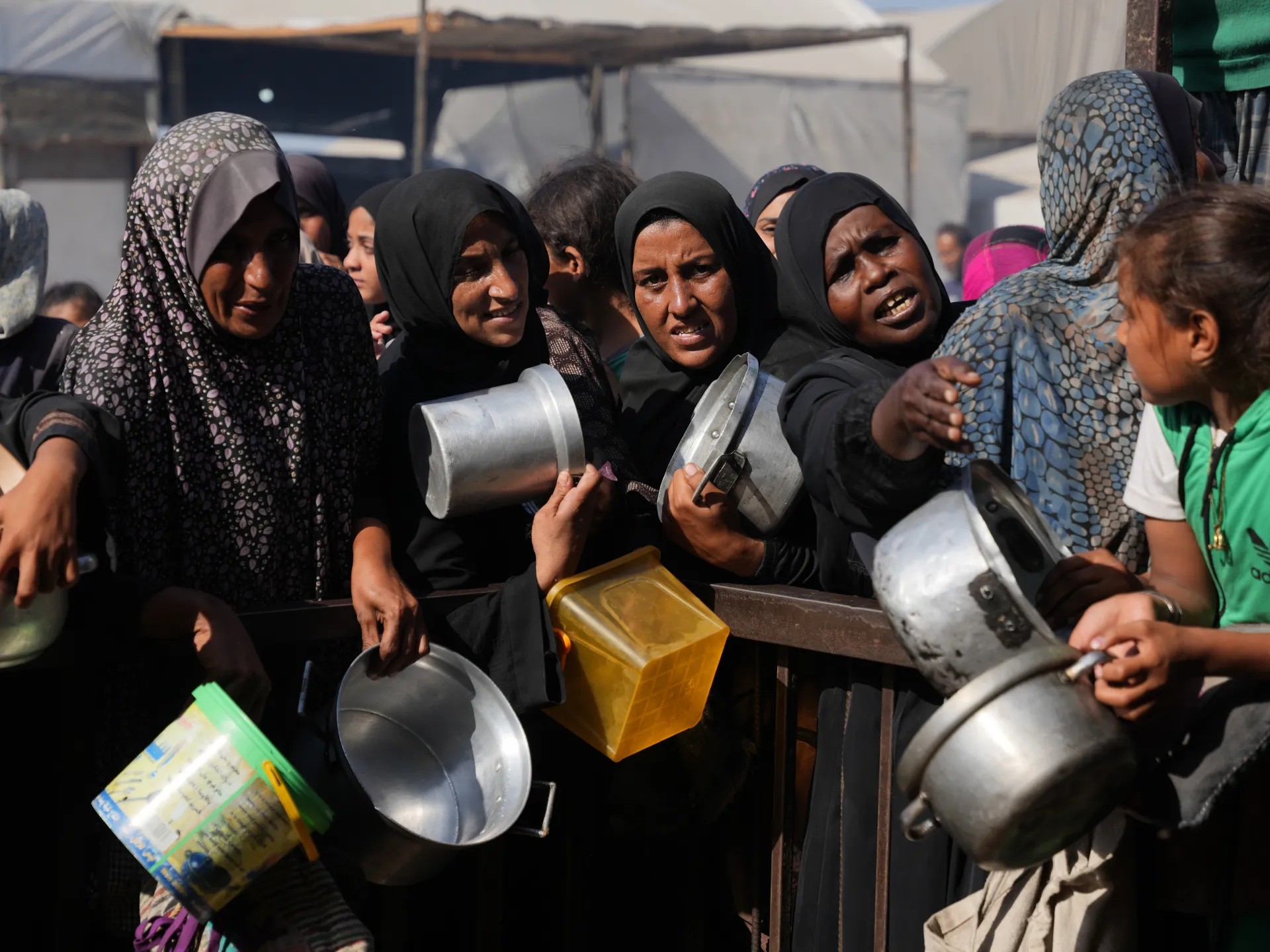
Gaza Government Media Office says just 24 percent of agreed aid allowed into Gaza since ceasefire deal came into force.
Authorities in Gaza say that Israel has only allowed a fraction of the humanitarian aid deliveries agreed on as part of the United States-brokered ceasefire into the enclave since the agreement came into effect last month.
In a statement on Saturday, Gaza’s Government Media Office said that 3,203 commercial and aid trucks brought supplies into Gaza between October 10 and 31.
list of 3 itemsend of list
This is an average of 145 aid trucks per day, or just 24 percent of the 600 trucks that are meant to be entering Gaza daily as part of the deal, it added.
“We strongly condemn the Israeli occupation’s obstruction of aid and commercial trucks and hold it fully responsible for the worsening and deteriorating humanitarian situation faced by more than 2.4 million people in the Gaza Strip,” the office said in a statement.
It also called on US President Donald Trump and other ceasefire deal mediators to put pressure on Israel to allow humanitarian aid into Gaza “without restrictions and conditions”.
While aid deliveries have increased since the truce came into force, Palestinians across Gaza continue to face shortages of food, water, medicine and other critical supplies as a result of Israeli restrictions.
Many families also lack adequate shelter as their homes and neighbourhoods have been completely destroyed in Israel’s two-year military bombardment.
A spokesperson for United Nations chief Antonio Guterres said on Thursday that the UN’s humanitarian office reported that aid collection has been “limited” due to the “rerouting ordered by the Israeli authorities”.
“You will recall that convoys are now forced to go through the Philadelphi Corridor along the border with Egypt, and then up the narrow coastal road. This road is narrow, damaged and heavily congested,” Farhan Haq told reporters.
“Additional crossings and internal routes are needed to expand collections and response.”
Meanwhile, the Israeli military has continued to carry out attacks across Gaza in violation of the ceasefire agreement.
On Saturday, Israeli fighter jets, artillery and tanks shelled areas around Khan Younis, in the south of the territory. The army also demolished residential buildings east of the Jabalia refugee camp in northern Gaza.
Al Jazeera’s Tareq Abu Azzoum reported that witnesses in Khan Younis described “constant heavy shelling and drone fire hitting what’s left of residential homes and farmland” beyond the so-called yellow line, where Israeli forces are deployed.
“We have also been told by Gaza’s Civil Defence agency that it’s struggling to reach some sites close to the yellow line because of the continuation of air strikes and Israeli drones hovering overhead,” Abu Azzoum said.
Israeli attacks on Gaza have killed at least 222 Palestinians and wounded 594 others since the ceasefire took effect, according to the Ministry of Health in the enclave.
Israeli leaders have defended the continued military strikes and accused Hamas of violating the ceasefire agreement by not returning all the bodies of deceased Israeli captives from the enclave.
But the Palestinian group says that retrieval efforts have been complicated by widespread destruction in Gaza, as well as by Israeli restrictions on the entry of heavy machinery and bulldozers to help with the search.
Late on Friday, the International Committee of the Red Cross said it had transferred the bodies of three people to Israel after they were handed over by Hamas.
But Israel assessed that the remains did not belong to any of the remaining 11 deceased Israeli captives, according to Israeli media reports.

Aerial footage from Elgeyo-Marakwet County shows massive mudslides and flash flooding stretching over vast distances.
Published On 2 Nov 20252 Nov 2025
Share
Heavy rains have triggered landslides in Kenya’s western Rift Valley region, killing at least 21 people and destroying more than 1,000 homes, according to officials.
Kenyan Cabinet Secretary for the Interior Kipchumba Murkomen, in a statement on X on Saturday, said at least 25 people with “serious injuries” have been airlifted from Elgeyo-Marakwet County to the city of Eldoret for medical attention, while at least 30 remain missing.
list of 4 itemsend of list
He said that rescue efforts would resume on Sunday, with help from the military and the police.
“Preparation to supply more food and non-food relief items to the victims is underway. Military and police choppers are on standby to transport the items,” he added.
The landslide occurred overnight in Elgeyo-Marakwet County’s hilly area of Chesongoch in western Kenya, which has been battered by heavy rains amid the country’s ongoing short rainy season.
Local Stephen Kittony told the Citizen Television station that he heard a deafening sound and, together with his children, rushed out of his house and ran in different directions.
The Kenyan Red Cross shared aerial images from the region that showed massive mudslides and flash flooding stretching over vast distances.
It said it was coordinating rescue efforts with the government, including air evacuations for the injured.
“Access to some of the affected areas remains extremely difficult due to flooding and blocked routes,” it said in a statement on X.
Aerial views show the extent of destruction in Chesongoch after heavy overnight rains triggered a landslide and flash floods.
Kenya Red Cross teams, working with the National and County Governments, are coordinating rescue and relief efforts, including air evacuations for the… pic.twitter.com/SrVmFYF5fr
— Kenya Red Cross (@KenyaRedCross) November 1, 2025
The hilly area of Chesongoch is prone to landslides, which left dozens of people dead in separate incidents in 2010 and 2012. A shopping centre was washed away in 2020 by raging floods.


Nov. 1 (UPI) — The nation’s 42 million recipients of Supplemental Nutrition Assistance Program benefits will have to wait for them to be restored after losing them on Saturday, which might take weeks.
The ongoing federal government shutdown has shut off funding for the SNAP program that enables recipients to buy food, but two federal judges on Friday ordered the Trump administration to continue it.
President Donald Trump on Friday night announced he is seeking ways to access funds to keep the program going as the federal government shutdown continues at least through Monday.
“I do not want Americans to go hungry just because the radical Democrats refuse to do the right thing and reopen the government,” Trump said Friday in a Truth Social post.
Trump said the two federal judges issued conflicting rulingsand he does not think the federal government legally can access available funds to cover SNAP costs.
“I have instructed our lawyers to ask the court to clarify how we can legally fund SNAP as soon as possible,” he said.
“Even if we get immediate guidance, it will unfortunately be delayed while states get the money out.”
U.S. District Court of Rhode Island Judge John McConnell Jr.was one of the two judges who ordered the SNAP benefits to continue despite the shutdown.
On Saturday, he responded to the president’s post by ordering the Trump administration to access $6 billion in contingency funds for SNAP benefits.
“There is no question that the congressionally approved contingency funds must be used now because of the shutdown,” McConnell wrote Saturday in a seven-page order.
The contingency fund is too little to cover the full $9 billion monthly cost of providing SNAP benefits, but SNAP is an entitlement that the federal government must provide to all eligible households, he said.
“To ensure the quick, orderly and efficient implementation of the court’s order … and to alleviate the irreparable harm that the court found exists without timely payment of SNAP benefits, the government should … find the additional funds necessary to fully fund the November SNAP payments,” McConnell ruled.
He ordered the Trump administration to make at least a partial payment of SNAP benefits by Wednesday and to report how it intends to do so by noon EST on Monday.
The Trump administration said it will take several days and possibly longer to get funds to the respective states and cover the benefits for those who don’t receive them this month.
If the government shutdown continues into December, the problem starts over again with no contingency funds available.

Al-Sharaa’s trip, planned for November 10, will be first-ever visit by a Syrian president to the White House.
United States President Donald Trump will host Syria’s interim leader, Ahmad al-Sharaa, for talks on November 10, according to Washington’s envoy to Damascus, in what would mark the first-ever visit by a Syrian president to the US capital.
Tom Barrack, the US envoy to Syria, told the Axios newspaper on Saturday that al-Sharaa is expected to sign an agreement to join an international US-led alliance against the ISIL (ISIS) group during his visit.
list of 4 itemsend of list
The Reuters news agency also cited a Syrian source familiar with the matter as saying that the trip was expected to take place within the next two weeks.
According to the US State Department’s historical list of foreign leader visits, no previous Syrian president has paid an official visit to Washington.
Al-Sharaa, who seized power from Bashar al-Assad last December, has been seeking to re-establish Syria’s ties with world powers that had shunned Damascus during al-Assad’s rule.
He met with Trump in Saudi Arabia in May, in what was the first encounter between the two nations’ leaders in 25 years.
The meeting, on the sidelines of Trump’s get-together with the leaders of the Gulf Cooperation Council, was seen as a major turn of events for a Syria that is still adjusting to life after the more than 50-year rule of the Assad family.
Al-Sharaa also addressed the United Nations General Assembly in New York in September.
Barrack, the US envoy to Syria, told reporters on the sidelines of the Manama Dialogue in Bahrain that Washington was aiming to recruit Damascus to join the coalition the US has led since 2014 to fight against ISIL, the armed group that controlled about a third of Syria and Iraq at its peak, between 2014 and 2017.
“We are trying to get everybody to be a partner in this alliance, which is huge for them,” Barrack said.
Al-Sharaa once led Syria’s offshoot of al-Qaeda, but a decade ago, his anti-Assad rebel group broke away from the network founded by Osama bin Laden, and later clashed with ISIL.
Al-Sharaa once had a $10m US reward on his head.
Al-Sharaa, also referred to as Abu Mohammed al-Julani, had joined fighters battling US forces in Iraq before entering the Syrian war. He was even imprisoned by US troops there for several years.
The US-led coalition and its local partners drove ISIL from its last stronghold in Syria in 2019.
Al-Sharaa’s planned visit to Washington comes as Trump is urging Middle East allies to seize the moment to build a durable peace in the volatile region after Israel and Hamas earlier this month began implementing a ceasefire and captives’ deal. That agreement aims to bring about a permanent end to Israel’s brutal two-year war in Gaza.
The fragile ceasefire and captive release deal continues to hold, but the situation remains precarious.
Israeli strikes in Gaza earlier this week killed 104 people, including dozens of women and children, the enclave’s health authorities said. The strikes, the deadliest since the ceasefire began on October 10, marked the most serious challenge to the tenuous truce to date.
Meanwhile, Syria and Israel are in talks to reach an agreement that Damascus hopes will secure a halt to Israeli air strikes and the withdrawal of Israeli troops who have pushed into southern Syria.
Barrack told the Manama Dialogue earlier that Syria and Israel continued to hold de-escalation talks, which the US has been mediating.
He told reporters that Syria and Israel were close to reaching an agreement, but declined to say when exactly a deal could be reached.
Israel and Syria have been Middle East adversaries for decades.
Despite the overthrow of al-Assad last December, territorial disputes and deep-seated political mistrust between the two countries remain.
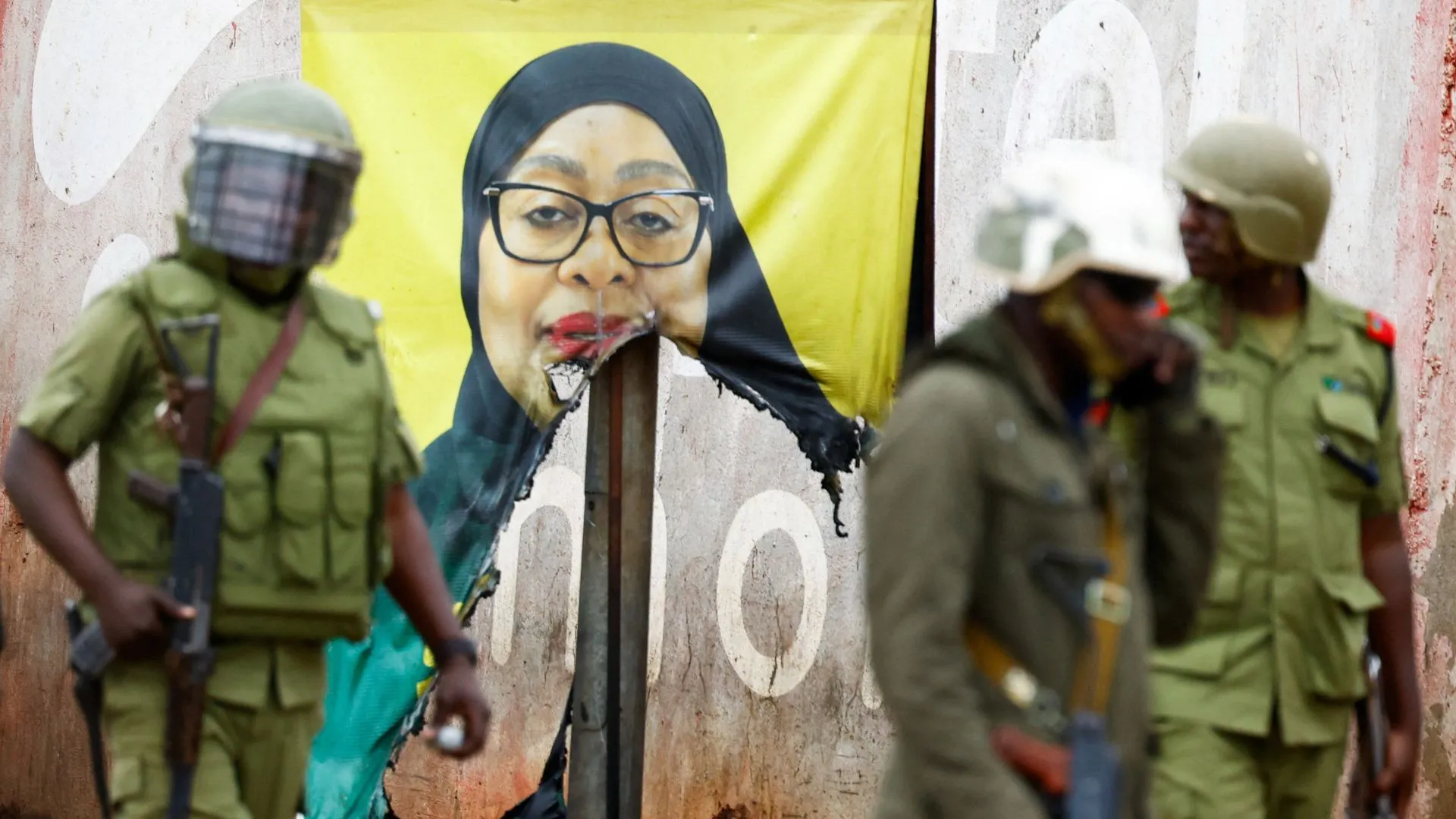
President Samia Suluhu Hassan has been re-elected in a landslide, as the government denies that hundreds were killed.
Tanzania’s incumbent president, Samia Suluhu Hassan, has been re-elected with 98 percent of the vote in an election denounced by the opposition as a sham.
The government has denied that hundreds of people have been killed in a police crackdown.
So, what’s behind this crisis, and what’s next?
Presenter: Adrian Finighan
Guests:
Tito Magoti – independent human rights lawyer and activist
Nicodemus Minde – researcher with the East Africa Peace and Security Governance Program at the Institute for Security Studies in Nairobi
Fergus Kell – research fellow with the Africa Programme at London’s Chatham House
Published On 1 Nov 20251 Nov 2025
Share
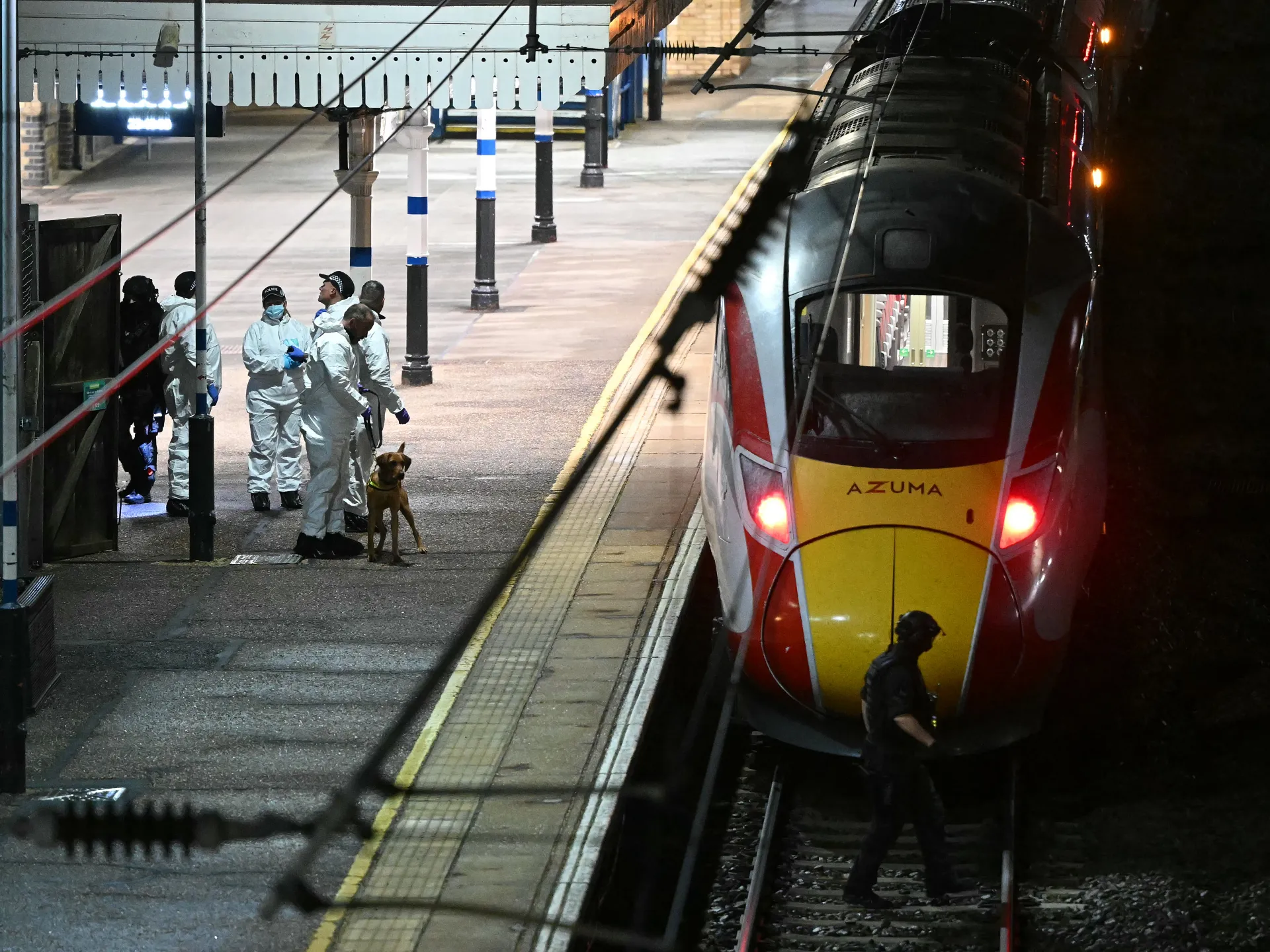
Police say a number of people were taken to hospital after a series of stabbings on a train near Cambridgeshire.
Police in the United Kingdom have arrested two suspects after several people were taken to hospital following a stabbing on a train near Cambridgeshire in eastern England.
“We are currently responding to an incident on a train to Huntingdon where multiple people have been stabbed,” the British Transport Police said in a statement on X on Saturday.
list of 4 itemsend of list
“Two people have been arrested,” it said.
Cambridgeshire police issued a separate statement, saying they were called at 19:39 GMT after reports that multiple people had been stabbed on a train.
“Armed officers attended and the train was stopped at Huntingdon, where two men were arrested. A number of people have been taken to hospital,” the police said.
The East of England Ambulance Service said it mobilised a large-scale response to Huntingdon Railway Station, which included numerous ambulances and critical care teams, including three air ambulances.
“We can confirm we have transported multiple patients to hospital,” it said.
One witness described seeing a man with a large knife, and told The Times newspaper there was “blood everywhere” as people hid in the washrooms.
Some passengers were getting “stamped [on] by others” as they tried to run, and the witness told The Times that they “heard some people shouting we love [you]”.
Another witness told Sky News that one of the suspects was tasered by police.
The appalling incident on a train near Huntingdon is deeply concerning.
My thoughts are with all those affected, and my thanks go to the emergency services for their response.
Anyone in the area should follow the advice of the police.
— Keir Starmer (@Keir_Starmer) November 1, 2025
UK Prime Minister Keir Starmer said the “appalling” incident was “deeply concerning”.
“My thoughts are with all those affected, and my thanks go to the emergency services for their response,” Starmer said in a statement on X.
“Anyone in the area should follow the advice of the police,” Starmer added.
London North Eastern Railway, or LNER, which operates the East Coast Mainline services in the UK, confirmed the incident had happened on one of its trains and said all its railway lines had been closed while emergency services dealt with the incident at Huntingdon station.
LNER, which runs trains along the east of England and Scotland, urged passengers not to travel, warning of “major disruption”.
It serves major stops, including in London, Peterborough, Cambridge, York and Edinburgh, and trains are often very busy and packed with travellers.
The mayor of Cambridgeshire and Peterborough, Paul Bristow, said in a post on X, “Hearing reports of horrendous scenes on a train in Huntingdon, Cambridgeshire”, and added that his “thoughts are with everyone affected”.
Knife crime in England and Wales has been steadily rising since 2011, according to official government data.
While the UK has some of the strictest gun controls in the world, rampant knife crime has been branded a “national crisis” by Starmer.
His Labour government has tried to rein in their use.
Nearly 60,000 blades have been either “seized or surrendered” in England and Wales as part of government efforts to halve knife crime within a decade, the Home Office said on Wednesday.
Carrying a knife in public can already get you up to four years in prison, and the government said knife murders had dropped by 18 percent in the last year.
Two people were killed – one as a result of misdirected police gunfire – and others were wounded in a stabbing spree at a synagogue in Manchester at the start of October, an attack that shook the local Jewish community and the country.


1 of 2 | One of two suspects is recorded leaving the Harvard University Medical Building in Boston immediately after an early morning explosion. Photo Courtesy of the Harvard University Police Department
Nov. 1 (UPI) — The FBI, local and university police are investigating an “intentional” explosion that occurred early Saturday morning on the fourth floor of the Harvard Medical School building in Boston.
The explosion occurred at 2:48 a.m. EDT in the medical school’s Goldenson Building and triggered a fire alarm that alerted university police, The New York Times reported.
A Harvard University Police officer responded to the building at 220 Longwood Ave. and saw two individuals running from it.
The officer tried to stop the individuals but could not and then found evidence of an explosion on the fourth floor, according to The Boston Globe.
The Boston Fire Department and its arson unit also responded to the alarm and determined the explosion likely was intentional.
Boston police searched the building for explosive devices but found none.
No one was injured during the incident, and the FBI is assisting with the investigation.
University police released video stills of the two suspects, who appear to be young, white males wearing light-colored masks while fleeing the building.
One wore a brown sweatshirt with a hood and what looked like “NYC” printed on the front, khaki pants and gray Crocs.
The other wore a dark hooded sweatshirt and dark plaid pajama pants, according to university police.
The university police released images of each suspect that were captured by surveillance cameras.
Anyone who has information regarding the incident or suspects can contact the Harvard University Police Department’s detective bureau by calling 617-495-1796.
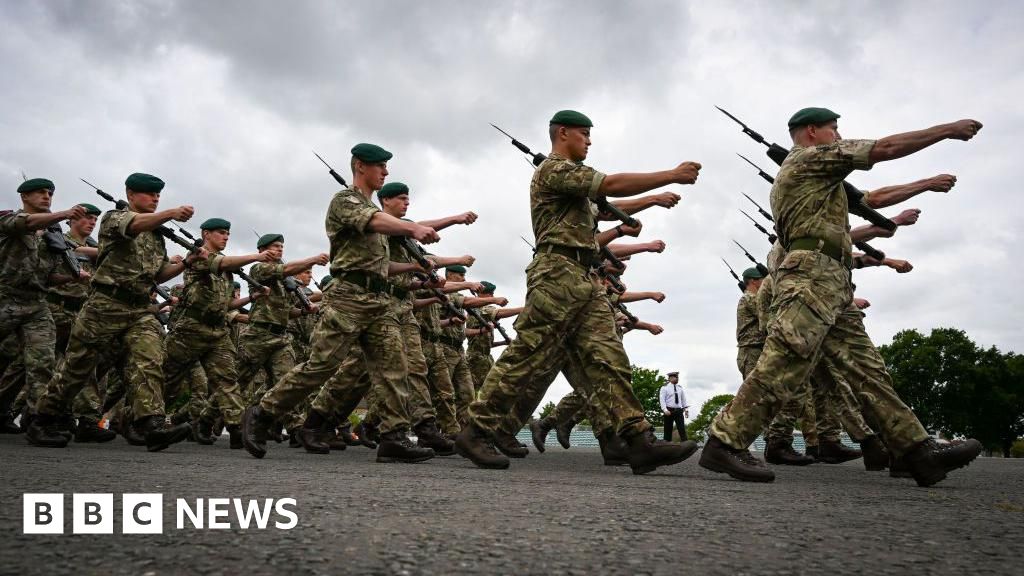
Thousands of military homes across the UK will be modernised, refurbished or rebuilt over the next decade under a £9bn government plan to improve defence housing.
The Ministry of Defence’s new housing strategy will see improvements made to almost all of its 47,700 homes for military families in what Defence Secretary John Healey said will be the “biggest renewal of Armed Forces housing in more than 50 years”.
The plan is in response to consistent complaints from serving personnel about the state of their accommodation.
In 2022, dozens of members and their families told the BBC they were having to live in damp, mould-infested housing without heating.
A Commons defence committee last year found two-thirds of homes for service families needed “extensive refurbishment or rebuilding” to meet modern standards.
Under the new strategy, service family accommodation (SFA) will be refurbished with new kitchens, bathrooms and heating systems.
About 14,000 will receive either “substantial refurbishment” or be completely replaced.
The plans are part of the government’s wider defence housing strategy, to be published on Monday. A total of £4bn in funding to tackle the housing problem had already been announced.
The government says it has also identified surplus MoD land which could be used to build 100,000 new homes for civilian and military families.
Healey said: “This is a new chapter – a decisive break from decades of underinvestment, with a building programme to back Britain’s military families and drive economic growth across the country.”
Almost three years ago, the BBC was contacted by families in military accommodation in Sandhurst who had been living without heating for days.
“We’re at breaking point and something has to change. The system is broken,” they said at the time.
In response to the story, the MoD said it was working with its contractors to improve the service. But a report released in December last year found those problems “still exist”.
“It is shocking that until a policy change in 2022, it was considered acceptable to house families in properties known to have damp and mould,” the report said.
The MoD last year announced it would acquire 36,347 military houses from property company Annington Homes for nearly £6bn, reversing a privatisation deal struck in 1996 under the Conservative government.
The deal would save millions in rent and maintenance costs, the MoD said, money that would be put towards fixing military accommodation.