news

Aid cuts and climate change drive deadly malaria surge in Zimbabwe | News

Harare, Zimbabwe – Precious Mvundura woke up with joint pain, a high fever and a pounding headache on a chilly autumn morning in eastern Zimbabwe.

The 37-year-old initially thought it was just the flu. But when the headache persisted for three days, she became worried.

Her five-year-old son had also fallen ill and was sweating heavily.

In early May, the pair sought help from a village health worker in Chishakwe, a rural farming community outside Zimbabwe’s third-largest city, Mutare. Both tested positive for malaria.

“I felt relieved,” Mvundura told Al Jazeera.

“From the moment I took that medication, I started getting better.”

Her son has also recovered and is back in school.

Their ordeal comes as malaria cases and deaths surge across Zimbabwe after US funding cuts disrupted key malaria control programmes.

Shortly after returning to office for a second term in 2025, US President Donald Trump slashed foreign aid funding, including programmes backed by the United States Agency for International Development (USAID). In Zimbabwe, the cuts disrupted tuberculosis, HIV/AIDS and malaria research, prevention and treatment programmes.

Among the affected initiatives were the Zimbabwe Entomological Support Programme in Malaria (ZENTO) at Africa University in Mutare, which provided scientific research to support the country’s National Malaria Control Programme, and the Zimbabwe Assistance Programme in Malaria II (ZAPIM II), which helped strengthen malaria diagnosis, treatment and prevention in high-burden districts.

USAID had disbursed $270m for health and agriculture programmes in Zimbabwe in 2024.

Malaria cases jumped to 65,399 between January and April 2026, up from 36,000 recorded during the same period in 2025 and 17,000 in 2024, according to Zimbabwe’s Ministry of Health National Malaria Control Programme weekly surveillance report.

Deaths have also risen sharply, reaching 174 between January and April 2026, compared with 85 during the same period last year and 34 in 2024.

Mvundura and her son survived because they sought treatment early. In many other cases, the disease has been fatal.

Shortages of mosquito nets, test kits

Thomas Chuchu, the health programme lead at Save the Children Zimbabwe, said several malaria elimination activities previously supported by ZAPIM II had been disrupted.

“In practice, elimination has continued through government and other partners, but with weaker operational capacity and slower implementation,” Chuchu told Al Jazeera.

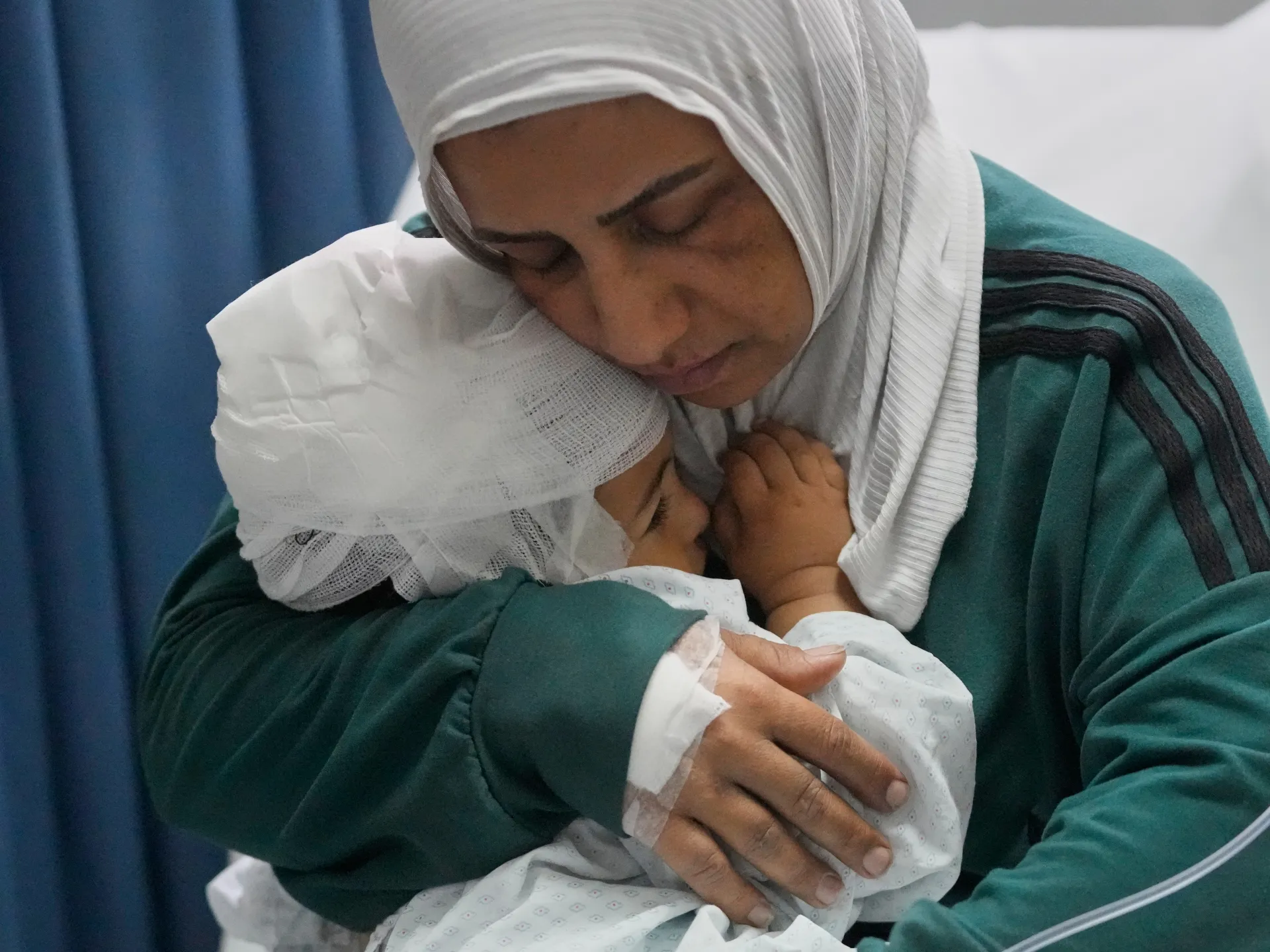
Zimbabwe’s dependence on donor funding for essential medicines, diagnostic kits and mosquito-control supplies has left the country vulnerable. [Farai Shawn Matiashe/Al Jazeera]
Zimbabwe’s dependence on donor funding for essential medicines, diagnostic kits and mosquito-control supplies has left the country vulnerable [Farai Shawn Matiashe/Al Jazeera]

The ZAPIM II programme ran through Zimbabwe’s Ministry of Health system in 11 districts across the provinces of Central and East Mashonaland and the province of Matabeleland North.

Before falling ill, Mvundura said she had not been using mosquito nets or repellents.

“I only started using a mosquito net a friend shared when I fell sick,” she said.

In December 2025, Caroline Mawombedzi was diagnosed with malaria while living in Burma Valley, a farming community about an hour’s drive from Mutare.

She had last contracted the disease in the late 2000s while still a child.

In mid-May, her five-year-old daughter was also diagnosed with malaria by a village health worker in Chishakwe after suffering severe headaches and stomach problems.

Although her daughter received treatment, Mawombedzi said she could not afford preventive measures such as mosquito nets.

“I am unemployed. I cannot afford to buy a mosquito net. We have not been sleeping under a mosquito net for years,” she said.

Virginia Chakandinakira, a village health worker serving Chishakwe, said malaria diagnostic kits and drugs are now in short supply.

“I used to get plenty of malaria test kits and drugs. But in 2025, they did not give me. I referred everyone showing malaria to a nearby Chitakatira clinic,” she said. Chitakatira is a rural settlement about an hour’s drive from Chishakwe.

“I only received test kits and drugs in February. However, the supplies are limited. The authorities told us they were only distributing them to hotspot communities.”

Research programmes crippled

Professor Sungano Mharakurwa, the director of Africa University’s Malaria Institute, said the abrupt withdrawal of US support had worsened the malaria outbreak by affecting the programme.

ZENTO was contributing data from the surveillance of malaria-carrying mosquitoes, which guided strategies employed by the National Malaria Control Programme to control malaria transmission, he said.

The Trump administration’s funding cuts have also effectively put a stop to the US President’s Malaria Initiative (PMI), launched in 2005 by former President George W Bush to control and eliminate malaria worldwide. Mharakurwa said the PMI had played a major role in funding malaria medications, and communities had been left exposed without it.

He said the Malaria Institute later secured funding from the United Methodist Church General Board of Global Ministry, but it fell far short of previous US assistance.

Zimbabwe’s dependence on donor funding for essential medicines, diagnostic kits and mosquito-control supplies has left the country vulnerable.

Itai Rusike, the director of Zimbabwe’s Community Working Group on Health, said the government needed to strengthen domestic health financing to reduce dependence on foreign donors.

“It is risky for a country to depend substantially on external partners, as donors can withdraw financial support anytime should their interests shift,” he said.

Climate change fuels spread

Experts say climate change is also driving the spread of malaria and other vector-borne diseases across Africa.

Rising temperatures are allowing malaria to spread into higher-altitude areas, which were once less vulnerable to outbreaks.

Zimbabwe experienced El Niño between 2023 and 2024, a climate phenomenon marked by unusually warm temperatures in the Pacific Ocean, which typically disrupts rainfall patterns across Southern Africa.

Heavy rainfall followed in 2025 and 2026, creating ideal breeding conditions for mosquitoes.

Chuchu, from Save the Children Zimbabwe, said that the current spike in malaria cases was closely linked to the heavy rains during the 2025–2026 season.

“The rains created favourable breeding conditions for mosquitoes, particularly in already endemic provinces such as Mashonaland Central, Manicaland, Mashonaland East and Mashonaland West,” he said.

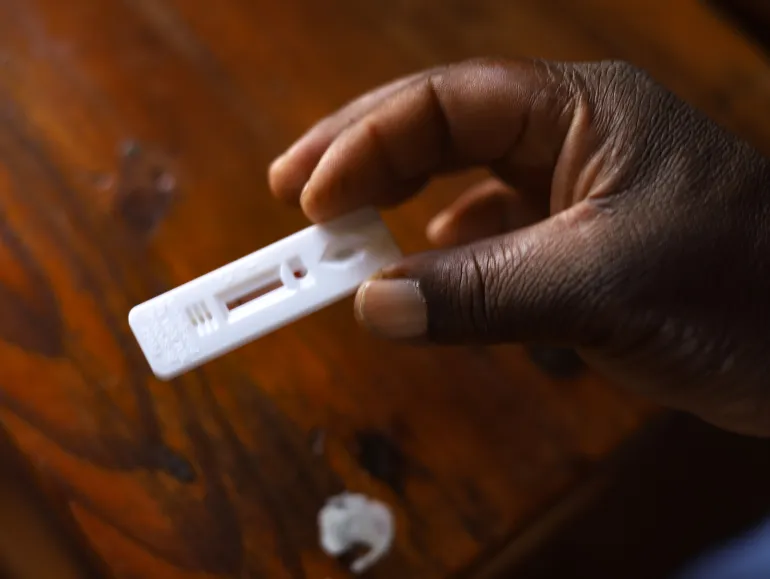
Virginia Chakandinakira, a village health worker serving Chishakwe, said malaria diagnostic kits and drugs are now in short supply.. [Farai Shawn Matiashe/Al Jazeera]
Health workers say malaria diagnostic kits and medicines are now in short supply in rural Zimbabwe [Farai Shawn Matiashe/Al Jazeera]

“The effect of heavy rains is likely being amplified by weakened prevention systems, including reduced mosquito-net coverage, delayed vector-control activities, reduced community surveillance, and challenges with timely testing and treatment following the discontinuation of ZAPIM,” he added.

Professor Mharakurwa, meanwhile, said that above-normal rainfall required equally strong preparation and resources to contain malaria transmission.

Government efforts

Zimbabwe aims to eliminate malaria by 2030, in line with the target set by the African Union.

Over the years, the government, working with international donors and aid organisations, has relied on indoor residual spraying, mosquito-net distribution, mass testing and public awareness campaigns to contain outbreaks, particularly in rural communities.

Health workers continue to carry out indoor spraying campaigns in malaria-prone areas, while village health educators use community meetings and radio programmes to encourage early testing and treatment. Authorities have also expanded surveillance and rapid-response systems in high-risk districts.

But some of these efforts have weakened following the disruption of donor-funded programmes. Key malaria elimination activities previously supported by ZAPIM II included active case tracking, targeted distribution of long-lasting insecticidal nets and district rapid-response systems.

For years, the government and aid organisations distributed mosquito nets annually to vulnerable communities, such as Chishakwe. But since the US funding cuts, shortages have become increasingly common.

Village health workers say malaria diagnostic kits and treatment drugs are also running low in some rural areas, forcing suspected malaria patients to travel long distances to clinics for testing and treatment.

Health experts warn that unless funding gaps are urgently addressed, Zimbabwe risks losing years of progress made in reducing malaria infections and deaths.

For Mvundura and her son, surviving malaria still feels like escaping death.

“We cheated death,” she said. “It was so bad.”

Source link

Google employee charged with insider trading over Polymarket bets | Crime News

Michele Spagnuolo allegedly used insider information to profit from bets on people on Google’s most-searched list.

A Google software engineer has been charged with fraud by US authorities after allegedly using insider information to win more than $1.2m in bets on the prediction market platform Polymarket.

Michele Spagnuolo, an Italian citizen residing in Switzerland, is accused of using confidential information to wager on the results of Google’s annual most-searched list, according to a criminal complaint unsealed on Wednesday.

Recommended Stories

list of 3 itemsend of list

US prosecutors accuse Spagnuolo of using an account named “AlphaRaccoon” to make trades on various markets linked to the results of Google’s 2025 Year in Search.

The total sum of the bets was approximately $2.75m, according to the complaint, filed in federal court in New York.

Among the bets, Spagnuolo successfully predicted that indie pop musician d4vd would top the list for the most-searched for person last year, hours after accessing confidential data at Google, according to prosecutors.

Spagnuolo, 36, faces charges of commodities fraud, wire fraud and money laundering.

“Today’s charges reinforce a decades-old message: corporate insiders cannot use confidential business information to turn a profit in our markets,” US Attorney for the Southern District of New York Jay Clayton said in a statement.

“Insider trading compromises the integrity of our markets, and the American people want this greed-driven conduct investigated and prosecuted,” Clayton added.

Bets on Maduro’s capture

Google said in a statement that it is working with law enforcement and that using confidential information to place bets is a serious breach of company policy.

Spagnuolo has been placed on leave, according to a Google spokesperson.

A Polymarket spokesperson said the company had worked closely with the US Attorney’s Office on the investigation and that the firm “is the only prediction platform to date whose cooperation has led to insider trading charges in the United States”.

“We are committed to maintaining accurate, fair, and transparent markets as well as enforcing our rules and working with our regulators and law enforcement,” the spokesperson added.

Last month, a US soldier was charged with using classified military information to place bets on Polymarket regarding the abduction of Venezuelan President Nicolas Maduro.

Prosecutors accuse Gannon Ken Van Dyke, 38, of cashing in on the US operation against Maduro, to the tune of more than $400,000.

Source link

US returns Palestinian rights expert Francesca Albanese to sanctions list | United Nations News

The Trump administration has sought to pressure international officials who scrutinise reported abuses by Israeli forces.

The United States government has returned UN human rights expert Francesca Albanese to a list of sanctioned individuals after a judge had granted a temporary injunction against the designation.

On Wednesday, an update appeared on the US Treasury Department’s Office of Foreign Assets Control (OFAC) website, indicating that Albanese had been added to the agency’s list of Specially Designated Nationals (SDN), without offering further details.

Recommended Stories

list of 3 itemsend of list

Albanese serves as the UN’s special rapporteur on the occupied Palestinian territory, and her criticism of Israeli policies has made her a target under US President Donald Trump.

In July 2025, Secretary of State Marco Rubio issued a statement announcing sanctions against Albanese, accusing her of “lawfare” and “biased and malicious activities” against Israel.

He also cited her recommendation that the International Criminal Court (ICC) should issue arrest warrants against Israeli Prime Minister Benjamin Netanyahu and former Minister of Defence Yoav Gallant, which it ultimately did in November 2024.

The announcement was one in a series of actions the Trump administration has taken against critics it sees as hostile to US and Israeli interests.

The sanctions barred Albanese from entering the US and froze her assets in the country. They also prevented any US-based entity from doing business with her.

Albanese, an Italian citizen, has close ties to the US: Her daughter is a US citizen, and the family maintains a residence in the country.

In February, members of Albanese’s family filed a lawsuit on her behalf, stating that the sanctions had disrupted her life, even preventing her from accessing her bank account.

The lawsuit also accused the Trump administration of trying to intimidate those who speak out against Israeli rights abuses.

Albanese has been vocal in her assessment that Israel has committed genocide in Gaza, a view echoed by leading human rights experts around the world. More than 75,000 Palestinians have been killed in the territory since 2023, when Israel launched its genocidal war on the Strip.

Albanese is not alone in facing economic penalties for her work. Since taking office for a second term, Trump is estimated to have issued sanctions against nine ICC judges, as well as prosecutors for the court.

The judges and prosecutors were reportedly involved in probes into abuses by US and Israeli forces.

Legal experts have condemned the sanctions as an assault on international law and an effort to shield the US and its allies from scrutiny.

On May 13, US District Judge Richard Leon, an appointee of former President George W Bush, ruled in favour of the Albanese family’s lawsuit, granting a temporary injunction against the sanctions.

Leon found that the Trump administration had used the penalties to curtail Albanese’s constitutionally protected speech. He also stated that Albanese could not be blamed for the ICC’s actions.

“It is undisputed that her recommendations have no binding effect on the ICC’s actions,” Leon wrote. “They are nothing more than her opinion.”

As a result of the ruling, Albanese was removed from the sanctions list this month.

But the Trump administration appealed Leon’s order. It also said it would restore her to the sanctions list as soon as it was able, though it is unclear what prompted Wednesday’s change.

Source link

FACTBOX – Iranian, US versions of potential agreement proposals – Middle East Monitor

Both the US and Iran have recently signaled progress on efforts to reach a deal to end their conflict, though their accounts of its terms differ on some issues across respective media narratives, Anadolu reports.

US President Donald Trump on Saturday said an agreement with Iran to end the war was “largely negotiated” and awaited finalization.

On Sunday morning, Iran’s semi-official Tasnim news agency also published a report on the details of a potential agreement. However, certain aspects of what has been agreed seem to diverge.

Here is a comparison of the US and Iranian versions of the deal by key issues.

Strait of Hormuz

Citing a US official, Axios said the deal that Washington and Tehran are close to signing would extend a ceasefire by 60 days, during which the Strait of Hormuz would be reopened.

During the 60-day period, the Strait of Hormuz would be opened without any tolls, and Iran would remove the mines it has placed there to ensure unrestricted maritime passage.

In return, Washington would lift its blockade on Iranian ports, added the report.

The New York Times also said it was informed by three senior Iranian officials that Tehran had agreed to a memorandum of understanding to halt fighting and reopen the Strait of Hormuz.

US Secretary of State Marco Rubio also said on Sunday that the agreement could, if successful, result in a “completely open” Strait of Hormuz, with no tolls or restrictions on passage.

“They don’t own it. It’s an international waterway,” Rubio told reporters of the strait, in remarks that came during his visit to India.

A report by Iran’s semi-official news agency Tasnim, however, said that the Strait of Hormuz will not fully return to its pre-war status if the agreement is reached.

Instead, the number of ships allowed to pass would be restored to pre-war levels within 30 days, the outlet added.

Tehran also demands an end to the US blockade on its ports, arguing that no changes will be made in the strait if the blockade remains in place.

For its part, the US argues that the quicker Iran removes the mines and allows shipping to resume, the sooner the blockade will be lifted.

READ: Iran ready to reassure world it is not pursuing nuclear weapons, president says

Sanctions relief and release of frozen Iranian assets

Iran was seeking the immediate unfreezing of funds and a permanent lifting of sanctions, but the US position indicates these measures would only be granted after Iran made concrete concessions, according to the Axios report.

As part of the proposed 60-day agreement, the US is offering temporary sanctions waivers that would allow Iran to sell its oil freely. These waivers are explicitly linked to Iran reopening the Strait of Hormuz, removing mines, and ending restrictions on maritime traffic. Once these steps are taken, Washington would also lift its naval blockade on Iranian ports.

Tehran, however, says no agreement will be reached unless at least a portion of the frozen Iranian assets is released immediately. Iranian media confirmed the discussion of temporary oil sanctions waivers in the latest US proposal but insisted on broader and more permanent sanctions relief.

Nuclear file

The Axios report said the draft deal includes commitments from Iran not to pursue nuclear weapons, along with provisions to negotiate a suspension of uranium enrichment and the removal of its stockpile of highly enriched uranium.

The Iranian media reports, however, indicate that Tehran has not yet accepted anything on its nuclear program.

A potential deal would involve a 60-day negotiation window on Iran’s nuclear program, according to Tasnim.

Extent of ceasefire

Both US and Iranian media reports suggest that the cessation of hostilities would mean a halt to fighting on all fronts, including Lebanon.

This was also highlighted by Iranian Foreign Ministry spokesman Esmaeil Baqaei on Saturday, when he said Tehran was prioritizing an end to hostilities across all fronts, including Lebanon.

Context

Regional tensions have escalated since the US and Israel launched strikes against Iran in February. Tehran retaliated with strikes targeting Israel, as well as US allies in the Gulf, along with the closure of the Strait of Hormuz.

A ceasefire took effect on April 8 through Pakistani mediation and was later extended by Trump indefinitely. Washington and Tehran also held rare direct talks in the Pakistani capital Islamabad on April 11-12, but have failed to reach an agreement.

Trump’s Saturday remarks came after Pakistani army chief Asim Munir’s visit to Tehran. The visit was the second of its kind in recent weeks, as Munir is directly involved in Islamabad’s mediation efforts.

READ: Trump says Iran talks ‘constructive’ but blockade will remain until final deal is reached

Source link