Is our Instagram era literally shrinking books? An L.A. bookseller weighs in
In the age of Ozempic, the buzziest hardcovers are getting smaller — and slip right into your Baggu. At Book Soup in West Hollywood, the bestselling hardcover fiction display is marked with laminated cards that denote the book’s place in the top 10, with each one cut snugly into the popular hardcover frame of 6-by-9 inches. But lately, more of the books rising to the top wear the placard noticeably looser.
I should know, I work at Book Soup so I spend a lot of time staring at this display and can tell you, the answer to this problem is definitely to print out smaller cards cut to the little sister “trim size” of 5-by-8 inches — or 5½-by-8¼ to be specific.
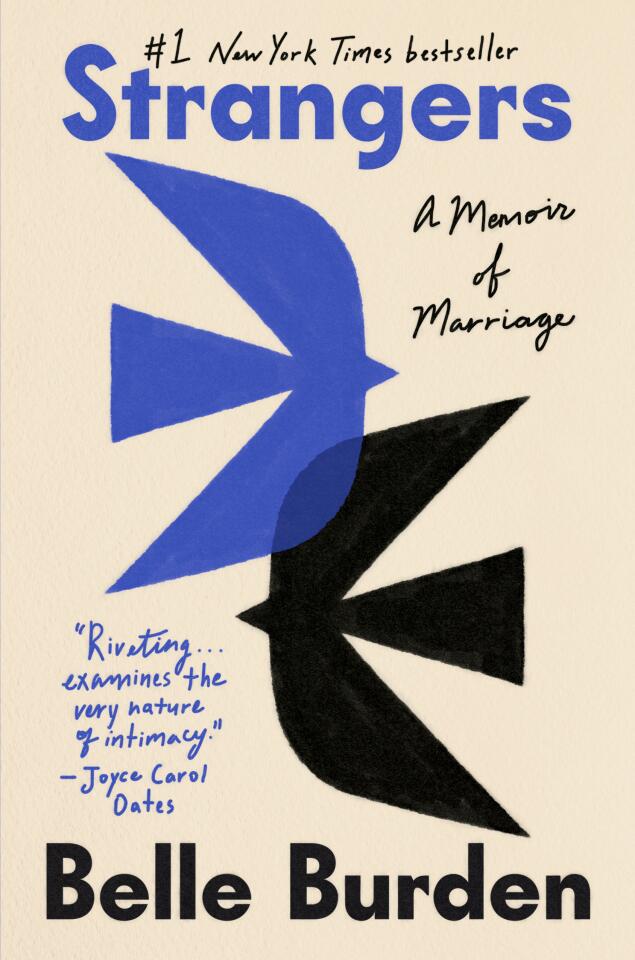
While the New York Times bestsellers from 2025 skew in favor of the 6-by-9 trim, the popularity of 5-by-8 books appears to be on the rise. Current utilizers of the smaller cut include the buzzy Vanderbilt heir Belle Burden’s “Strangers,” George Saunders’ darkly humorous “Vigil” Lena Dunham’s millennial-tinged tell-all “Famesick” and the infamously tablet-sized “Transcription” from Ben Lerner.


Gretchen Achilles is the director of interior design at Farrar, Straus and Giroux. Achilles recently implemented the 5-by-8 cut for one of this year’s breakout hits, “Lost Lambs” by Madeline Cash. “It’s a tone,” she says. “Smaller trim sizes have an intimacy. … You want to echo what’s going on in the text as an experience for the reader.”
According to Achilles, FSG frequently implements the 5-by-8 trim size. She said that length is the No. 1 factor when deciding to employ it, followed by genre. She listed literary fiction, memoir, biography, and essay collections as the defining genres of the smaller size books.
Caroline Mason is a writer in New York whose debut novel “An Endless Cycle of Evenings” from Hyperion Avenue is slated for 2027; she runs the Instagram account @literarycrushes. Mason described a 5-by-8 hardcover as shorthand for a specific book she seeks out when she is in a bookstore because it often signals a character-driven novel. “It’s my favorite kind of book,” Mason says. She adds that it’s also Instagram-friendly.
“Holding the book up to take a photo of it is easier,” she says with a laugh. “Although I do sometimes still drop it.”
Dahlia de la Vega is an L.A.-based Bookstagrammer who runs the page @ofpagesandprint. According to De la Vega, she finds the shrunken books more approachable. “When I sit down to read a small hardcover, it almost feels like I’m reading a journal,” she says. “Whereas when I read a large hardcover, it almost feels like I need a journal to jot down notes about what’s happening.”
Ethan Mann, my colleague and a supervisor at Book Soup, told me he remembers the place he was both mentally and physically when he purchased a 5-by-8 hardcover copy of “The Parade” by Dave Eggers. (Right before the pandemic struck at CSUN campus store at Cal-State Northridge). “It’s easier to attach relevance to the specific feel of [the book] because it seems one of a kind,” he says.
Mann adds that hardcovers are sometimes a tough sell on the floor. They are often derided for their cost, and customers declare they will wait till the paperback comes out. But the smaller hardcover has the benefit of fitting into nearly any bag.
Esther Margolis is a publishing veteran and the founder of Newmarket Press. She says that the 5-by-8 hardcover is nothing new. According to Margolis, the smaller trim size was previously the industry standard for U.S.-based publishing houses, and any fluctuation is due to the evolution of printing technology.
“Unlike for mass-market paperbacks, hardcover books were shelved, so it didn’t matter that the books were different sizes,” Margolis says. “They didn’t have to fit into a pocket.”
The popularity of the 5-by-8 hardcover is, at the very least, indicative of a shift in what I witness consumers at Book Soup seeking out. With social media making it easier than ever to connect over the act of reading, or looking like you are reading, cover design and presentation — and how it cuts through the noise of the attention economy— is perhaps a factor too.
“A small hardback is like a Labubu,” my co-worker Mann says. “ The feeling in your hands isn’t just about books — it’s about all cute things. … We like small things we can control.”
The success of the publishing industry could never rest on the tiny shoulders of the small hardcover. It may not even represent any changes in production. But on the bestsellers display at your favorite local indie, it represents the small pleasure of palming a near-pocket-size book in your hands.
And, yes, maybe Instagrammability too.
Messinger is a writer in L.A. who runs the Substack adumbmessinger.