new postal service rule

Supreme Court halts Trump’s proposed limits on mail ballots for this year’s elections

The Supreme Court has blocked President Trump’s plan to restrict voting by mail, ruling it is too late to impose new postal service rules for the November election.

The justices on Monday turned down an emergency appeal from Trump’s lawyers, who argued the government needed a new and untested system of unique bar codes to track all the ballots of the tens of millions of people who vote by mail.

Instead, the justices left in place a judge’s order that prevents the U.S. Postal Service from enforcing the new rules for the midterm elections.

Concurring, Justice Brett M. Kavanaugh agreed it was too late to enforce the new rules for this election.

Justices Samuel A. Alito Jr. and Clarence Thomas dissented.

The decision in USPS vs. California is a victory for California Atty. Gen. Rob Bonta and the attorneys general for 22 other Democratic-led states who sued to block the new rules.

Last week, they warned there would be chaos and confusion if Trump’s rules were put in effect now.

Bonta cheered the decision late Monday, calling it “a victory for our democracy and a powerful affirmation of the rule of law” in a case where the stakes “could not have been higher.”

“Voting is the fundamental right from which all other rights flow, and all 50 states allow ballots to be cast by mail in some form. In California and several other states, mail voting is the primary way elections are conducted,” Bonta said. “Had this rule been allowed to take effect, the consequences would have been catastrophic.”

He said his office “will remain vigilant in safeguarding our elections,” and urged voters to make their voices heard.

Under the proposed rules, state and county election officials across the nation would be required to enroll each voter with a unique bar code and submit this data to a new online portal that, as of last week, was not yet functioning.

Without the individualized bar codes, states could not send ballots through the mail. In California, that would mean election officials would have to enroll 23 million voters with new bar codes before state ballots could be mailed.

“Compliance with the USPS’ rule would be impossible ahead of the midterms, meaning that millions of voters would be unable to vote by mail and some would not be able to vote at all,” the state attorneys general told the court last week.

The impact would not be limited to Democratic-leaning states. Utah Lt. Gov. Deidre Henderson said it would be “an unmitigated disaster” if the new rules were put into effect now. About 30% of the nation’s voters — and 80% of Californians — cast ballots by mail in 2024.

But Trump has maintained, without providing evidence, that voting by mail leads to widespread cheating and fraud.

In March, he issued an executive order that called on the postal service to do more to “enhance election integrity.”

“Unique ballot envelope identifiers, such as bar codes, enable confirmation that only citizens receive and cast ballots,” he said.

Elections experts say there is no evidence of such widespread fraud, despite robust audits and other searches for it.

State attorneys general argued that the Constitution entrusts states, not federal officials, to conduct elections. While Congress may impose new rules, it is not done to limit voting by mail or to empower the postal service to do so, they said.

Trump and his lawyers maintained the administration had a duty to combat fraud, including in elections.

Solicitor Gen. D. John Sauer described the new rules as “modest measures that will help prevent and restrain potential gross abuses of the mails to perpetrate a fraud on the Nation.”

And he said the federal government, the states and the voting public would face irreparable harm if the new Postal Service rules were not allowed to be applied to the coming election.

But U.S. District Judge Indira Talwani, in Boston, ruled the postal service may not put its new regulations into effect for the Nov. 3 election. She found the Trump administration had presented no evidence to the court of widespread fraud existing, while the states had presented ample evidence that implementing such a system on such a fast timeline posed tremendous risk.

The 1st Circuit Court affirmed her order and said the administration’s lawyers “have not even seriously challenged the … detailed findings about the chaos and widespread disenfranchisement that would occur between now and November 3 should the USPS rule take immediate effect.”

On Sunday, U.S. District Judge Carl Nichols — a Trump appointee — also blocked the new Postal Service rules from being implemented in separate cases brought by the NAACP and Democratic groups, finding they clearly exceeding the Postal Service’s authority in elections.

What the future will hold is unclear. The courts did not declare the new rules to be illegal or unconstitutional, though multiple lower courts have suggested that parts of the plan likely would be — including by exceeding the Postal Service’s authority to intervene in elections.

Much of the debate before the appellate and high court related to the rushed timeline under which the Postal Service was seeking to implement the changes. With that set aside by the Supreme Court’s ruling that the rules will not apply this election, the debate in the lower courts may shift focus to whether the new regulations can be applied to the 2028 elections.

Nevada Secretary of State Cisco Aguilar, chair of the Democratic Assn. of Secretaries of State, said the high court’s ruling was a clear loss for Trump, and that state election officials are ready to continue their fight to protect U.S. elections if necessary.

“This ruling affirms what our Constitution has always held: Elections belong to the American people, not a desperate man in Washington,” he said.
Source link

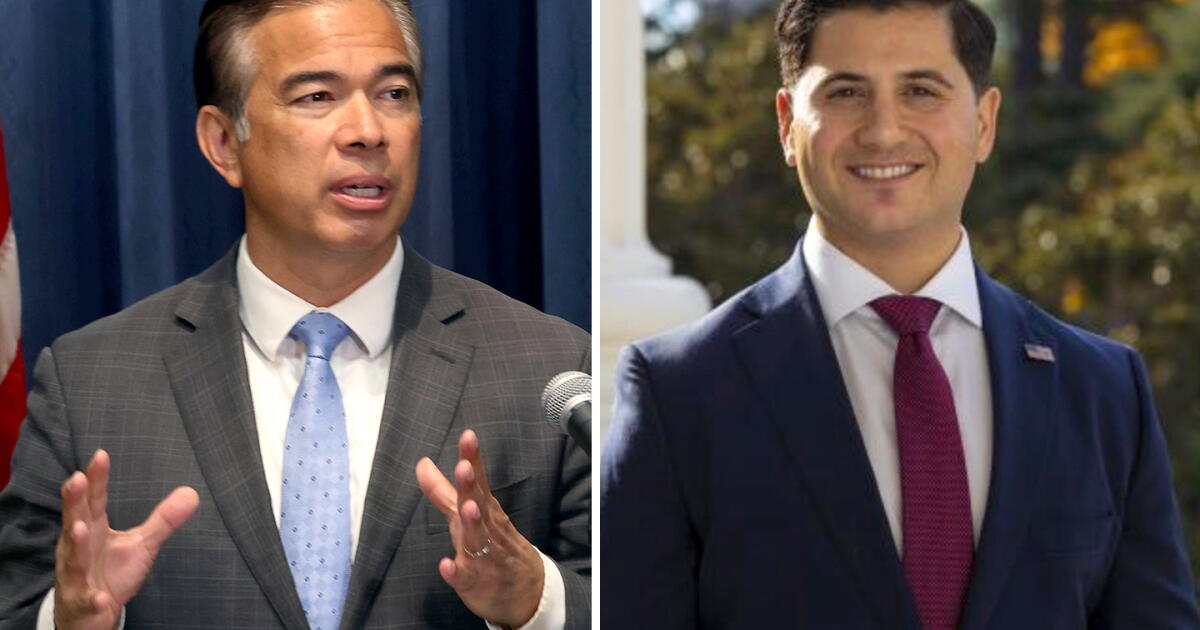
AG Rob Bonta, Bill Essayli spar over California election integrity

Two of the highest-ranking law enforcement officials in California are publicly sparring over the integrity of state elections, trading barbs on social media that highlight the fierce partisan divide on the issue heading into the November midterms.

In a post to X on Wednesday, First Assistant U.S. Atty. Bill Essayli, the top federal prosecutor in Los Angeles, accused California Atty. Gen. Rob Bonta, the state’s highest-ranking law enforcement official, of fighting to “preserve non-citizens’ access to mail ballots” and “shield fraudsters and illegals from accountability.”

On Thursday, Bonta fired back, accusing Essayli of being “more interested in currying favor with a desperate wannabe dictator” — a reference to President Trump — “than upholding the law himself.”

Bonta and Essayli’s back-and-forth followed an announcement from Bonta that California and 24 other Democratic-led states were suing to block the U.S. Postal Service from implementing new nationwide rules on mail ballots that were developed at Trump’s behest.

Late Thursday, a federal judge sided with the states, issuing a temporary restraining order halting the implementation of those rules as the litigation continues. An appeal is likely.

Such a public and personal rift between Bonta and Essayli is highly unusual and has broader implications, given the California Department of Justice and the U.S. Attorney’s Office in Los Angeles coordinate on statewide law enforcement initiatives and traditionally maintain a cordial relationship.

They have worked together in recent years to target Los Angeles street gangs trafficking guns and drugs statewide, as well as international drug syndicates trafficking fentanyl and other narcotics through L.A.

The U.S. Justice Department at times finds itself on the opposing side of litigation involving local or state law enforcement partners, including in cases in which it investigates local police departments for civil rights violations and forces them into consent decrees, as it has done with the Los Angeles Police Department.

However, it is extremely rare for U.S. attorneys and top state law enforcement officials to engage in direct attacks on each other’s integrity — or the integrity of state voting processes, which both are tasked with defending. Federal prosecutors in particular have historically sought to avoid the appearance of political partisanship and rarely taken aim at elected officials over policy matters.

That tradition certainly has faltered under Trump, who has filled the Justice Department with outspoken loyalists who make no secret of their allegiance to him. And Essayli, the administration’s embattled appointee to lead one of the largest federal prosecutor’s offices in the country, has been no exception.

Essayli did not respond to a request for comment on the public exchange Thursday.

A spokesperson for Bonta’s office, which has sued this Trump administration more than 85 times, said in a statement that office staff regularly work with the U.S. Justice Department and federal prosecutors to keep Californians safe, and that work won’t stop “just because some are dead set on politicizing our work and theirs.”

At a news conference this week touting major crime declines in the state, Bonta said partnerships with both local and federal law enforcement remain a vital part of public safety in the state.

“That remains the secret sauce — the magic — when it comes to making our communities more safe. Working together, collaborating, sharing intel and resources and teaming up,” he said. “That remains a priority and is behind a lot of our success.”

Still, the new Postal Service rules sparked a clash. The rules require states to submit lists of eligible voters to the Postal Service and to use new ballot envelopes with digital bar codes that would allow the Postal Service to identify and reject ballots that don’t match those lists. Trump requested the changes as part of a broader executive order in March to combat what he claims is widespread voter fraud across the country and particularly in big blue states such as California.

Independent election experts say there is zero evidence of such problems existing in significant numbers. The Trump administration has said that is because states are keeping voter rolls secret and refusing to cooperate with federal efforts to vet them for noncitizens and other ineligible voters.

On Monday, the U.S. Supreme Court lifted a separate lower court ruling blocking the Postal Service changes, on the grounds that they had yet to be implemented and had not yet caused any harm to the states challenging them. The high court made clear, however, that it was not weighing in on the substance or merits of the rules themselves.

Essayli has long made allegations of voter fraud in California, and lawyers in his office were involved in an unsuccessful lawsuit in which the Justice Department sought California’s unredacted voter rolls. After the Supreme Court issued its ruling, and Gov. Gavin Newsom pledged the state would sue again, Essayli responded to defend the administration’s efforts.

“These measures wouldn’t be necessary if states like California didn’t allow non-citizens to easily register to vote and get mail ballots,” he wrote. “We are actively identifying ineligible citizens on California’s dirty voter rolls and will soon announce criminal arrests related to our election fraud investigation.”

Essayli’s office did not respond to a request for information on those alleged arrests or its broader investigation.

Then, on Wednesday, Bonta, who is seeking reelection in November, announced the latest lawsuit challenging the merits of the Postal Service rules, which he noted had been formally issued last week. He called the rules “an unlawful overreach that shows just how far President Trump will go to control elections,” and the state’s lawsuit an effort to “protect election integrity.”

Essayli soon replied, writing, “What election integrity? You’re fighting to preserve non-citizens’ access to mail ballots. I’ve never seen a state AG fight this hard to shield fraudsters and illegals from accountability. Imagine if he used his efforts to protect citizens.”

On Thursday morning, Bonta replied. “Simply untrue. We’re fighting to uphold the constitution and protect California’s right to administer our own elections,” he wrote.

“If you’re really concerned with election integrity, might I suggest starting with Donald Trump who: asked for 10,000+ votes from election officials in Georgia, fueled January 6, seized ballots, and issued two blatantly unlawful elections executive orders,” Bonta said.

After he lost the 2020 presidential election to Joe Biden, Trump called Georgia Secretary of State Brad Raffensperger and asked him to “find 11,780 votes” for Trump to swing the state from Biden to him.

A later congressional investigation found that Trump provoked his supporters into attacking the U.S. Capitol on Jan. 6, 2021, in an attempt to prevent the certification of Biden’s win. This January, the FBI raided and seized ballots from an election center in Fulton County, Ga. — a focus of Trump’s 2020 election denial.

“Trump has repeatedly shown he’ll stop at nothing to interfere in our elections. He’s repeatedly broken the law, so we’ve repeatedly taken him to court,” Bonta continued in his post. “Unfortunately, it appears that the First Assistant is more interested in currying favor with a desperate wannabe dictator than upholding the law himself.”

In agreeing late Thursday to halt the Postal Service rules, U.S. District Judge Indira Talwani wrote that the court did not have “any evidence regarding fraudulent absentee or mail-in voting” before it, and that the Postal Service’s “interest in correcting an unsubstantiated problem through likely unconstitutional means is dwarfed by the overwhelming risk of pervasive disenfranchisement of citizens who need access to mail ballots in order to vote.”

Bonta, back on X, praised the ruling, writing, “President Trump must keep his hands off our elections.”

Source link