On her new album, “Petal,” the pop superstar opens the spigot on what she’s described as an “unfiltered rage” to blast any number of feckless exes, a prying public obsessed with her body and her personal life — and not least herself for allowing anyone the power to hurt her in the first place.
“Tell me who’s to blame — is it the people or myself?” she wonders against the icy synth stabs of the title track.
Her answer, delivered as a sneering little aside: “Yeah.”
“Petal” marks a dramatic shift from Grande’s previous LP, 2024’s “Eternal Sunshine,” a tender and melancholy electro-pop collection that laid out a kind of emotional philosophy of heartbreak. She recorded the new album with the same team — the hit-making writer-producers Ilya Salmanzadeh and Max Martin — but here they go for a murkier, more percussive sound to match Grande’s dark mood.
Tolling electric guitar accompanies her in “Freak” as she muses on “all of the life I’ve been denied,” while “Oh Well” puts a jittery U.K. garage beat under her sneering farewell to an unnamed antagonist: “Good luck on your way to hell.” In “Hate That I Made You Love Me,” which debuted at No. 1 on Billboard’s Hot 100 when Grande released it as “Petal’s” lead single, she sings, “I’ve held your projections when you’ve felt so insecure,” over a trudging groove that moves like a funeral march.
These downcast observations arrive at what would seem to be a professional high point for Grande, who recently wrapped her extended stay in the “Wicked”-verse and who’s in the middle of a tour that’s drawn adoring fans to arenas across the country.
But perhaps that’s the point: Almost every song on “Petal” can be interpreted two ways — as a story about a broken relationship between two people or as a tale about the toxic connection between an idol and her audience. (More than once did this record make me think about Taylor Swift’s “The Tortured Poets Department.”)
“My pain is music — do you hear me everywhere?” Grande asks in “Warning Signs (Interlude),” which climaxes with a pithy diagnosis of pop stardom in the parasocial age: “You don’t deserve me / You know you don’t, you never have / But I want you to feel me / I wish someone could hear me.”
Complaints about celebrity can be pretty tedious, of course; sometimes it feels as though famous pop singers have forgotten how to write about anything other than life in the social-media fishbowl.
Yet “Petal” gets some creative traction from how Grande chooses to use her voice; instead of belting, she rarely rises above a whisper, which gives a spooky, slightly creepy quality to her thoughts on being endlessly scrutinized. The airiness of her singing provides some comedy too in a hard-edged song such as “Like I Do,” where after noting that “all that s— talk keeps me well-fed,” she tells whoever needs to hear it, “No one f— you like I do.”
Having gotten all this off her chest, Grande finishes the album by allowing in some light: Over a zippy new wave arrangement, “Bad Thing (Bunny Hop)” ponders the renewing energy of a fresh romance — or maybe a rekindled old one — while the glistening “Nowhere, Nobody” has her taking deep breaths with a lover she’s convinced might finally give her what she needs.
“Convinced” is probably the wrong word.
“Hard to believe in a perfect ending,” she admits, “But that’s all right.”
In the Mid-City neighborhood where Syd grew up, lots of people now refer to this 34-year-old musician as the mayor.
“During COVID, I’d spend all day on the grass waving at everybody,” she says with a laugh. More recently, a bunch of “unruly teenagers,” as Syd describes them, have been doing doughnuts in the street near her parents’ house.
“I’m out there talking about, ‘Hey! Stop!’ I had one of my trucks parked in front, so I was like, ‘Y’all ain’t finna mess my s— up.’ But also they were hanging out the window — it was really dangerous.” She laughs again.
“I’m an old head when it comes to safety.”
Syd’s new album happily embraces a sense of maturity — of “feeling more sure of myself than I ever have,” she says. Released last week, “Beard” — the title was inspired by Syd’s wife’s request that she maintain the peach fuzz on her upper lip — sets thoughts of romantic commitment and professional achievement against gleaming R&B grooves that occasionally nod toward Afrobeats or bossa nova. It’s Syd’s third solo LP since she emerged nearly two decades ago as a member of the Los Angeles hip-hop collective Odd Future; it also comes eight years after her most recent album with the Internet, the Grammy-nominated soul-music combo she shares with Matt Martians and Steve Lacy (the latter of whom dropped his new “Oh Yeah?” on the same day Syd dropped “Beard”).
Yet for all the growing up she’s done, “ironically, I feel younger than I’ve ever felt,” Syd says. “Beard’s” blurry cover photo, which shows her shaved head and slightly doleful eyes, “captures exactly what I was trying to portray with the music,” she adds. “It’s kind of this nonbinary image, where if you’re looking at it and you don’t know who I am, you might wonder: Is that a 12-year-old boy?”
Syd and I are talking over coffee at a crowded spot on Jefferson Boulevard that she says she visits every day. (So many people say hi to her that I’m inclined to believe it.) The restaurant isn’t far from her house, which itself is just an eight-minute drive from her folks’ place; eventually, she says, her parents plan to swap homes with Syd and her wife, the model Simone Clay, so that the couple can fulfill their dream of becoming foster moms in the larger house.
“With all my privilege and with all the peace I’ve been able to create for myself, I would love to spread that,” says Syd, whose full name is Sydney Bennett and whose younger brother Travis (known as Taco) also came up through Odd Future before finding success as an actor.
Syd recorded “Beard” between a studio she built at her parents’ place and a studio in North Hollywood owned by Raphael Saadiq, the veteran R&B star whom Syd counts as something of a mentor. The singer says she can relate to the way Saadiq moves between making solo records, working in a band (in his case Tony! Toni! Toné!) and writing and producing for other artists, as Syd did on Beyoncé’s 2022 “Renaissance” album.
“Syd is just looking for things in music that are breathing,” says Saadiq, who plays bass and co-produced several cuts on “Beard.” “She keeps developing, and she’s not developing to be relevant — she’s developed because she loves doing it. People like Syd and myself, we’ve been at this since we were kids. We were the ones in the neighborhood who’d walk outside and say, ‘Anybody want to get on this track? Anybody want to play?’”
Songs on “Beard” like “Closet” and “My Love” reflect recent changes in Syd’s life, not least her decision to get hitched last year, which she attributes in part to an uncertainty about how long same-sex marriage will remain legal in the United States.
“You know the Supreme Court,” she says with a shrug.
She also quit drinking after realizing that she was waking up more often than not with a hangover. “People around me weren’t like, ‘She be drinking,’” Syd says. “But it was every day, and it was just at the crib. Everybody has a different relationship to it, and I found that mine was tied to boredom, which I think is probably better than it being tied to sadness. But that’s also what made it a little bit harder to call it a problem, you know what I mean? I had to realize: OK, this might not be a problem for someone else, but it’s not serving me.”
So two and a half years ago, she stopped — and on a holiday some can’t imagine without booze.
Says Syd: “I raw-dogged New Year’s Eve, bro.”
“Ironically, I feel younger than I’ve ever felt,” Syd says.
(Nabil)
“Beard” encompasses shifts in Syd’s business too. After fulfilling her contract with the Columbia label, the singer signed last year to Warner Records, where an old high school pal, Tim Hinshaw, oversees a boutique label called Free Lunch. The new deal inspired her to mix up her creative process and hold a songwriting camp with an assortment of writers and producers, among them the duo Nova Wav, who’ve also worked with Beyoncé; on “Beard,” the duo co-wrote and co-produced the hooky “Callin” and “Jasmin 17,” a lusty boudoir jam titled after the unisex fragrance. (Additional collaborators on the album include James Fauntleroy, Van Hunt, Rodney Jerkins, Big Sean and Jordan Ward.)
Given her high-profile gig writing and producing Beyoncé’s “Plastic Off the Sofa” — a sensual retro-soul number that went on to win a Grammy — I tell Syd that I assume the offers came rolling in immediately afterward to join other A-list acts in the studio.
“To be honest, that opportunity didn’t give me any more producing opportunities,” she answers, to my surprise. “Nobody was reaching out — like, ‘Hey, can I get beats?’” She’s not bothered, though, since what the experience did do was “give me the confidence to produce this album for myself.”
And anyway, she’s got a solo tour coming up, not to mention a long-awaited Internet LP to finish. The band has been recording intermittently at her place, and last month she spent a week working at Martians’ studio in rural Georgia.
“We’re closer than we’ve probably ever been,” Syd says of the band, whose drummer, Christoper Smith, put out yet another solo record on the same day as “Beard” and Lacy. Syd doesn’t want to reveal too much about the Internet’s new music. But she will say that so far the group has avoided using Auto-Tune, the vocal-processing software that she feels has become sadly ubiquitous.
“I want nuance, I want texture, I want the lack of perfection,” she says. “I’d rather mess up naturally than not mess up unnaturally.”
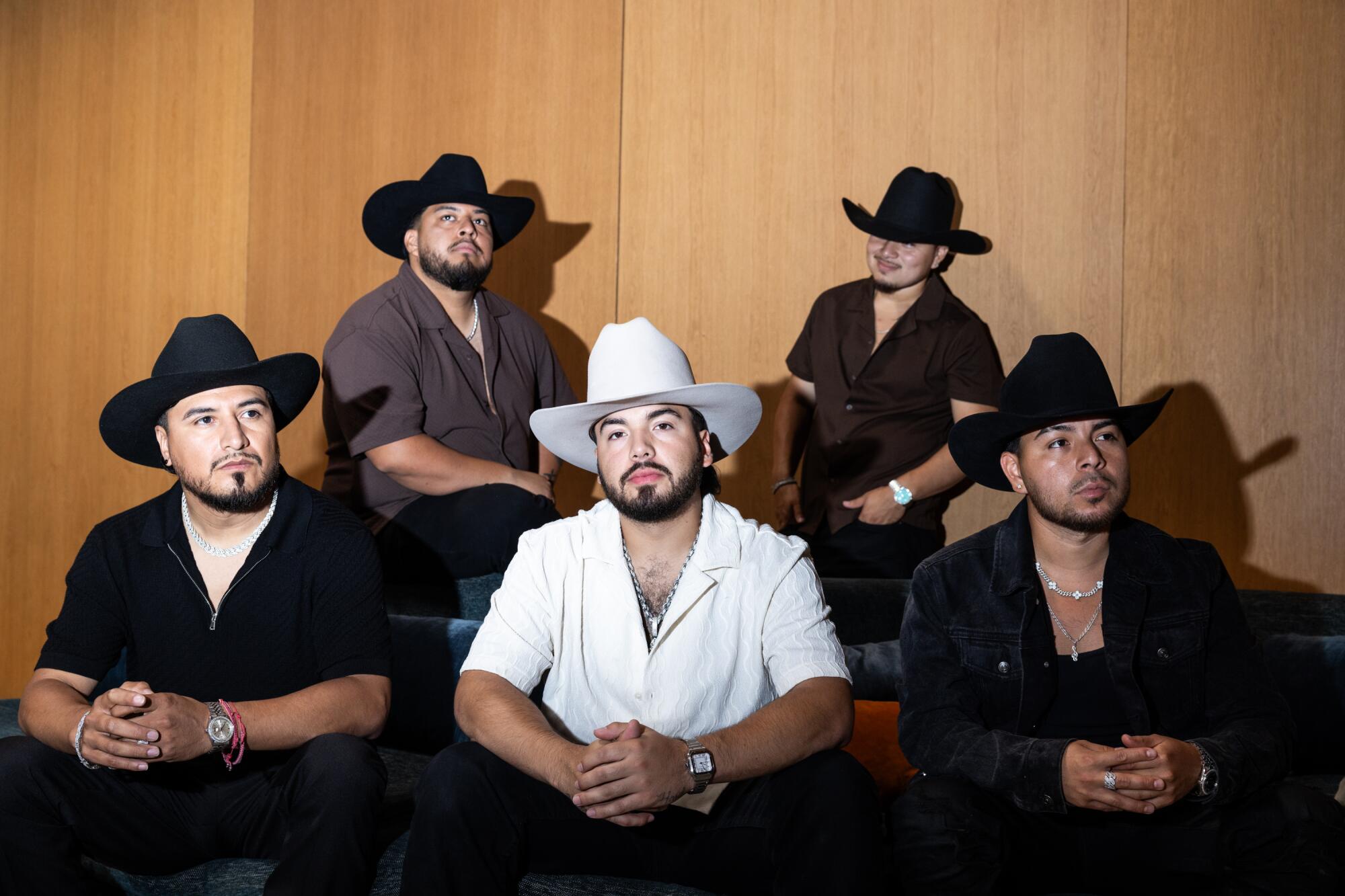
When you walk into a room with Los Primos del Este, the happy-go-lucky guys immediately make you feel like part of the family. What they first cultivate with silly banter and lighthearted ad-libs eases into a more vulnerable, introspective atmosphere, comparable to a cathartic therapy session.
When I met the norteño-sax band in at Interscope Records — the major label that signed them in early 2023 — it was just a couple of hours before the official release of Los Primos’ new album, “Dulce Amargo,” on Thursday.
For a young band of players in their early 20s, they play it cool; “Dulce Amargo” is their eighth LP to date. The project feels thoroughly chiseled to their refined sonic tastes (influenced by Julión Álvarez, Legado 7 and Remmy Valenzuela) inflected with raw, sentimental lyricism and a wailing saxophone that commands each track with the spirit of an electric guitar.
“Play it back to back and actually start understanding the sound more and realize there’s new sounds being created,” said lead vocalist Geovanni Flores. “Because a lot of people get stuck in their old ways.”
Made up of five members — Flores, bassist and supporting vocalist Ariel Jesus Lopez, accordionist Juan Luis Hernandez, drummer Alejandro Tellez and saxophonist David Tellez — the group has built a steady momentum in the música mexicana genre. They’ve championed the resurgence of norteño-sax, a subgenre that fuses the accordion sounds of norteño music with an invigorating alto saxophone, made popular by legendary groups like Conjunto Primavera.
Since forming in 2017, the North Carolina-based band has gained over 2 million listeners on Spotify through catchy norteño-sax songs like “No Es Mentira (Version Norteña),” “Poema” and “Mami” — drawn together by a polka-like beat that has made them a staple of Mexican dance venues.
In 2024 alone, the subgenre grew by 39% in both the U.S. and Mexico, per Spotify.
Los Primos del Este formed in 2017 out of North Carolina.
(Arwen Clemans / Los Angeles Times)
The band took a few years to find its groove. Its 2020 debut album, “PDE,” experimented more with the prickly, sad sierreño sound popularized by acts like Eslabon Armado and DannyLux — as well as trap-infused corridos tumbados with a thumping tololoche. Still, this was music one could bop their head to, even if dance parties were limited during the global pandemic. With norteño-sax, the group could incorporate contemporary dating themes into songs that bring people physically closer to one another on the dance floor.
“There’s been a sense of maturity that’s happened within the group. In the past, we would just make music to make music and release it,” said Flores. “ We thought about every single detail now, even down to the album cover.”
Before getting into the thick of their recent music catalog, Los Primos del Este quickly unfurled details of the album cover, which shows the group sprawled across the flatbed of a white truck. The image was inspired by Alejandro Cartagena, a Dominican Republic-born Mexican creative who photographed carpooling laborers on the flatbeds along a highway in Monterrey, Mexico, in 2012. The project was a visual representation of how everyday people — often marginalized individuals — navigate transit in a sprawling suburban area.
Such an open stance on community issues appears to be a norteño-sax speciality. In 2000, their forefathers Conjunto Primavera previously told The Times that they make music for working-class audiences: “Wealthy people don’t like what we do.”
“Personally, I found myself in the bed of a truck at one point, low-income, trying to make something out of nothing,” said Lopez. “That’s the world I grew up in, and that’s the world I wanna show everybody. It’s not all sweet, you know?”
The band also nods to injustices faced by immigrant communities — including the recent fatal shootings of 52-year-old Lorenzo Salgado Araujo and 26-year-old Johan Sebastian Duran Guerrero by Immigration and Customs Enforcement agents in Texas and Maine, respectively.
“We’re willing to take the heat,” said Lopez, referring to the band’s pro-immigrant stance. “The community looks at us as a negative presence, but in reality, we’re hard-working, dedicated family people.”
It is both that honesty and vulnerability that are etched into the 14-track LP “Dulce Amargo,” which translates to “bittersweet” in English. The band shared that each member contributed details of his own personal experience to the brainstorming sessions — a process they likened to therapy.
“We were comfortable enough with each other to let [our] stories be heard,” said Lopez. “In the Latino community, there is kinda like that stereotype [that] you have to be strong. I think this message goes out to everybody — if you’re feeling something, specifically the men, it’s OK to just let it out.”
(Arwen Clemans/Los Angeles Times)
The hazy love melody “Tremenda,” for example, underscores an intense yearning for connection. Written after Lopez was starstruck by a woman, its first lyrics begin in wondrous marvel: “Tal vez fue tu mirada,” or, “Perhaps it was your gaze.”
“What’s the first thing you do when you look at somebody? I look at the eyes,” said Lopez. “They say the eyes are the doors to the soul.”
Alejandro Tellez’s contribution came with the punchy “Linda Sonrisa,” that pleads for someone to realize the realities of the mistreatment they’re facing with another lover.
“How many times are you gonna let him do you wrong until you realize that you have the right guy in front of you?” said Alejandro Tellez in a sing-song twang. “That’s a story that I went through in high school.”
For Flores, the EDM-fused, echoing melody “Mejor Sin Ti,” struck a personal chord; could a relationship be the only thing standing in your way to personal success? “Some people do hold you back, some people tie you down — that’s what I felt,” said Flores.
Hernandez gets a bit teary-eyed when talking about his favorite song, “Sentimientos,” a whirling polka-driven ballad about an avoidant situationship, he said. “To me, it’s like we both kinda love each other already, but we’re kind of afraid to say it,” he explained. “A lot of people are afraid of falling in love again, so that song hits close to home.”
The concept behind “Mereces Mejor,” a trance-inducing ode with floating melodies that implores a loved one to recognize their self-worth, was inspired by David Tellez’s own experience with unrequited love: “She’s trying to go to the bad guy, and I’m over here giving everything I got.”
As the five artists prepare to take their new album on the road — including an upcoming performance at the Lone Star State’s Truck Show Texas Fest on July 25 — they want to make clear that norteño-sax is not a stagnant subgenre. Like most of música mexicana, it, too, is evolving, both in sound and lyricism, encapsulating today’s complex dating culture. Their emotional vulnerability is welcome in a field flooded with artists that may otherwise shrink away from such honesty — perhaps due to the stigma of mental health issues in the Latino community, especially among men.
“We understand that changing the sound may not be for everybody, but we’re making music for the next generation,” said Lopez. “Who knows? Maybe their parents might end up liking this too.”
Sitting in the control room of their home studio known as the Centre of Mental Arts (COMA for short), Long Beach husband-and-wife duo Scott Montoya and Julia Kugel smile as they discuss new music they recorded for their band Soft Palms. Their new album, titled “In Echo,” has been in the works for over five years. The 10-song album, out Friday on Everloving Records, was inspired by their frustration about how they feel the world has devolved since 2020.
“The first record I was like, ‘I want to give the world a hug,’” Kugel says. “And then this one I was like, f— this world.”
For Kugel and Montoya, the album serves as the latest chapter of their creative and personal journey. The pair met in 2012 at a music festival in Dallas (“The most romantic city,” Kugel quips), while playing in the Atlanta-based band the Coathangers and Orange County’s the Growlers, respectively. They bonded over a shared disgust at gladiator shoes, and soon thereafter, were in a relationship.
By 2017, they were married and settled in Long Beach. Despite Kugel’s role in the Coathangers at the time (Montoya left the Growlers in 2016), the couple wanted to form a band. Previously, they recorded a pair of songs that constituted Kugel’s second solo seven-inch single. That experience made them comfortable knowing they could balance their professional and personal lives.
“He’s super easy to work with,” Kugel says of Montoya, who sits beside her, trying to hide a smile. She looks at him and continues, “he’s very talented and very patient.”
“When we were in our other bands, we used to meet up on tour,” Montoya, who also produces and engineers for other artists, says. ”You see the absolute worst of people on tour … so this is nothing.”
To kickstart Soft Palms, Kugel drew from a batch of songs she had previously written that had no home. Being able to record in their own studio allowed the pair to craft songs without feeling any pressure to meet a deadline.
By late 2019, the pair put the finishing touches on their self-titled debut. When the record was released in July 2020, the pandemic was still in full force. The pair were disappointed and upset by the state of the world, and after a few years of stewing, Kugel and Montoya got started on a second album.
Don’t be fooled by its breezy ’60s-analog vintage pop sound. Soft Palms are angry, and that informs the spirit of “In Echo.”
The pair points to “Radio” as the album’s bellwether. First released in 2025, the song rails against how, over the past handful of years, people have fought for the sake of fighting, with no end in sight.
More strikingly, on the biting “Nervous as Hell,” Montoya points to Fox News as “infecting everyone’s parents.”
“I did some digging because I couldn’t believe something that hateful existed,” he says of the network, specifically its landmark $787-million settlement with Dominion Voting Systems. “It turned it from this horrible thing into this s— business that has taken advantage of the elderly and destroyed families.”
That anger continues on the angsty rocker “The Wedding Song.” Kugel points to attending a wedding where a family member married a “total raging maniac,” and how they dealt with the buildup of delicately balancing being cordial yet firm.
“He [the family member] goes, ‘I just want you to show up and shut up!” she says. “I was like, ‘Well, firstly, f— you. Then secondly, this is a song — you just handed me gold.”
Since settling in Long Beach, for the last 10 years Kugel and Montoya took it upon themselves to help foster a positive, artistic community. It’s that mindset that pushed them to found and operate their 501(c)(3) nonprofit called Studios for Schools with the goal of providing recording equipment to underprivileged schools.
Their DIY work ethic in entertainment was also the driving force behind Happy Sundays, a free Long Beach-based music festival. Running for 10 years, the fest created a block party in the city’s Zaferia neighborhood that eventually expanded into a full weekend of shows across stages set up at local businesses to host a diverse lineup of veteran and up-and-coming area bands. Though the event was paused this year so they can focus on the new album and book, the couple plan to bring it back in 2027.
“It was like a statement in that way of like f— these giant prices, VIP experiences and all of that stuff,” Kugel says. “It’s the anti-music festival and a celebration of community.”
Keeping with that spirit, and drawing from the experiences of their two-decade careers, last month the pair released a book titled “How to Be Self-Reliant in the Music Business.” The genesis of this self-published guidebook occurred when the pair realized they were not receiving a portion of a royalty stream they were owed. They knew that if they were in the dark on the issues they thought they knew, others likely were as well.
“We decided to turn it into a book because we realized there’s so much stuff that few artists know about on their own,” Montoya says. “I want people to understand the scope of what they’re actually getting into, and the reality of their situations.”
“It’s a very thorough overview,” Kugel adds.
The book includes information beyond what one would find in Donald S. Passman’s longstanding industry bible “All You Need to Know About the Music Business.” With assistance from a lawyer friend and a CPA family member, the pair addresses topics ranging from backstage etiquette to managing social media to dealing with record labels and publishing companies. They hope that it will provide a blueprint for bands old and new to better navigate music’s notoriously choppy waters. Their accessible, snack-size chapters move fluidly as they explain the realities artists face in 2026.
Battling through the disappointment of the first part of the decade allowed Kugel and Montoya to find their creative way. Armed with this infusion of activity across various disciplines, the couple is inspired to continue to shake their way out of the past. Though focused on their impending U.S. and European tour, the duo promise that the next Soft Palms album won’t take as long and are mulling over their next music-industry book project. For now.
“It’s a lot to keep up with all of these projects,” Montoya says. “We work all day, every day. And it’s been cool to see signs that it’s paying off.”
The Recording Academy announced significant changes for the 2027 Grammys, introducing several new genre categories and updating eligibility rules for two of its top awards.
The rule changes will most prominently affect the new artist and album categories.
A change to allow for four submissions for new artist instead of three “establishes more specific language surrounding prominence,” the academy said in a statement. The change updates the famously confusing criteria for new artist, in which acts familiar to some fans for years can suddenly break through and earn new consideration for the category.
It’s likely to benefit an artist such as Ella Langley, who had previously submitted several times for new artist but finally had a commercial and critical breakthrough with her single “Choosin’ Texas” and LP “Dandelion.”
“We’ve heard from the music community that the way artists are being developed is changing, and the time it’s taking to find success or recognition can take longer than it once did. Artists are often releasing more music before they actually break through the consciousness of consumers or of our voters, and that evolution directly impacts this Category,” Recording Academy Chief Executive Harvey Mason Jr. said in a statement announcing the changes. The changes “reflect the reality that artist development looks different than it did even a few years ago.”
In the album category, new rules state that “the threshold of new recordings required on an eligible album is lowered from 75% to 66% to reduce the exclusion of entries that are widely recognized throughout the music industry as new albums.” Given the fast streaming-centric release cycle of new singles, remixes and live cuts, the rule changes reflect that a new album may have a significant amount material released earlier.
Additionally, the academy announced five new genre categories, most significantly a dedicated award for Asian pop — a late but welcome acknowledgment of the commercial reach, artistic accomplishments and deep fan culture of K-pop and other scenes in Japan, the Philippines and China.
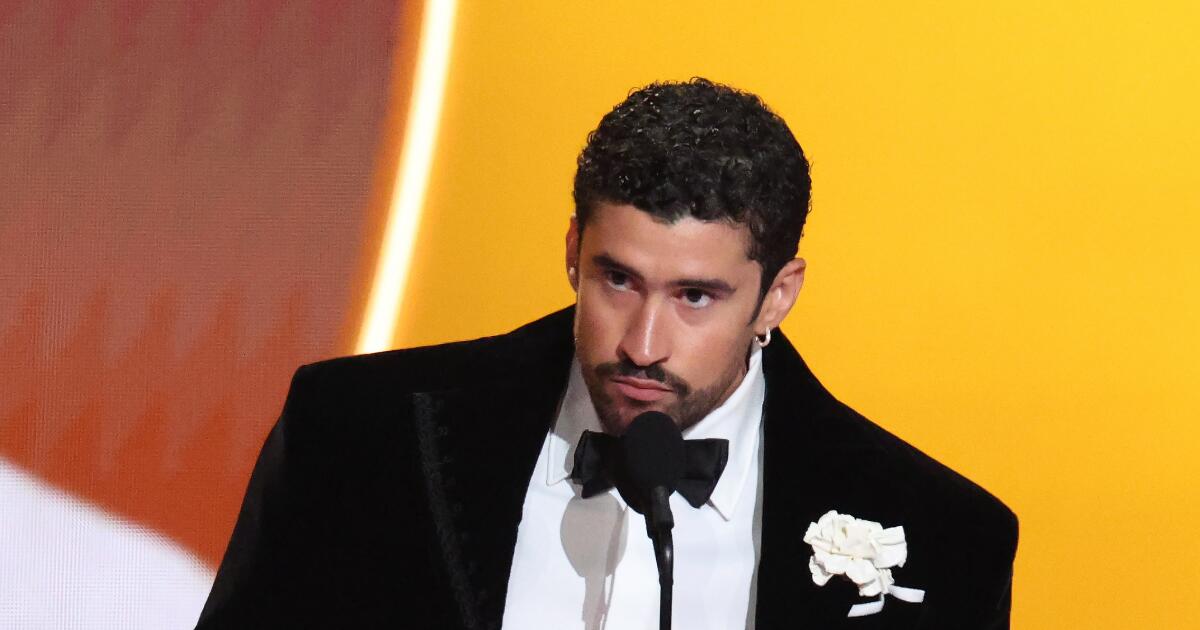
Other new categories include Latin song, a songwriting-specific award for Latin music in an era when Bad Bunny and Karol G make some of pop’s most salient political and creative statements; distinct awards for R&B collaboration or duo/group performance and R&B solo performance; a new traditional pop vocal performance award; and the replacement of folk album with categories for contemporary folk album and traditional folk album.
Additionally, a new “ballot plus” option will allow for voting members working across genres to vote in more categories, and songwriting contributors to winning albums in most genre categories will receive Grammy statuettes and achievement certificates, as producers and engineers currently receive.
“These changes and expansions give even more people a place for their music to be respected, heard and evaluated. With more Categories, we can represent more music creators, artists, writers, and producers, and it gives us a great opportunity to be more inclusive,” Mason said in his statement. “Now more than ever, we have to keep pace because things are changing and evolving so quickly. These changes are a reflection of that fast-paced evolution.”
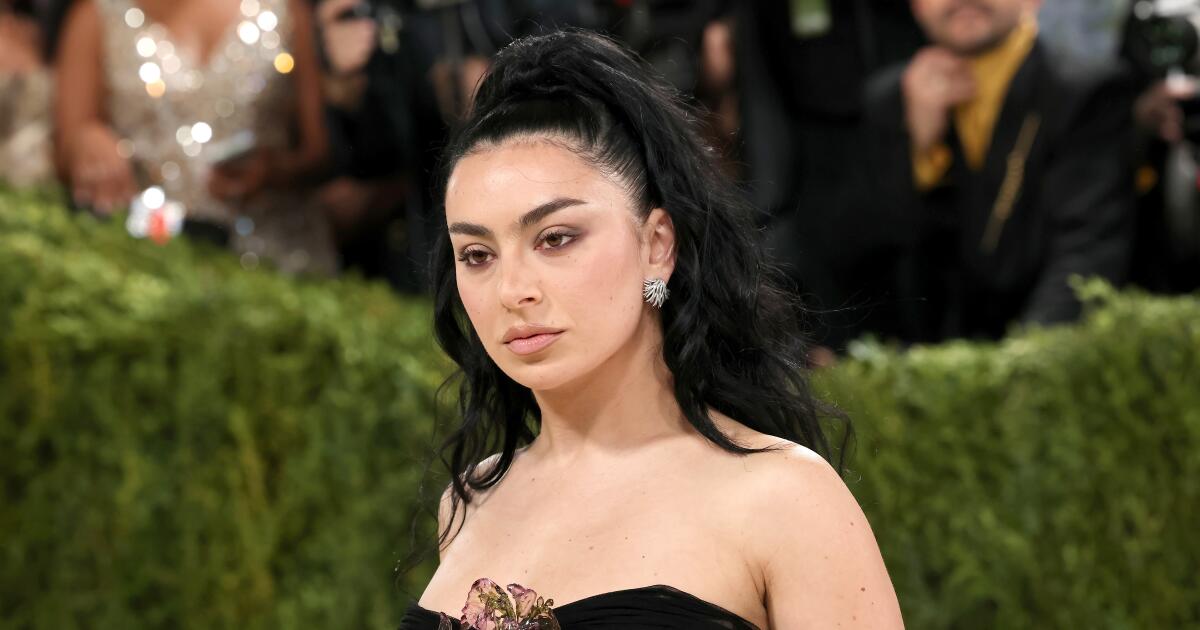
Charli XCX announced Monday that her new album, “Music, Fashion, Film,” drops July 24, and it already looks iconic.
That’s because the cover art, which Charli shared on Instagram, features three icons within their fields. The Velvet Underground’s John Cale represents music, Marc Jacobs stands for fashion and beloved director Martin Scorsese symbolizes film.
“My new album Music, Fashion, Film is out july 24th,” Charli wrote on Instagram. “11 songs, 30 minutes, 5 seconds. available to pre order now, love you xx.”
She released the first two singles, “Rock Music” and “SS26,” in May. The latter, a shorthand for the fashion industry’s current “Spring, Summer ‘26” season, has an accompanying video that features the artist strutting down an X-shaped runway, singing, “We’re walking on a runway that goes straight to hell / Nothing’s gonna save us, not music, fashion or film.”
“Rock Music,” the album’s first single, was met with mixed reactions from critics and fans. The song telegraphs Charli’s genre switch from electronic pop to the titular rock music, announcing, “I think the dance floor is dead” over heavily distorted guitar.
“If I’d made another album that felt more dance-leaning, it would have felt really hard, really sad,” Charli told British Vogue in April. “What’s interesting for me is to bend the possibilities of what my perspective on [rock music] could be.” She later clarified on Instagram, “I never said i was making a rock album.”
“Music, Fashion, Film” is not the artist’s first album in 2026. She released “Wuthering Heights,” the soundtrack to Emerald Fennel’s movie of the same name, in February. Cale is featured on “House,” the soundtrack album’s lead single.
Charli has added acting and producing to her repertoire in recent years. She produced and played a somewhat fictionalized version of herself in Aidan Zamiri’s mockumentary “The Moment,” based on the “Brat” album cycle, which Times film critic Amy Nicholson called “ ‘Spinal Tap’ for the era of stan culture.”
She also co-starred in Daniel Goldhaber’s “Faces of Death” remake, released in April, and is set to appear in Gregg Araki’s upcoming erotic comedy “I Want Your Sex” and Cathy Yan’s art-world thriller “The Gallerist” by year’s end.
“I’ve always been really inspired by cinema when making my music, more so than listening to music, to be honest,” Charli told The Times at the Sundance Film Festival in January. “It’s an honor to be able to be acting, working on projects and writing and producing films. It’s kind of my dream.”
PALM SPRINGS — Barry Manilow steers a golf cart to the end of a long driveway, pulls to a stop and flings a plush toy goose across a manicured lawn to the delight of his two Labrador retrievers.
“OK, where we doing this?” the 82-year-old singer asks about our interview. Dressed in a khaki shirt and slim-fitting rust-colored trousers, he’s got the look of a man prepared to undertake some très chic brush clearance; in reality, he’s motored down here merely to answer questions about his fabulous life and career.
Manilow and his husband and longtime manager, Garry Kief, moved to this sprawling desert estate from Los Angeles in the late 1990s. “We kept coming out, and it’s so beautiful that eventually we said, ‘Screw it — let’s just stay,’” he says. By then, Manilow had long since established himself as one of music’s premier showmen, with a Grammy Award, 11 Top 10 hits and a storied 15-night run at L.A.’s Greek Theatre under his belt.
So you might’ve taken Palm Springs as a sign that he was ready to slow down. Instead, he launched a residency at the Las Vegas Hilton in 2005 that eventually surpassed the length of Elvis Presley’s show there; in 2006, he released “The Greatest Songs of the Fifties,” which went platinum and spawned a series of successful follow-up albums.
Last month, Sabrina Carpenter interpolated a bit of Manilow’s iconic “Copacabana (At the Copa)” into her headlining set at Coachella just days before he was honored by the American Advertising Federation for his work writing commercial jingles. The range of those achievements said something about his blend of music-nerd craft and pop-star razzle-dazzle.
“Barry loves music as much as anyone I’ve ever known,” says Bette Midler, who hired Manilow as her pianist for the name-making gig she played at New York’s Continental Baths in the early 1970s. Performing, Midler adds, “isn’t a job with him — it’s a vocation, a calling.”
Yet now that calling faces a threat. In December, Manilow announced that he’d been diagnosed with lung cancer and that surgery would require him to postpone a number of concert dates; five months later, he has yet to return to the stage — the longest break, COVID-19 aside, he can remember taking in decades.
Fortunately for Manilow, he has a new album, “What a Time,” with which to occupy himself. Due June 5, it consists mostly of original material — his first such LP in nearly 15 years — though it opens with a sumptuous rendition of Peter Allen and Dean Pitchford’s “Once Before I Go.” Manilow notes proudly that the song, which was produced by Kenneth “Babyface” Edmonds, recently made Billboard’s adult contemporary chart, extending his run on that tally beyond the half-century mark.
Barry Manilow performs in Beverly Hills in 2025.
(Gina Ferazzi / Los Angeles Times)
Still, performing is clearly on his mind as he leads me into a tile-roofed gym equipped with weights, a treadmill and a massage table. Manilow has been working out here every morning, he says, to regain the strength needed for his show; he’s got Vegas dates on the books for July but admits he’s unsure whether they’ll happen or not. We settle into two leather club chairs, his dogs Jake and Abby at his feet.
“Please be brilliant,” he tells me. “Don’t be boring.”
What are you doing on a day you’re not working? Working.
I see. Since the surgery, I can’t go on the road. Ninety minutes of screaming in tune, which is what I do for a living — I’m not up for that yet. I will be, but it’s taking a long time to get my voice back. They warned me that I’d have to learn to breathe again. So these days, I get up, I go to my piano and I try to be creative. Before I know it, the afternoon’s over.
Was the diagnosis a shock? Imagine your doctor saying, “You’ve got lung cancer.”
Fair enough. I’ll tell you the story. I have terrible hips — bursitis and everything — and they hurt so bad that I thought maybe I broke a bone or something. So I asked my wonderful family doctor, I said, “Can you just do one of those MRIs and see?” Now, before that, I’d had two bad bouts of bronchitis, one after the next. Have you ever had bronchitis?
I have. It stinks. So I asked him if he could check my hip, and he told the guys that were doing it, “Why don’t you check his lungs?” And I think he might have saved my life because they found a big black thing in my chest. One doctor said it was probably remnants of the bronchitis, the other doctor said it could be cancer. I voted for the bronchitis. But they went back in to see and it was a cancerous tumor.
How’d you react? When they told me, I was on the road, and I just went back to sound check. What else could I do? I never thought cancer would get me — it wasn’t in the cards. They wanted to get rid of it as soon as possible, so we made a deal: I’d finish the couple of weeks of shows that I had, then I’d go to the hospital and they’d remove it. It was supposed to be a no-brainer — it hadn’t spread yet, thank goodness. But then my AFib kicked in and acid reflux kicked in and pneumonia kicked in. They rushed me to the ICU for seven days.
Barry Manilow with Dionne Warwick in Los Angeles in 1985.
(Paul Harris / Getty Images)
Sorry to be morbid, but were you close to death? They said at one point — I didn’t hear them say this but I heard that they did say it — “We don’t want to lose him.” It’s all a total blur now. When they finally brought me back to my lovely room at the Eisenhower [medical center], I weighed 128 pounds.
How long you figure it had been since you weighed 128 pounds? I don’t remember ever being 128.
You said you never thought cancer would get you. Why? I’m too busy. Pretty stupid. What I realized is that I’ve always been the leader — leader of the band, leader of an audience — but I wasn’t the leader of this one. That was a big lesson for me. I had to rely on everybody else. Nurses, doctors, friends — you should see some of the notes people have sent.
What’s it been like to be offstage for so long? Agony. Make an album, go on the road, come back, make an album, go on the road — that’s what my life’s been for years. And I like it. Now I just have to get better and do what the doctors are telling me. It’s the only way out.
Well, there’s one other way. I’m not ready to croak. But I wasn’t ready to stop performing either, and it just went like that [snaps fingers]. The day before surgery, people are screaming, standing ovation, band sounds great. Next day I’m packing to go to the hospital.
Are you working with a vocal coach? Yep. But I get winded just walking down the hallway. I turn on my old records and sing along, and three songs in I’m like [pants].
Could you do a show where you skip the uptempos? No “It’s a Miracle” or “Copacabana”? I’m trying ballads too — my ballads end big.
Are you allowed to smoke or drink? I stopped smoking many, many years ago. I vape but hardly — I just like holding it. I was a great smoker. Brooklyn in the ’50s? Please. I started smoking when I was 9. I got up to three packs of Pall Mall non-filters a day, and it never bothered me — never had any problem breathing. I was just a skinny piano player who smoked. That’s who I am. That’s who I was.
Before he was a skinny piano player, he was a skinny accordion player.
Manilow grew up poor in Brooklyn, the only son of a Jewish mother and an Irish father who split up right after he was born. As a kid he entertained his mom and his maternal grandparents by squeezing out the Jewish folk song “Hava Nagila”; later, his stepfather brought home records by Gerry Mulligan and Judy Garland that opened his mind to jazz and pop.
He says today that he never saw himself as a performer — he wanted to write, arrange, produce. His first success came with jingles for brands like State Farm — “Like a Good Neighbor” is his handiwork — and Band-Aid.
“My ideas were good for pop music because of the commercials,” he says. “The rules are pretty much the same — you need to grab the listener as soon as possible. For a commercial, you’ve got about five seconds. For a pop song, you’ve got 10.”
In 1971, Manilow got the job with Midler and ended up working on her million-selling debut, “The Divine Miss M,” which led to a deal of Manilow’s own with Clive Davis’ Arista Records. Despite Manilow’s insistence that he was a behind-the-scenes guy, he scored a No. 1 hit out of the box with the plaintive “Mandy,” then quickly followed that with another chart-topper, “I Write the Songs” — a pop-philosophical epic, as nobody’s tired of pointing out ever since, that Manilow didn’t actually write.
Barry Manilow at home in Palm Springs.
(Christina House / Los Angeles Times)
Bruce Johnston, who wrote “I Write the Songs” — and won a Grammy for song of the year thanks to Manilow’s recording — says the key to Manilow’s performance is that “he’s never too cool for school.” A Beach Boy for six decades until he retired from the band this year, Johnston adds that Manilow’s rendition of the song, which was also cut by Captain & Tennille and David Cassidy, “is the only one I care about, honestly. He really grabbed it — he’s just as real as he could be.”
After several more Manilow hits — “Tryin’ to Get the Feeling Again,” “Weekend in New England,” “Looks Like We Made It” — Davis asked the singer to produce a would-be comeback album by his latest Arista signing, Dionne Warwick. Warwick’s initial reaction to that idea: “Really?” she says with a laugh. “Did Barry Manilow really know anything about Dionne Warwick? As it turned out, he knew quite a bit,” adds Warwick, who recalls turning up for their first session to discover that Manilow had laid every one of her albums on his piano. “He was letting me know: I know you,” she says.
“Dionne,” the album they made together, went on to win a pair of Grammys and spun off silky hit singles including “Deja Vu” and “I’ll Never Love This Way Again” that reinvigorated Warwick’s career and helped solidify Manilow’s standing as a kind of soft-rock auteur.
Which isn’t to say that rock’s intelligentsia ever viewed him kindly. Though his best music finds an emotional truth in over-the-top theatrics, critics routinely dismissed Manilow as a lightweight or a schlockmeister; even now, he seems an unlikely candidate for the Rock & Roll Hall of Fame, where he’s been eligible for induction for decades.
Manilow, who entered the Songwriters Hall of Fame in 2002, insists the slights don’t bother him. “I’ve never been one of the guys,” he says. We’ve been talking for a while, and because of the bursitis, perhaps, he’s hoisted one of his legs over the arm of his chair. “I don’t think about awards and parties and stuff like that. I’m very lucky — I live in the most gorgeous place I’ve ever seen and I have the most wonderful partner that you can imagine. I’m grateful he’s chosen to share his life with me. We’ve been together for over 46 years, and we still laugh and we still love each other. That’s the greatest award I’ll ever get.”
Manilow and Kief married in 2014; the singer came out as gay three years later. (Manilow was briefly married to his high school girlfriend, Susan Deixler, in the mid-1960s.) Has he found that the world looks at him differently since he came out?
“It was a non-event. Nobody gave a s—,” he says. “They all knew. I never really hid it, but in the ’70s and ’80s, that would have killed the career, and I didn’t want to do that. So I just never talked about it.” He smiles.
“Garry and I are just two guys that live in a house on a hill with two dogs that we love.”
Like many of Manilow’s hits, “Once Before I Go” was Davis’ idea.
Allen, the late Australian entertainer portrayed by Hugh Jackman in Broadway’s Tony-winning “The Boy From Oz,” had played the tune for Manilow in the early ’80s. “And I loved it,” Manilow says now. “But I was too young to sing a song like that — that song needs age to be able to pull it off honestly.”
Davis first suggested that Manilow perform it in his set at the post-pandemic We Love NYC concert that Davis put on in Central Park in 2021. After the show, which was called off due to weather as Manilow sang “Can’t Smile Without You,” Davis repeatedly advised the singer to record it.
Clive Davis, left, with Barry Manilow at an Arista Records party in Los Angeles in 1989.
(Lester Cohen / Getty Images)
“I don’t know, he had a bug up his ass,” Manilow says. “He loved it, and he loved it for me. And I’m not even on his record label anymore — he’s just a friend at this point. But he was right once again.”
Given the cancer diagnosis, did Manilow worry that fans might interpret the song — a teary goodbye from a well-wishing lover — as a more permanent farewell?
“Not one time has anybody said, ‘Is he talking about dying?’”
You wouldn’t necessarily call “What a Time” a concept album, though many of the songs ponder the ways memory and history can shape a romance. Manilow knows he’s regarded as a singles act but says that putting together LPs is what he’s always enjoyed best. His favorite is 1984’s jazzy “2:00 AM Paradise Cafe,” on which he collaborated with Mulligan, Sarah Vaughan and Mel Tormé.
“That was one where the critics who’d been killing me, they didn’t know I was capable of doing something like that,” he says. “But frankly, I’d been surprised that I was capable of doing the pop stuff.”
You made records of hits from the ’50s, ’60s, ’70s and ’80s. Why’d you stop before “The Greatest Songs of the Nineties”? Were there songs in the ’90s?
Barry. Didn’t it start to go downhill?
I can think of a handful of classics by Whitney Houston alone. You can’t touch those. I’m a good arranger, but you can’t top those records. Maybe four of those albums was enough. I was ready to go back to writing.
You’ve said the problem with modern pop is that there’s no melody anymore. That’s what I miss. Clive’s been pushing me to do “The Great New American Songbook.”
Like he did with Johnny Mathis a few years ago. So I’ve been studying the Top 20. The one I like is Lady Gaga and Bruno Mars.
“Die With a Smile.” Love that. But the way they’re writing songs these days is not the way I know how to write songs. They don’t do a verse, a chorus, a bridge, a chorus, a big ending. To me, when I listen, the songs feel like run-on sentences.
Barry Manilow with his dog Abby.
(Christina House / Los Angeles Times)
I was trying to think of artists older than you who are still performing. Name me one.
You’re invoking the widely held assumption that he lip syncs. I loved Frankie Valli and the Four Seasons. Who didn’t?
Would you ever lip sync? I’m terrible at it. I try now and again.
Do you find it morally objectionable? Depends on the artist. I like being in the moment, not knowing what’s gonna happen in the next bar or at the ending. It’s exciting to me to see if I can make those high notes.
Would not being able to make them mean it’s time to hang it up? Well, what’s happening right now, I’m on the verge. But I’m getting stronger, so maybe I don’t have to hang it up yet. I look fantastic, but I’m a hundred years old, right? I don’t know how that happened, by the way — I don’t get Botox or anything.
You’ve had no work done? No! I must say: There was one time when we lived in L.A. that I did do a facelift. But after that it’s just been a little here, a little there.
Wait, I asked you — “Work” is like a facelift, and I only had one of those. The rest of it — I see something falling down, sure, I’ll do that. I’m as vain as anybody else. One of my old friends, his mother said, “I always knew he was talented, but when did he get so handsome?”