negotiations

Republicans promised healthcare negotiations after the shutdown, but Democrats are wary

Now that the government shutdown is over, House and Senate Republicans say they will negotiate with Democrats on whether to extend COVID-era tax credits that help tens of millions of Americans afford their healthcare premiums. But finding bipartisan agreement could be difficult, if not impossible, before the subsidies expire at the end of the year.

The shutdown ended this week after a small group of Democrats made a deal with Republicans senators who promised a vote by mid-December on extending the Affordable Care Act subsidies. But there is no guaranteed outcome, and many Republicans have made clear they want the credits to expire.

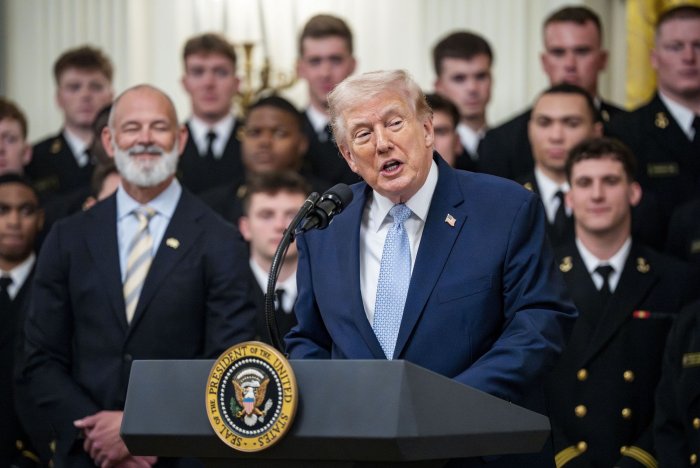
House Speaker Mike Johnson (R-La.) called the subsidies a “boondoggle” immediately after the House voted Wednesday to end the shutdown, and President Trump said the Obama-era healthcare overhaul was “disaster” as he signed the reopening bill into law.

It is far from the outcome that Democrats had hoped for as they kept the government closed for 43 days, demanding that Republicans negotiate with them on an extension before premiums sharply increase. But they say they will try again as the expiration date approaches.

“It remains to be seen if they are serious,” said House Democratic leader Hakeem Jeffries of New York. But he said Democrats “are just getting started.”

Republicans have been meeting privately to discuss the issue. Some want to extend the subsidies, with changes, to avoid the widespread increases in premiums. Others, like Johnson and Trump, want to start a new conversation about overhauling “Obamacare” entirely — a redo after a similar effort in 2017 failed.

Democrats push for extension

Healthcare has long been one of the most difficult issues on Capitol Hill, marked by deep ideological and political divides. Partisan disagreement over the 2010 law has persisted for more than a decade, and relationships are already strained from weeks of partisan tensions over the shutdown.

Connecticut Rep. Rosa DeLauro, the top Democrat on the House Appropriations Committee, said that while Republicans have promised negotiations and a Senate vote, Democrats are wary. She noted that Johnson has not committed to anything in the House.

“Do I trust any of them? Hell no,” DeLauro said.

If the two sides cannot agree, as many as 24 million people who get their healthcare from the exchanges created by the law could see their premiums go up Jan. 1. New Hampshire Sen. Jeanne Shaheen, one of the Democrats who struck a deal with Senate Majority Leader John Thune (R-S.D.) to reopen the government, said she thinks an agreement on the tax credits is possible.

During the talks that led to the shutdown’s end, Shaheen said she and other moderate Democrats sat across from Thune and “looked him eye to eye” as he committed to a serious effort.

“We’re going to have a chance to vote on a bill that we will write by mid-December, in a way that gives us a chance to build — hopefully build — bipartisan support to get that through,” Shaheen said.

While Democrats would like to see a permanent extension of the tax credits, most realize that is unlikely. Just before the shutdown ended, Senate Democratic leader Chuck Schumer of New York proposed a one-year extension and a bipartisan committee to address Republican demands for changes to the Affordable Care Act. But Thune said that was a “nonstarter” as the government remained shut down.

In the House, Democrats have proposed a three-year extension.

What Republicans want

While Republicans have long sought to scrap Obamacare, they have had challenges over the years in figuring out what would replace it. That problem plagued the 2017 effort, when then-Sen. John McCain (R-Ariz.) cast the deciding vote to kill a bill on the Senate floor that was short on detail.

Republican Sen. Bill Cassidy of Louisiana, chairman of the Senate Health Education Labor and Pensions Committee, and Sen. Rick Scott (R-Fla.) have proposed overhauling the law to create accounts that would direct the money to individuals instead of insurance companies. Those are ideas that Trump echoed as he signed the funding bill Wednesday evening.

“I want the money to go directly to you, the people,” Trump said.

It is unclear exactly how that would work, and scrapping the law in its current form would take months, if not years, to negotiate, even if Republicans could find the votes to do it.

Slow start to negotiations

Some moderate Republicans in the House have said they want to work with Democrats to extend the subsidies before the deadline, which is only weeks away. In a letter to Thune and Schumer on Wednesday, Pennsylvania Rep. Brian Fitzpatrick, the Republican co-chair of the Bipartisan Problem Solvers Caucus, encouraged negotiations.

“Our sense of urgency cannot be greater,” Fitzpatrick wrote. “Our willingness to cooperate has no limits.”

So far, though, Senate Republicans have been meeting on their own to figure out their own differences.

“Right now, it’s just getting consensus among ourselves,” Sen. Thom Tillis (R-N.C.) said Monday after GOP members of the Senate Finance Committee met to discuss possible ways forward.

Tillis is supportive of extending the tax credits, but said lawmakers also need to find a way to reduce costs. If the two sides cannot eventually agree, Tillis said, Republicans may have to try to figure out a way to do it on their own, potentially using budget maneuvers that enabled them to pass Trump’s “Big Beautiful Bill” this summer without any Democratic votes.

“We should have that in our back pocket too,” Tillis said.

Another shutdown?

Some House Democrats have raised the possibility that there could be another shutdown if they are unable to win concessions on healthcare. The bill signed by Trump will fully fund some parts of the government, but others run out of money again at the end of January if Congress does not act.

“I think it depends on the vulnerable House Republicans who are not going to be able to go back to their constituents without telling them that they’ve done something on healthcare,” said Rep. Pramila Jayapal (D-Wash.).

“We’ll just have to see” if there could be another shutdown, said Rep. Mark Takano (D-Riverside).

Rep. Jim McGovern (D-Mass.) said he is “not going to vote to endorse their cruelty” if Republicans do not extend the subsidies.

DeLauro said that Republicans have wanted to repeal the ACA since it was first enacted. “That’s where they’re trying to go,” she said.

“When it comes to Jan. 30 we’ll see what progress has been made,” she said.

Jalonick writes for the Associated Press.

Source link

Lebanon faces dilemma over ending war with Israel through negotiations

Smoke rises after an Israeli airstrike on Tayr Debba town in southern Lebanon on Thursday. The Israeli army announced it had launched a series of strikes on Hezbollah targets in southern Lebanon. Photo by Wael Hamzeh/EPA

BEIRUT, Lebanon, Nov. 7 (UPI) — Lebanon faces the dilemma of whether to go ahead with negotiations with Israel to end the ongoing cycle of violence and prevent a full-scale war despite Hezbollah‘s rejection of the talks — highlighting a deep political divide within the country.

The Hezbollah-Israel war, which broke out when the Iran-backed group opened a support front for Gaza on Oct. 8, 2023, never came to an end, even after a cease-fire agreement was reached on Nov. 27, 2024.

Israel has continued its unrestrained attacks on Hezbollah, causing further casualties and destruction. It has refused to withdraw from five strategic positions it still occupies in southern Lebanon, refrained from releasing Lebanese prisoners detained during the war, and prevented displaced residents from returning to their border villages turned to ruin.

The Lebanese Army’s successful advance in taking control of southern Lebanon and eliminating Hezbollah’s military presence along the border and south of the Litani River, as stipulated by the cease-fire agreement, does not seem sufficient for Israel, which wants Hezbollah to be completely disarmed.

In fact, Hezbollah, which suffered heavy losses during the war, has refrained from firing a single shot in retaliation to Israel’s continued air and drone strikes, which allegedly target the group’s remaining arms depots and military infrastructure beyond southern areas of the Litani River.

However, Hezbollah’s recent claims that it has fully recovered, restructured its military capabilities and rebuilt its command structure — coupled with its refusal to disarm or support Lebanese President Joseph Aoun in his new approach to negotiations with Israel — put the country at risk of another round of war.

While Aoun said that Lebanon has no choice but to engage in talks with Israel to end its occupation and halt its attacks, Hezbollah rejected any attempt to involve the country in new negotiations — outside the framework of the “mechanism” committee responsible for supervising the implementation of the ceasefire accord — arguing that they would only serve “the enemy and its interests.”

Hisham Jaber, a Lebanese military expert and former Army general, said it is the Lebanese state — not Hezbollah — that should negotiate with Israel, based on terms set by President Aoun: no direct or political negotiations, only military-security talks conducted via a third party, such as the U.S. or the United Nations, and no use of force to complete Hezbollah’s disarmament.

Jaber said that indirect talks with Israel had proven successful, recalling the 2022 U.S.-mediated maritime border deal that ended a years-long dispute between Lebanon and Israel over the ownership of natural gas fields.

“Why not do that again?” he told UPI. But to sit at the negotiation table, he added, the United States, which is pressuring Lebanon to accept the talks, should ensure that Israel withdraws from southern Lebanon and releases the prisoners, instead of “cornering us.”

What Lebanon wants is for Israel to abide by the truce accord through the “mechanism” committee, which is made up of Israel, Lebanon, the United States, France and the United Nations. However, the newly proposed negotiations, although their framework is still unclear, would also address land border disputes and other issues.

“There is a need for an agreement on the disputed points along the border, and this is not within the mandate of the mechanism,” said Riad Kahwaji, a Middle East security analyst, adding that the truce committee is charged with ensuring Hezbollah’s disarmament, the return of prisoners, and Israel’s withdrawal behind the [U.N.-drawn] Blue Line that existed before the last war in October 2023.

If the new negotiations with Israel proceed and result in a final land border agreement, it would lead to the cessation of the state of war between the two countries, and “the 1949 Armistice will prevail,” Kahwaji said..

“But, of course, Hezbollah does not want an end to the state of war between Lebanon and Israel, because that would require it to disarm, causing it to lose its value for Iran and its significance and standing within its own popular base,” he told UPI. “Its resistance will no longer be needed or relevant.”

However, Hezbollah’s attempts to rearm appear extremely difficult after the group lost its main supply route after the overthrow of its key ally, Syrian President Bashar Assad, as well as its long-standing access to Beirut’s port and airport, which it had used for years to smuggle weapons and funds.

It is now impossible for Hezbollah to smuggle large weapons, such as heavy missiles, across the border with Syria, though it may still attempt to acquire Grad rockets, anti-tank Kornet missiles and drones.

“If Hezbollah goes into another war with Israel, it will be using whatever is left from its arsenal, which is not that much,” Kahwaji said, noting that the group now has “a different leadership” after Israel killed most of its top leaders and military commanders, and that “its popular base is exhausted … so the repercussions will be huge.”

Israeli Prime Minister Benjamin Netanyahu “is acting as a victor,” refusing to make any concessions and imposing all his conditions, he added.

Lebanon has been facing mounting pressure, especially from the United States and Israel, to disarm Hezbollah even forcibly. Authorities prefer a quiet approach to avoid a confrontation between the Lebanese Army and the militant group, which could create divisions within the army and potentially spark a civil war.

Jaber, the former Army general who is well-informed about Hezbollah, said Washington should instead understand and support Lebanon’s approach, because the group “is ready to hand over its weapons” if Israel stops its attacks and withdraws in line with the truce accord.

“Hezbollah is prepared to relinquish its offensive weapons first, followed by its defensive weapons at a later stage, as part of a national defense strategy,” he said. “This is now an attrition war, not between two parties, but led by only one [Israel].”

Iran, which has funded and armed Hezbollah since its formation in the early 1980s, no longer is interfering in the group’s day-to-day affairs, but remains keen to preserve it as a political and military entity -a card in its hand — after “losing all its other cards in the region,” Jaber said.

With Israel threatening to expand its attacks and launch a full-scale war to force the complete disarmament of Hezbollah, Lebanon remains with few options: diplomacy and political pressure.

“It is in Lebanon’s best interest to seize this opportunity and drag Israel into negotiations to end the war and the conflict,” Kahwaji said.

Source link