
The series has been called an “understated masterpiece”, comparing it favourably to Yellowstone

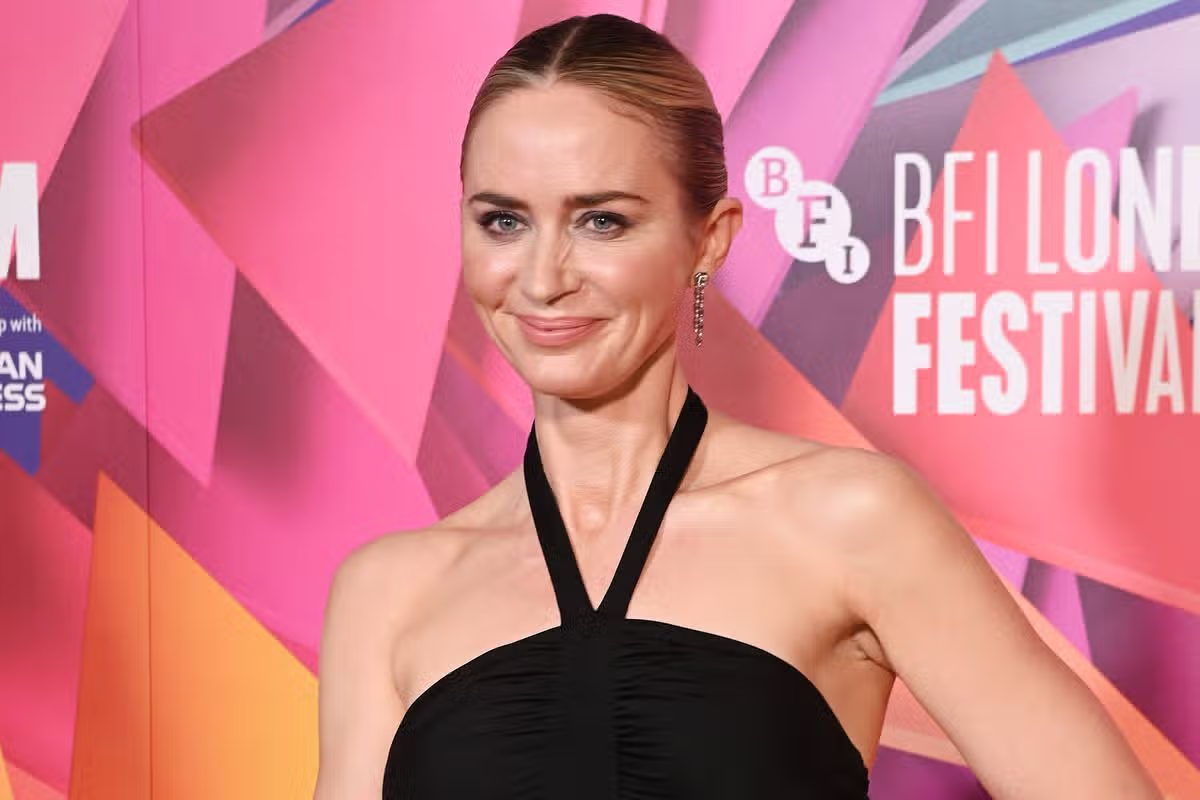
Emily Blunt stars in the six-part BBC series(Image: Dave Benett, Alan Chapman/Dave Benett/WireImagevia Getty Images)
For many people BBC iPlayer has become a great destination for drama, evolving far beyond its original role as a simple catch-up service for television. One of its biggest strengths is its extensive box-set offering, allowing viewers to binge entire series rather than waiting for new episodes to air weekly on the BBC.
The BBC has also continued to expand its selection of returning dramas, with previous seasons increasingly available to watch in full. Some of the most popular dramas listed on there include Happy Valley, Taboo, Wolf Hall and Normal People.
However, one drama series has caught the attention of viewers and it is essentially a revenge story, love story and Western epic rolled into one,
Set in 1890, the BBC series follows Lady Cornelia Locke (Emily Blunt), an Englishwoman who journeys to the American West in pursuit of the man she believes is responsible for her son’s death.
Her journey brings her into the path of Eli Whipp (Chaske Spencer), a former cavalry scout and member of the Pawnee Nation seeking to claim land promised to him for his military service. As their paths converge, the pair form an unlikely alliance while navigating the violence and lawlessness of the American frontier.
The English is created and directed by Hugo Blick’s which transports you to the dying days of the Old West for six hours, reports the Express.
Audiences have described the drama as an underappreciated gem alongside American Primeval and Yellowstone.
The English, aired on BBC Two and Amazon Prime in late 2022, and comprises of six episodes that have earned acclaim from traditional western devotees and those discovering the genre.
Westerns are enjoying a resurgence, fuelled by the popularity of shows such as Yellowstone, American Primeval, and 1923.
Despite its parallels to Yellowstone, devotees of The English have queried why it doesn’t attract the same recognition as other contemporary shows, despite being “Western in all the right ways”.
“Instantly, The English has made my top 10. I have seen a lot of movies and series over the many many years I’ve walked this earth. And seldom have I been struck so profoundly,” one IMDB reviewer described in a 10-star review.
“Every scene, every word, each gesture, to a person reaches out, aiming for the heart. Relentlessly uncovering a story that weaves beauty and horror in equal measure.”
“It never waits for you to catch up. But rather pulls you along as you follow- never really knowing what will happen and carefully doling out what has happened.”
“Fans of American Primeval should watch The English. Both are great Westerns featuring a strong female lead,” Emily Long writes for Screen Rant, adding “Though each of the shows have their own stories and unique characters, The English and American Primeval are surprisingly similar. Both shows centre on a woman trying to make her way across the American West with a travelling partner, encountering numerous challenges along the way.”
The show has also won over the hearts of Reddit’s 67,000-strong r/Western community, with one user, apswim22, remarking, “This was an amazing under-the-radar series. One of the better Western series in a while.”
Hundreds have applauded the series’ storyline, with BeautifulDebate7615 telling the Western subreddit, “We did not see the twist coming but kept wondering why things weren’t developing the way we expected. Then the twist perfectly explained things.”
Both Chaske Spencer and Emily Blunt earned nominations for Best Actor at the British Academy Television Awards and Outstanding Performance by a Female Actor in a Television Movie or Limited Series at the Screen Actors Guild Awards, respectively.
Stephen Rea earned an Irish Film and Television Award for his portrayal of Sheriff Robert Marshall.
Beyond the exceptional acting on display, Arnau Valls Colomer’s breathtaking cinematography is wonderfully complemented by Federico Jusid’s classical score, together creating an utterly compelling atmosphere.
Some critics have taken issue with the show’s tempo, with the opening episode labelled something of a slow burner, though such gripes quickly fade once the second episode hits its stride.
The English is available to stream on both BBC iPlayer and Amazon Prime.