The road to the UEFA Nations League 2026-27 begins on Thursday, with 54 teams in action in the league phase.
Portugal, the record two-time champions, will look to successfully retain the title they won in 2025.
Recommended Stories
list of 3 itemsend of list
But with reigning World Cup winners Spain, and former champions France and heavyweights England also in the mix, the title defence will be far from easy.
What is the UEFA Nations League?
The UEFA Nations League was founded in 2018 to reduce the number of meaningless friendlies and give nations competitive matches against equally-ranked teams.
In this competition, countries from across Europe participate in a league structure, which features promotion and relegation.
How many teams are in the Nations League?
A total of 54 teams will participate in the 2026-27 UEFA Nations League.
They are divided into the following leagues and groups, following the draw in Brussels, Belgium in February:
League A
Group A1: France, Italy, Belgium, Turkiye Group A2: Germany, Netherlands, Serbia, Greece Group A3: Spain, Croatia, England, Czechia Group A4: Portugal, Denmark, Norway, Wales
League B
Group B1: Scotland, Switzerland, Slovenia, North Macedonia Group B2: Hungary, Ukraine, Georgia, Northern Ireland Group B3: Israel, Austria, Republic of Ireland, Kosovo Group B4: Poland, Bosnia and Herzegovina, Romania, Sweden
League C
Group C1: Albania, Finland, Belarus, San Marino Group C2: Montenegro, Armenia, Cyprus, Latvia Group C3: Kazakhstan, Slovakia, Faroe Islands, Moldova Group C4: Iceland, Bulgaria, Estonia, Luxembourg
League D
Group D1: Gibraltar, Malta, Andorra Group D2: Lithuania, Azerbaijan, Liechtenstein
What is the schedule for the UEFA Nations League?
UEFA has earmarked the following dates for the Nations League 2026-27:
League phase
Matchday 1: September 24-26 Matchday 2: September 27-29 Matchday 3: October 1-3 Matchday 4: October 4-6 Matchday 5: November 12-14 Matchday 6: November 15-17
Quarterfinals, League A/B and League B/C promotion/relegation playoffs
March 25-30, 2027
League C/D playoffs
March 23-28, 2028
Final tournament
June 9-13, 2027
How does the UEFA Nations League work?
The teams compete across four different divisions, facing every other team in their group twice: once at home and once away. The league phase ends in November.
In the top-most league, League A, the top two teams from each group go through to the quarterfinals, which take place in March 2027.
The finals will again be contested between four teams. The host and the dates of the finals have not been confirmed yet.
As for each of the group winners in Leagues B, C and D, they will be promoted to the league above. The teams finishing bottom of their groups in Leagues A, B and C will be relegated one league below.
Here’s the full breakdown of the promotion and relegation scenarios:
League A
The group winners and runners-up advance to the quarterfinals.
The two highest-ranked third-placed teams remain in League A.
The two lowest-ranked third-placed teams and two highest-ranked fourth-placed teams contest the League A/B play-offs against the four runners-up from League B.
The two lowest-ranked fourth-placed teams are relegated to League B.
League B
The group winners are promoted to League A.
The runners-up contest the League A/B play-offs against the two lowest-ranked third-placed teams and two highest-ranked fourth-placed teams from League A.
The third-placed teams remain in League B.
The fourth-placed teams contest the League B/C play-offs against the four runners-up from League C.
League C
The group winners are promoted to League B.
The runners-up contest the League B/C play-offs against the fourth-placed teams from League B.
The third- and fourth-placed teams remain in League C.
League D
All teams are promoted to League C.
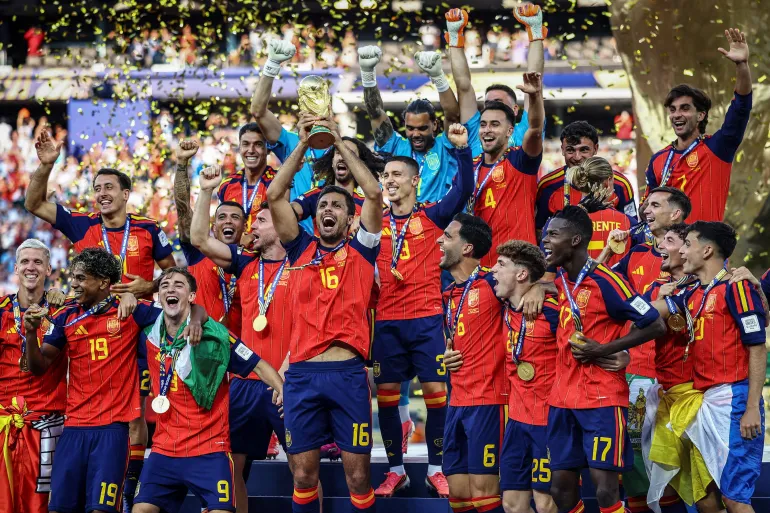
FIFA World Cup 2026 winners Spain will also be in action in the upcoming UEFA Nations League [File: Hannah McKay/Reuters]
Is the Nations League linked to major tournaments?
According to European football’s governing body, UEFA, the 2026-27 UEFA Nations League is expected to be linked to qualification for UEFA EURO 2028 in the United Kingdom and Ireland.
Based on their UEFA Nations League results, some teams will be given a second chance to enter the playoffs for the final tournament.
Will Ronaldo play in the Nations League?
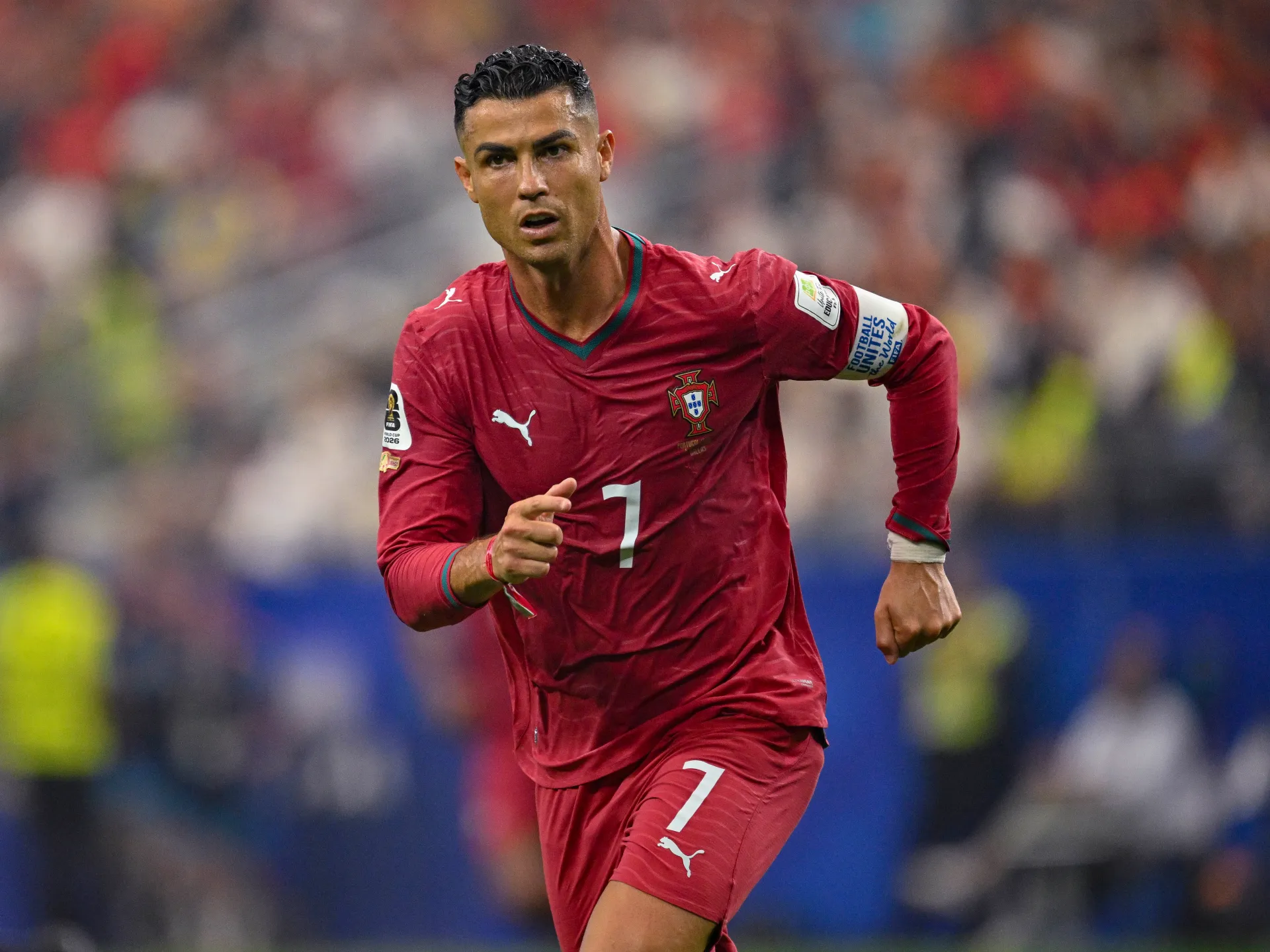
Yes. Cristiano Ronaldo will feature in the upcoming Nations League after being called up for their upcoming four fixtures. Last weekend, he was included in new coach Jorge Jesus’s first 25-man squad.
However, in August, the 41-year-old fuelled speculation about his retirement plans after saying the coming year would probably be the last of his playing career.
The Portugal captain has won major trophies at the club level with Manchester United, Real Madrid, Juventus and current club Al-Nassr since making his senior debut for Sporting in 2002.
But he has not quite tasted similar success with his national team.
The five-time Ballon d’Or winner has yet to win a FIFA World Cup, football’s biggest prize, after Portugal were knocked out in the last 16 by eventual champions Spain.
Has Ronaldo won the UEFA Nations League?
Yes. Ronaldo led Portugal to UEFA Nations League victories in the inaugural edition in 2019 and the latest one in 2025.
In the 2019 edition, Portugal were crowned winners on home soil in Porto, defeating the Netherlands 1-0 in the final.
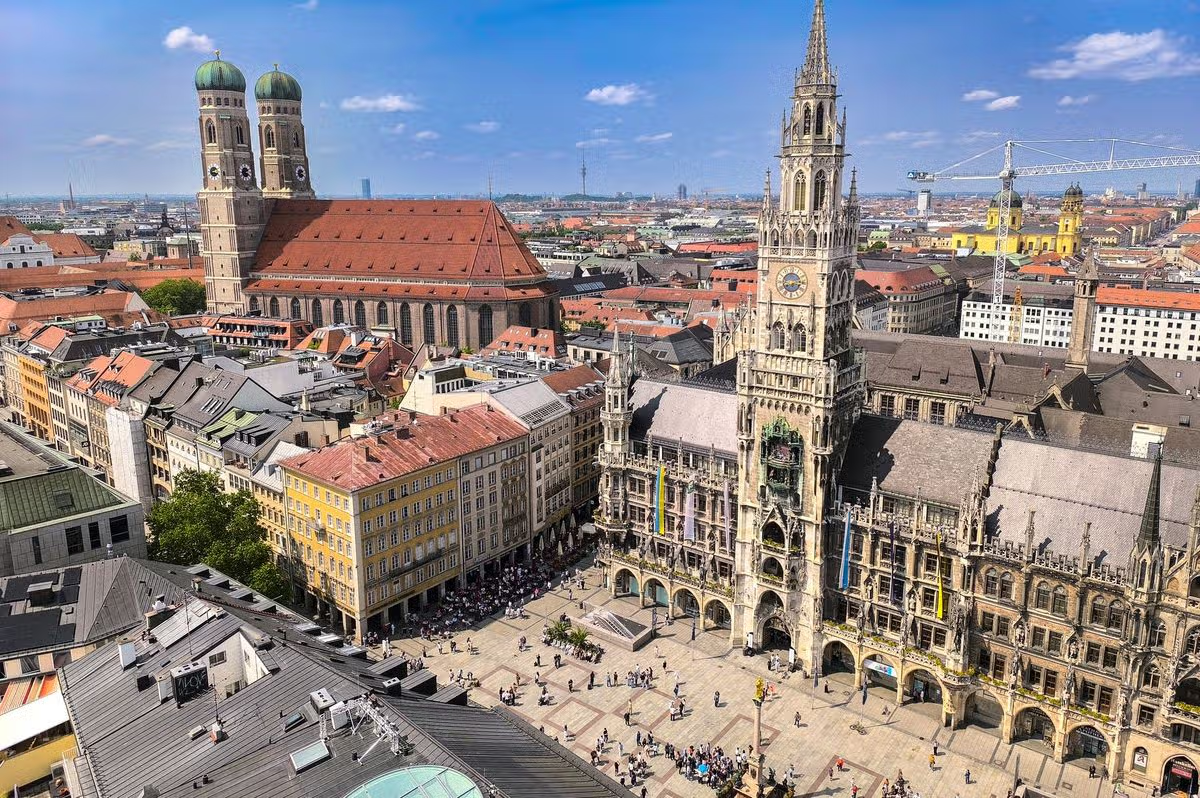
In the last edition, they were crowned champions for a second time, beating Spain 5-3 on penalties after the match was tied 2-2 in extra time, with Ronaldo among Portugal’s goalscorers in Munich.
Which other top players will play in the Nations League?
The UEFA Nations League 2026-27 is filled with stars across all divisions.
In Group A, world champions Spain have talent all around with Lamine Yamal, Rodri and Ferran Torres among the standout names, while England skipper Harry Kane and Jude Bellingham also add glamour to the division.
Norway’s talismanic forward Erling Haaland and captain Martin Odegaard headline their team, Brian Bobbey has the spotlight on him in the Netherlands squad, and veteran Luka Modric continues his journey with Croatia.
In Group B, fans should watch out for Sweden’s Victor Gyokeres, the top scorer in the 2024-25 Nations League, Georgia’s winger and PSG star Khvicha Kvaratskhelia.
Which players will miss the opening UEFA Nations League games?
Several players have been sidelined with injuries, including England’s Cole Palmer, Declan Rice and Marcus Rashford.
Pedro Porro has been ruled out of the Spain squad.
Is the Nations League held every two years?
Yes. The UEFA Nations League has been held every two years since 2019.
With world leaders at the UN General Assembly podium this week, play our quiz matching famous quotes to who said them.
Published On 23 Sep 202623 Sep 2026
This week, world leaders converge on New York for the annual United Nations General Assembly (UNGA), where representatives from the 193 UN member states are expected to take to the podium.
Over the decades, that same podium has hosted some of modern diplomacy’s most quoted moments, from Cold War warnings to wartime appeals.
Match each line to the leader who spoke it from the UNGA podium in the 10-question quiz below.
US-led anti-cartel alliance backs sanctions against crime groups after Trump urges stronger action.
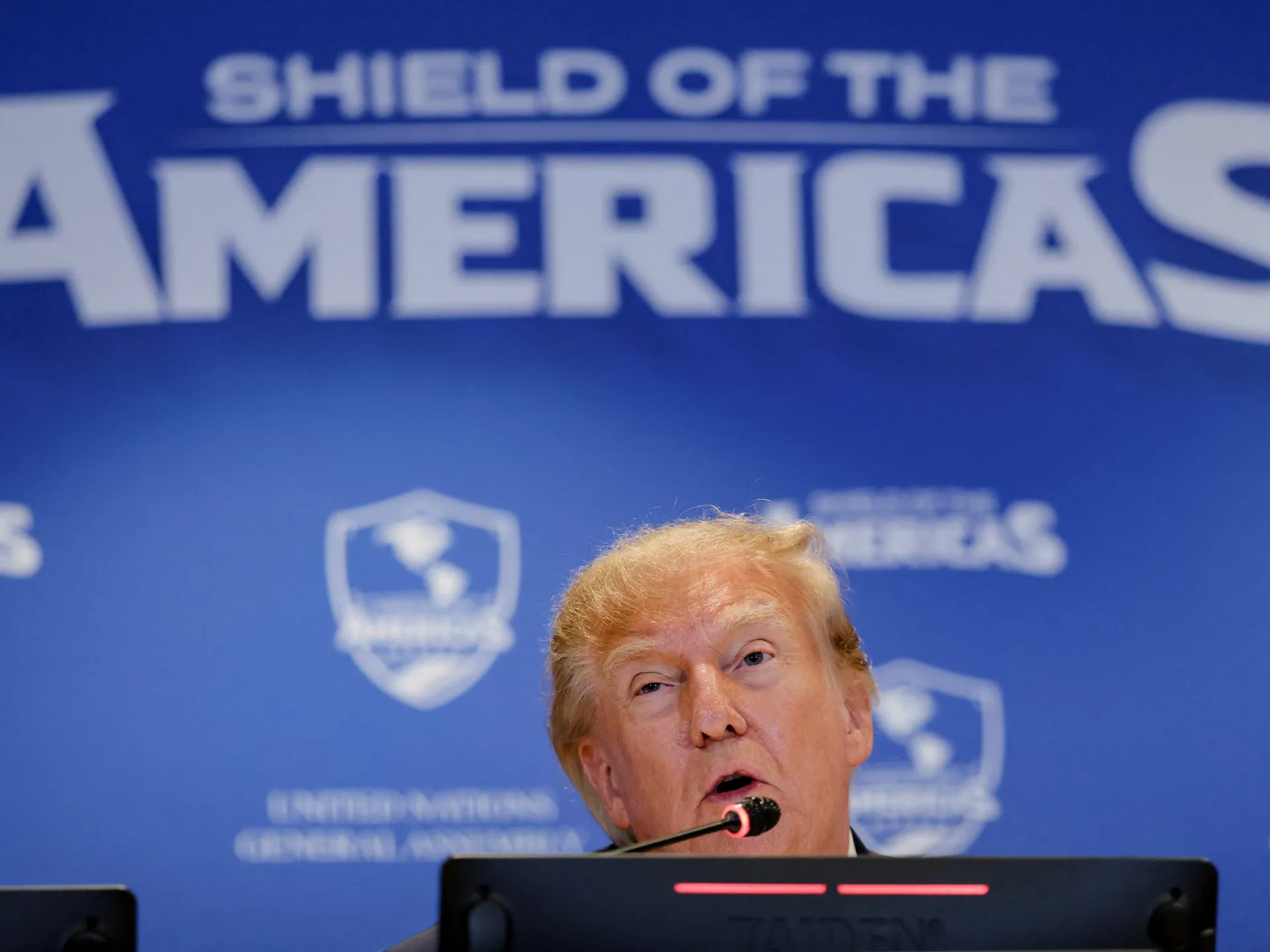
United States President Donald Trump has pledged to use “unmatched military might” against drug cartels in the Western Hemisphere during a meeting of the Washington-led Shield of the Americas coalition in New York City.
In a meeting with leaders and foreign ministers from the anti-cartel alliance, Trump on Tuesday urged member countries to join the US in targeting 24 criminal organisations, which he earlier described as the “ISIS of the Western Hemisphere”.
Recommended Stories
list of 3 itemsend of list
He said he was asking “all nations in the Shield of the Americas to formally designate narco-terrorists as common threats to stability and apply crushing sanctions” against all of the groups. The meeting took place on the sidelines of the annual United Nations General Assembly (UNGA) in New York City.
The coalition’s 15 governments later issued a joint statement saying they intended to impose asset freezes and visa restrictions on members and supporters of the groups and to pursue criminal charges against them.
At the top of the list are two groups that have been declared “terrorist” organisations by Washington: Mara Salvatrucha (MS-13) – one of Central America’s most powerful criminal gangs – and Tren de Aragua, a Venezuelan gang that is also active in Colombia, Peru and Chile.
The list also includes major Mexican cartels, Colombian armed groups such as the National Liberation Army, Brazil’s Primeiro Comando da Capital and Comando Vermelho groups, and Peru’s Shining Path.
Al Jazeera’s Alessandro Rampietti, reporting from Bogota, Colombia, said the statement was largely symbolic for now, because each country must follow its own legal procedures.
“For example, here in Colombia, it will require a law to pass in Congress. We understand that the government here has asked Congress to move forward in drafting such a law. So while the consequences may not be immediate, this is clearly an important step towards building what the US has been trying to do in Latin America [through] this alliance,” he added.
The coalition is made up of governments closely aligned with Trump, including Argentina, Ecuador and El Salvador, whose leaders he has praised or endorsed. Colombia and Peru joined after Trump-aligned presidents took office in recent months.
Brazil and Mexico have not joined.
US Secretary of State Marco Rubio, who also attended, praised “the emergence of strong leaders who are committed to the challenge of taking on transnational terrorism”.
The gathering was the administration’s latest effort to rally the region behind a more aggressive approach to drug trafficking. Since returning to office last year, Trump has designated cartels as foreign terrorist organisations and ordered dozens of strikes on boats in the Caribbean and eastern Pacific that US officials say were carrying narcotics bound for the US.
The strikes have killed more than 223 people, and UN experts say they violate international law and could amount to crimes against humanity.
The Trump administration’s National Security Strategy, released late last year, laid out plans for a revamped Monroe Doctrine, the 19th-century policy asserting US primacy in the hemisphere that critics associate with decades of US intervention.
Trump has also spoken of retaking the Panama Canal and annexing Greenland and Canada. On Tuesday, he signed an agreement on Greenland that stopped short of his demand that the island become US territory.
The focus on the hemisphere has raised concerns across the region.
Brazilian President Luiz Inacio Lula da Silva, in his UN speech, bristled at the approach, warning countries in Latin America and the Caribbean of “renewed hegemonic temptations”.
Debate opened at the UN General Assembly and leaders from across the world made their arguments for making the world a better place. International cooperation seems to be the central goal, but as Al Jazeera’s Emma Withrow explains, only a handful of countries hold the cards.
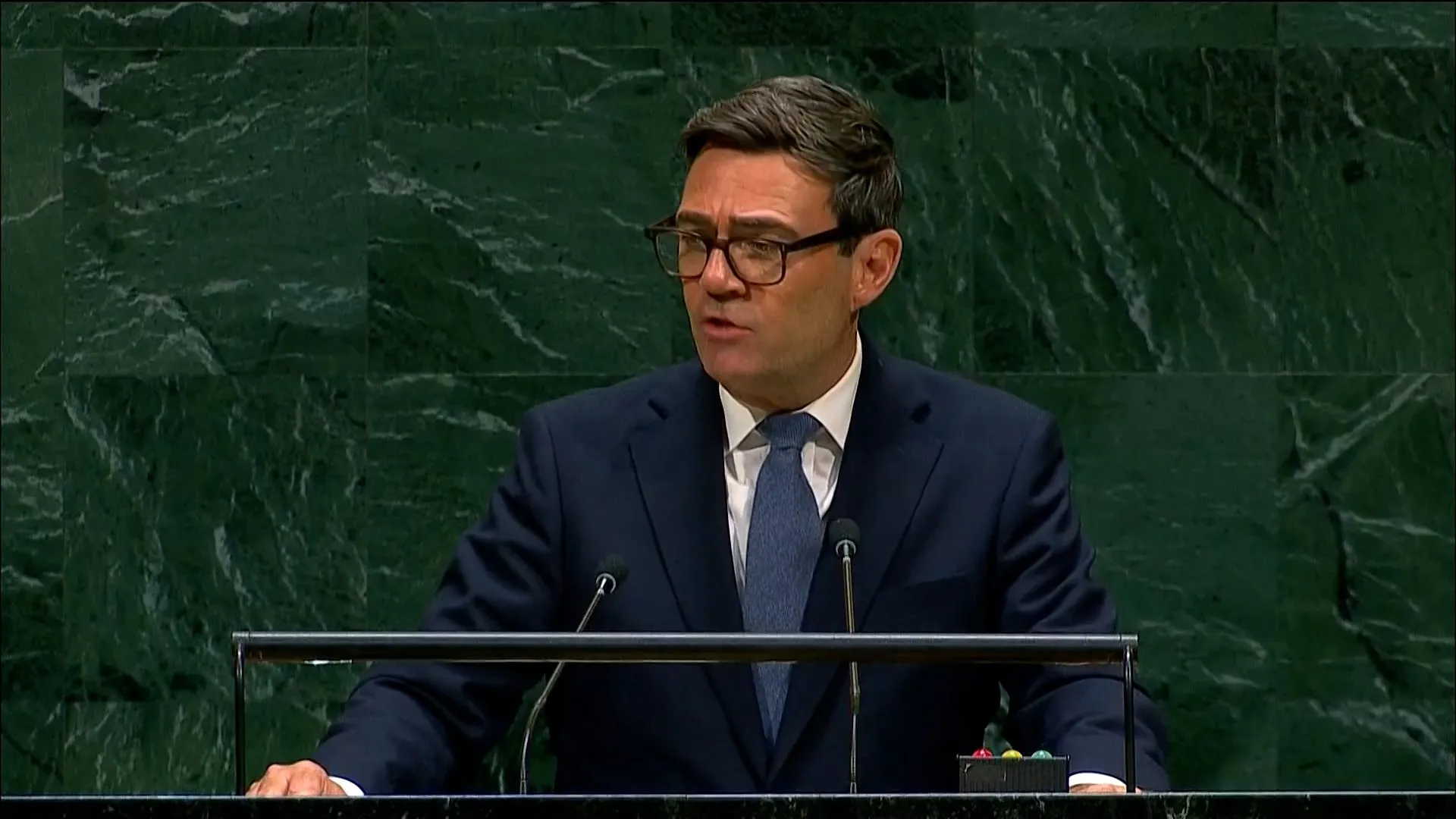
UK Prime Minister Andy Burnham condemned Israel’s genocidal war on Gaza during his UN General Assembly address. He also said continued Israeli military action had led the UK to impose sanctions on illegal Israeli settlements in Palestinian territory.
Canada pledges 100 million Canadian dollars ($71m) in aid for Palestinians as the UK and France call for action against Israeli settlement expansion in the occupied West Bank.
Published On 23 Sep 202623 Sep 2026
Canadian Prime Minister Mark Carney has announced that Canada is pledging 100 million Canadian dollars ($71m) in international assistance for Palestinians in an effort to preserve “the possibility of a two-state solution”.
Speaking on the sidelines of the United Nations General Assembly (UNGA), Carney outlined that 80 percent of the funding will go towards direct humanitarian aid. The remaining 20 percent will be allocated to “support peace and security”, including Canada’s multiyear initiative to train Palestinian police in the occupied West Bank.
Recommended Stories
list of 3 itemsend of list
Carney prefaced the pledge by noting that Palestinians in Gaza continue to endure “immense human suffering”, while Israelis confront “existential threats from Hamas and from Iran and its proxies”.
The prime minister was also critical of Israel’s E1 settlement project, with the “intention to bring forward trade restrictions targeting goods produced in those illegal Israeli settlements”.
Canada is one of the 12 states that announced restrictions on trade in goods with settlements in the occupied territory.
Since the beginning of Israel’s genocidal war on Gaza, Ottawa has pledged more than 600 million Canadian dollars ($426m) in aid for Palestinian civilians.
‘Shame on all of us’
Carney was not the only Western leader to speak on Palestine. French President Emmanuel Macron also slammed world leaders for restrictions on aid in a UNGA speech on Tuesday.
“There are those who claim that peace has been achieved, but this has not opened the way for humanitarian aid deliveries. This sight is shameful. Shame on all of us,” he said.
“But what is our credibility worth if we remain inactive in the face of Gaza?” he added.
British Prime Minister Andy Burnham with French President Emmanuel Macron in London, UK [File: Leon Neal/Reuters]
British Prime Minister Andy Burnham said failure to deliver a two-state solution will “corrode trust” in politicians who have talked about the issue but not taken action.
Burnham told delegates from dozens of countries that the UK has also banned trade with illegal Israeli settlements in the West Bank because the E1 settlement expansion plan is “a deliberate attempt to block a two-state solution”.
“We all live in an era of low trust in politics. Many people in this room, many politicians around the world, have spoken for decades about a two-state solution. But if we fail to back those words with deeds, we will further corrode trust in the political, diplomatic and international process,” Burnham added.
The 81st UN General Assembly opened with US President Donald Trump threatening to ‘annihilate’ Iran. Despite the threat, US and Iranian officials met for three hours on the sidelines of UNGA. Al Jazeera’s Diplomatic Editor James Bays reports.
Hungary has been deemed a suitable host nation for Israel matches because the two nations enjoy stronger diplomatic ties than those between Israel and many other European nations, and it has been willing to provide the necessary policing and security arrangements for matches to operate smoothly.
The FAI decided in the summer to play its ‘home’ fixture against Israel at a neutral stadium, citing “operational challenges that could impact on the delivery of the game on home soil”.
Reports have claimed the FAI was concerned protests could prevent the match from taking place in Dublin.
The FAI gave no official reason for the selection of Backa Topola, but choosing a venue in Serbia – in a town so remote – in theory renders security management easier and reduces the possibility of protest.
In 2025, Serbian foreign minister Marko Duric described Israel as one of Serbia’s “closest friends and strategic partners”. Serbia has also purchased military equipment, including drones and missiles, from Israel in recent years.
The decision to play in neutral stadiums has not curtailed opposition.
Fans of various Irish clubs have demonstrated against the matches during domestic fixtures in recent weeks, and on Monday more than 160 Irish athletes signed an open letter by the Irish Sport for Palestine group urging a boycott. The signatories include boxer Tyrone McKenna and former European champion athlete Ciara Mageean.
The annual general debate of the United Nations General Assembly (UNGA) starts on Tuesday morning in New York amid dire circumstances. Besides traffic gridlock and overpriced hotel rates, cavalcades of motorcades and successive dignitaries delivering calibrated speeches, this session will hear Secretary-General Antonio Guterres’s last speech on the state of the UN.
Guterres headed the UN for 10 years, and during that time, he repeatedly failed to defend it when it came under attack. He passes on his post at the top of a world organisation on the verge of financial collapse and more marginalised than ever before.
Paradoxically, Guterres has the United States, the host government of the UN, and its mercurial president, Donald Trump, to thank for this dismal state of affairs.
Earlier this year, the Trump administration withdrew from dozens of UN agencies and organs and, in an extraordinary move, ceased all payments of its dues to the regular and peacekeeping budgets of the UN. But these drastic policy decisions did not spring out of nowhere. Trump’s unhappiness with the UN is multifaceted, and his decision to stop fulfilling Washington’s legally binding financial obligation may well be the logical culmination of decades-long US policy.
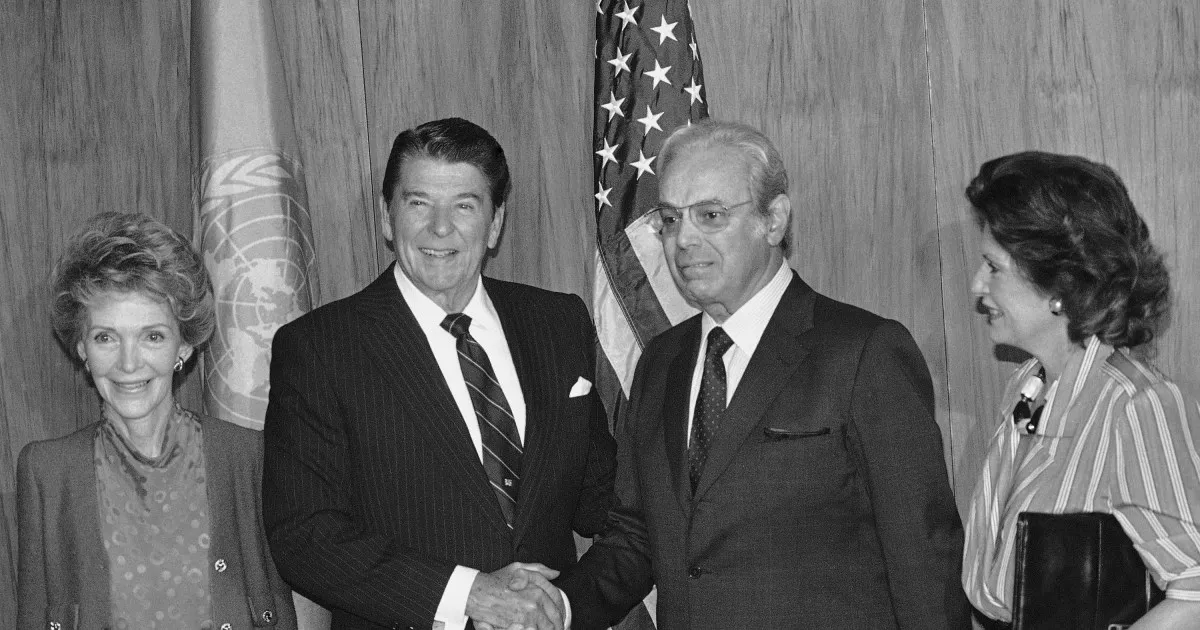
In the mid-1980s, the Reagan administration accused the UN of being a third-world, anti-US forum. To compel the organisation to better serve its interests and under the guise of the ubiquitous need for reform, which all secretaries-general fell for, the US started to withhold a share of its assessed contribution, which accounted for a quarter of the regular budget and a third of the peacekeeping budget back then.
By 1987, the US relaxed its payment withholding policy, but the precedent was set. Washington continued to use the threat of withholding payment to maintain its grip on an organisation it viewed and continues to view as a vehicle serving its national interests rather than a multilateral agent serving the whole of humanity.
Ever since the Reagan years, the US has kept the UN on a short financial leash, and to this day, has been deliberately accruing arrears. It currently owes an estimated $4.2bn – that is equivalent to 120 percent of the regular UN budget for 2026.
Trump has readily embraced this policy of financial blackmail. His administration has slow-walked mandatory payments, although earlier this month it paid $827m towards its outstanding dues so it could preserve its voting rights in the UNGA.
The president’s ambivalent view of the UN may be rooted in a lesser-known detail. In 2001, Trump, then a real estate developer, lobbied then Secretary-General Kofi Annan to be awarded the billion-dollar renovation project of the UN headquarters, but he did not get his way. That was probably not forgotten.
But just like during the Reagan years, there is another major factor driving Trump’s assault on the UN: US congressional politics. As Israel faced growing backlash at the UN for its genocide in Gaza, pressure from the Israeli lobby in Washington mounted. The Iron Dome diplomatic cover the US provided to Israel in the UN Security Council (UNSC) was no longer sufficient.
By 2025, two years into the genocidal campaign, Guterres’s tepid and overdue criticisms of Israeli policies, critical UNGA resolutions and scathing reports by special rapporteurs of the Human Rights Council – including Francesca Albanese, whom Washington placed under sanctions in violation of its host country obligations – became too much for Trump, Secretary of State Marco Rubio and the US Congress.
In the 1980s, Washington deemed the UN a third-world anti-US forum; today, it is deemed anti-Israel and anti-Semitic. The US’s blind and unconditional support for Israel has brought it growing isolation at the UN, as has its decision to launch a war of aggression against Iran.
Against the backdrop of these developments, the selection of the next secretary-general is dominating the behind-the-scenes agenda. Guterres’s lacklustre tenure at the helm of an organisation on the verge of financial bankruptcy and political demise will soon be forgotten. But what should be remembered is that his appeasement policy vis-a-vis Washington since the first Trump administration has evidently failed.
The new secretary-general will inherit the modus vivendi under which all secretaries-general since Javier Perez de Cuellar have had to operate — chronic cash flow problems due to US arrears.
That should motivate the new UN leadership to consider an overhaul of how the UN budget is put together and how member states’ contributions are allocated. Leaving the power of the purse in Washington’s hands is a self-inflicted perpetual wound that could prove lethal for the organisation.
Another fundamental question is whether the UN would be better off had its headquarters not been in the US. For too long, Washington has seen the UN either as a vector of its national interests or in adversarial terms. It has even used its position as a host to exclude world leaders it has viewed as hostile or undesirable, such as PLO Chairman Yasser Arafat and today Palestinian President Mahmoud Abbas.
Evidently, those are decisions only the UNGA can take. But a secretary-general with foresight and political backbone ought to provide views and leadership on those seminal questions to save the organisation from further marginalisation and possible demise.
The views expressed in this article are the author’s own and do not necessarily reflect Al Jazeera’s editorial stance.
On Tuesday, nearly 130 heads of state and government are expected to begin taking the podium at the annual United Nations General Assembly (UNGA) in New York as the high-level general debate opens.
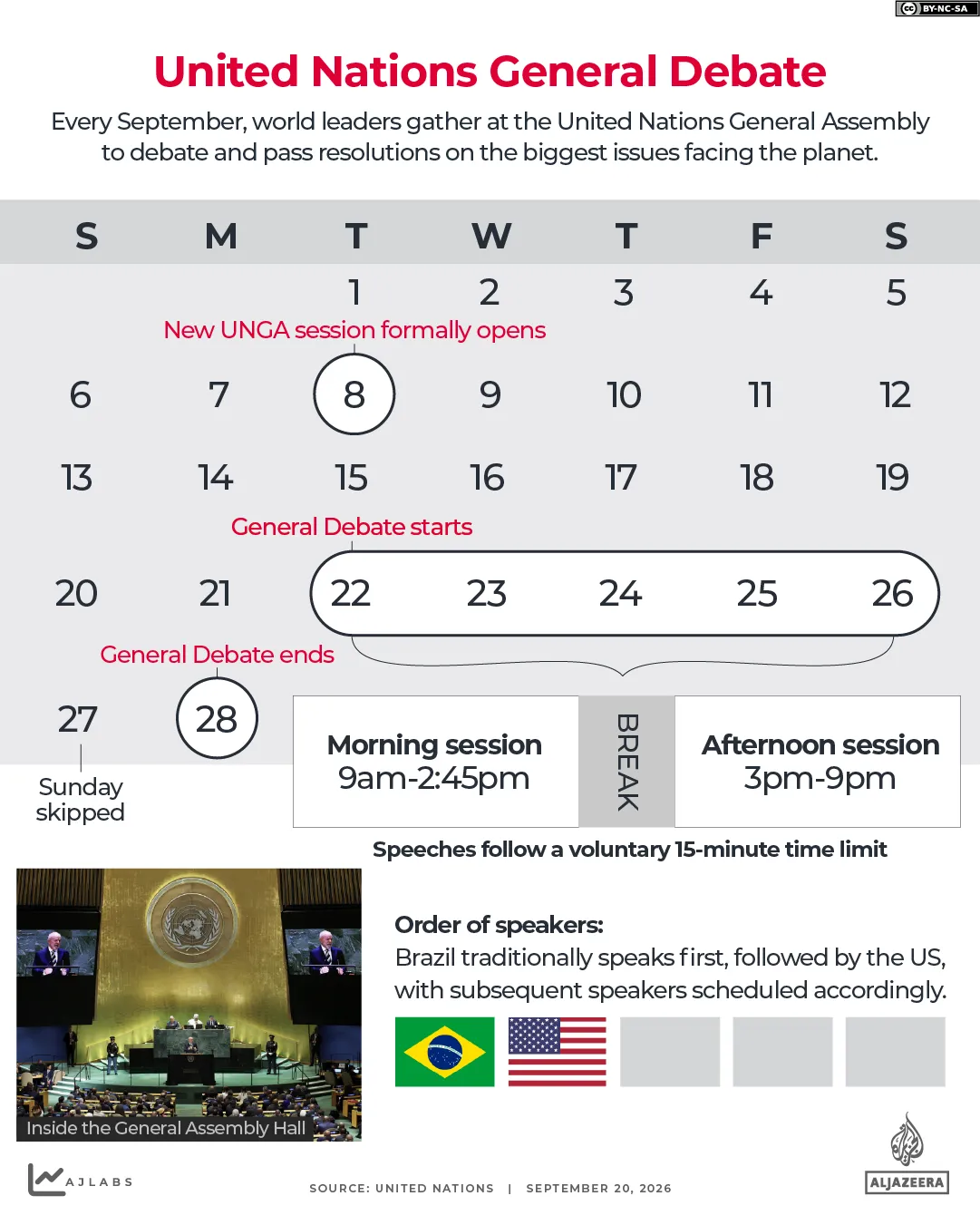
The debate is the key event of the UNGA’s annual session, which began on September 8, when Khalilur Rahman of Bangladesh took office as president.
In this visual explainer, Al Jazeera looks at what happens at the UNGA, who will speak, and the key moments to watch.
When is UNGA 2026?
The debate opens on Tuesday, September 22, runs through Saturday, September 26, and resumes on Monday, September 28, as no sessions are held on Sunday.
It runs in two daily sessions: from 9am to 2:45pm local time (13:00 GMT to 18:45 GMT) and from 3pm to 9pm (19:00 GMT to 01:00 GMT the next day).
Statements are expected to observe a voluntary 15-minute limit, though many run longer, and meetings continue until all scheduled speakers have spoken.
Who is speaking at UNGA 2026, and when?
The session opens with UN Secretary-General Antonio Guterres, who introduces his annual report and is expected to give his final address, followed by UNGA President Khalilur Rahman, who formally opens the debate.
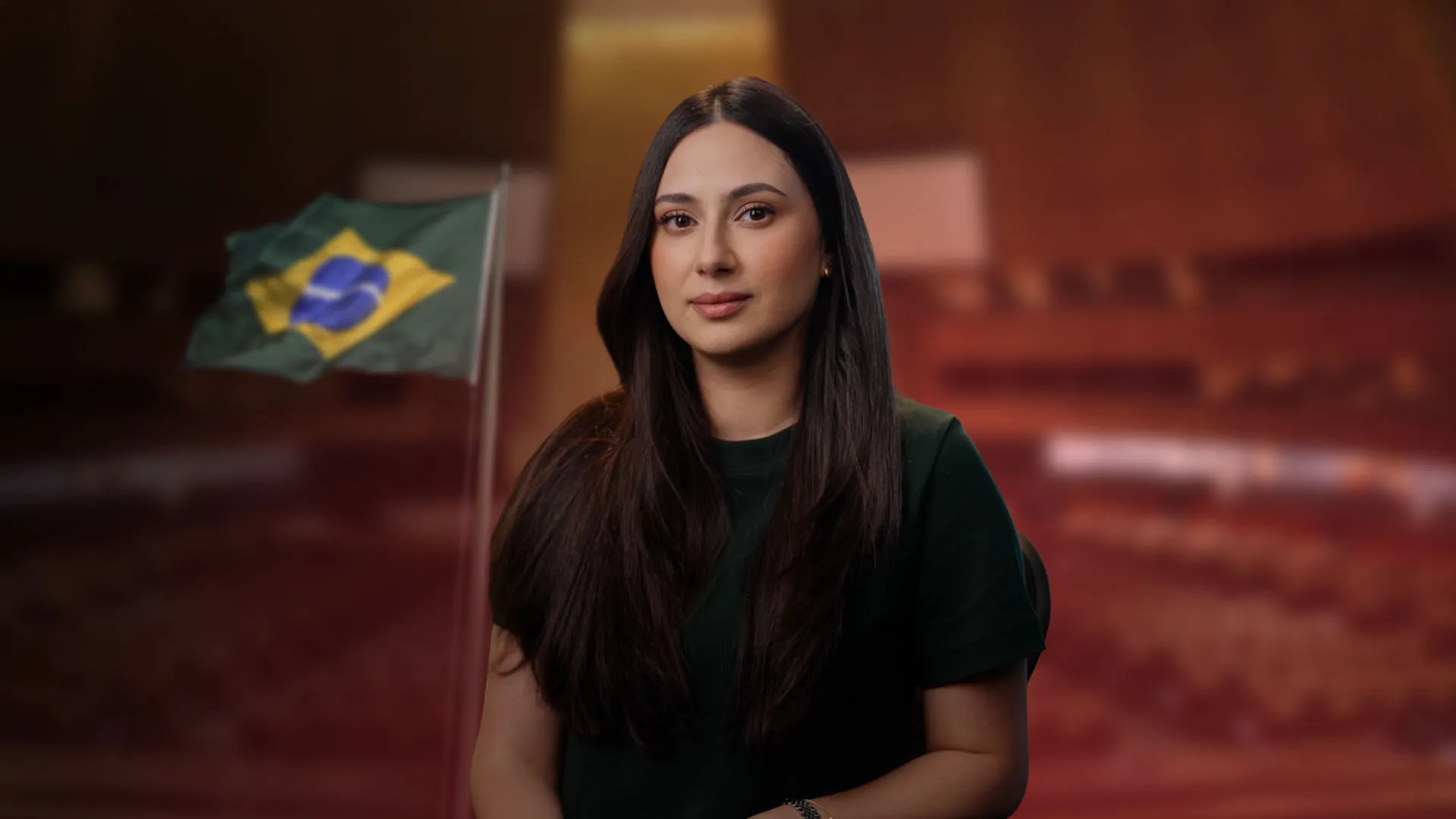
By tradition, Brazil is always the first country to speak, a practice that began in 1955 when it volunteered to open the debate, when no other country would. The United States, as the host country, usually speaks second, and President Donald Trump is expected to take the podium after Brazil on Tuesday morning, likely around 9:45am local time (13:45 GMT).
For all other member states, the speaking order is determined by the level of representation (head of state, head of government, or minister), expressed preferences, and geographic balance.
The Holy See (Vatican City), the State of Palestine, and the European Union are also invited to participate, with their speaking slots set according to their representation.
Speakers for day one are shown in the graphic below. The speaking schedule for the remaining days will be published in the coming days.
Where is the UNGA held?
The UNGA is held at the UN headquarters, which is located along the East River in Manhattan, New York.
The complex, built between 1949 and 1952, is owned by the UN and is considered international territory. It serves as the main hub for international diplomacy.
The UNGA has not always been held in New York. The first six UNGA sessions took place in different cities, beginning in London and later including Paris. Since 1952, however, nearly all sessions have been held at the UN headquarters in New York.
Some notable exceptions include 1988, when the UNGA met in Geneva, Switzerland, after the US denied a visa to Palestinian leader Yasser Arafat.
This time, for the second year running, the US has denied visas to Palestinian officials, so President Mahmoud Abbas will address the UNGA by prerecorded video after member states voted to allow it.
The Trump administration’s decision has drawn widespread criticism, with the UN asserting that it violates the Host Country Agreement, which obligates the US to allow heads of state and government to travel to New York for annual meetings and other diplomatic business, with full diplomatic immunity.
What is on the UNGA 2026 agenda?
The 81st UNGA has the theme “Restoring trust, managing transformation: a United Nations that delivers for all”, which is set out in the UN’s information note on the arrangements for the high-level week.
Alongside the speeches, the UN has scheduled high-level meetings on climate action and a just transition and on the 40th anniversary of the Declaration on the Right to Development (September 23), on sea level rise (September 24), on pandemic preparedness (September 25), on the 25th anniversary of the Durban Declaration against racism (September 28), and on eliminating nuclear weapons (September 29).
Many speeches are also expected to focus on the wars in the Middle East and Ukraine, artificial intelligence and the UN’s funding squeeze, while diplomats watch the race to succeed Guterres, whose term ends on December 31.
Who will be the next UN chief?
The UNGA formally appoints the secretary-general, but the choice is not expected to be made this week. The UN Security Council (UNSC) is still holding straw polls and must recommend a candidate first.
Guterres’s second and final term ends on December 31, and the race to succeed him is under way. There have been nine secretaries-general since the UN was founded in 1945, all of them men. Several UNSC members have said they want a woman to lead the organisation for the first time.
Seven candidates remain in the running, four women and three men, but more could still enter the race:
Rebeca Grynspan (Costa Rica): Secretary-general of UNCTAD and former vice president of Costa Rica
Carolyn Rodrigues-Birkett (Guyana): Guyana’s permanent representative to the UN and former foreign minister
Ivonne Baki (Ecuador): Diplomat and former minister of foreign trade
Maria Fernanda Espinosa (Ecuador): Former president of the UNGA and former foreign minister
Rafael Grossi (Argentina): Director general of the International Atomic Energy Agency
Macky Sall (Senegal): Former president of Senegal
Olara Otunnu (Uganda): Former foreign minister and ex-UN undersecretary-general
Former Chilean President Michelle Bachelet withdrew on Saturday after winning support from only one of the 15 UNSC members in the latest informal vote. The same vote put Costa Rica’s Grynspan narrowly ahead, with nine of the 15 members encouraging her candidacy, five discouraging it, and one with no opinion. Guyana’s Rodrigues-Birkett came second, with eight votes to encourage, six to discourage and one with no opinion, diplomats and sources close to the process said.
The UNSC must settle on one candidate with no veto from its five permanent members before recommending them to the UNGA.
When did each nation join the UN?
The UN was established after World War II, growing from 51 members in 1945 to 193 today, with two non-member observer states: Palestine and the Holy See (Vatican City).
The aim of the UN was to prevent future conflicts, promote international peace and security, foster cooperation among nations, protect human rights and support social and economic development worldwide – goals that many critics say it is increasingly failing to deliver on.
Each member has one vote in the UNGA, whose resolutions are generally nonbinding recommendations. That sets it apart from the 15-member UNSC, where five permanent members hold a veto and decisions can be legally binding.
Use the table below to find out when each country joined the UN.
World leaders arrive in New York for UNGA 81 as wars multiply and trust in international institutions erodes. Al Jazeera’s @EmmaWithrow explains the real question is whether global rules still matter when powerful countries choose to ignore them.
The UN chief’s mandate ends on December 31 this year, with a successor yet to be named.
Published On 21 Sep 202621 Sep 2026
The state of the world seems to be getting worse due to a “dramatic geopolitical divide” that is leaving “the most vulnerable countries and populations in very dramatic situations” and that “paralyses the Security Council”, United Nations Secretary-General Antonio Guterres has told Al Jazeera.
Speaking on Monday, the first day of the UN General Assembly (UNGA) in New York City, Guterres said that major military conflicts happening in the world at the moment, the Russia-Ukraine war and the US-Israel war on Iran, have created a crisis due to the continued violations of international law by “superpowers” that are key members of the UN Security Council (UNSC).
Recommended Stories
list of 4 itemsend of list
“That creates an environment of impunity, in which midsize powers believe that they can do whatever they want because nothing will happen to them,” Guterres told Al Jazeera, admitting that “wars are becoming multiplied, and more and more complex”.
The UN chief outlined the real-life impacts that these two wars are having on people on a humanitarian level, particularly around food accessibility, rising fuel prices, and global inflation.
“The combination of the war in Ukraine with the problems of exports of foods, fertilisers, and energy through the Black Sea, if you combine it with the difficulties in the Strait of Hormuz [in the Gulf], in the Bab al-Mandeb [in the Red Sea], and in the attacks [on] oil installations in several countries of the [Middle East] region, we are creating a situation that has a devastating impact on many economies around the world,” Guterres said.
He added that rising interest rates and fuel prices in developed countries could eventually be managed, whereas people in the developing world “are in a desperate situation” due to the increasing energy and food costs and the lack of fertilisers.
Dire need for reforms
Guterres, who previously served as prime minister of Portugal and UN high commissioner for refugees, has been the UN chief since January 1, 2017, though his mandate is coming to an end on December 31, 2026.
His successor, who is yet to be named, will take charge of an organisation that is grappling with multiple crises and is, in Guterres’s opinion, in dire need of reforms to stay relevant and important on the global stage. He notably cited the UNSC, saying it “still essentially represents the world of World War II”.
Candidates in the running to replace Guterres include the International Atomic Energy Agency’s Rafael Grossi, former Senegalese President Macky Sall and Ecuadorian diplomat Maria Fernanda Espinosa.
To be recommended by the UNSC, a candidate for UN secretary-general needs at least nine of the council’s 15 members to vote in favour and must avoid a veto from any of the five permanent members – China, France, Russia, the United Kingdom and the United States – before a final vote in the UNGA.
The UN was created to help save the world from war. More than 80 years later, conflicts and atrocities continue. So what has the UN actually achieved, and what are the limits of its power? Al Jazeera’s Noor Wazwaz explains.
Qatar’s Prime Minister Sheikh Mohammed bin Abdulrahman bin Jassim Al Thani has called on states to respect sovereignty as a condition for security in the Middle East, warning against “cycles of escalation” after “an earthquake” caused by the US-Israeli war on Iran.
The region needs a “framework in which sovereignty is respected” and no state can pose a “threat to another”, Sheikh Mohammed said on Sunday at the opening of the Qatar Economic Forum’s UN General Assembly-adjacent event in New York City.
Recommended Stories
list of 3 itemsend of list
Sheikh Mohammed – who is also Qatar’s foreign minister – described the economic fallout from the US-Israel war on Iran as “an earthquake” with “its shock waves” reaching far beyond the borders of the Middle East, “challenging assumptions about security and stability”.
“During the crisis, almost every conversation began with security and de-escalation, then turn[ed] to energy supplies, shipping routes, and with our investments, plans will continue. These were different expressions of the same question. When so much is being disrupted, what can still be relied upon?”
He said that Qatar has weathered the test to the “foundations” of the country’s economy and security, but acknowledged that the ongoing conflict in the region is having an impact.
“Permanent security cannot be built through arrangements that leave any state permanently exposed to insecurity,” Sheikh Mohammed said. “We must address the sources of tensions and build confidence.”
Reporting from New York, Al Jazeera’s Kristen Saloomey said that message “no doubt will be repeated” when Gulf leaders meet US President Donald Trump on Tuesday during the UN General Assembly.
Qatar’s $38bn domestic investments
The PM also outlined a domestic shift in Qatar’s investment strategy by pledging more than $38bn in spending on Qatari infrastructure over the next five years.
“That’s meant to attract private investors and send a message of Qatar’s resilience,” Saloomey said, while the PM is nonetheless acknowledging that the ongoing conflict is “having an impact on the region”.
The UNGA starts on Monday and ends on Friday.
The situation in the Middle East and its global ramifications are expected to be high on the agenda during speeches and diplomacy.
Also on Sunday, Qatar’s Foreign Ministry spokesman, Majed Al-Ansari, told US media in New York that the mediation efforts by his government are ongoing to restart talks between Tehran and Washington to end the US-Israel war on Iran.
The United Nations General Assembly will allow Palestinian President Mahmoud Abbas to address via a prerecorded video.
Published On 19 Sep 202619 Sep 2026
The European Union says it regrets the denial of visas by the United States for the second year running to Palestinian Authority (PA) officials seeking to attend the United Nations General Assembly (UNGA) in New York, urging it to reconsider the decision.
The statement on Saturday comes just days after the UNGA voted to allow Palestinian President Mahmoud Abbas to address the body during the upcoming 81st session via a prerecorded statement.
Recommended Stories
list of 3 itemsend of list
“In light of its existing headquarters agreements with the UN and its obligations as host state, we urge the United States for this decision to be reconsidered,” said Anouar El Anouni, a spokesman for the EU’s diplomatic service.
On Friday, UN Secretary-General Antonio Guterres also expressed regret at Washington’s decision, adding he was concerned about its impact “on the ability of the State of Palestine to participate fully in the work of the United Nations”.
The US Department of State announced on Wednesday that it would prolong visa sanctions on officials of the PA and members of the Palestine Liberation Organization (PLO).
“As a consequence of their failure to reform, contrary to their commitments to the United States, and their ongoing activities that undermine the prospects for peace, the United States will extend sanctions that deny visas to PLO members and PA officials,” the State Department said in a statement.
The department accused the PA of violating US law by bypassing direct negotiations to seek international recognition of Palestinian statehood.
It also cited the PA’s decision to take its dispute with Israel to international courts and its financial support for people the US and Israel label as convicted attackers and their families.
No Israeli officials face equivalent US travel restrictions, despite an International Criminal Court arrest warrant issued against Israeli Prime Minister Benjamin Netanyahu over alleged war crimes in Gaza.
Abbas’s address this year is expected to push for international recognition of Palestinian statehood and revive momentum for a two-state solution, building on a wave of formal recognitions by the United Kingdom, France, Canada and other Western nations last year.
His speech will also highlight the severe humanitarian crisis in Gaza alongside the rapid growth of illegal Israeli settlements and settler pogroms across the occupied West Bank.
Palestine’s Ministry of Foreign Affairs and Expatriates welcomed the UN resolution passed on Thursday allowing Abbas to address the assembly next week, saying it “represents a breaking of the attempt to prevent Palestine’s participation” in the UNGA’s annual session.
Ex-Manchester United and Real Madrid forward Cristiano Ronaldo named in Portugal squad to face Norway and Denmark.
Published On 18 Sep 202618 Sep 2026
Cristiano Ronaldo has been included in new Portugal manager Jorge Jesus’s first 25-man squad for the defending champions’ upcoming four Nations League matches.
In August, Ronaldo fuelled speculation about his retirement plans after saying the coming year would probably be the last of his playing career.
Recommended Stories
list of 4 itemsend of list
The 41-year-old Portugal captain is one of the most decorated players in football history, having won major trophies with Manchester United, Real Madrid, Juventus and current club Al Nassr since making his senior debut for Sporting in 2002.
Ronaldo, a five-time Ballon d’Or winner, was unable to add a World Cup title to his list of honours after Portugal were knocked out in the last 16 by eventual champions Spain, leaving the sport’s biggest prize absent from his trophy cabinet.
Ronaldo confirmed in July that the 2026 edition of the FIFA World Cup would be his last in that competition, but he was unwilling to make a hasty call on his international future.
“His performance is what matters. The past doesn’t count,” Jesus told a news conference on Friday.
“In this squad, there are 13 players who have worked with me. I don’t have a set core, so within this group, there were several players who were important for this squad.
“Cris is a player like any other. If he performs, he plays; if not, he doesn’t. He has a different status – he has five Ballon d’Or awards – but does that factor into my decisions? No. However, the fact that he is different is.”
Jesus will make his debut as Portugal manager against Wales at home on September 24. Portugal then travel to face Norway and Denmark on September 27 and October 1 respectively, before hosting Norway on October 4.
Portugal appointed the 72-year-old former Al Nassr boss in July, days after Spaniard Roberto Martinez stepped down following the country’s World Cup exit.
Portugal’s Nations League squad
Goalkeepers: Diogo Costa (Porto), Rui Silva (Sporting), Samuel Soares (Benfica)
Defenders: Goncalo Inacio (Sporting), Joao Cancelo (Barcelona), Diogo Dalot (Manchester United), Nuno Tavares (Lazio), Nuno Mendes (Paris St Germain), Renato Veiga (Villarreal), Ruben Dias (Manchester City), Tomas Araujo (Benfica)
Midfielders: Bruno Fernandes (Manchester United), Joao Palhinha (Benfica), Joao Neves (Paris St Germain), Ruben Neves (Al-Hilal), Vitinha (Paris St Germain), Bernardo Silva (Real Madrid)
Forwards: Cristiano Ronaldo (Al-Nassr), Fabio Silva (Borussia Dortmund), Francisco Trincao (Al-Ahli), Francisco Conceicao (Juventus), Goncalo Ramos (AC Milan), Joao Felix (Al-Nassr), Pedro Neto (Chelsea), Rafael Leao (Galatasaray)
World Cup winners Spain choose Cueta to announce Nations League squad in solidarity with migration crisis in region.
Published On 18 Sep 202618 Sep 2026
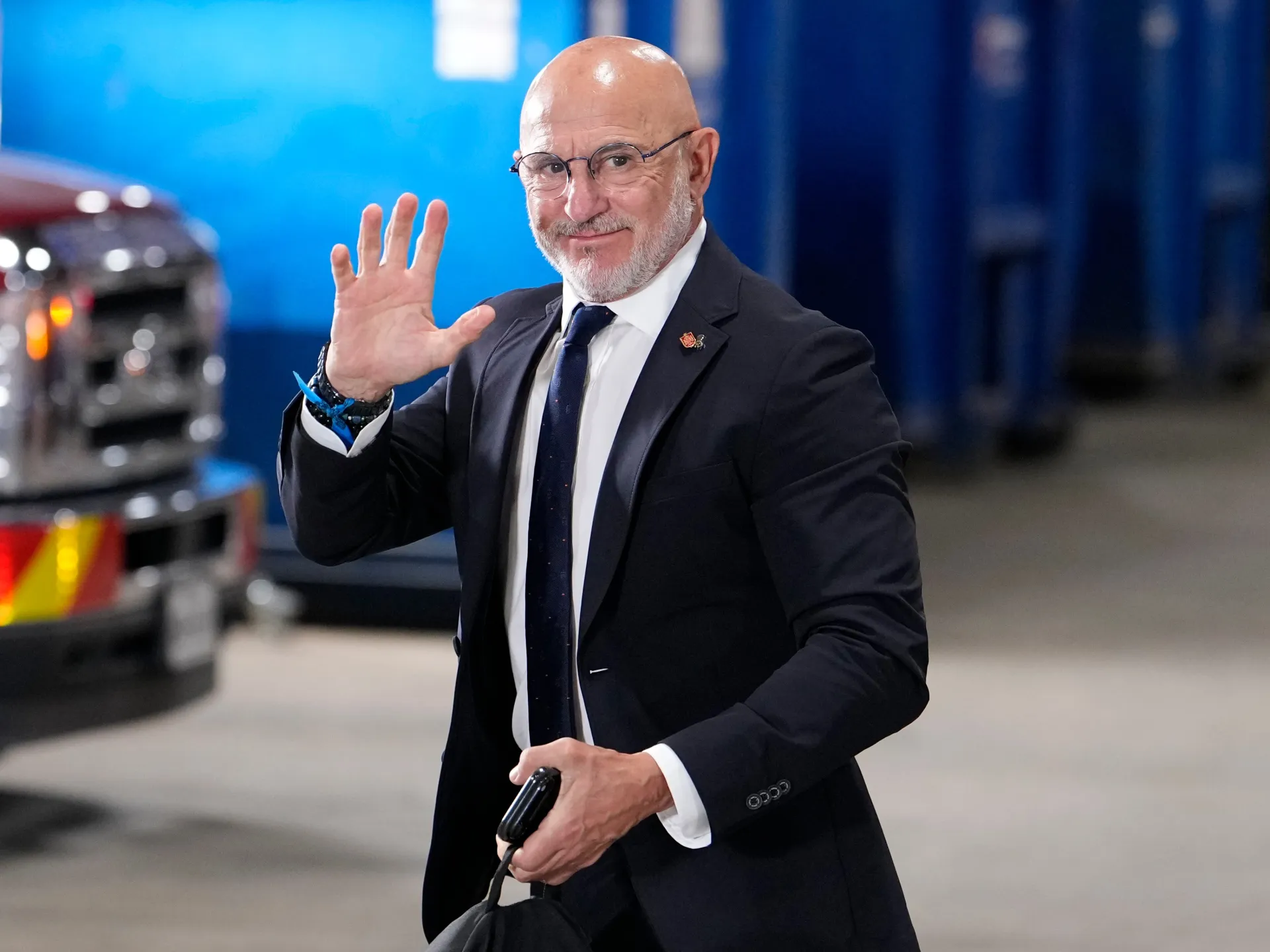
Spain coach Luis de la Fuente announced his Nations League squad from Ceuta on Friday in a show of support for the Spanish city in northern Africa that has become the centre of a migration crisis.
For his first squad announcement since Spain won the World Cup in July, De la Fuente revealed his list in a video featuring him in Ceuta accompanied by residents of the Spanish exclave. More than 70,000 people stormed across the border in late July from Morocco, with more than 100 dying in the chaos. Most quickly returned, but a few thousand remain in the city of just over 80,000.
Recommended Stories
list of 4 itemsend of list
De la Fuente did not directly mention the border crossing or its impact, but did say: “This is Ceuta, this is Spain.” It echoed the rise in sentiment in Spain that Ceuta – a territory that until the mass crossing was mostly an afterthought for most mainland Spaniards – needs to be supported.
Spain opens the Nations League against England at Wembley Stadium on September 26 , when its players will wear two stars on their shirts for the first time since winning their second world title.
After visiting London, Spain will host Croatia on September 29 and the Czech Republic on October 3 , before visiting Croatia on October 6 .
De la Fuente kept his World Cup squad mostly intact.
Inter Milan goalkeeper Josep Martinez replaces Barcelona’s Joan Garcia, who is out with a minor knee issue. Real Madrid defender Dean Huijsen is in for Marcos Llorente, who retired from international football. Fermin Lopez replaces fellow Barcelona midfielder Gavi, while Espanyol striker Roberto Fernandez got his first call-up, replacing Borja Iglesias.
Ceuta is one of two Spanish territories on the north African coast along with Melilla. Ceuta has been in Spanish possession since 1580. Christians and Muslims, Spanish and Moroccan residents and day workers all live there in relative harmony behind a border fence that many migrants from across Africa attempt to cross or swim around for a better life in Europe.
A Real Madrid supporters’ group has demanded a public apology from their star striker Kylian Mbappe and two of his teammates after the trio declined to fully wear a T-shirt in support of the people of Ceuta.
Mbappe, Vinicius Junior and Ibrahima Konate wore a tribute shirt along with the rest of the squad ahead of Madrid’s 3-2 win at Elche on Tuesday in La Liga, although theirs were partially rolled up to cover the message.
Spain’s Nations League squad:
Goalkeepers: Unai Simon (Athletic Bilbao), David Raya (Arsenal), Josep Martínez (Inter Milan)
Defenders: Aymeric Laporte (Athletic Bilbao), Pau Cubarsi (Barcelona), Eric Garcia (Barcelona), Marc Pubill (Atletico Madrid), Alejandro Grimaldo (Atletico Madrid), Marc Cucurella (Real Madrid), Dean Huijsen (Real Madrid), Pedro Porro (Tottenham).
Midfielders: Rodri Hernandez (Barcelona), Pedri Gonzalez (Barcelona), Fermin Lopez (Barcelona), Martin Zubimendi (Arsenal), Mikel Merino (Arsenal), Fabian Ruiz (Paris Saint-Germain), Alex Baena (Atletico Madrid).
Forwards: Lamine Yamal (Barcelona), Dani Olmo (Barcelona), Ferran Torres (Paris Saint-Germain), Yeremy Pino (Crystal Palace), Nico Williams (Athletic Bilbao), Mikel Oyarzabal (Real Sociedad), Victor Munoz (Liverpool), Roberto Fernandez (Espanyol).
Brazil has opened the UN’s General Debate for decades, with the US traditionally second in line as the host country. Here’s how that tradition began and how the rest of the speaking order is decided.
They “are feeling very pessimistic,” said Mark Baldassare, PPIC’s statewide survey director. “You know that comes out not just in the questions we ask about the economy, but generally about the direction of the state and the nation. This just indicates the level of negativity that people have going into this final stage before people cast their ballots this November.”
More than half of the state’s likely voters believe that California is headed in the wrong direction, and 73% predict sour economic times in the state next year. Less than a quarter of likely voters believe the nation is headed in the right direction.
President Trump has an approval rating of 27% of likely voters, but that’s better than Congress, which has a 16% approval rating. Majorities do not have confidence in either major political party’s ability to solve problems.
Ballots will begin arriving in 23.2 million voters’ mailboxes in a little over two weeks. Nearly 80% of likely voters are frustrated by the length of the ballot, which includes 14 propositions as well as statewide, congressional and local elections. This a rare consensus among Democratic, Republican and independent voters.
“This year, there are more propositions on the ballot than we’ve seen for a decade,” Baldassare said. “Overwhelming majorities of Californians say that there are too many propositions on the ballot, too many things for them to decide. And many Californians feel that the wording of ballot initiatives makes it very hard for them to understand what happens if one passes.”
The proposal to tax the assets of billionaires to make up for federal government healthcare cuts, Proposition 40, has a slim lead in the poll, with 52% of likely voters saying they support the one-time 5% levy.
However, there are two ballot measures, Propositions 41 and 42, that would nullify the wealth tax if one is approved and gets more votes than Proposition 40. Narrow majorities support both of these proposals, creating a quandary for wealth tax supporters: ensuring their proposal receives the support of a majority of voters while also tamping down support for the competing efforts.
Findings about the proposal to require showing government-issued identification to vote and the governor’s race show less competitive contests that break along predictable partisan lines in a state where registered Democratic voters outnumber Republicans nearly 2 to 1.
The voter ID measure is opposed by 55% of likely voters. In the race to succeed termed-out Gov. Gavin Newsom, 60% of likely voters support Democrat Xavier Becerra, and 38% support Republican Steve Hilton. The other 2% were undecided or do not plan to vote on the race.
The poll of 1,745 adult Californians was conducted Sept. 4-10, and has a margin of error of about 3 percentage points in either direction, and 3.8 percentage points among the 1,103 likely voters.
Italy, who play their home Six Nations fixtures at Rome’s 70,000-seater Stadio Olimpico, also distanced themselves from the possibility of taking a game across the Atlantic.
“The United States has all the potential to be a major market for the growth of our sport: in this respect, Italy was ahead of its time by playing a test match against Ireland in Chicago back in 2018,” said a spokesman for the Italian Rugby Federation (FIR).
“An event like the one between South Africa and the All Blacks – one of the greatest rivalries on the international calendar – can serve as an exciting preview of the upcoming Men’s and Women’s Rugby World Cups in 2031 and 2033.
“At present, however, there are no discussions between FIR and other stakeholders on the possibility of a Six Nations test taking place in the US.”
In an interview with the Daily Telegraph, external and The Times, external, Gilpin said: “This isn’t a live discussion of an Italy v Ireland game, but why we use that as an example is because you’ve got two fantastic fanbases in the US of Irish and Italian fans.
“If you could take a Six Nations game to the right place, to a Boston or to a New York, where there’s a lot of those fanbases, you can definitely drive the economics.
“Now, you’re going to have Irish fans and Italian fans in those respective home countries saying: ‘Hang on a minute, you know, we want to see our country play?’
“The counter-argument to that [is] it’s still Irish and Italian fans getting the chance to watch their team, so they’re just not the ones who live in Ireland and Italy on this occasion. But that’s a balancing piece we’ve got to work through.”
Ireland have previously enjoyed two well-attended games in the US against New Zealand.
Germany has the largest GDP in Europe(Image: Getty)
When you think about wealthy countries, places like Dubai, China and the US might spring to mind. However, Europe has its fair share of rich countries too. The wealthiest of all has been revealed in new data this year, and it’s not Luxembourg or Sweden.
According to figures from the World Population review, Germany is Europe’s wealthiest country when judged by gross domestic product (GDP). Germany has a GDP of $5.45trillion (£4.026T).
What is GDP?
GDP is a way to measure a country’s productivity and prosperity. The GDP of a country is the total monetary value of all goods and services which that country produced within its borders over a year.
To calculate it, economists take the spending of everyday consumers, the investment of businesses in the country, and government spending and net exports to figure out the final calculation.
If GDP is rising year on year, it’s a good sign that the country is doing well financially. If it is consistently lowering, it’s a sign of an incoming recession.
Is it accurate?
GDP is not a very accurate indicator of the prosperity of a country’s people. It does not indicate how the wealth is distributed, nor the happiness or individual wealth of people.
These flaws are why GDP is often calculated alongside other metrics such as the Human Development Index, which measures the economy as well as life expectancy and education to get a better idea of how a country is functioning.
There’s also the Inclusive Wealth Index, which measures the “savings account” of a country by looking at infrastructure, natural resources and workforce alongside its finances.
How does the UK compare?
According to the most recent data, the UK is in second place with a GDP of $4.23trillion (£3.148T).
France is in third place with $3.17trillion (£2.654T), Italy fourth with $2.42trillion (£2.021T), and Russia fifth with $2.21trillion (£1.962T).
In the case of Germany’s GDP, it is larger than two other European nations combined. Portugal has $380.6billion (£281.0B), and Greece has $307.6billion (£227.1B).
RIYADH: Eight Islamic and Arab countries on Sunday condemned Israeli plans for the removal of Palestinians from the Gaza Strip saying the designs, voiced by ministers, jeopardise a US-backed peace in the territory.
Israeli Defence Minister Israel Katz said Wednesday the government had plans to remove Palestinians from Gaza but was waiting for US approval on where to displace the territory’s population.
A day later, Israel’s National Security Minister Itamar Ben Gvir said the plan aimed to remove 250,000 Palestinians from Gaza in the first year, followed by the rest of the roughly two million residents over the following six years.
The foreign ministers of Saudi Arabia, Egypt, Jordan, the United Arab Emirates, Qatar, Pakistan, Indonesia and Turkey said they condemned in “the strongest terms” the “plans and mechanisms they proposed aimed at forcibly expelling Palestinians from their land”.
“Such measures directly challenge international efforts to achieve peace, particularly President Donald Trump’s comprehensive plan to end the conflict in Gaza, which includes a firm rejection of forced displacement,” they added referring to a US-backed, October 2025 peace plan for Gaza.
On Saturday the US ambassador to Israel Mike Huckabee, a staunch supporter of Israel and Israeli settlers in the occupied West Bank, denied there was an Israeli plan to force Palestinians out of Gaza.



![British Prime Minister Andy Burnham looks at French President Emmanuel Macron as they pose for photos ahead of a bilateral meeting at 10 Downing Street on September 3, 2026 in London, UK [Leon Neal/Reuters]](https://i0.wp.com/occasionaldigest.com/wp-content/uploads/2026/09/2026-09-03T133923Z_1327001305_RC2MBNAX5ATT_RTRMADP_3_BRITAIN-FRANCE-1788466043.jpg?w=640&ssl=1)