Nancy Pelosi

Mamdani-backed progressives win in N.Y. as states hold primaries

June 23 (UPI) — Mamdani-backed progressives scored big wins Tuesday night in New York state’s Democratic primary, as voters cast ballots across the Empire State, Maryland, Utah and South Carolina.

New York State

Of the four states holding primaries, New York state’s was being closely watched to gauge the influence of New York City Mayor Zohran Mamdani, who had endorsed three progressive candidates in competitive Democratic races — all of whom appeared poised late Tuesday to win their races.

Brad Lander, a former city comptroller, was running against Goldman in New York District 10 with the endorsements of other big-name progressives, including Sen. Bernie Sanders, I-Vt., and Rep. Alexandria Ocasio-Cortez, D-N.Y.

Lander said he was drawn to challenge Goldman because Goldman had called for increasing U.S. support for Israel. Their differing views on support for Israel have been a key issue in the race. Goldman and Lander are both Jewish.

Preliminary results showed Lander with an overwhelming 65.3% vote share, compared to Goldman’s 33.7%, with all 417 districts reporting.

Lander claimed victory Tuesday night.

After being introduced by Mamdani, Lander told supporters that he believes he and Goldman have more in common than they have differences. And to Goldman’s supporters, he said he knows that they want to “rescue our country back from Trumpism,” renew U.S. democracy and find a humane path for the country on the world stage.

“Solidarity is the force that we need to vanquish Trump’s fascism, to abolish ICE and to stand up to the billionaires who are rigging our economy against us,” he said.

“This campaign here was born out of solidarity.”

In New York District 7, Mamdani-endorsed Claire Valdez appeared poised to succeed outgoing Rep. Nydia Velazquez, who backed Brooklyn Borough President Antonio Reynoso.

With all 393 election districts reporting, preliminary election results showed Valdez had secured 55.5% of the vote to Reynoso’s 35.4%.

And in New York District 13, Mamdani endorsed Darializa Avila Chevalier, who late Tuesday appeared to be edging out incumbent Rep. Adriano Espaillat.

Chevalier, who was a field organizer for Mamdani, had secured 48.59% of the vote to Espaillat’s 45.2%, according to preliminary results.

Mamdani did not endorse a candidate in District 12 in a stacked field that consisted of state lawmakers Alex Bores and Micah Lasher, Lincoln Project co-founder George Conway, President John F. Kennedy‘s grandson Jack Schlossberg, attorney Laura Dunn and health researcher Nina Schwalbe.

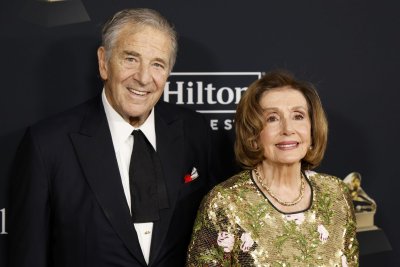
Former House Speaker Nancy Pelosi had endorsed Schlossberg and former New York City Mayor Michael Bloomberg had endorsed Lasher.

Artificial intelligence has been a central topic in the District 12 race. The Leading the Future super PAC, funded by the heads of OpenAI and venture capital firms supporting the AI industry, funneled more than $10 million to a super PAC opposing Bores’ campaign. Bores has been supportive of establishing regulations on AI.

With all 410 precincts reporting, Lasher had secured nearly 39% of the vote, followed by Bores with 34.82% and Schlossberg with 10.7%.

South Carolina

The big race in South Carolina was the GOP gubernatorial runoff between notable candidates, South Carolina Lt. Gov. Pamela Evette and state Attorney General Alan Wilson.

Preliminary results indicate Wilson stormed his way to the nomination and likely the South Carolina governor’s mansion.

With all counties reporting, Wilson netted 68.5% of the vote to Evette’s 31.44%.

Wilson has claimed victory, and Evette has conceded defeat.

The runoff followed a dramatic turnaround by President Donald Trump, who had initially endorsed Evette, before rescinding his support.

Trump gave his “Complete and Total Endorsement” to Evette ahead of the state’s primary earlier this month. But after it was determined to be a runoff between Evette and Wilson, Trump, rather than continue his support for Evette, told voters that they “can’t go wrong” with either candidate.

Evette finished less than two percentage points ahead of Wilson in the Republican primary but neither candidate cracked 30% of the vote, let alone 50%. While Trump endorsed Evette, the other candidates who ran in the primary — Reps. Ralph Norman and Nancy Mace — have endorsed Wilson. Sen. Tim Scott, R-S.C., also gave Wilson his endorsement on Friday.

“I’ve proudly stood with President Trump from the very beginning, defended him when others would not, and fought alongside him against the radical left,” Wilson said in a news release after Trump posted his support on social media. “I am deeply honored to have his support because he understands I am focused on making South Carolina more affordable for families and profitable for businesses.”

Evette’s campaign had highlighted her receiving Trump’s endorsement.

Wilson will face Democratic state Rep. Jermaine Johnson in November.

Maryland

In Maryland, Adrian Boafo was poised to succeed Rep. Steny Hoyer in the Democratic primary for District 5.

From among the two dozen candidates in the running, Boafo, Hoyer’s former field director, had nearly 32% of the vote, according to preliminary results, far exceeding healthcare CEO Quincy Bareebe, who was sitting second with 18% and former police officer Harry Dunn in third with 13.4%.

Dunn was among those defending the U.S. Capitol from attacks by pro-Trump rioters on Jan. 6, 2021. He is also a co-plaintiff in a lawsuit seeking to stop the Trump administration from establishing an “anti-weaponization fund” to pay rioters for being “targeted” by the Department of Justice.

Boafo had received Hoyer’s endorsement.

Utah

Former Rep. Ben McAdams appeared poised Tuesday night to win the Democratic nomination for Utah’s new District 1, created under Utah’s new congressional map.

Largely made up of Salt Lake City, the district went to Vice President Kamala Harris in the 2024 presidential election.

Preliminary results show McAdams with 60.2% of the vote, state Sen. Nate Blouin with 24.04% and Utah Democratic convention winner Liban Mohamed with nearly 12%.

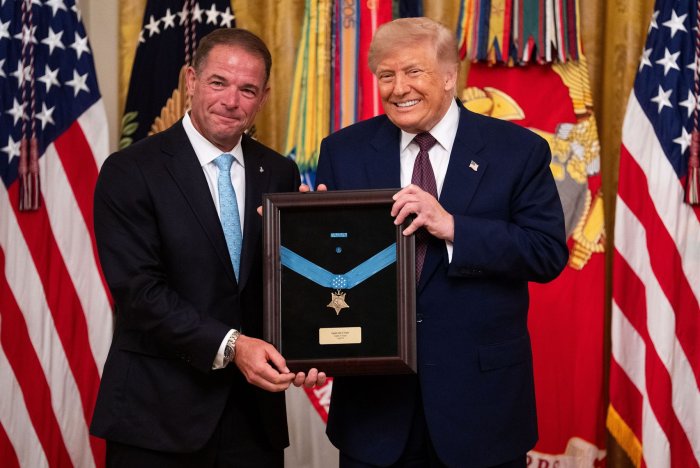
President Donald Trump presents a Medal of Honor to Tom Ripley on behalf of his father, John W. Ripley, during a Medal of Honor award ceremony in the East Room of the White House on Thursday. Photo by Aaron Schwartz/UPI | License Photo

Source link

What the primary chaos says about California Democrats

The first rule of a primary election is: Don’t make too much of the results.

The intrepid folks who bother to cast a ballot in these first-round races are largely a group of engaged voters, and drawing conclusions from such a narrow minority is a losing game.

So however the final June results tally out, the lessons learned won’t easily translate to the larger electorate that will almost surely show up in November. But if this election doesn’t tell us much about what fall voters will do, it does tell us something about the Democratic Party that dominates this state: It’s chaotic, to put it gently. And no, that’s not entirely the fault of the “jungle” primary.

Traditional rules seem to have broken down (not a bad thing) and new ones haven’t yet emerged. The old guard has lost control, and maybe vision, and the result is more candidates willing to sidestep seniority and a wait-your-turn mentality to try their luck — especially younger progressives.

Sometimes that chutzpah works, sometimes it doesn’t, but it’s a mirror of the national trend of Democratic infighting and a glimpse into just how fragmented the party has become as it tries to figure out who it stands for and who it supports before the 2028 presidential election.

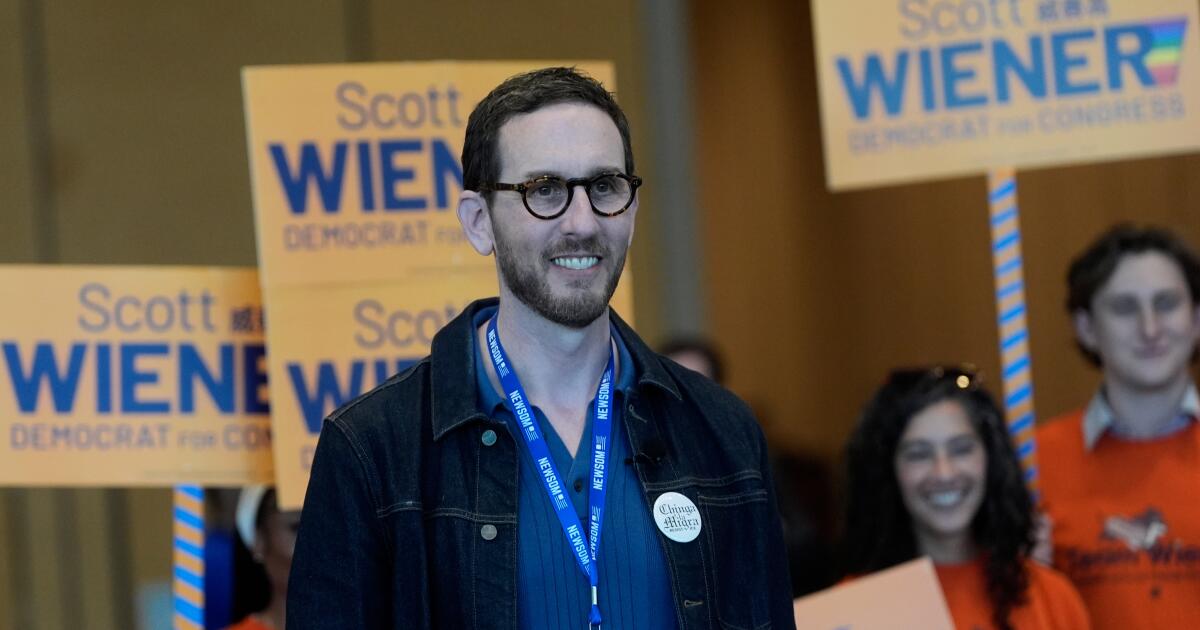
“I feel like I’m definitely running against major institutional forces, but that’s how it is,” state Sen. Scott Wiener told me recently. “At times we see sort of a little bit of a fortress mentality, and other perspectives are not welcome, and younger folks, newer voices are not welcome, and and that’s a dynamic that plays out in a lot of different places.”

Wiener, who could be considered king of the line-jumpers, just took the top spot in the San Francisco-centered race to represent the 11th Congressional District, the seat held by Nancy Pelosi since 1987, when Wiener was 17.

By most accounts, Pelosi and Wiener had a mostly cordial relationship until last year, when he entered the race before she announced her retirement. Though Wiener had been clear for years that he planned such a run when Pelosi stepped down, Pelosi is an icon in the city, beloved by constituents and uncontested as queen of the old guard.

Announcing his campaign before she officially made that decision — or had the chance to choose her successor — sent shock waves through the political firmament. When Pelosi endorsed Supervisor Connie Chan in May, it was seen by many as a sign of her displeasure. Chan, who had struggled to gain traction in the primary, came in second with the Pelosi boost and will face Wiener in November.

Across the state, there were other races with upstart contenders. In Southern California, Jake Levine, a progressive Democrat who served in the Obama White House, took on incumbent Brad Sherman. Sherman, who at 71 has served almost 30 years in Congress, resoundingly beat out Levine by more than 20 points.

In Sacramento, there is Mai Vang, a progressive City Council member, who is challenging Rep. Doris Matsui, another member of the old guard royalty. Vang is in a tie for second place with a Republican contender as remaining votes are counted.

And of course, there is the governor’s race itself, which included a field so determined and uncontrollable even before the fiasco of Eric Swalwell’s sexual misconduct scandal that the state Democratic Party started putting out its own polling in a seeming bid to convince some blue contenders to drop out. It didn’t work. Notably, progressive Katie Porter and moderate San José Mayor Matt Mahan stuck in until the bitter end. But old guard candidate Xavier Becerra came out on top.

If these races have a lesson, it’s that different Democratic voters want different things, but the party hasn’t figured out how to embrace that other than offering up the moderate middle ground.

“This is a big question to this Democratic establishment, about how big of a tent they want to build,” said Irene Kao of Courage California, a progressive advocacy organization.

She said that it “bodes well” that so many strong progressive challengers came out for the primary, because it allows a chance for candidates outside the party power structure to find an audience with voters, even if they are ultimately unsuccessful.

And where voters go, the party will eventually be forced to follow. That doesn’t necessarily mean a more progressive Democratic Party, but it likely means a more inclusive one if they want to lure the kind of low-information and low-propensity voters who make or break a general election.

“People are sick of the games, and sick of people trying to just maneuver things to get their own person in,” Wiener said. “People want to have choices.”

Source link

Former Rep. Barney Frank dies at 86

1 of 2 | Former Rep. Barney Frank speaks in 2022 during a signing ceremony for the Respect for Marriage Act, which requires the U.S. federal government to recognizing the validity of same-sex and interracial marriages in the United States, in the Rayburn Room of the U.S. Capitol in Washington, D.C. Frank died Tuesday at age 86. File Photo by Bonnie Cash/UPI | License Photo

May 20 (UPI) — Barney Frank, a former Massachusetts congressman who was instrumental in overhauling the country’s financial regulations and was one of the first openly gay members of Congress, died at his home in Maine. He was 86.

Frank had entered hospice care last month with congestive heart failure, The New York Times reported.

Rep. Nancy Pelosi, D-Calif., worked with Frank in Congress for decades. Pelosi called him “a real mentor” and said she learned a lot from him.

“He has been about idealism and pragmatism to get the job done,” she told NBC News.

Frank served in the House of Representatives for more than 30 years and led the House Financial Services Committee from 2007 to 2011. One of the successes for which he was best known was the Dodd-Frank Act of 2010, which he co-sponsored with Sen. Chris Dodd. The act, a response to the 2008 financial crisis, tightened regulations on Wall Street, preventing banks from taking part in the riskiest behaviors and protecting consumers.

Frank was one of the first U.S. politicians to come out as gay voluntarily — in a 1987 interview with the Boston Globe, a statement he followed with “So what?” He became the first member of Congress to marry a same-sex partner when he wed Jim Ready in 2012. Ready survives him.

“I think the key to our having made the enormous progress we made in defeating anti-gay prejudice had to do with all of us coming out and people discovering the gap between between our reality and the way we were painted,” Frank said in an interview last month with NBC News.

Frank was also known for championing civil rights and women’s rights and advocating for issues including environmental protection and abortion rights.

“I’m a left-handed gay Jew,” he often said, The New York Times reported. “I’ve never felt, automatically, a member of any majority.”

Frank’s first book, Frank: A Life in Politics from the Great Society to Same-Sex Marriage, was published in 2015. His second, The Hard Path to Unity: Why We Must Reform the Left to Rescue Democracy, is expected to be published in September.

In Frank, he wrote that he’d been good at his job but in retirement, he was ready to be “good at life.”

Brandon Clarke

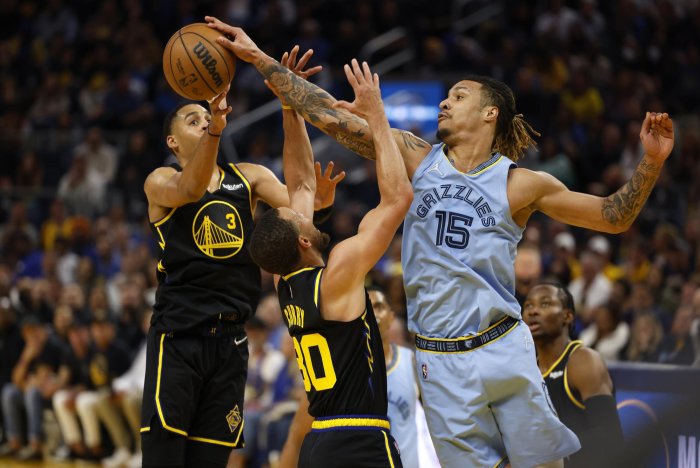
Memphis Grizzlies forward Brandon Clarke (R) and Golden State Warriors guard Jordan Poole reach out for a rebound in San Francisco on May 7, 2022. Clarke died at the age of 29 on May 11. Photo by John G. Mabanglo/EPA

Source link