Arab News | Lebanese army reinforces presence in Nabatiyeh amid fears of Israeli incursion

BEIRUT: The Lebanese army and other security agencies reinforced their presence in the southern city of Nabatiyeh Thursday amid continued Israeli military escalation. An official Lebanese source told Arab News that Beirut had received no guarantees that the city would be spared an Israeli incursion following Israel’s takeover of the Ali Al-Taher ridge.
The Lebanese source said the enhanced army deployment was intended to “remove Israeli pretexts” for advancing into and occupying the city. “No foreign party, including the Americans, has provided Lebanon with guarantees that Israel will be restrained from pursuing its ambitions,” the source said.
Concerns are mounting over the city’s fate since Israel announced taking control of Ali Al-Taher, amid silence from Hezbollah, raising fears that Nabatiyeh could become vulnerable militarily. Nabatiyeh is approximately 12-15 km from the Israeli border.
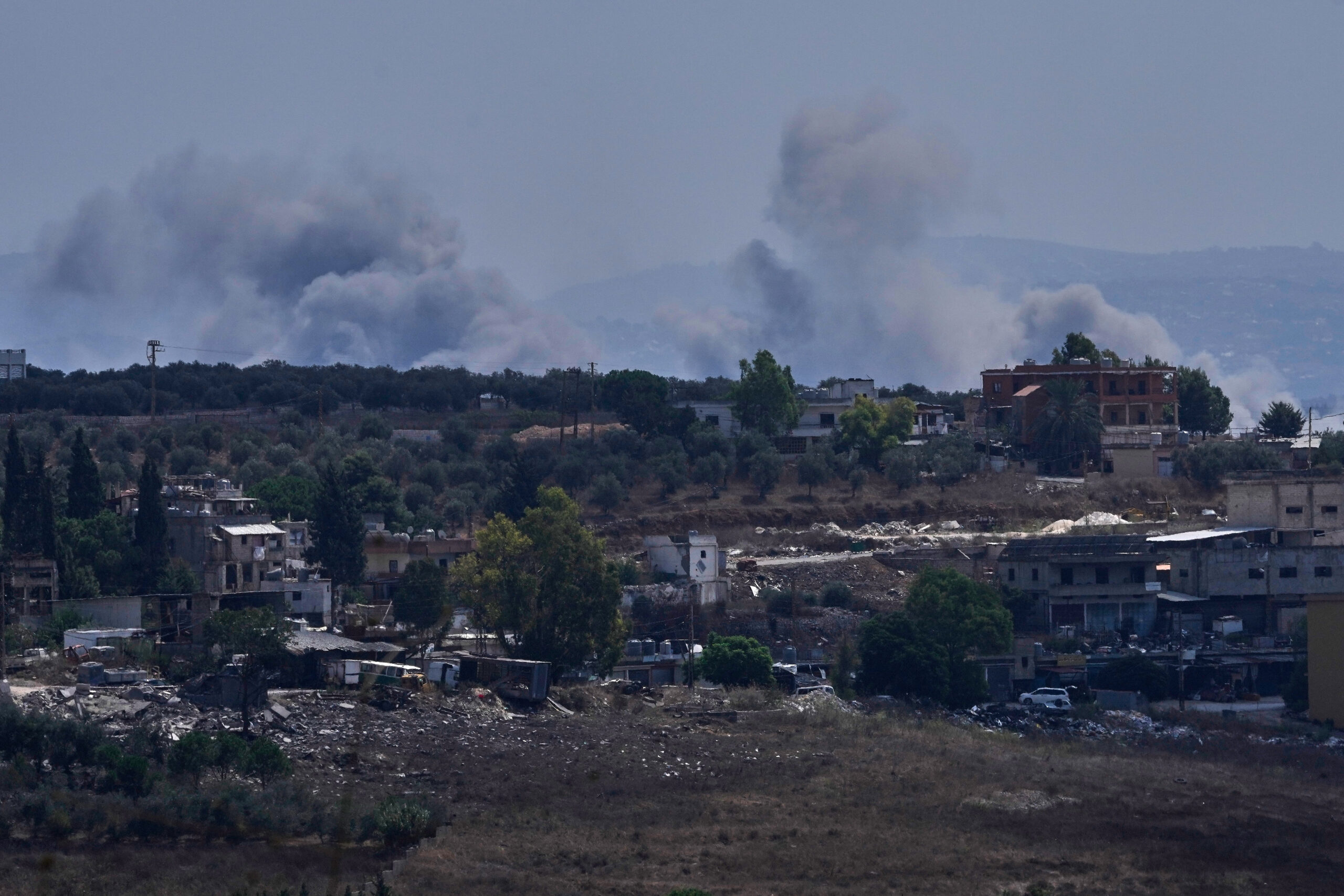
Any slide toward widespread destruction would mark a major escalation in the conflict. Recent Israeli attacks have struck government and public facilities in Nabatiyeh, prompting President Joseph Aoun to condemn the targeting of a Finance Ministry building and the destruction of Ghandour Hospital.
In a statement, Lebanese Army Command stressed that the reinforcements did not constitute a new deployment, as army units were already present in Nabatiyeh and other areas not occupied by Israeli forces. It said the military had instead intensified its duties to reassure residents.
Interior Minister Ahmad Al-Hajjar said reinforcing the military and security presence was “an essential step to reassure residents,” adding that the state would continue strengthening its presence in the south to create conditions for people to return safely.
Prime Minister Nawaf Salam told Nabatiyeh Mayor Abbas Fakhruddin that supporting the resilience of residents was a priority. He said he was following up with security chiefs on increasing the presence of official state agencies alongside the army in Nabatiyeh. Lebanon is seeking to consolidate its authority inside the city and turn it into a broader model of state administration in areas exposed to Israeli military pressure.
The developments at Ali Al-Taher have made those efforts more urgent, with concerns that any area not quickly brought under effective state authority could, under the current balance of power, become the target of further Israeli military pressure.
The push coincided with a statement from the US Embassy on Thursday, as public calls grew in southern Lebanon against Hezbollah’s weapons. Residents of Tyre and Nabatiyeh have urged the Lebanese army to deploy and for weapons to be restricted exclusively to state institutions, while backing the government’s efforts to secure an Israeli withdrawal.
The US Embassy in Lebanon said Thursday that “the Lebanese people are making clearer every day their preference for Lebanese state institutions over Hezbollah’s weapons.” It added that “southern Lebanon does not belong to regional actors or militias.”
The embassy reaffirmed US support for the government’s declared objective of asserting sovereignty, with the Lebanese army responsible for enforcing it and decisions of war and peace remaining exclusively in the hands of the Lebanese state. The Lebanese army, meanwhile, issued a detailed statement outlining its activities since the signing of the US-sponsored framework agreement between Lebanon and Israel.
The statement came in response to what the army described as continued Israeli efforts to undermine existing arrangements, obstruct the army’s field operations and continue attacks on civilians that killed and wounded dozens of people a week ago. Lebanese Army Command said the escalation in Israeli strikes, alongside demolition and explosive operations in the south, “leaves no room for doubt regarding the aggressive intentions of the Israeli occupation.”
It said the Israeli escalation threatened implementation of the framework agreement between Lebanon and Israel, while continued attacks endangered existing understandings and arrangements and obstructed the army’s efforts to establish stability in the south. The army also warned that Israeli attacks and violations demonstrated an effort to undermine its credibility both inside Lebanon and before the international community.
The continuation and escalation of these attacks, alongside brutal demolition and explosive operations in the south, left no doubt about Israel’s aggressive intentions and contradicts international law, the statement added. Lebanese Army Command said specialist units had seized about 1,818 weapons and ammunition items during their operations.
The seized material included 10 rocket-launching platforms, seven rockets, seven drones, 51 projectiles, 10 aerial bombs and 1,560 pieces of light ammunition, in addition to large numbers of mines and explosive devices.
The army said units had also searched some homes in accordance with Lebanese law and with owner consent. It said residents had cooperated with the measures, particularly those related to removing unexploded ordnance and other dangers left behind by the war. Military units also opened roads totaling about 12 km in length as part of efforts to rehabilitate damaged areas, facilitate the movement of residents and troops and consolidate the army’s presence.
The measures included controlling movement in and out of operational areas, giving deployed units greater ability to monitor the area and prevent unauthorized armed activity. Lebanese Army Command said there had been no corresponding Israeli compliance.
According to army monitoring, Israel has committed about 7,700 violations since the framework agreement was signed on June 26. These include multiple attacks, as well as incidents in which Israeli forces opened fire near Lebanese army personnel and patrols.