MSF’s New Report Examines Surging Malnutrition Crisis in Northern Nigeria
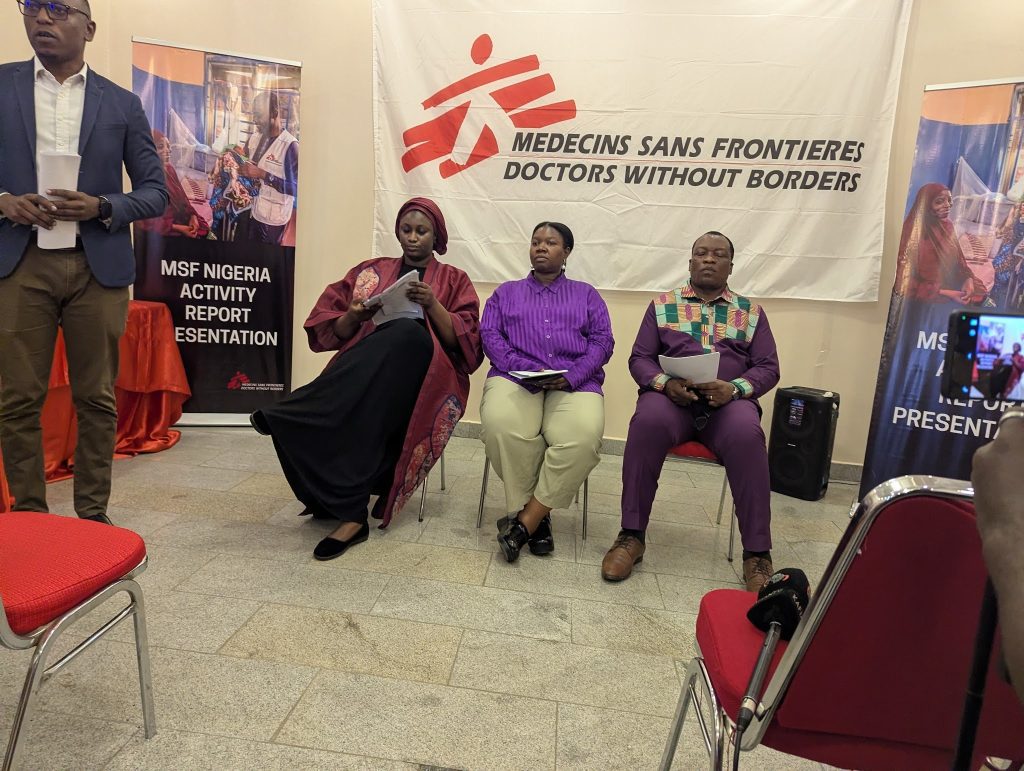
Médecins Sans Frontières (MSF), an international humanitarian organisation, has released its 2025 activity report for Nigeria, and the findings are sobering. The medical emergency organisation, also known as Doctors Without Borders, unveiled the report during an event in Abuja, North Central Nigeria, on Wednesday, May 13, documenting the disturbing rise in malnutrition cases in the country’s northern region.
With more than 3,500 workers delivering essential healthcare services across ten states, MSF reported treating over 440,000 children for malnutrition, more than 300,000 individuals for malaria, and assisting with over 33,500 deliveries in 2025.
This surge, according to the humanitarian organisation, underscores the fragility of Nigeria’s health system and the growing vulnerability of women and children in conflict-affected regions.
The 2025 report shows that MSF recorded more than 600,000 outpatient consultations, 48,000 inpatient admissions, and treated 341,239 patients for malaria, 38,753 children for measles, 6,123 patients for diphtheria, and 985 others for meningitis across its facilities in the region.
These findings are specific to the ten Nigerian states where MSF has been operating since 1996, including Jigawa, Kano, Katsina, Kebbi, Sokoto, Zamfara, and Cross River. The organisation says it has provided a wide range of essential medical services, including paediatric and maternal health care, treating children with malnutrition, responding to disease outbreaks, caring for survivors of sexual violence, offering mental health support, and performing life‑saving surgical interventions.
The MSF country representative, Ahmed Aldikhari, revealed that in 2025, the organisation observed a pattern consistent with that of previous years, starting in 2022. Aldikhari stated that malnutrition is one of the year’s greatest challenges, linking it to the region’s fragile conditions, which are severely affected by insecurity that has worsened food security.

“We are seeing a vicious cycle where malnutrition is both a cause and a consequence of diseases such as measles, malaria, and diphtheria, among others, which continue to affect vulnerable communities, especially when healthcare is delayed or inaccessible,” he said, suggesting that Nigeria might soon experience the peak of the malnutrition crisis.
“That is why we are consistently working side-by-side with the ministries of health, humanitarian affairs, budget and planning at the state and federal levels, and also, with our Nigerian colleagues to ensure that efficient services are provided, but they are not enough.”
HumAngle has previously reported on the broader impact of the crisis, stressing how displacements, insecurity, and climate change, among other natural and human-induced disasters, have compounded the problem. In July 2025, MSF, in collaboration with the Katsina State government, mobilised state and non-state actors to address the escalating malnutrition crisis in the northwestern region.
During the 2024 MSF conference in Abuja, organised in collaboration with the North West Governors’ Forum and the Katsina State Government, stakeholders emphasised that malnutrition in the northwestern region is no longer a seasonal emergency but rather a structural crisis that requires urgent mobilisation. The governors acknowledged that insecurity and climate pressures were eroding food systems, but MSF urged greater investment in therapeutic feeding centres and preventive programmes.
Northern Nigeria continues to face a critical malnutrition crisis, with Katsina particularly affected, according to MSF’s 2025 activity report. Findings reveal that since 2021, MSF has been present in the state, with the organisation’s leadership revealing that they have witnessed a sharp rise in the number of malnourished children since responding to the growing crisis in recent years.
In 2025, MSF reported treating the highest number of malnourished children in Katsina. With the support of the state Ministry of Health, the organisation focused on preventing illness and malnutrition to reduce mortality and morbidity among children suffering from acute malnutrition.
“Katsina State has faced a chronic malnutrition crisis for over a decade, driven by insecurity, climate shocks, limited primary healthcare services, and high birth rates,” the report revealed. “Throughout 2025, MSF admitted 26,445 patients for inpatient care, provided treatment to 146,301 children through its outpatient centres, and conducted 15,387 outpatient consultations for malaria.”
In response to this, MSF established a new Ambulatory Therapeutic Feeding Centre (ATFC) in Mashi and a second inpatient therapeutic feeding centre at the Turai Yar’aduwa Hospital to handle the increased patient load during peak seasons.
Beyond nutrition in Kebbi, the report states that MSF responded to multiple infectious disease surges and outbreaks by tackling the increase in meningitis cases from February to May, while supporting the Ministry of Health facilities in Jega, Gwandu, and Aliero with logistics, medical supplies, staff training, and facility rehabilitation.
Following the escalating insecurity in neighbouring Zamfara and Niger that led to mass displacement to the Danko-Wasugu areas of Kebbi State as of June, the humanitarian organisation provided basic healthcare and distributed non-food relief kits to vulnerable households.
In Zamfara alone, MSF admitted 47,164 children to inpatient therapeutic feeding centres and provided 14,167 outpatient consultations in 2024, with numbers continuing to rise in 2025. According to Aldikhari, this increase in admissions is due to multiple overlapping crises, including conflict and insecurity in the northwestern and northeastern regions, which have displaced thousands of families, cutting them off from farmlands.
While the 2025 activity report warns that malnutrition is no longer a seasonal emergency but a permanent feature of Nigeria’s humanitarian landscape, it also highlights the fact that the sheer scale of admissions suggests the crisis is outpacing the humanitarian response.
Médecins Sans Frontières (MSF) released its 2025 activity report for Nigeria, highlighting a troubling surge in malnutrition, especially in the northern region.
MSF treated over 440,000 malnourished children, more than 300,000 malaria patients, and assisted with 33,500 deliveries, illustrating the fragility of Nigeria’s health system amid growing challenges in conflict-affected areas. The report details their operations across ten states since 1996, offering a range of essential medical services and responding to disease outbreaks and the chronic malnutrition crisis, particularly in conflict-driven regions like Katsina and Zamfara.
The report emphasizes the cyclical nature of malnutrition being both a cause and consequence of diseases, exacerbated by insecurity and climate pressures. Collaboration with local government and NGOs is ongoing, yet MSF warns that the crisis has transformed into a structural issue requiring significant investments in therapeutic feeding centers and preventive programs. Despite increased efforts, the scale of malnutrition and related health crises like measles, diphtheria, and meningitis, is outpacing humanitarian response, marking malnutrition as an enduring element of Nigeria’s humanitarian landscape.