movements

Venezuelan Popular Movements Voice Iran Solidarity, Gov’t Deletes Controversial Statement

Venezuelan authorities have offered no explanation on the withdrawn statement. (Anadolu Agency)

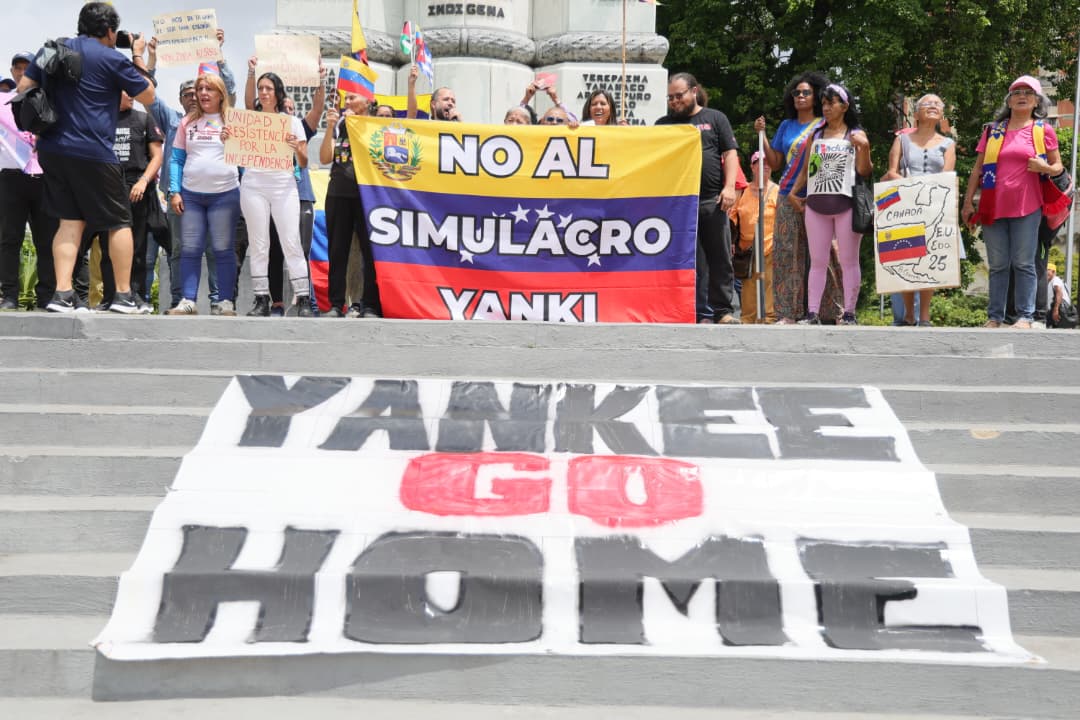
Mérida, March 2, 2026 (venezuelanalysis.com) – Venezuelan popular movements condemned the recent US and Israeli attacks against Iran and expressed support and solidarity with the West Asian nation. 

On Saturday, February 28, the International Platform for Solidarity with the Palestinian Cause and the Alexis Vive Patriotic Force were among the organizations issuing statements rejecting Washington and Tel Aviv’s military actions.

The organizations decried the bombings of Iranian territory, including against civilian targets, and described the operations as serious violations of international law. The International Platform for Solidarity with the Palestinian Cause expressed “deep outrage” over the bombing of a girls’ school in Minab that killed over 175 people.

“This infamous act will not crush the heroic resistance of the Iranian people, in their example of dignity in the face of imperialist and zionist aggression,” the platform’s communiqué read.

For its part, the Alexis Vive Patriotic Force emphasized that the latest attacks are not an isolated incident, but rather “another attempt to impose regime change and undermine Iran’s self-determination.” 

“These actions seek to reconfigure the political map of Western Asia in favor of the strategic interests of Washington and Tel Aviv,” the organization, a driving force in El Panal Commune in Caracas, added in its statement.

The Venezuelan chapter of Alba Movimientos, a continental alliance of social movements, likewise issued a statement declaring “unrestricted solidarity” with Iran and calling on multilateral organizations to deter the US and Israel’s “warmongering.”

Venezuelan grassroots organizations scheduled a rally on Tuesday in front of the Iranian embassy in Caracas to reiterate their support and condemnation of the foreign aggression against the country.

West Asia has been thrown into open conflict after the US and Israel launched operations “Epic Fury” and “Lion’s Roar,” respectively, on Saturday, with widespread bombings against Iran and targeted assassinations against the country’s leadership. Ayatollah Ali Khamenei, Iran’s supreme leader, was killed along with several relatives by an Israeli strike. 

Washington and Tel Aviv justified the systematic bombing of Tehran and other cities as a “preemptive strike,” with officials from both countries claiming without evidence that Iran was working toward nuclear weapons.

In response, Iranian forces launched defensive maneuvers and retaliatory attacks against US military assets in the region, striking bases and other targets in countries including Bahrain, the United Arab Emirates, Qatar, Iraq, and Jordan. Iran has also launched multiple waves of missiles against Israel and vowed to implement a strategic blockade in the Strait of Hormuz.

Caracas withdraws statement, expresses solidarity with Qatar

The Venezuelan government issued a statement on Saturday expressing its “condemnation and deep regret” that the “military option was chosen” with attacks against Iran while diplomatic talks were ongoing. However, Caracas did not name the US and Israel as the perpetrators. 

The communiqué went on to condemn Iran’s retaliatory actions as “inappropriate and reprehensible military reprisals against targets in various countries in the region.” The document ended with a call for a return to negotiations between all parties.

The government’s position drew widespread criticism on social media and was removed from the Foreign Ministry’s official accounts, as well as from Foreign Minister Yván Gil’s Telegram and X platforms, on Saturday evening.

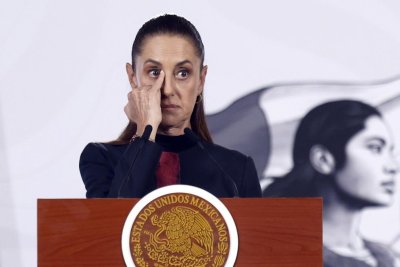
Venezuelan leaders, including Acting President Delcy Rodríguez, have offered no explanation for the statement’s publication and deletion. On Monday, Rodríguez reported a phone conversation with Qatari Emir Tamim bin Hamad Al Thani in which she expressed “solidarity” amidst the “violence and instability” in the region.

“I expressed my condolences and deep concern over the loss of civilian lives due to the ongoing conflict, reiterating our call to respect international law and preserve peace,” the acting president wrote.

Caracas’ latest stance contrasts with its previous fierce condemnations of US and Israeli actions in West Asia, including the genocide in Gaza, attacks against Lebanon, and the assassination of Hezbollah leader Hassan Nasrallah.

Venezuela had likewise firmly backed Iran, one of its strongest allies in the past quarter century, against foreign attacks, including during the June 2026 war against Israel.

During Hugo Chávez’s presidency (1999-2013), Caracas and Tehran consolidated a multidimensional strategic alliance based on opposition to US expansion and a commitment to building a multipolar world. During this period, more than 270 bilateral agreements were signed in sectors such as energy, housing, agriculture, and technology.

The close ties, described by both governments as a “revolutionary brotherhood,” also provided key lifelines as both countries faced US-led economic sanctions. Venezuela benefited from Iranian technology transfers in areas such as drone manufacturing, cement, and vehicle assembly.

Iran provided key fuel shipments in 2020, defying US threats, as the Venezuelan economy reeled under US coercive measures.

Edited by Ricardo Vaz in Caracas.


Source link

Europe’s growing fight over Israeli goods: Boycott movements mushroom | Israel-Palestine conflict News

One afternoon late August in a quiet Irish seaside town, a supermarket worker decided he could no longer separate his job from what he was seeing on his phone.

Images from Gaza, with neighbourhoods flattened and families buried, had followed him to the checkout counter.

Recommended Stories

list of 4 itemsend of list

At the time, Israel’s genocidal onslaught had killed more than 60,000 Palestinians.

His first act of protest was to quietly warn customers that some of the fruit and vegetables were sourced from Israel. Later, as people in Gaza starved, he refused to scan or sell Israeli-grown produce.

He could not, he said, “have that on my conscience”.

Within weeks, Tesco supermarket suspended him.

He requested anonymity following advice from his trade union.

In Newcastle, County Down, a town better known for its summer tourists than political protest, customers protested outside the store.

The local dispute became a test case: Can individual employees turn their moral outrage into workplace action?

Facing mounting backlash, Tesco reinstated him in January, moving him to a role where he no longer has to handle Israeli goods.

“I would encourage them to do it,” he said about other workers. “They have the backing of the unions and there’s a precedent set. They didn’t sack me; they shouldn’t be able to sack anyone else.

“And then, if we get enough people to do it, they can’t sell Israeli goods.”

“A genocide is still going on, they are slowly killing and starving people – we still need to be out, doing what we can.”

From shop floors to state policy

Across Europe, there is labour-led pressure to cease trade with Israel.

Unions in Ireland, the UK and Norway have passed motions stating that workers should not be compelled to handle Israeli goods.

Retail cooperatives, including Co-op UK and Italy’s Coop Alleanza 3.0, have removed some Israeli products in protest against the war in Gaza.

The campaigns raise questions about whether worker-led refusals can lead to state-level boycotts.

Activists say the strategy is rooted in history.

In 1984, workers at the Dunnes Stores retail chain in Ireland refused to handle goods from apartheid South Africa. The action lasted nearly three years and contributed to Ireland becoming the first country in Western Europe to ban trade with South Africa.

“The same can be done against the apartheid, genocidal state of Israel today,” said Damian Quinn, 33, of BDS Belfast.

The Boycott, Divestment and Sanctions (BDS) movement is a Palestinian-led campaign launched in 2005 that calls for economic and cultural boycotts of Israel until it complies with international law, including ending its occupation of Palestine.

“Where the state has failed in its obligation to prevent and punish the crime of genocide, citizens and workers across the world must refuse Israel and apply pressure on their governments to introduce legislation,” said Quinn.

That pressure, he said, takes the form of boycotting “complicit Israeli sporting, academic and cultural institutions”, as well as Israeli and international companies “engaged in violations of Palestinian human rights”.

The movement also seeks to “apply pressure on banks, local councils, universities, churches, pension funds and governments to do the same through divestment and sanctions”, he added.

Supporters argue that such pressure is beginning to shape state policy across Europe.

Spain and Slovenia have moved to restrict trade with Israeli settlements in the occupied West Bank following sustained public protests and mounting political pressure. In August 2025, Slovenia’s government banned imports of goods produced in Israeli-occupied territories, becoming one of the first European states to adopt such a measure.

Spain followed suit later that year, with a decree banning the import of products from illegal Israeli settlements. The measure was formally enforced at the start of 2026.

Both countries’ centre-left governments have been outspoken critics of Israel’s conduct during the war, helping create the political conditions for legislative action.

In the Netherlands, a wave of pro-Palestinian campus protests and public demonstrations in 2025 shifted political discourse. Student demands for academic and trade disengagement became part of broader calls for national policy change.

Later that year, members of the Dutch parliament urged the government to ban imports from illegal Israeli settlements.

Meanwhile, Ireland is attempting to advance its Occupied Territories Bill, first introduced in 2018, which would prohibit trade in goods and services from illegal settlements in occupied Palestinian territory, including the West Bank.

Progress, however, has stalled despite unanimous backing in the lower house of Ireland’s parliament, the Dail.

Paul Murphy, an Irish pro-Palestine member of parliament who, in June, attempted to cross into Gaza, told Al Jazeera the delay amounts to “indirect pressure from Israel routed through the US”. He accused the government of “kicking the can down the road” as it seeks further legal advice.

Pro-Israel organisations are working to oppose initiatives that aim to pressure Israel economically.

B’nai B’rith International, a US-based group that says it strengthens “global Jewish life”, combats anti-Semitism and stands “unequivocally with the State of Israel”, decries the BDS movement. In July 2025, it submitted an 18-page memorandum to Irish lawmakers, warning the bill could pose risks for US companies operating in Ireland.

The memorandum argued that, if enacted, the bill could create conflicts with US federal anti-boycott laws, which prohibit US companies from participating in certain foreign-led boycotts – particularly those targeting Israel.

B’nai B’rith International also “vehemently condemns” the United Kingdom’s recognition of Palestinian statehood and has donated 200 softshell jackets to Israeli military personnel.

Critics say interventions of this kind go beyond advocacy and reflect coordinated efforts to influence European policymaking on Israel and Palestine from abroad.


While lobby groups publicly press their case, leaked documents, based on material from whistleblower site Distributed Denial of Secrets, suggest the Israeli state has also been directly involved in countering BDS campaigns across Europe.

A covert programme, jointly funded by the Israeli Ministries of Justice and of Strategic Affairs, reportedly hired law firms for 130,000 euros ($154,200) on assignments aimed at monitoring boycott-related movements.

Former Sinn Fein MEP Martina Anderson, who supports the BDS movement, previously accused Israeli advocacy organisations of attempting to silence critics of Israel through legal and political pressure.

According to the leaked documents cited by The Ditch, an Irish outlet, Israel hired a law firm to “investigate the steps open to Israel against Martina Anderson”.

She told Al Jazeera she stood by her criticism.

“As the chair of the Palestinian delegation in the European Parliament, I did my work diligently, as people who know me would expect me to do.

“I am proud to have been a thorn in the side of the Israeli state and its extensive lobbying machine, which works relentlessly to undermine Palestinian voices and to justify a brutal and oppressive rogue state.”

Pushback across Europe

In 2019, Germany’s parliament, the Bundestag, adopted a non-binding resolution condemning the BDS movement as anti-Semitic, calling for the withdrawal of public funding from groups that support it.

Observers say the vote has since been used to conflate criticism of Israel with anti-Semitism.

The European Leadership Network (ELNET), a prominent pro-Israel advocacy organisation active across the continent, welcomed the move and said its German branch had urged further legislative steps.

Meanwhile, in the UK, ELNET has funded trips to Israel for Labour politicians and their staff.

Bridget Phillipson, now secretary of state for education, declared a 3,000-pound ($4,087) visit funded by ELNET for a member of her team.

A coworker of Wes Streeting named Anna Wilson also accepted a trip funded by ELNET. Streeting himself has visited Israel on a mission organised by the Labour Friends of Israel (LFI) group.

ELNET’s UK branch is directed by Joan Ryan, an ex-Labour MP and former LFI chair.

During the passage of a bill designed to prevent public bodies from pursuing their own boycotts, divestment or sanctions policies – the Labour Party imposed a three-line whip instructing MPs to vote against it. Phillipson and Streeting abstained.

The Economic Activity of Public Bodies (Overseas Matters) Bill was widely seen as an attempt to block local councils and public institutions from adopting BDS-style measures.

A vocal supporter of the legislation was Luke Akehurst, then director of the pro-Israel advocacy group, We Believe in Israel. In a statement carried by ELNET, he said it was “absurd” that local councils could “undermine the excellent relationship between the UK and Israel” through boycotts or divestment.

“We need the law changed to close this loophole,” he said, arguing that BDS initiatives by local authorities risked “importing the conflict into communities in the UK”.

The legislation was ultimately shelved when a general election was called in 2024. It formed part of broader legislative efforts in parts of Europe to limit BDS-linked boycotts.

Akehurst has since been elected as Labour MP for North Durham, having previously served on the party’s National Executive Committee.

Source link