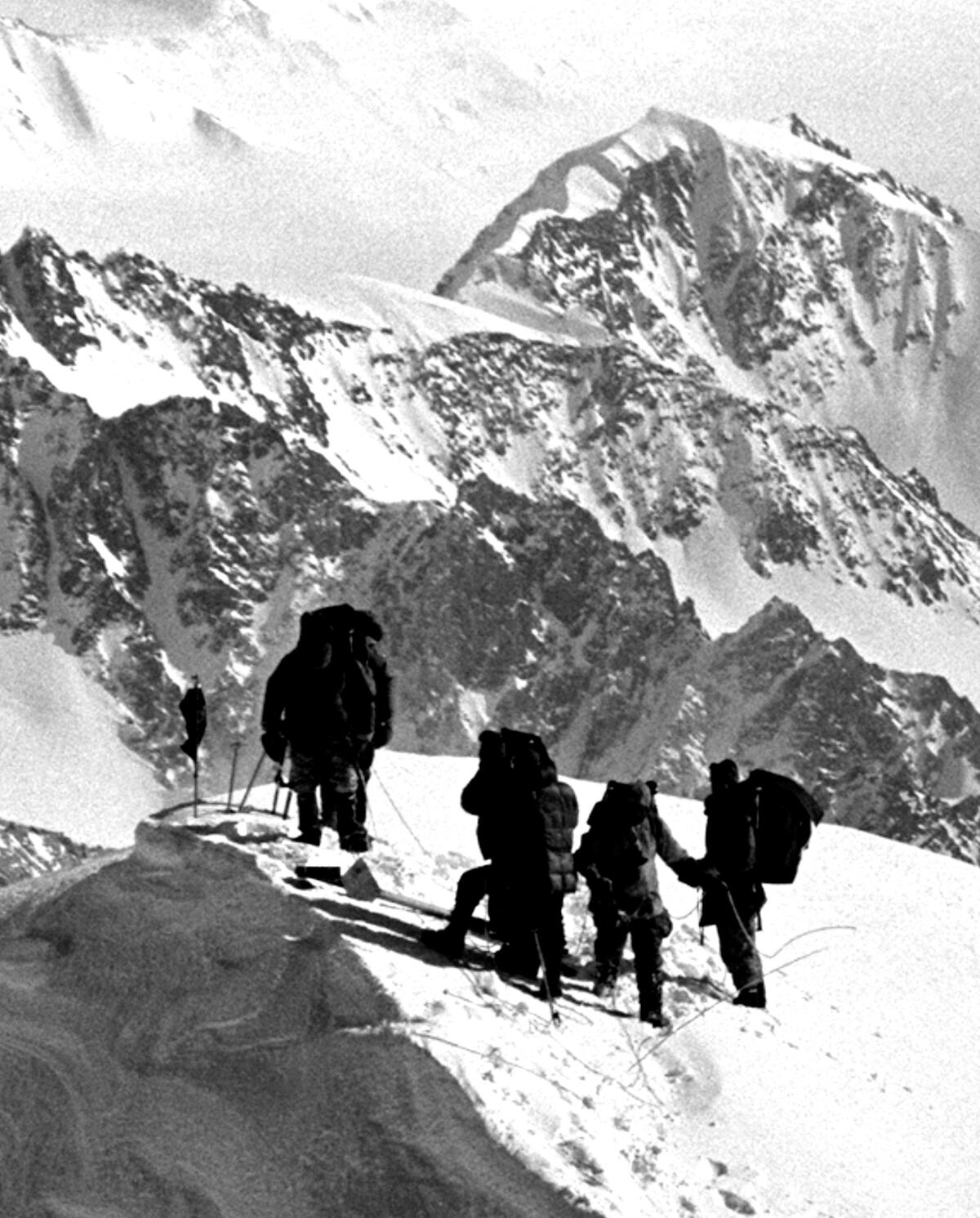
“We were standing in the jet stream, on the edge of space,” Whittaker wrote in his 1999 memoir, “A Life on the Edge.”
He returned home a hero, with his picture on the cover of Life magazine, a White House fete and unexpected celebrity. And though life off the mountain didn’t always go smoothly, he disdained regret.
“If you stick your neck out, whether it’s by climbing mountains or speaking up for something you believe in, your odds of winning are at least fifty-fifty,” he wrote. “On the other hand, if you never stick your neck out, your odds of losing are pretty close to 100%.”
An adventurer until the end, Whittaker died Tuesday at his home in Port Townsend, Wash., his son Leif confirmed to the New York Times. Whittaker was 97. .
On March 24, 1965, Robert F. Kennedy, left, stands atop Mt. Kennedy in Canada after placing a black flag in memorial to his late brother, President John F. Kennedy. With him were Jim Whittaker; William Allard, a National Geographic Society photographer; and George Senner, a ranger.
(Doug Wilson / Associated Press)
He was 34 when he scaled Everest, a feat that shaped much of the rest of his life. His Washington state license plate read 29028, the generally accepted height of Everest when he climbed it. (GPS surveys later put it at about 29,035 feet.)
He was chosen for the expedition by its leader, Swiss mountaineer Norman Dyhrenfurth, because of his experience in climbing under icy conditions, including numerous summits of Mt. Rainier near his Seattle-area home.
But Everest, first scaled in 1953 by New Zealander Edmund Hillary and Nepalese Sherpa Tenzing Norgay, was a far more formidable and dangerous beast. And even if the Dyhrenfurth expedition was successful, only a chosen few of its 19 team members would reach the top. Still, Whittaker thought his chances were good.
“I’d trained hard, put 60 pounds of bricks in my backpack,” he told National Geographic Adventure magazine in 2003. “I swam in Lake Sammamish in winter to build up to the cold we would encounter.
“I didn’t know anyone who was in better shape.”
On only the second day of the group’s climb from base camp, tragedy struck when a giant section of an icefall — a glacier formation resembling a frozen waterfall — shifted, crushing team member Jake Breitenbach.
“I had told everyone back home that Everest was not a difficult climb technically; the only problem was the lack of oxygen and the weather,” Whittaker wrote in “Life on the Edge.” “Now it had killed one of us, and we’d only just begun.”
Because the only way to get back to base camp was via that icefall, Whittaker chose to stay above it on the mountain for five steady weeks as more camps were established up Everest. He lost 25 pounds and a considerable amount of strength due to the thin air.
Still, he was in better condition than many of the other climbers, and Dyhrenfurth chose him for the final assault. He and Gombu left the last camp in the middle of a windstorm, with a scant supply of oxygen.
How hard was it to breathe? “Put a pillow on your face, run around the block, and try and suck oxygen through that pillow,” he said. It was so cold, one of his eyeballs froze, making it unusable.
Reaching the summit after several hours, they stayed only long enough to take pictures and plant flags as 50-mph winds whipped around them.
“When you are up there, you are not ecstatic, you are not afraid,” he told the Los Angeles Times in 2013. “You’re really not anything. But in the back of your mind, you know one thing: You gotta get off. Half of the climb is getting up, the other half is getting down.”
James Whittaker was born on Feb. 10, 1929, in Seattle, about 10 minutes before the birth of Louie, his twin brother. As the boys grew up, they took to rough-housing around the house, much to the chagrin of their mother.
“I believe that command to ‘Go outside and play’ is what started Louie and me on the path we have taken every since,” Whittaker wrote.
He was active in Boy Scouts and as a teenager joined a mountaineering club that sponsored climbs on the nearby Olympic and Cascade ranges. He tested himself on increasingly higher peaks, relishing moments such as breaking through cloud layers.
“I think nature is a great teacher,” he told the Seattle Times in 2013. “Being in nature that way is a good way to find out who the hell you are.”
After finishing West Seattle High School, Whittaker went on to Seattle University, graduating in 1952. He was promptly drafted into the Army, but his mountaineering experience led him to be assigned to the Mountain and Cold Weather Training Command in Colorado instead of combat duty in Korea.
In 1955, he became the first full-time employee of the Recreational Equipment Cooperative (later called REI) when it was housed in a 20-by-30-foot space above a Seattle restaurant. In his first year, he expanded the co-op’s offerings into ski equipment and introduced new concepts — such as opening on Saturday mornings so customers could pick up equipment for weekend trips — that boosted sales.
Whittaker, pictured on April 12, 1975, in Seattle, shows some of the gear he would be taking for an expedition to climb K2 on the China-Pakistan border.
(Associated Press)
Because of his connection to the co-op, he was appointed equipment coordinator of the Everest climb, and REI agreed to keep him on the payroll during the expedition.
In July 1963, he and other members of the Everest team, including Gombu, were presented the Hubbard Medal of the National Geographic Society — which partially sponsored the expedition — by President Kennedy, four months before the president was assassinated.
Two years later, Whittaker led a climb up Mt. Kennedy, a nearly 14,000-foot Canadian peak named for JFK, with Sen. Robert F. Kennedy in the climbing party. The two men forged a close friendship that extended to the wider Kennedy clan. In subsequent years, Whittaker went on ski vacations with the Kennedys, was a guest at the family compound in Hyannis Port, Mass., and hosted gatherings in Seattle that included mountain climbing.
Whittaker organized Robert Kennedy’s 1968 presidential campaign efforts in the Pacific Northwest and spoke to him by phone only minutes before the candidate was fatally shot in Los Angeles. Whittaker caught a flight to L.A. and was at the senator’s hospital bedside when he died and then served as a pallbearer at the funeral.
In mountaineering, Whittaker was closely involved in more high-profile ventures. He led a 1975 expedition up the world’s second-highest mountain, K2, that failed to reach the top. His return expedition in 1978 was successful, though he chose not to go to the summit himself.
That same year, he decided to quit REI, partly because of friction with the co-op’s board. He had been president and chief executive since 1971, and when he left, the co-op was a $46-million business with more than 700 employees.
Whittaker throws out the ceremonial first pitch before a baseball game between the Mariners and the Angels in 2013.
(Elaine Thompson / Associated Press)
Income from an endorsement agreement helped keep him financially sound, but an investment in a new outdoor gear company proved to be a disaster. The financial irregularities of a partner, who was convicted of felony bank fraud, doomed the venture, and Whittaker was left holding the financial bag.
He was nearly wiped out but got back on his financial footing when a venture capitalist asked him in 1986 to be chairman of the board, with stock options, of a new company called Magellan. It was a pioneer in GPS consumer electronics and holds numerous patents in the field.
Appropriately, Whittaker called one of the chapters midway through his book “Roller Coaster.” But he finished it with “Life Well Lived.”
“If you aren’t living on the edge,” he wrote, “you’re taking up too much space.”
Whittaker is survived by his wife, Dianne Roberts, and children Bobby, Joss and Leif.
April 5 (UPI) — Medical rescue teams airlifted a hiker from an Arizona mountain over the weekend after he sustained more than 100 bee stings and was unable to descend.
The Phoenix Fire Department said in a statement that rescue teams responded at about 10 a.m. Saturday to reports of a hiker being stung multiple times near the summit of Lookout Mountain in northern Phoenix.
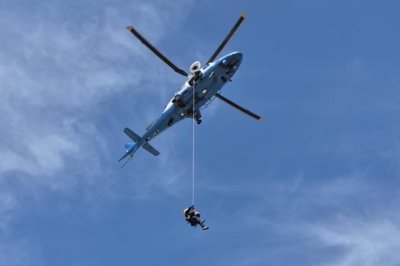
The hiker, only identified as an adult man, was located by rescue crews. A Firebird 10 helicopter hoisted the man from the mountain, authorities said.
The patient was transferred to an ambulance waiting at the trailhead and taken to a nearby hospital in critical condition, according to the fire department.
The man’s condition on Sunday was unknown.
Lookout Mountain is smaller and less frequented by hikers than the more popular and taller North Mountain, but it provides views of the region without crowds, according to its website.
The medical emergency occurred amid recent concern in the area over swarms of bees and potential stinging incidents.
Late last month, at least five people were stung, including one person who was hospitalized, during a lacrosse game at Arizona State University.
The City of Tempe, located just east of Phoenix, issued a warning to residents early last month about bees following what it called “a small number of bee-related emergency calls.”
Following the rescue on Saturday, the Phoenix Fire Department warned the public about the stinging insects.
“Avoid disturbing hives, skip scented products when outdoors, wear light-colored clothing and if you encounter a swarm — run away quickly and protect your head and face,” it said in a statement.
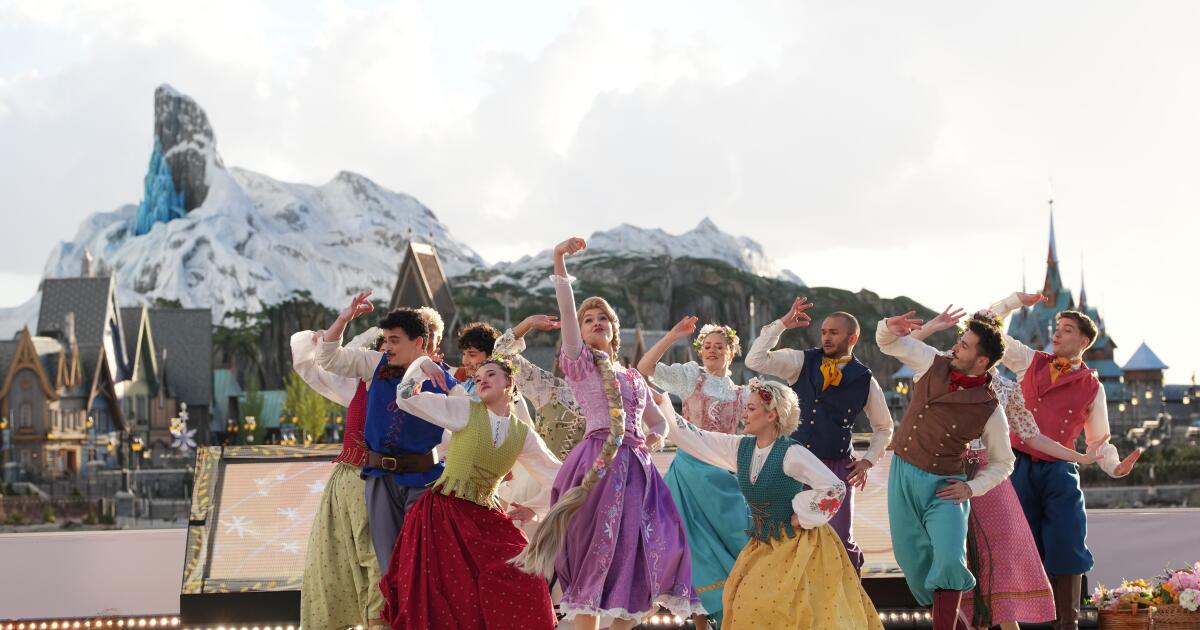
CHESSY, France — A 118-foot mountain of ice rose over the suburban Paris countryside this weekend as Disney opened its Arendelle kingdom to the world — Elsa’s palace glowing at the summit, a “Frozen” Nordic fishing village below, and the company’s new chief executive standing before a crowd of celebrities.
World of Frozen, an immersive land themed to the blockbuster animated franchise, opened Sunday as a centerpiece of a $2.2-billion transformation at Disneyland Paris.
The transformation renames one of Disneyland Paris’ two parks from Walt Disney Studios Park to Disney Adventure World. The inauguration drew Penélope Cruz, Naomi Campbell and Teyana Taylor.
It is the largest expansion in the 34-year history of Disneyland Paris, and one node in a roughly $60-billion global build-out of Disney’s parks, resorts and cruise lines.
A new CEO’s first stage
It is also the first major international stage for Josh D’Amaro, who took over as Disney’s CEO on March 18 — 11 days before the French gates opened — after nearly three decades in the company’s theme parks division.
The parks-and-experiences business reportedly generated 57% of the company’s $17.5 billion in segment operating income last year, the force that observers say propelled D’Amaro from parks chief to the corner office.
“The Walt Disney Co. was built on one man’s dream, and for more than 100 years we’ve shared that dream with the world,” D’Amaro told the inauguration crowd.
“Storytelling is fundamental to everything that we do, whether that’s on screen or stage, in our theme parks, on our cruise ships, or even at home.”
He called the opening “a transformational moment” and paid tribute to the creative team behind the attraction, including “Frozen” writer-director Jennifer Lee — who are all now at work on “Frozen 3.”
An Associated Press journalist accompanied D’Amaro on the “Frozen” ride Saturday night.
The carriage splashed through water to childlike cheers from riders and laughter from the new CEO as they glided past Elsa singing in the dark. Some stepped off lightly wet.
The evening’s emotional peak came when Lou, an 11-year-old whose wish was granted through Make-A-Wish France, took the stage to sing a few notes of “Do You Want to Build a Snowman?”
A next-generation robotic Olaf walked out to join her. It was the 25,000th wish fulfilled for a sick child at Disneyland Paris since 1992.
A French reversal
On Friday, D’Amaro had stood alongside Emmanuel Macron at the resort.
The French president used the visit to claim the park as a national economic asset, calling Disneyland Paris “the leading tourist destination in Europe” and describing it as “a genuine ecosystem of success.”
Macron said the latest expansion would create 1,000 additional direct jobs.
“Since the beginning, that’s 13 billion euros invested on this territory,” Macron said, a figure equivalent to about $15 billion.
Disneyland Paris says it has recorded more than 445 million visits since 1992, accounting for 6.1% of France’s national tourism revenue.
Macron’s presence underscored a remarkable reversal.
When the park opened as Euro Disney in 1992, French intellectuals derided it as a “cultural Chernobyl.” The president at the time, Francois Mitterrand, dryly derided the new attraction as “not exactly my cup of tea.”
Now a French president was standing in front of cameras calling it an engine of national prosperity.
European roots
“‘Frozen,’ of course, has its roots in European storytelling,” said Michel den Dulk of Walt Disney Imagineering.
“It’s very loosely based on Hans Christian Andersen. So to have a northern European, charming wooden little village here in Disneyland Paris — it just made sense.”
The new Tangled family ride, too, draws from European folklore — the Brothers Grimm’s Rapunzel.
The land re-creates Arendelle around a lagoon, its timber buildings painted in muted Scandinavian pastels, facades adorned with rosemaling, a traditional Norwegian decorative art.
At the center is Frozen Ever After, a boat ride featuring state-of-the-art animatronics and immersive projection effects.
Guests can meet Anna and Elsa inside Arendelle Castle, have a conversation with a responsive baby troll named Mossy who talks back, and watch a lagoon celebration called the Snow Flower Festival — featuring an original song.
Visitors praised the scale of the mountain and the detail of the village, even after delays and minor glitches.
“Despite the wait, it was well worth it. The attention to detail is incredible, and the perspective of the ice mountain is breathtaking,” said Daniel Weber, 41, an architect from Munich, Germany, after the ride Sunday.
“You forget you’re outside Paris. For a few minutes, it really feels like Arendelle,” said Léa Moreau, 27, a graphic designer from Lille, France.
Beyond World of Frozen, the rebranded park brings a vast new lake called Adventure Bay, a Tangled family ride, 15 new dining locations — including the posh Regal View Restaurant — and a nighttime spectacular called Disney Cascade of Lights featuring more than 380 drones.
A Lion King land, already under construction, will follow.
More than 90% of the second park’s offerings will have been redesigned since it opened in 2002, and Disney says the footprint will roughly double once the full transformation is complete.
Disney’s streaming has swung from deep losses to profitability, but the parks remain the company’s most dependable earnings engine — and D’Amaro is the man who ran them.
“We continue to dream bigger and bring stories to life in brand new ways,” D’Amaro told the crowd.
Pyrotechnics lighted up Arendelle Village.
The ice palace on the mountain turned blue.
And 34 years after Euro Disney became a punchline, a brand-new kingdom opened in the fields east of Paris — for the first time in forever.
The picturesque village, with its postcard-worthy mountain views, rolling hills, and charming houses, may seem like a dream, but anyone hoping to land the cash incentive should be aware of a major catch
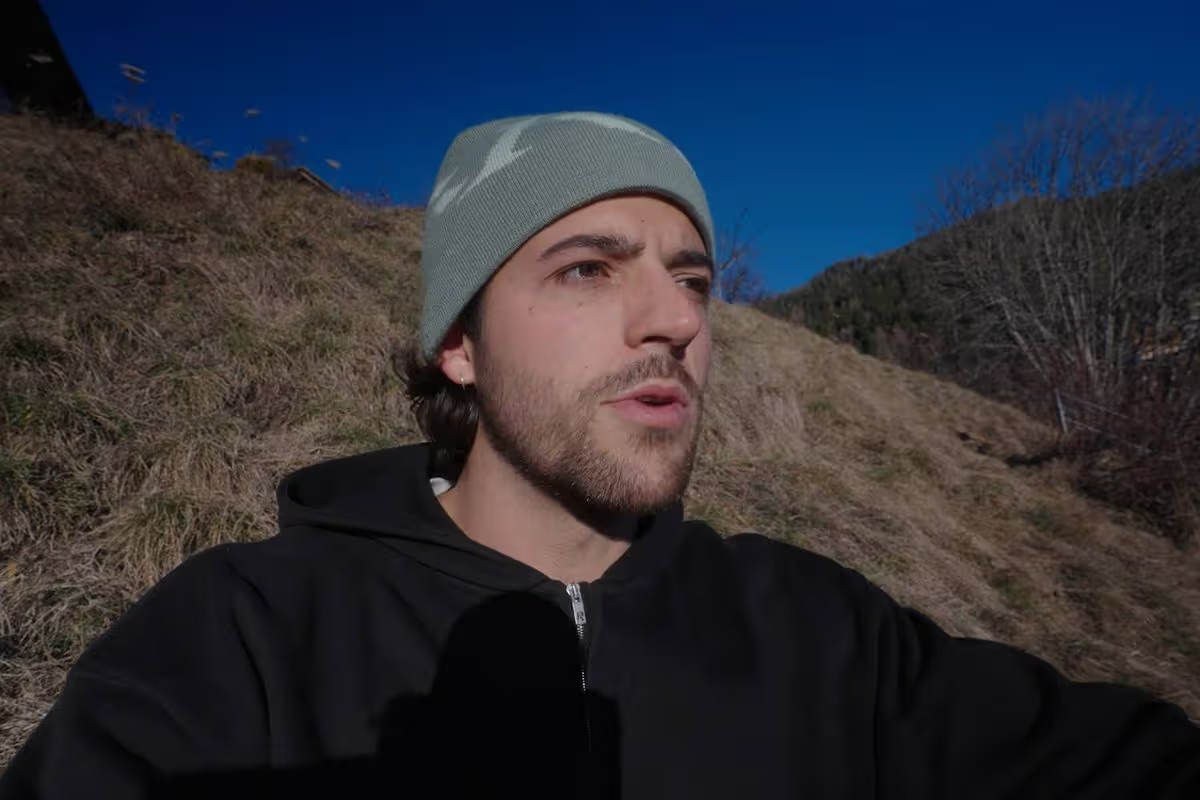
Ben was clearly impressed after making his way to the village by car(Image: Ben Morris/YouTube)
A travel vlogger who visited a picturesque European village offering people £24,000 to relocate there has highlighted a significant drawback. Ben Morris travelled to the Swiss Alps to explore a location faced with declining population numbers, which has introduced a financial incentive for anyone willing to make the village their permanent home.
Tucked away in southwestern Switzerland in the canton of Valais, the picture-perfect village of Albinen appears straight out of a postcard, boasting breathtaking mountain vistas, undulating hills, and quaint houses set against a lush green backdrop.
With a reported population of just 262 residents, Albinen’s inhabitants voted to enact a residency scheme offering CHF 25,000 (approximately £24,000 at the time of writing) to those prepared to relocate to the mountains, the BBC reports.
Ben was evidently impressed during his journey to the village by car, describing the scenery as “incredible” whilst driving in. Upon his arrival, he observed the village was “dead silent”, but as he wandered the narrow lanes and soaked up the panoramic views, he was blown away.
In the video, shared on his eponymous YouTube channel, he said: “I actually wasn’t going to come to this town. I just felt so tired and miserable this morning. But just being able to sit here right now and take in this view. It’s worth this alone.”
It appeared baffling that somewhere so stunning would need to provide financial incentives, but he subsequently highlighted the snag: relocating to Albinen comes with a set of requirements that must be adhered to.
He said: “I know what you’re all thinking. This village seems amazing. How do you sign up to receive your money? There is, unfortunately, a few requirements. That’s what makes it slightly less appealing.”
Ben continued: “Here are the requirements for moving to Albinen and getting your money. It’s 25,000 Swiss francs, which is actually a lot more than $25,000.
“You need to purchase, build, or substantially renovate a primary home in Albinen with a minimum value of 200,000 Swiss francs. This home has to be a main residence. It can’t be a holiday home. This one is pretty crazy as well.
“You have to commit to living in the village for at least 10 years. This one’s probably going to let down the majority of you guys watching. You must either be a Swiss citizen or hold a Swiss C permit for permanent residence.”
A seemingly deflated Ben added that once you learn these details, you realise it’s “not as attractive” as it first seemed. According to House Beautiful, you will also need to be under 45.
It explained that these stipulations, as outlined in the 2023 housing regulations, aim to “promote the retention and permanent residence of young people and families in the municipality of Albinen”.
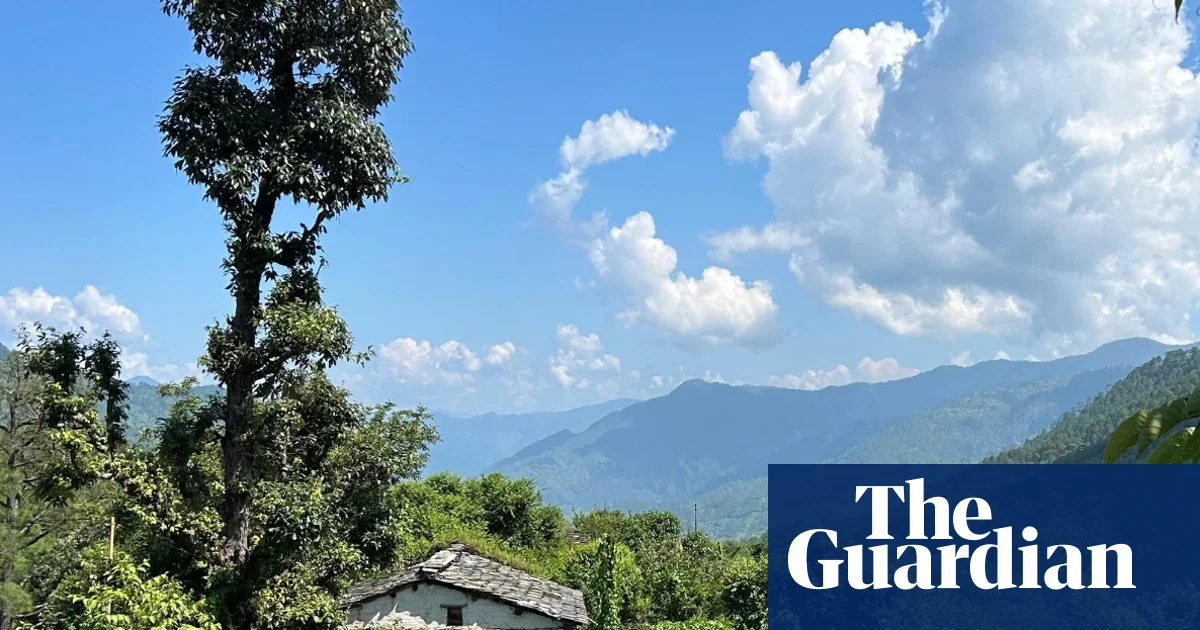
Kathdhara village is a riot of colour as the early evening light turns the clouds the rosy hue of Himalayan salt. Bright red chillies lie drying in front of cornflower blue doorways. The pink of a sari and the orange of marigolds pop against a backdrop of verdant terraced fields, where cabbages grow in perfect rows like a picture from a Peter Rabbit book.
Just 22 families live in this remote hamlet in Binsar Wildlife Sanctuary, in the Kumaon region of Uttarakhand, north-east India. As we stroll with our guide, Deepak, taking in views of the layered hills and soaring, snow-capped Panchachuli peaks beyond, we are welcomed by villagers tending homes and gardens, strings of Diwali fairy lights adding extra sparkle to the scene.
I’m here to explore the foothills of the Himalayas and sample village life on a walking holiday with Village Ways, a pioneer of responsible, community-based tourism in India, which is celebrating its 21st anniversary this year. Dreamed up by Manisha and Himanshu Pande, the couple who run the Khali Estate, a small hotel in the reserve, the goal is to help address urban migration and support traditional rural life through low-impact tourism. Village Ways launched in 2005 with just five villages in the reserve, which guests hike between, and now more than 30 villages are involved in different parts of the country, from Madhya Pradesh to Kerala.
A view of the Kumaon ranges in Uttarakhand. Photograph: Monarch/Balan Madhavan/Alamy
“The idea was to bring the community together to run something collectively, training people in all aspects of business. Everyone has a role to play,” says Manisha. “The Village Ways model has captured the attention of the government, too, and we’re collaborating on various projects in other states now, which is exciting.”
Most accommodation is in small, village-built guesthouses sleeping up to eight, rather than homestays, and money is evenly distributed to everyone from cleaners to porters, with committees making joint decisions. Back at the Kathdhara guesthouse, we join Diwali celebrations, sharing sweets, lighting lamps and praying to the goddess Lakshmi by a makeshift shrine. We feast on a delicious thali – spicy yams, dal, hemp chutney and warm roti – and sleep soundly, cocooned by the silence of the mountains.
The next day brings blue skies, and after breakfast we set out on a gentle walk to the neighbouring Gonap village. Binsar Wildlife Sanctuary was created in 1988, a 47 sq km (18 sq mile) area to help protect the broadleaf oak forest and wildlife. For the people living here, it altered their relationship with the forest, ending tree felling and hunting – tempting many to abandon village life for the cities. Village Ways offered an alternative – former hunters turned guides, sharing knowledge of the land and wildlife with guests, and seeing outsiders’ interest in local customs and traditions renewed their sense of pride.
We hike through pristine pine, oak and rhododendron forests (come in March or April to see the land painted red, pink and white when they bloom). I’m fascinated by the Himalayan oaks, which play a key role in storing and releasing water and stabilising the land with their vast root networks. We see the bright red flowers of wild turmeric and countless medicinal plants, from goat weed (some believe the juice stops bleeding) to Indian tobacco (used for toothache).
Gonap village, in Binsar Wildlife Sanctuary. Photograph: Steve Taylor ARPS/Alamy
Leopards roam here too and, though they remain elusive, we spy footprints and scat, as well as porcupine quills. But the sanctuary is best known for its amazing birdlife – more than 200 species are found here – and we stop frequently as Deepak points out the crested serpent eagle, leaf warbler, black-headed jay and noisy parakeets.
Gonap itself is tiny – home to just seven families today. We’re welcomed to the guesthouse with chai and plates of warm pakora – enjoyed with staggering mountain views as Eurasian griffon vultures float on the thermals. Deepak leads us to a tiny temple, past houses with gardens heaving with jumbo lemons and air potatoes on giant stalks, the sounds of cicadas in the air.
No roads connect the five villages in the Binsar circuit, but the paths between them offer easy walking and there’s plenty of time to rest. A higher-altitude route in the nearby Saryu and Pindar valleys, close to the border with Tibet, offers more challenging hikes. But limited time means we head back to the Khali Estate from Gonap, stopping at Zero Point lookout – the highest vantage spot in the reserve, at 2,500 metres – to gawp at the 360-degree Himalayan panorama, dominated by Nanda Devi, the second highest mountain in India.
Built 150 years ago by a British commissioner, Gen Sir Henry Ramsay, the Khali Estate makes a picturesque base, with accommodation in stone rondavel cabins and a sitting room with roaring fire. During his time in Kumaon, Ramsay is credited with developing local infrastructure, founding a leper colony in the historical capital of the region, Almora, and regulating tree felling. We delve into the estate’s history on a tour with Himanshu, poring over photos and library texts, and learn how it was also a retreat for the Nehru family and an ashram for Mahatma Gandhi. Surrounded by forest, it’s utterly peaceful. Later, I fall asleep to the distant sound of barking deer.
For visitors wanting to learn more about the region’s history and the characters who shaped it, Village Ways has launched a new itinerary, Khali in Kumaon. As well as the Binsar walks, it takes in the lakeside hill station of Nainital, where we had stopped on the 270-mile journey from Delhi. Guests will also explore Almora, with its local primary school supported by Village Ways, the museum of the Anglo-Indian hunter turned conservationist Jim Corbett, and the Gandhi trail, heading into the hills to see some of the first looms he established for homespun cotton – a symbol of economic independence and resistance to British rule – at Anasakti ashram.
The Khali Estate. Photograph: Village Ways
But our last day is very much focused on the present, as a stream of villagers arrive at Khali from far and wide to join the anniversary celebrations. Other Village Ways founders – Brits who worked in development and tourism – are here too, and there are talks, feasting and dancing. I learn about the Village Ways charitable trust, which supports healthcare in these remote villages, training local women to run mobile clinics. Since Village Ways’ inception, it has hosted 7,000 guests, benefiting about 5,000 people, from artists to taxi drivers, according to Manisha, and 470 villagers are directly involved in decision-making as members of the village tourism committees in six states.
I buy locally made scarves and handicrafts, and many of the young villagers – now guides, cooks or porters – tell me about the positive impact tourism has had on their lives. “Since I joined as a guide three years ago I’ve learned lots about Binsar and our birds – and my English has really improved,” said 23-year-old Ashirwad Joshi from Dalar village. “I’m very happy to be part of it and share my knowledge with visitors – it makes me proud.”
When we leave the next morning for the long drive to Kathgodam and onward train journey to Delhi, it’s the feeling of mutual respect and warmth that stays with me. The challenges are many, from ageing village populations to a decline in international visitor numbers to the area since Covid, but the Village Ways mission is very much full steam ahead – taking its ethos to other parts of the country. This type of tourism – one that involves communities as partners and is collaborative rather than exploitative – benefits locals and travellers alike. In these times of division, it is to be celebrated more than ever.
The trip was provided by Village Ways, which creates bespoke itineraries, tailored to travellers’ interests. The suggested 10-day Khali in Kumaon itinerary (available until 30 May, and from 15 September to 30 November 2026) costs from £1,315pp, based on a party of four, including transfers, rail travel, accommodation and most meals
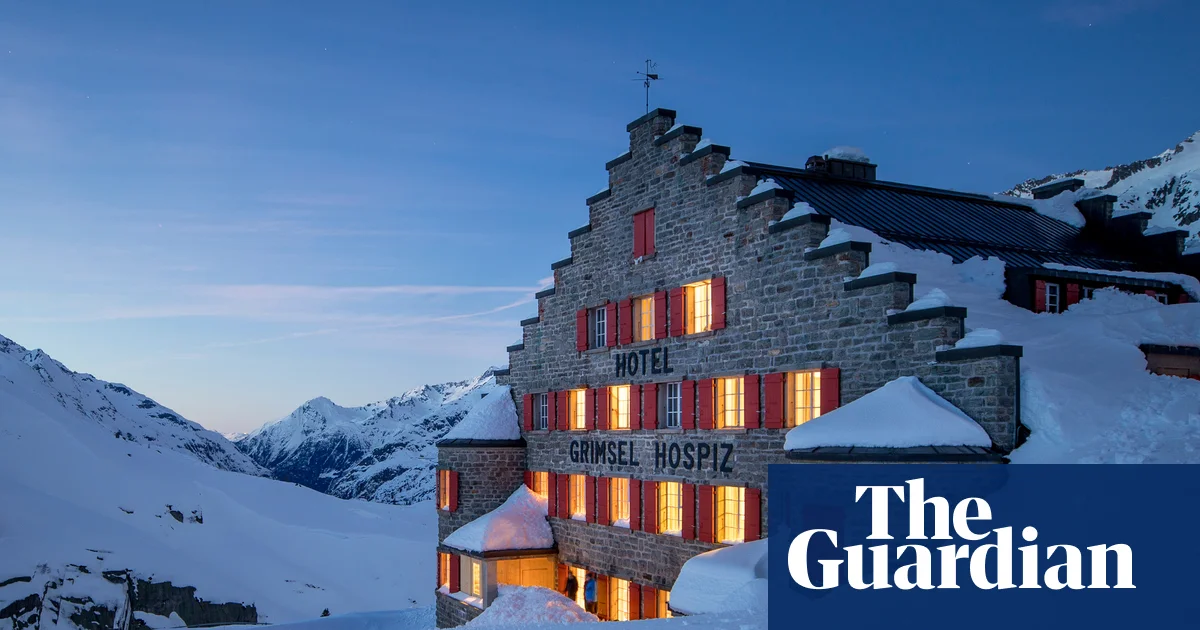
Near the top of the Grimsel Pass in Switzerland’s Bernese Oberland, a small crowd had gathered to take photographs. We were surrounded by bulky mountains and rippling glaciers, but all eyes were focused on a silvery granite chalet with apple-red shutters, its foundations deep in snow.
It was early February and, one after another, we posed in front of it as if standing beside a celebrity. Which in a way we were, because the proud building was the Grimsel Hospiz, the country’s oldest recorded mountain inn and a place that predates Westminster Abbey.
First documented in 1142 and originally built as a simple hostel – either by the Order of Saint Lazarus or the Augustinian monastery of Interlaken, no one is quite sure – today’s much-modernised Grimsel Hospiz is marooned on a spur of sheer rock and snow at 2,000 metres (6,562 ft). Over the centuries it has been inhabited by monks, used by shepherds, needy travellers and soldiers, ravaged by fire and buried by an avalanche. The mountains reach up, but it is surrounded on three sides by plunging ravines and the frozen Grimselsee, which thaws to turquoise ice floes in spring. The scenery is stupendous.
Grimselsee reservoir and Spitallamm Dam, with Grimsel Hospiz above, in autumn. Photograph: David Birri
My visit began on a PostBus, the yellow stagecoaches that reach the parts of Switzerland that the railways can’t. I was south-east of the village of Meiringen, having taken a train to Innertkirchen Kraftwerk, a station built 100 years ago to service the hydroelectric power plants hidden deep in the mountains. The towering stone pines, the tumbling cliffs, the dripping snow, the sky only peeking through – it might have been the landscape of JRR Tolkien’s Middle-earth.
As the bus worked its way higher up the Aare Gorge, we saw that the road ahead was closed for winter. Instead, we were dropped at a high-security shutter leading to an underground hydropower station operated by Kraftwerke Oberhasli AG. The renewable energy plant opens for public tours and, moments later, a minibus appeared from behind the steel door to take us deeper into the mountains. We hopped on board.
A road blasted into the granite, dark and narrow, then crept through a maze of tunnels, ending four miles (6.4km) later at a tiny cable car station that opened to daylight. We looked up at the Grimselsee reservoir and Spitallamm Dam, a 113 metre-tall arch of stone above which we were soon to soar. For a century, the high-altitude lake has stored glacier meltwater to generate green electricity. Now, for visitors like me, it forms part of Grimselwelt, a Swiss Alpine tourist region, serving as a backdrop to a great tract of lonely winter wilderness.
The Grimsel Hospiz in 1950: Photograph: Fox Photos/Getty Images
The picture of the Grimsel Hospiz developed as we rose on the cable car, like a photo going from faded to sharp. The uninhabited valleys beyond led to the Unteraargletscher, an eight-mile leviathan of ice and the Alps’ fifth-largest glacier. From the cable car, I made out a group of horned ibex as they clambered with ease over the col.
It was the Celts, then Romans, who first used the Grimsel Pass, but it has been an important locus in Alpine culture for centuries: a trade route between Berne and Upper Valais in the middle ages, a strategic camp for raids and war campaigns between Swiss, French, German and Austrian armies, a setting for pioneering glacier research. All these aspects combine in a single story at the Grimsel Hospiz.
What lends the mountain inn so much credibility today is its environmental outlook. Located within the Unesco World Heritage Swiss Alps Jungfrau-Aletsch region, the 28-room hotel is in the midst of a critical wildlife habitat, meaning all winter sports are banned. Ski gear is prohibited by the hotel’s management and it cannot be transported on the cable car. The Alps have always been the preserve of travellers keen on activities that take serious effort, but here is an antidote to every other winter destination, a rare meditative place where doing nothing is the only thing to do.
The only activity on offer is snowshoeing and even that is restricted to a 500-metre loop around the inn’s tower-like granite porches and wooden and copper-roofed chapel. It might be “the shortest winter trail in Switzerland”, as manager Markus Meier put it, but it still took me an hour as I kept stopping to take photos.
‘A fantasy of a mountain inn.’ A cosy lounge at the Grimsel Hospiz.
Inside is a fantasy mountain inn, the result of sensitive restorations: a huge wooden door creaks open and you step into corridors leading to cosy double rooms, intimate lounges, fireplaces and a restaurant where dinner is accompanied by one of 250 bottles from one of Europe’s highest-altitude wine cellars. Back in 1932, the guesthouse caused a sensation as the continent’s first electrically heated hotel. Now, the building is sustainably powered by clean energy and waste heat from the hydroelectric plant below.
As evening fell, it was time for the inn’s only other activity: staring at the flaring sunset and night sky from its outdoor wooden barrel sauna and hot tub. The air was bracingly cold, the constellations appeared and it was just me, the burbling water and the mountains stretching away into darkness. Forget any thoughts of Alpine heroes such as George Mallory or Edward Whymper. That night, down to my cossie in -10C (14F), tiptoeing across the snow in a pair of felt slippers and dwarfed by mountains, I was the bravest man in the Alps.
‘The bravest man in the Alps’ … Mike MacEacheran soaking in the outdoor hot tub
At nearly 2,000 metres, dinner is another event. The four-course menu produced by Slovakian chef Roman Crkon is hardly the stuff of traditional refuges. I’ve had my share of mountain meals, but I’ve never had veal sweetbreads, scallops, chicken with truffle cream and a cheese board at high altitude. In 1544, a local chronicler wrote that the Grimsel Hospiz was all about “good wine, brought by pack animals across the mountains”. Looking at the card games and excessive drinking around me, little had changed.
Later, just before bed, I slipped outside to gaze again at the stars. It was pine needle-drop quiet. Though I was separated from some of Switzerland’s most popular resort towns by only a few miles as the eagle flies, I felt engulfed by the Alps in their entirety. Tomorrow, another day with nothing to do beyond the confines of the inn awaited. But in a landscape like this, I was thrilled to have fallen off the map, out of time, into winter’s grasp.
The trip was provided by Jungfrau Regionand Historic Alpine Hotel Grimsel Hospiz (Wednesday to Sunday only; grimselwelt.ch). Rooms from £165pp a night, including breakfast, afternoon tea, hot tub and wooden barrel sauna. A four-course dinner costs £85. Return bus, tunnel and cable car transfers cost £70