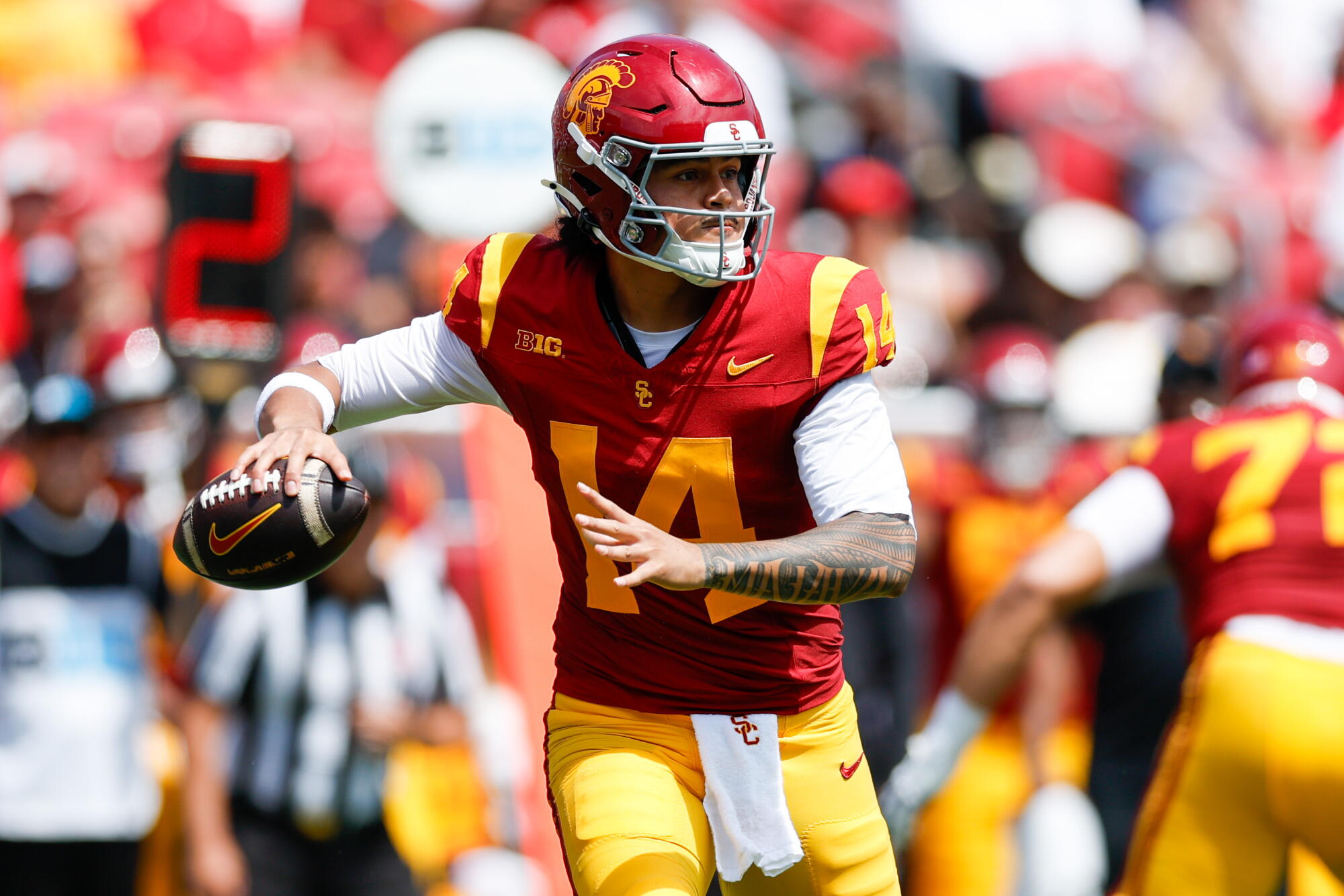
The pass looked doomed the moment it left Jayden Maiava’s hands.
It was third-and-long, midway through the second quarter last November in Eugene, Ore. USC was down just a score, and Maiava, the Trojans’ big-armed quarterback, was trying to make something happen. But the receiver he’d locked in on was unavailable and an Oregon edge rusher was charging at him unchecked. So Maiava let one fly down the middle of the field, and the pass sailed into a crowd of Duck defensive backs.
That regrettable interception, one of two for Maiava that day, ended up being one of the turning points in that game — and in a 2025 season that fell one win short of the College Football Playoff. The loss to Oregon last season served as a rude awakening for USC and Maiava, a reminder of how far both still had to go before reaching their potential.
A year later, as the two Big Ten powers meet again on Saturday, Maiava and the No. 12 Trojans (4-0, 1-0 Big Ten) find themselves at another critical mile marker. A win over No. 20 Oregon (2-1, 0-0) would put USC firmly in the conversation for the College Football Playoff. A loss would have folks taking serious stock of where the Trojans stand in their fifth season under coach Lincoln Riley. And at the center of it all is a quarterback who so far seems entirely unfazed by that outside pressure.
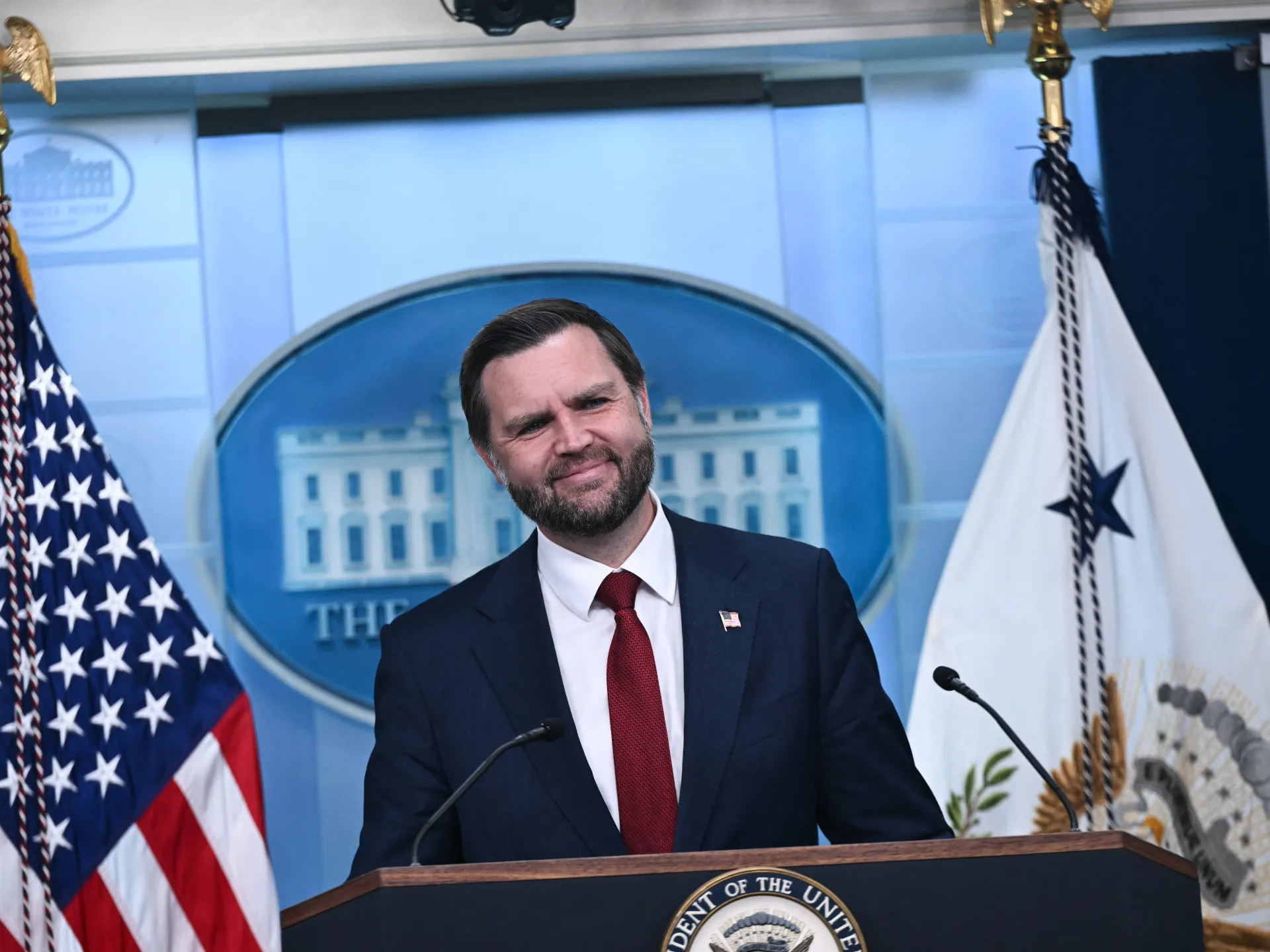
USC quarterback Jayden Maiava looks down field to pass against San José State on Aug. 29 at the Coliseum.
(Ronaldo Bolanos/Los Angeles Times)
“He’s playing with great confidence,” running back Waymond Jordan said of Maiava. “We’re going to keep seeing him getting better and better and better.”
Ask anyone at USC about Maiava at the moment, and they will invariably say something similar.
“It’s the most confident Jayden I’ve seen in the three years I’ve been around him,” left tackle Elijah Paige said.
Through four games, the numbers certainly suggest he’s on the cusp of a big season. Maiava leads all of college football with 12 touchdown passes and ranks seventh in completion percentage (75.7%). His name is already being floated in early Heisman Trophy conversations.
But Maiava also hasn’t been tested much through four games this season. His protection has been near-perfect, with just a single sack allowed. According to Pro Football Focus, Maiava has been under pressure on a mere 16 dropbacks — or 13% of the time — and, more often than not, that’s because he held the ball too long. Maiava’s average time to throw while under pressure so far this season is nearly four seconds, which, by Big Ten standards, is an eternity.
All of that’s likely to change this week against Oregon. The Ducks are loaded with talent along the defensive line and in the defensive backfield. While they’ve tallied just five sacks through three games, they’ve forced five interceptions, most of any team in the Big Ten. That’s after finishing second in the conference in that category a year ago.
Maiava hasn’t been quite as sharp the last two games after a dynamite start in which he had as many touchdowns (6) as incomplete passes through two weeks. But he knows Oregon will make him pay for any mistakes he makes Saturday, just as it did last season.
“Definitely a lot to learn from that game coming into the next one,” Maiava said. “Definitely turning the ball over, clean that up. Being stingy with the ball, being able to get the ball in playmakers’ hands and just continue to stay on the same page and move as one.”
He’ll almost certainly be without two of his top playmakers against Oregon, with freshman Trent Mosley unlikely to play and sophomore big-play threat Corey Simms already ruled out. Though, so far this season, Maiava has had no problem overcoming the absence of his two top receivers from a year ago, Makai Lemon and Ja’Kobi Lane.
USC still has standout freshmen Kayden Dixon-Wyatt and tight end Mark Bowman to pace the passing attack. The offense has also barely made use of two receivers who were expected to be at the top of the depth chart, Tanook Hines and Terrell Anderson, both of whom should play more of a part Saturday.
USC coach Lincoln Riley talks with quarterback Jayden Maiava on the sideline during a game against San José State on Aug. 29 at the Coliseum.
(Kevin Terrell / Getty Images)
“He’s done a really nice job with all the new faces around him, which is hard to do at this position,” Riley said of Maiava.
That’s a testament to his development since 2024, when Maiava arrived at USC with a howitzer arm but little polish to his game as a passer. He’d never gotten any individual training as a quarterback. His mechanics and footwork were especially raw.
After taking over at the end of that 2024 season, though, Maiava has continued to get progressively better. Now Riley views him as “one of the best quarterbacks in the country.”
“Of all the guys I’ve been fortunate enough to coach, I don’t know that I’ve had any that have improved from Day One to this point as much as Jayden has,” said Riley, who has coached three Heisman-winning quarterbacks. “It’s been fun to see him grow as a player and leader, starting to embrace what it means to be the starting quarterback at USC. I think a guy that’s just going to get better and better in his prime to play his best football.”
USC will need him at his best Saturday if it hopes to knock off Oregon, which has its own star quarterback in need of a big moment. Dante Moore could have been one of the top picks in the NFL draft a year ago, but returned to the Ducks, only for them to suffer a stunning loss to Oklahoma State.
Oklahoma State’s coach later acknowledged that Moore was tipping whether Oregon was running or passing on a given play by his pre-snap stance.
USC quarterback Jayden Maiava looks to throw a pass against Rutgers on Sept. 19 in Piscataway, N.J.
(Adam Hunger/Associated Press)
“That was a game and that was a moment that helped mold us,” Moore has said since. “I learned from that, and I’m glad it happened.”
Moore will have the benefit Saturday of facing a struggling USC secondary. The Trojans have yielded 10 yards per pass attempt this season and now could be without starter Alex Graham, who’s listed as questionable. It has been especially difficult for USC to get off the field on third and fourth down, which Riley said has been a central focus this week.
“As a secondary, we’ve got to be a little bit tighter in those situations,” Riley said. “We’ve got to make those competitive plays. We have a good defensive line. We have a group that can rush the passer. We’ve got to make guys hold onto that ball, make our pass rush work, and make those plays when we get to the point of attack.”
Not to mention the Trojans have got a great quarterback, one that Riley expects to lean on his experience as USC faces its biggest test of the season.
“He’s just mentally in a really, really good place to go do that,” Riley said of Maiava. “He’s the guy I want taking us into this game, for sure.”
Something’s in the air this fall — and it’s not just the autumnal chill. For some reason, survival thrillers are all the rage; there are even two featuring a man and his dog. First, we had Ridley Scott’s “The Dog Stars” with Jacob Elordi and a Belgian Malinois traversing a postapocalyptic landscape.
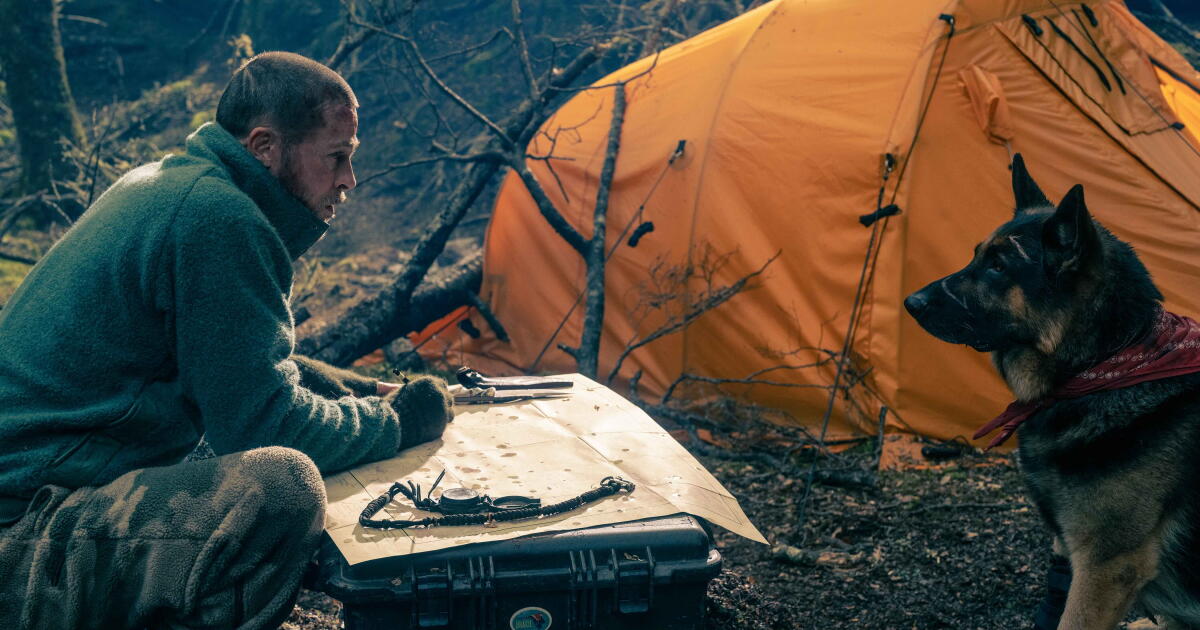
The latest is “Heart of the Beast,” an Alaskan-set story about two combat veterans — one human, one canine — who set out for a post-retirement camping trip and find themselves in a perilous situation after the human, retired Special Forces officer James (Brad Pitt), suffers a heart attack while piloting his seaplane. James and his combat dog Odin survive the crash, just barely, but they’re stranded deep in the wilderness, miles from civilization.
The film is directed by David Ayer, a purveyor of wild action flicks and ballads of masculinity; the screenplay is the debut effort of Cameron Alexander. Their intent is to deliver something muscle-bound and emotional — if a man can’t cry about an Army dog, what can he cry about? But until the last two minutes of the film, “Heart of the Beast” is essentially “Homeward Bound” for adults. You know, the 1993 kids adventure film featuring a golden retriever, a bulldog and a cat named Sassy who have to make their way home through the wild. Marry the structure of that film with a Jack London-inspired milieu, add some blood, gore and rather cheesy Iraq war flashbacks, and you have “Heart of the Beast.”
We watch James as he’s rained on, chewed on, pulls trunks out of an icy lake, falls off a log, breaks his arm, faces down a bear, fights off wolves, sustains many head injuries and inexplicably keeps going, in hopes of saving if not himself his dog, the most important creature in his life.
And oh, is Odin worth it. Played by four different dogs named Uber, Seeka, Ryker and Hondo, the performance that these dogs collectively deliver is worthy company to an Oscar winner — the dogs may even eclipse Pitt for sheer screen presence. With every whimper, sigh, howl, bark and head tilt, these dogs create an empathetic portrayal of a highly intelligent creature that has been through battle and has the scars (and nightmares) to prove it. Odin is a bionic dog, with titanium teeth and a prosthetic foot from injuries sustained during wartime, but nothing slows him down, not even a plane crash. However, the film does have its limitations when it comes to the other wildlife, all digitally created and the CGI isn’t convincing in the slightest.
“Heart of the Beast” is an onslaught of danger and misery, alleviated only by the pleasure of watching James’ survival skills and ingenuity. This man makes a lot of mistakes on this journey (he’s constantly calling himself “stupid” and “dumb”), but he’s also kind of a MacGyver. He starts a fire with cotton balls and Neosporin. He carries an alarming number of knives. He splints his own arm. If anything, it’s an excellent lesson on carrying the right gear and always taking medical supplies on a camping trip — if you ever go camping again after this.
Pitt typically excels when there’s a little (or a lot) of levity for him to exercise his loose-limbed charms and there’s precisely none of that in “Heart of the Beast.” Ayer pushes the emotional and physical extremes and it feels like a dirge: a forced march through the muddy Alaskan wilderness with plenty of body horror on top. The one moment of camaraderie comes in the beginning, when James shares a beer with a mysterious stranger (J.K. Simmons) who happens upon his camp and might even be an apparition of an old miner. James does share moments of affection and victory with Odin but there’s nothing to relieve the constant danger, even though structurally, the film has already sapped its potential suspense.
“Heart of the Beast” has its highs and lows but cinematically, it’s a mixed bag — entirely predictable and just not great. Nevertheless, there’s no denying that the star of the movie is indeed Odin and he’s a very, very good boy.
Walsh is a Tribune News Service film critic.
‘Heart of the Beast’
Rated: PG-13, for violence, peril, bloody/injury images and some language
After the aircraft touched down in Birmingham, airport police boarded the plane and escorted the four adults off
08:39, 23 Sep 2026Updated 08:40, 23 Sep 2026
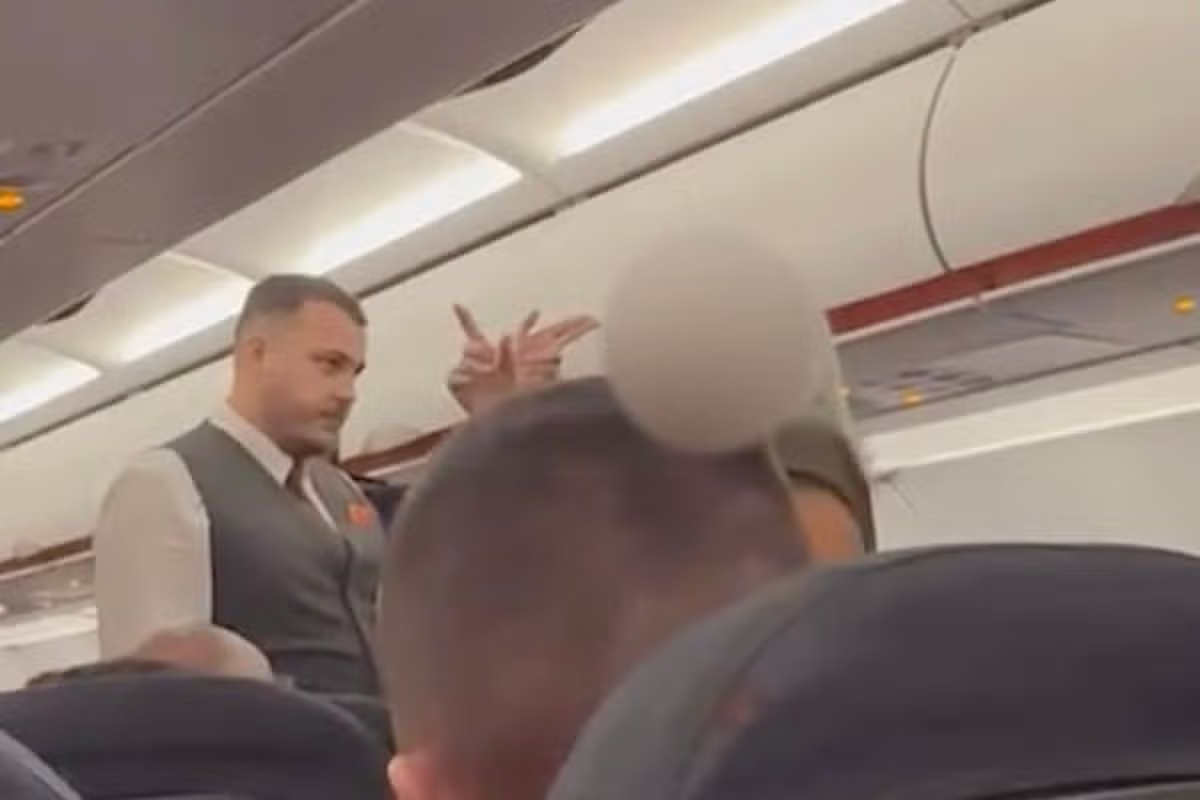
Moment police escort passengers off UK easyJet flight
A group of adults were escorted off an easyJet flight by police after allegedly vaping throughout the five-hour journey. Passenger Annalise Galstaun captured the moment four adults were removed from the plane by airport police after it landed at Birmingham Airport.
Annalise was travelling from Larnaka International Airport in Cyprus to Birmingham on the evening of September 16 when the incident unfolded. Sitting just two rows behind the group, she said she saw EasyJet cabin crew warn them multiple times to stop vaping during the flight.
But despite the repeated warnings, Annalise claimed the passengers continued to vape discreetly, hiding the devices behind their legs while sitting in their seats.
After the aircraft touched down in Birmingham, airport police boarded the plane and escorted the four adults off, causing a 25-minute delay on the tarmac.
Annalise said: “They were warned a few times by EasyJet staff but continued to vape on the sly throughout the journey, hiding the vapes behind their legs on the seat.
“I felt quite annoyed as we were delayed around 20/25 mins grounded on the floor waiting for them to be escorted.
“There were children on board crying as it was about 11pm and we were just stuck on the tarmac.”
EasyJet said in a statement: “Flight EZY6610 from Larnaca to Birmingham on 16 September was met by police on arrival due to a group of passengers behaving disruptively onboard.
“Our cabin crew are trained to assess all situations and to act quickly and appropriately to ensure that the safety of the flight and other customers is not compromised at any time.
“We take these incidents seriously and do not tolerate disruptive behaviour onboard.
“The safety and wellbeing of our customers and crew is always easyJet’s highest priority.”
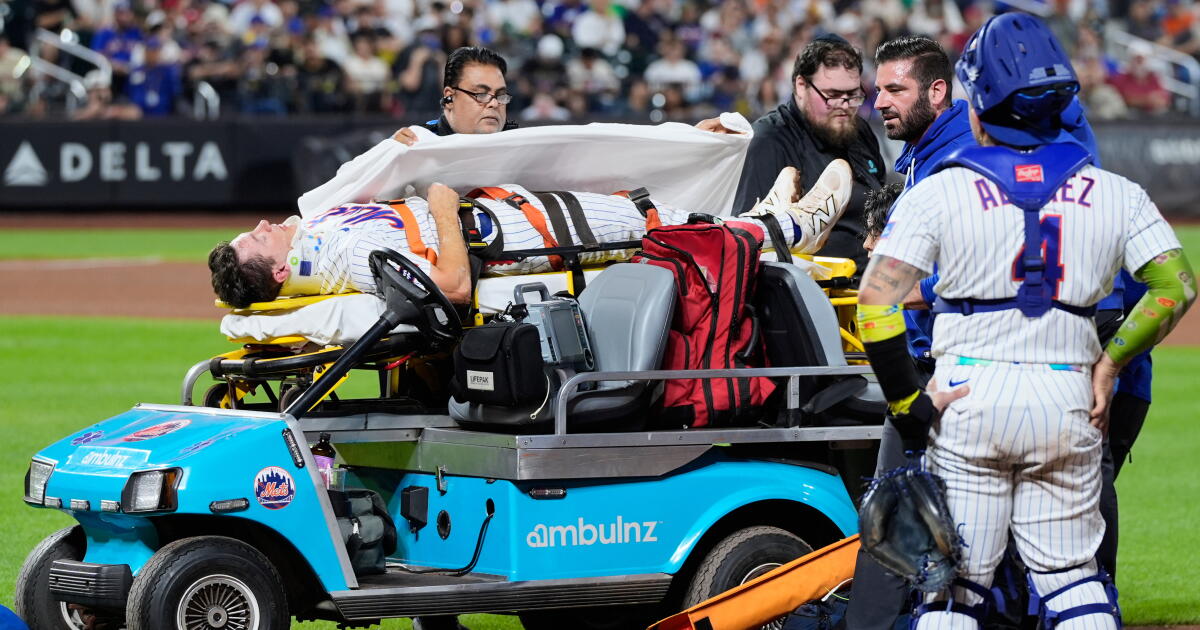
New York Mets first baseman Jared Young was carted off the field Thursday night after he took a knee to the head during a collision with pitcher Nolan McLean while both players were trying to make a play on a ground ball hit by Philadelphia’s Justin Crawford.
Young, who landed face-first in the dirt, reportedly was briefly knocked unconscious during the sixth-inning incident at Citi Field.
“It was scary to sit there and just know that he wasn’t with us in that moment,” Mets shortstop Francisco Lindor said after the game. “He was just somewhere else.”
Young was able to give a thumbs-up to the crowd, however, as he was driven off. Mets interim manager Andy Green told reporters after the game that it “feels at this point in time like we’ve avoided the scariest outcomes.”
A CT scan at a hospital was negative, said Green, who added that Young had concussion symptoms but also had full use of his extremities.
Still, Green said after his team’s 3-0 loss, “it was a terrifying moment on a baseball field. Took him a while to come to. It was a really scary collision.”
McLean remained in the game and struck out Philadelphia’s Garrett Stubbs to end the inning. He was replaced by reliever Tobias Myers in the seventh.
Young, 31, has been a bright spot for the Mets (69-84) during his first full season, hitting .266 with nine homers and 39 RBIs in 103 games. A left knee injury caused him to miss six weeks early in the season.
“He’s somebody we all respect and appreciate and have love for,” Lindor said. “He’s been a big part of our team this whole year.”
THERE was an on-stage mystery last night as Nicole Scherzinger ‘went missing’ from a Pussycat Dolls song on their tour.
Her bandmates even failed to cover her lyrics when Nicole was nowhere to be seen on the stage in Poland on September 16.
Nicole Scherzinger ‘went missing’ from half of a hit song on The Pussycat Dolls’ tourCredit: Tiktok/@luke.witekShe emerged halfway through the numberCredit: Tiktok/@luke.witek
The Pussycat Dolls Kimberly Wyatt, Nicole Scherzinger and Ashley Roberts are currently on their reunion tourCredit: GettyThe original noughties lineup is not touring, with only three members currently on the roadCredit: Getty
Nicole, who carries pretty much the entire vocal on the 2006 hit, was missing for nearly two minutes before joining the second half of the song.
Fans were quick to react to the rather awkward moment during the concert.
One person said on TikTok: “Could the other girls not just fill in a sing her part.”
“This feel proper awks,” penned a second.
“Why didn’t they just sing her part?” asked a third.
“That was so awkward,” added a fourth.
While a fifth said: “I would ask for a refund haha.”
And a sixth added: “She was missing for half of the song and was visibly p***ed as hell after she came out.”
The PCD Forever Tour marks 20 years since the group’s debut album was released.
The string of gigs feature just three of the group’s original members after most US dates were cancelled due to poor ticket sales.
British fans will see the group take to the stage in Birmingham later this month.
There are also further UK dates including London’s O2 weeks later in October.
MARK Wright was caught red-handed by wife Michelle Keegan after telling porkies about his whereabouts while she was at work.
The TV star told his actress wife he would be at home looking after their daughter Palma, 1, – confident he wouldn’t be rumbled.
Michelle Keegan caught husband Mark Wright out after he lied about going golfingCredit: Instagram/thisisheartA flustered Mark admitted their daughter Palma was spending the day with his mumCredit: Instagram/thisisheart
But Mark, 39, was actually out playing golf and was spectacularly exposed when Michelle FaceTimed him live on air.
The hilarious incident unfolded on Heart Breakfast when Michelle appeared as a guest to promote her new drama The Blame.
Sign up for the Showbiz newsletter
Thank you!
“Shock, he’s at golf,” Michelle, 39, remarked as the star popped up on the video call before demanding: “I’ve got a question – where’s the baby?”
A flustered Mark responded: “She’s with my mum. She’s seeing her nanny today.”
Mark joked that the radio presenters had landed him “in the doghouse”Credit: Instagram/thisisheartThe couple welcomed their first child, daughter Palma, in March 2025Credit: PA
Michelle then clapped back: “You told me you weren’t golfing today. You’re in trouble!”
Mark told the other presenters: “This is what I mean, guys. You’ve got me in the doghouse!”
The couple welcomed their first child, Palma, in March 2025 after nearly ten years of marriage.
Michelle is now gearing up for the release of six-part ITVcrime drama The Blame, adapted from Charlotte Langley’s debut novel of the same name.
Mark is a doting dad to 18-month-old daughter PalmaCredit: instagramMichelle recently pulled out of another ITV project to spend more time with PalmaCredit: Instagram
She plays DI Emma Crane, who investigates the murder of a young figure skater while confronting corruption and misogyny within the police force.
The series marks Michelle’s first acting role since giving birth to Palma.
She said earlier this year: “Coming back to work after having a baby is quite daunting.
“But the production were so supportive and I was so looked after. It was like working with family.”
However, the actress recently pulled out of another major ITV drama amid concerns its demanding filming schedule would keep her away from Palma for too long.
Michelle had been due to play a working-class barrister but withdrew several months before filming began, with former Doctor Who star Jodie Whittaker, 44, stepping into the role.
Although Michelle had committed to the project and filming dates had been agreed, she reportedly walked away before signing a contract.
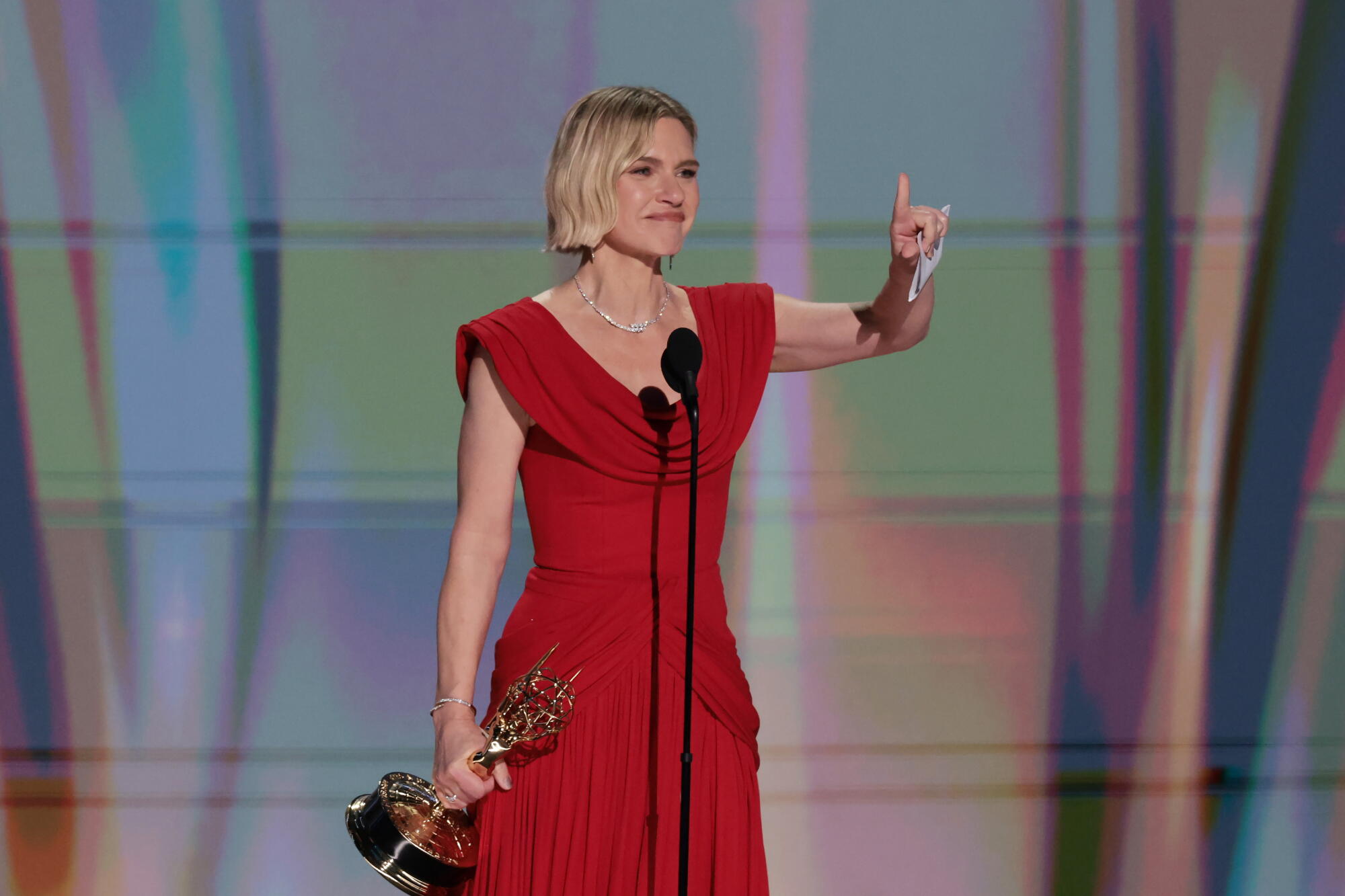
The 78th Primetime Emmy Awards saw a number of firsts: A first-time host, a first-time Emmy winner and the first to win two lead acting Emmys in a night. These notable achievements were coupled with moments of remembrance for legendary actors and creators, like Dolly Parton, Rob Reiner and Catherine O’Hara, among many others.
With Mariska Hargitay at the helm, the show ran at a quick pace without feeling rushed, giving room to winners to say their thanks in acceptance speeches while still having moments of fun in between. Here, our writers discuss some of the best moments of the ceremony. — Maira Garcia
Best moment of overdue recognition: Rhea Seehorn
Rhea Seehorn finally won an acting Emmy, an accolade that was long overdue.
(Robert Gauthier/Los Angeles Times)
If you appreciate Rhea Seehorn’s complex, subtle acting, her dynamic range and her deadpan humor, then you’ve probably found the Emmys to be maddening over the years. She famously wasn’t nominated for playing poker-faced attorney Kim Wexler on “Better Call Saul” until the show’s two-part final season. And she never won, not even for the raw, heartbreaking work she did in those last episodes. So seeing her win, finally, for her lead turn on “Pluribus” was thrilling, long overdue recognition that, given her history, made you wonder if it would ever come. Awards voters typically don’t appreciate nuanced acting, too often equating “best” with “most.” But Seehorn’s work on “Pluribus” was undeniable. Playing Carol Sturka, a sad woman forced to save the world from happiness and hive mind, Seehorn had the role of a lifetime and ran with it. This Emmy was a long time coming, and you could feel that when she choked up on stage accepting it. Her palpable joy thanking “Pluribus” creator Vince Gilligan, wiping away tears, is one reason why we keep watching the ceremony. — Glenn Whipp
Best double Emmy haul: Matthew Rhys
Matthew Rhys with his double Emmy haul for “The Beast in Me” and “Widow’s Bay.”
(Ronaldo Bolanos/Los Angeles Times)
It was the sort of epic night that might make life vest-wearing mayor Tom Loftis jolt from his boat seat in shock or compel the villainous real estate heir Nile Jarvis to scarf down a whole rotisserie chicken with a glint in his eye — Matthew Rhys, the actor who brought both characters to life on screen, won two Emmys during Monday’s ceremony.
In doing so, he achieved a feat no actor has accomplished in 78 editions of the Emmy Awards: he won two lead acting Emmys in the same night. He was recognized for lead actor in a limited series for his turn in Netflix’s psychological thriller “The Beast in Me,” where he played Nile equal parts charming and terrifying. Later, he took the stage to accept the lead comedy actor prize for his optimistic but skeptical take on a mayor of a small, haunted island town in Apple TV’s horror comedy “Widow’s Bay.”
Rhys didn’t react like his characters might have — instead, he thanked his homeland: “To the great and good people of Wales… we are a small but mighty nation!”) And he took in the moment being feted by his partner, Keri Russell, who hung on him with pride as he made his way back to the main seating area after his first win.
The double wins add to Rhys’s collection of gold across the acting categories. In 2018, he took home the prize for lead drama actor for “The Americans.” — Yvonne Villarreal
Best reaction to someone else winning: Martin Short
Martin Short, left, with his “Only Murders in the Building” co-star Steve Martin on the red carpet at the Emmys.
(Christina House/Los Angeles Times)
Rhys may have taken home lead actor Emmys for limited series and comedy series, but the award for best reaction belongs to Martin Short.
During Rhys’ acceptance speech for lead actor in a comedy, the camera briefly panned to Short, who was nominated for “Only Murders in the Building,” just in time to catch him ripping paper into pieces — presumably his speech — and throwing it on the floor in anger and disbelief.
It lasted only a few seconds, but Short took advantage of the moment.
The timing. The commitment. The expressive performance. Short’s full comedic arsenal was on display before the camera moved on. It was the kind of quick visual gag that was easy to miss, and plenty of people probably did. But for those who caught it, I hope it was worth the spit-take. I am certainly glad I had a napkin at hand.
Short may have lost the Emmy, but his comedic timing remains undefeated. Stay funny, Short. — Anthony Solorzano
Best emotional moment that emptied our tissue box: Michael J. Fox
Michael J. Fox received the Bob Hope Humanitarian Award for his work and advocacy on Parkinson’s disease.
(Robert Gauthier/Los Angeles Times)
In an Emmys telecast full of genuine emotion — Reba McEntire’s musical celebration of Dolly Parton, a heartbreaking In Memoriam segment that ended with Jamie Lee Curtis’ personal tribute to Rob Reiner — the most moving moments were claimed by Michael J. Fox, receiving the Bob Hope Humanitarian award.
Fox’s decades-long battle with Parkinson‘s disease, and for those who suffer from it, is well known, as is his refusal to let it define him or his career — he received his 19th Emmy nomination this year, for guest actor in “Shrinking.” But when he first came out on stage, in a wheelchair and classic black, he spoke first about his admiration for Bob Hope, a man whose tireless support of soldiers “and military families like mine” illuminated, for Fox, the necessity of showing up for others. “When it starts to get tough, you show up, you help, and if you add a little joy while you’re doing it, that’s so you know it’s even better.”
The utter silence of that room as he spoke, the admiration on all those famous faces said it all. Fox remains as he has long been — funny, sincere, wildly talented and one of the most courageous people many of us will ever know. — Mary McNamara
Best self-depricating host: Mariska Hargitay
Mariska Hargitay didn’t take herself too seriously as host, cracking a number of silly jokes throughout the night.
(Robert Gauthier/Los Angeles Times)
Host Mariska Hargitay was refreshingly lewd and charmingly self-deprecating as the first female host of the Emmys in 15 years.
By not taking herself too seriously, she set a laid-back tone for a high pressure show that for many nominees feels like a life or death moment.
Winning is not everything, Hargitay regularly reminded the crowd, with bits that grounded actors’ experience, like a clip from a 1984 B-horror film she starred in called, “Ghoulies,” which, as she explained to everyone, is a film, “where a monster pops out of a toilet.”
“Jamie Lee Curtis isn’t the only scream queen around here,” Hargitay quipped.
That joke came after an ongoing series of goofy, blue wisecracks, including one about “Law & Order” producer Dick Wolf, saying his real name was “Richard Penis;” that her “SVU” character, Olivia Benson, was “America’s sweetheart sex cop;” that aging fans who once loved and watched “Hannah Montana” would soon need “Hannah Mammogramas;” and an aside about her packed work schedule, noting that “Margo may have money troubles, but Mariska’s doing just fine.”
She ended the night with a mic drop by introducing Woody Harrelson and Matthew McConaughey as “my two favorite flavors of vape.” — Jessica Gelt
Best changes to a host’s hair: Hargitay and her hairstylist
A sampling of Mariska Hargitay’s hairstyles at the Emmy Awards.
(Robert Gauthier/Los Angeles Times)
Beach waves, bombshell, Targaryen-inspired twists, luscious locks and a tousled bob. Mariska Hargitay changed her hairstyle so many times throughout the Emmy Awards it was hard to keep track. One can only imagine the quick work happening backstage to get her hair coiffed amid costume changes. And one can only hope there was a wig wall somewhere inspired by Catherine O’Hara’s Moira Rose. The bombshell blowout was reportedly a tribute to her late mother, ‘50s starlet Jayne Mansfield — Hargitay took home two Emmys earlier this month for a documentary she directed about her. Her quick-turn tresses were yet another example of the first-time host’s infectious enthusiasm. — Brittany Levine Beckman
Best presenter who should host the next awards show: John Mulaney
John Mulaney introduced the award for lead actor in a drama series, but not before sending up men.
(Robert Gauthier/Los Angeles Times)
I’ll say it: I’m not sure how I feel about John Mulaney. I’ve waffled over the years. I used to love his work, then I found it tired, then I fell off the bandwagon altogether. So believe me when I tell you: I wasn’t sure how I’d feel about him presenting lead actor in a drama series. I wasn’t primed to like his speech. And yet.
He won me — I’m not necessarily a certified Mulaney hater, but certainly not a full-blooded Mulaney lover — over with a truly funny arpeggio of riffs about the mediocrity we accept from men and male actors. I was trepidatious, as was the live audience. (“This award is for the guys. Just men being men,” is a scary start.)
But then Mulaney rounded the curve with a tongue-in-cheek reference to the “Bluey” dad controversy and I sat up straighter. If the line, “some of the men in this category do method acting, and some do regular, less annoying acting” didn’t get me, then “they can play anything, these nominees, not just doctors — they can play a cop or an FBI agent or a secret agent, and then that’s it, no other examples,” certainly did. Don’t get me started on the DJ Khaled quote (I loved it).
Let this man host an awards show, as he is clearly trying to do. I recognize the game, and I respect it.
Also: a very honorable mention to Meg Stalter dressed as a literal Emmy statue. Meg, you are the only method actor I respect. — Laura Zornosa
Best Targaryen family reunion: Emma D’Arcy and Emilia Clarke
Emma D’Arcy and Emilia Clarke nodded to “Game of Thrones” before presenting the award for lead actress in a limited series or television movie .
(Robert Gauthier/Los Angeles Times)
One of the last things I ever expected to see on an awards show in 2026 is the Mother of Dragons speaking in High Valyrian on stage. So “Game of Thrones” star Emilia Clarke hitting the stage with “House of the Dragon’s” Emma D’Arcy to present the award for lead actress in a limited series or television movie was a pleasant surprise.
“In the ‘Game of Thrones’ universe, Emilia is my great-great-great-great-really-great granddaughter,” D’Arcy said. “And in honor of our shared Targaryen lineage, Emilia is going to address you in High Valyrian — our mother tongue — and I will translate.”
Clarke earned four Emmy nominations during “Game of Thrones’” run for portraying Daenerys Targaryen, one of the last surviving members of the family that long reigned over Westeros. D’Arcy, meanwhile, plays Rhaenyra Targaryen in “House of the Dragons,” which is set at a time when there are so many Targaryens that a war of succession became inevitable.
The Targaryen team-up was my favorite but it wasn’t the only name-based collaboration of the night. An earlier segment saw Olivia Benson, the fan-favorite “Law & Order: SVU” character played by Hargitay, share the screen with another Olivia Benson — Taylor Swift’s cat that is named after her. The cat made a surprise cameo along with the mega pop star in a pre-recorded segment about the likelihood of Swift appearing at the Emmys. — Tracy Brown
Best invitation to dinner at their house: Marcello Hernández
Marcello Hernández presented an award, but not before presenting some dinner invitations to a few people in the crowd.
(Robert Gauthier/Los Angeles Times)
When I saw “SNL’s” Marcello Hernández would be presenting at the Emmys, I knew it would be a special moment, and he didn’t let me down. The actor, who presented the award for directing for a comedy series, promptly made himself at home, shouting out, “Donde ‘tan los Latinos?” He then took the opportunity to say hello to a few fellow actors in the room.
“Very quickly, I would like to say hello to Harrison Ford,” he said, looking at the actor sitting in the audience, who gave an exasperated look and waved. “You are a legend and a real inspiration to me and I would like to invite you to have dinner at my house.”
The room erupted in laughter, but he wasn’t finished. He then extended an invitation to Zendaya and her partner, Tom Holland: “I want to say hi to Zendaya, you’re a beast and you’re amazing. And I saw you and I wanted to play it cool, and I decided I can’t do that. So I would like to invite you and Spider-Man to have dinner at my house.”
Then he proceeded to invite Oscar Isaac, the Guatemalan actor who utilizes his given name professionally, suggesting they might be related. “You are so good in ‘Beef’ and you are also Hernández, like I am. So we could be cousins, you never know. And I will see you at Christmas, I will cook you whatever you want.”
Lastly, he said a hello to Matthew McConaughey, and quoted his Cuban tía, who told him if he works very hard, he can hang out with “Matthew McCon-i-purse.” It was a light-hearted speech that spoke to anyone who suddenly finds themselves in a room wondering how they got there. — M.G.
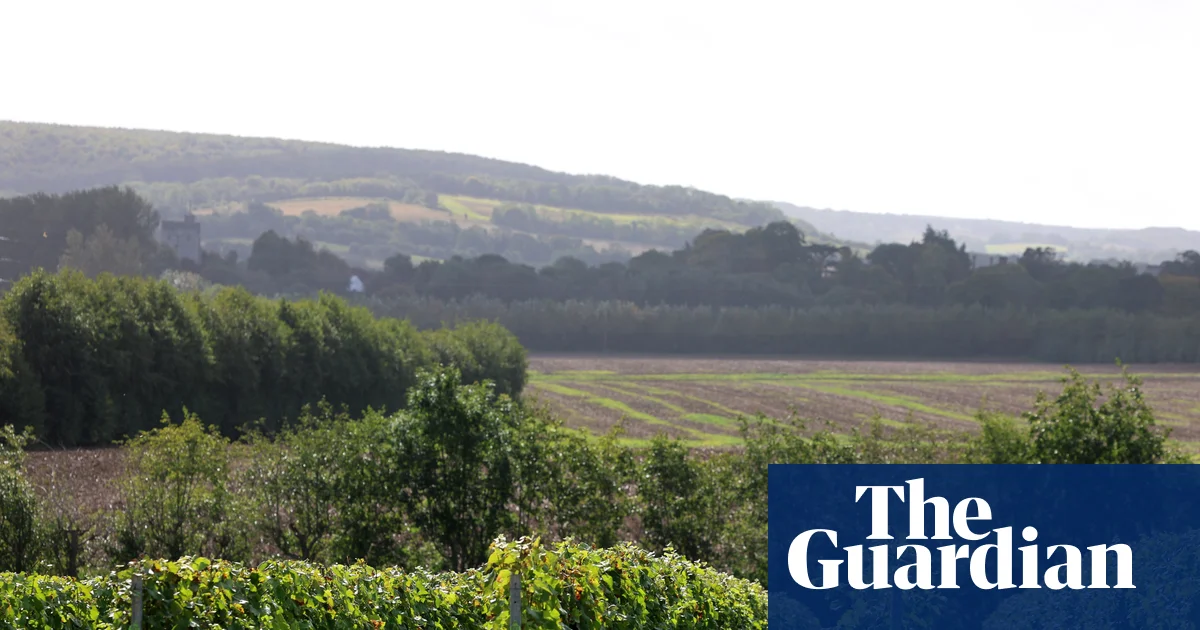
The grapes are turning purple on tall green vines, which stretch down towards the distant flint-and-limestone tower of Chilham church. These rows of Pinot Meunier, destined for English sparkling wine, are 51% owned by French champagne house Taittinger. “England is now the most exciting wine region,” says host and sales executive Hilary Sharp as she leads me around Domaine Evremond vineyard, which opened its visitor centre last year to coincide with the launch of its first wine.
In his 2023 book Vines in a Cold Climate, drinks writer Henry Jeffreys charts the rise of English wine “from a joke to world-class in 30 years”. The book opens with an alcohol-fuelled scene of vine-planting at Domaine Evremond in May 2017: unseasonably cold, rainy, muddy, with rambling anecdotes from anglophile Pierre-Emmanuel Taittinger about “English women encountered in his misspent youth”. The vineyard is named for the exiled French aristocrat Charles de Saint-Évremond, a symbol of hedonistic Anglo-French cooperation. The bon vivant introduced champagne to England and party-loving Charles II made him governor of Duck Island in St James’s Park.
Illustration: Guardian Graphics
We stroll past a Land Rover, parked up by a windbreak of crab apple trees. Harriet opens the back to reveal a tray of glasses with a chilled bottle of Domaine Evremond’s Edition I, and we’re soon sipping creamy, citrussy fizz with a view of vines. It tastes great to me, but I’m no expert.
Wine critic Jancis Robinson gave it a “distinguished” 16/20 and Jeffreys, in his Substack, Drinking Culture, describes “bright green apple fruit with a reassuring bass note of croissant and Marmite”. King Charles III toasted French president Emmanuel Macron with this wine at a state banquet last summer.
Taittinger’s vineyard director, Christelle Rinville, supervises the vines at Domaine Evremond, regularly taking Le Shuttle from Champagne and enthusing about flinty Kentish subsoils. One of the companies that dug through chalk to make the Channel tunnel excavated Evremond’s 25-metre-deep cellars, where 1.5 million bottles can stay cool around the UK’s first subterranean winery.
Domaine Evremond’s new winery building
An elegant umbrella-shaded terrace outside the chalk-cliff walls of the winery has long rustic tables with vases of wildflowers. Visitors can sample the wine (£12.50 a glass, £55 a bottle) from Wednesday to Sunday and there are year-round tours and tastings. Sitting here under blue skies, among banks of yarrow, knapweed, vetch and wild carrot scorched by the relentless sun, it doesn’t feel very English.
Europe is the world’s fastest-warming continent. The unirrigated vines (unlike many other crops) seem to be thriving, and the harvest will be up to three weeks early. Jeffreys writes: “Currently the climate in south-east England is similar to that of Champagne in the 1970s.” Optimal latitudes for wine are supposed to be 30 to 50 degrees, with Champagne at the northerly end of the range. Chilham sits at 51 degrees north.
The vineyard is a half-hour walk through fields from the village, with its cafes, pubs and railway station, where only the front four carriages fit next to the short platform. Bearded butter-yellow cobs of sweetcorn are bursting out of pale green husks beside the path. I loop back to Chilham through Perry Wood. Just beyond the vines, I can see an old oasthouse through branches laden with rosy gala apples. The land was bought in 2015 from the fruit-growing Gaskain family, whose managing director, Mark Gaskain, oversees day-to-day operations in the vineyards as well as producing about 70 million apples a year.
Further on, an orchard of plums is drooping under the weight of purple fruit and crates are stacked up ready for harvest. In the hedges, sprawling hops and honey-scented wild clematis tangle with reddening rosehips and sweet, wine-dark blackberries. Sparrows snack on early-ripened hawthorn under arching beech and sweet chestnut trees, ancient ivy-wreathed hedge maples and squirrel-haunted hazels. Huge clumps of mistletoe hang from towering poplars.
Chilham Castle’s gardens were landscaped by Capability Brown and now include a vineyard. Photograph: Goddard New Era/Alamy
Cottage gardens are heady with late summer roses, scented lavender, aromatic catnip. I wander past wisteria-clad walls and a row of mud-built house martin nests with late fledglings still cheeping under half-timbered eaves while gathering swallows twitter on the wires.
Deputy church warden Lynda Twaite shows me round the flint-walled St Mary’s, pointing out memorials and a battered old school table, graffitied by 18th-century kids. The pilgrim route to Canterbury runs through the lime- and yew-shadowed churchyard. Across the square, I peer through the gates at creeper-covered Jacobean Chilham Castle. Its gardens, landscaped by Capability Brown, now include a new vineyard.
Before heading to the Woolpack Inn for the night, I take an evening stroll by the River Stour, with a view of weatherboarded Chilham Mill framed by willowherb and ripe elderberries. The river sparkles in the sun and turquoise damselflies hover among loosestrife and waterlilies.
The Woolpack’s garden has a Mediterranean feel, with pink hydrangeas, agapanthus and a 600-year-old olive tree. The brick-walled bar has a curving window seat, weathered oak beams and is stuffed with prints and plants and quirky lighting. After a multimillion-pound renovation a couple of years ago, suites and bedrooms upstairs are named after Kentish vineyards, while the big rooms in Rose Cottage, across the lane, come with their own private gardens.
The Woolpack Inn’s ‘Woolly cheeseboard ’is served on a slice of tree trunk. Photograph: Phoebe Taplin/The Guardian
I sit in the leafy shade with a “Woolly cheeseboard” on a slice of tree trunk. As much cheese-based installation as meal, its applewood-smoked and creamy goat are artfully arranged among crackers, olives, nuts, dried fruit, chutneys and tangy homemade pickles. To go with it, there are pints of Shepherd Neame’s toffee-appley Master Brew from down the road in Faversham, or glasses of the local cuvée at cellar door prices.
Domaine Evremond helped found the Wine Garden of England, a collaboration of Kent vineyards. August 2026 also saw the launch of a new tourism initiative, the Kentish Wine Way, encouraging people to visit “England’s largest and most awarded wine region”. The county has 120 commercially active vineyards and more than 25% of Britain’s vines by area, with last year’s harvest producing more than five million bottles. From the train window next day, after hours of walking through wooded hills and burdened orchards, several vineyards roll past, glowing in the evening sunlight.
Accommodation was provided by the Woolpack Inn (doubles from £140 B&B) and some transport by Southeastern (advance tickets from London St Pancras from £16 each way)
Five more Kent vineyards to visit
Balfour Winery
Balfour produced the first English wine to win a gold medal and a trophy at the International Wine Challenge for its 2004 Brut Rosé. Most days, you can pick up a map at the Cellar Door and wander free around the vineyards, orchards, wildflower meadows and ancient oakwoods – or book a range of experiences (from £15pp for a self-tutored tasting). There’s a free shuttle bus to Balfour from Marden train station Friday to Sunday (45 mins from London or Canterbury), and car-free visitors get 20% off the year-round tours and tastings.
Biddenden Vineyards
Five miles from Sissinghurst Castle Garden, the vineyard at Biddenden is the oldest in Kent. Drinks journalist Henry Jeffreys writes that the Barnes family are “apple growers who moved into grapes in 1969 when Joyce Barnes … heard a segment about English viticulture on Radio 4’s Woman’s Hour and decided to plant some vines”. You can still buy all kinds of fancy apple juice and cider here, as well as a range of experiences. Most run from May to September (from £15 for a self-guided tour and tasting flight) with a new behind-the-scenes production tour and tasting added this year for the colder months (£30).
Chapel Down
Photograph: Tim Winter
Chapel Down, near Tenterden, is England’s largest wine producer, with bottles in numerous supermarkets, made using fruit from more than 700 acres of vineyards across south-east England. A half-hour taxi ride from Ashford International, it offers various tours and tastings, including a cheese and wine pairing (£70).
Simpsons’ Wine Estate
Ruth and Charles Simpson started making wine in Languedoc in 2002 and, since 2012, in Kent, which they call “one of the most dynamic wine-producing regions of the world”. Bookable sessions include tastings (from £25) on a glass-walled mezzanine floor in the winery with velvet sofas and an optional helter-skelter slide to get back down after sampling their still and sparkling wines.
Westwell
On the edge of the Kent Downs, Westwell is close to Charing station and a short walk from the Pilgrims’ Way. The vineyard is known for its experimental approaches, including wild yeasts, small-scale production and cloudy, naturally sparkling Pet Nats. Alongside regular tours, there are Friday pizza nights and seasonal supper clubs. Tour and tasting £28.
NEW YORK — Americans commemorated the 25th anniversary of 9/11 on Friday, remembering the shock, the dead and the sweeping consequences of the al Qaeda attacks on symbols of U.S. might and prosperity.
The milestone anniversary brought memorial rituals — wreath-laying, flag-flying, moments of silence, vigils and readings of victims’ names — and volunteer projects in tribute to a day that about half of U.S. adults remember as the most historic event of their lifetime, according to a new poll. On Sept. 11, 2001, al Qaeda extremists hijacked four commercial jets and crashed them into New York’s World Trade Center, the Pentagon and a field near Shanksville, Pennsylvania, killing nearly 3,000 people.
Elsie Caldwell carried a photograph of her son Kenny Caldwell to the trade center to hear his name and all the others read aloud Friday morning. She last spoke to him that morning a quarter-century ago.
“Mom, I just want to let you know that I love you,” Caldwell said he told her in a final phone call. His remains, like those of many other victims, have never been recovered.
Trump attends Pentagon observance
The attacks brought down the World Trade Center’s twin towers — icons of U.S. economic power, and among the tallest buildings on Earth — and blew a hole in the Pentagon, the U.S. military’s fortress-like headquarters near Washington. The fourth plane was headed for Washington, officials concluded, but the aircraft went down in Pennsylvania after passengers and crew members stormed the cockpit and fought the hijackers.
“Sept. 11 reminded us of the terrible power of hate,” President Trump said Friday at the Pentagon’s anniversary ceremony Friday.
“The 25 years since have shown us the even greater power of the American spirit to endure and prevail, and to win,” added the Republican, who was in his native New York on 9/11.
Former President George W. Bush, who was in office on 9/11, and ex-Presidents Clinton, Obama and Biden and current Vice President JD Vance convened for the observance at the National Sept. 11 Memorial in New York. Other administration officials went to the Flight 93 National Memorial in Pennsylvania.
At ground zero, a new tribute to those who fell ill
For Angilic Casalduc, attending the New York commemoration “helps to show you’re not alone.” She lost her mother, Vivian Casalduc.
“There’s no timeline for grief, and unfortunately, no one can say how can you can grieve, but coming here once a year makes it feel just a little bit better,” she said.
Traditionally, there are no political speeches at the ground zero commemoration, where victims’ relatives read aloud the long list of names and added personal messages. They thanked first responders and the military, invoked religious faith, appealed for national unity and touched on the U.S. relationship with Saudi Arabia. The kingdom was the homeland of most of the hijackers but denied any involvement in the attacks.
Mostly, relatives spoke of, and to, loved ones — who some were too young to remember.
“You dreamed my whole life for me, and you only got eight months of it,” said Trisha Pakka, who lost her mother, Deepa Pakkala.
The ceremony has long been punctuated with moments of silence at key points in the attack timeline and this year organizers added another moment to honor people who were exposed to the clouds of toxic dust released by the twin towers’ fiery collapse and have since died of cancer and other illnesses. Questions remain about how many people developed health problems linked to the dust.
The impact of 9/11 endures
It’s a reminder of how the attacks’ long shadow has reached into many corners of life in the U.S. and beyond.
The U.S.-led global war on terrorism included invasions of Iraq and Afghanistan — the latter Washington’s longest war — and detentions and harsh interrogation of terror suspects in an international network of secret CIA prisons. The U.S. found and killed al-Qaida leader Osama bin Laden in Pakistan in 2011, but accused 9/11 mastermind Khalid Sheikh Mohammed still awaits a trial 23 years after his capture.
The attacks changed U.S. air travel, led to the creation of the Department of Homeland Security, prompted new federal surveillance and intelligence-gathering powers and banking regulations and generated ongoing debate over the balance between security and freedom.
Sept. 11 engendered a culture of individual vigilance summed up by the slogan “ if you see something, say something,” while a wave of patriotism propelled some Americans to join the military, fire departments, police forces or other public agencies.
Casey Kloepfer became a New York police officer this June. He was 4 when his father, Officer Ronald Kloepfer, was killed at the trade center.
“It’s big footsteps to fill, but it’s definitely something that I take very seriously and want to continue to honor him and be the best police officer I can,” the 29-year-old, who wears his father’s badge number, said by phone this week.
New York’s mayor comes under scrutiny
Amid the post-9/11 calls to service and appeals for national unity, the attacks also fanned mistrust, prejudice and hate crimes directed at Muslims.
In the quarter-century since, Muslim Americans have played a growing role in public life from statehouses to Congress to New York City Hall, where Zohran Mamdani is the city’s first Muslim mayor. Yet he faced some criticism for attending the anniversary ceremony at ground zero.
Republican ex-Gov. George Pataki and 9/11 victims’ relatives cited, among other things, past remarks that some of Mamdani’s political associates have made about the attacks. Former Mayor Rudy Giuliani, a Republican, also inveighed against Mamdani attending the remembrance, though the two shook hands there Friday.
Mamdani, a Democrat, said this week he loves the city and country and that he wanted the anniversary to focus on victims’ families, first responders and New Yorkers who helped one another after the attacks, which he called a “horrific act of terror.” The 34-year-old mayor was an elementary school student in New York on 9/11.
Times Square billboards pause advertisements
Remembrances extended far from the attack sites, including beams of light projecting from New Hampshire’s Mount Washington, a stair climb at Mississippi State University’s football stadium and a ceremony at Honolulu’s 9/11 memorial.
Sept. 11 isn’t a federal holiday, but Congress has designated it both Patriot Day and a National Day of Service and Remembrance.
“One appropriate way to remember is by serving,” says Jay Winuk, who lost his brother Glenn Winuk and then co-founded the volunteer organization 9/11 Day with friend David Paine. The group helps people find volunteer opportunities and this year arranged for dozens of Times Square billboards to pause their advertising at 9:11 a.m. Friday.
Instead, they simply displayed the time.
Peltz and Shaffrey write for the Associated Press. AP journalists Michael R. Sisak, Anthony Izaguirre, and Julie Walker contributed to this report.
A MAJOR UK airport has now become the first to introduce robotic valet parking – which uses no human interaction at all.
But one catch could see certain travellers excluded from the service.
The new technology has now been rolled out at the South TerminalThe robot automatically lifts, moves and parks cars without the need for human interactionCredit: Reuters
London GatwickAirport has officially brought in a new Robotic Parking system, said to be designed with customer comfort in mind.
Officially announced two months ago, passengers have already begun to use the parking service from August, which sees drivers leave their vehicle at a private drop-off garage before heading to the terminal.
Sign up for the Travel newsletter
Thank you!
The “state-of-the-art” robot then takes over, gently hoisting the car from underneath its wheels and moving it to an access-restricted parking area.
One key difference from traditional airport parking is that customers are able to keep hold of their car keys throughout their trip.
When a passenger returns from holiday, the system receives an alert that they have landed.
This means that when they arrive at the South Terminal car park, their vehicle should already be ready for collection.
However, there are some limitations, with 5 per cent of vehicle models not compatible with the new technology.
This includes popular models such as a Range Rover Sport Hybrid, Renault Trafic Van, as well as SUVs with roof boxes.
It also costs around £109 for a five-day stay (travellers are unable to use the service for shorter stays) and passengers are currently only able to drop off their vehicles on weekdays between 9am and 5pm.
Located at the South Terminal, passengers can reach the parking lot following the marked signs for Robotic Parking, once within the Long Stay car park entrance barriers.
Gatwick airport also said the area includes 24-hour security patrols, automatic number plate recognition (ANPR) at the entrance and exit, perimeter fencing, floodlighting and no public access.
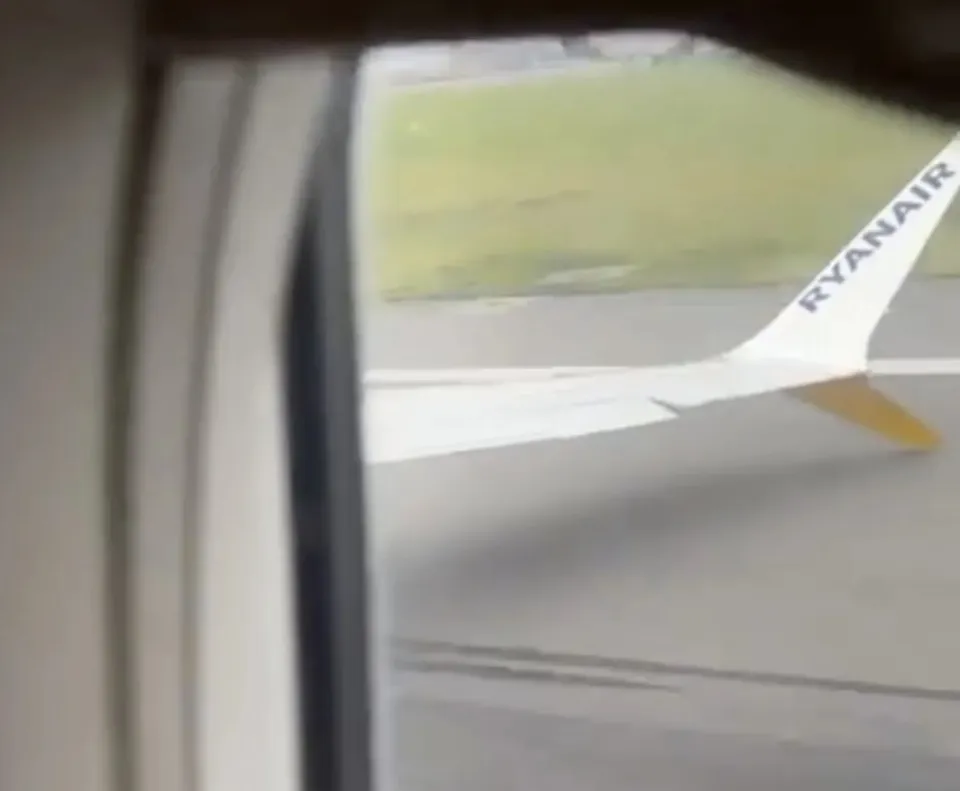
THIS is the scary moment a Ryanair plane’s wingtip hit the ground as it came into land at Dublin Airport.
A passenger filmed the moment the plane lurched to the right and suffered a “minor wingtip impact” during a rough landing yesterday morning.
The jet’s wingtip came ever so close to scraping along the groundCredit: Social Media CollectThe plane performed a go-around after the aborted landing (stock image)Credit: Alamy
The Boeing 737 Max, which took off from Bologna just after 8am came in to land at Dublin at 10.45am.
As it touched down on the runway, the plane tumbled onto its right-hand side.
Sign up for the Travel newsletter
Thank you!
Shocked passengers watched as the wing tips of the plane brushed against the runway.
Recognising the danger of the dodgy landing, the Ryanair pilots immediately brought the engines up to full power to perform a go-around.
This is where a plane aborts its landing attempt and flies in a loop around the airport to try again.
The two pilots were able to guide the plane safely onto the ground about 15 minutes later.
In a statement, Ryanair described the incident as a “minor wingtip impact”.
A spokesperson told us yesterday: “On landing in Dublin this evening (10 Sept) Ryanair flight FR9457 from Bologna suffered a minor wing tip impact.
“The aircraft landed safely and all passengers offloaded normally.
“Our engineers are now repairing this wing tip and the aircraft is expected back into service tomorrow morning (11 Sept).”
It comes as Ryanair boss Michael O’Leary came under fire for “shameful” comments he made describing other airlines as “high-fare rapists”.
TheRyanairchief landed himself in hot water ahead of his budget airline’s annual general meeting inDublin yesterday.
The billionaire businessman, 65, claimed rising air travel prices at other airlines would see passengers switch to Ryanair, before doubling down on his claims.
In response, Labour’s Laura Harmon urged the notorious motormouth to engage with organisations like the Rape Crisis Centre, and to apologise for his “shocking” language.
The senator fumed: “Michael O’Leary must apologise for the comments he made in advance of Ryanair’s annual general meeting in Dublin.
“The casual use of the word ‘rapist’ to describe the prices of his competitors is deeply shocking and could be traumatising for any survivor of sexual abuse.
“We should have a zero-tolerance approach to sexual violence. In recent years, due to the tireless work of activists and the bravery of survivors of sexual violence who have shared their stories, Ireland has taken a strong stance in support of survivors.
“It is shameful to see O’Leary diminish the real experience of these survivors in such a way.”
Harmon continued: “Every week brings shocking new statistics and stories about the levels of domestic and sexual violence against women in our country.
“Reports conducted by organisations like the National Women’s Council of Ireland often detail the systemic challenges victims of domestic violence are faced with when they look for help – through the courts and the legal system, and through first responders like the Gardai.
“Having O’Leary make such ignorant comments only adds to this. I would urge him to come out and apologise today, and commit to informing himself about the real trauma of sexual violence.”
Fianna Fail’s Lorraine Clifford-Lee also condemned O’Leary’s comments as “a new low” for the Ryanair CEO.
It’s an exciting time for Southern California coaster fans. Universal Studios Hollywood is on the verge of officially openingFast & Furious: Hollywood Drift, and Knott’s Berry Farm this summer unveiled the refurbished Montezooma: The Forbidden Fortress. Now Six Flags’ Magic Mountain is getting in on the coaster action.
Coming in 2027 to the Valencia park will be Thrill Glider, a first of its kind thrill ride designed by coaster manufacturer Vekoma exclusively for Magic Mountain.
Magic Mountain in a release describes Thrill Glider as introducing a new coaster category, one that combines a motorbike-like seating arrangement with suspended coaster technologies. Riders will board what the park is referring to “hoverbikes,” essentially bike vehicles designed to simulate a flying sensation by being suspended from the track. Riders will be seated in a prone, face-forward position that will hang from the track above.
Concept art for Thrill Glider, which will boast bike-like vehicles and a sci-fi backstory.
(Six Flags Magic Mountain)
The ride will feature 20 different coaster elements and is slated to last 80 seconds. Speeds will reach 50 mph, and the coaster will boast five inversions that will take guests upside down. The various inversions will include a barrel roll, a zero-g roll and an overbanked stall turn, hinting at a heavily twisted track that will create drifts and swinging. There will be at least 12 moments, Six Flags promises, in which riders will experience airtime lifts.
“It is the latest milestone in Six Flags Magic Mountain’s renaissance and a reflection of the park’s enduring role as an industry innovator,” said Brian Oerding, park president of Six Flags Magic Mountain in a release.
The ride will come with a heavy sci-fi-inspired narrative. The story: The ride is a new technology from a fictional inventor, Rebecca Silva, who will introduce guests in the waiting area to what is described as a “Futurist Pavilion.” Throughout the queue, riders will encounter “holographic presentations and scientific exhibits,” culminating in the discovery of a new energy source, detailed by illuminated blue energy lines, that will power the ride.
The goal, says Six Flags, is to provide an optimistic view of the future, albeit with many sudden dives and weightless moments. The ride will feature multiple launches, reach a height of 107 feet and traverse 3,380 feet of track, which is more than a half mile.
Concept art of Magic Mountain’s new Thrill Glider, which will reach a top height of 104 feet.
(Six Flags Magic Mountain)
A specific opening window has not been detailed, but the ride is currently under construction. It will be located on the former site of the Golden Bear Theatre and will overlook the recently refurbished kiddie area, Looney Tunes Land.
Thrill Glider is arriving at a moment when Six Flags has been garnering national attention. Magic Mountain’s X2 remains shut down while state safety officials continue an investigation involving the attraction.
The ride, first opened in 2002 as X, has been the subject of controversy and at least one high-profile lawsuit stemming from a 22-year-old man’s death. Six Flags bills the ride as “a right of passage for the ultimate daredevil” that goes up to 76 mph. A CNN report recently took a look at other, more recent injuries allegedly stemming from the attraction.
On Sept. 11, 2001, there were no smartphones and no social media. What the country watched that morning — a jet airliner colliding with the south tower of the World Trade Center, the ash rolling through the streets, the paper still falling in the afternoon — was through a television set and the journalists who had to deliver the unfathomable details.
The jarring images shattered the peacefulness of a sunshine-filled late summer morning in New York.
“Everything seemed so perfect,” said MS NOW’s Chris Jansing, reflecting on the moments before anchoring her network’s continuous coverage. “It was another day of doing a job I loved, living in a city I loved.”
By nightfall, nearly 3,000 people were dead in lower Manhattan, at the Pentagon and in a field outside Shanksville, Pa. The experience of covering the terrorist attacks and their grim aftermath transformed Jansing and other journalists who were there. Twenty-five years later, it’s never far from their minds.
“It’s with me in ways large and small,” said NJ Burkett, a correspondent who covered the tragedy for New York station WABC. “When I look at my phone and it says 9:11, it takes me back.”
The Times asked five of the on-air personalities who are still working today to look back on the day they were called to cover the tragedy and its lasting impact.
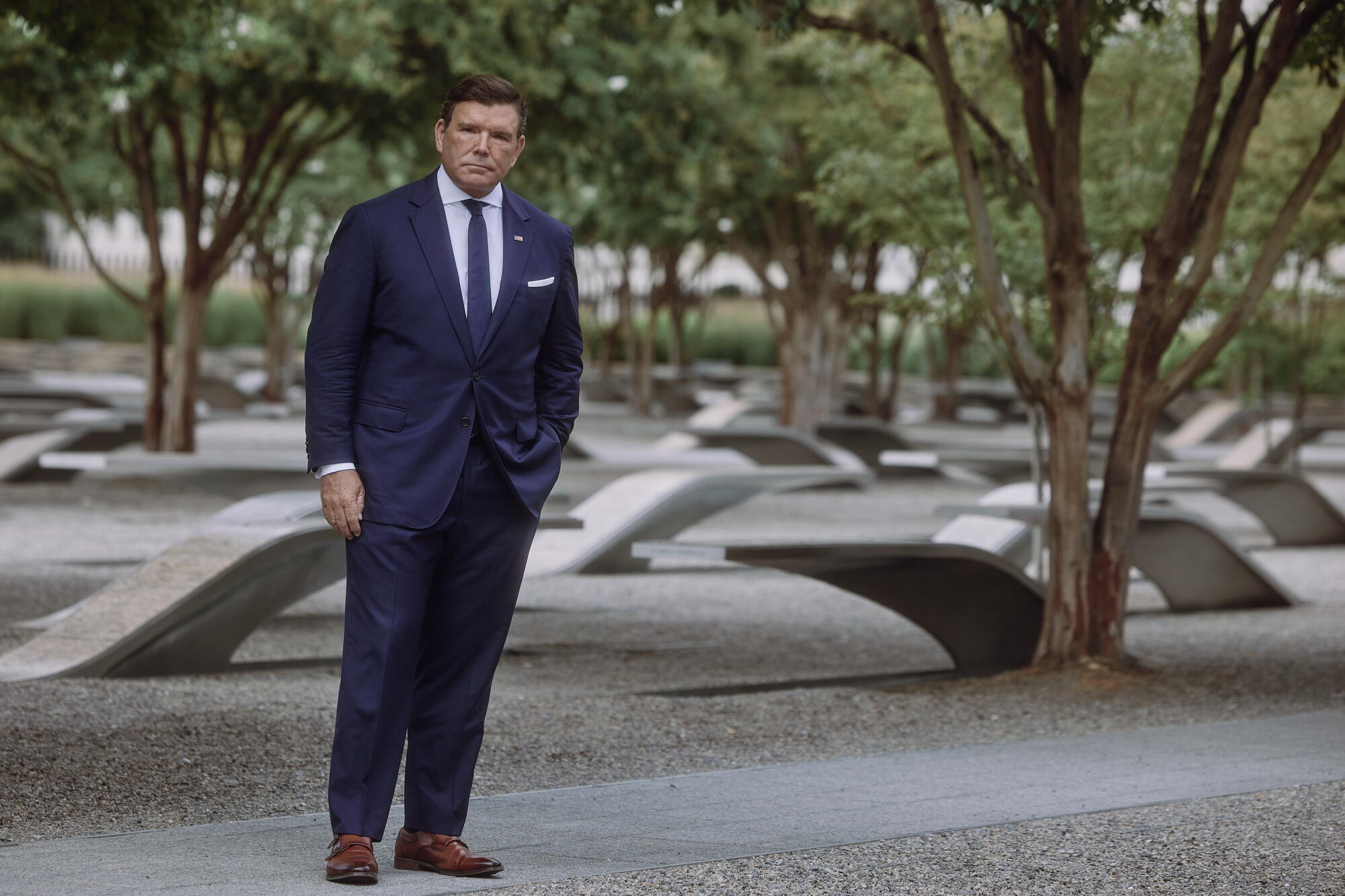
Bret Baier: “I just said yes to everything.”
Fox News anchor Bret Baier at the National 9/11 Pentagon Memorial in Arlington, Va., on Aug. 25, 2026.
(Jared Soares/For The Times)
On every anniversary of Sept. 11, Fox News anchor Bret Baier uses the hashtag #NeverForget. He can recall every moment of that day.
Baier, 56, was driving to the Fox News bureau in Atlanta when he first heard on his car radio that a plane had hit the World Trade Center. He was a 31-year-old correspondent for the network, covering stories throughout the southeast U.S. and Latin America. When he arrived at the office, a call came from New York headquarters telling him to book a flight to the city so he could file reports from the World Trade Center site for Fox TV affiliates around the United States.
After a second plane hit the south tower of the World Trade Center 17 minutes later, all flights in the U.S. were halted. Baier and his producer were told to get a car and start driving.
“I just remember going really fast when I was driving,” Baier said. “I remember thinking what is happening with the world, and how big this story is. How big this moment is.”
By the time the duo reached northern Georgia, their plans changed again. A jetliner struck the Pentagon while a San Francisco-bound United Airlines flight crashed in Shanksville, Pa. Fox News executives told Baier and his producer to reroute to Arlington, Va.
After the 10-hour drive, Baier started the first of 10 straight days of reporting on the recovery efforts at the site. While the World Trade Center provided the most dramatic and enduring pictures of the stunning attack, the loss of life at the Pentagon was staggering as well, as 125 people died along with the 64 passengers and crew members on American Airlines Flight 77.
Baier was eventually pulled into the larger military story that followed 9/11. Fox News, just 5 years old, did not have a full-time Pentagon correspondent. Baier was offered the job while traveling overseas with Defense Secretary Donald Rumsfeld, who was making the case for war against Afghanistan.
“I called a buddy on a satellite phone to get me an apartment in Washington,” he said. “Fox packed up my stuff in Atlanta.”
But the unplanned move changed Baier’s life. In six years on the Pentagon beat, he traveled to 74 countries. He was embedded with the military in war zones. “I just said yes to everything,” said Baier, who has anchored Fox News’ Washington newscast “Special Report” since 2009.
Baier recalled it was in the weeks after Sept. 11 that he first wore an American flag pin on his lapel. He never felt conflicted about it, even though such displays were prohibited at other network news divisions. “I thought I could report on America, ask tough questions and still be an American, pulling for us to win,” he said. “I wanted to be tough but fair, but also show that as a country we were standing together against this horrible attack.”
Byron Pitts covering the terrorist attacks in lower Manhattan for CBS News on Sept. 11, 2001.
(CBS)
Byron Pitts: “It’s the only story I think about every day.”
A newcomer to New York 25 years ago, Byron Pitts, then a CBS News correspondent, admitted it took him a few moments to understand the massive scope of what happened the morning of Sept. 11, 2001. He arrived early at the network’s headquarters on the West Side of Manhattan to screen an interview he did with entertainer and civil rights icon Harry Belafonte. Shortly after he started, a producer knocked on his door and told him there was a plane crash at the World Trade Center.
Pitts, 65, acknowledged the producer but kept working. “I thought it was a novice pilot bumping into a building,” he recalled. “I thought it would be three hours out of my day and it won’t make television.”
The producer came back shortly and said, “You need to go down there.”
An irritated Pitts hailed a cab and headed down the West Side Highway. While in the car, he learned a second plane had hit the south tower. Traffic was stopped and he had to head downtown by foot.
As Pitts got closer to the site, he tried to use his past experiences covering fires and other disasters during his career to judge the severity of the situation.
But the horrible scenes that unfolded before him were incomparable. One was a lifeless body near the lobby of the north tower. He thought it was a homeless man until he saw a uniform. He later learned it was Father Mychal Judge, the chaplain of the New York Fire Department killed by fallen debris. Judge’s body was later carried away by a group of first responders. Pitts saw a woman and a man standing at a window of one of the towers holding hands, and then jumping.
“Gravity takes over and their hands split, and he moves a little faster than she does,” Pitts said. “And we see them on the ground. That was the moment I realized something significant was going on.”
Pitts crossed paths with Mika Brzezinski, then a CBS News correspondent, now the cohost of MS NOW’s “Morning Joe.” As debris came down and smoke filled the air, they headed into an elementary school that Pitts believes was a command post for the fire and police departments. They took turns calling into CBS News on a hard-line phone, one delivering accounts of the unfolding catastrophe while the other looked outside to gather details amid the blinding smoke and dust.
Pitts said from that day forward, he never went to a story assignment without a handkerchief.
Pitts was awed not just by the enormity of the event, but also by how despite the rigid hierarchy of CBS News, he was “the new kid on the block” who had to present the story on Dan Rather’s evening newscast that night.
“My approach became almost childlike, so I would not become overwhelmed,” he said. “I tried to make it as simple as possible. I said, ‘Dan, I’ve never heard New York City this quiet.’ I was thinking — what simple thing can I say that you would understand if you’ve never been in New York.”
A few weeks later, Pitts headed off to Afghanistan to cover the U.S. military action. His evening news report on Sept. 11 won an Emmy Award and his star rose at CBS News, leading to “60 Minutes” and then ABC News in 2014, where he is currently a co-anchor of “Nightline.”
Pitts knows the good fortune he’s had in TV journalism is linked to the tragedy that started with a producer’s knock on his door 25 years ago. “I feel some measure of guilt but mostly gratitude,” he said. “It’s the only story I think about every day.”
Pitts said he uses his 9/11 experience to provide perspective. “When we’re discussing politics, a mass shooting, or the latest awful day in Iran, I know for a fact there is one guy in the room who has seen worse and who can say, ‘we’ll be OK,’ ” he said.
Chris Jansing: “You had to balance the news response with the human response.”
Chris Jansing paid her dues as a local reporter in upstate New York before she joined MSNBC (now called MS NOW) as a daytime anchor in 1998. She loved living in Manhattan, and took friends from out of town to the World Trade Center observation decks and Windows on the World, the restaurant on the 106th floor of the north tower.
“It was so iconically New York,” she said. “And I was proud to live in the city.”
Jansing, 69, had little time to process her emotions when she was told to “get in the chair” before 9 a.m. that morning at MSNBC’s Secaucus, N.J., studios after the first plane hit.
“You had to balance the news response with the human response,” she recalled.
For several hours, Jansing co-anchored the network’s coverage alongside Gregg Jarrett. The look of 24-hour cable news evolved that day, as the tsunami of information led to Fox News, MSNBC and CNN all adding running tickers at the bottom of the screen.
Jansing went to the roof of the network’s building after Brian Williams took over the anchor chair. Trauma centers in the area had been alerted, and she was told to watch for ambulances. “There was still a hope and a prayer that there would be injured folks who would overwhelm the hospitals in New York and would need to be brought to New Jersey,” Jansing recalled. She saw none.
Jansing has never watched the coverage of that day, which is now on YouTube. She had real-life reminders every day in her Manhattan neighborhood when she walked by the Rescue Company 1 firehouse that lost half its battalion at the crash site. She adopted a dog left behind by a 9/11 victim, a Dachshund named Baron. She remains friends with every producer she worked with on the story. The experience also reinforced her purpose in a career approaching its 50th year.
“I will always think that those moments are what keep you going,” said Jansing, currently chief political reporter for MS NOW. “They were an affirmation that’s kept me in the job,”
NJ Burkett, a correspondent for WABC, on the 13th floor of the Walt Disney Co. offices in Manhattan on Aug. 31, 2026.
(Roshni Khatri/For The Times)
NJ Burkett: “I put myself in increasingly dangerous situations.”
Burkett, 64, recalls how pedestrians were gathered around WABC’s windowed street level studio on the Upper West Side of Manhattan when he arrived for work on 9/11. He presumed the crowd was there for a big name guest on “Live with Regis and Kelly.” They were actually watching monitors showing news reports of the first plane that hit the north tower.
As Burkett and his cameraman Marty Glembotzky headed downtown in a truck, he already knew it was a terror attack. He recalled covering the 1993 terrorist bombing of the World Trade Center and regretted not getting footage of the firefighters’ rescue efforts. This time around he wanted to go inside the buildings and document their heroism.
A police officer stopped Burkett and Glembotzky before they could get in, likely saving their lives. A short time later, they would escape death again.
Burkett was doing a second take for a taped report that would set the scene for viewers when he heard the rumbling that “sounded like Niagara Falls.” It was the south tower of the World Trade Center coming down behind him. “A huge explosion now raining debris on us — we better get out of the way,” he said in what may be the most terrifying video clip from that morning.
Burkett and Glembotzky took cover in an adjacent building. “We open up the door and in a weird way it’s sort of providential, right?” he said. “The door is a metaphor. It’s like the door into the rest of your life. If we had to run for half a block, we’d be dead.”
Glembotzky was so shaken by the experience, he stepped away from his career as a cameraman and became a wine seller before eventually returning. But Burkett took on more dangerous assignments in the Middle East, heading to Israel to cover the Palestinian uprising known as the Second Intifada. He later headed to Iraq to cover the run-up to the U.S. invasion in 2003.
Burkett won a George Foster Peabody Award for his work on 9/11. In retrospect, he believes he took on assignments in war zones to avoid dealing with the trauma of the day.
“I would put myself into increasingly dangerous situations,” he said. “Looking back, I was running from 9/11. That was my way of coping. Sometimes I wonder did I allow myself feel it enough. Or did I just run too far and too hard and it will all come down and crash on me one day?”
Occasionally he worries about 9/11-related illnesses. “If I start to cough — the slightest little cough — I’ll think ‘is this it?’” he said.
But as a New York TV fixture since 1989, Burkett still feels the appreciation from viewers for his efforts. “To this day, almost 25 years later, people will come up to me on the street and ask to hug me and say ‘NJ Burkett I’m glad you’re alive,’ ” he said.
Carson Daly at NBC’s “Today” show studio at Rockefeller Plaza in Manhattan on Sept. 3, 2026.
(Roshni Khatri/For The Times)
Carson Daly: “I remember how motionless the room was.”
As continuous news coverage of the Sept. 11 attacks saturated television for days, the makers of entertainment shows had to decide when it would be appropriate to go back to work. Carson Daly and the MTV executives mulled over the situation as their wildly popular program “Total Request Live” remained off the air for three days since the attacks.
“We had such a massive audience that the question was raised, ‘do we have a responsibility to simply show up?’ ” Daly, 53, recalled in a recent interview.
Daly, now a feature anchor on NBC’s “Today,” was not a journalist by trade. But he understood the trust that young viewers had in him and “TRL,” a live show that counted down the most popular music videos of the moment. The show had dealt with tragedy a few years before after the high school shooting in Columbine, Colo.
But 9/11 happened on the home turf of “TRL,” which aired from New York City’s Times Square. With the bridges and tunnels closed, getting a crew to the studio was a challenge.
“Everybody wore multiple hats,” said Daly, who also served as an executive producer.
By Sept. 14 of that week, the MTV studio on Broadway was filled with young “TRL” fans, but lacked the energy viewers were used to seeing on the screen. “They were frozen,” Daly recalled. “That was in such stark contrast to what the show was every day. I remember how motionless the room was and feeling like, ‘What am I doing on television?’ ”
Carson Daly shows a tattoo he got after the 9/11 attacks in New York.
(Roshni Khatri/For The Times)
Daly leaned on the MTV News team to update the audience on the 9/11 story developments. Music stars including Jay-Z, Justin Timberlake and Kid Rock called into the program to share their thoughts with Daly. Instead of music videos, the screen showed email messages from viewers expressing their feelings about the tragedy.
MTV News personality Sway delivered a music news report that noted how two new CD releases — “Party Music” by the American hip-hop group The Coup and Dream Theater’s “Live Scenes from New York” — were delayed because both used cover artwork that depicted the destruction of the World Trade Center.
Daly has a permanent remembrance of the week. When he arrived at the MTV offices the day before “TRL” returned, the building was evacuated after it received a bomb threat.
“I remember walking around Hell’s Kitchen,” he said. “I ended up getting a tattoo. A red, white and blue NYC on my right wrist.”
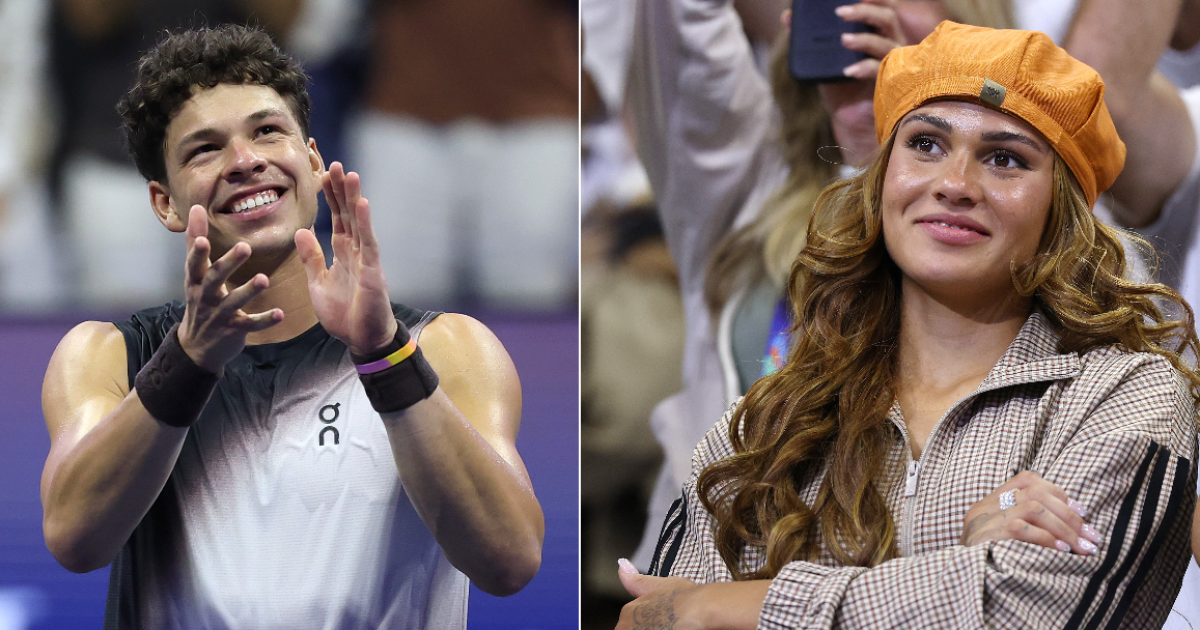
Sure, the U.S. tennis star advanced to his second U.S. Open semifinal in epic fashion, knocking off defending champion Carlos Alcaraz in a five-set marathon that did not end until 3:33 a.m. ET Wednesday.
It was during his on-court interview afterward, however, that Shelton committed a bit of a faux pas while discussing the match that ended later than any other in tournament history.
“I’m just hoping that my best friend and my sister over there don’t have to be at work at 6 a.m. in three hours,” Shelton said following the 6-7 (5), 6-1, 6-3, 1-6, 7-6 (10-7) victory. “It’d be huge from their employers to let them have the day off today.”
Shelton certainly didn’t have to give a shout out to two of his loved ones for hanging in there for the entire 4 hours 28 minutes … but since he did, there’s one other person Shelton probably should have mentioned as well: soccer star Trinity Rodman, who also was sitting courtside throughout the match. TV cameras showed her laughing and apparently saying, “What about me?”
Shelton and Rodman have been dating for more than a year, after going Instagram official in May 2025. They are seen in the stands at each other’s sporting events when their schedules allow.
For the record, Rodman apparently did have to work hours later. The U.S. national team and Washington Spirit player posted a video later Wednesday morning on TikTok that showed her inside a gym with the caption, “Yes, I’m at training now.”
She doesn’t seem to hold a grudge over her boyfriend’s omission, though. Rodman posted a video on her Instagram Story of the match’s aftermath, with the caption, “The moment belongs to Shelton!”
And Shelton actually did include Rodman in that moment, with the two of them making eye contact and flashing his signature “dialed-in” hand motion to each other as he celebrated.
Rodman’s schedule with the Spirit hasn’t allowed her to attend all of Shelton’s matches at Flushing Meadows, but she has been to at least three. For his Round 2 victory against Hubert Hurkacz, Rodman wore a black crop top that read, “I ❤️ my boyfriend.”
For the quarterfinal, Rodman carried a Shelton figurine, possibly as a good luck charm.
Shelton will face fellow U.S. player Frances Tiafoe in Friday’s semifinals.
It’s pronounced “human.” Yet writer-director Siân Heder acknowledges that the unusual spelling of the title of her new movie, “Being Heumann,” is something people might give a puzzled second look, unsure of how to say it and possibly dismissing it altogether.
Which, the more she sat with it, made it perfect as the title for a portrait of real-life disability rights activist Judy Heumann, who, while being in a wheelchair, made herself undismissable.
More specifically, the film looks at the pivotal 1977 protest in which Heumann led a group in a 26-day sit-in at a federal office building in San Francisco until the government began enforcing Section 504 of the Rehabilitation Act of 1973 — the first federal law that recognized disability as a civil rights category.
“The fact that her last name was ‘human’ has so many beautiful layers of meaning,” says Heder, 49, during a recent interview in Los Angeles. “I think Judy was asking for the world to see disabled people as human beings who were worthy of rights and being looked at and being included.”
A world premiere and the opening-night selection of this year’s Toronto International Film Festival, which begins on Thursday, “Being Heumann” will hit theaters Nov. 6 and begin streaming on Apple TV Nov. 13. It is also, crucially, Heder’s first film since 2021’s “CODA,” the bittersweet drama about a young woman in a Deaf family (the title is an acronym for “child of Deaf adults”) that won three Academy Awards including adapted screenplay for Heder and best picture.
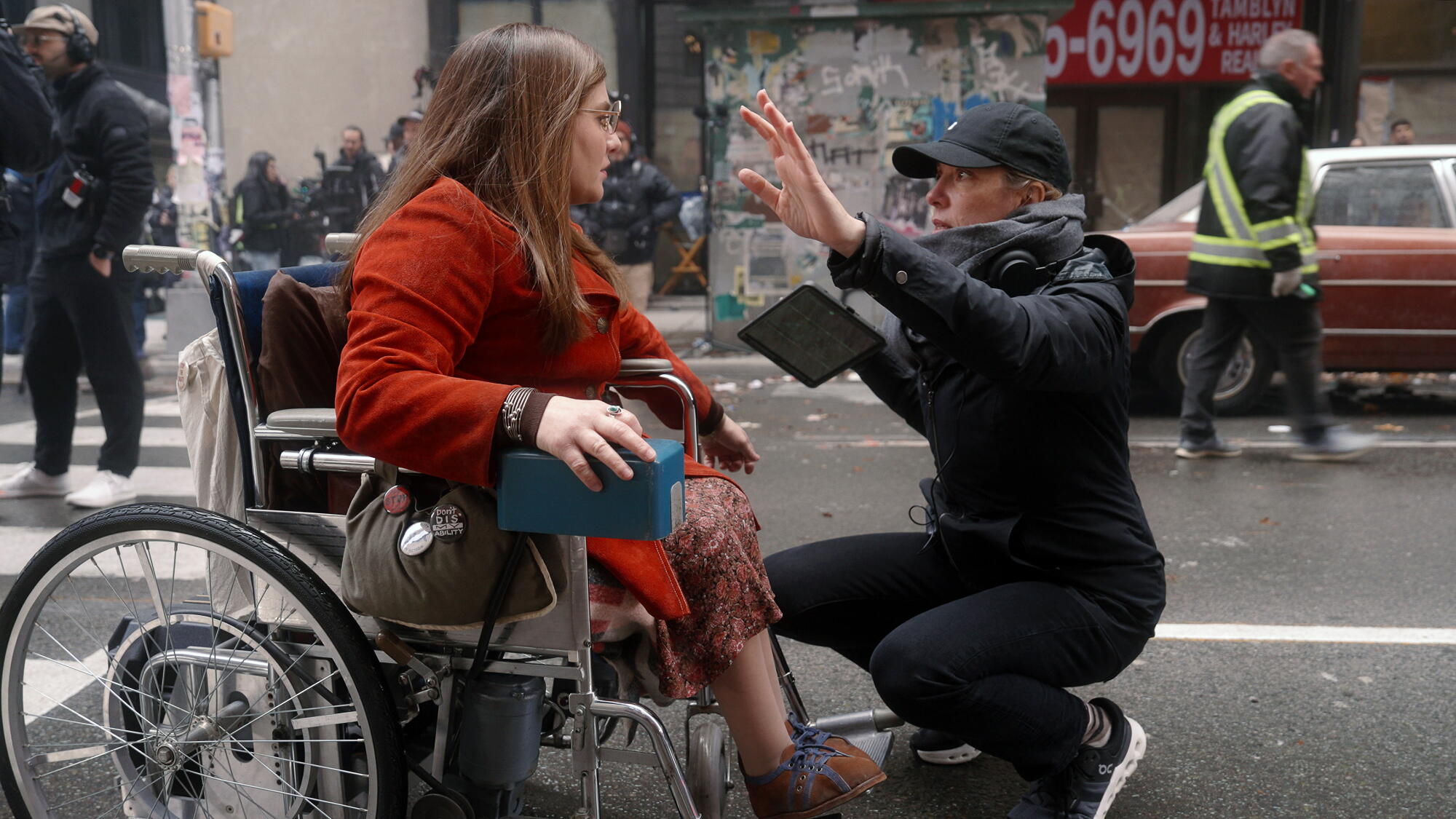
Actor Ruth Madeley and filmmaker Siân Heder during production on “Being Heumann.”
(Apple TV)
In Heumann, a wheelchair user after contracting polio as a child, Heder found a subject who was in the process of discovering herself as a leader: learning when to hold firm and when to cede ground and empower other people. And for someone who was grappling with the aftermath of unexpected success, that felt familiar.
“I think I was making a movie about myself, honestly,” Heder says. “When you’re moving forward on a massive project or a movement or anything, there’s a necessary drive and ambition and focus that is needed. And if you look at any major change that’s happened in human history, it takes a certain kind of person to push that through. I’m not identifying myself with great leaders of the civil rights movement, but directing a movie is a similar thing.”
Heder is tucked into a quiet corner of a busy coffee shop in L.A.’s Eagle Rock neighborhood, where she has long lived. She is in the process of moving from one historic house to an even older one a few blocks away. Heder didn’t want to disrupt the schooling of her two young children, ages 10 and 12, and has become too enmeshed in the area to want to leave it.
“There’s definitely an element of: ‘She manipulated everyone with that movie. She made us all cry and that’s why she won,’” Heder says of “CODA,” her Oscar-winning best picture. “I was an indie filmmaker that was compelled to tell that story.”
(Jason Armond / Los Angeles Times)
Community is a word that comes up often over the course of a conversation with Heder, who has a warm manner and a quiet self-possession. Though “CODA” may have brought her wider attention, she was far from a novice by the time she made that film. She won a Peabody Award as a writer on the series “Men of a Certain Age” and was a writer, director and producer on the acclaimed “Orange Is the New Black.” She expanded her 2006 short film “Mother” into her first feature “Tallulah,” about a young woman who takes a baby from a reckless mother and tries to pass it off as her own. It premiered at Sundance in 2016.
Winning the Oscar created changes in her life both big and small. Heder at first kept it on her desk at home, but had to move it because she began to feel the statuette’s crossed arms quietly judging her as she worked. When she drove herself to the Spirit Awards the year after “CODA’s” triumph and spontaneously gave a ride to an afterparty to Maggie Gyllenhaal and Ebon Moss-Bachrach, Heder suddenly realized her 10-year-old Subaru wasn’t going to cut it anymore.
“I have a nicer car now,” she says, laughing at the memory. “It’s baby steps.”
The day after the Oscars, Heder recalls that she couldn’t stop crying, all the pressure built up from months of campaigning events and Q&As finally letting itself out.
She says two things changed almost immediately after winning the Oscar. One was a sense of expectation, wanting to make the most of whatever the moment might allow.
“This was not a part of my plans,” she says. “I didn’t ever intend to have so many eyeballs turn to me and go, ’What are you doing now?’”
The second was simply the volume of material and opportunities incoming. Heder says she met with Marvel “so many times” about different projects but none of them felt right. As an independent filmmaker “you’re always pushing against the no,” she puts it, moving projects forward against all odds. But now she felt she had to be the resistance, the one to ask whether something was worthwhile.
“Suddenly there are a lot of voices chiming in too because your reps have an idea of what you should do next and the industry has an idea of what you should do next,” Heder says. “And it was really important for me to center myself back in a feeling of: I’ve always been drawn to stories because they move me. And that hasn’t changed.”
Her Oscars triumph was also the night of the notorious Will Smith-Chris Rock on-stage slap, which overshadowed coverage. Heder is online enough that she knows that some film fans would want an asterisk next to the Oscar wins for “CODA,” as if to note some sort of COVID-era exception for the first film from a streaming service to win Hollywood’s top award.
“There’s definitely an element of: ‘She manipulated everyone with that movie. She made us all cry and that’s why she won,’” Heder says with a edge of defiance. “I was an indie filmmaker that was compelled to tell that story. And then audiences embraced that story and that story took off in a way that was unexpected and surprising even for me.”
Siân Heder holds her Oscar for best adapted screenplay for “CODA” backstage during the Oscars in 2022.
(Robert Gauthier / Los Angeles Times)
Heder had been developing “Being Heumann” before “CODA” was released. A friend encouraged Heder to see the 2020 documentary “Crip Camp,” which includes Heumann as a subject, and the filmmaker was so struck by that story, she followed up by reading Heumann’s 2020 memoir.
She sent Heumann a cold email expressing interest in the book. As it turned out, Heumann was deciding that very day who should direct a movie of her life. Heumann gave the filmmaker a last-minute chance to pitch herself. After saying she’d cast authentically disabled performers as she did on “CODA,” Heder got the job.
Heder would work for two years on researching and developing the project with Heumann, interviewing dozens of people involved in the actual Carter-era protest. When Heumann died unexpectedly in 2023, Heder did not think she could continue, but it was “Crip Camp” co-director James Lebrecht who convinced her otherwise.
“I think Judy’s death, which was sudden — it made me feel like she had left her legacy in my hands,” remembers Heder.
After developing other scripts post-Oscars that never quite became her next film, Heder eventually found herself in the enviable position of having two projects greenlit at once: “Being Heumann” at Apple and an adaptation of Gabrielle Zevin’s popular novel “Tomorrow and Tomorrow and Tomorrow” at Paramount.
As she was trying to make a decision, she went to a meeting with several other directors about the relaunching of the Village Theater in Westwood. She found herself having coffee with Guillermo del Toro and asked him how he decided between potential projects.
“And he said, ‘Make the movie that can’t get made without you,’” she recalls. “And that was very clarifying for me. When you are the element that gets that story told, it takes on an importance and urgency.”
As can often be the case, Del Toro’s advice confirmed what she already felt and she began to move forward with “Being Heumann.” (She is currently prepping “Tomorrow and Tomorrow and Tomorrow” so there will not be another five-year gap between releasing films.)
“I was having a rare moment of power in the industry to push something forward,” Heder says, “and it felt like there was a path to go make a big paycheck and have that kind of jump up, or I could use that moment of power and success to try to push through the hardest project I could think of. It was in that moment, after ‘CODA,’ where I really realized: I could make this incredibly difficult movie that no one might make.”
Andrew Pilkington, from left, Siena Rafter, Charlie Rush-Reese, Dylan O’Brien, Roberta Colindrez, Ruth Madeley and Madeline Delp in the movie “Being Heumann.”
(Apple TV)
Following what Heder describes as “the casting Olympics,’ she arrived at BAFTA-nominated actor Ruth Madeley, a wheelchair user, to play the lead role. “Being Heumann” was shot in Toronto, largely on a soundstage built to stand in for the San Francisco federal office building where the sit-in took place.
“Hollywood might be the least accessible industry out there,” Heder notes while beginning to explain the accommodations that needed to be made for a cast that included performers with a wide range of disabilities. Custom-built trailers were created and the set had to be made accessible in ways that a filming location typically is not. An accessibility team oversaw everything, from large-scale logistics to the personal needs of individual background actors.
Rather than a more conventional biopic, Heder wanted to tell the more specific story of the 504 sit-in, building out an ensemble of characters around Heumann.
“I said, “It’s almost like ‘Bad News Bears’ and ‘Dog Day Afternoon’ together,” says Heder. “There’s an underdog-sports-team feeling and bank-heist-gone-wrong.”
But a filmmaker friend asked her: Is making movies about disability now her “thing”? It is a question Heder had already considered.
“Of course it was on my mind if it starts to feel like: Oh, is Siân Heder a social justice warrior who’s just out to try to make these movies that have some kind of message behind them,” she says preemptively. “But I think this is just a great story. Outside of disability, outside of anything else, it is a great story.”
Heder remains interested in stories about outsiders, about class and people generally ignored by or on the fringes of society. And it remains important that she herself feel a part of a larger community in her life and her work.
“My daughter said to me the other day, ‘Mom, I think you’re the right kind of famous because you are important to people who know who you are, but you can still just be in the world and be anonymous.” And I think there’s something true about that.”
Her daughter has obviously inherited Heder’s deep well of empathy, one that is more concerned with bringing new, unseen stories to the screen than with the pursuit of cool points or pure fame.
“‘Earnest’ has become a dirty word,” says Heder. “And what earnest actually means is direct and truthful.”
A NEW teaser video from Oasis ‘confirms’ an upcoming tour location – with a subtle nod to a moment that happened around the group’s original split.
The legendary rock band – led by brothers Liam Gallagher and Noel Gallagher – reformed in 2024 after breaking up in 2009.
Oasis fans think they’ve sussed out an upcoming tour location after the band posted a new teaser clip onlineCredit: X/@oasisThe clip in question features a reference to a famous moment between brothers Liam and Noel GallagherCredit: Getty
Oasis originally split in 2009, before reuniting in 2024Credit: GettyThe band have since been going from strength to strengthCredit: Alamy
Another added: “Hey Oasis, you owe me a gig in Paris!!! I was there that night in 2009. F*****g night. So VIVE LA FRANCE!!”
In addition to this, the video also includes a reference to an infamous moment in Oasishistory.
A viewer remarked: “Please tell me that was a plum he threw. Genius.”
While a second person said: “OMG ITS LIAM THROWING A PLUM AT NOEL !!!!!”
In the clip, a man wearing a leather jacket took out a plum from a paper bag and began eating it.
Soon after this, he lobbed the plum away somewhere off camera, into the distance.
It references Noel previously telling how – during a heated 2009 argument at the Rock en Seine Festival in Paris the time of his Oasis departure – Liam threw a plum at him.
In 2011, he said at a press conference for solo album Noel Gallagher’s High Flying Birds: “He storms out of the dressing room and on the way out, he picked up a plum and threw it across the dressing room and it smashes against the wall.”
Noel added: “Part of me wishes it did end like that – “plum throws plum.”
A suspected-Houthi roadside ambush of Yemeni government forces has been captured on camera. The convoy was driving through the Hodeidah governorate when gunmen opened fire, killing one person and wounding several others.
Video captured the moment an Amazon Prime plane overran a runway in Miami and crash landed, skidding into a carpark at the airport. At least five people were killed.
The Oasis reunion shows of 2025 have created memories of a lifetime for hundreds of thousands of people. The incredible nights, or as some might say, biblical gigs, saw friends and loved ones grinning or crying tears of joy as they witnessed something they feared would never happen again.
With their film, creator Steven Knight and directors Dylan Southern and Will Lovelace are trying to bottle that up and recreate the greatest musical comeback ever seen in Britain on a flat screen. But then, this isn’t any old concert documentary.
It tells some of the story behind the Oasis tour and then it also allows you to relive some of those moments again. And just when you think it might be flagging a bit, they have a joint interview with Noel and Liam which is entertaining and also illustrates how their relationship has come full circle.
The tour rehearsal footage is dynamite, adding scenes of tension and comedy. As the band wait for Liam to arrive, Noel paces nervously and technicians look edgy.
Liam is then portrayed as some kind of gun slinging cowboy pushing open the saloon doors as he strides in. No sooner is he inside than the band are off and Liam is belting out the hits and attacking the microphone as if his life depends on it.
And then, almost as quickly as he stormed in, he picks up his black Adidas bag and leaves again, with the rest of the band almost in a stunned silence at this whirlwind they are working with.
Noel must have had doubts at this point about if the tour would go smoothly, but he admits despite some last minute drama he was wowed by Liam’s performance in Cardiff.
And for the majority of fans who weren’t at the Principality Stadium on July 4, 2025, the footage and sound used gives you a real taste of what that moment felt like when the Gallaghers walked back on stage holding hands – a moment that even took Noel by surprise.
It is an iconic moment, and they capture it brilliantly, leaving me close to tears as I recalled one of the greatest nights of my own life.
Lots of captivating footage is then given over to different gigs around the world and the filmmakers have found fans with poignant and interesting stories about why they love Oasis and are going to see the shows.
There’s also time for a touching tribute to their friend Mani from the Stone Roses and a section about Don’t Look Back In Anger taking on extra meaning after the 2017 Manchester bombing.
But the documentary really excited me again when it revealed Noel and Liam sat next to each other for a joint interview, the first time in two decades. It can’t compete with some of their old chats with Steve Lamacq on Radio 1 after an afternoon of cigarettes and alcohol, but Liam and Noel are older and wiser now.
However there are still some great lines and fun to be had. Liam jokes about his two hip operations and is glad he stays still rather than running around like Mick Jagger on stage.
Noel admits he would look stupid with a tambourine on his head but his brother makes it look the best thing ever. And then at the end there is the forgiveness and signs of a new chapter for the Gallagher brothers.
“The music brought us back together,” Liam says. Noel agrees things are “fixed” and admits for the first time in their lives they regularly text each other. The bond even goes way beyond them as their kids are now all great mates and enjoyed getting hammered at the Oasis gigs.
The Gallaghers are not looking back, but forwards, and the anger between them has gone. Rather than betray the Oasis memories I made or compete with them, I tried to let the songs wash over me as much as I could. The film allowed my mind to flash back to last summer, and hopefully it will for other fans too.
It is definitely worth going to the cinema to watch it too for the sound quality, as streaming it at home is unlikely to be the same.
As Oasis fans, all our dreams were made in the Summer of 2025, and this documentary is filled with reminders of that. It ensures those wonderful memories live forever on screen.
It’s also the perfect appetiser for when tickets go on sale shortly to do it all again in 2027.
* Oasis: Don’t Look Back In Anger opens in IMAX and UK Cinema on September 9.
As the United States and Iran exchanged attacks this week, one date was increasingly looming over the conflict.
The US midterm elections on November 3 could prove a pivotal moment in the war, as senior advisers to President Donald Trump seek to prevent the conflict from returning to all-out war before the polls when Republicans will be defending narrow majorities in both houses of Congress.
Recommended Stories
list of 4 itemsend of list
The push for restraint comes as Washington turns to economic pressure on Iran instead of military force. In August, the Trump administration announced its so-called “Economic D-Day”, imposing sanctions on 60 entities that it says facilitate oil revenues for trade with Iran and threatening other countries doing business with Tehran with secondary sanctions.
At the same time, the US naval blockade of Iranian ports in and around the Strait of Hormuz continues to exert pressure on Tehran’s oil exports.
Vice President JD Vance has meanwhile sought to downplay the war, which the US and Israel launched with attacks on Iran on February 28, as rising fuel prices and public opposition in the US threaten to become political liabilities for Republicans before the vote.
But there are clear limits to the restraint the Trump administration can show, with US forces continuing to strike Iran in recent days, and US leaders insist that further military action remains an option. Vance said this week that “everything that could happen is on the table,” including economic, military, diplomatic and covert pressure.
That leaves the coming two months as a particularly tricky period to navigate. Washington will want to avoid an all-out war while ratcheting up economic pressure, but Iran has its own calculations and could respond militarily anyway, potentially forcing the US into an escalation it would rather avoid before Americans go to the polls.
Here’s what we know.
Why do the midterms matter for Trump?
The midterms will determine whether the Republican Party can retain its narrow control of Congress. If the war escalates again before then, that could persuade more people to vote against the Trump administration.
Containing the fighting until November, therefore, may help prevent an already deeply unpopular war from dominating the political agenda.
A late-August Reuters/Ipsos poll suggested that just 31 percent of Americans support the war, compared with 63 percent who oppose it. Trump’s approval rating has also fallen since the outbreak of hostilities, from 40 percent to 33 percent, according to Reuters/Ipsos polling.
Observers say the Trump administration did not expect things to get to this point.
In early March, Trump insisted the war would last for “four or five weeks”. Instead, the conflict has dragged on, and unexpected consequences – including Iran’s closure of the Strait of Hormuz causing energy prices to spike – have made it even more unpopular with US households.
US diesel prices hit a record high on Thursday, surpassing the previous peak recorded in 2022, as higher crude oil prices and refining bottlenecks drove up the cost of a fuel that underpins much of the US economy.
That is particularly damaging for a president who campaigned partly on a promise to dramatically reduce energy costs – as well as not to get involved in “unnecessary” wars.
The fallout from the war has not stopped at the petrol pump. Sustained increases in fuel and transport costs feed into the price of groceries, manufactured goods and other everyday purchases – potentially worsening inflation when Democrats are making the cost of living a defining issue for the midterm campaign.
A Politico poll conducted in August suggested that 61 percent of Americans believe the Iran war had made life more expensive for their families, four percentage points higher than a month earlier.
Can Trump keep the war contained until November?
There are signs that his administration is trying to do exactly that.
In recent weeks, Washington has intensified its campaign to economically isolate Iran, threatening severe sanctions against countries that continue trading with it while maintaining military pressure around the Strait of Hormuz.
With strikes on Iran earlier this week, Trump has also indicated he is willing to engage in sporadic attacks, while trying to keep the war from escalating back to all-out conflict.
Senior administration officials have simultaneously sought to play down the scale of the military confrontation. Asked at a White House briefing whether the Iran war would be resolved before the midterm elections, Vice President JD Vance said he “wouldn’t call it a war” and claimed there was “no active shooting right now”.
Asked when Iran would stop attacking commercial shipping, Vance said: “You would have to ask the Iranians.” He also said the conflict was having “less effect day by day” on global energy markets. The US claims it is escorting about 30 ships per night through the Strait of Hormuz – and officials claimed some 18 million barrels of oil were transported through on Tuesday this week. However, shipping data does not appear to fully support this claim.
Trying to maintain a strategy of “no war, no peace” with sporadic attacks is high-risk, analysts have warned. Negar Mortazavi, senior fellow at the Washington, DC-based Center for International Policy, told Al Jazeera this week: “Tehran will not capitulate under [economic] pressure. Both sides may believe they can control the escalation, but every new exchange increases the risk of a wider regional conflict.”
One of the US attacks this week is also believed to have hit a civilian home where a wedding was taking place in Kuhestak, southern Iran, killing at least four people, including children, and wounding dozens.
Furthermore, The Washington Post reported on Sunday that senior Army, Navy and Air Force leaders have warned Pentagon chief Pete Hegseth in a written assessment that continuing the war at its current pace is unsustainable and risks undermining US military readiness in other parts of the world.
Trita Parsi, executive vice president of the US-based Quincy Institute for Responsible Statecraft, told Al Jazeera that this week’s attacks point to a US strategy that remains deeply unsettled.
“I think it’s quite likely that what we’re seeing right now is just complete military, strategic disarray on the American position in which the positions, the actions, the tactics, the strategies keep on getting changed,” Parsi said.
Washington had imposed sweeping economic sanctions on Iran in an apparent attempt to make further military intervention unnecessary, he noted. “Seven days later, the US is back into bombing Iran.”
The US appears to be “jumping from one position to the other”, he added.
What are Iran’s calculations?
While the most recent attacks between the US and Iran have been less intense than the heavy exchanges seen in the early weeks of the war and during the two flare-ups in July, the risk of escalation is high. And it may be in Iran’s interests for that to happen sooner rather than later.
Iran has excelled at the use of asymmetric warfare against an enemy with considerable military might – using cheap, mass-produced drones to exhaust US supplies of very expensive defensive systems, and launching attacks on US allies around the Gulf, sowing disharmony.
In particular, Tehran has demonstrated that it can severely disrupt maritime traffic through the Strait of Hormuz, causing global economic consequences.
Continued Iranian attacks on US or regional military assets, shipping or energy infrastructure would place pressure on Washington to retaliate more strongly than via the few attacks it has carried out this week, creating the possibility of an escalatory cycle that could return the two countries to a much wider war regardless of the White House’s electoral calculations.
Furthermore, Washington’s economic strategy to isolate Tehran – an attempt to move away from open warfare – may in fact create a greater Iranian incentive to retaliate.
Parsi told Al Jazeera that Iranian officials appear to believe Trump ultimately intends to restart the war on a larger scale but is just waiting until after the midterms.
That creates a potentially dangerous calculation for Tehran, where it is better to escalate now – while Trump is at his most politically vulnerable. “The reaction of the Iranians to that might be to actually trigger the war themselves early right before the midterm elections in order to maximise the pain that will impose on the US president,” Parsi said.
What happens after November?
Reuters reported on Wednesday that senior White House officials are already considering whether to intensify military operations against Iran after the November 3 vote, although no decision has been made on returning to full-scale conflict, it reported.
A Republican victory in the midterms could give Trump greater political room for this option, particularly if the administration interprets the result as approval – or at least lack of enough disapproval – for the war despite the economic consequences for voters.
A Republican defeat presents a more complicated picture, however. On the one hand, losing one or both chambers of Congress will constrain the administration, as Congress controls government funding. Democratic control of the House or Senate would also give Trump’s opponents greater scope to hold hearings, investigate the US conduct of the war and challenge requests for additional military spending.
Conversely, with Trump no longer facing a congressional election, he may feel less pressure to contain the war, experts fear.
Parsi warned that an electoral defeat could therefore have the opposite effect to what Tehran might expect.
“I’m not so sure that it’s going to pay off necessarily for the Iranians because a Trump that is humiliated at the elections, who is faced with a Democratic [majority] House [of Representatives] and potentially a Democratic Senate, may also become a much more desperate and reckless president,” he said.
Good vibes weren’t invented in Marin County. But reading “Morning in Marin,” David Perlis’ history of the place and its outsize cultural influence for much of the 20th century, you get the sense it served as America’s leading countercultural way station.
Book Review
Morning in Marin
By David Perlis Heyday Books: 384 pages, $35
If you buy books linked on our site, The Times may earn a commission from Bookshop.org, whose fees support independent bookstores.
Hosts of spiritual-minded sorts called it home: Alan Watts popularized Zen Buddhism in the ’60s, alongside poets Gary Snyder and Kenneth Rexroth. Francis Ford Coppola decamped there to write his script for “The Godfather,” and it’s where his compatriot George Lucas conjured up the “Star Wars” universe. (The cuddly Ewoks in “Return of the Jedi” were named after the region’s Miwok tribe.) Jack Kerouac sought enlightenment there; his compatriot Neal Cassady was imprisoned there, in San Quentin. It was the Grateful Dead’s retreat, Robin Williams’ launchpad, and the solid ground upon which Philip K. Dick questioned reality.
Why all these people, in this place, at that time? Perlis, an artist, radio host and Marin native, doesn’t strive for sociological or demographic explanations. His strategy is to sinuously move from moment to moment, artist to artist, as if in one continuous tracking shot, pausing only for a moment to catch some of the interesting characters he spots along the way. Over there, film critic Pauline Kael; and there, poet and sitcom star Suzanne Somers; and look, there’s bar-band singer Hugh Cregg, who’ll eventually use the stage name Huey Lewis.
Author David Perlis
(Jordan Blackman)
Still, Perlis breaks the flow just enough to offer a few reasons why the region became America’s affluent bohemia. It is, of course, gobstoppingly gorgeous, with Mount Tamalpais, Stinson Beach, Point Reyes and Bolinas practically designed to be edenic retreats. (Fairfax, he writes, is “ribboned with waterfalls, tufted with moss.”) Its isolation made it a counterculture haven for those looking to avoid San Francisco’s bustle: Gay poet Elsa Gidlow made her home there in the 1940s, among the first of many misfit pioneers. Wreckage from the 1906 earthquake was used to build the first “arks,” houseboats in Sausalito, providing a quirky infrastructure. Add some slow-growth initiatives, and you get artsy scrimping arrivistes; add LSD, legal until 1966, and you have a party.
So by the late ’60s, Marin had become a haven for a particular type: creative, interested in Eastern spirituality and profoundly disinterested in social convention (not to mention conspicuously white). Perlis’ portrait of the county at the height of the decade suggests a region that had escaped — or at least refused to look at — the worst of America’s turmoil. “Despite atomic bombs, rampant racism, political violence, and the war in Vietnam and Marin, there is hope, a sincere, emphatic belief, in an imminent inner revolution,” he writes. “When Zen, acid, or whatever your trip is, opens enough minds that people can outgrow this absurd, unwinnable conflict with nature and themselves.”
Perlis writes that with a slight smirk — of course nobody outgrew the conflict. Sure, a lot of people made a mint on the dream of transcendence: The Grateful Dead became a premier touring act, Lucas taught the country the ways of the Force and Sausalito’s Record Plant became the studio of choice for Sly Stone, Fleetwood Mac and more. But in the process, Marin became a kind of parody of itself, satirized by the writer Cyra McFadden in her 1977 novel, “The Serial.” In a world of what Perlis calls “swimmable wealth,” enlightenment sure looked a lot like narcissism in caftans. “I have no idea how I manage to do it,” Dick muses about his productivity at one point, prompting Perlis to bluntly break into the narrative: “I do. Drugs.”
Perlis could have gone further than that. One of the peculiarities of the Marin cultural scene, at least in Perlis’ reckoning, is that it hardly seems like a scene at all. Otis Redding and Frank Herbert and Linda Ronstadt and Anne Lamott and Shel Silverstein and Van Morrison all had little in common and interacted even less; if Marin was an incubator, it’s one where every egg hatched a different, brand-new species. Communal activity seemed relegated to the checkout aisles where locals kibbitzed over “The Serial,” or druggy extravaganzas that would in time claim Dick and various Dead members and associates as victims.
The irony, as the region stumbled into the ’80s, is that between its wealth and carefully cultivated isolation, Marin came to exemplify the ethos of conformist America: every man for himself. The actor Peter Coyote resisted: “When a Buddhist is thinking about shooting out traffic lights, it’s time to leave,” he quips. Others dug in: Huey Lewis and the News climbed the charts with a song titled “Hip to Be Square,” though to his credit, he explains to Perlis that it was meant to be a song about the difficulty of reconciling affluence and bohemian values. The man knows where he lives.
Perlis’ book isn’t a dismissal of Marin’s cultural moment, or even really a critique of it: His story is more something to be wondered at, like fog rolling over Mount Tamalpais. And Perlis’ storytelling skills make it seem like good fun as he pingpongs from artist to artist, each somehow inventing a meaningful, or at least recognizable, cultural touchstone. Marin gave us New Age music and Pablo Cruise; it also gave us Jim Carroll’s indelible punk classic, “People Who Died.” But one of the things to wonder at amid the good vibes is whether a different, more coherent, more sober scene would have been more meaningful, more enduring.
A regular contributor to The Times, Athitakis is a writer in Arizona and the author of “The New Midwest.”