MONTGOMERY, Alabama — President Trump vowed to campaign in 35 of the most competitive battleground districts in the final sprint to November’s midterm elections.
Instead, he will begin October by stumping in Alabama and Oklahoma, two of the most Republican states in the nation. His events are sure to draw enthusiastic crowds of fans, but his choice of destinations is a reminder of his deep unpopularity in much of the country during a campaign season he’s sought to make all about himself.
Trump will hold rallies Thursday in Durant, Okla., and Friday in Mobile, Ala., where he is sure to draw crowds, but also has raised eyebrows.
While organizers insist the rallies are in locations with media markets that span state lines and they will help bolster broader turnout, Trump’s itinerary is yet another sign of the uphill fight that his party faces. Republicans already have been pouring money into red states once considered safe as they try to shore up candidates facing an unhappy electorate that has soured on Trump and his polices.
Some Republicans also have been distancing themselves from the president in recent weeks as they try to appeal to voters beyond Trump’s “Make America Great Again” base. They’ve removed or downplayed references to the president on their websites and increasingly voiced opposition to his unpopular war with Iran.
But Trump’s events next week are likely to deliver something he craves: adoring crowds. He is almost guaranteed to fill the venues with the kind of die-hard supporters who fueled his political rise, projecting excitement as he tries to bolster enthusiasm and rally Republicans.
“The President’s ability to engage with and activate low-propensity voters is unmatched. That’s why he’ll be barnstorming the country to activate the voters we need to win in November,” Republican National Committee spokesperson Natalie Baldassarre said, promising more October rallies.
Democrats, meanwhile, celebrated the announcement. “The political floor is falling out from underneath Trump and Congressional Republicans, forcing them to scramble to spend and campaign in deep red territory in the final weeks,” said Viet Shelton, spokesperson for the Democratic Congressional Campaign Committee.
The RNC noted that Durant is on the Texas border and next to the Dallas-Fort Worth media market and will draw Republicans in Texas, which has emerged as one of the most critical states on the map. Scandal-plagued Atty. Gen. Ken Paxton, whom Trump backed over incumbent Sen. John Cornyn, is locked in a tight race against Democrat James Talarico. Gov. Greg Abbott also is facing a stronger-than-expected challenger in Democrat Gina Hinojosa.
Mobile is next to Florida’s panhandle, a Republican stronghold where high turnout can help bolster Trump-backed candidates running for Senate and governor. However, Florida Republican Sen. Ashley Moody is not expected to attend.
In Oklahoma, Trump will be stumping for Mike Mazzei, whom he backed as the Republican nominee for governor during a competitive primary. Mazzei is running against Oklahoma’s Democratic House Minority Leader Cyndi Munson.
“This race continues to get more competitive — and national Republicans are right to be worried about Mazzei,” Democratic Governors Assn. spokesperson Kevin Donohoe said in a statement.
Alabama, meanwhile, holds deep nostalgia for Trump and his early supporters. He held his first mega-rally in Mobile more a decade ago, drawing some 30,000 people to a college football stadium. The crowd made clear to skeptics of his campaign that he was more than a celebrity novelty.
“It’s very natural that he would host a rally here as he is gearing up for the midterm elections,” said John Wahl, the Republican candidate for lieutenant governor and former chair of the Alabama Republican Party.
Although Republicans remain the heavy favorites in Alabama’s statewide campaigns, they face a more challenging political landscape.
Former Democratic Sen. Doug Jones is mounting a vigorous campaign for Alabama governor against one of Trump’s most vocal allies, Republican Sen. Tommy Tuberville, who welcomed the president’s visit.
Republican Rep. Barry Moore, running to replace Tuberville in the Senate with Trump’s backing, said the president’s rally “will be the jet fuel we need to win big in Alabama.”
Mobile is also near Alabama’s 2nd Congressional District, which leans red after its lines were redrawn but is not a slam dunk for Republicans as they try to dislodge Democratic Rep. Shomari Figures.
Figures has been criticizing the president’s plan to lower import tariffs on foreign beef in an appeal to cattle ranchers as he tries to fend off a challenge from his Trump-backed opponent, State Rep. Rhett Marques.
Trump has promised to ramp up his campaigning in the election’s final stretch and had said he would visit all of the most competitive districts .
“It’s all about 35 races,” he said at a recent Rose Garden dinner attended by Republican lawmakers. “I’m going to go to every one of those 35 places and we’re going to see if we can get everyone elected.”
Colvin and Chandler write for the Associated Press. Colvin reported from New York. AP reporter Bill Barrow in Atlanta contributed to this report.
Taiwan has provided the first public look at its new 105mm 8×8 mobile gun system in action, with the domestically developed vehicle engaging moving and stationary targets during a live-fire demonstration in southern Taiwan. The vehicle is being developed as Taiwan continues to modernize its ground forces in response to the growing capabilities and increasingly frequent military activity of the Chinese People’s Liberation Army (PLA) around the island.
Defense ministry showcases 105mm mobile gun system
During the demonstration, held by the Republic of China Army (ROCA) at a training area in Tainan today, the vehicle reportedly engaged a moving target at approximately 0.75 miles and a stationary target at around 0.6 miles. It also fired against targets positioned 90 degrees to the side of the vehicle while operating on a gentle slope, demonstrating the gun system’s ability to engage targets while the vehicle is positioned on uneven terrain.
The vehicle subsequently fired its 7.62mm coaxial machine gun simultaneously with its main gun as part of a scenario intended to demonstrate engagement of multiple targets, including simulated amphibious assault vehicles.
An apparent weapon malfunction was also recorded during the demonstration. One of the 105mm rounds initially failed to fire, according to reports. The crew waited approximately two minutes in accordance with safety procedures before reloading the weapon, after which the vehicle fired normally. Maj. Gen. Chen Chien-chung, head of Taiwan’s Arsenal 202, the Production and Manufacturing Center of the Armament Bureau, said an investigation would be conducted into the misfire.
Despite the incident, the demonstration provided an important look at a vehicle that Taiwan is developing specifically around the country’s geography and battlefield requirements, including a potential amphibious invasion by the Chinese PLA.
A new direct fire support variant of the Clouded Leopard 8×8 infantry fighting vehicle was first publicly displayed at the Taipei Aerospace & Defense Technology Exhibition in 2023. It passed initial combat readiness testing with the ROCA in October 2023, and it was authorized for mass production in April 2024.
A pre-production prototype of the Taiwanese 105mm 8×8 mobile gun system. Ministry of National Defense
The production configuration has undergone significant changes since then.
Its height has been reduced by approximately 12 inches, bringing the overall vehicle height to below 9 feet 10 inches. Its turning radius has also been reduced from 36 feet to 26 feet. The reduction in turning radius was achieved by providing steering to three pairs of wheels, rather than two pairs on the earlier configuration.
Those changes are especially relevant to Taiwan, where large sections of the island feature restrictive terrain, dense urban development, narrow roads, drainage channels, and other obstacles that can limit the movement of heavy armored vehicles.
Taiwan’s 105mm 8×8 mobile gun system takes part in a live-fire demonstration in Tainan on September 23, 2026. Photo by CHENG Yu-chen / AFP
Taiwanese officials specifically highlighted the system’s suitability for culverts and urban areas, as well as the challenging terrain of Hualien and Taitung on the island’s mountainous east coast.
The vehicle’s principal weapon is a 105mm gun. The weapon can fire the general-purpose ammunition already developed for tank guns, in addition to ammunition developed specifically for the new system. The ROCA displayed armor-piercing, anti-personnel, and training ammunition during the demonstration. The gun also offers useful ammunition commonality with Taiwan’s older, but sill active M60A3 and CM11 tanks.
A Taiwanese soldier inspects an M60A3 tank during an overnight cross-region deployment from Hualien during the annual Han Kuang military exercises in Yilan on August 9, 2026. Photo by Chiang Ying-ying / POOL / AFP
That compatibility potentially gives the vehicle access to an existing ammunition ecosystem while allowing Taiwan to develop specialized rounds for its particular requirements.
Against a PLA assault, the 105mm system would provide mobile direct firepower against amphibious vehicles, armored personnel carriers, fortifications, and other ground targets, complementing Taiwan’s heavier tanks and other anti-armor weapons. Its wheeled configuration also allows the vehicle to rapidly reposition along Taiwan’s road network, giving commanders a mobile source of direct firepower that could respond to amphibious landings and reinforce threatened sectors.
The system falls into the same broad category as other modern 8×8 mobile gun systems, including Italy’s Centauro family and Japan’s Type 16 Mobile Combat Vehicle.
Italian soldiers of the 6th Cavalry Regiment, Aosta Mechanized Brigade, observe their sector of fire with a Centauro B1 tank destroyer while conducting a simulated assault during Saber Junction 17 at the Hohenfels Training Area, Germany, May 2017. U.S. Army photo by Pfc. Zachery Perkins
Less successful was a mobile gun system version of the U.S. Army Stryker, also with a 105mm gun, but the service divested that in 2021 because of problems with its dated cannon and autoloader. The U.S. Army then received the M10 Booker Combat Vehicle. Armed with a 105mm main gun, the Booker is a tracked vehicle with a much higher degree of armor protection and off-road mobility, but this, too, was canceled in 2025, amid cost and weight increases.
A Stryker Mobile Gun System fires a 105mm round. U.S. Army
A wheeled 105mm gun system can provide substantial direct-fire capability while offering advantages in road mobility and potentially lower logistical demands. It also lacks the combination of protection, cross-country mobility, and heavy armament associated with a tracked main battle tank.
For Taiwan, this kind of vehicle provides a comparatively compact armored platform able to move rapidly between positions and bring heavy direct firepower to areas where larger vehicles could face mobility constraints.
Taiwanese personnel get off a subway car in Taipei carrying a Stinger missile during the annual Han Kuang exercise. Military News Agency/Taiwan Ministry of National Defense capture via Focus Taiwan
The vehicle’s development is also being influenced by the threat of battlefield drones. Taiwanese military officials say the system is expected to receive additional counter-drone capabilities before entering mass production. One planned modification is an anti-drone cage around the vehicle.
More ambitious changes could involve the installation of a larger-caliber automatic weapon. Reportedly, the vehicle could eventually receive another machine gun or larger-caliber automatic cannon, with the 30mm M230 chain gun identified as one possible option. The proposed weapon could use canister-type ammunition designed to disperse numerous fragments against small drones.
Adding dedicated counter-drone equipment to the mobile gun system would therefore give the vehicle another role beyond direct engagement of conventional ground targets.
Taiwan’s new 105mm mobile gun system during a demonstration in Tainan on September 23, 2026. Photo by CHENG Yu-chen / AFP
The prominence of counter-drone measures in the planning of the vehicle also reflects the increasingly contested environment in which Taiwan’s armored forces would have to operate. In a conflict with China, armored units have to operate under the threat of persistent surveillance and attacks from a wide range of uncrewed systems, making concealment, mobility, dispersion, and organic counter-drone capabilities very important to any change of survival. Questioning just how long any armor would last in a full-on invasion scenario is absolutely relevant. As we have seen in Ukraine, the drone threat alone has sidelined even the most capable armor. At the same time, Taiwan is working toward its own drone-heavy battlefield doctrine, part of a broader plan to turn the island into a “hellscape” for any invading force.
Overall, the September 23 demonstration offered a useful glimpse into the thinking behind Taiwan’s indigenous armored vehicle program.
As part of a wider modernization of ROCA armor, the service has also received 108 M1A2T Abrams tanks, broadly equivalent to the M1A2 SEPv3 version — or System Enhancement Package version 3 — which you can read more about here.
With production of 178 series examples of the new vehicle scheduled to begin in 2027, Taiwan’s new 105mm mobile gun system is moving toward becoming a significant component of the island’s domestically produced armored fleet.
DAKAR: Health officials battling the Ebola outbreak in eastern Democratic Republic of Congo are using anonymised mobile-phone data to map population movements and identify areas where the virus could spread next, according to the World Health Organization and researchers working with it.
The approach, which has not been used before in an Ebola response, comes as authorities struggle to contain what the WHO has described as the fastest-growing Ebola outbreak on record. Cases have been confirmed in six provinces, with more than 6,250 people infected and 3,039 killed since the outbreak was declared on May 15, according to the latest government data.
The outbreak, Congo’s 17th, is caused by the Bundibugyo species of Ebola, for which there are no approved vaccines or treatments.
As the virus spreads, health officials are looking for ways to anticipate where cases could emerge next and direct limited surveillance and response resources.
“Population movements have always been a factor in outbreaks, but they are particularly important in the current epidemic,” said Olivier Le Polain, head of epidemiology and analytics for response at the WHO Health Emergencies Programme.
Traditional risk assessments focus on outbreak hotspots and assume the virus is most likely to spread to surrounding areas.Analizing mobility data allows responders to identify risks in places that may be geographically distant but closely connectedthrough travel patterns.
“It gives us a more nuanced understanding of risk,” Le Polainsaid, citing the example of Ituri province, in the northeast, where the virus is believed to have started circulating.
“There are very significant population movements in Ituri linked to mining activities and trade. Understanding those movements is crucial to understanding how the outbreak spreads.”
The analysis is produced by Swedish non-profit Flowminder, using anonymised records generated when mobile phone users connect to telecommunications networks. As people move around the country, their phones connect to different antennas on the network, generating records that show where those connections took place. Researchers use those records to estimate how people travel between different areas.
The data is provided free of charge by Vodacom, Congo’s largest operator. Vodacom did not respond to a request for comment.
Flowminder says it receives aggregated and anonymised records and does not have access to information identifying individual subscribers.
“We seek to provide estimates of how people move, which in turn is a predictor of how infectious people move,” Flowminderfounder Linus Bengtsson said.
Flowminder’s first analysis, published in early June, focused on the three areas where the outbreak is believed to have started: Bunia, Mongbwalu and Rwampara. Researchers tracked where people who had spent time in those areas between April 3 and April 23 later traveled.
The largest flows were to nearby areas in Ituri province and North Kivu province. By the end of June, all 10 of the destinations receiving the largest flows of travelers from the original outbreak areas had reported confirmed Ebola cases.
Ant International’s Agentic Mobile Protocol is rolling out across the global mobile payment ecosystemBusiness Wire
Article content
With payment leaders accelerating adoption, the Alipay+ ecosystem — with 50+ mobile payment partners, over 10 national QR schemes and serving over 2 billion consumer accounts — is evolving into the world’s largest agentic payment network for mobile commerce.
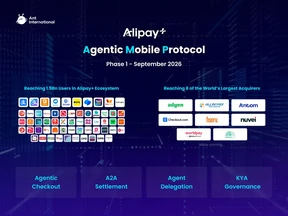
During Phase I in 2026, AMP partners up with 10 leading Alipay+ digital wallets that together serve 1.5 billion user accounts, as well as 7 leading acquiring partners including Adyen, Allinpay, Checkout.com, Fiserv, Global Payments, Nuvei, and Worldline.
Ant International, Mastercard, and Visa have begun collaboration on a Know-Your-Agent (KYA) interoperability framework, designed to help card networks, digital wallet ecosystems, agent platforms and marketplaces streamline agent onboarding and identification across networks, based on shared principles while preserving each network’s own verification and decisioning processes.
THIS CONTENT IS RESERVED FOR SUBSCRIBERS ONLY
Subscribe now to read the latest news in your city and across Canada.
Exclusive articles from Barbara Shecter, Joe O’Connor, Gabriel Friedman, and others.
Daily content from Financial Times, the world’s leading global business publication.
Unlimited online access to read articles from Financial Post, National Post and 15 news sites across Canada with one account.
National Post ePaper, an electronic replica of the print edition to view on any device, share and comment on.
Daily puzzles, including the New York Times Crossword.
SUBSCRIBE TO UNLOCK MORE ARTICLES
Subscribe now to read the latest news in your city and across Canada.
Exclusive articles from Barbara Shecter, Joe O’Connor, Gabriel Friedman and others.
Daily content from Financial Times, the world’s leading global business publication.
Unlimited online access to read articles from Financial Post, National Post and 15 news sites across Canada with one account.
National Post ePaper, an electronic replica of the print edition to view on any device, share and comment on.
Daily puzzles, including the New York Times Crossword.
REGISTER / SIGN IN TO UNLOCK MORE ARTICLES
Create an account or sign in to continue with your reading experience.
Access articles from across Canada with one account.
Share your thoughts and join the conversation in the comments.
Enjoy additional articles per month.
Get email updates from your favourite authors.
THIS ARTICLE IS FREE TO READ REGISTER TO UNLOCK.
Create an account or sign in to continue with your reading experience.
Access articles from across Canada with one account
Share your thoughts and join the conversation in the comments
Enjoy additional articles per month
Get email updates from your favourite authors
Sign In or Create an Account
or
Article content
Article content
SHANGHAI & SINGAPORE — As Ant International builds out its Agentic Mobile Protocol (AMP) with deeper interoperability and open-source initiatives, fintech and payment leaders are deploying the protocol globally at an accelerated pace, to enable trusted agentic transactions in large-scale commercial scenarios.
Article content
Article content
Top Stories
Get the latest headlines, breaking news and columns.
By signing up you consent to receive the above newsletter from Postmedia Network Inc.
Thanks for signing up!
A welcome email is on its way. If you don’t see it, please check your junk folder.
The next issue of Top Stories will soon be in your inbox.
We encountered an issue signing you up. Please try again
Article content
Towards building the World’s Largest Agentic Payment Network
Article content
The AI economy is built on the ability of the financial industry to ensure AI agents interact to make decisions and execute transactions end-to-end for consumers and businesses, securely, smoothly and with full authorisation across all payment rails, especially in prevalent mobile payment scenarios through QR scans, card swipes or phone taps.
Article content
Launched in April 2026, the AMP is an open payment protocol built by Ant International for digital wallets, super apps, smart devices, and other mobile interfaces to enable payments executed by AI agents. Today, adoption is rolling out across Ant International’s Alipay+ ecosystem, a mobile payment network serving 50+ mobile payment partners and over 10 national QR networks, connecting 150 million merchants to 2 billion consumer accounts globally.
Article content
In Phase I, the following partners will work with AMP to advance their own agentic commerce strategies:
Article content
Phase I Wallet partners:
Article content
10 Alipay+ mobile wallet partners will support AMP in their own agent security architecture in Phase I. They are:
Article content
Alipay (China), AlipayHK (Hong Kong SAR, China), DANA (Indonesia), GCash (Philippines), KakaoPay (South Korea), MPay (Macao SAR, China), TNG eWallet (Malaysia), TrueMoney (Thailand), Toss (South Korea), and Starryblu (Singapore)
Article content
Phase I Acquiring partners:
Article content
Adyen, Allinpay, Checkout.com, Fiserv, Global Payments, Nuvei, and Worldline
Article content
Cross-Sector Partnership on Trust with Card Networks, Monetary Authority of Singapore
Article content
Building a truly global, inclusive infrastructure for agentic commerce calls for cross-sector and public-private collaboration on trust and governance mechanisms.
Article content
Ant International, Mastercard, and Visa have begun collaboration on a Know-Your-Agent (KYA) interoperability framework, designed to help card networks, digital wallet ecosystems, agent platforms and marketplaces streamline agent onboarding and identification across networks, based on shared principles while preserving each network’s own verification and decisioning processes.
Article content
Article content
Building on the Safeguards for Agentic Finance at Runtime (SAFR) framework, Ant International, Mastercard and Visa will collaborate through BuildFin.ai to advance common approaches for AI agent verification, accountability and risk management across payment ecosystems in Singapore. BuildFin.ai is an industry platform convened by the Monetary Authority of Singapore (MAS) to bring together financial institutions, technology providers and researchers to develop and scale responsible AI solutions for financial services.
Article content
The effort aims to support secure and scalable agentic commerce, enabling AI agents to operate safely and reliably across payment ecosystems while maintaining strong safeguards for consumers, merchants and financial institutions.
Article content
To maximise industry co-building, AMP is now officially open-sourced on GitHub, with source code, developer SDKs, and related technical documentation available to global developers, AI platforms, wallets, acquirers, and financial institutions.
Article content
Agents as Trusted Actors across Markets and Payment Rails
Article content
“AMP has been created to enable agents to enter existing mobile payment systems as trusted actors. We are inspired to see how, a few months into its launch, more and more wallets and payment partners are accelerating their AI strategy by bringing this exciting capability to users in the real world,” said Jiang-Ming Yang, Chief Innovation Officer at Ant International.
Article content
Key features
Article content
of the Agentic Mobile Protocol include:
Article content
End-to-end agentic transactions across devices: No need to switch apps or change payment habits across mobile interfaces like smartphones and AR glasses.
Faster agent integration cuts steps required to link a payment agent to a wallet by 50%.
Clear boundaries of permissions for users to authorise the task, not hand over the account, with real-time visibility and control of agents.
Full-spectrum Know-Your-Agent (KYA) Framework establishes an agent’s digital identity and certifies its authorised capabilities, with Agent Trust Rating controlling levels of autonomy for agents.
AgentSafePay provides money-back guarantee for merchants against agentic-specific risks.
A high-frequency nano-grade agent-to-agent (A2A) settlement mechanism enables automated, ultra-small transactions as tiny as $0.000001 between AI agents.
Article content
“Meanwhile, agentic commerce will only have a real path to mass adoption when supported with a deep foundation of trust. While AMP continues to invest in our own security solutions like AgentSafePay, we are also committed more than ever to strengthening collaboration with card networks, policy leaders like MAS and other stakeholders on new accountability mechanisms, to ensure all agentic transactions are protected by our collaborative agent identity and authorisation capabilities across markets and rails,” said Yang.