COPS have threatened to force arrested criminals to listen to Taylor Swift’s new release on loop.
Greensboro Police in North Carolina, US, jokingly swiped at the superstar’s album after it received mixed reviews.
Cops threatened to force arrested criminals to listen to Taylor Swift’s new release on loopCredit: FilmMagicTaylor re-released her Life of a Showgirl album with four new songs last weekCredit: AP
They posted: “Those who are arrested tonight will be required to listen to Taylor Swift’s new songs on repeat.”
But following a huge online backlash, the force later wrote: “We apologise for stirring up the Taylor bots.
Cruel Summer singer Swift, 36, re-released her Life of a Showgirl album with four new songs last week, adding “The Encore” to the title.
But critics were not impressed.
Music magazine Pitchfork rated it 4/10, saying: “Taylor Swift has let the quality of her songwriting slide in favour of commercial domination.”
Critic Shaad D’Souza added: “Yes, Taylor Swift will always have one of the greatest songwriting catalogues of all time.
“Not even Taylor Swift could take that away from her — but she sure is trying.”
The album came out in 2025 as the first release since the end of her record-breaking Eras Tour, but failed to win acclaim.
Swift previously said she did not intend to add new tracks, but later admitted she went on a trip with her collaborators and “did what we do when we feel anything: we wrote more songs”.
Joshua Van earned a unanimous decision (49-46, 49-47, 50-45) win over his Brazilian opponent to cement his reign.
Published On 20 Sep 202620 Sep 2026
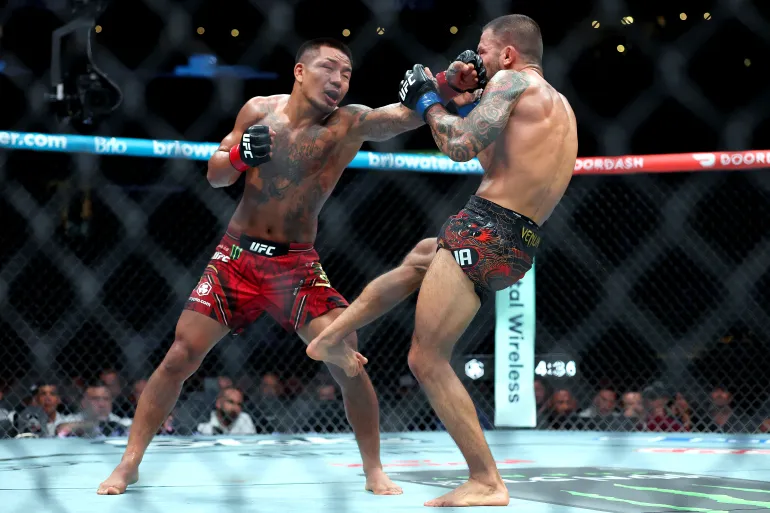
Joshua Van put on a striking masterclass to secure a unanimous-decision win over Alexandre Pantoja and retain his flyweight title in UFC 331 in Los Angeles, as the 24-year-old from Myanmar settled the score with the former champion after their first fight ended with a freak injury.
Undisputed flyweight champion Van cemented his reign atop the 125-pound (56.7kg) division, defeating the Brazilian via unanimous decision (49-46, 49-47, 50-45) in the main event on Saturday night.
Pantoja had suffered an accidental elbow dislocation 26 seconds into their first fight in December last year, resulting in Van becoming the UFC flyweight champion without an outright win over the Brazilian, who had reigned over the division for at least two years.
Van, the first UFC champion from Myanmar, defended the belt against Tatsuro Taira in May but was left waiting to seal his status as the best in the division as 36-year-old Pantoja recovered from the injury.
“A lot of people said that was an accidental win … well, doubt me now,” Joshua said after his second title defence, which extended his professional MMA record to 18 wins and two losses.
Pantoja took Van down in the first round before landing heavy punches and knees in a fiery exchange, as Van retaliated with a slicing elbow.
“You’re too good to brawl with this guy,” Van’s coaches told him during the break, suggesting a more tactical approach.
Joshua Van punches Alexandre Pantoja in their flyweight championship bout [Luke Hales/Getty Images via AFP]
Van peppered Pantoja with left-handed jabs in the second round and rocked the Brazilian with a fluid combination of punches in the third. Pantoja controlled the fourth round as he took Van down but was unable to submit him.
In the final round, Van stalked Pantoja and knocked him down with an overhand right, securing the win on the judges’ scorecards.
In the co-main event, Armenian contender Arman Tsarukyan staked his claim for a shot at the lightweight title when he pinned Mauricio Ruffy to the cage, rocked him with a left elbow and knocked him out with a right elbow with four seconds to spare in the first round.
“I knew my time would come, so I was patient,” said Tsarukyan, who extended his win streak to six fights, as he called for a bout with champion Justin Gaethje.
In featherweight action, former four-time, two-division Bellator champion Patricio Pitbull (38-9 MMA) earned his first UFC stoppage win, dismantling South Korea’s Dooho Choi via total knockout (TKO) within three minutes and 28 seconds of the opening round.
Brazil’s Pitbull overwhelmed Choi with sharp volume striking before landing a devastating right hand that forced the referee to step in and stop the contest. Pitbull snapped a three-fight finishing streak for Choi, a promotional mainstay who has competed under the UFC banner since 2014.
In the heavyweight division, Sean Sharaf pulled off one of the year’s most stunning upsets, needing just 12 seconds to shock Gable Steveson with a first-round TKO.
Steveson entered the Octagon as a massive betting favourite, but Sharaf caught him immediately in the opening exchange, unleashing a blistering flurry of strikes that forced a lightning-fast stoppage. The 12-second finish marked the third-fastest knockout in UFC heavyweight history.
A visibly frustrated Steveson refused to remain inside the Octagon as Sharaf had his hand officially raised, while Sharaf celebrated the landmark victory in front of an electric crowd.
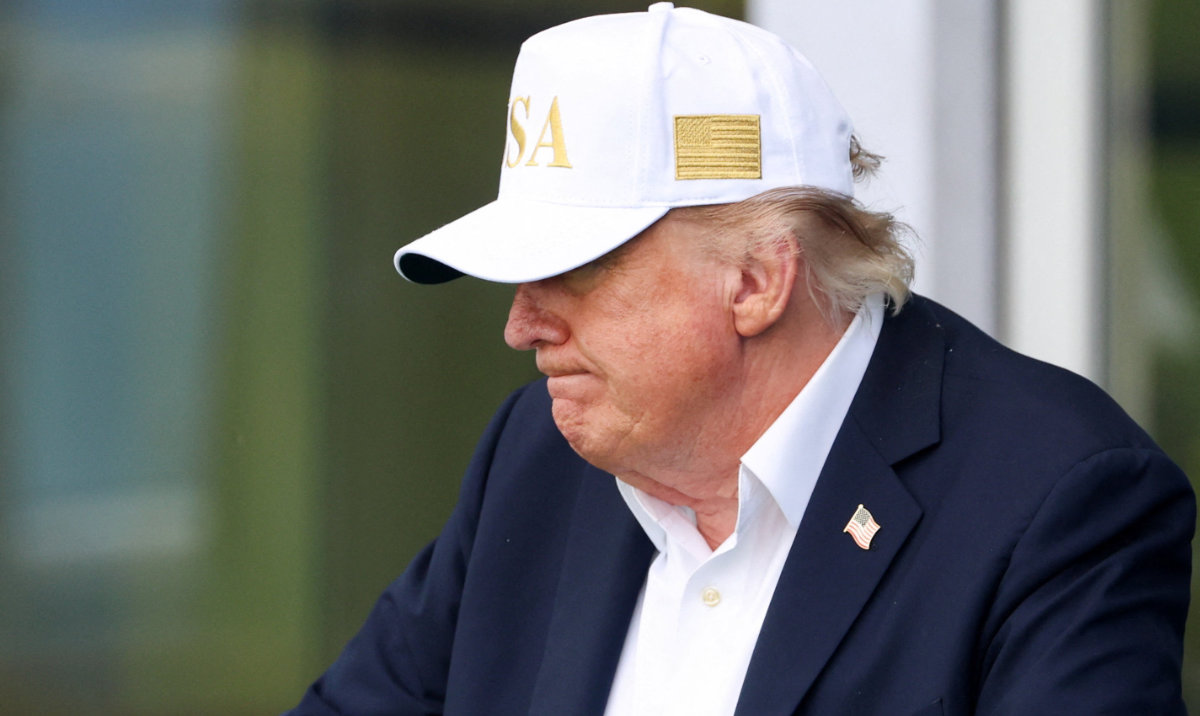
Europe has long been the primary target for US President Donald Trump’s tirades against traditional allies. However, Asia got a taste of this treatment last month when he cut short, at very short notice, the annual “Ulchi Freedom Shield” US military drills with South Korea.
Seoul is still angry at this development, especially given Trump’s later confirmation that he would also try to arrange a meeting with North Korea’s supreme leader, Kim Jong Un, in coming months. Signs of this frustration included President Lee Jae Myung’s call to speed up the development of new nuclear-powered submarines and his push to regain presidential wartime operational control of South Korean forces from the US, insisting that enhanced domestic military capabilities were needed in parallel with the alliance with Washington.
As remarkable as Trump’s decision was, it only confirmed the degree to which US partnerships with traditional allies have changed during his presidencies, as Washington demands wider concessions in return for US collaboration. These White House expectations include not only huge investments in the US, but also support in a conflict with Iran that has failed to unseat the regime in Tehran, while causing the largest global energy shock in a generation.
Certainly, some agree that Trump has legitimate concerns about South Korea. However, the manner in which he expressed his disagreement, in such a publicly humiliating way, is self-defeating. The US president said he told his South Korean counterpart that “we have 39,000 soldiers over there, guarding you from Kim Jong Un, your next-door neighbor, and you’re not going to help us on a very easy military operation in Iran? That’s strange.”
As ever, Trump’s statement requires a fact check. Currently, Seoul is scheduled this year to pay Washington about $1.19 billion of the estimated $5.5 billion-$6 billion it costs to station approximately 28,500 US troops in South Korea.
Even though that $1.19 billion sum represents a significant increase, Trump claimed that during his first term, Seoul pledged to pay much more: $3 billion. He further contends that the Biden administration failed to follow up on this pledge.
Trump’s decision to end the latest US-South Korea military exercises on Aug. 21 rather than Aug. 27, as scheduled, was embarrassing enough for Seoul. To also confirm that he planned to try to arrange another meeting with Kim was rubbing salt in the wounds.
His tirade has set back recent and extensive efforts by his team to reassure Asian allies about the US commitment to the region. At a recent meeting of Association of Southeast Asian Nations foreign ministers in the Philippines, for instance, Secretary of State Marco Rubio pledged about $2.5 billion of strategic investments in Southeast Asia. During a speech at Singapore’s Shangri-La conference in May, US Secretary of Defense Pete Hegseth emphasized the importance of the region to Washington.
White House expectations include not only huge investments in the US, but also support in a conflict with Iran.
Andrew Hammond
Asian allies also query the utility of reengaging with Kim, after Trump’s first three meetings with him, between 2017 and 2021, failed to deliver any diplomatic breakthroughs.
White House expectations include not only huge investments in the US, but also support in a conflict with Iran.
Andrew Hammond
The prospects appear slim for any sustained de-escalation of tensions in the world’s last Cold War-era frontier in the form of the prize of a verifiable, comprehensive denuclearization of North Korea. Pyongyang’s weapons program has only grown in size and sophistication since Trump’s first term. This potentially widens the negotiating divide between the two sides.
The central challenge in making any meaningful diplomatic process with Kim is, as it was during Trump’s first term, the differing US and Korean interpretations of what exactly would constitute “denuclearization” of the peninsula.
To Trump, this appears to mean unilateral North Korean disarmament. For Kim, it appears to be more about potentially lengthy negotiations in which Pyongyang should be treated as an equal to the US, providing him with the further potential for propaganda victories. In this context, Kim will continue to be wary of commitments on specific time frames, and will want to win further concessions from Trump before agreeing to any reduction in nuclear capabilities, let alone committing to full denuclearization.
As was the case during Trump’s first term, it is far from clear what, if any, sequencing is possible to move the process forward. After the last meeting between Trump and Kim, North Korea disputed the US assertion that the reason the talks collapsed was because Kim demanded a full roll-back of sanctions. Pyongyang said it asked only for partial sanctions relief, and that an offer had been made to permanently halt nuclear and long-range rocket testing.
One reason Pyongyang’s position will not shift far or fast is that it was Kim, not Trump, who emerged as the bigger beneficiary of their previous engagements. The North Korean leader made few concrete concessions while Trump called off US-South Korea military exercises, and held out the prospect of an easing of sanctions on Pyongyang if it did “something meaningful” on denuclearization.
Taking all of this together, the damage to US alliances in Asia from last month’s decisions therefore goes far beyond South Korea and might outlast Trump’s second term. The paradox is that the White House had spent much time in recent months reassuring allies of enduring US support for the region, efforts that have now been badly set back.
• Andrew Hammond is an associate at LSE IDEAS at the London School of Economics.