missiles

Missiles Clobber Target Ship In Highly Strategic Luzon Strait

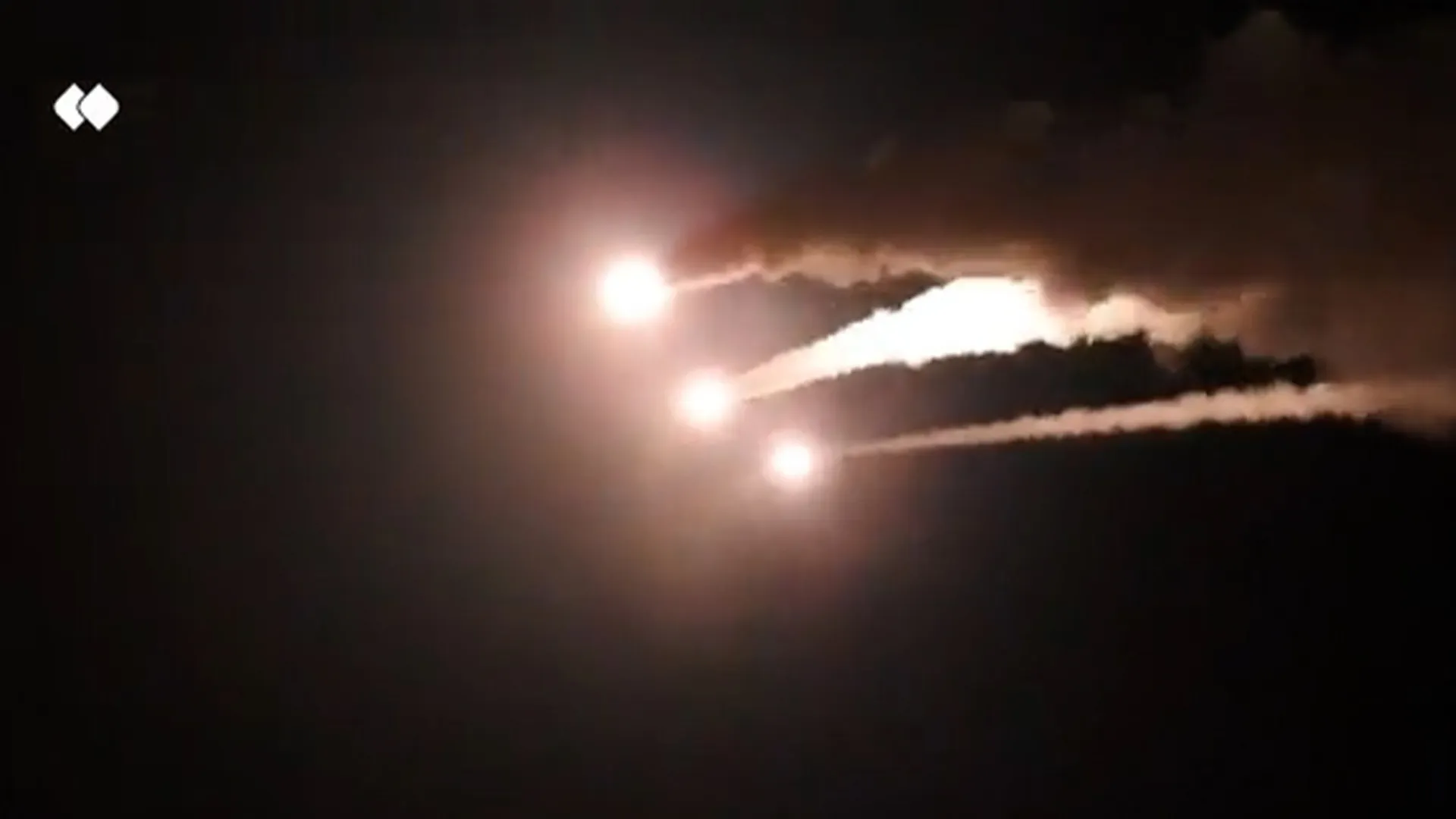
A former Philippine Navy warship was sent to the bottom today by the combined effects of maritime strike drills launched by Japanese, Philippine, and U.S. forces in the Luzon Strait, one of the world’s most strategic and tense bodies of water. The maneuvers, which reportedly involved a variety of anti-ship missiles and rocket artillery, were part of the broader Balikatan exercise, which is especially important in the context of rising tensions in the Indo-Pacific.

多国間共同訓練 バリカタン 26 (Balikatan 2026) において、88式地対艦誘導弾の射撃を行う、陸上自衛隊 第1特科団 第1地対艦ミサイル連隊。88式地対艦誘導弾の直撃を受けた標的艦はその後沈没した。 pic.twitter.com/V1Y4OCb4rU

— The Military Archives of Japan (@Archives_Japan) May 6, 2026

Located roughly 50 miles offshore, the target vessel for a live-fire sinking exercise (SINKEX) campaign was the decommissioned Philippine Navy Rizal class patrol corvette, the former BRP Quezon. The ship was originally completed for the U.S. Navy as an Auk class minesweeper during World War II, serving as the USS Vigilance before being transferred to the Philippines and serving in a new role in the late 1960s. The BRP Quezon, which had a standard displacement of 890 tons, was decommissioned in 2021.

日本陸上自衛隊在菲律賓「肩並肩」演習科目,實彈發射兩枚88式反艦飛彈,成功命中靶船 pic.twitter.com/ZooDgOxM5b

— 新‧二七部隊 軍事雜談 (New 27 Brigade)🇹🇼🇺🇦🇮🇱 (@new27brigade) May 6, 2026

The maritime strike (MARSTRIKE) drills were conducted on the island of Luzon, which sits at the northern end of the Philippines, and is the country’s largest and most populous island. Specifically, the live-fire drills took place around the Paoay Sand Dunes, in the coastal region of Ilocos Norte.

The drills began around 10:00 a.m. local time with a U.S. Army M30/31 Guided Multiple-Launch Rocket System (GMLRS) fired as a “probing round,” with the location of the target vessel being confirmed around 10:15 a.m.

U.S. Airmen assigned to the 317th Airlift Wing and 21st Air Task Force and U.S. Soldiers assigned to U.S. Army Pacific prepare a U.S. Army Guided Multiple Launch Rocket System pod for transport in support of Exercise Balikatan 2026 at Puerto Princesa, Palawan, Philippines, April 29, 2026. Balikatan is a longstanding annual exercise between the Armed Forces of the Philippines and U.S. military that represents the strength of our alliance, improves our capable combined force, and demonstrates our commitment to regional peace and prosperity. (U.S. Air Force photo by Senior Airman Jade M. Caldwell)
U.S. soldiers prepare a U.S. Army Guided Multiple Launch Rocket System pod for transport in support of Exercise Balikatan 2026 at Puerto Princesa, Palawan, Philippines, April 29, 2026. U.S. Air Force photo by Senior Airman Jade M. Caldwell

The GMLRS artillery rocket is a highly precise, rapid-strike weapon that can attack targets to a distance of around 50 miles, which would put it right at the limit of its range. It is fired from the M142 High Mobility Artillery Rocket System (HIMARS) that can launch six guided or unguided 227mm artillery rockets or a single Army Tactical Missile System (ATACMS) missile without reloading. GMLRS is not capable of engaging moving targets, so it has limited application in the traditional anti-ship mission set.

In a combined strike, anti-ship missiles were reportedly then launched from a U.S. Marine Corps Navy-Marine Expeditionary Ship Interdiction System (NMESIS) and from a Philippine Navy C-Star system.

Of these, NMESIS employs an uncrewed variant of the 4×4 Joint Light Tactical Vehicle (JLTV), also known as the Remotely Operated Ground Unit Expeditionary-Fires (ROGUE-Fires), on which is mounted a launcher with two ready-to-fire Naval Strike Missiles (NSM). These have a range of around 130 miles and have low-observable features, making them harder for enemy air defenses to detect and engage.

U.S. Marine Corps Lance Cpl. Bryzden Michener, a field artillery cannoneer assigned to 3rd Littoral Combat Team, 3rd Marine Littoral Regiment, 3rd Marine Division, operates a Navy-Marine Expeditionary Ship Interdiction System on to a U.S. Army Landing Craft Utility during Exercise Balikatan 2026 at Calayan, Cagayan, Philippines, May 2, 2026. Balikatan is a longstanding annual exercise between the Armed Forces of the Philippines and U.S. military that represents the strength of our alliance, improves our capable combined force, and demonstrates our commitment to regional peace and prosperity. Michener is a native of California. (U.S. Marine Corps photo by Cpl. Ernesto Lagunes)
A U.S. Marine Corps Navy-Marine Expeditionary Ship Interdiction System is loaded onto a U.S. Army Landing Craft Utility during Exercise Balikatan 2026 at Calayan, Cagayan, Philippines, May 2, 2026. U.S. Marine Corps photo by Cpl. Ernesto Lagunes

NMESIS is meant to be rapidly deployable and capable of highly dispersed operations in austere areas. As an uncrewed vehicle-launcher combo, small teams of Marines monitor multiple launchers dispersed around an area and move them regularly to keep them from being targeted by the enemy. The system was first deployed in a Balikatan exercise last year, as you can read about here.

While Philippine media reports that the NMESIS, operated by the Hawaii-based 3rd Marine Littoral Regiment, fired a missile during today’s drill, this is refuted by a report from Stars and Stripes. The 3rd MLR is notable in itself, being expressly designed to fight within an enemy’s own littorals, with all the challenges that brings.

Meanwhile, the C-Star is the Philippine Navy’s primary anti-ship missile. Produced by South Korea’s LIG Nex1, a version of this missile is used by the Republic of Korea Navy as the Haeseong. The Philippines uses the C-Star to arm its two Miguel Malvar class and two Jose Rizal class frigates, which are also made in South Korea. Similar to the U.S.-made Harpoon, the C-Star is a turbojet-powered, sea-skimming missile with a range of around 90 miles.

Philippine Navy Jose Rizal-class guided-missile frigate BRP Antonio Luna (FFG 15), left, Royal Australian Navy Anzac-class frigate HMAS Toowoomba (FFH 156), center, and Japan Maritime Self-Defense Force Murasame-class destroyer JS Ikazuchi (DD107) transit in formation during the group sail exercise for Exercise Balikatan 2026 in the South China Sea, April 24, 2026. Balikatan is a longstanding annual exercise between the Armed Forces of the Philippines and U.S. military that represents the strength of our alliance, improves our capable combined force, and demonstrates our commitment to regional peace and prosperity. (U.S. Marine Corps photo by Cpl. Kenneth Twaddell)
The Philippine Navy Jose Rizal class guided-missile frigate BRP Antonio Luna, left, transits in formation with other warships for Exercise Balikatan 2026 in the South China Sea, April 24, 2026. U.S. Marine Corps photo by Cpl. Kenneth Twaddell

In the drill, the C-Star was likely fired from the Philippine Navy frigates BRP Miguel Malvar and Antonio Luna, both of which are known to be taking part in Balikatan.

These were followed by two rounds fired from a Japanese land-based Type 88 anti-ship missile system, fired for the first time during a Balikatan exercise, and for the first time anywhere outside Japan. The Japanese missiles reportedly struck the hull of the target ship around 10:30 a.m.

JSDF Type 88 missiles fire for the first time in Balikatan 2026 | GMA News thumbnail

JSDF Type 88 missiles fire for the first time in Balikatan 2026 | GMA News


Developed by Mitsubishi Heavy Industries in the 1980s, the Type 88 (also known as the SSM-1) is the primary coastal anti-ship missile system of the Japan Self-Defense Forces, with a range of around 100 miles, although more capable and further-reaching weapons are now in development, as you can read about here.

Interestingly, in a video released of the live-fire event in Ilocos Norte, close protection was being provided to the truck-mounted Type 88 launcher by a Marine Air Defense Integrated System (MADIS), also from the 3rd Marine Littoral Regiment. MADIS utilizes the JTLV and distributes different sensors and effectors between individual JLTVs, as you can read more about here. In this kind of scenario, it would be tasked with protecting the coastal missile battery against kamikaze drones and other aerial threats at short ranges.

A U.S. Marine Air Defense Integrated System with 3rd Littoral Anti-Air Battalion, 3rd Marine Littoral Regiment, 3rd Marine Division, fires an XM950 training practice round at a moving target during an integrated air and missile defense event as part of Exercise Balikatan 2026 at Naval Station Leovigildo Gantioqu, Philippines, April 28, 2026. Balikatan is a longstanding annual exercise between the Armed Forces of the Philippines and U.S. military that represents the strength of our alliance, improves our capable combined force, and demonstrates our commitment to regional peace and prosperity. (U.S. Marine Corps photo by Sgt. Atticus Martinez)
A U.S. Marine Air Defense Integrated System with 3rd Littoral Anti-Air Battalion, 3rd Marine Littoral Regiment, 3rd Marine Division, fires an XM950 training practice round at a moving target during an integrated air and missile defense event as part of Exercise Balikatan 2026 at Naval Station Leovigildo Gantioqu, Philippines, April 28, 2026. U.S. Marine Corps photo by Sgt. Atticus Martinez

The vessel sank rapidly, meaning that the Philippine Air Force wasn’t able to deliver more munitions onto the target. FA-50 light combat aircraft and A-29 Super Tucano turboprop close support aircraft had both been prepared to strike the same ship, but were stood down.

Philippine Air Force Pilots with the 15th Strike Wing, conduct pre-flight checks on an A-29B Super Tucano during Exercise Balikatan 2026 at Laoag International Airport, Laoag City, Philippines, April 28, 2026. Balikatan is a longstanding annual exercise between the Armed Forces of the Philippines and U.S. military that represents the strength of our alliance, improves our capable combined force, and demonstrates our commitment to regional peace and prosperity. (U.S. Army photo by Sgt. Duke Edwards)
Philippine Air Force Pilots with the 15th Strike Wing conduct pre-flight checks on an A-29B Super Tucano during Exercise Balikatan 2026 at Laoag International Airport, Laoag City, Philippines, April 28, 2026. U.S. Army photo by Sgt. Duke Edwards

Other air assets taking part included a U.S. Navy P-8 Poseidon maritime patrol aircraft and an MQ-9 drone.

With the ship sunk or sinking, a coup de grace was provided by a U.S. HIMARS, which fired onto the same coordinates.

Also involved in Balikatan is the Royal Canadian Navy frigate HMCS Charlottetown, although it appears that it didn’t take part in the live-fire event.

According to a Philippine military spokesperson, another round of live-fire drills will take place tomorrow as part of Balikatan, utilizing a stand-by target vessel. This will also allow Philippine Air Force aircraft to take part.

The live-fire drills, conducted under the Balikatan exercise, signaled a notable expansion of Japan’s military role in the region as Tokyo strengthens security partnerships with its allies amid growing tensions with Beijing.

A Japan Maritime Self-Defense Force ShinMaywa US-2 aircraft assigned to Air Rescue Squadron 71 (ARS-71), Fleet Air Wing 31 lands during a casualty evacuation exercise as part of Exercise Balikatan 2026 in the South China Sea, April 27, 2026. Balikatan is a longstanding annual exercise between the Armed Forces of the Philippines and U.S. military that represents the strength of our alliance, improves our capable combined force, and demonstrates our commitment to regional peace and prosperity. (U.S. Marine Corps photo by Cpl. Kenneth Twaddell)
A Japan Maritime Self-Defense Force ShinMaywa US-2 amphibious aircraft lands during a casualty evacuation exercise as part of Exercise Balikatan 2026 in the South China Sea, April 27, 2026. U.S. Marine Corps photo by Cpl. Kenneth Twaddell

Overall, the live-fire exercise is highly significant due to its proximity to the Chinese mainland and the long range of some of the missiles that have been employed.

The Luzon Strait, into which the various missiles and rockets were fired, sits between Taiwan and the Philippines, spanning about 220 miles at its narrowest point. It serves as a vital shipping route and a highly strategic military corridor, particularly for China’s rapidly expanding naval forces. From this passage, assets stationed in the South China Sea can move into the Philippine Sea and the wider Pacific, and back again. This includes China’s growing fleet of nuclear-powered submarines, some of which underpin its second-strike nuclear deterrent.

A U.S. Army AH-64 Apache helicopter assigned to Task Force Saber, 25th Combat Aviation Brigade, flies over open water during a counter landing live-fire exercise as part of Exercise Balikatan 2026 over the Luzon Strait, Philippines, May 4, 2026. Balikatan is a longstanding annual exercise between the Armed Forces of the Philippines and U.S. military that represents the strength of our alliance, improves our capable combined force, and demonstrates our commitment to regional peace and prosperity. (U.S. Army photo by Sgt. Olivia Cowart)
A U.S. Army AH-64 Apache helicopter assigned to Task Force Saber, 25th Combat Aviation Brigade, flies over open water during a counter-landing live-fire exercise as part of Exercise Balikatan 2026 over the Luzon Strait, Philippines, May 4, 2026. U.S. Army photo by Sgt. Olivia Cowart

The strait is also a crucial gateway for the U.S. Navy entering the South China Sea and would likely be a central battleground in any major conflict over Taiwan. Because of its importance, the area is closely monitored for activity both above and below the surface. In the event of war, it would quickly turn into a dense anti-ship missile engagement zone (SMEZ). The live-fire campaign today gave just a small taster of that kind of contingency.

Earlier this week, the U.S. Army test-fired a Tomahawk cruise missile from a Typhon launcher in the central Philippines, successfully hitting a target around 370 miles away in Nueva Ecija.

On this occasion, the Tomahawk missile was supporting ground troops in a night land maneuver exercise led by the 25th Infantry Division in Fort Magsaysay, part of the Balikatan exercise.

US Army Soldiers assigned to Charlie Battery (MRC), 5th Battalion, 3rd Field Artillery (Long Range Fire Battalion), 1st Multi-Domain Task Force, position training canisters during Mid-Range Capability (MRC) certification training as part of Exercise Balikatan 24 in Northern Luzon, Philippines, April 30, 2024. This was the first time certification was completed on the MRC in a deployed environment, a milestone for the unit. BK 24 is an annual exercise between the Armed Forces of the Philippines and the US military designed to strengthen bilateral interoperability, capabilities, trust, and cooperation built over decades of shared experiences. (US Army photo by Captain Ryan DeBooy)
U.S. Army soldiers position training canisters during Typhon Mid-Range Capability (MRC) certification training as part of an earlier edition of Exercise Balikatan in Northern Luzon, Philippines, April 30, 2024. U.S.Army photo by Captain Ryan DeBooy

The Typhon ground-based missile system can also fire SM-6 multi-purpose missiles, which are used in this application in a quasi-ballistic missile land-attack mode. As for the Tomahawk cruise missile, this provided land attack and anti-ship capabilities

As we have discussed before, Typhon’s arrival in the Philippines in 2025 sent a clear signal to Beijing and throughout the region. It is a glimpse of what’s to come as the service works through plans to permanently base these systems in China’s backyard.

U.S. Indo-Pacific Command (USINDOPACOM) J7 Pacific Multi-Domain Training and Experimentation Capability (PMTEC) offloads a maritime drone target from U.S. Army ocean-contracted vessel MB480 in Palawan, Philippines, prior to the counter-landing live-fire exercise during Exercise Balikatan 2026 on April 27, 2026. The advanced unmanned maritime drone simulates an adversarial amphibious fighting vehicle. PMTEC provided maneuverable maritime and aerial targets to enable Philippine, Australian, New Zealand and U.S. forces to rehearse the full spectrum of detection, tracking, and engagement in a dynamic, contested environment. Balikatan is a longstanding annual exercise between the Armed Forces of the Philippines and U.S. military that represents the strength of our alliance, improves our capable combined force, and demonstrates our commitment to regional peace and prosperity. (Courtesy photo by Torch Technologies Inc., Philip Neveu)
A maritime drone target — clearly replicating a Chinese Type 05 amphibious armored vehicle — after disembarking from U.S. Army ocean-contracted vessel MB480 in Palawan, Philippines, ahead of a counter-landing live-fire exercise during Exercise Balikatan on April 27, 2026. Courtesy photo by Torch Technologies Inc., Philip Neveu

Compared to the longer-range Typhon, which is deployed further from the Luzon Strait, for the Balikatan exercise, the shorter-range NMESIS and Type 88 anti-ship missiles are pushed much closer to the zone in which their likely wartime targets would be found. As we have explored in the past, anti-ship missiles of this kind, and especially NMESIS, can also be deployed deeper into the strait, making use of smaller Philippine islands, like the Batanes island chain, although that ratchets up their exposure to counterstrikes considerably.

LOOK: The Japan Self-Defense Forces (JSDF) on Wednesday fired their Type 88 surface-to-ship missile during the maritime strike, part of Balikatan Exercise 2026.

The Armed Forces of the Philippines confirmed that the missiles launched hit the target—decommissioned Philippine Navy… pic.twitter.com/7QkzlB4qvW

— Bianca Dava-Lee 🐱 (@biancadava) May 6, 2026

For both these kinds of missiles, their survival would rely upon the dispersal of launchers and other vehicles, as well as regularly moving them around to help prevent them from being targeted by the enemy. Of course, with the uncrewed NMESIS, this is designed from the ground up to not put personnel in harm’s way. All of this kind of doctrine is central to the Marines’ Expeditionary Advanced Base Operations (EABO) strategy, which is now a core tenet of how it would fight in the Pacific.

U.S. Marines with 3rd Littoral Combat Team, 3rd Marine Littoral Regiment, 3rd Marine Division, and U.S. Army Soldiers with 7th Infantry Division, Multi-Domain Command - Pacific, guide an M142 High Mobility Artillery Rocket System off a U.S. Army Landing Craft Utility during a ship-to-shore movement for Exercise Balikatan 2026 at Calayan, Cagayan, Philippines, April 28, 2026. Balikatan is a longstanding annual exercise between the Armed Forces of the Philippines and U.S. military that represents the strength of our alliance, improves our capable combined force, and demonstrates our commitment to regional peace and prosperity. (U.S. Marine Corps photo by Cpl. Ernesto Lagunes)
U.S. Marines with 3rd Littoral Combat Team, 3rd Marine Littoral Regiment, 3rd Marine Division, and U.S. Army soldiers with 7th Infantry Division, Multi-Domain Command — Pacific, guide an M142 High Mobility Artillery Rocket System off a U.S. Army Landing Craft Utility during a ship-to-shore movement for Exercise Balikatan 2026 at Calayan, Cagayan, Philippines, April 28, 2026. U.S. Marine Corps photo by Cpl. Ernesto Lagunes

Already, China has voiced its displeasure at the deployment of the U.S. Army’s Typhon system to the Philippines. What is now becoming a regular appearance of NMESIS, backed up by other highly mobile strike systems, including allied anti-ship missiles, within reach of the Luzon Strait, will undoubtedly trigger similar concerns in Beijing. However, the live-fire sinking exercise today underscores how critical this waterway is to the U.S. military and its allies in the region, just as it is to China. Having more varied and more mobile anti-shipping assets in the northern Philippines complicates targeting for China, while extending the capabilities of the anti-access strategy of the U.S. military and its allies in the Luzon Strait, should a conflict break out.

Contact the author: thomas@thewarzone.com

Thomas is a defense writer and editor with over 20 years of experience covering military aerospace topics and conflicts. He’s written a number of books, edited many more, and has contributed to many of the world’s leading aviation publications. Before joining The War Zone in 2020, he was the editor of AirForces Monthly.


Source link

Iran says it fired missiles at US warship to prevent it entering Hormuz | US-Israel war on Iran

NewsFeed

Iranian state media says two missiles have struck a US navy destroyer to prevent it entering the Strait of Hormuz after the warship ignored warnings to halt. The attack comes after US President Donald Trump announced a naval mission to ‘guide’ stranded ships through the strait.

Source link

Evidence Of Ukraine Using AIM-120C-8 Missiles Emerges

Recently uncovered wreckage of an Advanced Medium-Range Air-to-Air Missile (AMRAAM) reveals that Ukraine is employing the AIM-120C-8 version, a weapon that is close to the ‘top of the line’ for these missiles. Ukraine can employ AMRAAMs of all types from its F-16 fighters, as well as from the ground-based National Advanced Surface-to-Air Missile System (NASAMS) air defense system.

The wreckage of an AIM-120C-8 missile, apparently found in the aftermath of a Russian air attack on Dnipro. via Dnipro Main News/Telegram

A photo showing part of an AMRAAM missile body clearly marked with the AIM-120C-8 designation began to circulate online recently. According to available accounts, the wreckage was found in the aftermath of a Russian air attack on Dnipro in central Ukraine, during which the Ukrainian Armed Forces were active in defense of the city.

Previous imagery of Ukrainian F-16s had confirmed they were using some version of the AIM-120C, which can be identified on account of its cropped fins for internal carriage in the F-22 and F-35. This appears to be the first confirmation that the AIM-120C-8, specifically, has been supplied to Kyiv, in addition to earlier AIM-120A/B versions.

As we’ve discussed in the past, the AIM-120C offers some significant advantages over the earlier AIM-120A/B models.

In general, the ‘Charlie’ version offers a range of advanced capabilities that reflect the continuous development of both this specific sub-variant and the AIM-120 series overall. Even in its earliest sub-generation versions, the C-model features notable upgrades in terms of range, guidance, resistance to countermeasures, and other key areas.

An F-35C launches an AIM-120C AMRAAM from its internal weapons bay over a controlled sea test range in the Pacific Ocean. U.S. Air Force/ Christopher Okula

Successive improvements reportedly introduced on the AIM-120C family include a new WDU-41/B warhead (AIM-120C-4), a new WPU-16/B propulsion section with a larger motor and electronic counter-countermeasures (ECCM) upgrades (AIM-120C-5), and an updated proximity fuze (AIM-120C-6). Meanwhile, the AIM-120C-7 features further improved ECCM, an upgraded seeker, and a longer range.

The exact differences between the AIM-120C-8 and the AIM-120D are somewhat unclear, although the D-model, at least, is understood to feature two-way datalink with third-party targeting capabilities. The AIM-120D may also feature an active electronically scanned array (AESA) seeker, while the C-8 remains a mechanically scanned antenna. There have been previous suggestions that the AIM-120D is reserved for the U.S. military and its closest allies, while other international customers receive the AIM-120C-8.

Maintainers prepare AIM-120D AMRAAMs for carriage by F-15s during an exercise at Kadena Air Base, Japan. U.S. Air Force/Senior Airman Peter Reft

It was an AIM-120D that was used for what the U.S. Air Force described as the “longest known” air-to-air missile shot, during a series of tests in airspace near Eglin Air Force Base, Florida, in the fall of 2024. The launch platform on that occasion was an F-22. This would fit with reports that the D-model features significantly greater range than earlier versions, although, once again, the precise differences between AIM-120C-8 and AIM-120D are unclear.

Both the AIM-120C-8 and the AIM-120D have also been further enhanced under the F3R program, developed for the U.S. Air Force. F3R stands for form, fit, function refresh, and is primarily intended to eke out more performance from the missile, as you can read more about here. It’s not clear if Ukraine’s AIM-120C-8s also benefit from the F3R improvements.

A recent promotional video from Raytheon includes footage of a separation launch of the latest-generation AMRAAM F3R from a U.S. Navy F/A-18F Super Hornet:

Air Dominance With a Digital Edge thumbnail

Air Dominance With a Digital Edge


The plan was for the U.S. Air Force to begin to receive AMRAAMs incorporating F3R starting early 2023, as part of the Lot 33 production run. The U.S. AMRAAM program of record is expected to continue into around 2027 or 2028. As for the AIM-120C-8, these missiles are expected to remain in production for international partners long beyond 2030.

Regardless, the AIM-120C-8 offers Ukraine a notably long-range weapon.

While official performance figures are classified, it is generally assumed to be able to hit targets at a distance of between 75 and 100 miles. Of course, in practical applications, a whole range of factors impact a missile’s reach, above all, the energy and altitude state of the launching aircraft and the target.

In an air-to-air context, the weapon goes some way toward closing the gap with Russia’s R-37M missile, known to NATO as the AA-13 Axehead. According to the manufacturer, at least in its export form, the R-37M can defeat “some types” of aerial targets at a range of up to 124 miles. This likely refers to only larger, less agile, aircraft targets and is very much a “sales brochure figure,” with all the caveats that entails.

A Russian Aerospace Forces Su-35S fires an R-37M missile during a weapons test. Russian Ministry of Defense screencap

At this stage, we don’t know for sure whether the wreckage in Dnipro came from an air-launched AMRAAM, i.e., fired by an F-16, or if it was an effector from a ground-based NASAMS.

In the case of the F-16, the importance of the AMRAAM cannot be overstated. This was the first active-radar-guided air-to-air missile to be fielded by Ukraine. This is a class of weapons that the Ukrainian Air Force long campaigned for. One of its fighter pilots, the late Andrii Pilshchykov, better known by his callsign “Juice,” told TWZ back in 2022: “The lack of fire and forget missiles is the greatest problem for us.”

More recently, Ukrainian F-16s have had to rely more heavily on AMRAAMs. Earlier this year, reports emerged indicating that Ukraine had been left late last year with only “a handful” of U.S.-made AIM-9 Sidewinder air-to-air missiles for its F-16s, after the supply of these short-range weapons dried up.

A U.S. Air Force F-16C armed with AIM-120C AMRAAM, AIM-9L/M Sidewinder, and AGM-88 HARM missiles. U.S. Air Force

This left the F-16 pilots with AMRAAMs plus the jet’s internal 20mm M61 Vulcan cannon.

As we have discussed many times before, taking out slow-moving drones via another fixed-wing aircraft with guns can be very challenging and downright dangerous, especially for fast jets. AMRAAMs can be employed against drones and cruise missiles, too, but are more expensive weapons than the Sidewinders. Each AMRAAM costs around one million dollars.

An earlier view of a Ukrainian F-16 carrying AIM-120 AMRAAM and AIM-9L/M missiles, underwing fuel tanks, plus the Terma pylons with integrated self-defense systems. The AMRAAMs have uncropped fins, so they are AIM-120A/B versions. Ukrainian Air Force

To help plug the gap, Ukrainian F-16s have begun using laser-guided 70mm Advanced Precision Kill Weapon System II (APKWS II) rockets. These rockets provide an extremely valuable, lower-cost option for engaging long-range kamikaze drones and subsonic cruise missiles. U.S. Air Force F-16s began using them in combat last year, as we were first to report.

A photo showing one of Ukraine’s F-16s apparently carrying a pair of LAU-131/A seven-shot 70mm rocket pods loaded with APKWS II rockets. via Avia OFN/Telegram

While somewhat less likely, there’s also a possibility that the Dnipro wreckage came from an AIM-120C-8 fired by a NASAMS.

Deliveries of the first two Ukrainian NASAMS batteries were expedited after Russia’s large-scale missile and drone assault on major population centers in Ukraine in late 2022.

A video showing the Ukrainian NASAMS in action:

Привітання до Дня Повітряних Сил ЗС України 2023 thumbnail

Привітання до Дня Повітряних Сил ЗС України 2023


As we explored at the time, a critical advantage of NASAMS is the fact that it fires the exact same missiles used in air-to-air applications. It does not require a special AMRAAM variant or major modifications to existing missiles. In addition, it can fire other types of effectors, including the AMRAAM-ER, which is a hybrid of the AIM-120 and the RIM-162 Evolved Sea Sparrow Missile (ESSM), and the infrared-homing AIM-9X Sidewinder and IRIS-T missiles

It might be expected that Ukrainian NASAMS is being fed with older AIM-120A/Bs, which, in the ground-launched application, are capable of engaging targets from relatively close ranges to up to roughly 20 miles away and from around 1,000 feet to 50,000 feet. These targets include everything from cruise missiles — which it is very good at engaging — to crewed aircraft and drones.

Soldiers load AIM-120s training rounds into a NASAMS launcher. Public Domain

Another major factor behind the appearance of the AIM-120C-8 wreckage could be the indication that stocks of older (AIM-120A/B and earlier C-version) missiles have been depleted, leading to the inclusion of higher-end C variants. If so, this would increase the pressure on at least some of the foreign partners who are supporting Ukraine with weapons, particularly given the global imbalance between the supply and demand for munitions. The conflict in Iran is likely to intensify this strain, as the United States is reportedly delaying deliveries to customers to prioritize replenishing its own inventories.

As it stands, we now have confirmation that Ukraine is using what is almost certainly the most advanced and capable version of the AMRAAM that is available to all but the very closest U.S. military allies. As such, it should provide Ukraine with a particularly powerful tool in its ongoing battle against Russian air attacks.

Contact the author: thomas@thewarzone.com

Thomas is a defense writer and editor with over 20 years of experience covering military aerospace topics and conflicts. He’s written a number of books, edited many more, and has contributed to many of the world’s leading aviation publications. Before joining The War Zone in 2020, he was the editor of AirForces Monthly.


Source link