minnesota

Sports figures-turned-politicians mixed results in midterm elections

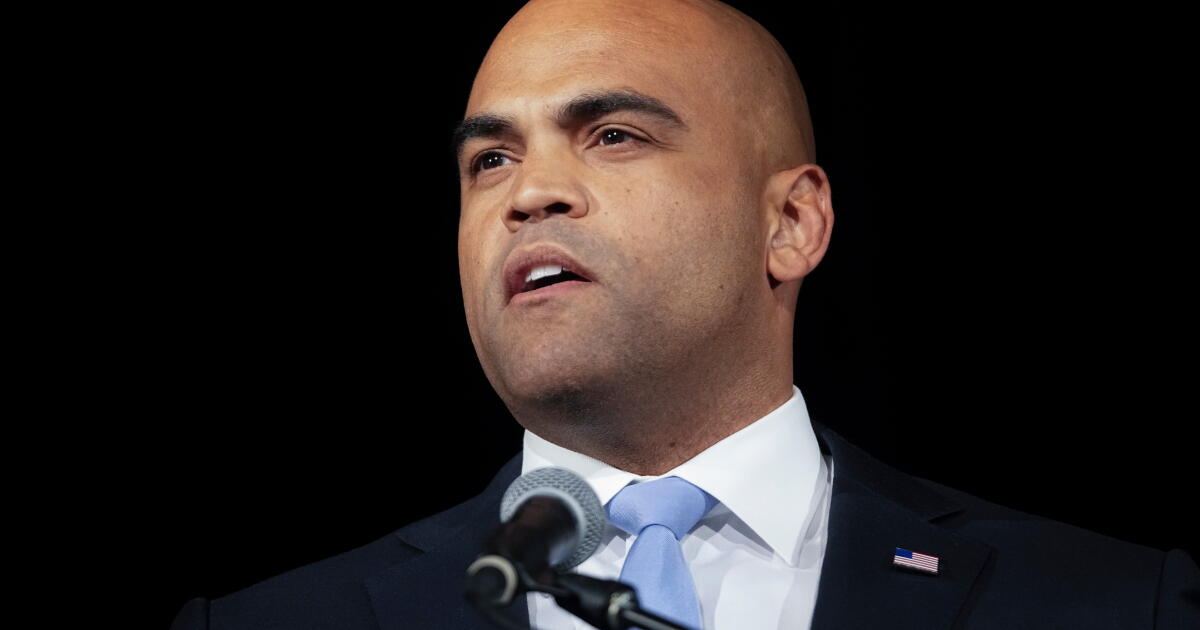
Colin Allred is all blue. The Democratic politician from Texas played linebacker for the powder blue-clad Tennessee Titans for four years and he rode the historic blue wave Tuesday to return to the U.S. House of Representatives.

Allred, who served three consecutive terms in Congress before making an unsuccessful bid for the Senate in 2024, is one of several prominent former athletes who ran for office in the midterm elections. He won this time in a landslide over Republican Patrick Gillespie, collecting nearly 80% of the votes in the 33rd Congressional District located in Dallas County.

In an Substack essay in August, Allred enumerated lessons learned playing in the NFL, calling them “the core values I’m bringing with me in my fight for Congress”: Staying humble, recognizing that leadership comes from bringing people together despite their differences and building strong relationships, trust and teamwork.

Joining Allred in Congress — albeit from the other side of the aisle — will be another former professional athlete who ran a successful campaign in Texas: Former Angels slugger Mark Teixeira, a Republican who will succeed Chip Roy.

Teixeira was the fifth overall pick in the 2001 MLB draft by the Texas Rangers, for whom he played until 2007. After brief stints with the Atlanta Braves and Angels, he spent nine seasons with the New York Yankees, helping them to a World Series title in 2009 and finishing second in MVP voting.

After retiring in 2016 with 409 career home runs, Teixeira returned to Texas and announced his candidacy for the 21st Congressional District a year ago. An avowed conservative, he said he was “ready to help defend President Trump’s America First agenda, Texas families, and individual liberty.” Trump endorsed Teixeira and he defeated 11 candidates in the Republican primary.

Historically, former athletes running for office lean Republican. Decades after helping Michigan to national championships in 1932 and 1933, the outstanding center and linebacker Gerald Ford became the 38th president of the United States on the Republican ticket.

Ford never played professionally, but several men who did have served in Congress: Rep. Jack Kemp (R-NY), Rep. Steve Largent (R-OK) and Rep. Burgess Owens (R-UT) played in the NFL; Sen. and Rep. Jim Bunning (R-KY) was a Hall of Fame MLB pitcher; and Sen. Bill Bradley (D-NJ) was a Hall of Fame NBA forward.

Dave Bing and Kevin Johnson became the Democratic mayors of Detroit and Sacramento, respectively. And if the net is widened to include powerlifting and pro wrestling, Governors Arnold Schwarzenegger of California and Jesse Ventura of Minnesota get a nod.

Tommy Tuberville, a former longtime college football coach and Republican senator since 2021, won the governor’s race in Alabama on Tuesday, defeating Democrat former Sen. Doug Jones. Tuberville posted a record of 159-99 over 21 seasons at Auburn, Cincinnati, Texas Tech and Mississippi.

Two former NFL players and a veteran NFL broadcaster appear to have fallen short in their attempts to win political office.

Republican Jay Feely, an NFL kicker for six teams over 14 seasons, trails Democrat Amish Shah, a former team physician for the New York Jets, 52.6% to 45.4% with 85% of the vote tallied in a race for the U.S. Congress in Arizona. Democrat Chris Kluwe, a Minnesota Vikings punter from 2005-2012, lost a close race to Republican Gracey Van Der Mark to represent California Assembly District 72, which mainly consists of Orange County beach communities.

And Republican Michele Tafoya lost the U.S. Senate race in Minnesota to Democrat Peggy Flanagan, the state’s lieutenant governor. Tafoya was a sideline reporter for NBC’s “Sunday Night Football” and also worked as a broadcaster for CBS and ABC.

Perhaps the most impressive showing by a former athlete was that of Iowa Democrat Josh Turek, who flipped a seat for the U.S. Senate by defeating Republican Congresswoman and former TV anchor Ashley Hinson. Born with spina bifida and confined to a wheelchair after his father was exposed to Agent Orange in Vietnam, Turek is a four-time Paralympian and two-time gold medalist in wheelchair basketball.

Source link

UCLA earns AP top 5 ranking for first time since 2001

Eric OlsonAP College Football Writer 

Ohio State dropped out of the top 10 of the Associated Press Top 25 on Sunday for the first time in five years, UCLA entered the top five for the first time in 25 years and New Mexico earned the first ranking in program history.

The Buckeyes plummeted from No. 2 to No. 11 following their 30-18 loss at USC, making it four weeks in a row the No. 1 or 2 team has lost to an unranked opponent.

Miami was No. 1 for the third straight week after escaping North Carolina with a 38-35 victory. Georgia moved up a spot to No. 2 and was followed by Utah, Notre Dame and UCLA.

The Hurricanes, who visit Notre Dame on Saturday for their much-anticipated top-five matchup, received 62 of 70 first-place votes from the media voting panel. Georgia got seven first-place votes and Utah got one.

Indiana slipped two rungs to No. 6 after a 23-16 overtime win over Minnesota. Brigham Young, Kentucky, Alabama and Texas rounded out the top 10.

Ohio State hadn’t been out of the top 10 since Sept. 26, 2021. The Buckeyes slipped to No. 11 after beating Akron by 52 points and were back in the top 10 the next week after a 39-point win over Rutgers and stayed there for 86 consecutive polls.

UCLA is 8-0 for the first time since 2005 under first-year coach Bob Chesney. The Bruins stepped out of conference play and shut out Nevada 27-0. At No. 5, UCLA has its highest ranking since it was No. 4 following a 6-0 start in 2001.

New Mexico, which has been playing football since 1892, cracked the AP rankings for the first time at No. 22 following a 21-16 win at San José State. The breakthrough comes in Jason Eck’s second season and after the Lobos’ first 7-1 start since 1982.

In and out

In: No. 18 USC’s win over Ohio State was the biggest in Lincoln Riley’s five seasons and put the Trojans right back into the playoff hunt.

In: No. 21 Iowa continued its recent domination of Wisconsin with a 30-0 victory and is back in the poll after a one-week absence.

In: No. 22 New Mexico is the only Mountain West team unbeaten in conference play and is a serious contender for the Group of Six playoff spot.

In: No. 23 South Carolina’s season and Shane Beamer’s tenure with the Gamecocks were all but written off a month ago, but now they’ve won three straight and are ranked for the first time since September 2025.

Out: SMU’s playoff hopes, barring an ACC championship, are fizzling with its 30-27 last-minute loss at Syracuse.

Out: Northwestern led into the fourth quarter but couldn’t finish the job at Oregon.

Out: Oklahoma State gave Iowa State a short field for a walk-off field goal because of unsportsmanlike conduct and lost a 51-49 shootout in Ames.

Out: Wisconsin coach Luke Fickell, who got a one-week reprieve with a dominant win over USC, is back on the hot seat following the humiliating loss at Iowa.

Full top 25 poll:

1. Miami (Fla.)
2. Georgia
3. Utah
4. Notre Dame
5. UCLA
6. Indiana
7. BYU
8. Kentucky
9. Alabama
10. Texas
11. Ohio State
12. Ole Miss
13. Texas Tech
14. Wake Forest
15. LSU
16. Tennessee
17. Houston
18. USC
19. Missouri
20. Boise State
21. Iowa
22. New Mexico
23. South Carolina
24. Arizona
25. Florida

Others receiving votes: Northwestern 79, Oregon 55, UTSA 43, SMU 27, Virginia Tech 12, Duke 10, Minnesota 8, Liberty 4, Oklahoma State 3, Louisville 1

Olson writes for the Associated Press.

Source link

30-year sentence in Minnesota fraud that drew Trump backlash | Corruption News

Government says Salim Said ‘hit the jackpot’ in a scheme claiming to feed needy children during the COVID-19 pandemic.

A 37-year-old man who played a key role in defrauding a United States food programme in the state of Minnesota during the COVID-19 pandemic has been sentenced to 30 years in prison, in a case that has drawn intense national scrutiny and political pressure from President Donald Trump.

The widespread scheme in Minnesota, which resulted in dozens of convictions, has repeatedly drawn attacks from Trump, who ridiculed the Democratic governor for failing to stop the scheme and cited it as grounds for an immigration crackdown in the state’s largest cities.

Recommended Stories

list of 3 itemsend of list

Salim Said, who operated Safari Restaurant in Minneapolis, was accused of vastly overstating the number of meals when seeking payment for providing food to needy children. The government said he was responsible for $44 million in fraud, some of which was committed by others he recruited.

“You took more than taxpayers’ dollars to enrich yourself. You took the reputation of our state down with you,” US District Judge Nancy Brasel said.

Said was claiming a “ridiculous daily distribution of 6,000 meals” while FBI cameras showed 40 people a day collecting food, prosecutors said in a court filing.

“The defendant and his sites did not serve thousands of children; he served a calculated, lucrative lie,” prosecutors said.

Said, who was born in Somalia, denied the allegations while testifying at his 2025 trial, saying many meals were delivered off site. But he changed course and expressed remorse at his sentencing on Wednesday.

Defence lawyer Barry Zone, who had asked for a 12-year prison sentence, disputed the government’s claim that Said was the “architect”.

COVID-19 brought changes to a federal programme that typically fed children through schools. Restaurants could participate, and food distribution was extended to places outside schools.

“For 21 consecutive months, Said made thousands of fraudulent reimbursement claims,” prosecutors said. “Each submission represented meals purportedly provided to underprivileged children, yet the listed children themselves were entirely fictitious.”

The government said Said hit the jackpot, using the stolen funds to buy a $1.2 million home, commercial real estate and an $87,000 pickup truck.

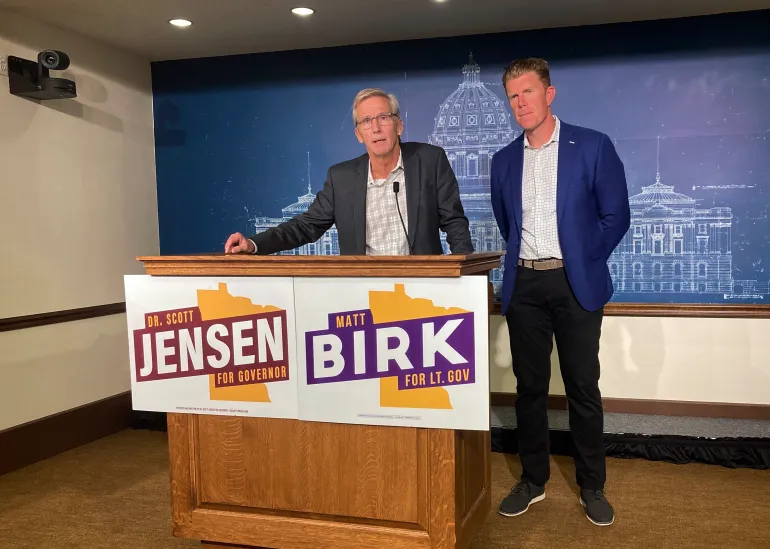
Former US State Senator Scott Jensen, left, and former Republican candidate for lieutenant governor Matt Birk, speak at a news conference at the State Capitol in St Paul, Minnesota, attacking Democratic Governor Tim Walz over his administration's handling of the investigation into the non-profit Feeding Our Future, on September 26, 2022 [File: Steve Karnowski/AP]
Former Minnesota state Senator Scott Jensen, left, and former Republican candidate for lieutenant governor Matt Birk speak at a news conference at the State Capitol in St Paul, Minnesota, attacking Democratic Governor Tim Walz over his administration’s handling of an investigation into the nonprofit Feeding Our Future, on September 26, 2022 [File: Steve Karnowski/AP]

Said was convicted in 2025 alongside Aimee Bock, leader of the Minnesota nonprofit Feeding Our Future, who is serving a 42-year prison sentence for devising the scheme and was ordered to repay $242 million.

State auditors found that Minnesota’s education department received numerous complaints about Feeding Our Future but often told the group to police itself. Following relentless criticism from Trump over theft in federally funded programmes, Governor Tim Walz announced in January that he would not run for re-election.

Source link

Activists O’Keefe, Higby charged with unlawful voting in Minnesota

Mark Vancleave and Rebecca Boone

Conservative activists James O’Keefe and Cam Higby were charged Wednesday with unlawful voting and identity theft after a Minnesota prosecutor said they gave false names to poll workers during the state’s primary election. The men recorded the exchanges for a video to expose what they say are vulnerabilities in the state’s voting laws.

Hennepin County Atty. Mary Moriarty announced the felony charges at a news conference. She said O’Keefe, 42, of West Palm Beach, Fla., and Higby, 26, of Covington, Wash., wore costumes and used the names of registered state voters while starting the “vouching” process in the Aug. 11 primary. The process provides a way for unregistered voters who lack proof of their current address to register and vote after signing an oath of eligibility.

Poll workers were suspicious and reported their behavior. Moriarty said the situation shows that “the system for identifying misconduct and responding to it functioned well during the primary.”

O’Keefe, who founded and later was ousted as leader of Project Veritas, gained notoriety by publishing undercover sting-style videos such as the one made at the Minnesota polling places. He was not immediately available for comment, and court records do not name an attorney to comment on his behalf.

Higby did not immediately respond to an email requesting comment and did not have an attorney in court records. Neither of them has had an opportunity to enter a plea.

Minnesota allows registered voters to “vouch” for another voter in the same precinct by signing an oath attesting to the second person’s identity and that they live in the precinct. The person being vouched for also must sign an oath attesting to their identity and eligibility to vote, and must also provide their Minnesota driver’s license or identification card number or the last four digits of their Social Security number.

The process is rarely used but is most commonly done by older adults who have not updated their address on a driver’s license because they no longer drive. In the November 2024 election, fewer than 0.6% of votes cast used the process, according to the Minnesota secretary of state’s office website.

Workers flag ‘strange behavior’

In their video that was posted to YouTube on Aug. 13, O’Keefe, Higby and others dressed in costumes similar to attire worn by some Muslims and used fake accents while asking about the vouching process at multiple Minneapolis voting sites. Higby’s face was covered, and when talking to poll workers, O’Keefe referred to him as his wife.

Moriarty said both men “identified themselves using names of registered voters in the precinct without those voters’ knowledge or permission.”

The poll workers noticed the “strange behavior” and flagged it to election officials, who asked police to investigate, Moriarty said. The men stopped short of signing the oath required for vouching, but Moriarty said that giving false names and starting the process was enough to justify the felony charges.

“Free and fair elections are the bedrock of democracy, and their protection is one of our highest priorities,” Moriarty said.

O’Keefe’s organization, O’Keefe Media Group, posted a statement and the video on its website and said the men presented “an intentionally extreme scenario to expose what they see as the lunacy of the state’s ‘vouching’ system.”

“The team wanted to determine how election workers would respond, what safeguards they would describe, and how far they would allow the vouching process to proceed,” the statement said. “Not every election worker reacted the same way. While several workers explained how the undercover team could proceed under the vouching rules, others became suspicious of the group and took issue with the investigation. Some workers communicated concerns about the team over their radios.”

David Becker, a former Justice Department official and the executive director of the Center for Election Innovation and Research, said he wasn’t aware of any examples of vouching leading to organized or widespread fraud. But he said there have been more efforts recently by those pushing voter fraud claims to commit questionable acts themselves.

“Impersonating another voter is a very serious crime,” Becker said.

Voter ID laws vary

Voter identification laws vary from state to state. Thirty-six states have laws requesting or requiring voters to show some form of identification at the polls, according to the National Conference of State Legislatures, but that identification can range from a photo ID to documents such as a utility bill or bank statement.

In the remaining 14 states and Washington, D.C., voters can cast a ballot without showing ID. They must verify their identity in various other ways, such as signing an affidavit or providing personal information such as birth date, name or address.

Some states, such as Minnesota, allow election officials or other registered voters to vouch for people without a current ID. Alaska and New Hampshire, for instance, allow officials including a clerk or a supervisor to verify a voter’s identity if they know the voter personally. North Dakota allows people who lack ID cards because of a disability to have an attester certify that they are a qualified voter. West Virginia allows an adult who has known a voter for at least six months to sign a sworn statement verifying the voter’s identity.

Vancleave and Boone write for the Associated Press. Boone reported from Boise, Idaho. AP writer Ali Swenson contributed to this report.

Source link

Alex Pretti’s parents say federal government is shielding agents involved in his killing

Michael Biesecker and Mark Vancleave

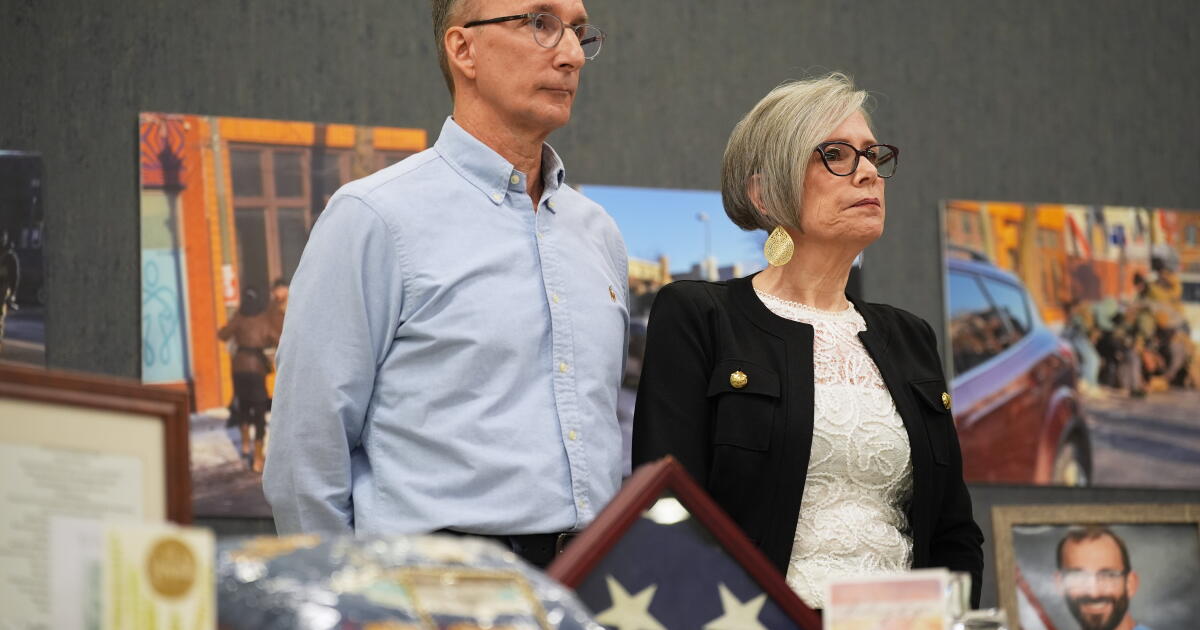
The parents of intensive care nurse Alex Pretti said the federal government is shielding the immigration enforcement officers involved in their son’s killing, and no one from the government has reached out with any substantive information for nine months.

Michael and Susan Pretti on Tuesday called for the Department of Justice to hold accountable those who shot their 37-year-old son during President Trump’s ramp up in deportations targeting Minnesota. Federal prosecutors disclosed in recent court filings they had stopped sharing evidence with Minnesota authorities who are investigating the January killings of Pretti and Renee Good by federal officers.

“The federal government went on TV and lied about Alex,” said Susan Pretti, his mother. “They tried to slander his memory to cover up their crime. Not only was it wrong, it was shameful.”

Within moments of his Jan. 24 death, Trump administration officials sought to portray Pretti, a U.S. citizen and nurse at a veterans hospital, as an armed disruptor intent on doing harm to federal agents when he brought his own gun to a Minneapolis street where officers clashed with protesters. Kristi Noem, the then-Homeland Security secretary, painted the Veterans Administration hospital nurse as a domestic terrorist who violently resisted federal agents. Court records show he had no criminal record.

Video shot by bystanders that day showed Pretti only had a mobile phone in his hand. No footage has since emerged showing him brandishing a weapon or attacking federal agents in the moments before he was killed.

The Prettis spoke Tuesday at a news conference organized by an attorney representing the family, calling their treatment by the Trump administration “cruelty.” They said they decided to speak out after being “stonewalled” by U.S. Atty. Gen. Todd Blanche and the top federal prosecutor in Minnesota, U.S. Atty. Dan Rosen.

“At every turn, they have ignored us, misled us, and shielded Alex’s killers,” said Michael Pretti, his father. “We are a family who love this country. We trust in the institutions of this country. We believe in the rule of law — and that people should be held accountable through that law.”

After months of reaching out to Rosen’s office, the federal prosecutor agreed to meet with them in July. But the family and their attorney, Steve Schleicher, said that meeting raised more questions than answers, with Rosen refusing to provide even basic information about the status of the federal investigation into Pretti’s death.

A spokesman for Rosen’s office had no comment when reached by the Associated Press on Tuesday. The Department of Justice did not immediately respond to a request for comment on the Pretti family’s remarks.

Minnesota officials sued the Trump administration in March for access to materials they said they needed to independently investigate the shootings of Pretti and Good. The Trump administration has suggested that state prosecutors don’t have jurisdiction to investigate federal officers, while Minnesota officials have said they don’t trust the federal government to investigate itself.

The state is still seeking the cellphones of the officers involved in both shootings and recordings of key interviews.

Pretti’s parents recounted how they first learned of his death when they were called by a reporter for the Associated Press.

“We learned about his death from the media as we saw him being shot repeatedly in the back after helping a woman from his community, a fellow Minnesotan, who had been shoved to the ground viciously,” Michael Pretti said. “No one from the federal government called us on that horrible day, but they did go on TV to tell lies about Alex. No one from the federal government has called us since.”

He said the videos of his son’s killing haunt his family every day.

“I think it haunts many Americans to see a U.S. citizen who was peaceful and in his community shot multiple times on the back, in the back, while on the ground,” the father said, calling his family heartbroken.

“We wish we didn’t have to be here,” he said. “We wish Alex was alive. We wish we were simply in Minneapolis to visit with Alex. For he and I to chat about cars, hiking, biking or anything that came to our mind. This administration has taken that away from us forever.”

Biesecker and Vancleave write for the Associated Press. Biesecker reported from Pittsburgh.

Source link

Judge orders 30-year prison sentence for key figure in Minnesota food fraud

A man who played a major role in defrauding a federal food program in Minnesota was sentenced Wednesday to 30 years in prison, the latest punishment in a sprawling scheme to collect millions of dollars during the COVID-19 pandemic by claiming to have fed needy children.

The depth of fraud in Minnesota — dozens of people have been convicted — has repeatedly drawn the attention of President Trump, who ridiculed the Democratic governor for failing to stop it and partly cited it as grounds for an extraordinary immigration crackdown in the state’s largest cities.

Salim Said operated Safari Restaurant in Minneapolis, which specialized in dishes from Somalia. He was accused of vastly overstating the number of meals when seeking payment for providing food. The government said he was responsible for $44 million in fraud, some of which was committed by others he recruited.

Said was claiming a “ridiculous daily distribution of 6,000 meals” while FBI cameras showed 40 people a day collecting food, prosecutors said in a court filing.

“The defendant and his sites did not serve thousands of children; he served a calculated, lucrative lie,” prosecutors said in court documents.

Said, a native of Somalia, denied the allegations while testifying at trial in 2025. He described his restaurant as a go-to spot for Somali immigrants in “Little Mogadishu” and said many meals were delivered.

“If you’re making good food,” Said told the jury, “people will come to you.”

Said’s attorney didn’t immediately return a message seeking comment on the decades-long sentence ordered by U.S. District Judge Nancy Brasel. A sentencing memo filed ahead of the hearing by his lawyer, Samuel Savage, was unavailable to the public.

COVID-19 brought changes to a federal program that typically fed children through schools. Restaurants could participate, and food distribution was extended to places outside schools.

“For 21 consecutive months, Said made thousands of fraudulent reimbursement claims, day after day, month after month,” prosecutors said. “Each submission represented meals purportedly provided to underprivileged children, yet the listed children themselves were entirely fictitious.”

The government said Said hit the jackpot: He bought a $1.2-million home, commercial real estate and an $87,000 pickup truck.

Said was convicted of a raft of charges in 2025, along with Aimee Bock, the leader of a Minnesota nonprofit, Feeding Our Future. She is serving a 42-year prison sentence for devising the overall plan to recruit Said and others to join the federal food program during the pandemic.

State auditors found that the Minnesota Department of Education received numerous complaints about Feeding Our Future, but often told the group to police itself. In January, Gov. Tim Walz said he would not run for reelection after being pounded by Trump about theft in programs that rely on federal cash.

Source link

Trump administration stopped sharing evidence in Good and Pretti killings, Minnesota officials say

The federal government has stopped sharing evidence with Minnesota authorities who are investigating the killings of Renee Good and Alex Pretti by federal officers, state officials said in recent court filings.

Minnesota officials sued President Trump’s administration in March for access to materials they said they needed to independently investigate the shootings during Trump’s immigration crackdown in Minneapolis earlier this year. The Trump administration has suggested that state prosecutors don’t have jurisdiction to investigate federal officers, while Minnesota officials have said they don’t trust the federal government to investigate itself.

The state is still seeking the cell phones of the officers involved in both shootings and recordings of key interviews.

State prosecutors announced in July that the federal government had begun turning over evidence in the cases, including police body camera video and hard drives containing statements. Hennepin County Attorney Mary Moriarty said at the time that the state expected to receive “all the evidence.”

But Minnesota investigators said in October court filings that the transfer of evidence stopped soon after the July announcement. Moriarty said the U.S. Attorney’s Office for Minnesota told her on Sept. 10 that evidence sharing would be on pause indefinitely “in light of challenges with D.C.,” according to the documents.

State prosecutors have again asked a judge to order federal agencies to hand over the evidence, arguing they “have identified no legal authority or rational basis justifying their obstruction of state criminal investigations.”

In a reply filed Tuesday, attorneys for the Justice Department argued it’s within their discretion to decline to share information with state authorities. They cited the department’s rules for responding to record requests, known as the Touhy regulations, which apply only when formal legal proceedings are underway. The attorneys said there was no active court case when Minnesota made its requests.

Drew Evans, superintendent of the Minnesota Bureau of Criminal Apprehension, said in a legal declaration that federal authorities still have Good’s clothing, the cell phone of the officer who killed her and interview recordings that state authorities have never been able to view.

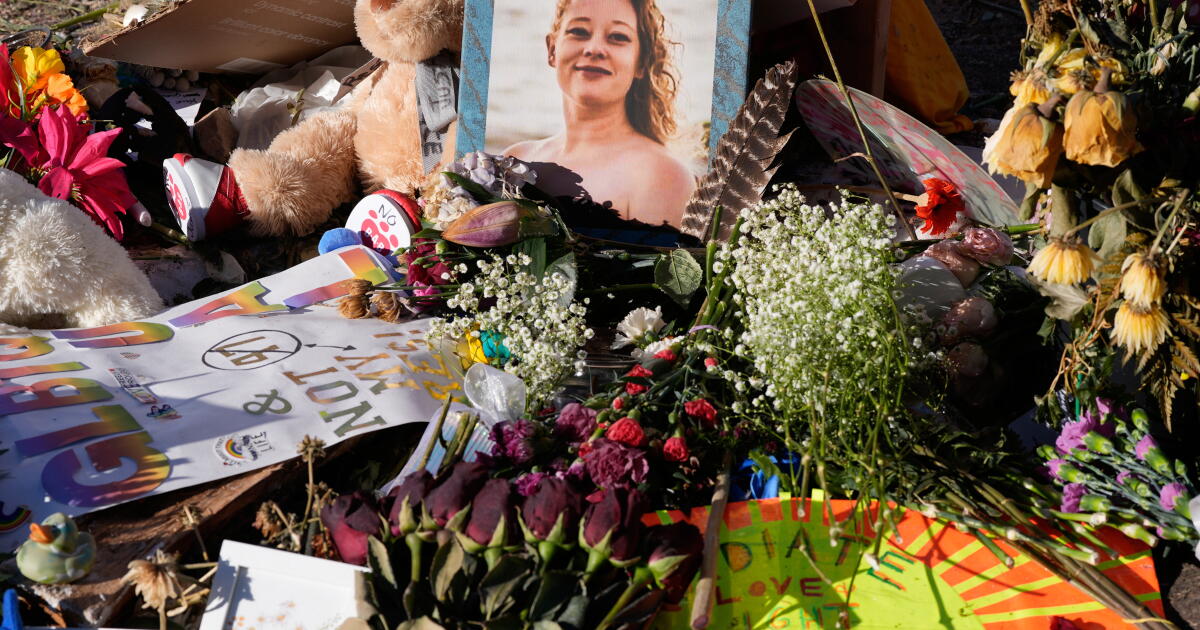
An Immigration and Customs Enforcement officer fatally shot Good, a 37-year-old mother of three, while she was leaving a Minneapolis protest on Jan. 7. Bystander video shows Good in the driver’s seat of an SUV, repeatedly honking the horn, when masked immigration officers order her to step out of the vehicle. She starts to pull forward, and an officer standing in front of the car fires at her windshield. The officer, now standing about an arm’s length from the open window on the driver’s side, fires twice more, according to an analysis of the videos by The Associated Press and others.

Federal officials at the time said the officer acted in self-defense.

Good’s death and that of Pretti, a 37-year-old intensive care nurse who was killed weeks later by a federal officer in Minneapolis, ignited nationwide protests against the Republican president’s immigration enforcement efforts.

No criminal charges have been filed in connection with the fatal shootings.

Evans said the federal government also has not shared a recorded statement from an officer who shot Pretti, the firearms used by the officers, their phones, projectiles and casings, and a gun taken from Pretti before he was shot.

Schoenbaum writes for the Associated Press.

Source link

Rep. Ilhan Omar’s phone seized and relatives subpoenaed in criminal probe, AP source says

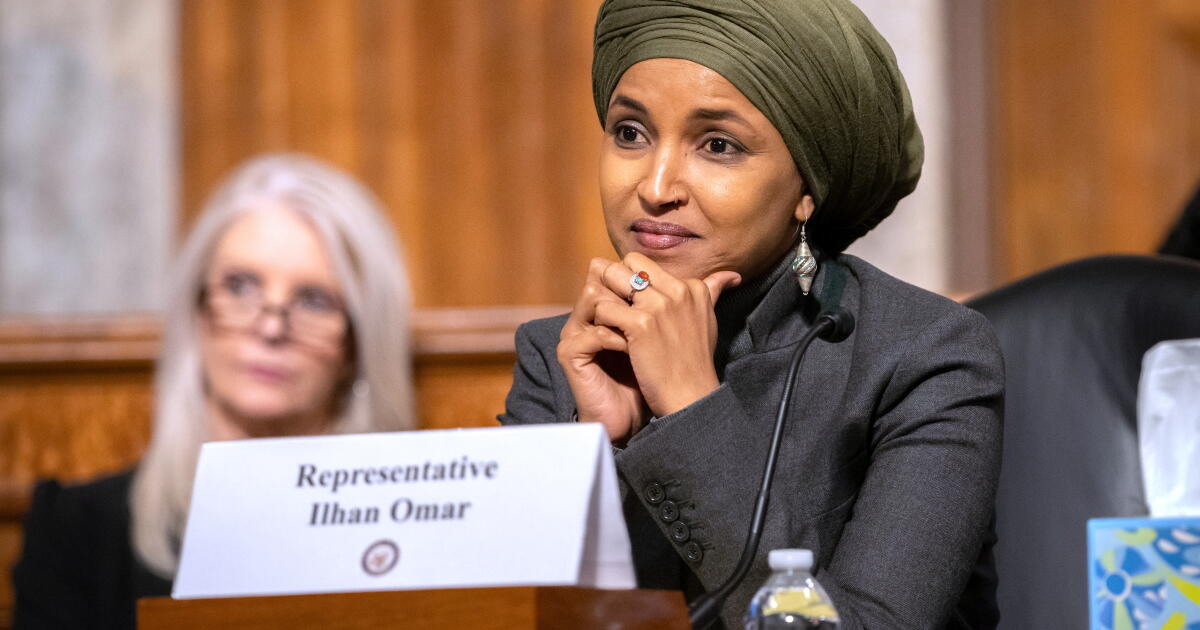
Federal authorities investigating Minnesota Rep. Ilhan Omar seized the Democratic lawmaker’s phone and have issued more than a dozen grand jury subpoenas, including to some of her relatives, according to a person briefed on the probe.

The subpoenas were issued for a grand jury collecting evidence in Minnesota as federal authorities probe potential fraud in Omar’s immigration paperwork, said the person, who spoke on the condition of anonymity because they were not authorized to discuss an ongoing investigation. The investigation led to federal agents searching Omar’s Washington, D.C. home on Monday just weeks before the November midterms, in which Omar is seeking reelection.

The scope of the investigation into Omar is unclear, though Homeland Security Secretary Markwayne Mullin has suggested that authorities were examining potential crimes related to her family’s immigration paperwork.

On Tuesday, Washington D.C. U.S Attorney Jeanine Pirro said in a Fox News interview that “there are several investigations going on” related to Omar and that her office is also probing issues concerning the lawmaker’s financial disclosures.

“If there was a crime that was committed, it will be prosecuted,” Pirro said.

The search of Omar’s home so close to next month’s midterm contests that will determine control of the House and the Senate was swiftly condemned by Democrats, who accused the administration of targeting the Democrat for political purposes. Omar, in a statement on X, called the search an “attempt to target political enemies and weaponize federal law enforcement.”

“For 10 years, Trump has targeted me with baseless lies and smear campaigns. This is just the latest escalation in his campaign of political intimidation,” she said. “I will not be silenced.”

A phone message seeking comment was left Wednesday with a representative for Omar.

Though the Republican focus on Omar’s background dates back years, the search notably took place three weeks before the November midterms, in which Omar is seeking reelection. The Justice Department has historically sought to avoid public investigative actions involving a candidate within 60 days of a primary or general election.

Omar, who was first elected to the House in 2018, represents Minnesota’s 5th District, including Minneapolis. She is part of The Squad of progressive lawmakers who are a vibrant political force on the left wing of Congress but have also endured repeated attacks from President Trump, dating back to his first term. She was one of the first two Muslim-American women in the House and the first African refugee to be elected to Congress.

Richer writes for the Associated Press.

Source link