minneapolis

Renee Good ‘slow to anger, quick to love,’ her father says

Renee Good loved sparkles and laughter and any excuse for a celebration. She loved pretty much everyone she met, and was late for pretty much everything.

“She had this way of making you feel special and loved that I didn’t even understand … until we lost her,” Donna Ganger said Friday of her daughter, who was shot and killed by an immigration officer during the federal crackdown in Minneapolis.

She was “slow to anger, quick to love, quick to care,” said her father, Tim Ganger. “That’s the essence of who she was.”

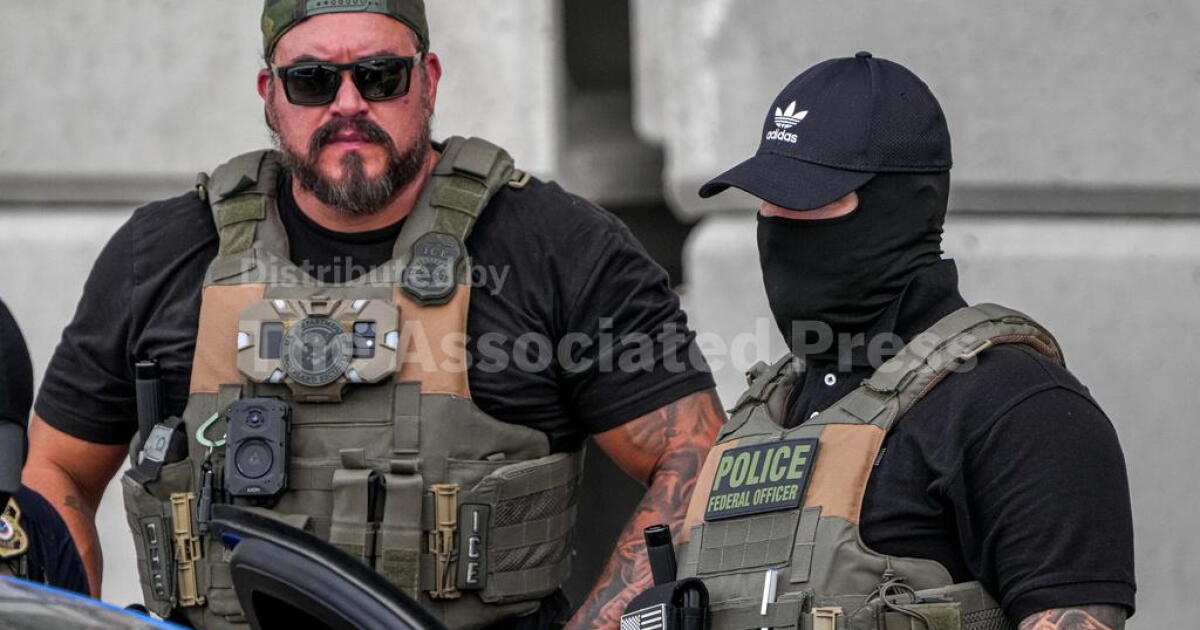
Good, a 37-year-old mother of three, was killed Jan. 7 as immigration agents surged through the Minneapolis area, sparking waves of protests. Her death and that of another U.S. citizen, Alex Pretti, weeks later in Minneapolis sparked outrage across the country and calls to rein in immigration enforcement.

In a wide-ranging interview in Colorado, where some of the family lives, Good’s parents and two of her brothers, Brent and Luke Ganger, talked to the AP about the joy Good found in life, their grief and their hopes that her death can bring about change in a deeply polarized nation.

“It’s going to be hard in the future,” Donna Ganger said. “It’s going to be kind of a constant pain.”

Settling in Minneapolis

Good, who graduated from college later in life, was volunteering in a local school district and working as a substitute teacher when she was killed, her parents said.

“She was working so hard to get her education, and then she was finally able to use it, and I could just tell how happy she was and how fulfilled,” Donna Ganger said.

Good, her 6-year-old son and her partner, Becca Good — the women were not legally married, according to a family lawyer, but referred to each other as wives — had only recently relocated to Minneapolis from Kansas City, Mo., settling on a quiet residential street in a tight-knit neighborhood known for its progressive activism.

In social media accounts, Renee Good described herself as a “poet and writer and wife and mom.” On Pinterest, a profile picture shows her smiling and holding a young child, alongside posts about tattoos, hairstyles and home decorating.

The family “settled very quickly into the community in Minneapolis,” said Donna Ganger, describing how the neighborhood had also welcomed the rest of the family when they came after the shooting. They see that as the result of the love that Good had showed her new neighbors.

“It was incredible to receive that back,” Luke Ganger said.

Donna Ganger held a stuffed toy owl as she spoke, a gift from her daughter, who knew how much she loved the birds. It had sparkles on its feet, a reminder of Good’s love for glitter.

At Good’s memorial service, a table of glitter had been set out for guests. Donna Ganger had put a piece on a lens of her glasses and it’s remained there.

“She just kind of sparkled all the way through,” said Donna Ganger. “I think of her and I look down and see my little sparkle.”

‘A very American blend’

The family is “a very American blend,” Luke Ganger said recently in testimony to Congress. “We vote differently, and we rarely completely agree on the finer details of what it means to be a citizen of this country.”

Yet “we have always treated each other with love and respect,” he said.

On Friday, the family didn’t want to discuss the specifics of their differences, but Donna Ganger said she’d long prayed for guidance: “Before all this happened, I said, ‘Make me a wise woman.’”

In the hours after Good’s death, Trump administration officials said she had been shot as she tried to drive her car into an immigration officer. Homeland Security Secretary Kristi Noem said Good had committed “an act of domestic terrorism.”

But as video evidence and other details of the confrontation emerged, and criticism of the crackdown began growing, administration comments softened.

President Trump said he’d been told that Tim Ganger had supported him.

“He was all for Trump, loved Trump. And, you know, it’s terrible,” he told reporters. “I hope he still feels that way.”

Tim Ganger declined to talk about his political affiliation or whether it had changed with his daughter’s killing.

“I think I’m just going to leave that go,” he said. “There’s so many other important things” to deal with now, he added.

But family members said they hoped their ability to get along would be an inspiration.

“Our purpose through this whole tragic, difficult, unbelievable time, is to have something good come out of this,” Tim Ganger said. “Otherwise the senselessness of this is overwhelming.”

Sadness echoed in Donna Ganger’s voice as she talked about navigating family differences.

“Sometimes I’m just silly, you know, and I joke with them and I’m goofy,” she said. “But I want to be able to talk about hard things — and that’s hard sometimes with your own family to talk about hard things that maybe you don’t agree on. And I don’t want there to be any hardships between us or hurt.

“But it’s important that we learn to be careful with our words, but share them in a deep way,” she said. “It’s really important.”

Family members spoke only in general ways about the change they’d like to see come from Good’s death.

“I think it’s evident that something is broken, right?” said Brent Ganger. “And when something is broken, you have to take a deep look to see what it is that can be changed and fixed in order for it to not happen again.”

The morning of the shooting

On the morning of the shooting, as immigration raids and protests were flaring across the city, Becca Good has said she and Renee stopped their car in the street to support neighbors during an immigration operation.

Video shows Renee Good in a maroon SUV blocking part of the road and repeatedly honking her horn.

Two immigration officers get out of a truck and one orders Good to open her door. She reverses briefly, then turns the steering wheel as the officer says again, “Get out of the car.” Almost simultaneously, Becca Good, standing in the street shouts, “Drive, baby, drive!”

When Good begins pulling forward, an ICE officer standing in front of the vehicle — later identified as Jonathan Ross — pulls his weapon and fires at least two shots into the car, through the driver’s-side corner of the windshield and the driver’s window, killing Good.

Weeks later, Tim Ganger said he hoped the family’s tragedy would lead to change, though “I’m not even sure what that will look like.”

“But for something good, for people to stop and take a breath and take a look and have a dialog,” he said. “That’s the broader mission of what we want, for people to come together and take care of each other.”

The Justice Department has said it sees no basis to open a federal civil rights investigation into Good’s death, but the family has hired a law firm that is conducting its own investigation and exploring potential legal action.

Family members said no one from the federal government has contacted them about Good’s killing, and they are unsure whether anyone will be held accountable.

“All we can do is speak out and hope that our sincere words are enough to enact some kind of change,” Brent Ganger said.

Slevin and Sullivan write for the Associated Press and reported from Denver and Minneapolis, respectively.

Source link

ICE agents accused of lying about Minneapolis shooting

Feb. 14 (UPI) — Two Immigration and Customs Enforcement agents are on administrative leave after investigators said evidence does not match their stories after one shot a Venezuelan man in Minneapolis.

The suspended agents’ names have not been released, and they might be fired and charged with crimes for allegedly lying about the circumstances leading up to the shooting on the night of Jan. 14 after investigators with the U.S. Attorney’s Office in Minnesota finish their review of the incident.

“A joint review by ICE and the Department of Justice of video evidence has revealed that sworn testimony provided by two separate officers appears to have made untruthful statements,” McLaughlin said in an email to Fox News Digital.

“Both officers have been immediately placed on administrative leave pending the completion of a thorough internal investigation,” she said, while referring to the agents’ statements as “false.”

An ICE agent shot Sosa-Celis in the thigh after he allegedly fled an attempted traffic stop and eventually exited his vehicle at an apartment complex.

The agent and Sosa-Celis were treated at a nearby hospital, and Sosa-Celis, Aljorna and Gabriel Alejandro Hernandez-Ledezma were arrested.

U.S. Attorney Daniel Rosen on Thursday filed a motion to dismiss criminal charges filed against Julia Cesar Sosa-Celis and Alfredo Alejandro Aljorna, both of whom are Venezuelan and were accused of beating a pursuing ICE agent with a snow shovel and the handle of a broom.

The agents’ statements were “materially inconsistent” with evidence that recently was discovered, Rosen said.

A federal judge agreed and granted the motion to dismiss on Friday.

Source link

Video evidence again contradicts official accounts of shootings

Federal authorities announced an investigation Friday of two immigration officers who appeared to have made untruthful statements under oath about a shooting in Minneapolis last month.

It is among at least five shootings in which initial descriptions by the immigration officials were later contradicted by video evidence. Those included the fatal Minneapolis shootings of Renee Good and Alex Pretti, in which bystander video quickly raised questions about how federal officials initially described the incidents.

The inquiry announced Friday came hours after a federal judge dismissed felony assault charges against two Venezuelan men who were accused of beating an Immigration and Customs Enforcement officer with a broom handle and a snow shovel on Jan. 14. The officer, who is not named in court filings, fired a single shot from a handgun that struck one of the men, Julio Cesar Sosa-Celis, in the thigh.

In an unusual reversal, prosecutors asked to dismiss the cases because they said new video evidence contradicted allegations made against the men in a criminal complaint and at a hearing last month.

Here is a look at how the five shootings were initially described and what was later learned:

Julio Cesar Sosa-Celis

Date and location: Jan. 14, 2026, in Minneapolis.

What federal officials said initially: Homeland Security Secretary Kristi Noem said the immigration officer was “ambushed” by Sosa-Celis and others, and fired a “defensive shot” out of fear for his life. “What we saw last night in Minneapolis was an attempted murder of federal law enforcement,” she said.

What came out later: Investigators have not released the new evidence that led charges to be dropped, but cracks were already apparent in a Jan. 21 court hearing. The immigration officer’s testimony recounting the moments before the shooting differed significantly from that of the defendants and three eyewitnesses. Available video evidence did not support the officer’s account of being assaulted with a broom and shovel.

Renee Good

Date and location: Jan. 7, 2026, in Minneapolis.

What federal officials said initially: Noem described the incident as an “act of domestic terrorism” carried out against ICE officers by a woman who “attempted to run them over and rammed them with her vehicle.” She said the immigration agent shot “defensively” to protect himself and the people around him. Good died of gunshot wounds to the head.

What came out later: Videos filmed from multiple angles challenged the administration’s narrative. Shortly before the shooting, Good is seen at the wheel of her SUV that is parked diagonally on a street. She tells an immigration officer, “I’m not mad at you.”

Seconds later, another immigration officer grabs at the driver’s side door while Good’s wife urges her to “drive, baby, drive.” It’s unclear in the videos whether the SUV makes contact with ICE officer Jonathan Ross, who shoots while standing near the front of the driver’s side of the SUV and then twice more while quickly moving to the driver’s side as the vehicle pulls forward.

Alex Pretti

Date and location: Jan. 24, 2026, in Minneapolis.

What federal officials said initially: Homeland Security spokesperson Tricia McLaughlin said Pretti approached Border Patrol officers with a handgun and he “violently resisted” when they tried to disarm him. An agent feared for his life and fired “defensive” shots, she said. Pretti was pronounced dead at the scene. Border Patrol senior official Greg Bovino claimed Pretti intended to “massacre law enforcement,” and Deputy White House Chief of Staff Stephen Miller described him as “a would-be assassin.”

What came out later: None of the half-dozen bystander videos collected by investigators showed Pretti brandishing his gun, which he had a permit to carry. The videos showed Pretti was holding his mobile phone as a masked Border Patrol officer opened fire.

In a tense hearing Thursday in Washington, Republican Sen. Rand Paul of Kentucky made leaders tasked with carrying out Trump’s mass deportation agenda watch a video of the shooting while he repeatedly scrutinized the forceful tactics used by immigration agents. Paul argued that Pretti posed no threat to the agents and said it was clear from the video that he was “retreating at every moment.”

Silverio Villegas González

Date and location: Sept. 12, 2025, in suburban Chicago.

What federal officials said initially: Homeland Security officials said federal agents were pursuing a man with a history of reckless driving who entered the country illegally. They alleged that Villegas González drove at officers and dragged one with his car. The Department of Homeland Security said the officer fired because he feared for his life and was hospitalized with “serious injuries.”

What came out later: Body-camera videos from local police contradicted the Trump administration’s account. Footage showed the agent who shot Villegas González walking around afterward and dismissing his own injuries as “nothing major.”

An autopsy made public in November declared Villegas González’s death a homicide. The report showed he was shot at “close range,” with wounds to his neck and fingers.

Marimar Martinez

Date and location: Oct. 14, 2025, in Chicago.

What federal officials said initially: A Homeland Security Department news release asserted that Martinez and the driver of another car involved in a crash with a Border Patrol officer were “domestic terrorists.” An FBI agent said in court documents that she was chasing the Border Patrol vehicle and drove at one of the officers after they got out of the vehicle. The officer was forced to open fire, the FBI agent alleged, striking Martinez seven times. She was treated at a hospital and arrested on felony assault charges.

What came out later: Videos emerged that her attorneys said showed agent Charles Exum steering his SUV into her truck.

In a text message presented during a Nov. 5 hearing, Exum appeared to brag about his marksmanship. “I fired 5 rounds and she had 7 holes. Put that in your book boys,” the text read.

The case against her was dismissed.

Schoenbaum writes for the Associated Press.

Source link

Immigration officials grilled over U.S. citizen deaths during oversight hearing

The leaders of the agencies enforcing President Trump’s immigration crackdown faced tough questioning on Capitol Hill on Tuesday, with one Democratic lawmaker asking the head of ICE if he would apologize to the families of two U.S. citizens killed by federal agents and called domestic terrorists by Homeland Security Secretary Kristi Noem.

Todd Lyons, acting head of Immigration and Customs Enforcement, declined to apologize to the families of Renee Good and Alex Pretti during the hearing but said he welcomed the opportunity to speak to Good’s family in private.

“I’m not going to speak to any ongoing investigation,” Lyons said.

For the first time since the federal operation in Minneapolis led to the deaths of Good and Pretti, the heads of three immigration agencies testified before the House Homeland Security Committee.

Along with Lyons, the other witnesses were Joseph Edlow, director of U.S. Citizenship and Immigration Services, and Rodney Scott, commissioner of Customs and Border Protection. Their agencies fall under the Department of Homeland Security.

Democrats and some Republicans have called for increased oversight of the Trump administration’s immigration operations since the shootings last month of Good and Pretti, both 37, by federal agents.

In the aftermath of the shootings, the administration replaced Gregory Bovino, a Border Patrol official who led the charge in Minneapolis, with border policy advisor Tom Homan, a former ICE official. Officials also withdrew some agents and began requiring those in Minneapolis to wear body cameras.

“We must take the temperature down and look at the record of enforcement actions through rational eyes,” said the committee’s chair, Rep. Andrew Garbarino (R-N.Y.).

Garbarino asked for commitment from the ICE and CBP leaders to give the committee the full reports and findings of the investigations into the shootings of Good and Pretti once those conclude. Scott and Lyons agreed.

Scott, the CBP commissioner, told the committee members that officers face an unprecedented increase in attacks by people who interfere with law enforcement action. He said these actions are “coordinated and well-funded.”

“This is not peaceful protest,” he said.

Lyons, the ICE leader, told lawmakers that his agency has removed more than 475,000 people from the U.S. and conducted nearly 379,000 arrests since President Trump returned to the White House. He said the agency has hired more than 12,000 officers and agents.

He condemned so-called sanctuary jurisdictions, which limit the collaboration between local law enforcement and ICE, as well as the rhetoric from public officials against ICE.

Lyons testified that 3,000 out of 13,000 ICE agents wear body cameras. Scott estimated that about 10,000 of 20,000 Border Patrol agents wear cameras, adding that “we’re building that program out.”

The agency heads faced intense questioning from Democrats on the committee, including those from California.

Rep. Eric Swalwell (D-Dublin) asked Lyons about his comment last year that the deportation process should work “like Amazon Prime, but with human beings.”

Lyons said the comment had been taken out of context.

“I did say that we need to be more efficient when it comes to removing individuals from the United States, because ICE doesn’t detain people punitively — we detain to remove,” he said. “I don’t want to see people in custody.”

“Well, speaking of human beings, how many times has Amazon Prime shot a nurse 10 times in the back?” Swalwell responded.

Swalwell asked how many agents have been fired for their conduct under Lyons’ leadership. Lyons said he would get that data.

“Can you tell us if, at least — God, I hope at least one person has been fired for their conduct since these operations have begun,” Swalwell said.

Lyons said he wouldn’t talk about personnel.

Swalwell was the one who asked Lyons if he would apologize to the families of Good and Pretti. He also asked if Lyons would resign from ICE. Lyons declined.

Rep. Lou Correa (D-Santa Ana) questioned Lyons about whether carrying a U.S. passport is enough for people to avoid being detained or deported. An October report by ProPublica identified more than 170 instances of U.S. citizens who were detained at raids or protests.

Lyons said U.S. citizens shouldn’t feel the need to carry their passports.

“No American citizen will be arrested for being an American citizen,” Lyons said.

Correa said a number of U.S. citizens in his district, which is majority Latino, have been detained, some for several days.

Lyons said he wasn’t aware of any cases of detained American citizens.

“Are you surveilling U.S. citizens today?” Correa asked.

Lyons said there is no database for protesters.

“I can assure you there is no database that’s tracking down citizens,” he said.

This is a developing story and will be updated.

Source link