


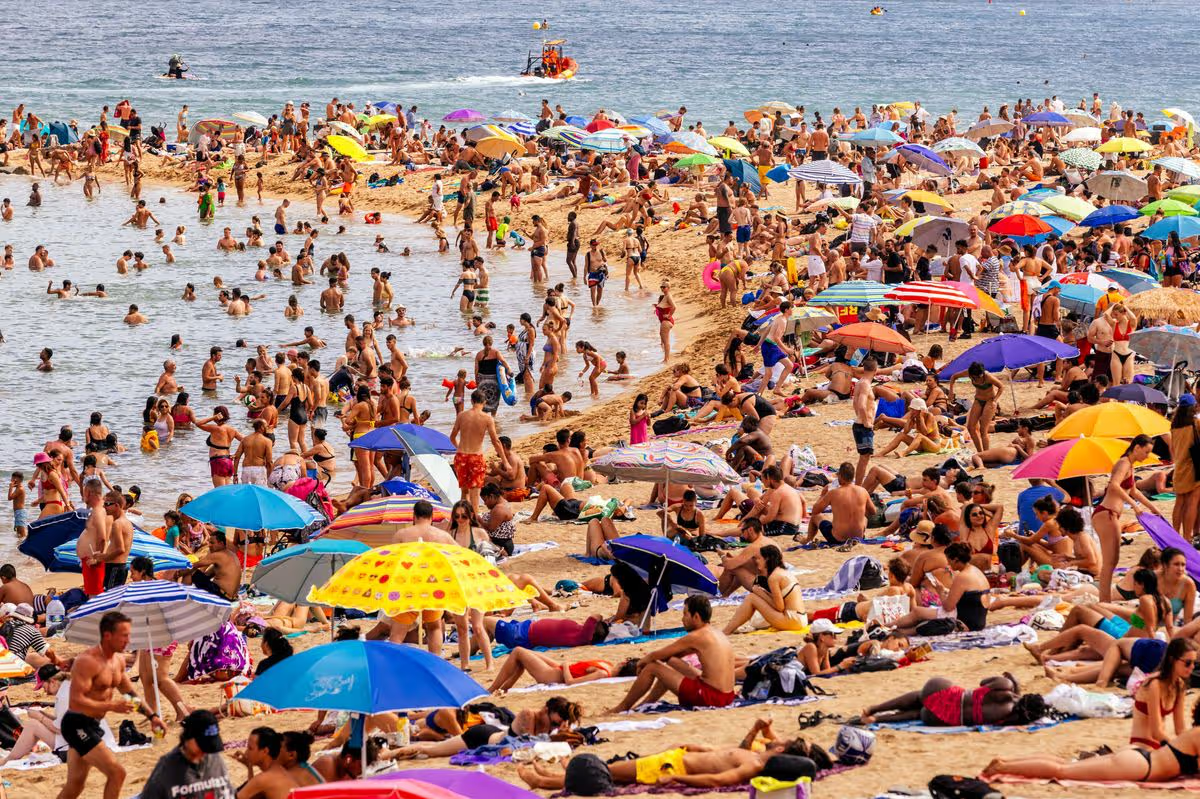
The warning comes as millions of people prepare to head to the country on their summer holidays

Advice has been issued(Image: Getty)
The Spanish government has issued an urgent safety warning to tourists visiting the country over the coming weeks. Millions of people will jet off on their summer holidays in the popular hotspot over the summer months as they look to enjoy their annual break.
However on Sunday, in a post on X, formerly Twitter, Spain’s Ministerio del Interior has issued a warning to visitors. The Ministry of the Interior of Spain (Ministerio del Interior) is the executive government department responsible for public safety, law enforcement, national security, civil protection, and the country’s prison system and overseas domestic policy.
It is keen to raise awareness that crime is an issue when on holiday just as it is back in the UK. In its post it said: “You’re away for a few days, but your safety doesn’t go on vacation. Before leaving the car parked:
- Remove valuables
- Don’t leave documents visible
- Choose well-lit and busy areas
- Save the vehicle’s location
It added: “Prevention is the best protection.” The warning came as Spain, along with much of the rest of Europe, basks in a heatwave.
The Ministry, in a separate post, had other advice for people to help them stay safe. It said: “In the forest, every gesture counts.
“Don’t throw away cigarette butts or matches. Don’t make fire outside of authorised areas. Don’t abandon flammable waste.” It added: “With heat and wind, the risk increases. A small oversight can turn into a big fire.”
The Foreign Office in the UK (FO) also has advice for holidaymakers and other visitors to the country. It warned of a number of different types of crime in the country including street and vehicle crime to drink spiking and sexual assaults.
Street crime
The Foreign Office warned: “Be alert to the risk of street crime. Thieves use distraction techniques and often work in teams. Take care of your passports, money and personal belongings, particularly when collecting or checking in luggage at the airport, and while arranging car hire.
“Do not carry all your valuables in one place. Keep a copy of the photo page of your passport somewhere safe.
“Make sure your accommodation has adequate security. Keep all doors and windows locked. If you’re concerned about the security of your accommodation, speak to your travel operator or the property owner.
“The Spanish Police and Civil Guard have a mobile app which offers a number of services, including simple and discreet communication with police forces if you experience or witness a crime – more information can be found on the ALERT COPS webpage.”
Vehicle crime
‘Highway pirates’ target foreign-registered and hire cars, especially those towing caravans, warns the FO. “They may flag you down, claiming there is something wrong with your car or that you have damaged theirs. If you decide to stop to check the condition of a vehicle, stop in a public area with lights, such as a service station. Be wary of anyone offering help.
“When driving, be wary of approaches from people posing as plainclothes police in unmarked cars. In all traffic-related matters, police officers will usually be in uniform. Unmarked police vehicles have a flashing electronic sign on the rear window saying ‘Policía’ or ‘Guardia Civil’. Genuine police will only ask you to show vehicle documents – not to hand over your bag or wallet.”
Attacks and sexual assault
Attacks, including sexual assaults, are rare but do occur, avised the FO. “In an emergency call 112. Avoid splitting up from your friends, do not leave drinks unattended and do not go off with people you do not know. Save the location of your accommodation on your maps app, so it’s easy to find.”
Drink spiking and alcohol
The FO said: “Be alert to the possible use of ‘date rape’ and other drugs including GHB and liquid ecstasy. Buy your own drinks and always keep them in sight to avoid them being spiked.
“Alcohol and drugs can reduce your vigilance, making you less in control. If you drink, know your limit. Drinks served in bars in Spain are often stronger than those in the UK.”
Scams
“Thieves posing as police officers may ask to see your wallet, claiming they need to see it for identification.” it warned. “Genuine police officers will ask to see ID but will not ask for wallets or purses. All police officers, including those in plain clothes, carry official ID.”
Timeshares and holiday clubs
The FO said: “Be cautious if you are planning to buy or sell a timeshare. There are companies who offer false incentives.”