Minesweepers

U.S. Navy Minesweepers Stationed In Middle East Are Now In Singapore

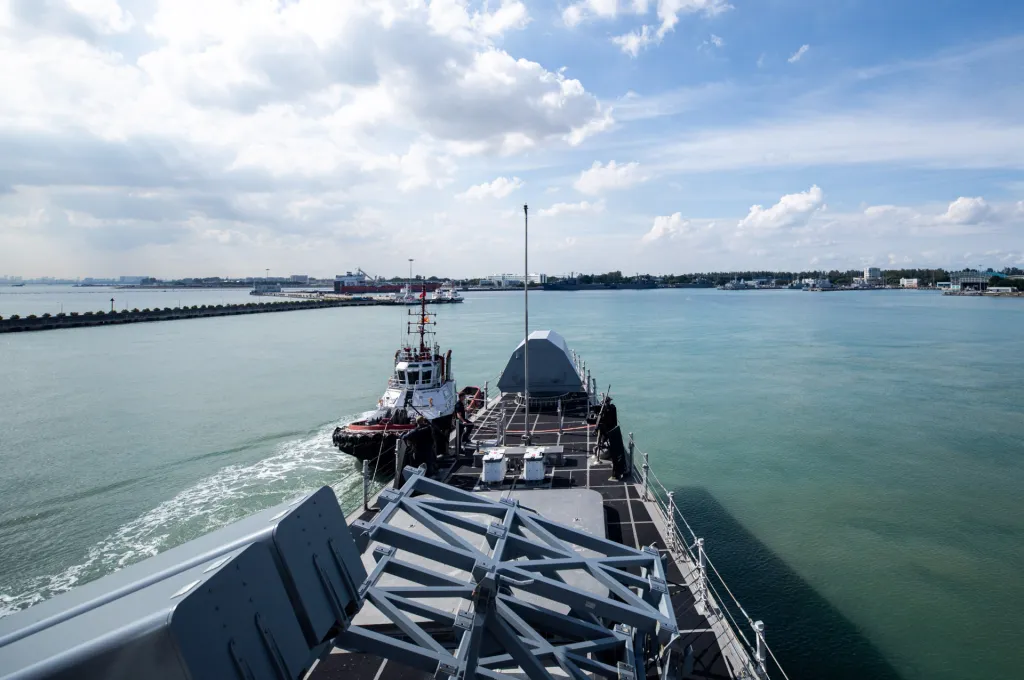
In a follow-up to our recent story about a pair of U.S. Navy Independence class Littoral Combat Ships (LCS) configured for minesweeping appearing in the Pacific, those vessels have now moved further east from Malaysia to Singapore. USS Tulsa and USS Santa Barbara remain thousands of miles away from their primary assigned operating area in the Middle East, where the conflict with Iran grinds on. The highly strategic Strait of Hormuz notably remains closed to normal maritime commerce due to Iranian attacks. Though the regime in Tehran does not yet appear to have employed naval mines to a large degree in the Strait, this remains a major threat that will factor into any plans to reopen the critical waterway.

As to why the Navy sent two of its three mine hunters in the Middle East not just out of the line of fire, but literally across the globe at a time when the U.S. and its allies could be facing the mining of one of the world’s most critical waterways remains a mystery.

U.S. Naval Forces Central Command (NAVCENT) has confirmed to TWZ that USS Tulsa and USS Santa Barbara are in Singapore. Last year, the Navy sent Tulsa and Santa Barbara, as well as a third Independence class LCS, the USS Canberra, to Manama in Bahrain in the Persian Gulf. Canberra‘s current location remains unclear. All three ships were explicitly sent to the Middle East to fill capability and capacity gaps left by the decommissioning of four Avenger class mine-hunters that had been deployed in the region for decades beforehand.

Local spotters had already caught the two LCSs arriving in Singapore earlier today. Authorities in Malaysia had previously confirmed that the LCSs had left the Port of Penang in that country on March 16. Singapore is a city-state that lies roughly 370 miles southeast of Penang.

USS Santa Barbara (LCS 32) and USS Tulsa (LCS 16) Independence-variant littoral combat ships coming into Singapore – March 18, 2026 SRC: INST- yplanesonly pic.twitter.com/SahGsKy6yW

— WarshipCam (@WarshipCam) March 18, 2026

USS Tulsa (LCS 16) Independence-variant littoral combat ship coming into Singapore – joining USS Santa Barbara there – March 18, 2026 SRC: FB- Military Aviation Photography Singapore pic.twitter.com/dElkABOeyD

— WarshipCam (@WarshipCam) March 18, 2026

Tulsa and Santa Barbara are conducting scheduled maintenance and logistics stop in Singapore. The U.S. and Singapore navies have an excellent and longstanding defense relationship,” a NAVCENT spokesperson told TWZ. “A testament to this relationship is the agreement to allow littoral combat ships to operate primarily from Singapore as a logistics and maintenance hub, as well as supporting regular port visits and logistics stops for other U.S. ships.”

NAVCENT had given TWZ an almost identical statement when asked previously about the arrival of the LCSs in Malaysia:

Tulsa and Santa Barbara are conducting brief logistical stops in Malaysia. U.S. forces routinely make port calls in Malaysia as part of our operations, reflecting the close and enduring military cooperation between the United States and Malaysia.”

“These stops allow for logistical arrangements such as replenishments,” Malaysian Defence Minister Datuk Seri Mohamed Khaled Nordin separately told the New Strait Times newspaper yesterday. “Any foreign naval vessel must submit a request through its country to the Royal Malaysian Navy, which forwards it to the Foreign Ministry for approval.”

15 Mar – Two US Navy Littoral Combat Ships (LCS) that were assigned to mine-countermeasure (MSM) missions in the Persian Gulf are currently docked at Butterworth in Malaysia.

Butterworth, Penang
15th March 2026
SC – sherwyndkessier https://t.co/FZN6qH1aSA pic.twitter.com/2kRnHiSeVk

— Justine (@polietzz) March 15, 2026

When Tulsa and Santa Barbara left the Middle East, to begin with, is unclear. There is no evidence of any U.S. warships having been in port in Bahrain since at least February 23, five days before joint U.S. and Israeli strikes on Iran began. Manama was almost immediately subjected to retaliatory attacks, making clear that sending American vessels elsewhere was, broadly speaking, a prudent security measure.

How long Tulsa and Santa Barbara will remain in Singapore, and where they might head to next, remains to be seen. As NAVCENT’s statement noted, Singapore’s Changi Naval Base has been a hub for forward-deployed LCSs in the Indo-Pacific region. U.S. naval vessels, in general, regularly make port calls there, including for maintenance.

A view from the USS Tulsa as it arrived for a visit to Changi Naval Base back in 2021. USN

As an aside, online ship tracking data indicates that the America class amphibious assault ship USS Tripoli and the San Antonio class amphibious warfare ship USS New Orleans are also now sailing through the same general area. The Tripoli Amphibious Ready Group (ARG) is reportedly on its way to the Middle East, loaded with Marines, as you can read more about here.

⛴️🇺🇸|🇮🇩🇲🇾🇸🇬 USS Tripoli (LHA-7) and USS New Orleans (LPD-18) have been detected approaching the Singapore Strait.

Additionally, two Littoral Combat Ships USS Tulsa (LCS-16) and USS Santa Barbara (LCS-32), have been detected in the Strait of Malacca after departing Bahrain. pic.twitter.com/RSQlViD4qC

— RANOSINT (@Ranosint) March 17, 2026

Regardless of where they might head next, Tulsa and Santa Barbara have now moved even further away from their assigned station in the Middle East. This, in turn, means that two of three mine countermeasures ships that are supposed to be forward-deployed in that region, at least, are currently in an entirely different part of the world. Whether any other LCS or other ships configured for the mine countermeasures mission have been deployed closer to the Middle East, or are now on their way, is unknown. There are only four other Avenger class ships still in Navy service, all of which are in Japan and have been slated for decommissioning in the coming years.

A stock picture of an Avenger class mine hunter seen here during an exercise. USN

Generally speaking, the Independence class LCS is a far more advanced ship, overall, than the Avenger class mine hunter. When suitably equipped, the LCSs also offer new standoff mine countermeasures capabilities, including uncrewed mine-sweeping drone boats and helicopter-borne systems. It should be noted that the Navy had originally planned for both Independence and Freedom class LCSs to be readily configured and reconfigured for different operational needs using an array of different mission packages, or ‘modules.’ The service now deploys LCSs in static configurations.

The USS Canberra, one of the three LCSs forward-deployed to the Middle East last year to take over mine-sweeping duties. Seen in the background is a heavy lift ship bringing the four decommissioned Avenger class mine hunters from Bahrain back to the United States. USN

Still, questions continue to be raised whether LCSs fitted out for the mine countermeasures role are adequate replacements for ships purpose-built for this mission set, as you can read about in much more detail in our past reporting. Mine-clearing operations are complex and slow-going affairs that carry significant risks even in optimal conditions in benign environments.

As noted, Iranian naval mines have yet to make a major appearance in the current conflict. U.S. officials have largely downplayed the mine threat, especially when compared to the active ongoing attacks Iran has been launching on commercial ships in and around the Strait of Hormuz using drones, missiles, and uncrewed boats.

That being said, “we defend all these countries and then, ‘do you have any minesweepers?’ And they say, ‘Well, would it be possible for us not to get involved?’” U.S. President Donald Trump said earlier this week in response to a question from a reporter about the current conflict with Iran. This suggested that American officials had at least asked allies and partners about the possibility of them providing additional naval mine countermeasures capabilities to the region. If so, this is somewhat puzzling, coming as the Navy had sent the two LCSs to another hemisphere.

Trump:

We have 45,000 troops in Japan, 45,000 in South Korea, and 50,000 in Germany.

We defend all these countries, and then: “Do you have any minesweepers?”

They say, “Well, would it be possible for us not to get involved?” pic.twitter.com/zAYdZFfdIQ

— Clash Report (@clashreport) March 16, 2026

Trump had previously appealed publicly for assistance, in general, in reopening the Strait of Hormuz, but had been soundly rejected by a number of countries. The President then said yesterday that any help was no longer required.

“I wonder what would happen if we ‘finished off’ what’s left of the Iranian Terror State, and let the Countries that use it, we don’t, be responsible for the so called ‘Straight?’ [sic],” Trump then wrote just earlier today in a post on his Truth Social site. “That would get some of our non-responsive ‘Allies’ in gear, and fast!!!”

Trump: “I wonder what would happen if we ‘finished off’ what’s left of the Iranian Terror State, and let the Countries that use it, we don’t, be responsible for the so called ‘Straight?’ That would get some of our non-responsive ‘Allies’ in gear, and fast!!! President DJT” pic.twitter.com/pwbF1lYELS

— Aaron Rupar (@atrupar) March 18, 2026

In an interview last Thursday with CNBC, U.S. Energy Secretary Chris Wright had said the prospect of U.S. Navy warships escorting commercial vessels through the Strait of Hormuz was still weeks away, at best. TWZ previously explored how risky such an operation would be, given Iran’s ability to turn the waterway into a super weapons engagement zone where mines would be just one of many concerns.

The fact that USS Tulsa and USS Santa Barbara have moved even further from the Middle East only underscores questions about what the U.S. government’s line of thinking might be now about how to get maritime commerce flowing again in and out of the Persian Gulf.

Contact the author: joe@twz.com
Joseph has been a member of The War Zone team since early 2017. Prior to that, he was an Associate Editor at War Is Boring, and his byline has appeared in other publications, including Small Arms Review, Small Arms Defense Journal, Reuters, We Are the Mighty, and Task & Purpose.


Source link

U.S. Navy Minesweepers Assigned To Middle East Have Been Moved To Pacific

The U.S. Navy Independence class Littoral Combat Ships (LCS) USS Tulsa and USS Santa Barbara, which are configured for minesweeping duties, have appeared in port in Malaysia. Both of these ships were last known to be forward-deployed in the Middle East, having arrived in Bahrain in the past year or so to take the place of a group of now-decommissioned Avenger class mine hunters. Now, as Iranian attacks on commercial ships have caused a virtual halt to maritime traffic through the highly strategic Strait of Hormuz, these ships have emerged thousands of miles away. The extent to which Iran has seeded naval mines in the Strait already is unclear, but this remains a huge threat to the future security of the waterway and will have to be taken into account in any future effort to reopen this critical waterway.

A spotter in Malaysia posted pictures of the USS Tulsa and USS Santa Barbara, which are said to have been taken today at the North Butterworth Container Terminal (NBCT) in the Port of Penang. Mike Yeo, an Australia-based defense and aviation reporter, was among the first to call attention to the particular significance of the images. TWZ has reached out for more information.

Interesting. The Littoral Combat Ships USS Tulsa and Santa Barbara, which were assigned rotationally to the Middle East and were supposed to be the US Navy’s mine countermeasures platforms in that region, are now in Penang, Malaysia h/t @limzeruihttps://t.co/Fe0r7VizQm

— Mike Yeo 杨启铭 (@TheBaseLeg) March 15, 2026

15 Mar – Two US Navy Littoral Combat Ships (LCS) that were assigned to mine-countermeasure (MSM) missions in the Persian Gulf are currently docked at Butterworth in Malaysia.

Butterworth, Penang
15th March 2026
SC – sherwyndkessier https://t.co/FZN6qH1aSA pic.twitter.com/2kRnHiSeVk

— Justine (@polietzz) March 15, 2026

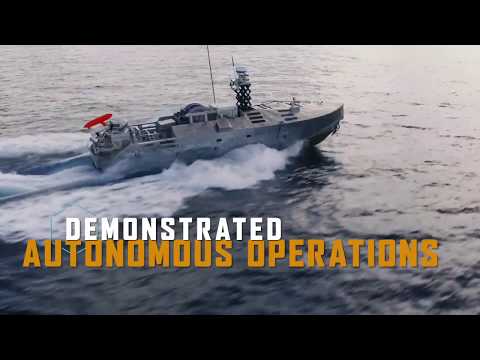
USS Tulsa and USS Santa Barbara are among a select number of Independence class LCSs fitted with a mine countermeasures mission package, or “module.” In its current form, the package includes towed mine-hunting sonar for the ships, Common Unmanned Surface Vehicles (CUSV) with mine-sweeping gear, and mine detection and neutralization systems carried by embarked MH-60 Sea Hawk helicopters. We will come back to this configuration later on.

CUSV®


Airborne Laser Mine Detection System (ALMDS) Video


When it comes to why the ships are now in Malaysia, TWZ also reached out to U.S. Central Command (CENTCOM), which directed us to the U.S. Navy’s Fifth Fleet. We were then directed by Fifth Fleet back to CENTCOM. CENTCOM is the top U.S. military command for operations in the Middle East. Fifth Fleet is the Navy’s numbered fleet in the Middle East, with its commander dual-hatted as head of Naval Forces Central Command (NAVCENT). Fifth Fleet and NAVCENT are headquartered in Manama, Bahrain, in the Persian Gulf.

We have reached out to the U.S. Navy and U.S. Indo-Pacific Command (INDOPACOM), as well.

Pictures available through the U.S. military’s Defense Visual Information Distribution Service (DVIDS) show USS Tulsa was in port in Bahrain at least as of February 9. Separate images also show USS Santa Barbara operating in the Persian Gulf on January 30. The current disposition of a third Independence class LCS, the USS Canberra, which had also been forward-deployed in the Middle East at least as of January, is unknown. Whether any other mine countermeasures ships may not be headed to the Middle East is also not known.

USS Canberra sails somewhere in the Middle East in 2025. USN

A review of satellite imagery in Planet Labs’ commercial archive shows no evidence of any U.S. warships being in port in Mamana since February 23. The United States and Israel launched their joint operation against Iran on February 28.

Moving U.S. warships out of port in Bahrain ahead of the current conflict was a prudent security measure. The Gulf state is well within range of Iranian missiles and long-range kamikaze drones, and U.S. military facilities in Manama did subsequently come under attack. The U.S. military’s own strikes on Iranian naval vessels in port have underscored the vulnerability of ships sitting pierside.

Why the decision was made to then send the USS Tulsa and USS Santa Barbara thousands of miles to the east is unknown. A host of factors may have come into play, including the availability of suitable friendly ports and diplomatic considerations.

Regardless, at least two-thirds of the warships intended to be available for tasking for mine countermeasures missions in the Middle East are presently in a completely different part of the world. As noted, USS Tulsa, USS Santa Barbara, and USS Canberra, were forward-deployed to the region in the first place explicitly to fill gaps left by the decommissioning of four Avenger class mine hunters last year. The former USS Devastator, USS Dextrous, USS Gladiator, and USS Sentry left the region for good aboard a heavy lift ship in January. There are only four Avenger class ships left in active Navy service, all of which are forward-deployed in Japan, and are also slated to be decommissioned in the coming years.

The heavy lift ship M/V Seaway Hawk seen underway with the four decommissioned Avenger class ships onboard on January 20, 2026. USN

How many of the Navy’s Independence class LCSs, in total, have been configured for the mine-clearing mission to date is unknown. In addition to USS Tulsa, USS Santa Barbara, and the USS Canberra, the USS Kansas City was at least being fitted out with this mission module as of last year.

The Independence class LCS is a far more advanced ship than the Avenger class mine hunter, and does offer new standoff mine countermeasures capabilities, including aforementioned CUSV drone boats and helicopter-borne systems. Still, questions continue to be raised about whether metal-hulled LCSs with mine countermeasures packages are adequate replacements for ships purpose-built for this mission. As TWZ previously wrote back in January:

The [Avenger class] ships themselves have fiberglass-coated wooden hulls to reduce their own vulnerability, particularly to mines that detect targets by their magnetic signature.

The Navy has long intended to replace the Avenger class ships with LCSs configured for the mine countermeasures duties. However, delays with the LCS mine countermeasures and other mission packages, or “modules,” as well as other persistent issues with both subclasses of those ships, repeatedly delayed those plans. The LCS program had also originally envisioned it being possible to readily reconfigure the ships for different mission sets by swapping out modules. However, the Navy is now deploying LCSs in largely fixed configurations.

Questions and criticism about the suitability of metal-hulled LCSs to take on the mine countermeasures mission have come up in the past. Both subclasses of LCS are also much larger than the Avenger class design, which could impose limits on how close they can get to mined or potentially mined areas. LCSs are better able to defend themselves against other threats than the Avengers, but they still have relatively limited firepower, which has been a separate source of criticism for years now. There would still be a significant need for tertiary support to protect LCSs during mine-clearing operations, which are slow and complex, and carry significant risks, even in benign environments.

The Independence class LCS USS Canberra, in front, sails together with the M/V Seaway Hawk carrying the decommissioned Avenger class on January 20, 2026. USN

In May 2025, a top U.S. Navy mine warfare officer gave an unclassified briefing detailing significant ongoing issues with the LCS mine countermeasures, according to a story published just this past week by Hunterbrook Media. Copies of the briefing slides that the outlet published say that employing the CUSV requires hours of prep time, and that the drone boat’s sonar sometimes has trouble spotting threats, but that the operators may have no indication of this until data is assessed after a mission. Visual confirmation of mines using the AN/AQS-20 mine-hunting system has also proven challenging “even [in] the relatively benign turbidity of SoCal [Southern California] waters,” another slide explains. The briefing also highlighted a number of potential “single-point failures” both in terms of mine countermeasures systems included in the module, and the equipment required to deploy and recover them.

The unmanned sonar vehicles need 4+ hours of maintenance before each mission and 1.5 hours of calibration once launched.

On multiple missions, the sonar failed to record data entirely — and nobody knew until after the mission was over. pic.twitter.com/guTf3OJ8eH

— Hunterbrook (@hntrbrkmedia) March 13, 2026

Critical equipment has no backups. The platform lift, the deployment crane, the test laptops — all single-point failures.

On the crane: “It is a troubling system. It is highly complex for what it does, and when it breaks, I’m out of a job, I’m out of a mission.” pic.twitter.com/j57pzItqis

— Hunterbrook (@hntrbrkmedia) March 13, 2026

Lastly, and perhaps most importantly, one of the briefing slides noted that “LCS was designed as a multi-mission platform” and “all of these other missions reduce time for the ship and Minemen to gain proficiency in MCM [mine countermeasures].” To reiterate, the Avenger class ships were purpose-built for this mission set and had crews trained to match. Mine-clearing operations are slow and complex, and carry significant risks, even when carried out by experienced personnel in benign environments.

In the context of the current conflict, there have been reports in the past week or so saying Iran has at least attempted to lay mines in and around the Strait of Hormuz. The U.S. military also says it has been actively targeting mine-laying assets. At the same time, Iran has laid mines in and around the Persian Gulf in the past, and this remains a real point of concern. Iranian anti-ship cruise and ballistic missiles, kamikaze drones, and uncrewed explosive-laden boats further complicate the threat picture for commercial vessels and any warships attempting to help clear the way.

A Thai-flagged cargo vessel, Mayuree Naree Bangkok, was attacked near the Strait of Hormuz on March 11, leaving 3 of its 23 crew missing. The ship had departed Dubai and was heading to India when struck near its stern. #Iran pic.twitter.com/0BYBjqJIt1

— NOELREPORTS 🇪🇺 🇺🇦 (@NOELreports) March 11, 2026

As it stands now, U.S. officials have said that American warships are unlikely to begin escorting commercial vessels through the Strait of Hormuz for at least some number of weeks. Convoy operations carry their own risks and will require a host of supporting assets at sea and in other domains, as TWZ has previously explained. Limited availability of mine countermeasures assets would create additional challenges.

It remains to be seen how long the USS Tulsa and USS Santa Barbara will remain in Malaysia, and where they might sail after they depart. Where USS Canberra is currently is still unknown, as is whether any additional mine countermeasures configured ships are on the way to the Middle East.

For the moment, at least, a substantial portion of the Navy’s minesweeping capacity in the region, amid a major conflict with an opponent experienced in mine warfare, is now thousands of miles away in a completely different part of the world.

Contact the author: joe@twz.com

Joseph has been a member of The War Zone team since early 2017. Prior to that, he was an Associate Editor at War Is Boring, and his byline has appeared in other publications, including Small Arms Review, Small Arms Defense Journal, Reuters, We Are the Mighty, and Task & Purpose.


Howard is a Senior Staff Writer for The War Zone, and a former Senior Managing Editor for Military Times. Prior to this, he covered military affairs for the Tampa Bay Times as a Senior Writer. Howard’s work has appeared in various publications including Yahoo News, RealClearDefense, and Air Force Times.


Source link