million

Easter staycation planned by 12.5 million Brits in massive tourism boost

Tourism chiefs are predicting a near two million jump in the number of Brits holidaying at home this Easter

Around 12.5 million Brits are planning an Easter staycation – as the Middle East war deters families from jetting abroad.

The number of people who say they intend to holiday in the UK over the Easter weekend is up sharply from 10.6 million last year. The near two million surge will help deliver a bumper £4.8billion boost to tourism and the wider economy, according to VisitEngland, which published the data.

The number saying they hope to holiday at home dwarfs the estimated 7.4 million who are planning a trip abroad this Easter. Of those definitely aiming to take a staycation during the Easter break, the majority will be short breaks of one to three nights.

READ MORE: UK drivers urged to do three-second car check as clocks change this weekendREAD MORE: UK’s ‘holiday park of the year’ is on family-run farm near beautiful beaches

It came as VisitEngland’s Trip-Tracker revealed that more than a quarter of those it surveyed, 28%, were worried about the impact of the Middle East conflict on their upcoming travel plans in April and May. The top concern was having less money to spend due to the economic impact. There have already been fears of air fare price hikes and possible flight cancellations.

The number of people planning an Easter staycation this year also marks a big jump on 2024’s 11 million, and nearly double the 6.5 million in 2023. A further 5.1 million people surveyed said they were undecided about whether to take an overnight holiday trip in the UK during the Easter weekend. The top reasons were “waiting to see if I can afford it” and “waiting to see what the weather is like”. Forecasts for the weather suggest it will be a mixed bag next week, but with settled conditions over the Easter weekend itself.

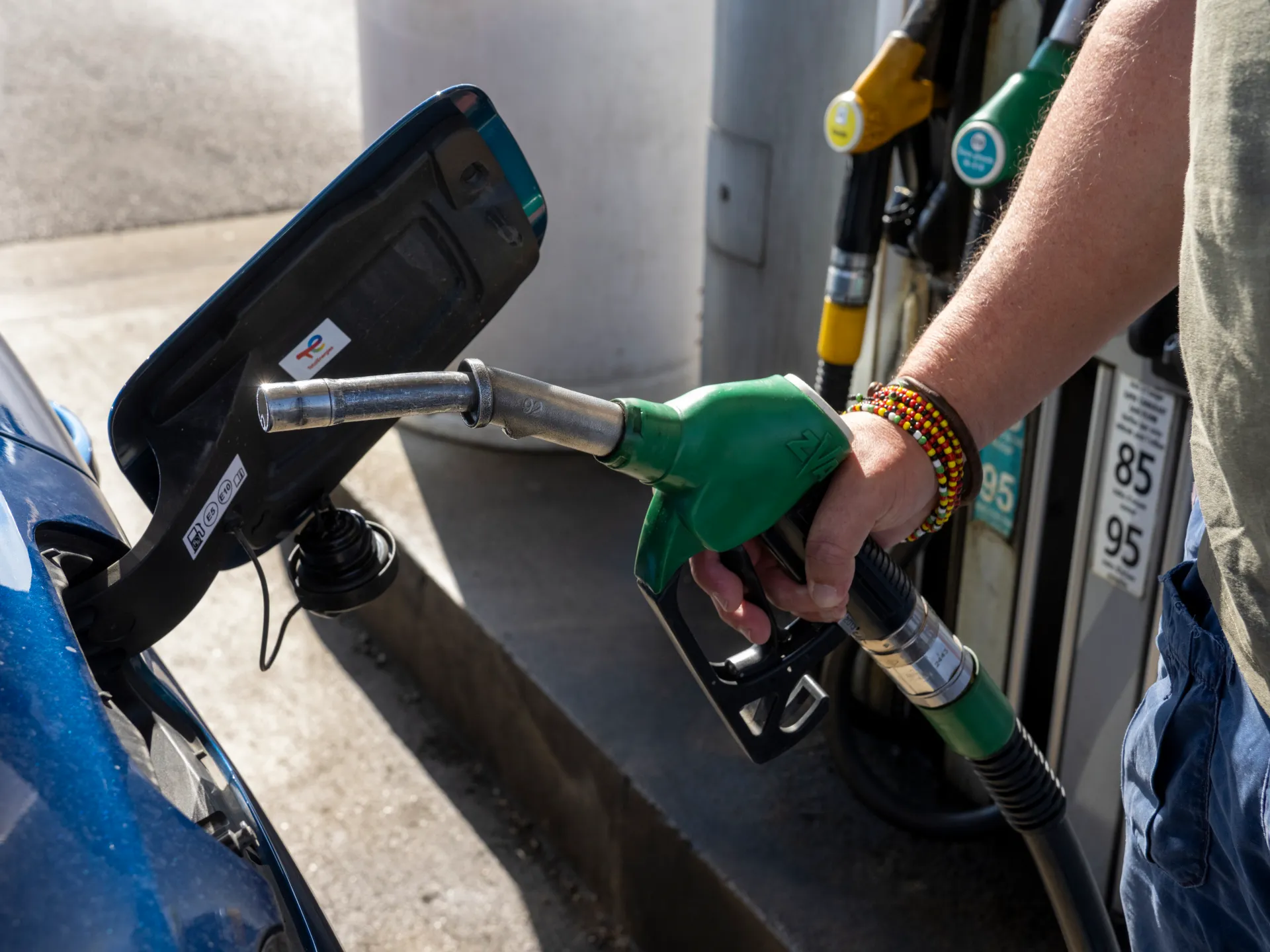
However, those driving for days out and holidays in the UK face a hit to the wallet from soaring fuel prices on the back of the Iran war. The nationwide average for unleaded has jumped to 150p a litre, up 17p since before the conflict erupted. Diesel drivers have been hit even harder, with diesel now averaging 176.68p per litre, a leap of 34p in recent weeks.

RAC head of policy Simon Williams said: “Petrol has now broken through the unwelcome milestone of 150p a litre (150.11p), something drivers haven’t seen since mid-May two years ago while the average price of diesel is now approaching 180p at 177.68p.

“With the long-awaited four-day Easter weekend almost within touching distance, the cost of getting away by car is going to be noticeably higher this year.

“And with average prices at motorway services at 166p for unleaded and 182p for diesel, drivers on long journeys will need to plan very carefully where they refuel. The best advice remains to shop around for fuel and make use of free apps such as myRAC to never pay a penny more for fuel than is absolutely necessary.”

Some families may also think twice given another wave of bill increases – including water and council tax – from the start of April, and warnings that food price inflation could jump again.

Kate Allen, owner of Devon-based Finest Stays, said: “For now, we’re not seeing a slowdown. Bookings are up around 10% on this time last year, with more guests opting to stay in the UK rather than travel further afield to places like Dubai.

“The Great British holiday is very much in favour, as we’re a nation that prioritises getting away, and domestic breaks are benefiting from that shift. That said, there’s a nervous undercurrent. Fuel costs feel like a slow leak, pressure building rather than bursting.

“We’re expecting more guests to postpone or cancel, and that’s where it gets tricky. Terms and conditions may cover it, but it doesn’t make refund conversations any easier when the wider impact on businesses and homeowners isn’t fully understood.”

Tourism Minister Stephanie Peacock said: “It is wonderful that so many people are planning on having a staycation this Easter weekend, whether that’s spending time visiting our stunning landscapes and coastlines or exploring our vibrant towns, cities and cultural landmarks. Supporting domestic tourism helps local areas thrive – fuelling small businesses, boosting pride, and strengthening community economies.”

VisitEngland chief executive Patricia Yates said: “Tourism businesses and destinations will be looking to the critical Easter weekend for much needed cash flow so it’s encouraging to see so many of us are planning a holiday at home, with its ease, convenience and certainty of budgeting. We also know that the cost of living remains a concern for holidaymakers, leaving it difficult too for businesses to plan in advance.

“We have incredible activities, experiences and places to stay for all tastes and budgets, and there really is nowhere quite like Britain in springtime. From walks in our beautiful countryside with the promise of a pub lunch or discovering contemporary culture in our buzzing cities to enjoying fish and chips on the beach, there is something for everyone. So, a rallying cry to please go out and explore the amazing destinations and events here on our doorstep this spring. Tourism businesses will be very pleased to welcome you, you will have an amazing time and create memories to make you smile all year.”

It came as trade body UKHospitality stepped up criticism of what has been dubbed a new “tourist tax”. Labour is proposing to allow regional mayors in England to introduce a “visitor levy” on overnight stays, as already happens in some European countries. While details of how it would work are still to be finalised, it could either be a per head charge or a percentage of the cost of the stay. Small businesses – from guesthouses to B&Bs – say it could lead to closures.

Modelling by Oxford Economics, commissioned by UKHospitality, which assumed a 5% levy, warned it could lead to a £1.6billion tax increase for holidaymakers by 2030, and a £2.2billion hit to the economy.

Source link

Justice Department settles lawsuit from Trump ally Michael Flynn for $1.2 million, AP source says

The Justice Department has settled for roughly $1.2 million a lawsuit from Michael Flynn, the former national security advisor to President Trump who pleaded guilty during the Republican’s first term to lying to the FBI about his conversations with a top Russian diplomat and was later pardoned.

Court papers filed Wednesday do not reveal the settlement amount, but a person familiar with the matter, who spoke to the Associated Press on condition of anonymity to disclose nonpublic information, confirmed the total as about $1.2 million.

The settlement resolves a 2023 lawsuit in which Flynn sought at least $50 million and asserted that the criminal case against him amounted to a malicious prosecution. It also represents a stark turnabout in position for a Justice Department that during the Biden administration had pressed a judge to dismiss Flynn’s complaint. Atty. Gen. Pam Bondi, a former personal lawyer for the president, has openly criticized the Russia investigation in which Flynn was charged and the Justice Department in the last year has opened investigations into former officials who participated in that inquiry.

The Justice Department cast the settlement as an “important step in redressing” what it says was a “historic injustice” of the Russia investigation that shadowed Trump for much of his first term.

“This Department of Justice will continue to pursue accountability at all levels for this wrongdoing. Such weaponization of the federal government must never be allowed to happen again,” a spokesperson said.

In a separate statement, Flynn said: “Nothing can fully compensate for the hell that my family and I have endured over these many years — the relentless attacks, the destruction of reputations, the financial ruin, and the profound personal toll inflicted upon us all. No amount of money or formal resolution can erase the pain caused by a prosecution that should never have been brought.”

The settlement is the latest turn in the long-running legal saga involving Flynn, one of six Trump associates charged as part of special counsel Robert Mueller’s investigation into potential ties between Russia and Trump’s 2016 presidential campaign. That investigation found Russia interfered in the election on Trump’s behalf and that the Trump campaign eagerly welcomed the help, but it ultimately found insufficient evidence of a criminal conspiracy.

Flynn, a retired Army lieutenant general who vigorously campaigned at Trump’s side, served for weeks as his first national security advisor before being pushed out of his position. He remained a Trump ally even after agreeing to cooperate with Mueller’s team. He was pardoned in the final weeks of the president’s first term.

Flynn pleaded guilty in December 2017 to lying to the FBI when he said he had not discussed with the Russian envoy, Sergey Kislyak, sanctions that the outgoing Obama administration had just imposed on Russia for election interference. During that conversation, Flynn advised that Russia be “even-keeled” in response to the punitive measures, and assured him “we can have a better conversation” about relations between the countries after Trump became president.

The conversation alarmed the FBI, which at the time was investigating whether the Trump campaign and Russia had coordinated to sway the election. In addition, White House officials were stating publicly that Flynn and Kislyak had not discussed sanctions, which the FBI knew was untrue.

Flynn was ousted from his position in February 2017 after news broke that Obama administration officials had warned the White House that Flynn had indeed discussed sanctions with Kislyak and was vulnerable to blackmail. He pleaded guilty months later to a false statement charge.

But Flynn later sought to withdraw his guilty plea, saying federal prosecutors had acted in “bad faith” and broken their end of the bargain when they sought prison time for him.

The Justice Department in 2020 moved to dismiss the case, asserting that the FBI had no basis to interview Flynn about Kislyak and that any statements he made during the interview were not material to the FBI’s broader counterintelligence probe.

Flynn was pardoned by Trump in November 2020, ending the court case and the legal wrangling.

In his lawsuit, Flynn maintained his innocence and said he was targeted by the “virulently anti-Trump leadership” of the FBI’s Russia investigation. He contended that investigators pursued him despite knowing there was no evidence of a crime and coerced his guilty plea.

“He was falsely branded as a traitor to his country, lost at least tens of millions of dollars of business opportunities and future lifetime earning potential, was maliciously prosecuted and spent substantial monies in his own defense,” says the lawsuit, adding that Flynn will continue to suffer “mental and emotional pain.”

Tucker and Richer write for the Associated Press.

Source link

Iran to Lebanon: Four million people displaced by US-Israeli war | US-Israel war on Iran News

The war launched by the United States and Israel has killed more than 1,500 people in Iran.

This number is considered conservative, as actual calculations are yet to be released by the authorities.

Recommended Stories

list of 4 itemsend of list

But the devastation from the war has also triggered mass displacement in the country: the United Nations refugee agency, UNHCR, estimates that 3.2 million people – more than 3 percent of the population – have already been displaced within Iran since US-Israeli strikes began on February 28.

Twenty-seven days into the conflict, aid agencies and countries bordering Iran are bracing themselves for a potential refugee crisis as civilians begin to flee the violence.

Cross-border flows have been limited and largely economic or short-term. In Afghanistan, most arrivals are Afghan returnees from Iran, citing insecurity or forced returns. Pakistan reports only authorised entries by citizens or traders, with no refugee inflows.

Turkiye, Turkmenistan and Azerbaijan report stable borders, limited authorised crossings, and occasional evacuations of third-country nationals.

Iraq has seen small-scale returns and 325 Iranian nationals crossing the border, citing the crisis. Within Iran, people have been forced from the ruins of their homes, and several hospitals, nuclear facilities, refineries and desalination plants have been hit.

However, pressure on the ground in Iran is mounting as more than 85,176 civilian sites have been damaged since the war began, including 282 healthcare facilities, 600 schools and 64,583 homes. In Tehran alone, the city administration said to local media that nearly 14,000 residential units in the capital have been damaged and at least 6,000 people have been accommodated in municipal hotels.

The growing risks of disruption to essential services are driving complex mobility patterns.

INTERACTIVE - Displaced in Iran - March 26_2026

More than one million displaced in Lebanon

But Iran is not the only country where the rapidly expanding war has led to a displacement crisis.

The Israeli army has expanded its forced displacement orders for residents of southern Lebanon – from the Litani River to north of the Zahrani River, about 40km (25 miles) north of the Israeli border.

According to the Norwegian Refugee Council, Israel’s sweeping evacuation orders now cover more than 1,470sq km (568sq miles), or about 14 percent of the country’s territory.

The map below shows more than 100 towns and villages across the country that are under forced evacuation orders from the Israeli military.

INTERACTIVE - Displaced in Lebanon_March 26_2026

Israel’s ground troops are also now increasingly expanding their de facto occupation of parts of southern Lebanon, with Israeli authorities claiming that they want to create what they describe as a “buffer zone”.

Nearly one in five people in Lebanon – or 18 percent of the population – have been displaced over the past two weeks.

According to the International Organization for Migration, the total number of registered displaced people has reached 1,049,328, and the number of displaced people residing in collective shelters is 132,742.

The pace of displacement has outstripped the country’s shelter capacity. Many families have been unable to secure accommodation and are spending nights in streets, vehicles or public spaces as collective shelters fill up. For many of them, this is not the first time.

More than 250,000 people have left Lebanon over the past two weeks, a 40 percent increase compared with the last two weeks of February.

INTERACTIVE - Displaced in Lebanon_March 26_2026

Much of the outward movement has been towards neighbouring Syria. As of March 17, more than 125,000 people had crossed the border. Nearly half are children. Most are Syrian nationals, with about 7,000 Lebanese among those crossing.

Southern Lebanon’s bridges attacked

Israel has struck several bridges in southern Lebanon, connecting the country through the Litani River.

Israeli forces have attacked:

  • Qasmiyeh Bridge.
  • Coastal Highway Bridge.
  • al-Qantara Bridge.
  • Khardali Bridge.
  • al-Dalafa Bridge.
  • Zaraiya-Tirseflay Bridge.

Footage and photos of the locations, verified by Al Jazeera, show each bridge specifically bombed, making them impossible to use. These were key crossings linking Lebanon’s south.

Israeli Defence Minister Israel Katz had last week ordered the military to destroy all crossings over the Litani River and homes close to the border between the two countries.

The areas in Lebanon near the Israeli border to the Litani River are the same locations where at least a million people have been pushed out.

Lebanese President Joseph Aoun has said the attacks on the bridges are “an attempt to sever the geographical connection between the southern Litani region and the rest of Lebanese territory”.

He said they fell “within suspicious schemes to establish a buffer zone along the Israeli border, solidify the reality of the occupation and seek Israeli expansion within Lebanese territory”.

INTERACTIVE - Lebanon south bridge attacked March 26, 2026

Source link

Hiltzik: Doing the math on Trump’s war budget

Governing, the political sages tell us, is all about making choices, particularly when leadership faces finite resources and the choices are between war and peace; this is the “guns or butter” balancing raised by Lyndon Johnson’s pursuit of the Vietnam War and, appropriately, by President Trump’s Iran war.

Thus far, according to budget experts and the Trump administration itself, the war has cost Americans about $25 billion, with the White House reportedly preparing to seek $200 billion more in military funding. That points to the obvious question of what the U.S. could buy if it stopped spending on the Iran adventure.

Here’s the short answer: Medicaid coverage, free school lunches, and housing, child care and community college assistance for tens of millions of Americans. Those estimates come from Bobby Kogan, senior director for federal budget policy at the liberal Center for American Progress.

$11.3 billion would have fully funded the training of 100,000 new nurses to solve our staffing crisis. Instead, it was spent in just six days on an illegal war with no endgame.

— Rep. Diana DeGette (D-Colo.)

Kogan is not alone in doing the math. Similar estimates have been published by the Century Foundation and Mother Jones.

Democrats in Congress have offered their own juxtapositions: “$11.3 billion would have fully funded the training of 100,000 new nurses to solve our staffing crisis,” Rep. Diana DeGette (D-Colo.) observed on social media. “Instead, it was spent in just six days on an illegal war with no endgame.” (She wrote when that was the government’s estimate on spending in only the first week of the Iran war.)

Get the latest from Michael Hiltzik

Commentary on economics and more from a Pulitzer Prize winner.

Details will follow. But first, a reminder that the “peace dividend” — that is, the surge of available resources for socially beneficial spending after the cessation of hostilities — has always been an elusive concept.

In part that’s because it invariably gets tied up in conflicts over precisely what peacetime programs political leaders wish to fund, and that often involves tougher decisions than whether to mount a bombing campaign against a perceived adversary.

“What happened to the peace dividend?” economist Augusto Lopez-Claros asked last year, referring to the supposed surfeit of funds that was to flow after the end of the Cold War. His answer was that there were always alternatives, many of them militaristic in nature, in the wings to suck up the funds that had been spent in the past.

The issue has especially acute significance today, not merely because of the Iran war. The Trump administration and Republicans in Congress have been campaigning to cut federal spending, almost entirely on social programs such as Medicaid and on Social Security and Medicare benefits, ostensibly because they contribute heavily to our “unaffordable” federal budget deficits.

Never mind that the largest single contributor to the deficit is the massive tax cut enacted by Republicans in 2017, during the first Trump term, which were made permanent by the GOP’s budget bill last year.

Placing military spending in the context of alternatives is typically shunned by Republicans and conservatives. The Wall Street Journal editorial board derided the exercise as “dorm room politics,” referring specifically to an estimate by Rep. Ro Khanna (D-Fremont) that the $200 billion reportedly sought by the White House “would pay for free college for every American,” and more.

That doesn’t mean the exercise isn’t worthwhile, however. Kogan acknowledges that it wouldn’t be up to the Pentagon to redirect its budget to the social programs that could be funded with its funding request, but his point in making the comparisons is “to get a sense of scale.”

So let’s dive in, starting with Kogan’s work. He matched the cost of several social services against the $25 billion estimated to be spent on the war through the end of this week and the $200-billion new request. He also broke down some of the spending by ordnance. The price of one Tomahawk missile, invoiced about $3.5 million each, could cover Medicaid for a year for 275 people, for example; the U.S. has fired an estimated 300 of them in the Iran war so far, for more than $1 billion.

Kogan calculated that more than 3.1 million people could be covered by Medicaid for $25 billion, and 24.8 million could be covered for $200 billion. He based this estimate on the Congressional Budget Office’s finding that the federal share of Medicaid came last year to $668 billion to cover about 82 million adult and child enrollees, or about $8,048 per person annually.

Then there’s free school lunches, which the government has pegged at up to $4.69 per day for about 30 million children receiving meals in school. If they all received free lunch, that would come to a little over $25 billion, based on a 180-day school year. (Only about two-thirds of those children receive free meals, with the rest receiving cut-price meals or paying full price.)

Child care isn’t typically a governmental responsibility (though it should be); Kogan uses an estimate from the nonprofit organization Child Care Aware that care cost Americans about $13,128 on average in 2024; inflating that to a 2026 figure yields an average of $14,048, meaning that 1.78 million households could be covered for about $25 billion, and about 14.2 million for $200 billion.

Tuition for a two-year path to an associate degree in community college, that portal to higher education for millions of Americans, will cost an average of $8,700 this year by Kogan’s reckoning, based on the College Board’s estimate of $8,300 for 2025. That means that about 2.87 million Americans could have their tuition fully covered for about $25 billion, and nearly 23 million students could be covered for $200 billion.

The progressive Century Foundation contributed estimates of how much in social program spending could be accommodated for $200 billion. Its roster includes the cancellation of all medical debt for the 100 million Americans shouldering about $194 billion in medical debt. The enhanced Affordable Care Act premium subsidies that expired this year could be continued for almost six years for about $200 billion, extrapolating from the 10-year, $350-billion estimate produced by the CBO. “Ensuring health coverage for all Americans,” the foundation noted, “could save an estimated 68,000 lives per year.”

The foundation also notes that $200 billion could ameliorate the draconian cuts in Medicaid imposed by the preposterously named One Big Beautiful Bill that the GOP enacted as a budget measure in July. The work requirement in that bill is estimated to reduce Medicaid spending by $326 billion over 10 years, according to the CBO, mostly by throwing enrollees out of the program. The work rules, which as I’ve reported do nothing to enhance employment, could be deferred for six years, preventing the loss of coverage for about 5.2 million Americans.

Mother Jones reported soberly that $200 billion would cover the wages of 2.8 million public school teachers, based on an average salary of $72,030, as reported by the National Education Assn.

The publication took a rather more fanciful approach for some calculations. It reported that $200 billion would pay for 2,666 sequels to the “Melania” documentary, based on the $75-million reported cost of its production and marketing by Amazon, its sponsor. And 500 more White House ballrooms, based on the latest projection of $400 million for just one.

Obviously all these calculations are somewhat chimerical. No one really believes that if Congress rejects the $200-billion ask, that money would be redeployed for any of these social programs, at least while the GOP remains in control of the government purse strings. The basic arithmetic itself is subject to cavils resulting from the murkiness of some of the cost calculations and projections.

But they’re not far wide off the mark in terms of orders of magnitude. Millions of dollars in social spending could be covered by billions of dollars in military spending, and much more productive investments could be made in the years and decades to come.

The lost “peace dividend” encompasses not just domestic needs, but also “the potentially catastrophic risks that we are taking on in the future because we are misallocating resources now,” Lopez-Claros observed — “spending massively on defense while leaving unattended climate change mitigation, pandemic preparedness, the shamefully high levels of malnourishment in the world, among others. We may well come to regret this and by then, unfortunately, it might be too late.”

Even before the first bombs fell on Iran, after all, the U.S. was shortchanging all those imperatives. “Just last July, Trump signed into law the biggest cuts to the social safety net in all U.S. history,” Kogan says, including “the biggest cuts to Medicaid ever, and the biggest cuts to SNAP, ever.” (The GOP budget bill cut SNAP, the food stamp program, by $186 billion, leaving “nearly 3 million young adults ages 18 to 24 who receive SNAP vulnerable to losing that assistance,” the Urban Institute estimated after the bill was signed.

At their heart, these calculations are not really about dollars and cents. The financial figures just help us keep score of the choices that define us as a nation.

Source link

Russia, Ukraine tit-for-tat attacks knock out power for over half a million | Russia-Ukraine war News

Some 450,000 people without electricity in Belgorod region, while power cut off for 150,000 consumers ‌in ​Chernihiv.

Russia and Ukraine have targeted each other’s energy facilities in tit-for-tat attacks, leaving hundreds of thousands of people without power, officials from both countries said, as the world’s attention has shifted to the US-Israel war on Iran.

Nearly half a ⁠million people were left without electricity in Russia’s Belgorod region, while 150,000 consumers ‌in the city of Chernihiv and surrounding areas were without power on Wednesday.

Recommended Stories

list of 3 itemsend of list

The electricity distribution company in Ukraine’s northern ⁠Chernihiv region said on Wednesday that the energy facility was damaged and repair work ⁠would begin as soon as ‌the security situation allowed.

Belgorod Governor Vyacheslav Gladkov said power outages affected some 450,000 people across several districts, including the regional capital ‌of Belgorod, with many residents also facing disruption to heating and water supply. The temperature in Belgorod hovers around 0C (32F).

Gladkov said repair works have already started, but that it would ⁠take several days to complete.

Belgorod, which ⁠lies about 40⁠km (25 miles) from the border with Ukraine, has been a frequent target of ‌Ukrainian drone and missile attacks in the four years since ‌Russia ‌invaded its neighbour.

In Ukraine’s southern region of Odesa, Russian ⁠attacks ⁠late on Tuesday killed ⁠one person and wounded another, emergency services said.

The ‌attack damaged a private house, sparking a fire, and caused damage to six ⁠buildings nearby. Photos posted on Telegram by emergency ⁠services showed ⁠firefighters putting out ⁠flames in a partially destroyed building.

Meanwhile, in Russia, officials said on ⁠Wednesday a Ukrainian drone attack targeting a major oil export hub sparked a fire at the Baltic Sea port of Ust-Luga.

Alexander Drozdenko, governor of Russia’s Leningrad region, said the fire was being brought under control and that no casualties had been reported.

Ukraine has stepped up drone attacks on Russian oil refineries and export routes over recent weeks in an attempt to weaken Russia’s war economy.

According to Russia’s Ministry of Defence, 389 Ukrainian ‌drones were shot down across the country overnight, including over the Moscow region.

Meanwhile, Latvia, a NATO member, said ‌a drone ⁠from neighbouring Russia crashed in the country.

A Russian attack or a miscalculation involving a NATO member could prompt allies to invoke the mutual defence Article 5.

Source link

More than half a million ballots seized by top GOP candidate in California governor’s race

Riverside County Sheriff Chad Bianco, who is a leading Republican candidate for governor, has seized more than 650,000 ballots from last November’s election and is investigating whether they were fraudulently counted.

“This investigation is simple: Physically count the ballots and compare that result with the total votes recorded,” Bianco said at a news conference Friday.

The unusual probe drew a sharp rebuke from California Atty. Gen. Rob Bonta, who said in a statement Friday that it is “unprecedented in both scope and scale” and appears “not to be based on facts or evidence.”

“There is no indication, anywhere in the United States, of widespread voter fraud,” Bonta said. “Counts, recounts, hand counts, audits, and court cases all support this.”

According to Bonta’s office, Bianco’s department on Feb. 26 seized about 1,000 boxes of ballot materials in Riverside County related to the November election for Proposition 50, which temporarily redrew the state’s congressional districts to favor Democrats in response to partisan redistricting in Republican states, including Texas.

The sheriff said his investigators are looking into allegations by a local citizens group that “did their own audit” and found that the county’s tally was falsely inflated by more than 45,000 votes — a claim that local election officials have rejected.

President Trump, who remains fixated on his 2020 election loss, continues to amplify election conspiracy theories and has repeatedly called for the federal government to “nationalize” state-run elections to counter what he says is widespread fraud.

Bonta and California Secretary of State Shirley Weber, both Democrats, have vowed to fight federal interference that could affect voting in California, including efforts to seize election records, as the FBI recently did in Georgia.

Bianco is an outspoken Trump supporter who said in an endorsement video in 2024 that, after 30 years of putting criminals in jail, he figured it was “time to put a felon in the White House — Trump 2024, baby” — referencing Trump’s conviction by a New York jury for falsifying business records while paying hush money to a porn actor.

Bianco’s investigation, which includes all the ballots cast in Riverside County in November, raises questions about how he would handle the election denialism movement if elected governor.

A poll released last week by UC Berkeley’s Institute of Governmental Studies and co-sponsored by The Times showed Bianco and conservative commentator Steve Hilton leading the crowded field of gubernatorial candidates by slim margins, in a left-leaning state.

Last fall, Proposition 50 passed in Riverside County with 56% of the vote — a margin of more than 82,000 ballots.

A citizens group called the Riverside Election Integrity Team has said it performed an audit finding that 45,896 more ballots were counted than were cast.

In a lengthy February presentation to the Riverside County Board of Supervisors, Registrar of Voters Art Tinoco disputed that figure, saying it was based on a misunderstanding of raw data that had not been fully processed.

The actual discrepancy, Tinoco said, was 103 votes, a variance of 0.016% that was far below what he said was the state’s preferred 2% margin of error for certifying results.

Bianco on Friday said that there “is no acceptable error, small or large, in our elections.”

The sheriff did not name the Riverside Election Integrity Team, but his description of the allegations brought to him by “a group of citizen volunteers” matched theirs.

Bianco said the investigation was “not a recount” for the Proposition 50 contest and was “just as much to prove the election is accurate as it is to show otherwise — we will not know until the count is complete.”

Bonta said his office has “attempted to work cooperatively” with the Sheriff’s Department to understand the basis for the probe. The sheriff, Bonta said, “has delayed, stonewalled, and otherwise refused to work with us in good faith” and failed to provide most of the requested documents.

“We’re concerned that there is not sufficient justification for seizing every ballot that was cast in this very largely populated county,” an official in Bonta’s office said in an interview Friday night.

In a March 4 letter to Bianco, the attorney general cited Bianco’s plan to use Sheriff’s Department staffers, “who are not trained and have no experience,” to count the ballots.

“Let me be clear: this is unacceptable,” Bonta wrote. “Your decision to seize ballots and begin counting them based on vague, unsubstantiated allegations about irregularities in the November special election results sets a dangerous precedent and will only sow distrust in our elections. You are also flagrantly violating my directives.”

At his news conference Friday, Bianco fired back by calling Bonta “an embarrassment to law enforcement.”

A Riverside County Superior Court judge, Bianco said, has ordered the appointment of a special master to oversee the ballot count.

In a statement Friday, Secretary of State Weber said “the Sheriff’s assertion that his deputies know how to count is admirable. The fact remains that he and his deputies are not elections officials and they do not have expertise in election administration.”


Source link

300 million people celebrate Nowruz under a cloud of war | US-Israel war on Iran

NewsFeed

Millions of people have rung in the ancient Persian New Year, Nowruz, as war grips the Middle East. The 3,000-year-old Zoroastrian-rooted celebration marks the beginning of spring in the northern hemisphere and is celebrated by 300 million people in Iran and Central Asia.

Source link

Democrats excluded from USC governor debate urge rivals to boycott

Four Democrats running for governor called on their fellow candidates to boycott an upcoming debate at USC, reiterating concerns that the criteria used to determine who was invited to participate resulted in every prominent candidate of color being excluded from the forum.

“We ask each and every candidate who is in this race to recognize that if we can’t have a fair process for a debate, then we should all not participate,” said Xavier Becerra, the former U.S. Health and Human Services secretary. “We call on them to withdraw from this biased forum.”

Becerra’s call was echoed by former Los Angeles Mayor Antonio Villaraigosa, state Supt. of Public Instruction Tony Thurmond and former state Controller Betty Yee during a Friday afternoon news conference.

The candidate’s request comes a week after some of them raised concerns about the criteria for Tuesday’s debate, arguing that it was engineered to allow the inclusion of San José Mayor Matt Mahan, who entered the race in late January and quickly raised millions of dollars from Silicon Valley executives.

“The rules initially were polling and money. Matt Mahan is [polling] lower than some of us, period,” Villaraigosa said, adding that the debate organizers “then added time in the race,” which resulted in Mahan’s invitation.

Mahan’s campaign did not respond to a request for comment on Friday, but when Becerra raised such concerns last week, Mahan said the former Biden administration official ought to be included in the debate.

The matter is further complicated by Mahan supporters who have notable ties to the university.

Mike Murphy, a co-director of the USC center hosting the debate, has been voluntarily advising an independent expenditure committee backing Mahan. The veteran GOP strategist said last week that he had nothing to do with organizing the debate and that he has asked for unpaid leave at the university through the June 2 primary if he takes a paid role in the campaign.

USC has also received tens of millions of dollars in donations from billionaire real estate developer Rick Caruso and his wife. Caruso, a USC alumnus who served as a trustee for years, is also a Mahan supporter.

A representative for Caruso did not respond to a request for comment.

The debate, hosted by the USC Dornsife Center for the Political Future, KABC-TV Los Angeles and Univision, is scheduled to take place on campus at 5 p.m. Tuesday — less than two months before ballots begin arriving in voters’ mailboxes. The forum will be streamed and broadcast on ABC and Univision affiliates across the state.

USC and the television stations put out a joint statement Friday morning, prior to the candidates’ news conference, justifying the criteria used to determine who was invited to participate and saying none of the debate partners had any influence on the methodology.

“We want to be clear that we categorically, unequivocally deny any allegations that the debate criteria was in any way biased in favor or against any candidate and want to clarify the facts,” they said in a statement, adding that Christian Grose, a USC political science professor, was asked to develop “data-driven” benchmarks to determine which candidates were invited.

“The methodology was based on well-established metrics consistent with formulas widely used to set debate participation nationwide — a combination of polling and fundraising — and developed without regard to any particular candidate.”

After the Democratic candidates called for their competitors to not participate, USC and KABC declined to comment further. Univision did not respond to a request for comment.

Grose defended the methodology he crafted as “objective” in an interview Friday, and said he met with Becerra as well as the staff of other candidates to explain it.

“The idea that it was biased or designed to create some sort of outcome to disfavor the candidates who spoke at the press conference is just not correct,” Grose said, adding that attacks on the methodology have a “chilling effect” on universities and media outlets who sponsor debates.

“I’m not worried about the optics,” he said. “The optics are we are having a debate at USC to inform voters and educate students.”

Jarred Cuellar, a political science assistant professor at Cal Poly Pomona, described Grose’s methodology as “thoughtful” and “empirically grounded,” and characterized the concerns raised by candidates not included in the debate as unfounded and not credible.

“The formula is methodologically sound and represents a clear improvement over how debate participation has often been determined,” he said. “Rather than relying on a single metric such as polling, it takes a multidimensional approach to evaluating candidate viability. That approach better reflects how political scientists measure complex phenomena like electoral competitiveness.”

But the controversy has caused consternation among USC professors past and present.

“It seems like an unforced error that is casting the entire event in a bad light,” said a current USC professor who closely follows politics but is not involved in the debate, and who asked for anonymity to speak candidly. “It’s super important that if the debate happens, it happens correctly.”

Darry Sragow, a veteran Democratic strategist who taught election and environmental law at USC for 19 years, said that while he believes the large field of Democratic candidates needs to be winnowed, that’s not the job of a university or media outlets.

“Every one of these eight [Democratic candidates] is capable of running the state of California,” he said. “ It would certainly be my advice to USC and to Univision and to ABC to allow all the candidates to take part, or to cancel the debate.”

The four Democratic candidates not invited to the debate argued that voters are just starting to pay attention to the thus-far sleepy race and that diverse candidates should be represented.

“We are a minority-majority state, and the idea that the four candidates of color are not going to be on the stage to bring those perspectives, to really speak to those communities, is really not doing right by the voters,” Yee said.

Becerra said some of the candidates had requested to speak with top university leadership, including President Beong-Soo Kim. In other conversations, he said university officials raised the possibility of “either canceling this debate or incorporating more of the candidates in it. Evidently they could not agree to do that. … I think they recognize that there were problems with the way this debate had been organized.”

Becerra said he reviewed the formula and has “never seen” debate criteria like it before during his decades of serving in elected office.

“Your fundraising numbers are divided by the number of days you’ve been out there campaigning in front of voters,” he said. “So you could have raised millions of dollars, but if you’ve been in longer than someone else who just raised millions of dollars very quickly, you get penalized.”

Campaigns for the invited candidates — Democrats Rep. Eric Swalwell of Dublin, former Orange County Rep. Katie Porter, climate activist Tom Steyer and Mahan; as well as Republicans Chad Bianco, the sheriff of Riverside County, and former Fox News host Steve Hilton — did not respond to requests for comment on the call to boycott the debate.

Source link

Democrats storm out of Justice Department leaders’ briefing on the Epstein files

Democratic lawmakers on Wednesday stormed out of a closed-door briefing on the Jeffrey Epstein files by Justice Department leaders, and said they would push to force Atty. Gen. Pam Bondi to answer questions under oath about the case that has plagued the Trump administration.

Bondi and Deputy Atty. Gen. Todd Blanche went to Capitol Hill to try to quell bipartisan frustration over the Justice Department’s handling of millions of files related to Epstein’s sex trafficking investigation.

But less than an hour into the briefing, Democrats walked out in protest of the arrangement and said they would press to enforce a subpoena for Bondi to appear for a sworn deposition next month.

“We want her under oath because we do not trust her,” said Democratic Rep. Maxwell Frost.

Asked by reporters after the briefing whether she would comply with the subpoena, Bondi said, “I made it crystal clear I will follow the law.” She also defended the department’s handling of the Epstein files, saying officials are proud of their work to release millions of documents to the public.

The committee’s Republican chairman, Rep. James Comer, accused Democrats of political grandstanding.

“This for us, for the Republicans, it’s about getting answers,” Comer said after the briefing. “For the Democrats, it’s a political game, and they just demonstrated that today. There’s no reason for them to walk out and clutch their pearls and act like they were offended and outraged.”

Justice Department leaders had hoped the release of documents tied to the disgraced financier would put an end to a political saga that has dogged the president’s second term, but the agency remains consumed by questions and criticism over Epstein’s case and its management of the files. Bondi has accused Democrats of using the furor over the documents to distract from Trump’s political successes, even though some of the most vocal criticism has come from members of the president’s own party.

Five Republicans on the committee voted with Democrats to support the subpoena for Bondi to appear for a deposition on April 14. Lawmakers have accused the Justice Department of withholding too many files and criticized the agency for haphazard redactions that exposed intimate details about victims.

The Justice Department has called the subpoena “completely unnecessary,” noting that members of Congress have been invited to view unredacted files at the Justice Department and that department leaders have made themselves available to answer questions from lawmakers.

The department has sought to assure lawmakers and the public that there has been no effort to shield President Trump, who says he cut ties with Epstein years ago after an earlier friendship, or any other high-profile figures close to Epstein from potential embarrassment. Justice Department leaders have also rejected suggestions that they have ignored victims and insist that while there is no evidence in the files to prosecute anyone else, they remain committed to investigating should new information come forward.

“I’m not trying to defend Epstein — I’m not,” Blanche said in an interview this week with Katie Miller, who is married to top Trump advisor Stephen Miller. “I do defend the work that this department is doing today, right now, which is going after every single perpetrator anyway, and if there is a narrative that exists that we are ignoring Epstein victims, that is false.”

The documents were disclosed under the Epstein Files Transparency Act, the law enacted after months of public and political pressure that requires the government to open its files on the late financier and his confidant and onetime girlfriend, Ghislaine Maxwell. Maxwell, 64, was convicted in December 2021 and sentenced to 20 years in prison for her role over a decade in sexually exploiting and abusing underage girls with Epstein.

Criminal investigations into the financier have long animated online sleuths, conspiracy theorists and others who have suspected government cover-ups and clamored for a full accounting.

After missing a Dec. 19 deadline set by Congress to release all the files, the Justice Department said it tasked hundreds of lawyers with reviewing the records to determine what needed to be redacted, or blacked out. The Justice Department in January said it was releasing more than 3 million pages of documents along with more than 2,000 videos and 180,000 images.

Richer and Groves write for the Associated Press.

Source link

Owner of $1 million hockey puck that won U.S. Olympic gold in dispute

U.S. hockey star Jack Hughes might have lost more than a couple of teeth during the gold-medal-winning victory against Canada at the Milan-Cortina Olympics last month.

The puck that Hughes smacked into the net in overtime to give the United States its first men’s Olympic hockey gold since the 1980 “Miracle on Ice” was seemingly forgotten amid the raucous celebration.

But this week, the Hockey Hall of Fame began displaying that puck along with the one Megan Keller knocked into the net in overtime to give the U.S. women’s team gold in Milan. The International Ice Hockey Federation apparently secured the frozen vulcanized rubber disks immediately after the games and handed them to the Hall of Fame located in Toronto.

Hughes is happy “his” puck surfaced but believes he is the rightful owner of a piece of memorabilia that David Kohler, president of SCP Auctions, estimated might be worth $1 million.

“I don’t see why Megan Keller or I shouldn’t have those pucks,” Hughes told ESPN. “I’m trying to get it. Like, that’s [B.S.] that the Hockey Hall of Fame has it, in my opinion. Why would they have that puck?”

Hughes might not like the answer. The provenance of the puck is similar to that of a basketball or football used in a notable moment. It is dissimilar to a historic home run because a baseball leaves the field of play, and the owner becomes the fortunate fan.

“Because of the increasing value of memorabilia, ownership of items has become standardized over the last decade or so,” said an expert who agreed to speak anonymously because they work in the acquisition of such items. “Whoever purchased the puck owns it. Jerseys belong to the team, shoes and gloves to the player, the puck to whoever supplied it to the Olympics.”

That would be the International Ice Hockey Federation, the governing body of the Olympics hockey tournament. The IIHF employees who immediately secured those precious pucks amid gold-medal bedlam apparently did their job well.

“The puck was designated for archival preservation with the Hockey Hall of Fame to ensure its long-term safekeeping and historical recognition,” an IIHF spokesperson said.

The pucks are featured in an “Olympics ‘26” display that also contains a hockey stick used by Brady Tkachuk of the U.S. team and a U.S. jersey worn by four-time Olympian Hilary Knight.

It might strike some as odd that the display is in Canada, where fans are mourning the loss to the United States, but that’s been the location of the Hall of Fame since it was established in 1943. HOF president Jamie Dinsmore said in a statement that the display contains “donated items,” although it is unclear whether the IIHF has donated or merely loaned the pucks to the HOF.

“The Olympics ’26 display will help ensure that these unforgettable Olympic moments are preserved for our guests from around the world to experience,” Dinsmore said.

Meanwhile, Hughes told ESPN he wants the puck to become the property of one particular fan — his father, who collects memorabilia for him and his brothers Quinn and Luke. All three play in the NHL.

“I wouldn’t even want it for myself. I’d want it for my dad. I know he’d just love, love having it,” Hughes said. “When I look back in my career, I don’t collect too many things for myself, but my dad’s a monster collector for the three of us. I know he would have a special place for it.”

Or it could be sold at auction, where certainly it would pay for any dental work Hughes needs after getting teeth knocked out during the gold-medal game. Various auction houses have estimated the value of the puck to be from $40,000 to $1 million.

Should he acquire the puck, though, Hughes might not even consider selling it. The first pick of the 2019 NHL draft, he signed an eight-year, $64 million contract extension with the New Jersey Devils four years ago.

Source link

2026 Oscars telecast scores 17.9 million viewers, down 9% from last year

ABC’s Sunday telecast of the 98th Oscars averaged 17.9 million viewers, ending a four-year streak of audience increases.

The figure from Nielsen is down 9% from the 19.7 million viewers who watched the telecast on ABC and Hulu in 2025.

After ratings for the Oscars cratered to an all-time low of 10.5 million viewers in 2021, the event’s audience levels ticked back up in recent years.

But the show has not topped 20 million viewers since 2019, as younger viewers are content to watch highlights of the ceremony on social media, rather than sit through a three-hour-plus telecast on traditional TV.

The awards held at the Dolby Theatre in Hollywood honored “One Battle After Another” for best picture, Michael B. Jordan for lead actor in “Sinners,” and Jessie Buckley for lead actress in “Hamnet.” Conan O’Brien was the host for the second straight year.

Critics said the ceremony was light on political statements about President Trump, whose name was not mentioned during the telecast. The show’s highlight was an extended “In Memoriam” segment that gave extra tribute to legendary actor and filmmaker Robert Redford and slain actor, director and producer Rob Reiner.

ABC had success in selling out the commercials for the Oscars, which is perennially the most watched non-sports telecast of the year. But the network will only have the event for two more years as the Academy of Motion Picture Arts and Sciences chose to take a better financial offer from YouTube for the rights to the telecast starting in 2029.

O’Brien poked fun at the YouTube move. He closed with a video that shows him being appointed Oscars “host for life.” As he takes in the honor, poison gas seeps into the office he is given. After O’Brien’s lifeless body is wheeled out, a name plaque with a new host is put on the door. His successor is YouTube star Mr. Beast.

Source link

Atty. Gen. Pam Bondi subpoenaed to answer questions from Congress about the Epstein files

Atty. Gen. Pam Bondi was subpoenaed Tuesday to answer questions from Congress about the Justice Department’s sex trafficking investigation of Jeffrey Epstein and the agency’s handling of millions of files related to the disgraced financier.

Bondi was ordered to appear for a deposition on April 14 by the Committee on Oversight and Government Reform after a vote earlier this month that five Republicans supported.

The Justice Department’s failure to fend off the subpoena from the Republican-led committee underscores widespread discontent among President Trump’s own base over Bondi’s management of the review and release of a trove of documents from the criminal investigation into Epstein.

“The Committee has questions regarding the Department of Justice’s handling of the investigation into Jeffrey Epstein and his associates and its compliance with the Epstein Files Transparency Act,” Rep. James Comer, the Republican chairman, said in a letter to Bondi.

“As Attorney General, you are directly responsible for overseeing the Department’s collection, review, and determinations regarding the release of files pursuant to the Epstein Files Transparency Act, and the Committee therefore believes that you possess valuable insight into these efforts,” he wrote.

The department on Tuesday called the subpoena “completely unnecessary.” Bondi and Deputy Atty. Gen. Todd Blanche were expected to provide a private briefing Wednesday to members of the committee.

“Lawmakers have been invited to view the unredacted files for themselves at the Department of Justice, and the Attorney General has always made herself available to speak directly with members of Congress,” the department said in a statement. The agency said it looks forward to “continuing to provide policymakers with the facts.”

The Trump administration has faced constant political headaches since the rollout of the files began in December, with critics accusing the department of hiding certain documents and over-redacting files. In other cases, victims have slammed the department for sloppy redactions that revealed their sensitive information.

The Justice Department has fiercely defended its handling of the Epstein files, saying it worked as quickly and diligently as possible to review and release millions of documents required under the law. The department has denied any accusations that it used redactions to protect certain people or improperly withheld certain materials. And it has said it immediately worked to fix any redaction errors raised by victims.

Richer writes for the Associated Press.

Source link

UN warns of record hunger, 45 million more at risk, if Iran war continues | US-Israel war on Iran News

The Middle East conflict risks adding a staggering 45 million to acute hunger levels, warns the UN’s World Food Programme.

Tens of millions more people will face acute hunger if the United States-Israel war on Iran, and its reverberations through Iran’s retaliation, continue through to June, the United Nations warned.

“If the Middle East conflict continues through June, an additional 45 million people could be pushed into acute hunger by price rises,” Carl Skau, the deputy executive director of the UN’s World Food Programme (WFP), said on Tuesday.

Recommended Stories

list of 4 itemsend of list

“This would take global hunger levels to an all-time record, and it’s a terrible, terrible prospect,” Skau said, with 319 million people, already a historic high, currently acutely food insecure.

The US-Israeli attacks on Iran that began on February 28 have choked up key humanitarian aid routes, delaying life-saving shipments to some of the world’s worst crises.

Skau said shipping costs are up 18 percent since the war began and that some have had to be rerouted.

The extra costs come on top of deep spending cuts by the WFP, as donors focus more on defence, he added.

Hunger crises in Gaza, Sudan

In Gaza, residents are rushing to stockpile dwindling goods as border closures and the Iran war further strain already fragile supplies, with shortages worsening across the besieged enclave as Israel presses on with its genocidal war there.

Israel is set to partially reopen Gaza’s Rafah crossing with Egypt on Wednesday, ending a two-week shutdown that has deepened an already catastrophic humanitarian crisis in the decimated territory.

Israel shut the crossing the same day it and the US launched strikes on Iran, citing “security” reasons.

The World Health Organization’s regional director for the Eastern Mediterranean warned last week that only about 200 trucks a day were entering Gaza, far short of the estimated daily requirement of 600.

Meanwhile, more than 21 million people in Sudan, nearly half of the population, face acute hunger. Famine has been confirmed in areas where months of fighting have made access for aid workers largely impossible.

In January, the UN warned that aid to Sudan could run out within months unless hundreds of millions of additional dollars are pledged.

Three years of brutal war between the military government and paramilitary Rapid Support Forces have killed tens of thousands of people and displaced 14 million.

Source link

Republican bill poses a burden for many U.S. voters

Joshua Bogdan was born and raised in the United States. The only time the New Hampshire resident has left the country was for a day and a half in seventh grade, when he went to Canada to see Niagara Falls.

Even so, that did not mean proving his U.S. citizenship in last fall’s local elections was easy.

The 31-year-old arrived at his voting place in Portsmouth and handed the poll worker his driver’s license, just as he had done in other towns when arriving to vote. She said that would no longer do.

The poll worker said that under the state’s new proof-of-citizenship law, which took effect for the first time during town elections in 2025, Bogdan would need a passport or his birth certificate because he had moved and needed to re-register at his new address. A scramble ensued, turning the voting process that he had always found fun and invigorating into a nerve-racking game of beat the clock.

“I didn’t know that anything had officially changed walking in there,” he said. “And then being told that I had to provide a passport that I’ve never had or a birth certificate that’s usually tucked away somewhere safe just to cast my vote — which I’ve done before — it was frustrating.”

Noncitizen voting is rare

Bogdan’s experience in New Hampshire is a glimpse into the future for potentially millions of voters across the country. That is if Republican voting legislation being pushed aggressively by President Trump passes Congress and a “show your papers” law is put in place in time for the November midterm elections.

The Safeguard American Voter Eligibility, or SAVE America Act, cleared the House last month on a mostly party-line basis. Republicans say it would improve election integrity. Trump has called its safeguards common sense. Democrats and voting rights advocates call it a clear act of voter suppression. The bill is scheduled to come up for debate and voting in the Senate next week.

Republican messaging has mostly highlighted a less divisive provision in the bill that would require voters to show a photo ID. But the mandate for people to provide documentary proof of citizenship to register to vote in federal elections is likely to have the most wide-ranging consequences. Noncitizens already are prohibited from voting in federal elections, and it is not allowed by any state. Cases where it occurs are rare and harshly punished.

Obtaining the necessary documents under the SAVE Act is not as easy as it might sound. A similar effort was tried in Kansas a decade ago and turned into a debacle that eventually was blocked by the courts after more than 30,000 eligible citizens were prevented from registering.

Qualifying documents, with caveats

Rebekah Caruthers, president and chief executive at the Fair Elections Center, said the legislation’s strict documentation requirements could move the U.S. “in the opposite direction” of representative democracy.

“If this bill passes, it would deny millions of eligible Americans their fundamental freedom to vote,” she said in an email. “This includes millions of people who make up your communities, including married women, people of color and voters who live in rural areas.”

The list of qualifying documents in the SAVE Act for proving citizenship appears long, but many of them come with qualifiers.

Under the bill, a Real ID-compliant driver’s license would have to indicate that “the applicant is a citizen,” but not all do. Only five states — Michigan, Minnesota, New York, Vermont and Washington — offer the type of enhanced Real IDs that explicitly indicate U.S. citizenship.

Standard driver’s licenses, generally available to both citizens and noncitizens, often do not include a citizenship indicator. Some states, including Ohio, have recently added them.

The stipulations continue, buried in the fine print.

While military ID cards are listed as qualifying documents under the act, they will not suffice on their own. The bill says a military ID must be accompanied by a military “record of service” that indicates the person’s birthplace was in the U.S.

A DD214, the current standard-issue certificate of release or discharge for all military service branches, does not fulfill that requirement. According to the Pentagon, that document lists only where someone lived at points of entry and discharge and a person’s current home of record. It does not list where someone was born.

Passport requires time and money

For most provisions, the SAVE Act contains no phase-in period that would give voters and local election offices time to adjust. If passed by Congress and signed by Trump, its documentary proof-of-citizenship mandate would apply immediately, meaning it would be in place for this year’s midterm elections.

That could lead to a rush to obtain documents by those who want to register or need to reregister. A 2025 University of Maryland study estimates that 21.3 million Americans who are eligible to vote do not possess or have easy access to documents to prove their citizenship, including nearly 10% of Democrats, 7% of Republicans and 14% of people unaffiliated with either major party.

A passport would most effectively meet the requirement, but only about half of American adults have one, according to the State Department. The SAVE Act requires the passport to be current; an expired one does not count.

Obtaining a passport in time for a looming voter registration deadline is another potential hurdle.

Workers who process passports had layoffs at the State Department reversed, but just last month the department forbid passport processing at certain public libraries that had long helped relieve pressure at the department. Government libraries, post offices, county clerks and others still provide the service.

It takes four weeks to six weeks to get a passport, according to the department’s website, excluding mailing time. A new passport costs $165 for adults and renewals cost $130, while the photo costs $10 or $20 more. The turnaround time can be sped up to two weeks or three weeks for an additional $60 — and for even faster processing, add $22 more. The fully expedited process for a new passport would cost at least $257, a significant burden for many voters.

Birth and marriage certificates

A birth certificate may be a quicker and cheaper choice for most people, but there are twists.

The SAVE Act requires a certified birth certificate issued by a state, local government or tribal government. What does not appear to qualify is the certificate signed by the doctor that many new parents are given in the hospital when their child is born. It provides information similar to a certified birth certificate, but would not meet the letter of the federal legislation.

Like passports, birth certificates can sometimes take weeks to obtain. Those who live near their birthplaces can visit the local vital statistics office, but staffing shortages and escalating demand for Real IDs have caused significant backlogs in some states. In New York, the waiting period for certified copies is four months, the state said. Average processing times for online certificate requests vary widely by state, from as few as three days to 12 weeks or longer.

People whose birth certificates don’t match their current IDs — mostly women who changed their names when they married — would probably need additional documentation to register to vote under the bill. A 2023 Pew Research Center survey found about 80% of women in opposite-sex marriages in the U.S. take their husband’s last name.

Notably, the SAVE Act does not provide any money to help states and local governments implement the changes or promote them to voters.

For Bogdan, that was part of the problem when New Hampshire’s proof-of-citizenship law took effect. People who have voted elsewhere in the state are not required to show proof of citizenship in their new towns if poll workers confirm their registration history. But Bogdan said workers at his polling place did not seem to know that or try to look up the information.

He eventually was able to cast his ballot because, by luck, he had recently retrieved his birth certificate from his parents’ house more than an hour away so he could apply for a Real ID. But he said government notices to voters would help prevent possible disenfranchisement.

“Young voters like myself don’t always carry around our birth certificate, Social Security card, all that important stuff, because it’s not used ever or very often,” he said. “And so all those young kids who are going to go out and try and vote will be held back from that.”

Smyth writes for the Associated Press.

Source link

Up to 3.2 million people displaced across Iran amid US-Israeli attacks: UN | US-Israel war on Iran News

United Nations refugee agency says forced displacement likely to increase as US and Israel continue deadly strikes across Iran.

More than three million people have been displaced in Iran since the United States and Israel launched a war against the country late last month, the United Nations says, as concerns mount over a worsening humanitarian crisis.

The UN High Commissioner for Refugees (UNHCR) said on Thursday that as many as 3.2 million people – representing between 600,000 and one million Iranian households – have been forcibly displaced since the war began on February 28.

Recommended Stories

list of 3 itemsend of list

“Most of them are reportedly fleeing from Tehran and other major urban areas towards the north of the country and rural areas to seek safety,” UNHCR official Ayaki Ito said in a statement.

“This figure is likely to continue rising as hostilities persist, marking a worrying escalation in humanitarian needs.”

The US and Israeli militaries have continued to bombard Iran despite mounting international condemnation and calls for de-escalation.

More than 1,300 people have been killed in US-Israeli attacks across the country to date, according to the latest figures from Iranian officials.

While the US and Israel have said they are targeting Iranian leaders as well as military and nuclear infrastructure, Iran says thousands of civilian sites, such as schools and hospitals, have been attacked.

Iran’s Deputy Health Minister Ali Jafarian told Al Jazeera on Thursday that medical teams have been responding to a growing number of casualties as strikes on urban areas have intensified in recent days.

“Most of these people are civilians,” Jafarian said, adding that more than 30 hospitals and health facilities have been damaged due to the attacks.

On Thursday, explosions were heard in several parts of the capital, Tehran, and other Iranian cities as the strikes continued.

Al Jazeera’s Tohid Asadi said rescuers were digging through mounds of rubble as several multistorey apartment buildings were heavily damaged in recent attacks on a hard-hit eastern neighbourhood of Tehran.

“We saw bodies taken out [of the rubble] … and the situation was far beyond what I can call disastrous,” Asadi said.

Iran has responded to the US-Israeli assault by launching a barrage of missiles and drones at US bases and other sites in countries across the wider Middle East region.

It has also shut down the Strait of Hormuz, a critical Gulf waterway through which about one-fifth of the world’s oil transits, raising serious concerns of disruptions to global energy supplies.

Source link

400 million barrels of oil to be released from strategic reserves as Iran targets commercial ships

Attacks on multiple commercial ships in the waters around Iran on Wednesday increased global energy concerns, pushed nations to unleash strategic oil reserves and sparked fresh critiques of the Trump administration’s readiness for a war it started.

As Trump administration and U.S. military officials continued to claim increasing success and advantage in the conflict — and authorities downplayed a reported threat of drone attacks on California — leaders around the world scrambled to respond to the latest attacks and the International Energy Agency’s call for the largest ever release of strategic oil reserves by its members to help stem energy price spikes.

President Trump also faced renewed questions about a deadly strike on an Iranian elementary school at the start of the war, after the New York Times reported Wednesday that a military investigation had determined the U.S. was responsible.

“I don’t know about it,” Trump said when asked about the report.

In an address Wednesday morning, IEA Executive Director Fatih Birol said energy shipments through the Strait of Hormuz had “all but stopped” amid the conflict, driving massive global competition for oil and gas in wealthier countries and fuel rationing in poorer nations.

He said the IEA’s 32 member nations have brought a “sense of urgency and solidarity” to recent discussions on the matter, and had unanimously agreed to “launch the largest ever release of emergency oil stocks in our agency’s history,” making 400 million barrels of oil available.

However, he said the most needed change is the “resumption of traffic through the Strait of Hormuz.”

A vendor pumps petrol from tankers.

A vendor pumps petrol from Iranian fuel oil tankers for resale near the Bashmakh border crossing between Iraq and Iran.

(Ozan Kose / AFP/Getty Images)

Several countries, including Germany, Austria and Japan, had already confirmed their plans to release reserves.

The White House did not immediately respond to a request for comment on any U.S. plans to release its strategic reserves, or how much would be released. The U.S. is an IEA member.

Trump told reporters Wednesday that the U.S. has hit Iran “harder than virtually any country in history has been hit,” including by wiping out its naval fleet and eliminating other vessels capable of laying mines, and that he believes oil companies should resume shipments through the strait despite the recent attacks.

U.S. Interior Secretary Doug Burgum backed the idea of releasing oil reserves in a Fox News interview.

“Certainly these are the kinds of moments that these reserves are used for, because what we have here is not a shortage of energy in the world; we’ve got a transit problem, which is temporary,” Burgum said. “When you have a temporary transit problem that we’re resolving militarily and diplomatically — which we can resolve and will resolve — this is the perfect time to think about releasing some of those, to take some pressure off of the global price.”

Burgum said that while Iran is “holding the entire world hostage economically by threatening to close the strait,” Trump has made the consequences of such actions “very clear,” and “there’s a lot of options between ourselves and our allies in the region, including our Arab friends in the region, to make sure that those straits keep open and that energy keeps flowing for the global economy.”

The IEA did not provide details as to the release of the 400 million barrels, part of a broader reserve of some 1.2 billion barrels held by its members. It said the reserves “will be made available to the market over a time frame that is appropriate to the national circumstances of each Member country and will be supplemented by additional emergency measures by some countries.”

The agency said an average of 20 million barrels of crude oil and oil products transited the strait per day in 2025, and that options for bypassing the strait are “limited.”

While some tankers believed linked to Iran were still getting through the Strait of Hormuz, which under normal circumstances carries about 20% of the world’s oil and natural gas, Iranian officials threatened attacks on other vessels — saying they would not allow “even a single liter of oil” tied to the U.S., Israel or their allies through the channel, which connects to the Persian Gulf.

Trump has repeatedly claimed that the U.S. and its powerful Navy would support commercial vessels and ensure the strait remains open to oil shipments, but that has not been the case.

Gas tankers sit offshore.

Tankers wait off the Mediterranean coast of southern France on Wednesday.

(Thibaud Moritz / AFP/Getty Images)

The United Kingdom Maritime Trade Operations center, run by the British military, reported at least three ships struck in the region Wednesday — including ships off the United Arab Emirates and a cargo ship that was struck by a projectile in the strait just north of Oman, setting it ablaze.

The Trump administration and the U.S. military, meanwhile, have been pushing out messaging about wiping out Iran’s ability to plant mines in the strait — posting dramatic videos of major strikes on tiny boats on small docks.

Adm. Brad Cooper, the leader of U.S. Central Command, said in a video posted to X on Wednesday morning that “in short, U.S. forces continue delivering devastating combat power against the Iranian regime.”

“I’ve said this before, but it bears repeating: U.S. combat power is building, Iranian combat power is declining,” he said.

The U.S. has struck more than 60 Iranian ships, and just “took out the last of four Soleimani-class warships,” he said. “That’s an entire class of Iranian ships now out of the fight.”

Cooper said Iranian ballistic missile and drone attacks have “dropped drastically” since the start of the war, though “it’s worth pointing out that Iranian forces continue to target innocent civilians in gulf countries, while hiding behind their own people as they launch attacks from highly populated cities in Iran.”

He also addressed the attacks on commercial shipping in the region directly, saying that “for years, the Iranian regime has threatened commercial shipping and U.S. forces in international waters,” and that the U.S. military’s “mission is to end their ability to project power and harass shipping in the Strait of Hormuz.”

Other U.S. leaders called the U.S. war plan — and specifically its approach to protecting the Strait of Hormuz — into question.

In a series of posts to X late Tuesday, which he said followed a two-hour classified briefing on the war, Sen. Chris Murphy (D-Conn.) slammed the administration’s plans as “incoherent and incomplete.”

Murphy wrote that the administration’s goals for the war seemed to be focused primarily on “destroying lots of missiles and boats and drone factories,” and without a clear plan for what to do when Iran — still led by “a hardline regime” — begins rebuilding that infrastructure, other than to continue bombing them. “Which is, of course, endless war,” he wrote.

Murphy also specifically criticized the administration’s plan for the Strait of Hormuz — which he said simply doesn’t exist.

“And on the Strait of Hormuz, they had NO PLAN,” he wrote. “I can’t go into more detail about how Iran gums up the Strait, but suffice it [to] say, right now, they don’t know how to get it safely back open. Which is unforgiveable, because this part of the disaster was 100% foreseeable.”

Ships in the strait remained under threat of various forms of attack Wednesday, as did much of the region as the war raged on.

There was an attack on a U.S. Embassy operations center at Baghdad’s airport, which officials attributed to a drone launched by Iranian proxies based in Iraq. No casualties were reported.

Lebanon’s Health Ministry reported the death toll there — from fighting between Israel and Iranian-backed Hezbollah fighters — had risen to 634 since last week, including 91 children. Another 1,500 people had been wounded, the ministry said.

Iranian authorities have said U.S. and Israeli attacks have killed 1,255 people since Feb. 28. That includes many Iranian leaders, including then-Supreme Leader Ayatollah Ali Khamenei. U.S. officials have said Iranian attacks in the region have killed seven U.S. service members, with another 140 wounded.

CBS News reported Wednesday that dozens of those injuries were sustained by service members in the March 1 Iranian drone attack on a tactical operations center in Kuwait — which is also where six of the seven deaths occurred.

The outlet reported that the attack was more severe than the Trump administration has revealed, with more than 30 military members still in hospitals Tuesday with a range of battle injuries including “brain trauma, shrapnel wounds and burns.”

Threats extended beyond the Middle East, too — including to California, where law enforcement agencies were warned by federal authorities that Iran “allegedly aspired to conduct a surprise attack” on California using drones launched from a vessel off the U.S. coast.

However, sources told The Times that advisory was cautionary and not backed by credible intelligence.

Times staff writer Gavin J. Quinton, in Washington, D.C., contributed to this report.

Source link

IEA’s 32 member countries to release 400 million barrels of oil

The executive director of the International Energy Agency Fatih Birol said he is glad to see IEA’s 32 member countries unanimously agree to release 400 million barrels of oil from its emergency stockpile.. File Photo by Ole Berg-Rusten/EPA-EFE

March 11 (UPI) — The International Energy Agency agreed to take emergency action and release 400 million barrels of oil into the market, the coalition announced Wednesday.

The 32 members of the IEA unanimously agreed to tap into their emergency reserves in response to the strain on the oil market from the war in Iran.

“The oil market challenges we are facing are unprecedented in scale, therefore I am very glad that IEA member countries have responded with an emergency collective action of unprecedented size,” Fatih Birol, IEA executive director, said in a statement.

“Oil markets are global so the response to major disruptions needs to be global too. Energy security is the founding mandate of the IEA, and I am pleased that IEA members are showing strong solidarity in taking decisive action together.”

The IEA said oil will be released to the market “over a timeframe that is appropriate to the national circumstances of each member country.”

The release of emergency reserves is the sixth in the coalition’s history since being founded in 1974.

Japanese Prime Minister Sanae Takaichi said Wednesday that Japan plans to begin releasing oil from its stockpile possibly next week. Japan is an IEA member.

Oil prices soared after the United States and Israel launched military operations against Iran. Iran has threatened vessels traveling through the Strait of Hormuz, a critical route in the oil trade, in response.

About 25% of the world’s seaborne oil is transported through the Strait of Hormuz.

The IEA has an emergency stockpile of more than 1.2 billion barrels of oil, There are 600 million additional barrels obligated by member governments.

Sen. Markwayne Mullin, R-Okla., speaks to the press outside the U.S. Capitol on Thursday. Earlier today, President Donald Trump announced Mullin would replace Kristi Noem as Secretary of the Department of Homeland Security. Photo by Bonnie Cash/UPI | License Photo

Source link

Where do the 35 million foreigners living in the GCC come from? | Infographic News

More than half of the 62 million people in the six Gulf Cooperation Council (GCC) countries are foreign workers.

Nearly 62 million people living in the six Gulf Cooperation Council (GCC) countries have been caught in the crossfire of the latest US-Israel war on Iran.

Known for their economic opportunities, these countries, including Bahrain, Kuwait, Oman, Qatar, Saudi Arabia and the United Arab Emirates (UAE), collectively host nearly 35 million foreign workers from around the world, predominantly from South Asia.

Recommended Stories

list of 4 itemsend of list

With the exception of Saudi Arabia and Oman, foreign workers make up the bulk of the populations of people living in the remaining four GCC countries.

The map below illustrates the national and non-national populations in each of the GCC countries.

Interactive_WhereDo_Expats_GCC_MARCH9_2026

Where do GCC foreign workers come from?

Generations of foreign workers in the GCC countries have significantly contributed to the workforce, including labourers, construction workers, household staff, security personnel, and cleaners, all vital to building the modern infrastructures that Gulf nations are known for.

Millions consider the Gulf their home, despite holding nationalities from other countries.

Additionally, highly skilled foreign workers have a long history in industries such as banking, finance, technology, engineering, aviation, medicine and the media.

According to Global Media Insight, a digital marketing agency based out of the UAE,  the 10 largest groups of non-nationals living across the six GCC countries are from:

  • India: 9.1 million
  • Bangladesh: 5 million
  • Pakistan: 4.9 million
  • Egypt: 3.3 million
  • Philippines: 2.2 million
  • Yemen: 2.2 million
  • Sudan: 1.1 million
  • Nepal: 1.2 million
  • Syria: 694,000
  • Sri Lanka: 650,000

Interactive_WhereDo_Expats_GCC_COUNTRY_NATIONALITY_MARCH9_2026

Saudi Arabia

Saudi Arabia is the largest of the six GCC countries, with a population of nearly 37 million.

riyadh
Aerial view of Riyadh city is seen from Mamlaka tower, a 99-story skyscraper, in Riyadh, Saudi Arabia [Amr Nabil/AP Photos]

The oil-rich country has a local population of about 20.5 million and an additional 16.4 million foreign residents.

The five largest groups of non-nationals living in Saudi Arabia are people from:

  • Bangladesh: 2,590,000
  • India: 2,310,000
  • Pakistan: 2,230,000
  • Yemen: 2,210,000
  • Egypt: 1,800,000
  • Sudan: 1,000,000

The UAE

The United Arab Emirates has the second-largest population in the GCC, totaling some 11.3 million people.

Dubai skyline
Dubai skyline is visible with the Burj Khalifa, the world’s tallest building, during the COP28 U.N. Climate Summit, in Dubai, United Arab Emirates, Thursday, November 30, 2023 [Kamran Jebreili/ AP Photo]

It consists of seven emirates, including the capital Abu Dhabi, Dubai, Sharjah, Ajman, Umm Al Quwain, Ras Al Khaimah, and Fujairah.

Emiratis make up nearly 12 percent of the population, with foreigners at almost 88 percent.

The five largest groups of non-nationals living in the UAE are from:

  • India: 4,360,000
  • Pakistan: 1,900,000
  • Bangladesh: 840,000
  • Philippines: 780,000
  • Iran: 540,000
  • Egypt: 480,000

Kuwait

With a population of 4.8 million, Kuwait has the third-largest population in the GCC.

Kuwait
A drone view shows Kuwait City in Kuwait, February 28, 2026 [Stephanie McGehee/Reuters]

Approximately 1.56 million are Kuwaiti citizens, and 2.16 million are foreign workers.

The five largest groups of non-nationals living in Kuwait are from:

  • India: 1,000,000
  • Egypt: 700,000
  • Bangladesh: 350,000
  • Philippines: 250,000
  • Pakistan: 200,000
  • Nepal: 120,000

Oman

Oman’s population stands at approximately 4.7 million people. Oman’s 2.5 million citizens account for nearly 59 percent of the population, while the remaining 2.05 million (or 41 percent) are foreign workers.

Oman
General view of old Muscat the day after Oman’s Sultan Qaboos bin Said was laid to rest in Muscat, Oman, January 12, 2020 [Christopher Pike/Reuters]

The five largest groups of non-nationals living in Oman are from:

  • India: 766,735
  • Bangladesh: 718,856
  • Pakistan: 268,868
  • Egypt: 46,970
  • Philippines: 45,213
  • Uganda: 20,886

Qatar

Qatar skyline
The Doha skyline, seen here [Showkat Shafi/Al Jazeera]

Qatar has a population of some 3.2 million people, with 2.87 million foreign workers accounting for about 88 percent of them. Qatari citizens number around 330,000, making up 12 percent.

The five largest groups of non-nationals living in Qatar are from:

  • India: 700,000
  • Bangladesh: 400,000
  • Nepal: 400,000
  • Egypt: 300,000
  • Philippines: 236,000
  • Pakistan: 180,000

Bahrain

With a total population of 1.58 million, Bahrain has the smallest population in the GCC. Bahraini citizens make up just under half of the population.

Manama
A general view of residential buildings in the Juffair district of Manama, Bahrain, June 22, 2025 [Hamad I Mohammed/Reuters]

The five largest groups of non-nationals living in Bahrain are from:

  • India: 350,000
  • Bangladesh: 150,000
  • Pakistan: 120,000
  • Philippines: 80,000
  • Egypt: 60,000
  • Nepal: 35,000

Source link

Disney and Pixar score a big $46 million opening for ‘Hoppers’

Walt Disney Co. and Pixar’s “Hoppers” took the box office crown this weekend in an encouraging sign for the company’s original animated films.

The film generated $46 million in ticket sales in the U.S. and Canada, marking the highest domestic opening for an original animated movie since 2017’s “Coco,” according to studio estimates. The global box office total for “Hoppers” was $88 million.

The zany movie features a young environmental advocate who “hops” her consciousness into a robotic beaver and bands together with other woodland creatures to stop a planned freeway expansion through a glade.

The film is directed by Daniel Chong, who created the Cartoon Network animated series “We Bare Bears.”

The muscular debut for “Hoppers,” as well as the strong performance from Sony Pictures Animation’s “Goat” last month, has been a positive sign for audience interest in original animated films.

Since the pandemic, theatrical returns for animated sequels have far surpassed that of original films. Disney’s “Zootopia 2,” for instance, has now grossed more than $1.8 billion in global box office revenue, with more than $426 million domestically. Disney and Pixar’s 2024 hit “Inside Out 2” also crossed more than $1.6 billion globally.

By contrast, Disney and Pixar’s 2025 original film “Elio” brought in about $154 million in worldwide box office revenue.

Original films are vital to Pixar’s future, as the Emeryville-based studio built its reputation on its string of nearly uninterrupted original blockbuster hits, including 1995’s “Toy Story” and 2004’s “The Incredibles.”

Paramount Pictures and Spyglass Media Group’s “Scream 7” came in second at the box office with $17.3 million in its second weekend in theaters. Warner Bros. Pictures’ “The Bride!,” Sony’s “Goat” and Warner Bros.’ “Wuthering Heights” rounded out the top five at the box office, according to data from Comscore.

With several strong releases, as well as popular holdover films from 2025 that continue to bring in revenue, the first few months at the box office have been a notable improvement over last year’s dismal first quarter.

Domestic box office revenue so far is up more than 12% compared to the same time period in 2025, according to Comscore.

Source link

L.A. cannabis businesses owe $400 million. The city may get only $30 million

Los Angeles cannabis businesses that owe back taxes wouldn’t have to pay late fees and interest under an “amnesty” program proposed by the City Council.

To qualify, the businesses would have to pay their city taxes within three years.

The council’s unanimous vote on Tuesday, asking the Office of Finance to draft language creating the program, comes at a time when city leaders are searching for money to cover basic services after closing a $1-billion budget gap.

More than 500 of the roughly 700 licensed cannabis businesses in the city collectively owed about $400 million in taxes — an amount that includes $100 million in penalties and $35 million in interest, according to an October report from the Office of Finance.

The total amount owed increased to $417 million as of December, according to Matthew Crawford, the office’s assistant director.

But only about $150 million is collectible, since some tax debts are outside of the three-year statute of limitations and some cannabis businesses are no longer operating.

Based on a projection that about half of eligible cannabis businesses would take part in the program, the city would collect about $30 million in back taxes while waiving about $25 million in penalties, the October report said.

Under the amnesty program, about 20% of the revenue would go to the city’s general fund and the Office of Finance. The Los Angeles Police Department and the city attorney’s office would receive about 40% for illegal cannabis enforcement, and the remaining 40% would fund social equity grants to cannabis operators, particularly members of low-income and minority communities that have been subject to disparate enforcement of criminal cannabis laws.

“The city finds itself with a unique opportunity to bring businesses into compliance and, at the same time, properly fund cannabis industry-centric programming,” City Councilmember Imelda Padilla said during Tuesday’s meeting.

Owners of cannabis businesses say the 10% city tax rate on their gross sales is exorbitant, at the same time that illegal cannabis businesses have carved out a chunk of the market.

“Not only are we competing against the illicit market, we’re competing against licensed dispensaries that the city is allowing to stay open who have made it their business model to not pay tax,” Daniel Sosa, who owns four cannabis dispensaries in the city, told the council on Tuesday.

The amnesty program should be mandatory for businesses that are behind on their taxes, and those who default on their payments should have their licenses stripped, Sosa said.

Sosa said that the tax on cannabis sales should be “just like every other business pays in the city: guns, tobacco, alcohol, major, major billion dollar corporations.”

Other business tax rates in the city range from 0.11% to 0.425%, according to Crawford.

Last month, the council placed a cannabis-related measure on the June 2 ballot that, if approved by voters, would close a tax loophole for illegal cannabis businesses and open them up to the threat of civil collection.

Source link

Voter ID appears headed for California’s November ballot. What you should know

A proposed initiative to require Californians to show identification every time they vote, and election officials to verify registered voters are U.S. citizens, appears to have enough support to qualify for the November ballot.

Proponents say they have collected more than 1.3 million voter signatures on petitions supporting the ballot measure, far more than required under California law, and plan to submit them to county elections officials Monday for verification.

The Republican-led push for the voter ID initiative comes at a time of growing distrust in the integrity of the electoral process nationwide, a wariness intensified by President Trump’s baseless claims that the 2020 election was stolen from him and false assertions that droves of undocumented immigrants are swaying elections with illegal votes.

Proponents of voter ID contend that such laws prevent election fraud and, along with proof of citizenship mandates, prevent noncitizens from voting. Opponents say ID mandates threaten the fundamental constitutional rights of Americans who do not have the mandated documentation readily available, and that the restrictions are unnecessary given that voting by noncitizens is rare and already outlawed in the U.S.

The partisan divide over whether voters must provide proof of U.S. citizenship when registering to vote, one of Trump’s top priorities, continues to consume Washington. House Republicans passed the mandate in early February but the legislation — known as the SAVE Act — has bogged down in the Senate.

Democrats say that under the SAVE Act, many state driver’s licenses would not be adequate documentation to prove U.S. citizenship, forcing people to produce a passport or birth certificate — which many voters do not have. According to a 2023 survey by the Brennan Center for Justice and others, 9% of U.S. adult citizens do not have proof of their citizenship that’s readily available. The survey found that 11% of adult citizens of color were unable to readily access those documents, compared with 8% for white American adults. They accused Republicans of trying to prevent millions of Americans from voting in the next election in order to keep Congress under GOP control.

UC Berkeley Law School Dean Erwin Chemerinsky said that both the SAVE Act and proposed ballot measure in California are not only unnecessary, but harmful to democracy.

“Both are aimed at solving problems that don’t exist,” Chemerinsky said. “There is no evidence of a problem of non-citizens voting. Nor is there evidence of significant fraud with voters casting votes under false names. But both would limit who can vote. As for the SAVE Act, many people don’t have a birth certificate or passport.”

 U.S. House Speaker Mike Johnson (R-La.) speaks during a news conference.

U.S. House Speaker Mike Johnson (R-La.) speaks during a news conference on Feb. 11 at the U.S. Capitol. Johnson was joined by Republicans to speak about the passage of the SAVE America Act, an election bill backed by President Donald Trump that would require proof of citizenship to register to vote and require photo identification at the ballot box.

(Michael M. Santiago / Getty Images)

Rep. Ken Calvert (R-Corona), who supports and voted for the SAVE Act, said it is a simple way to restore voter confidence in elections. But he said the bill’s fate appears grim.

“I don’t think they have the votes,” Calvert said Friday.

Which is why, Calvert says, California must join other states and enact commonsense voter ID and citizenship requirements that can attract bipartisan support. The longtime Republican congressman said he does not believe there has been widespread voter fraud in the U.S., or a that a flood of noncitizens has been voting, but that does not mean those have not happened to some degree and would sway both tightly contested local elections and congressional races.

“I’ve always said it’s probably a small amount, but it’s enough to change an outcome of elections, and could change the numbers we have in Congress,” Calvert said.

The California ballot measure

The petitions being submitted for the California Voter ID Initiative will be reviewed by county election officials, who must verify that the people who signed are registered voters in the state and that the proponents collected at least the 874,641 valid signatures required to qualify for the November ballot.

The ballot measure will make significant changes to how Californians vote, and enact new mandates on county elections officials. Among the top changes being proposed:

  • Every time a voter casts a ballot in person in any election in California, they must present government-issued identification.
  • Californians voting by mail will be required to list on the ballot envelope the last four digits of a “unique identifying number from a government issued identification” — essentially a pin number like people use at an ATM — that matches the one the voter designated when they registered to vote.
  • The California secretary of state and county election officials will be required to verify that registered voters are U.S. citizens by “using government data,” which according to supporters could include information in the federal Social Security Administration database, jury summons information and other government records.
  • The secretary of state and county election officials must maintain accurate voter registration lists.
  • If requested, the state would be required to a provide eligible voters with free voter identification cards for use during elections.

“We’re creating the legal obligation that in California, when we do voting, we want our election officers to actually give a damn about whether someone’s a citizen,” said Assemblymember Carl DeMaio (R-San Diego), one of the main forces behind the proposed ballot measure. “That’s what we’re asking. That’s why voters support this, because it’s not a burden on the voter. It really is a burden on the election officers to do their job.”

Republican Assemblymember Carl DeMaio speaks at a press conference.

Republican Assemblymember Carl DeMaio of San Diego speaks at a press conference in July to announce a campaign to require voter identification in California.

(Tran Nguyen / Associated Press)

But Jenny Farrell, executive director of the League of Women Voters of California, called the proposed ballot measure an underhanded attempt by Trump and Republicans to make it even harder for people in the state to vote — which they see as a political advantage. The Californians who will suffer the most are “communities of color, people with disabilities, elderly folks, folks who move around a lot, folks who have recently experienced a name change.”

“California elections are already secure. This initiative isn’t really about election integrity. It’s part of this broader national playbook from President Trump and the current federal administration to make voting harder and to create doubts in the minds of the public and to really sow chaos on election day,” Farrell said. “The measure would create new strict barriers for eligible voters. It could wrongfully flag naturalized citizens, and it will create new ways to challenge results.”

Noncitizens who vote in California risk being charged with a felony and deported, she said.

Farrell’s organization has joined with the ACLU of Northern and Southern California, Common Cause, Disability Rights California and other groups to oppose the proposed measure.

The nonpartisan Legislative Analysts Office estimates the new requirements under the proposed ballot measure could potentially cost state and local governments “tens of millions of dollars to the low hundreds of millions of dollars” annually.

What’s the law now in California?

Currently, 36 states require or request that voters provide identification at the time they cast a ballot, and 10 states have strict laws requiring people to produce government-issued photo IDs, according to the National Conference of State Legislatures.

Under current law, Californians are not required to show or provide identification when casting a ballot in person or by mail. They are required to provide identification when registering to vote, and must swear under penalty of perjury, a felony, that they are eligible to vote and a U.S. citizen.

To register to vote, Californians must provide their driver’s license number or state identification card number and the last four digits of their Social Security number, along with other information. The state is required to validate the information using relevant databases, including records at the state Department of Motor Vehicles and Social Security Administration.

Along with a driver’s license, U.S. passport or state identification card, acceptable identification also can include photo identification cards issued by a school, a credit card company, a gym, an insurance company, an employer or a public housing agency. Californians have the option of providing certain other documents, as long as they contain the person’s name and address, including: utility bills, bank statements, government checks, rental statements or government-issued bus passes.

First-time voters who did not present identification when they registered to vote must present ID the first time they cast a ballot in a federal election.

When ballots are sent by mail, election officials are required to verify a voter’s signature on the ballot by comparing it with the signature on the official voter registration records on file.

Source link