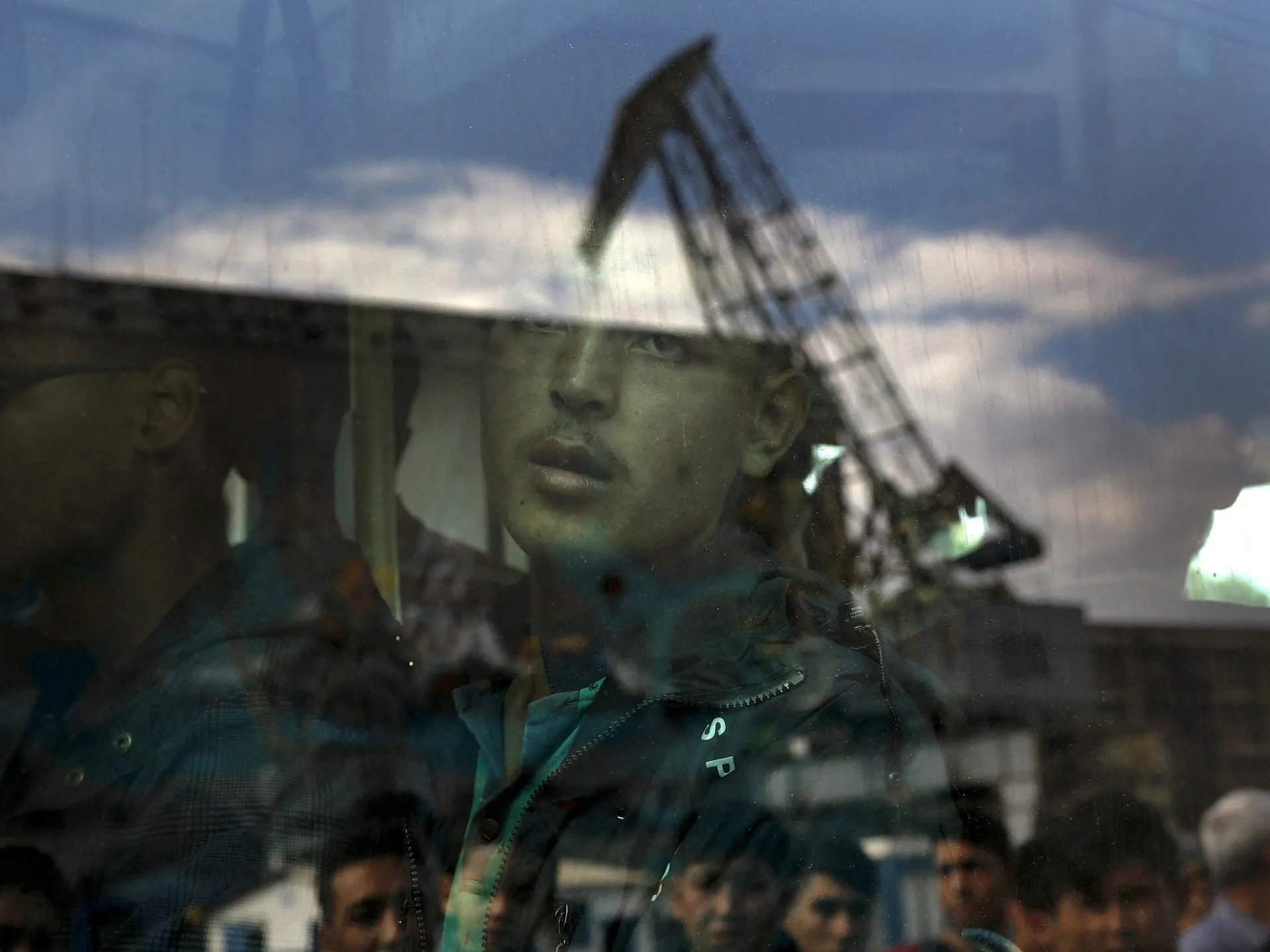
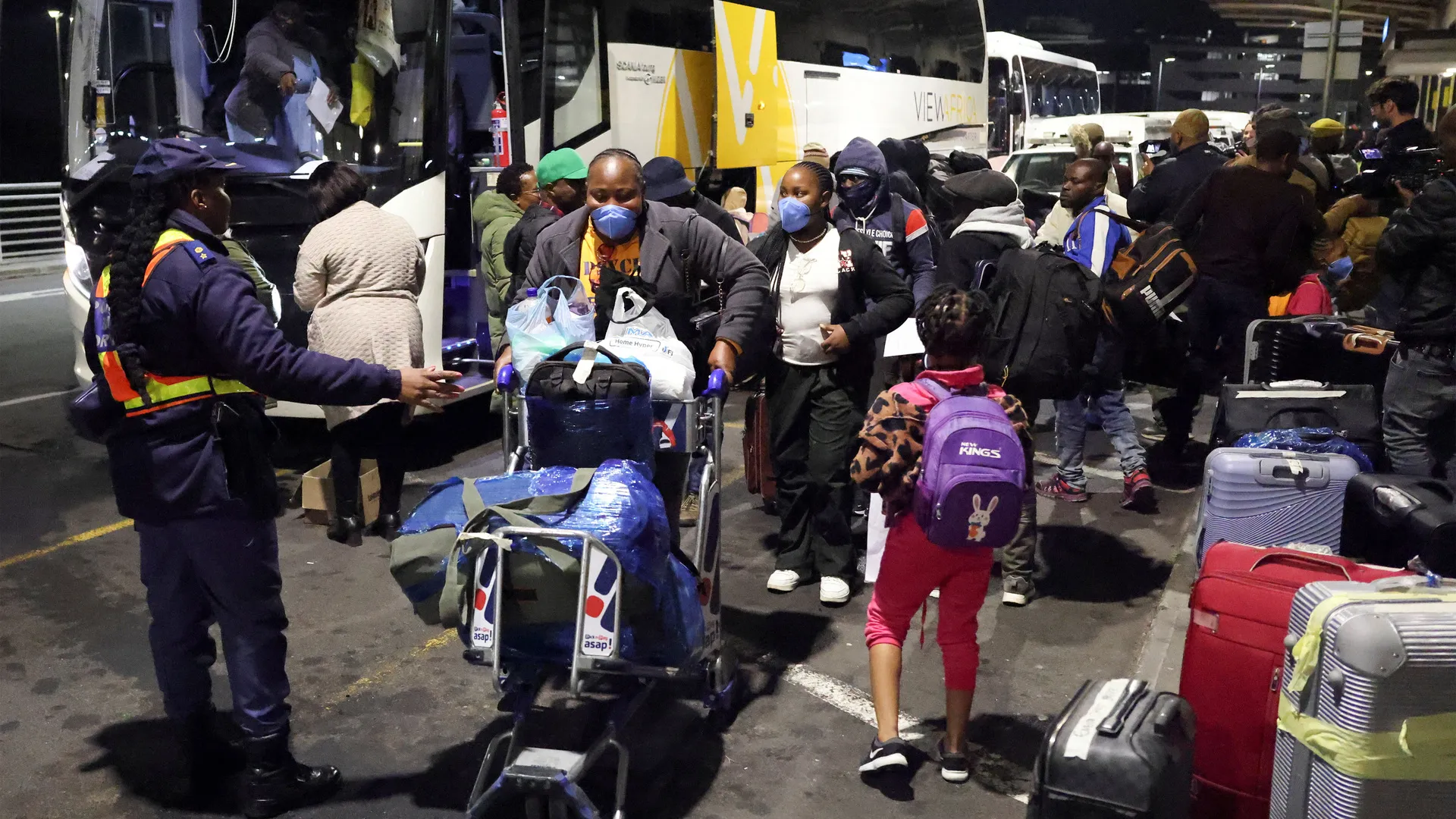
Thousands of migrants shelter in a Durban park after being driven from their homes ahead of a June 30 expulsion ultimatum.
Published On 11 Jun 202611 Jun 2026
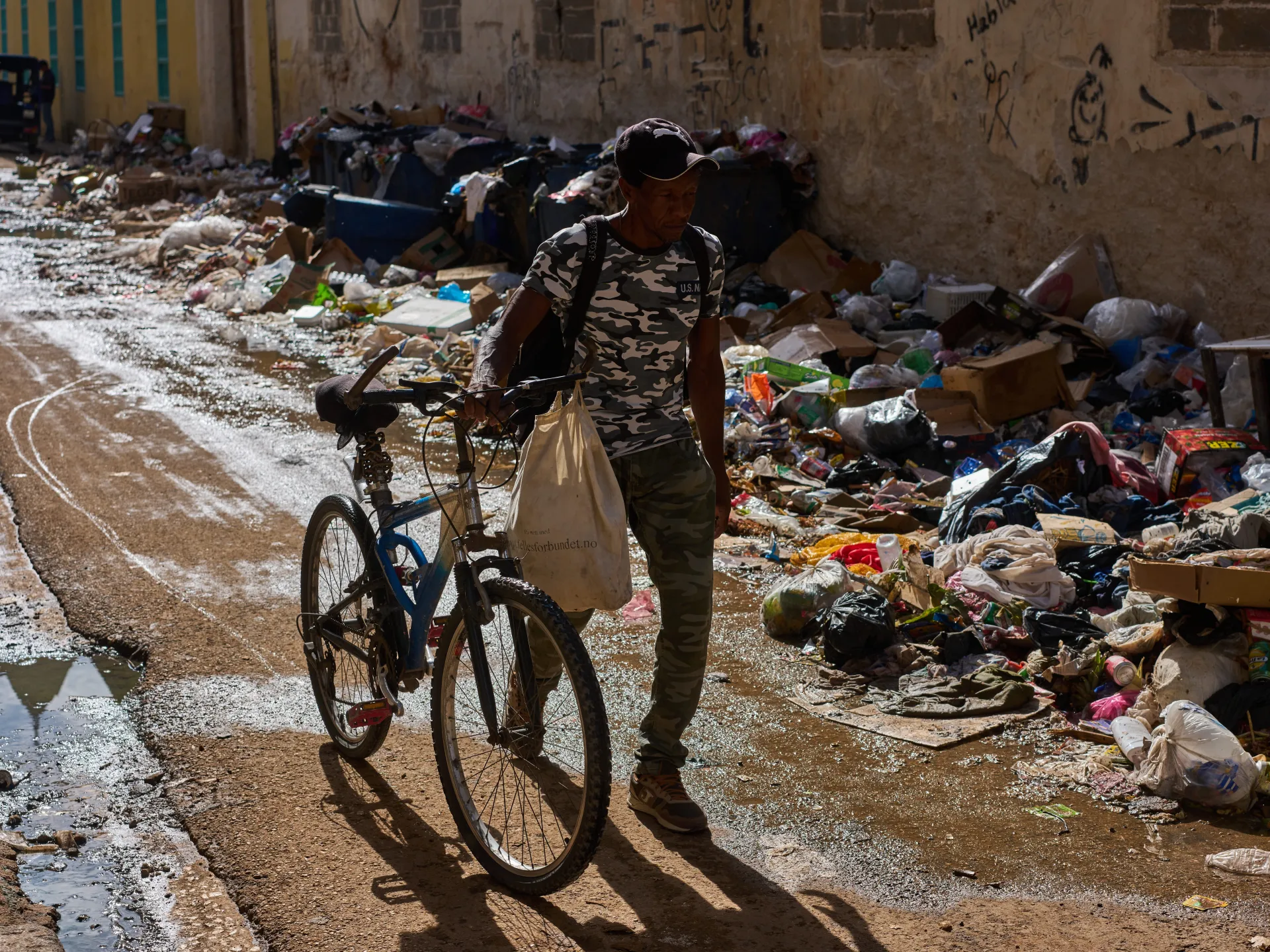
More than 3,000 Malawians, including hundreds of children, are staying in an open field in South Africa’s port city of Durban, after fleeing what they described as escalating anti-immigrant threats and attacks.
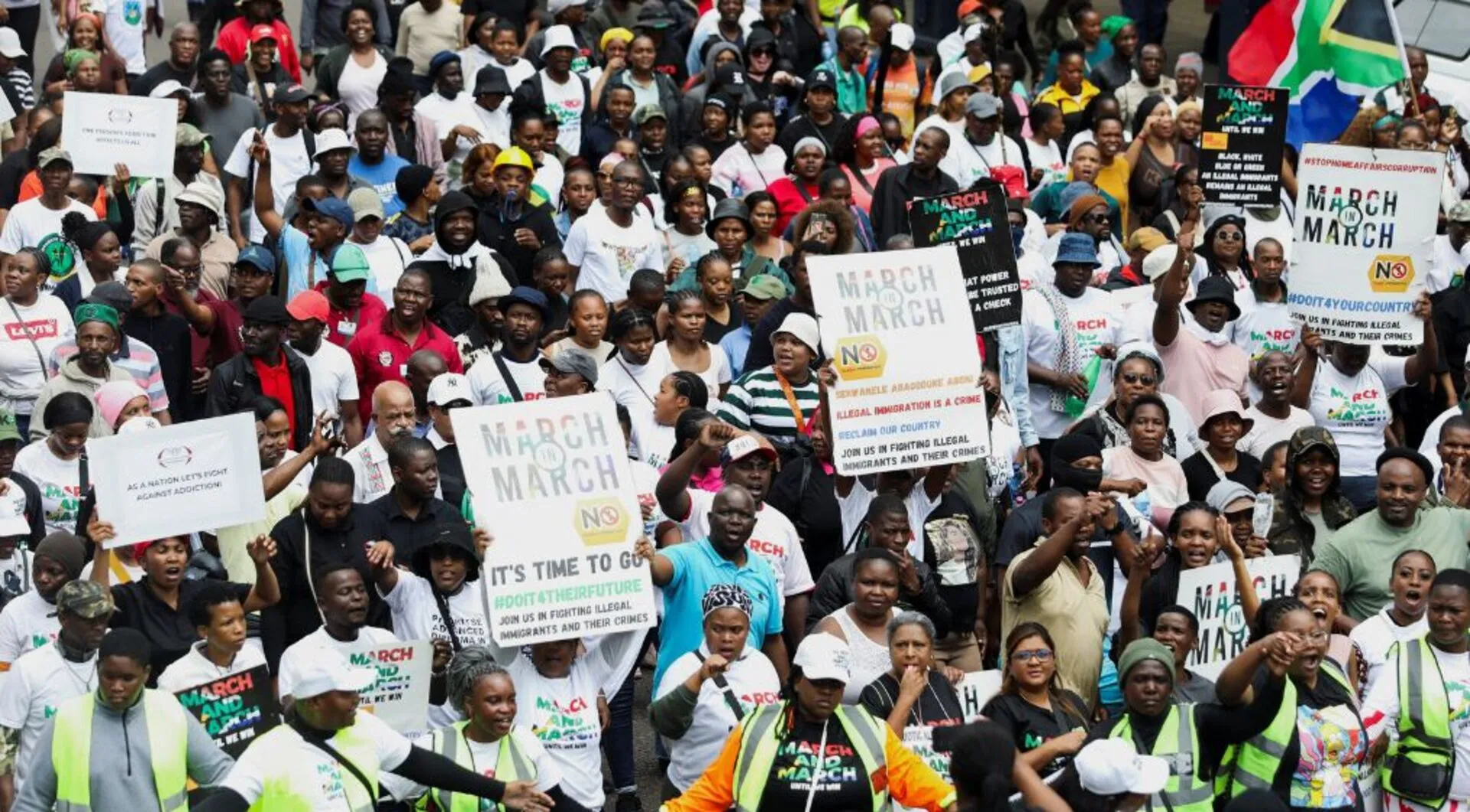
For weeks, groups armed with sticks, whips and shields have marched through parts of the country demanding that foreigners with no papers leave by June 30.
Recommended Stories
list of 3 itemsend of list
At the park, which transformed into a makeshift transit camp in Durban on Wednesday, many people said repatriation was their only safe option.
“It’s hard to stay here,” Falesi Chukuwumba, a Malawian national, told Al Jazeera. “You can see we are outside. How can we stay in this cold? Our children can get sick.”
Sayiba John, 33, a Malawian who fled Nazareth township with her husband and three children, told the AFP news agency her daughter, a Grade 2 pupil, was forced to abandon her exams.
“They said we must go. We have no choice in the matter,” John said. “It’s better our government take us away from here than to face the anger of the South Africans.”
Ellen Mwamulima, a 45-year-old widow, mother of three and former domestic worker in Mossel Bay in the Western Cape, fled a mob who nearly caught up with her and had to hide out in the bush for two weeks.
“It’s been very difficult because we lost everything, they burnt our houses and all our belongings,” the Malawian told Al Jazeera.
The anti-migrant marches have been backed by the MK Party, led by former President Jacob Zuma, which commands strong support across KwaZulu-Natal province.
When the party called on supporters to march against undocumented migrants, thousands responded. Demonstrators accuse foreign nationals of taking jobs and economic opportunities from South Africans.
“There are undocumented foreigners working everywhere in our business field,” Mythobisi Sabelo, one of the protesters, told Al Jazeera in Durban. “People here have been trying to find work for a long time and given up. It’s becoming an issue.”
Waves of xenophobic violence
But while demonstrators blame foreigners for South Africa’s economic and social issues, others argue that foreigners, particularly those from elsewhere in Africa, are being wrongly blamed.
Ghana, Zimbabwe and Mozambique have repatriated hundreds of nationals this month, and a flight carrying the first group of Nigerians is due to depart Johannesburg.
About 150 additional migrants from Burundi, Ethiopia and Zimbabwe are sheltering at a government office not far from the Durban park.
South Africa has faced recurring waves of xenophobic violence since 2008, when dozens of migrants were killed and thousands displaced. Some three million foreigners – about 5 percent of the population, more than 63 percent of them from within the Southern African Development Community (SADC) bloc – live in the country.
The latest flare-up comes as political parties campaign ahead of local government elections in November.
Migrants say they are living in fear after a campaign group gave people living illegally in South Africa until June 30 to leave. Nigeria’s diplomatic mission in South Africa says many of those returning no longer feel safe to continue living or working in the country.
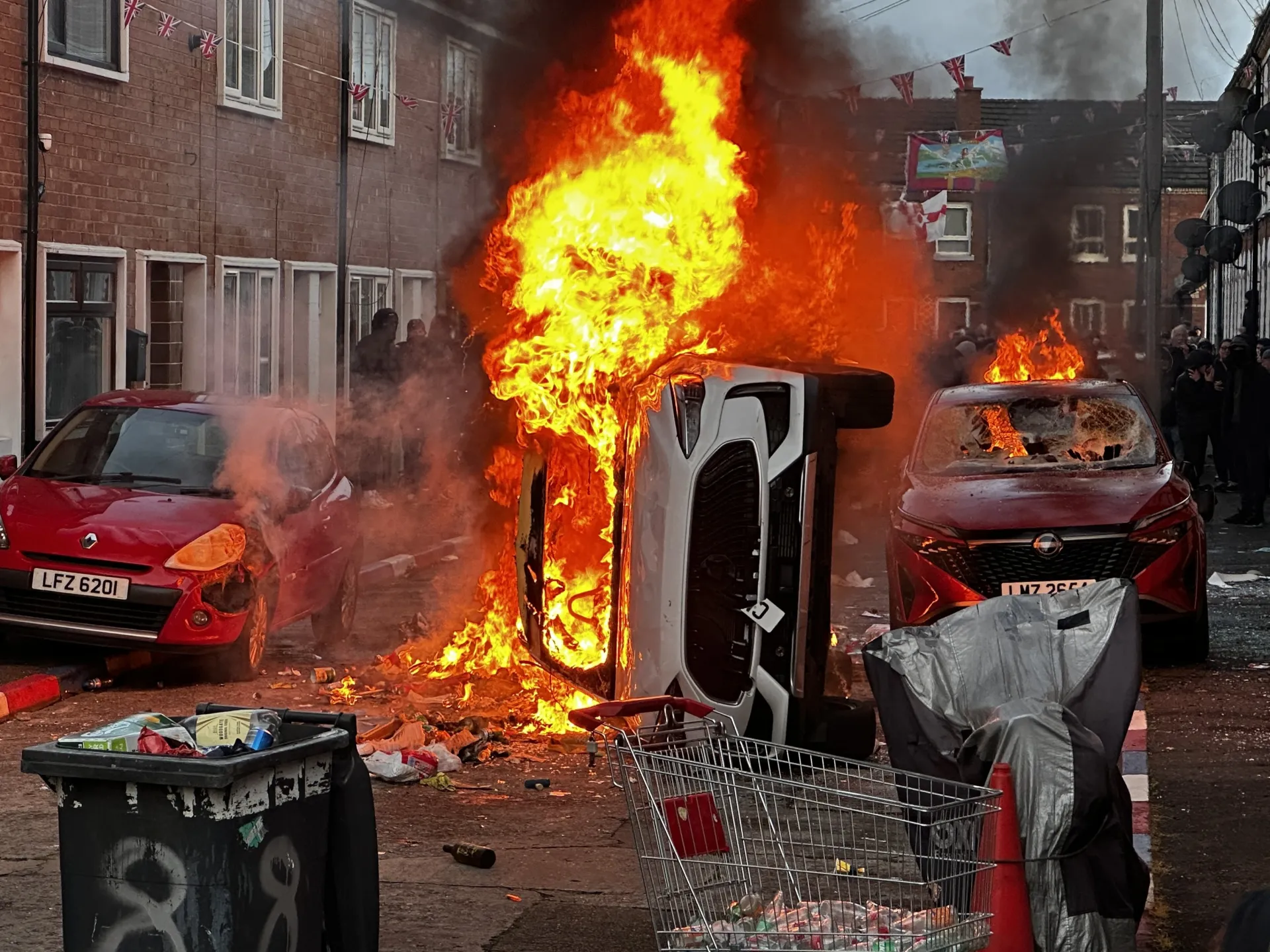
Anti-immigration protesters have torched buildings and vehicles in the capital of Northern Ireland, a day after a knife attack was captured in a graphic video.
Hundreds of protesters, many of them masked, gathered at several locations across Belfast on Tuesday evening. A bus and several cars were set alight, while a building on the edge of the city centre caught fire and its residents had to be evacuated.
Police helicopters patrolled above the city, and shops closed early.
British Prime Minister Keir Starmer described the initial knife attack, which took place in north Belfast late on Monday evening, as “sickening”.
The attack comes at a time of heightened tensions in the United Kingdom following the murder of a student who was handcuffed by police as he lay dying from stab wounds after his killer falsely alleged a racist attack.
It also follows repeated protests over immigration, with populist parties saying the UK’s asylum policy has allowed dangerous men into the country. There was anti-immigration rioting in Northern Ireland last year amid anger over an alleged sexual assault.
Immigration has become a highly charged political issue and has helped fuel the rise of the hard-right Reform UK and Restore Britain parties in opinion polls.
Northern Ireland’s political leaders and the region’s chief constable have urged people not to incite hate and fear or target particular communities.
Brazilian police have intercepted 108 Cuban nationals in a single day as they were being smuggled into the country.
In a statement on Tuesday, officials noted that the incident was part of a growing trend of undocumented immigration leaving the beleaguered Caribbean island for Brazil.
Recommended Stories
list of 3 itemsend of list
Brazil’s Ministry of Justice and Public Security described the operation as a “rescue”, designed to disrupt human trafficking and irregular migration.
“According to the Federal Highway Police (PRF), this was the largest humanitarian rescue operation ever recorded in a single incident in Roraima,” the ministry said, referring to one of Brazil’s 26 states.
Roraima is situated in the Amazon rainforest, along the border with Guyana and Venezuela. The ministry said that a “large portion” of Cubans are using Guyana as a gateway to enter Brazil.
Some 57.6 percent of the Cuban immigrants living in Brazil are either in Roraima or Amapa, another northern border state.
Cuba has been facing a heightened humanitarian crisis in recent months, as it weathers a de facto fuel blockade imposed by the United States.
Since January, no foreign oil has been allowed to reach the Caribbean island, save for one Russian tanker. The US has threatened steep tariffs against any country that might seek to supply Cuba with oil, a necessary fuel for its fragile energy grid.
The blockade has had wide-ranging repercussions, with public services in many areas grinding to a halt. The country has been gripped by multiple island-wide blackouts, and residents are reporting difficulties accessing basic supplies like food and medication.
Critics fear the pressure will lead to new waves of migration off the island. During the COVID-19 pandemic, for example, economic decline contributed to a mass exodus, with Cuba’s population dropping by roughly 10 percent or more.
Since 2024, Brazil’s Federal Highway Police say they have “rescued” roughly 297 migrants and asylum seekers in Roraima, most of them Cuban.
Five “coyotes”, or human smugglers, were arrested during Monday’s law enforcement efforts, which come as part of Operation Safe Route, an initiative launched in December 2024 to ensure roadway safety.
Three separate sets of arrests were made. One involved a convoy of three vehicles that attempted to flee federal police after being signalled to stop. Inside the vehicles were 39 Cubans, including children, being “transported in precarious conditions”.
“Many reported having gone without food for at least two days,” the Justice Ministry said.
In another incident, police found eight Cuban immigrants after seizing a vehicle that crossed the border illegally. In a third, law enforcement followed a vehicle suspected of human smuggling to a residence where 61 Cubans were found.
All 108 of the Cubans recovered on Monday were transferred to police officials for “immigration regularisation and subsequent referral to the social assistance network”, according to the Brazilian security ministry.
In its annual migration report for 2025, the ministry described Cuban immigration to Brazil as stable or even descending during the last decade, up until the early years of the COVID-19 pandemic.
“Migration flows of Cubans to Brazil were never particularly intense,” the report said. But then, starting in 2022, Cuban immigration into Brazil started to “rebound vigorously”.
“It is important to note that, in 2025, refugee applications submitted by Cubans surpassed those submitted by Venezuelans — not only due to a drop in applications from the latter group but, above all, due to the sharp rise in cases filed by Cubans, exceeding 40,000 requests,” the report explained.
The report also warned that the upward trend could continue, given the conflict between the US and Cuba.
Since returning for a second term, US President Donald Trump has taken an active role in Latin American politics and has suggested he may use military force to initiate regime change in Cuba.
“Should geopolitical tensions between Cuba and the United States of America escalate, migration flows toward Brazil could very well increase,” the report concluded.
More than two years ago, Gaza resident Hanin Muhammad accompanied by her 39-year-old sister Sabreen, a kidney transplant recipient, was flown to the Iraqi capital Baghdad for medical treatment. But Muhammad has since been confined to the Private Nursing Home Hospital inside Baghdad’s Medical City complex, thousands of miles away from her home in Gaza, as her travel documents have been confiscated by Iraqi authorities.
“My six children are in Gaza, and I am entering my third year without seeing them,” 40-year-old Muhammad told Al Jazeera.
Recommended Stories
list of 4 itemsend of list
Her family home in Rafah was destroyed by Israeli forces, forcing her children to be displaced into makeshift tents located between Rafah and Khan Younis.
“I check on them through other people because they lack internet connection. I am begging anyone to intervene so we can get back to Egypt, register, and see our children,” she said. Currently, Palestinians can go in and out of Gaza only using the Rafah crossing, which opens into Egypt.
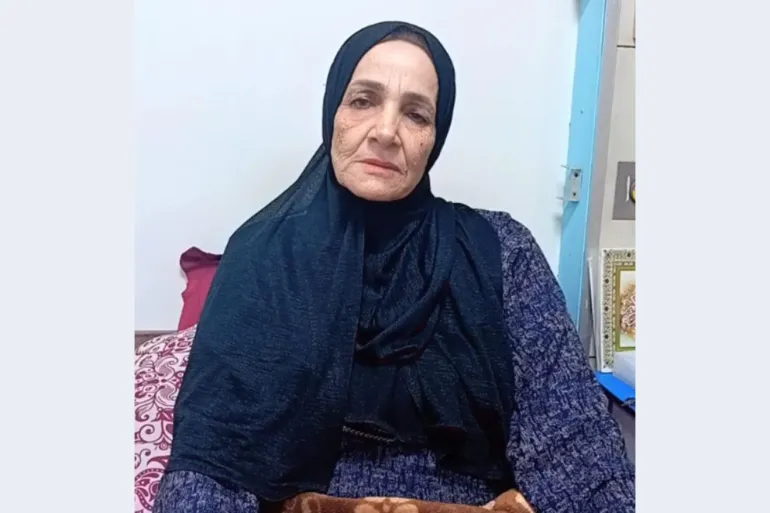
Samah Abdul Moati, 65, an oncology patient stranded in Baghdad, lost two sons in the war and says she no longer cares about her treatment, wishing only to return to her family [Courtesy of Samah Abdul Moati]
Muhammad, who travelled to Iraq as a medical companion to her sister, is part of a forgotten cohort of 46 Palestinians evacuated to Iraq, comprising 21 patients and 25 family escorts.
According to health authorities tracking the group, the clinical breakdown of the patients highlights the severity of their conditions, which include five oncology patients, four suffering from blood disorders, one cardiac patient, one kidney disease patient, and 10 patients wounded in the ongoing genocidal war that has killed nearly 73,000 Palestinians and wounded more than 172,000.
The group was flown to Baghdad in March 2024 on a military aircraft in coordination with the Iraqi and Egyptian governments, with a symbolic presence from the Palestinian Embassy in Cairo.
These rare evacuations highlight a much broader medical crisis back home. According to Gaza’s Health Ministry, more than 20,000 patients and wounded people are currently waiting to travel abroad for medical treatment.
Zaher al-Waheidi, head of the ministry’s Information Unit, reported that 1,200 children in Gaza now suffer from spinal cord injuries and paralysis directly resulting from Israeli attacks, while some 4,000 children require urgent treatment abroad.
Despite the overwhelming need, official data provided by al-Waheidi shows that only 154 children have been allowed to leave Gaza since the Rafah crossing, the enclave’s only gateway to the outside world, partially reopened in February amid heavy Israeli restrictions.
The crisis is equally dire for newborns: in 2025, more than 4,000 women had premature deliveries, and at least 4,800 babies were born with low birth weights – double the pre-war figure. Last year alone, 457 infants died in their first week of life.
For the handful who made it out, like the group in Iraq, the promised sanctuary quickly devolved into a cage defined by confiscated documents, restricted movements, and systemic neglect.
Confiscated documents and suspended lives
Upon their arrival from Egypt’s Heliopolis Hospital, the promised short-term recovery windows evaporated. Evacuees state that their primary identification and travel documents were immediately seized.
“When we left Egypt for Iraq, the Iraqi authorities took our identification papers from the Egyptians, and we haven’t seen them since,” Muhammad told Al Jazeera.
“When we asked for them, they told us they were held by Iraqi Intelligence and the Ministry of Foreign Affairs. We demand them back, but no one answers us.”
The Palestinian Embassy in Baghdad issued new passports for those lacking them, but according to Muhammad, these documents remain unstamped by the Iraqi government and are functionally useless. She noted that without the official stamps, they cannot travel anywhere.
This administrative vacuum has completely frozen the lives of the companions. Noor Ibrahim, a pseudonym for a young woman who arrived as an escort for her cancer-stricken aunt, is stranded along with four of her aunt’s children.
“I have been engaged for four years, and my fiancé and family are in Gaza,” Ibrahim told Al Jazeera. “We left on the promise that it would be a temporary six-month treatment trip, but now, two years have passed.”
She expressed deep frustration as she is stuck inside the medical complex, emphasising that she just wants to return to Egypt, from where she can travel to Gaza to complete her marriage and start her life.
The stress of the confinement has also severely exacerbated underlying health conditions. Ibrahim noted that while her aunt received the necessary cancer treatment, she has developed various other undisclosed health complications in Iraq, and her psychological state is exhausted from leaving her husband and family behind in war-ravaged Gaza.
Retaliation and dire conditions
For the Palestinians living inside Baghdad’s Medical City complex, daily life has become a grind of material deprivation and psychological distress. The evacuees are completely cut off from any monetary stipends, leaving them entirely dependent on the hospital for basic shelter and local citizens for additional charity.
This picture taken on December 24, 2023, shows a view of the Baghdad Medical City hospital complex overlooking the Tigris river in the centre of Baghdad [File: Ahmad Al-Rubaye/AFP]
Samah Abdul Moati, 65, who battles leukaemia, liver cancer, and an arm injury, is accompanied by her injured 43-year-old son and her daughter-in-law. She painted a grim picture of their daily life.
“The hospital brings food every day, but no one can eat it because it is unfit for consumption,” Abdul Moati told Al Jazeera. “We are surviving on the grace of local well-wishers who don’t fail us. But we don’t care about the treatment any more – we just want to return to our children.”
Abdul Moati’s situation is compounded by unfathomable grief: two of her sons were killed in the war, two others have platinum implants from injuries, her husband is fighting cancer in a Gaza intensive care unit with no one to care for him, and her daughters and orphaned grandchildren are living in tents for displaced people.
“The hardest feeling is that I am trapped between the hospital walls while my heart is outside with my family and my people,” Abdul Moati said. “My husband is in the intensive care unit alone, and my children and grandchildren are in tents under the cold and fear.”
Compounding their alienation, evacuees who have tried to protest or publicise their predicament faced swift administrative blowback. When they demanded their right to travel five months ago and spoke to the media, hospital management retaliated by locking down the ward and banning them from even visiting the hospital garden.
Muhammad revealed that they were only allowed out after journalists wrote about their situation, adding that officials continuously throw them from one department to another without providing any straightforward answers.
Bureaucratic runaround
The spokesperson for the Iraqi Ministry of Health, Saif Albadr, did not answer repeated calls from Al Jazeera.
While the head of public relations at the Health Ministry, Ruba Falah Hassan, told Al Jazeera that the case is “political.”
“Frankly, this is a political issue, not health-related.. I’m not authorised to talk about it,” she stated.
The newly appointed Iraqi government spokesperson, Haidar Al-Aboudi, told Al Jazeera that he “will look into the matter”.
For the Palestinians stranded in the Medical City, they maintain that they lack the financial means to buy commercial airline tickets even if their papers are returned, meaning they desperately need a coordinated effort by a charity or government body to facilitate their travel back to Egypt.
“I am not asking for a luxury or an exception,” Abdul Moati pleaded in her final remarks.
“I am asking for a simple human right: that my family does not remain divided between life and death. Open a safe path, facilitate our family reunification, and let me return to my family before it is too late.”
The violence prompted 300 Mozambicans to return home by their own means over the weekend, with more than 500 still in the country now beginning the official repatriation process.
Published On 2 Jun 20262 Jun 2026
At least five Mozambican nationals have been killed in “xenophobic attacks” in South Africa over the weekend, the Mozambican government said, marking the first deaths officially linked to country-wide protests against undocumented immigration.
About 800 Mozambicans got caught up in violence that broke out in the southern coastal city of Mossel Bay on Friday, the government press office said in a statement received on Tuesday.
Recommended Stories
list of 3 itemsend of list
“Regrettably, seven Mozambican citizens have died, five of them as a direct consequence of the xenophobic attacks and the other two as a result of a road accident, when they were travelling in a private vehicle on their way back to Mozambique,” the statement said.
The violence prompted 300 Mozambicans to return home on Saturday, said the statement.
“The remaining just over 500 have since been sheltered in a safe location in the Western Cape Province, and as of today, 1 June, the process of their repatriation to Mozambique is already underway,” it said.
South African police said on Sunday they were investigating the deaths of two men at an informal settlement in Mossel Bay, a port town about 380km (236 miles) east of Cape Town, where xenophobic attacks had been reported.
They did not say whether the deaths were linked to the protests. It was also not immediately clear what nationalities the two men were.
But the area mayor, Dirk Kotze, voiced “deep concern and dismay at the current xenophobic attacks where people have been murdered, houses burned and families displaced”.
The region has seen anti-migrant protests similar to those reported in the financial capital Johannesburg, Durban and parts of the Eastern Cape province in recent weeks.
South Africa has faced recurring waves of xenophobic violence since 2008, when dozens of migrants were killed and thousands displaced in attacks across the country. Similar flare-ups occurred in 2015 and 2021.
The latest spike in anti-immigrant tensions comes as political parties seek support before local government elections in November.
Athens, Greece – Bashir is a Syrian Muslim who has lived in Greece since 2014. He married a fellow Syrian in the country, and three months ago, they had a son. After years of picking olives and oranges, learning Greek and a trade in metalwork, and finally buying his own equipment to start work as an independent trader, Bashir felt his life was finally coming together.
Two months ago, the authorities handed him a piece of paper asking him to restate his reasons for coming to Greece and why he should now return to Syria.
Recommended Stories
list of 4 itemsend of list
Bashir, who requested to withhold his surname, had been granted asylum in Greece in 2015 because of the civil war then raging in Syria. The war ended in December 2024, and Bashir became one of 1,200 Syrians whose asylum cases were reopened in February.
“It’s a catastrophe,” he told Al Jazeera. “I don’t understand how this can happen. If they decide I should leave the country, should my family stay here?”
Bashir’s lawyer said only men are currently receiving such notices – and not just from Syria but Afghanistan, another country whose civil war is deemed to have ended, with the Taliban’s sweeping victory in August 2021.
But neither Syria nor Afghanistan is necessarily safe to return to, said the lawyer, Angeliki Theodoropoulou.
“We believe this has to do with the European Union’s stance towards Syria and Afghanistan, and with the fact that there are quite a few voluntary returns, which encourages authorities to say, ‘Let’s see if these people can return’,” Theodoropoulou told Al Jazeera.
She said the entire regime of international protection was being tightened for these two nationalities. “We’re also seeing asylum being given in very few cases, and a lot of rejections,” she said.
“We don’t understand on what criteria they decided Syria is safe,” Bashir said.
Earlier this year, renewed clashes erupted between the Syrian government and the Kurdish-led Syrian Democratic Forces (SDF), while Israel has continued attacks on the country sporadically.
Bilal said he feels uncomfortable about the idea of living in Syria for cultural and political reasons, having spent 15 years away.
“Many of the refugees here are like me,” he said.
Jihad, who requested to withhold his surname, has similar concerns but for the opposite reason. He has lived in Greece legally since 2001 and runs a small clothes shop. When the regime of Bashar al-Assad fell, the rest of his family also fled, because he and his family were Assad supporters.
He fears that he would be mistreated in Syria over his views.
“If they just look at my Facebook page or look at things I wrote in the past, they will send me to jail for sure,” Jihad said. “I’m afraid even to go to the embassy. I have never held a gun, I have never killed anyone, I just have an opinion.”
Both men have clean criminal records, pay taxes and social security contributions, and have nurtured families in Greece. Both say they would flee to another country rather than return to Syria. So why is Greece considering their eviction?
Greece’s turn to exclusion
Greek Migration Minister Thanos Plevris announced in February that he had ordered a reopening of any asylum cases that could be revoked. As a temporary status, it can be.
Last year, Greece revoked the asylum of almost 200 people, compared with 400 in the previous decade. Dozens more cases are under review this year. And there appears to be a religious element to the policy.
Greece suspended asylum applications for mainly Muslim asylum seekers arriving from Libya for three months last year. Most of the people whose asylum is being revoked are from majority-Muslim countries.
At a recent parliamentary committee hearing, Plevris stated clearly that Greece prefers non-Muslim migrant workers.
“There are countries with which we don’t have common values, and that’s mainly because of religion, let’s be clear, it’s because of hardcore Islam,” Plevris said. “So, you have to pick countries that are religiously neutral or Christian. We’re talking to Georgia, the Philippines, Armenia, India.”
Greece has been tightening its migration policy in other ways as well.
In September 2025, it adopted what Plevris described as “the strictest returns policy in the whole EU”, empowering the government to imprison people who refuse to be deported. Rejected asylum applicants can be fitted with ankle monitors and given just two weeks to remove themselves voluntarily. If they don’t, they face a 5,000-euro fine ($5,870) and two to five years’ confinement in closed camps.
In February, the governing conservative New Democracy party passed a law stipulating that if any aid worker is charged with helping to smuggle asylum seekers into Greece, their entire aid organisation can be delisted from the ministry’s registry. That means they could lose their funding and access to refugee camps, and could shut down.
The broader context
Europe is undergoing a transition as it prepares to put into force an Asylum and Migration Pact next month. The pact demands a hard-border policy and a returns policy for rejected asylum seekers, both of which each member state must manage itself.
“We’re at a pivotal point in time. We’re about to see the implementation of the European pact. This will fundamentally change the way that migration works,” Kristin Fabbe, chair in Business and Comparative Politics at the European University Institute, recently told a Delphi Economic Forum event in Athens.
The largest bottleneck, she said, “is that Europe has not yet figured out how to do returns at scale … in order to reform asylum and reform migration, you have to execute returns at scale, and the data show that that has been impossible”.
Greece, an EU front-line state, already has 938,000 legally resident migrants in a population of 10.3 million, a relatively high number. Of these, more than 137,000 are recipients of asylum or international protection.
As the Middle East and North Africa region remains unstable, the government is worried about the potential scale of future refugee flows.
More than a million asylum seekers crossed the Greek borders in 2015. In the years that followed, certain EU members took on thousands of asylum cases from Greece and Italy in a show of solidarity, and tens of thousands more asylum recipients in Greece moved to other EU states. Those states have agreed to keep them, but that would not necessarily happen again under the pact.
Observers say this explains Greece’s hardline attitude.
Commenting on the political mood in Europe, Fabbe said, “The legality, the sanctity of the [returns] solutions is being challenged, but I think we’re going to see the proliferation of those solutions and new institutional mechanisms.”
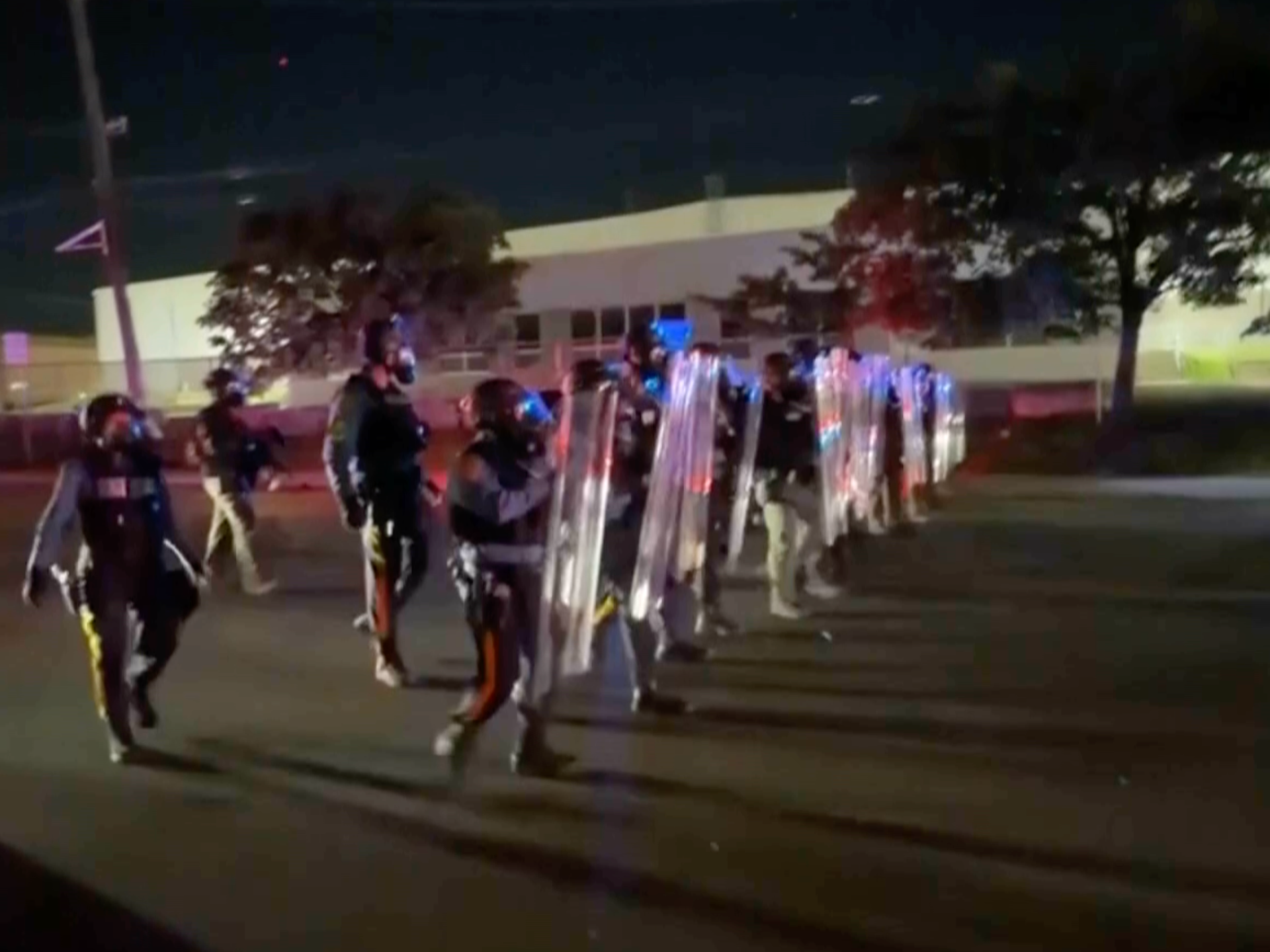
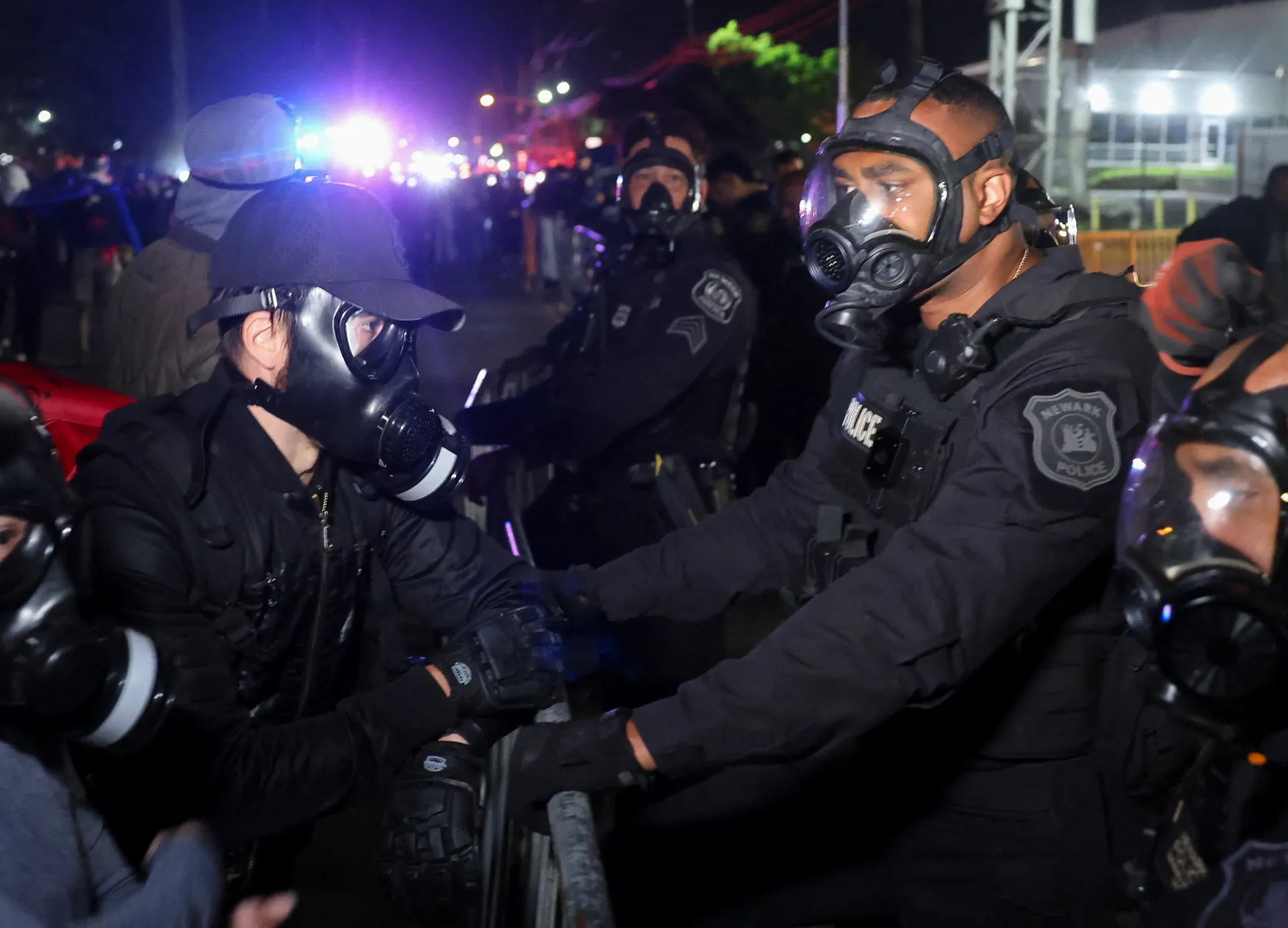
New Jersey Governor Mikie Sherrill has imposed a curfew and deployed state police outside Newark’s Delaney Hall immigration detention centre after nights of clashes between protesters and ICE agents.
Ras Baraka, the mayor of Newark in New Jersey, has imposed a curfew on the area surrounding Delaney Hall, the immigration detention centre that has become a flashpoint in the debate over United States President Donald Trump’s mass deportation drive.
The Sunday morning announcement came amid a flare-up in tensions outside the detention centre, which is run by the private contractor GEO Group, as part of a 15-year deal with Immigration and Customs Enforcement (ICE).
Recommended Stories
list of 3 itemsend of list
“Due to the escalating situation at Delaney Hall and the increasing need for police intervention, immediate action is required to protect public safety,” Baraka wrote in a statement.
“Multiple individuals have already been arrested and found in possession of weapons, underscoring the seriousness of the threat.”
As part of the curfew, movement will be restricted within half a mile (0.8km) of the detention centre between the hours of 9pm and 6am US Eastern time (1:00 to 10:00 GMT).
A nearby road, Doremus Avenue, will also be closed to pedestrians and vehicles that cannot verify their need to be in the area.
Since the reopening of Delaney Hall as an immigration detention facility last year, it has been the site of confrontations between law enforcement and protesters, including Mayor Baraka himself.
The month of May has seen more than a week of daily protests outside Delaney Hall, after lawyers for the detainees at Delaney Hall announced a hunger strike was unfolding inside.
Detainees have denounced the living conditions to human rights groups, reporting expired food, a lack of medical care and abuse at the hands of authorities.
The Trump administration has justified its mass deportation campaign as an effort to rid the US of “the worst of the worst”, framing undocumented immigrants as a criminal threat.
But critics point out that many of those detained have no criminal record, and some who do have only been cited for minor offences.
The Transactional Records Access Clearinghouse, a data-tracking service from Syracuse University, found that, as of April, roughly 71 percent of those in ICE detention had no criminal conviction.
To show solidarity with the hunger strike, protesters have been gathering outside Delaney Hall, locking arms to form human chains and creating barricades to prevent access.
But that has led to tense confrontations with law enforcement, who have used batons and pepper spray to try to clear roads to the facility.
Governor Mikie Sherrill called for the establishment of designated protest zones, to mitigate the likelihood of conflict between officers and demonstrators.
But clashes have continued. Overnight on Wednesday, six protesters were arrested.
Politicians themselves have encountered tense interactions at Delaney Hall.
A year ago, one protest resulted in trespassing charges against Mayor Baraka and assault charges against US Representative LaMonica McIver, after a disagreement over which officials could enter the facility for an inspection.
While the charges against Baraka were dropped, McIver continues to face legal proceedings. She has denied the charges and called the prosecution politically motivated.
“One year ago, the Trump administration threw baseless charges against me for conducting oversight to protect immigrants at Delaney Hall,” McIver wrote on social media on Saturday.
“Have they tried to silence me? Yes. Have the stakes risen? Yes. Am I backing down from speaking up for you? Never.”
This past week, Governor Sherrill was also denied access to the facility. She has since issued a statement calling for Delaney Hall to be shut down.
At a news conference on Saturday, she blamed “national extremist groups” for arriving from out of state and escalating tensions. She added that the current precautions were designed to protect the safety of peaceful protesters.
“I urge those protesting outside of Delaney Hall to bring the temperature down, so we can focus on the detainees and their families,” Sherrill said.
She suggested that the actions of state and local officials would help head off any expanded ICE operations in New Jersey.
“I will not give ICE a pretext to expand operations at Delaney Hall or across our state. I will not put lives at risk,” she said. “I’m grateful to the vast majority of protesters who have assembled peacefully and raised their voices about Delaney Hall’s conditions.”
The charges stem from the January 14 shooting of Julio Cesar Sosa-Celis in Minneapolis during Operation Metro Surge.
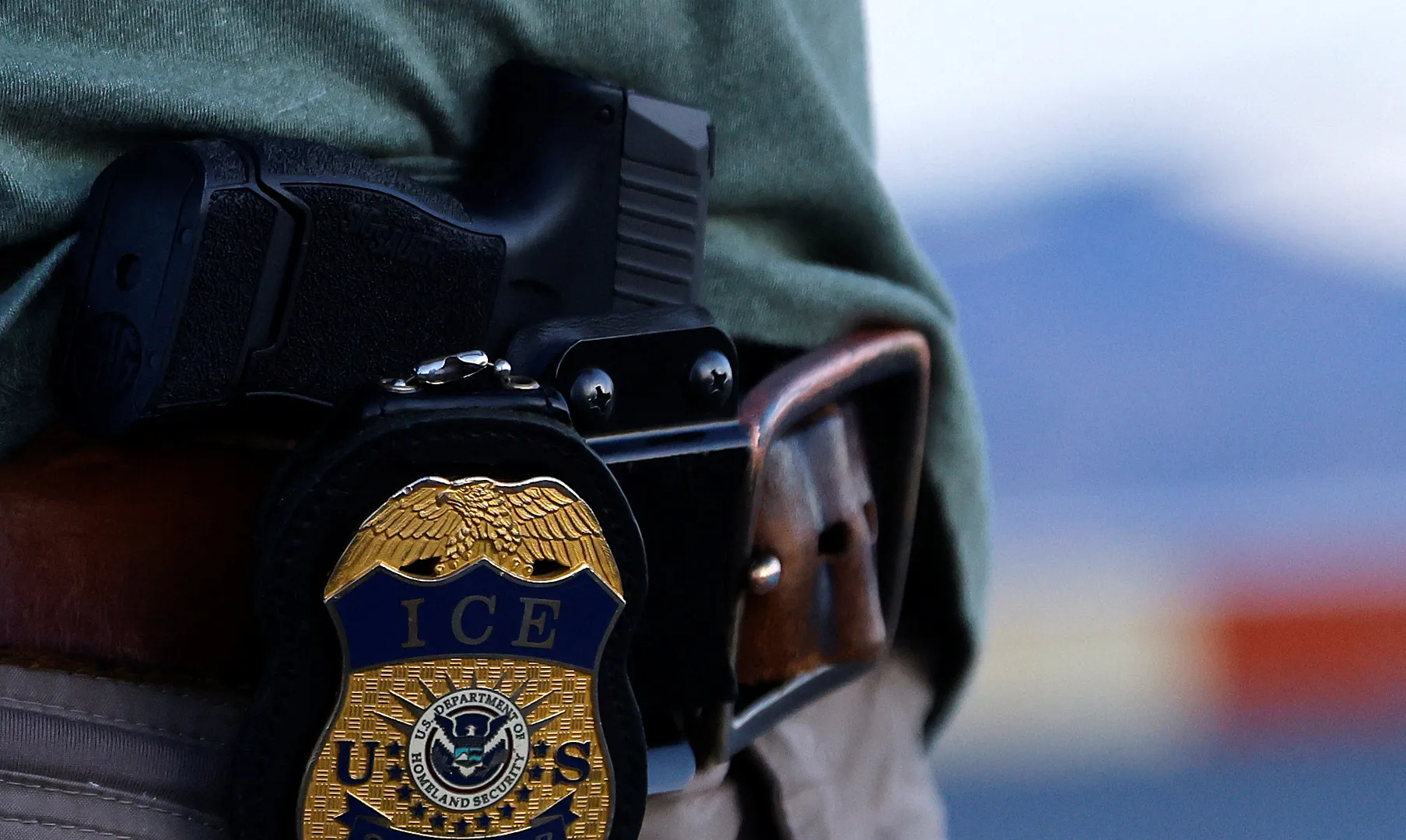
An Immigration and Customs Enforcement (ICE) agent charged with shooting a Venezuelan man during a controversial immigration raid in Minnesota has been arrested in Texas, according to United States authorities.
Agent Christian Castro, 52, was taken into custody on Friday after investigators from Minnesota tracked him down in the southern state, where he was arrested with assistance from the Texas Rangers and the Department of Homeland Security’s (DHS) inspector general’s office. He faces four counts of second-degree assault and one count of falsely reporting a crime.
Recommended Stories
list of 3 itemsend of list
The charges stem from the non-fatal shooting on January 14 of Julio Cesar Sosa-Celis in Minneapolis during Operation Metro Surge, a large-scale immigration enforcement campaign that drew widespread criticism for its aggressive tactics.
Prosecutors allege Castro fired through the front door of a residence, striking Sosa-Celis in the leg.
“Mr Castro was charged earlier this month with four counts of second-degree assault and one count of falsely reporting a crime for an incident on January 14, 2026, when he discharged his weapon through the front door of a home knowing there were people who had just run inside,” the Hennepin County Attorney’s Office said in a statement.
“The bullet travelled through the door and struck one victim in the leg before making its final impact in the wall of a child’s room.”
Minnesota officials welcomed Castro’s arrest, saying federal agents should be held to the same legal standards as everyone else.
“In Minnesota, we believe in equal justice under the law. That means nobody is above the law, including agents of the federal government,” said Minnesota Attorney General Keith Ellison. “I am pleased to hear Christian Castro has been taken into custody and will stand trial for the crimes he allegedly committed in Minnesota.”
Operation Metro Surge faces increasing legal scrutiny
The case became a flashpoint after federal authorities initially claimed Sosa-Celis and another man had assaulted ICE officers.
Those allegations later unravelled when video and other evidence emerged that contradicted agents’ accounts, prompting prosecutors to drop charges against Sosa-Celis and his housemate, Alfredo Aljorna.
The DHS later acknowledged that officers involved in the incident had provided false information about the shooting.
The outgoing director of ICE, Todd Lyons, also indicated a federal investigation was under way. “Lying under oath is a serious federal offense,” he said.
But through a spokesperson, ICE rejected Minnesota’s effort to prosecute the agent involved, calling the case “unlawful” and “a political stunt”.
Castro is the second federal officer charged this year in connection with Operation Metro Surge, an unusual step that reflects growing scrutiny of federal agents’ conduct during the immigration crackdown.
Hennepin County Attorney Mary Moriarty is also pursuing investigations into other incidents linked to the operation.
Operation Metro Surge began in Minnesota in December 2025. By the time Sosa-Celis was shot on January 14, hundreds of federal agents had been deployed across the Minneapolis-St Paul area in what officials described as the largest DHS operation in US history.
The crackdown ultimately prompted intense controversy, particularly after the fatal shootings of two US citizens: Renee Good on January 7 and Alex Pretti on January 24.
Against that backdrop, the investigation into the Sosa-Celis shooting further intensified scrutiny of federal agents’ tactics and conduct during the operation.
Foreign workers in South Africa are yet again facing violence and protests by anti-immigrant groups. They accuse them of residing and working in the country illegally and are demanding that they leave by June 30.
South Africa has seen recurrent waves of anti-immigrant violence in the past decade – often directed at other African nationals.
Recommended Stories
list of 3 itemsend of list
Since the end of apartheid in 1994, the country has become a destination for thousands of workers from neighbouring countries. But many South Africans say the government is not upholding its immigration laws.
So, does South Africa still need foreign workers?
Presenter: Tom McRae
Guests:
William Gumede – Associate professor, School of Governance at the University of the Witwatersrand
Lindiwe Zulu – Member of the ANC Committee on International Relations and a former South African minister of social development
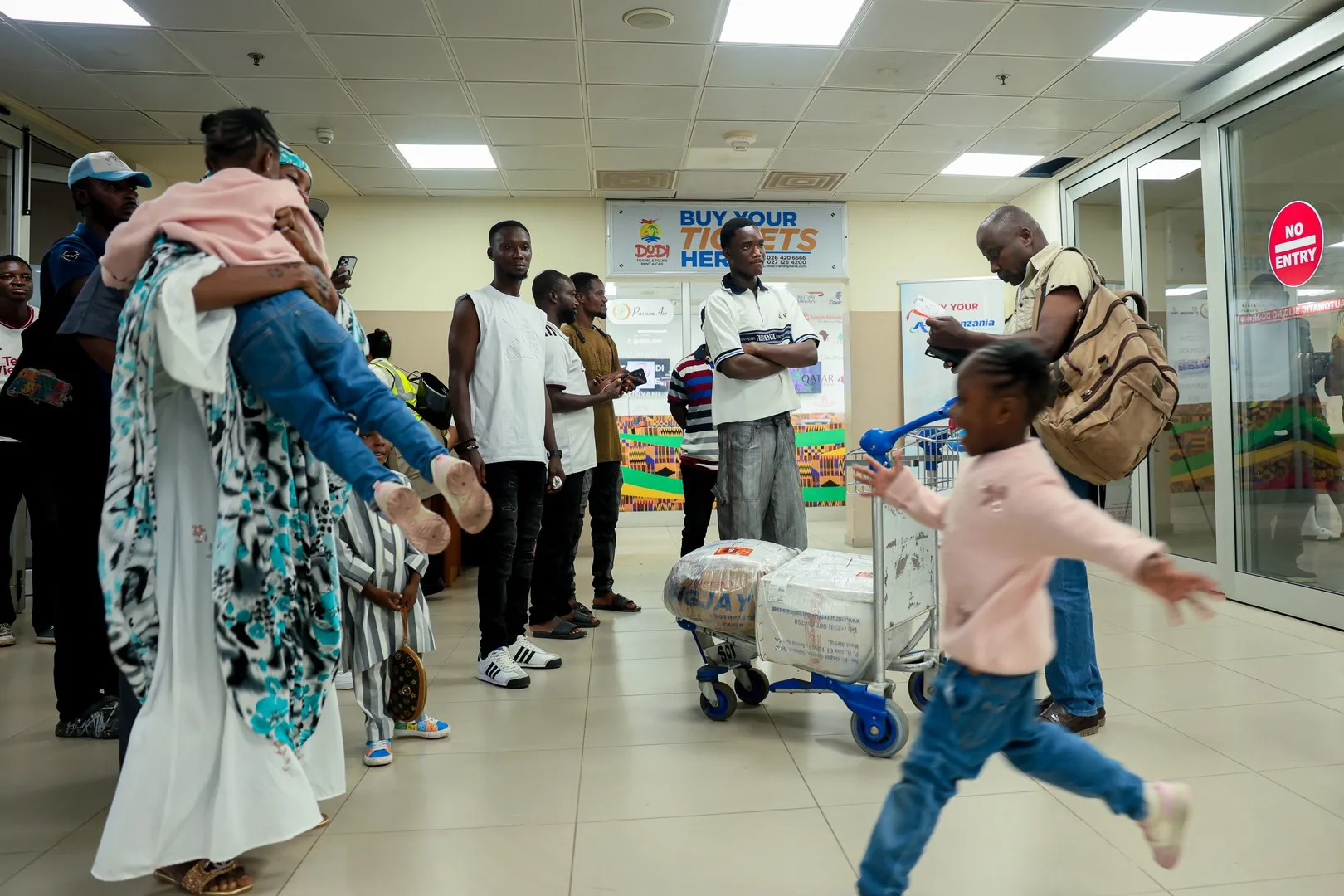
The first flight carrying around 300 Ghanaians evacuated from South Africa following anti-immigrant tensions and reported attacks on foreign nationals has arrived in Accra. Authorities welcomed returnees with reintegration support and transport assistance.
Judge says the human smuggling probe was reopened after the Salvadoran national filed his lawsuit against his deportation.
Published On 22 May 202622 May 2026
A United States judge has dismissed an indictment against Kilmar Abrego Garcia after finding that he would not have been prosecuted if he had not challenged his deportation.
On Friday, US District Judge Waverly Crenshaw said the Department of Justice only reopened its human smuggling probe stemming from a 2022 traffic stop after Salvadoran national Abrego Garcia filed his lawsuit.
Recommended Stories
list of 3 itemsend of list
“The court does not reach its conclusion lightly,” Crenshaw wrote.
“The objective evidence here shows that, absent Abrego’s successful lawsuit challenging his removal to El Salvador, the Government would not have brought this prosecution.”
Last year, Abrego Garcia became a symbol for President Donald Trump’s drive to clamp down on illegal migration and was sent to a mega prison in El Salvador despite a prior court banning him from being returned there due to a risk of persecution.
While the Trump administration brought Abrego Garcia back to the US in June of the same year, his return came only after prosecutors had secured a criminal indictment charging him with human smuggling and conspiracy to commit human smuggling.
Abrego Garcia pleaded not guilty to the claim and argued that he was being prosecuted in retaliation for suing the government to be returned to the US from El Salvador.
In the ruling to dismiss the indictment, Crenshaw wrote that the timing of the charges was central to the “presumption of vindictiveness”.
With Homeland Security already aware of the traffic stop two years ago and having closed the case against Abrego Garcia when it deported him, the case was only reopened once the US Supreme Court had ruled that he be returned from El Salvador.
Abrego Garcia’s deportation had violated a 2019 immigration court order that granted him protection against being returned to his home country after a judge found that he faced danger from a gang that targeted his family.
Despite his return to the US and his family, Trump officials have said that Abrego Garcia cannot remain in the country and have pledged to deport him again to a third country, a country where the person does not have any ties.
The ONS says net migration fell to 171,000 in the 12 months to the end of December from 331,000 a year earlier.
Published On 21 May 202621 May 2026
Long-term net migration to the United Kingdom nearly halved in 2025, falling to levels last seen before the post-Brexit immigration system was introduced, as tougher government measures enacted in recent years restricted arrivals.
The Office for National Statistics (ONS) said on Thursday that net migration fell to 171,000 in the 12 months to the end of December from 331,000 a year earlier, extending a sharp decline from a record peak of 944,000 in 2023.
Recommended Stories
list of 3 itemsend of list
Immigration – both legal and illegal – has dominated political debate in the for more than a decade, with successive governments imposing stricter visa rules and higher salary thresholds. The current government has pledged to go further.
The British Future think tank said the country was “experiencing one of the sharpest falls in net migration on record”, but that most people believed the opposite, according to its research.
Interior Minister Shabana Mahmood welcomed the progress from tighter policies, but said that there was still work to do.
“We will always welcome those who contribute to this country and wish to build a better life here. But we must restore order and control to our borders,” she said, adding that the government’s new skills-based migration would reward contribution and end reliance on “cheap overseas workers”.
On Saturday, far-right activist Tommy Robinson drew tens of thousands of people in London to attend his “unite the kingdom” march. Islamophobic and ethnonationalist hate flyers were reportedly distributed to the crowds. “In a country saturated with degenerates, grifters and imported political enemies … We are a brotherhood of White Europeans who share the same values,” read one leaflet.
Meanwhile, employers and economists have raised concerns about labour shortages, particularly in sectors such as care and hospitality.
The ONS said long-term net migration was now close to its level before the new immigration system was introduced at the start of 2021, when the UK transitioned out of European Union membership, and when COVID restrictions were still in place.
The drop reflects policy changes implemented from 2024, when the previous Conservative government banned most international students from bringing dependents and raised salary thresholds for skilled worker visas.
The current Labour government has tightened policies further as it seeks to counter Nigel Farage’s populist Reform UK party, which campaigns on an anti-migration platform and holds a double-digit lead in opinion polls.
To that end, the government last year moved to end overseas recruitment of care workers, the single biggest driver of work migration in recent years, and raised the salary threshold for skilled worker visas further. It has since announced more sweeping reforms, including plans to speed up deportations of those arriving illegally and double the qualifying period for some workers to obtain settled status to 10 years, as well as making refugee status temporary.

![Samah Abdul Moati, 65, an oncology patient stranded in Baghdad, lost two sons in the war and says she no longer cares about her treatment, wishing only to return to her family. [Courtesy of Samah Abdul Moati]](https://i0.wp.com/www.aljazeera.com/wp-content/uploads/2026/06/WhatsApp-Image-2026-06-01-at-8.37.47-PM-1780388719.jpeg?w=640&ssl=1)