Serbian MiG-29 Appears Armed With Chinese Supersonic Standoff Missiles
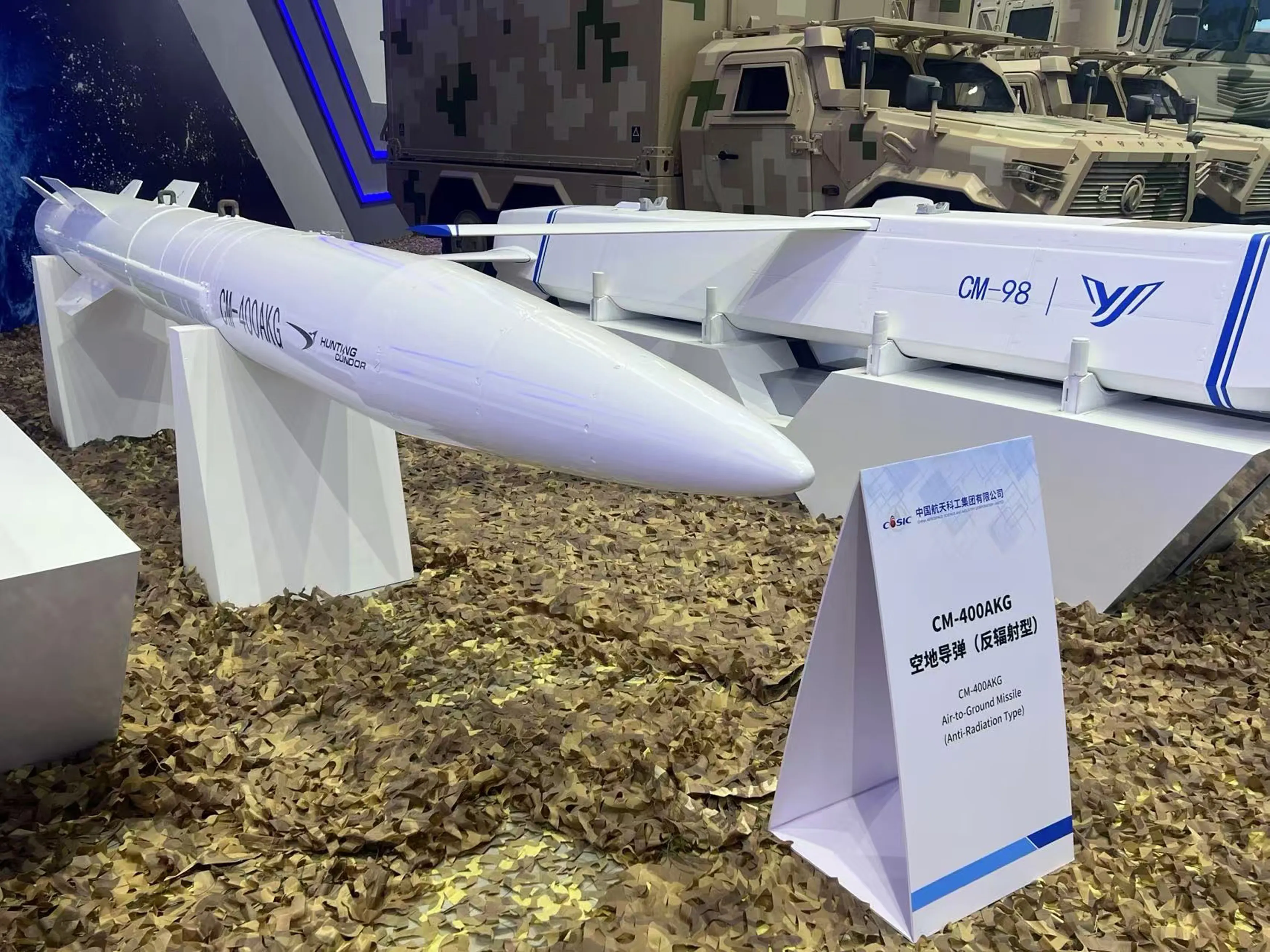
In a surprising development, Serbia has emerged as an operator of the Chinese-made CM-400 air-launched supersonic standoff missile. The weapon has been integrated into Serbia’s Soviet-era MiG-29 Fulcrums, which have undergone various upgrades. As it stands, the Balkan state, which has had a turbulent recent history, likely fields a missile capability otherwise unmatched in Europe (outside of Russia, at least).
A photo recently emerged showing a Serbian Air Force and Air Defense MiG-29 carrying a pair of CM-400 missiles on its inboard underwing hardpoints.
There had also been previous clues that Serbia might be poised to introduce a powerful new weapon of some kind.
According to Belgrade-based defense journalist Petar Vojinović, the chief of the General Staff of the Serbian Armed Forces, Gen. Milan Mojsilović, stated last month that “in the air component, we have weapons of a similar maximum range and lethality [to the PULS rocket artillery system].”
Mojsilović was referencing the Israeli-made PULS (Precise and Universal Launching System) since this has been recently introduced by the Serbian Army. You can read more about this ground-launched artillery rocket here.
Furthermore, Serbian President Aleksandar Vučić recently alluded to recently introduced military capabilities, stating: “…people couldn’t dream about everything we have, everything we are acquiring, they couldn’t dream.”
As for the CM-400, this weapon was developed and is manufactured by the China Aerospace Science and Industry Corporation (CASIC), apparently primarily for export. So far, it is not known to be in Chinese military service.
Unveiled in 2012, the CM-400 has a length of around 17 feet, a diameter of 16 inches, and weighs roughly 2,000 pounds. This includes one of two types of warheads, either a high-explosive charge weighing 330 pounds or an armor-piercing warhead weighing 440 pounds.
The CM-400 is a supersonic weapon, and CASIC claims it can reach a speed of Mach 4.5 in the terminal phase of flight. It has often been described as a hypersonic missile, but this is likely not the case: Mach 5 is typically considered to be the boundary between high-supersonic and hypersonic speed.
Nevertheless, it is clearly a very fast missile.
The missile’s range remains unclear, with varying accounts of this aspect of its performance.
At the very least, it is reported to have a range of 155 miles, while some sources claim it can hit targets at a range of 186 miles or even 250 miles.

The CM-400 has also been described as a quasi-ballistic missile, though this is also probably not entirely accurate.
Generally speaking, a quasi-ballistic missile is capable of being used on a depressed trajectory. This makes the missile more capable of significant maneuvering in flight, presenting greater challenges even for opponents with more robust missile defense capabilities.
In the case of the CM-400, the missile reportedly flies on a relatively high ballistic trajectory, powered by its solid rocket motor. It then careens toward its target at a steep angle of descent. While it may also be able to maneuver dynamically during its terminal attack phase, to attack moving ships, it doesn’t fly on a depressed trajectory, as far as we know.
In terms of target sets, the missile has been widely described as an anti-ship missile, specifically even as a ‘carrier-killer’. In fact, the basic weapon can also be configured as an anti-radiation missile, and it is presumed to also have the capability to attack non-emitting ground targets.
Depending on the different targets, the CM-400 can have different seeker heads fitted. All of the versions have an inertial guidance system with Global Navigation Satellite System (GNSS) correction. For the terminal phase, it relies on an infrared/optoelectronic seeker for attacking naval targets, or a passive radar seeker to take out electromagnetic emitters. The circular error probable (CEP) for the anti-radiation version is claimed to be 16-33, reduced to 16 feet or less for the anti-ship version.
Previously, the only confirmed export operator of the CM-400 was Pakistan, which uses it on its JF-17 Thunder multirole fighters. Pakistani officials claimed that the missile saw successful combat use against Indian S-400 air defense systems during the conflict between the countries in May last year. However, this remains unconfirmed.

In Serbian service, the CM-400 is carried by the MiG-29 fighter. These aircraft were first acquired by the then Yugoslavia in the 1980s. Survivors of Operation Allied Force in 1999 were later supplemented by secondhand MiG-29s from Russian and Belarusian stocks. The aircraft have also been moderately upgraded and are now known as MiG-29SM+. Fourteen examples are currently in active Serbian service.

The long-term plan for the Serbian MiG-29s is somewhat unclear, since the country ordered 12 Dassault Rafale multirole fighters, in a deal that you can read more about here.
For the time being, however, in the CM-400, Serbia looks to have secured a capability that is very likely unique in the wider region.
With its combination of very high speed, long range, and ‘fire and forget’ guidance, the missile is ideal for deep standoff strikes. It is optimized for striking hardened strategic targets, day and night, and in all weather.
Thanks to CATIC’s Standalone Weapon Fire Control System (SWFCS), also designated as WZHK-1 by China, the CM-400 (and other Chinese missiles) areis designed to allow foreign models of aircraft to operate Chinese missiles and bombs.
Speaking to Janes during the exhibition, a CATIC official said that the system is designed to equip a range of Chinese air-launched weapons and can be installed on existing weapon hardpoints.
“The system gives air forces around the world the ability to easily integrate Chinese-made weapons with their aircraft without requiring them to make software or hardware changes to the host aircraft,” a CATIC official told Janes about the SWFCS back in 2024.

“The [SWFCS] uses a wireless data system that connects to a tablet in the cockpit that can be worn by the pilot. The tablet acts as a portable wireless controller that the pilot can use to launch the missiles,” the official added. Similar tablet-based soluiions have also been used by Ukraine to rapidly integrate Western weapons on Soviet-era jets, as you can read about here.
The same SWFCS interface is also being used to carry another Chinese air-to-ground weapon, the LS-6 precision-guided munition. This is a 1,100-pound-class weapon that combines a general-purpose bomb with a strap-on upgrade package to provide range extension and precision strike capabilities.
Meanwhile, weapons in the CM-400 class are a response to the growing threat posed by ground-based air defense systems, which are pushing combat aircraft ever further from the targets they are assigned to destroy.
With its very high maximum speed, the CM-400 is also well suited to attacking time-sensitive targets, which could also include mobile air defense systems or mobile ballistic missiles, provided their coordinates can be established in the required timeframe.
For Serbia, the new missile would appear to offer a relatively easy way to expand its air-launched, precision standoff strike capability. With a high degree of flexibility, fast reaction time, and the ability to penetrate most enemy air defenses, it is a notably hard-hitting weapon for what is otherwise a fairly modest air force.
It is also interesting that Serbia is looking to China to fulfil its missile needs, rather than Russia.

While Belgrade and Moscow have traditionally had good relations, acquiring Russian arms has become far harder since the West imposed sanctions in response to the full-scale invasion of Ukraine.
Even before this, however, there were signs that Serbia was looking to move away from Russia as its main arms supplier. As such, it has increasingly moved into a more Western-oriented orbit, with acquisitions from Airbus, for example, but it is also buying weapons from China and Israel.

At the same time, the Serbian military is increasingly switching to more NATO-style doctrine, as well as equipment, including exercises alongside the U.S. Air Force, as you can read about here.
Bearing in mind the fact that it can be integrated on non-Chinese platforms, it will be interesting to see if other nations also adopt the CM-400.
Contact the author: thomas@thewarzone.com