midterms

After quiet off-year elections, Democrats renew worries about Trump interfering in the midterms

If history is a guide, Republicans stand a good chance of losing control of the House of Representatives in 2026. They have just a slim majority in the chamber, and the incumbent party usually gives up seats in midterm elections.

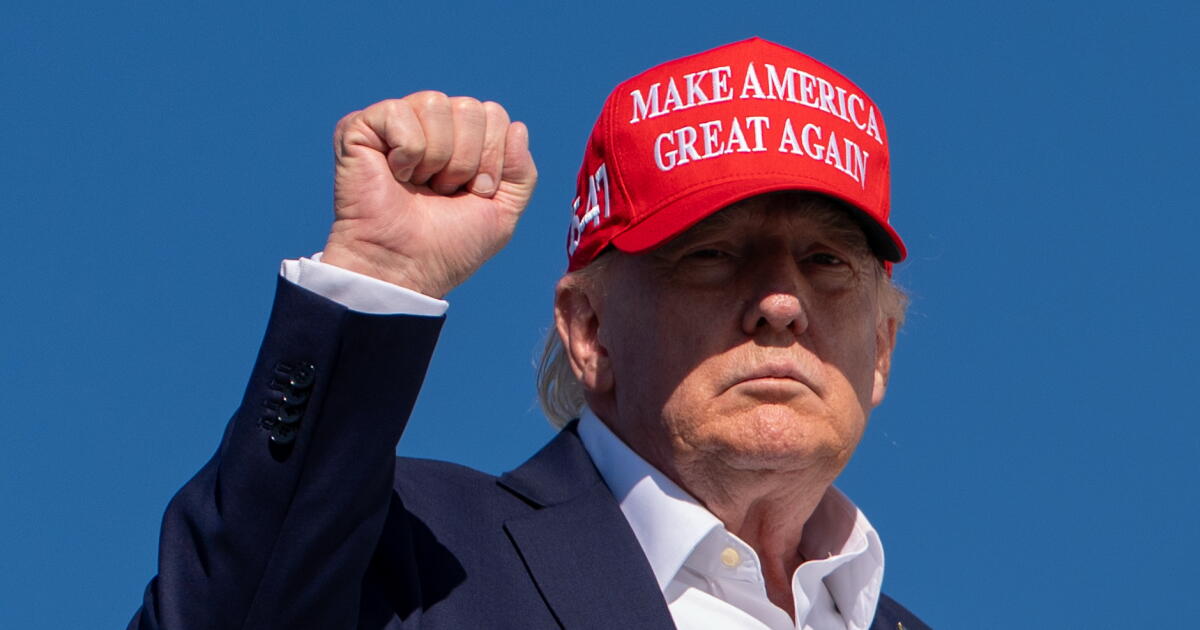
President Trump, whose loss of the House halfway through his first term led to two impeachments, is trying to keep history from repeating — and doing so in ways his opponents say are intended to manipulate next year’s election landscape.

He has rallied his party to remake congressional maps across the country to create more conservative-leaning House seats, an effort that could end up backfiring on him. He’s directed his administration to target Democratic politicians, activists and donors. And, Democrats worry, he’s flexing his muscles to intervene in the midterms like no administration ever has.

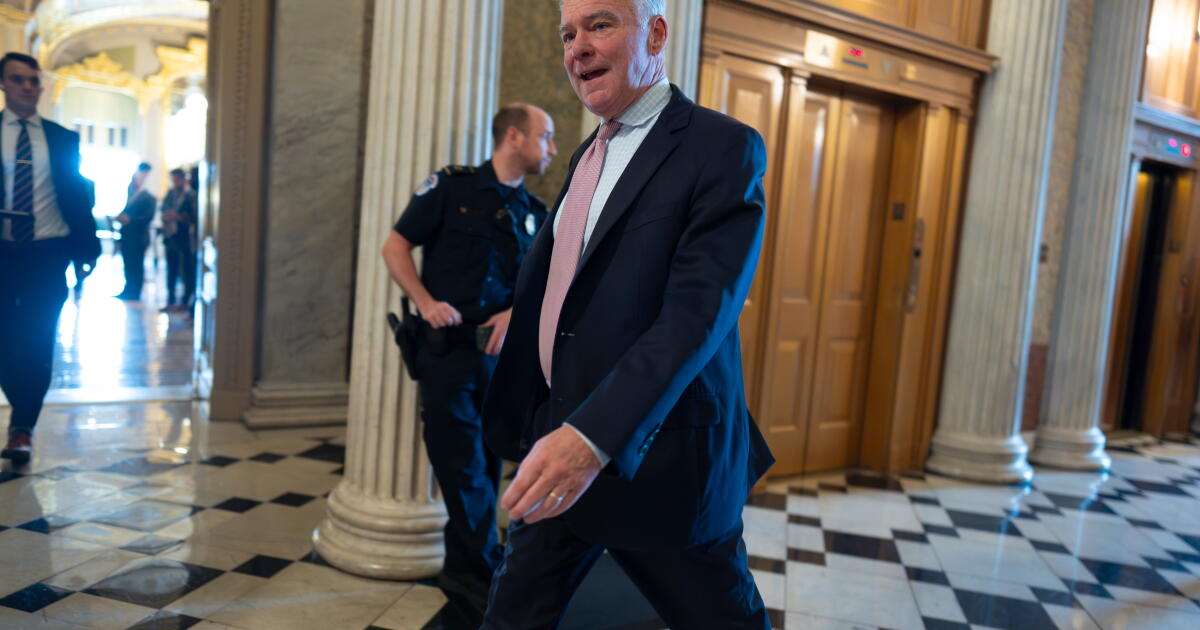
Democrats and other critics point to how Trump has sent the military into Democratic cities over the objections of Democratic mayors and governors. They note that he’s pushed the Department of Homeland Security to be so aggressive that at one point its agents handcuffed a Democratic U.S. senator. And some warn that a Republican-controlled Congress could fail to seat winning candidates if Democrats reclaim the House majority, recalling Trump’s efforts to stay in power even after voters rejected him in 2020, leading to the violent attack by his supporters on the U.S. Capitol.

Regarding potential military deployments, Ken Martin, chairman of the Democratic National Committee, told The Associated Press: “What he is going to do is send those troops there, and keep them there all the way through the next election, because guess what? If people are afraid of leaving their house, they’re probably not going to leave their house to go vote on Election Day. That’s how he stays in power.”

Military to the polls, or fearmongering?

Democrats sounded similar alarms just before November’s elections, and yet there were no significant incidents. California Gov. Gavin Newsom, a frequent Trump antagonist who also warns about a federal crackdown on voting in 2026, predicted that masked immigration agents would show up at the polls in his state, where voters were considering a ballot measure to counter Trump’s redistricting push.

There were no such incidents in November, and the measure to redraw California’s congressional lines in response to Trump’s efforts elsewhere won in a landslide.

White House spokeswoman Abigail Jackson said the concerns about the midterms come from Democratic politicians who are “fearmongering to score political points with the radical left flank of the Democrat party that they are courting ahead of their doomed-to-fail presidential campaigns.”

She described their concerns as “baseless conspiracy theories.”

Susie Wiles, Trump’s chief of staff, denied that Trump was planning to use the military to try to suppress votes.

“I say it is categorically false, will not happen. It’s just wrongheaded,” she told Vanity Fair for an interview that was published earlier in December.

DNC litigation director Dan Freeman said he hasn’t seen an indication that Trump will send immigration enforcement agents to polling places during the midterms, but is wary.

He said the DNC filed public records requests in an attempt to learn more about any such plans and is drafting legal pleadings it could file if Trump sends armed federal agents to the polls or otherwise intervenes in the elections.

“We’re not taking their word for it,” Freeman said in an interview.

States, not presidents, run elections

November’s off-year elections may not be the best indicator of what could lie ahead. They were scattered in a handful of states, and Trump showed only modest interest until late in the fall when his Department of Justice announced it was sending federal monitors to California and New Jersey to observe voting in a handful of counties. It was a bureaucratic step that had no impact on voting, even as it triggered alarm from Democrats.

Alexandra Chandler, the legal director of Defend Democracy, a group that has clashed with Trump over his role in elections, said she was heartened by the lack of drama during the 2025 voting.

“We have so many positive signs we can look to,” Chandler said, citing not only a quiet election but GOP senators’ resistance to Trump’s demands to eliminate the filibuster and the widespread resistance to Trump’s demand that television host Jimmy Kimmel lose his job because of his criticism of the president. “There are limits” on Trump’s power, she noted.

“We will have elections in 2026,” Chandler said. “People don’t have to worry about that.”

Under the Constitution, a president has limited tools to intervene in elections, which are run by the states. Congress can help set rules for federal elections, but states administer their own election operations and oversee the counting of ballots.

When Trump tried to singlehandedly revise election rules with a sweeping executive order shortly after returning to office, the courts stepped in and stopped him, citing the lack of a constitutional role for the president. Trump later promised another order, possibly targeting mail ballots and voting machines, but it has yet to materialize.

DOJ voter data request ‘should frighten everybody’

Still, there’s plenty of ways a president can cause problems, said Rick Hasen, a UCLA law professor.

Trump unsuccessfully pushed Georgia’s top election official to “find” him enough votes to be declared the winner there in 2020 and could try similar tactics in Republican-dominated states in November. Likewise, Hasen said, Trump could spread misinformation to undermine confidence in vote tallies, as he has done routinely ahead of elections.

It’s harder to do that in more lopsided contests, as many in 2025 turned into, Hasen noted.

“Concerns about Trump interfering in 2026 are real; they’re not frivolous,” Hasen said. “They’re also not likely, but these are things people need to be on guard for.”

One administration move that has alarmed election officials is a federal demand from his Department of Justice for detailed voter data from the states. The administration has sued the District of Columbia and at least 21 states, most of them controlled by Democrats, after they refused to turn over all the information the DOJ sought.

“What the DOJ is trying to do is something that should frighten everybody across the political spectrum,” said David Becker, a former Justice Department voting rights attorney and executive director of the Center for Election Innovation & Research. “They’re trying to use the power of the executive to bully states into turning over highly sensitive data — date of birth, Social Security numbers, driver’s license, the Holy Trinity of identity theft — hand it over to the DOJ for who knows what use.”

‘Voter protection’ vs ‘election integrity’

Voting rights lawyers and election officials have been preparing for months for the midterms, trying to ensure there are ways to counter misinformation and ensure state election systems are easy to explain. Both major parties are expected to stand up significant campaigns around the mechanics of voting: Democrats mounting what they call a “voter protection” effort to monitor for problems while Republicans focus on what they call “election integrity.”

Freeman, the DNC litigation director who previously worked in the DOJ’s voting section, said his hiring this year was part of a larger effort by the DNC to beef up its in-house legal efforts ahead of the midterms. He said the committee has been filling gaps in voting rights law enforcement that the DOJ has typically covered, including informing states that they can’t illegally purge citizens from their voter rolls.

Tina Barton, co-chair of the Committee on Safe and Secure Elections, a coalition of law enforcement and election officials who advise jurisdictions on de-escalation and how to respond to emergencies at polling places, says interest in the group’s trainings has “exploded” in recent weeks.

“There’s a lot at stake, and that’s going to cause a lot of emotions,” Barton said.

Riccardi writes for the Associated Press. AP writers Marc Levy in Harrisburg, Penn., Julie Carr Smyth in Columbus, Ohio, and Ali Swenson in New York contributed to this report.

Source link

Trump’s economic claims collide with reality in a Pennsylvania city critical to the midterms

When Idalia Bisbal moved to this Pennsylvania city synonymous with America’s working class, she hoped for a cheaper, easier life than the one she was leaving behind in her hometown of New York City.

About three years later, she is deeply disappointed.

“It’s worse than ever,” said the 67-year-old retiree, who relies on Social Security, when asked about the economy. “The prices are high. Everything is going up. You can’t afford food because you can’t afford rent. Utilities are too high. Gas is too expensive. Everything is too expensive.”

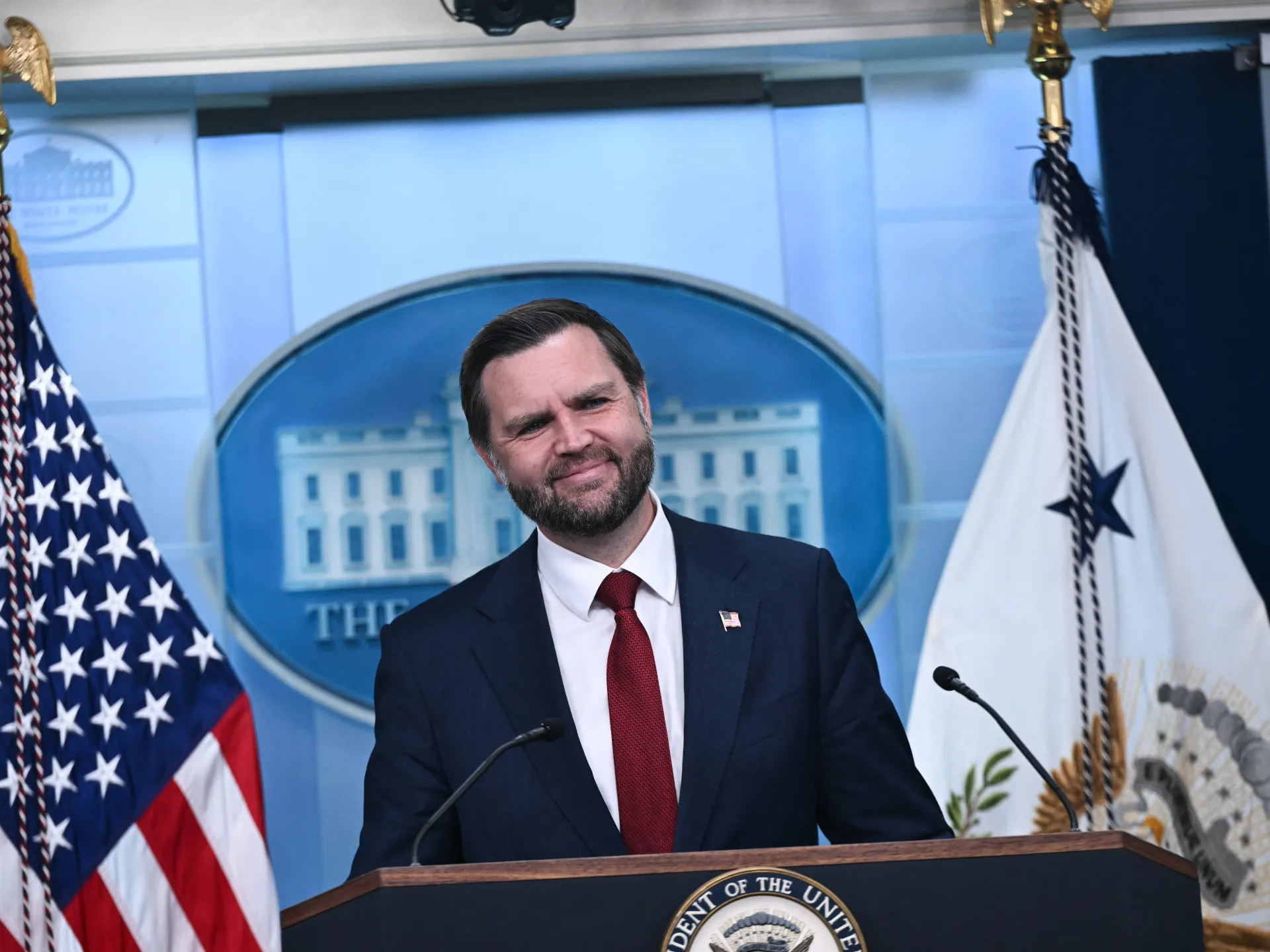
Bisbal was sipping an afternoon coffee at the Hamilton Family Restaurant not long after Vice President JD Vance rallied Republicans in a nearby suburb. In the Trump administration’s second high-profile trip to Pennsylvania in a week, Vance acknowledged the affordability crisis, blamed it on the Biden administration and insisted better times were ahead. He later served food to men experiencing homelessness in Allentown.

The visit, on top of several recent speeches from President Trump, reflects an increasingly urgent White House effort to respond to the economic anxiety voiced by people across the country. Those worries are a vulnerability for Republicans in competitive congressional districts like the one that includes Allentown, which could decide control of the U.S. House in next year’s midterms.

But in confronting the challenge, there are risks of appearing out of touch.

Only 31% of U.S. adults now approve of how Trump is handling the economy, down from 40% in March, according to a poll from the Associated Press-NORC Center for Public Affairs Research. Yet Trump has called affordability concerns a “hoax” and gave the economy under his administration a grade of “A+++++.” Vance reiterated that assessment during his rally, prompting Bisbal to scoff.

“In his world,” Bisbal, a self-described “straight-up Democrat,” responded. “In the rich man’s world. In our world, trust me, it’s not an ‘A.’ To me, it’s an ‘F,’ ‘F,’ ‘F,’ ‘F,’ ‘F,’ ‘F.’”

Agreement that prices are too high

With a population of roughly 125,000 people, Allentown anchors the Lehigh Valley, which is Pennsylvania’s third-largest metro area. In a dozen interviews last week with local officials, business leaders and residents of both parties, there was agreement on one thing: Prices are too high. Some pointed to gas prices while others said they felt the shock more at the grocery store or in their cost of healthcare or housing.

Few shared Trump’s unbridled boosterism about the economy.

Tony Iannelli, the president and CEO of the Greater Lehigh Valley Chamber of Commerce, called Trump’s grade a “stretch,” saying that “we have a strong economy but I think it’s not yet gone to the next stage of what I would call robust.”

Tom Groves, who started a health and benefits consulting firm more than two decades ago, said the economy was at a “B+,” as he blamed the Affordable Care Act, widely known as Obamacare, for contributing to higher health costs, and he noted stock and labor market volatility.

Joe Vichot, the chairman of the Lehigh County Republican Committee, referred to Trump’s grade as a “colloquialism.”

Far removed from Washington’s political theater, there was little consensus on who was responsible for the high prices or what should be done about it. There was, however, an acute sense of exhaustion at the seemingly endless political combat.

Pat Gallagher was finishing lunch a few booths down from Bisbal as she recalled meeting her late husband when they both worked at Bethlehem Steel, the manufacturing giant that closed in 2003.

Now retired, Gallagher too relies on Social Security benefits, and she lives with her daughter, which helps keep costs down. She said she noticed the rising price of groceries and was becoming exasperated with the political climate.

“I get so frustrated with hearing about the politics,” she said.

A front-row seat to politics

That feeling is understandable in a place that often gets a front-row seat to the national debate, whether it wants the view or not. Singer Billy Joel’s 1982 song “Allentown” helped elevate the city into the national consciousness, articulating simultaneous feelings of disillusionment and hope as factories closed.

In the decades since, Pennsylvania has become a must-win state in presidential politics and the backdrop for innumerable visits from candidates and the media. Trump and his Democratic rival in 2024, Kamala Harris, made several campaign swings through Allentown, with the then-vice president visiting the city on the eve of the election.

“Every race here, all the time,” Allentown’s mayor, Democrat Matt Tuerk, recalled of the frenzied race last year.

The pace of those visits — and the attention they garnered — has not faded from many minds. Some businesses and residents declined to talk last week when approached with questions about the economy or politics, recalling blowback from speaking in the past.

But as attention shifts to next year’s midterms, Allentown cannot escape its place as a political battleground.

Trump’s win last year helped lift other Republicans, such U.S. Rep. Ryan Mackenzie, to victory. Mackenzie, who unseated a three-term Democrat, is now one of the most vulnerable Republicans in Congress. To win again, he must turn out the Republicans who voted in 2024 — many of whom were likely more energized by Trump’s candidacy — while appealing to independents.

Mackenzie’s balancing act was on display when he spoke to the party faithful Tuesday, bemoaning the “failures of Bidenomics” before Vance took the stage at the rally. A day later, the congressman was back in Washington, where he joined three other House Republicans to rebel against the party’s leadership and force a vote on extending Obamacare subsidies that expire at the end of the year.

Vichot, the local GOP chairman, called Mackenzie an “underdog” in his reelection bid and said the healthcare move was a signal to voters that he is “compassionate for the people who need those services.”

A swing to Trump in 2024

Lehigh County, home to Allentown and the most populous county in the congressional district, swung toward Trump last year. Harris’ nearly 2.7-percentage-point win in the county was the tightest margin for a Democratic presidential candidate since 2004. But Democrats are feeling confident after a strong performance in this fall’s elections, when they handily won a race for county executive.

Retaking the congressional seat is now a top priority for Democrats. Gov. Josh Shapiro, a Democrat who faces reelection next year and is a potential presidential contender in 2028, endorsed firefighter union head Bob Brooks last week in the May primary.

Democrats are just a few seats shy of regaining the House majority, and the first midterm after a presidential election historically favors the party that’s out of power. If the focus remains on the economy, Democrats are happy.

The Uline supplies distribution factory where Vance spoke, owned by a family that has made large donations to GOP causes, is a few miles from the Mack Trucks facility where staff was cut by about 200 employees this year. The company said that decision was driven in part by tariffs imposed by Trump. Shapiro eagerly pointed that out in responding to Vance’s visit.

But the image of Allentown as a purely manufacturing town is outdated. The downtown core is dotted by row homes, trendy hotels and a modern arena that is home to the Lehigh Valley Phantoms hockey team and hosts concerts by major artists. In recent years, Latinos have become a majority of the city’s population, driven by gains in the Puerto Rican, Mexican and Dominican communities.

“This is a place of rapid change,” said Tuerk, the city’s first Latino mayor. “It’s constantly changing ,and I think over the next three years until that next presidential election, we’re going to see a lot more change. It’s going to be an interesting ride.”

Sloan writes for the Associated Press.

Source link