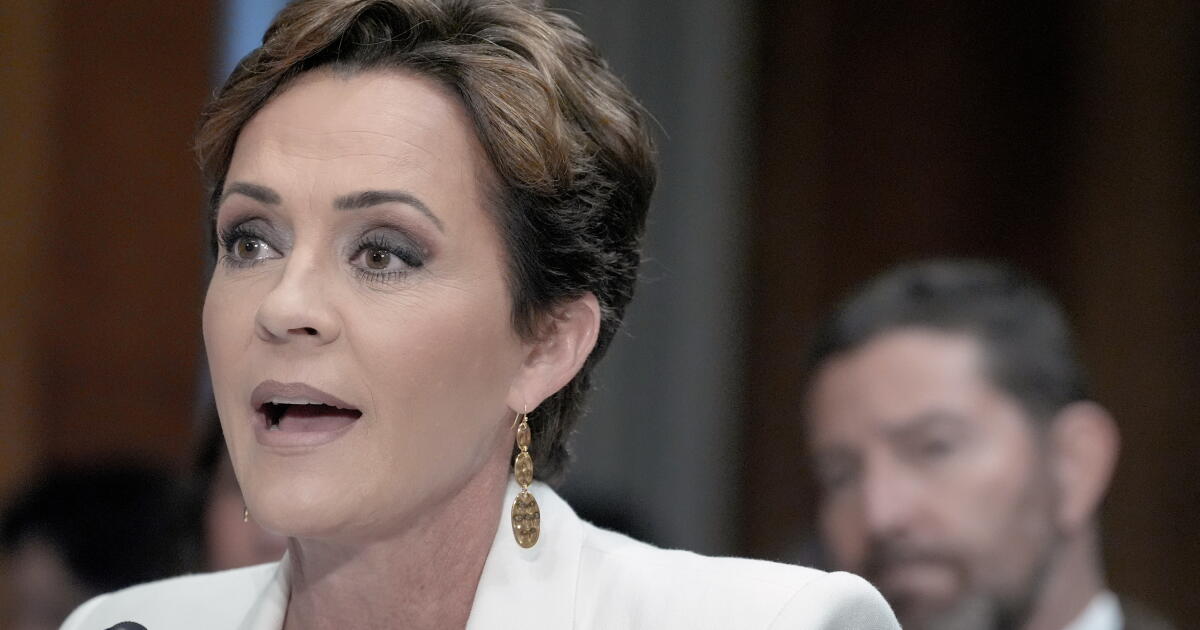
PHOENIX — The U.S. Supreme Court has refused to toss out $122,000 in legal costs that lawyers for former Arizona gubernatorial candidate Kari Lake were ordered to pay for false and misleading statements they made in a lawsuit that sought to require a hand-count of all ballots in the 2022 midterm elections.
The nation’s highest court on Tuesday denied a request from Andrew D. Parker, an attorney who represented Lake in the lawsuit, to review a lower-court decision over the legal costs arising from the unsuccessful litigation.
The lawsuit by Lake and state lawmaker Mark Finchem sought to ban electronic tabulation devices. It was dismissed by a judge who found Lake and Finchem lacked standing to sue and that their lawsuit was filed too close to the election.
In 2022, Lake lost the governor’s race to Democrat Katie Hobbs and Finchem was defeated in the secretary of state’s race by Democrat Andrian Fontes. Both Republicans had promoted the narrative that the 2020 election was marred by fraud.
Maricopa County had sought sanctions against Lake, Finchem and their lawyers, alleging they broke a court rule by making unfounded allegations and by not conducting the necessary research before filing the lawsuit.
U.S. District Judge John Tuchi later concluded the lawsuit’s claims lacked an adequate basis in fact, that the standard inquiry attorneys must make before pressing litigation hadn’t been done and that the lawyers acted recklessly in seeking a court order based on frivolous claims.
The requirement to pay the legal fees applies to the lawyers who pressed the lawsuit, not to Lake and Finchem.
The 9th Circuit Court of Appeals rejected appeals over the lawsuit’s dismissal and the awarding of the legal fees.
The Associated Press left phone and email messages Tuesday for Parker, whose firm is based in Minneapolis.
Earlier this year, Parker asked the Supreme Court to throw out the requirement to pay Maricopa County’s legal fees in the case, arguing such sanctions would deter attorneys from bringing aggressive or novel legal claims.
Maricopa County said lawyers for Lake and Finchem had disregarded a letter that identified false allegations they had made in their lawsuit and relied on some of those claims in a later court filing. The county’s attorneys said those who brought the lawsuit failed to present evidence to support their allegations and falsely alleged that Arizona didn’t use paper ballots and that its electronic voting systems hadn’t been subjected to expert analysis.
WASHINGTON — The Supreme Court sided with Republicans Wednesday and gave political parties and their fundraising committees lower rates for broadcast campaign ads.
Over two dissents, the justices granted a fast-track appeal from the Trump administration and the National Republican Congressional Committee and upheld the use of the GOP-friendly rule in the midterm election.
In a brief order, the court said the issue should be left to the Federal Communications Commission.
The outcome has given Republican candidates an advertising edge in the final weeks of the campaign.
Federal law says a “legally qualified candidate” running for election is entitled to a “lower unit charge” for campaign ads in the 60 days prior to an election.
However, on March 30, the FCC, under Republican control, announced that broadcasters must extend the lower rates to political parties and their joint fundraising committees.
The FCC notice did not explain the basis for this change, and it refused to hold a commission hearing to debate the issue.
But the change was seen as benefiting Republicans.
Democratic candidates have raised more money from direct but limited contributions from individuals, while Republicans have raised far more through party committees that are funded by wealthy donors.
The non-partisan Campaign Legal Center said the FCC’s rule change was “contrary to the text and purpose of the federal statute and would effectively grant super PACs an advertising discount.”
Anna Gomez, the lone Democrat on the FCC, issued a statement objecting to the change.
“The American public should not have sweeping election-year rule changes forced on them in the dark, on the eve of the election, without a single opportunity for public input,” she said.
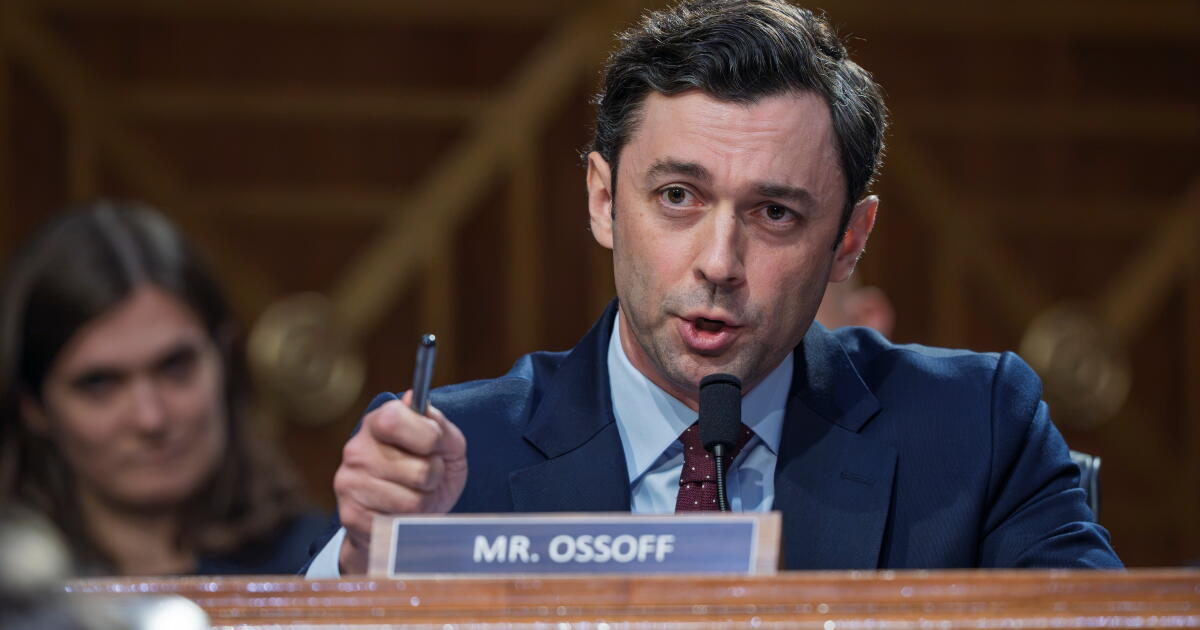
Democratic Senate candidates Sherrod Brown of Ohio, Jon Ossoff of Georgia and Roy Cooper from North Carolina objected to the FCC rule change in April and and asked for a review.
When no action was taken, they filed suit in federal court. They argued the FCC had no authority to change the law that gave only candidates, not fundraising committees, the benefit of the lower ad rates.
Since then, the two sides have gone back and forth in the courts, with both accusing the other of seeking a late change in the rules.
The U.S. 4th Circuit Court of Appeals in Virginia ruled for the Democrats in a pair of 2-1 decisions.
“Suffice to say that any ‘chaos’ is the FCC’s fault, not ours,” Judge Robert B. King, a Clinton appointee, said on Oct. 7. It “has endeavored to create from whole cloth a new rule entirely outside the purview of judicial review.”
But the Supreme Court stepped in twice to overturn the 4th Circuit and rule for the Republicans.
In a Sept. 4 order, the court said in an unsigned order the 4th Circuit intervened too soon. The law “makes clear that an aggrieved party must wait for the Commission to resolve its application for review by order before filing a petition for judicial review.”
Only Justice Ketanji Brown Jackson dissented.
In September, the FCC did nothing other than to ask for public comments on its March rule change.
Frustrated with the delay, the 4th Circuit issued a second order requiring the FCC to act by Oct. 9.
Last week, in response to an appeal from Solicitor Gen. D. John Sauer, Chief Justice John G. Roberts put the 4th Circuit order on hold.
On Wednesday, the full court said the 4th Circuit Court should have left the issue to the FCC.
“Our system of separation of powers does not allow the judiciary to meddle in the workings of a coordinate branch of the government in this manner,” the court said an unsigned opinion.
In dissent, Jackson and Justice Sonia Sotomayor voted to deny the administration’s appeal.
WASHINGTON — President Trump said Thursday that he will not order a resumption of military strikes on Iran before the Nov. 3 midterm elections in the United States.
Trump, while stumping for Republicans this week, has hinted that he was confident that an endgame to the war could come in the days before or after the election, while also hinting that he remained open to resuming full-scale military operations against Iran.
For weeks, Trump has been threatening that a post-midterm election escalation in the seven-month-old war remains a viable option, despite his initial promises to Americans of a military campaign that would last a matter of weeks.
But Trump in a social media post on Thursday said the U.S. “will not be attacking Iran at any time prior to the Midterm Elections to be held in the United States on November 3rd.”
Trump added that his team has been “having productive discussions with the Islamic Republic of Iran.”
Negotiations had appeared at a standstill since Trump late last month publicly rejected Iran’s proposal to reopen the Strait of Hormuz within seven days if the U.S. met certain conditions.
Iran, however, said last week it had received a U.S. counterproposal. And Foreign Minister Abbas Araghchi on Thursday said he expected Tehran would offer a formal reply within days.
Trump’s post comes as the military has dispatched more resources to the region. U.S. officials have said a third aircraft carrier, the USS Theodore Roosevelt, and thousands of troops aboard it and accompanying ships could arrive as early as the end of October.
Trump’s announcement was made the same day the USS Abraham Lincoln was due to arrive to its home port in San Diego after a record-long deployment in support of the Iran war. There have been reports of crew stress and poor mental health, as well as supply shortages, including food and hygiene products.
The USS George Washington, which is usually based in Asia, relieved the Lincoln in August. The other aircraft carrier in the Middle East, the USS George H.W. Bush, has been deployed for about six months, but it pulled into Phuket, Thailand, for a port visit several days ago.
There are few people, if any, who’ve tracked U.S. elections for longer or in greater depth than Charlie Cook.
Ever since 1984, when he started his eponymous political newsletter, Cook and his stellar crew of nonpartisan analysts have plumbed many thousands of races — for president, Congress, governor — following the money, sussing out the candidates, watching their ads and assaying the campaign landscape at a granular level.
What’s unusual, Cook suggested, is the prospect of big Democratic gains when Republicans started out this election season with so many advantages. (And that was before the GOP set off on a gerrymandering jag at Trump’s behest.)
Roughly two-thirds of the Senate seats up in November are in states Trump carried in 2024. Five of the seven toss-up races are in states Trump won, several by double digits.
On the House side, Republicans maintain control by an exceedingly narrow margin, meaning there aren’t a lot of low-hanging districts for Democrats to aim for. As Cook rightly noted, “A party cannot lose a seat they don’t have.”
We’ll get to predictions in a moment. (Patience, dear reader.)
First, let’s hear from Nathan Gonzales, another longtime election handicapper. He’s been tracking political contests nationwide for more than 25 years and edits and publishes Inside Elections — formerly the Rothenberg Political Report — another nonpartisan field guide to campaigns. Like Cook, he traffics in clear-eyed, dispassionate analysis, not partisan wish-casting or political spin.
A detail of the exhibit in the Epstein Files Bookmobile during a campaign stop for Democratic House candidate Bob Brooks at the United Steelworkers of America office in Bethlehem, Pa. Brooks is challenging Republican incumbent Ryan Mackenzie (R-Pa.) in Pennsylvania’s highly competitive 7th Congressional District in the upcoming midterm election.
(Alex Wong / Getty Images)
Trump’s performance — his approval rating is flirting with record lows — “has inspired Democrats, turned off independents and created a group of apathetic Republicans,” Gonzales said, “and those are the ingredients for a good or great Democratic year.”
He noted Democrats don’t need a big wave to seize control of the House. A pickup of just three seats would flip the House, marking the seventh straight midterm election in which one chamber or the other changed partisan hands.
(For the record, there is no authoritative definition of a wave election, though it’s generally agreed the term applies to an election in which one party or the other gains a large and lopsided number of House and Senate seats.)
It’s beginning to feel a lot like 2006, Gonzales said.
Gonzales and his team of experts believe the House is most likely gone for Republicans, forecasting a Democratic gain of seven to 15 seats, unless the bottom falls out for the GOP and their losses climb much higher.
In the Senate, where Democrats need to pick up four seats to take control, Gonzales sees the chamber teetering on a knife’s edge, forecasting a Democratic gain of three to five seats.
“It’s too late to fundamentally change the trajectory of this election,” Gonzales said. “But if Republicans can boost Republican turnout, it might be enough to save the Senate.”
For his part, Cook agrees that Mike Johnson may be nearing the end of his speakership. The best-case scenario for the GOP would be keeping its losses to 25 House seats or less, Cook said, which is right around the average for midterm elections going back well over half a century.
“It starts getting into eyebrow-raising territory if it gets north of 35,” Cook said, “because that shouldn’t be possible with the few competitive districts we have now.”
As for the Senate, he suggested the best Republicans can hope for is a net loss of two seats, keeping the GOP barely in control. (A loss of three would mean a 50-50 split, leaving Vice President JD Vance poised to be the tiebreaker on close votes — and wouldn’t he love having to drop off the 2028 campaign trail to be on hand, just in case.)
Of course, there’s still an election to be held, votes to be cast and ballots to be counted.
President Trump is promising more payments to voters just ahead of the Nov. 3 midterm elections — this time, to more than 20 million seniors, who each would get $90 to help pay for Medicare premiums.
The announcement, made late Friday night by Trump on social media, comes after he said last month about 1 million people would get rebate checks of $500 for Affordable Care Act premiums. It also comes after his One Big Beautiful Bill Act last year slashed funding for Medicare, disqualifying thousands from eligibility and raising fees for the rest, and for the ACA, raising premiums for millions by eliminating tax credits.
Trump has also promised on the campaign trail to send every American adult $5,000 if Republicans retain control of the House and Senate in the midterm elections.
His latest promise — which, like the others, would require approval from Congress — would probably cost more than $1 trillion, adding to the ballooning deficit and worsening inflation.
Polls show Americans increasingly blame Trump for the high cost of gasoline and groceries, with just 17% approving of his handling of inflation. Rising healthcare costs are also a key component of the affordability struggles many face across the country.
The president has sought to shrug off concerns about affordability, claiming the economy is booming.
The White House said the $90 payments for seniors would come from the Medicare Improvement Fund, established by Congress in 2008 as flexible funding to improve program operations and payments to healthcare providers.
As proposed, Medicare Part B enrollees would receive a one-time payment in October, either through direct deposit or by check, the White House said. Total monthly costs for the program — which covers costs like doctor’s visits, ambulance services and lab tests — start around $200 and vary with income.
To be eligible, seniors must be living in the U.S. and not be already receiving premium assistance from Medicaid or paying adjusted monthly premiums based on income, according to the Centers for Medicare and Medicaid Services. Seniors enrolled in Medicare Advantage, a private plan alternative to traditional Medicare coverage, would not be eligible for the payment. More than half of eligible Medicare beneficiaries have Medicare Advantage, according to healthcare research nonprofit KFF.
Previous administrations have not used the Medicare Improvement Fund in this way, although Congress has periodically taken out money from the fund to pay for other priorities, said Larry Levitt, KFF’s executive vice president for health policy. For example, $20.74 billion was used for the creation of the Affordable Care Act in 2010.
“The Medicare Improvement Fund language is quite broad and gives substantial discretion to the administration,” Levitt said.
MONTGOMERY, Alabama — President Trump vowed to campaign in 35 of the most competitive battleground districts in the final sprint to November’s midterm elections.
Instead, he will begin October by stumping in Alabama and Oklahoma, two of the most Republican states in the nation. His events are sure to draw enthusiastic crowds of fans, but his choice of destinations is a reminder of his deep unpopularity in much of the country during a campaign season he’s sought to make all about himself.
Trump will hold rallies Thursday in Durant, Okla., and Friday in Mobile, Ala., where he is sure to draw crowds, but also has raised eyebrows.
While organizers insist the rallies are in locations with media markets that span state lines and they will help bolster broader turnout, Trump’s itinerary is yet another sign of the uphill fight that his party faces. Republicans already have been pouring money into red states once considered safe as they try to shore up candidates facing an unhappy electorate that has soured on Trump and his polices.
Some Republicans also have been distancing themselves from the president in recent weeks as they try to appeal to voters beyond Trump’s “Make America Great Again” base. They’ve removed or downplayed references to the president on their websites and increasingly voiced opposition to his unpopular war with Iran.
But Trump’s events next week are likely to deliver something he craves: adoring crowds. He is almost guaranteed to fill the venues with the kind of die-hard supporters who fueled his political rise, projecting excitement as he tries to bolster enthusiasm and rally Republicans.
“The President’s ability to engage with and activate low-propensity voters is unmatched. That’s why he’ll be barnstorming the country to activate the voters we need to win in November,” Republican National Committee spokesperson Natalie Baldassarre said, promising more October rallies.
Democrats, meanwhile, celebrated the announcement. “The political floor is falling out from underneath Trump and Congressional Republicans, forcing them to scramble to spend and campaign in deep red territory in the final weeks,” said Viet Shelton, spokesperson for the Democratic Congressional Campaign Committee.
The RNC noted that Durant is on the Texas border and next to the Dallas-Fort Worth media market and will draw Republicans in Texas, which has emerged as one of the most critical states on the map. Scandal-plagued Atty. Gen. Ken Paxton, whom Trump backed over incumbent Sen. John Cornyn, is locked in a tight race against Democrat James Talarico. Gov. Greg Abbott also is facing a stronger-than-expected challenger in Democrat Gina Hinojosa.
Mobile is next to Florida’s panhandle, a Republican stronghold where high turnout can help bolster Trump-backed candidates running for Senate and governor. However, Florida Republican Sen. Ashley Moody is not expected to attend.
In Oklahoma, Trump will be stumping for Mike Mazzei, whom he backed as the Republican nominee for governor during a competitive primary. Mazzei is running against Oklahoma’s Democratic House Minority Leader Cyndi Munson.
“This race continues to get more competitive — and national Republicans are right to be worried about Mazzei,” Democratic Governors Assn. spokesperson Kevin Donohoe said in a statement.
Alabama, meanwhile, holds deep nostalgia for Trump and his early supporters. He held his first mega-rally in Mobile more a decade ago, drawing some 30,000 people to a college football stadium. The crowd made clear to skeptics of his campaign that he was more than a celebrity novelty.
“It’s very natural that he would host a rally here as he is gearing up for the midterm elections,” said John Wahl, the Republican candidate for lieutenant governor and former chair of the Alabama Republican Party.
Although Republicans remain the heavy favorites in Alabama’s statewide campaigns, they face a more challenging political landscape.
Former Democratic Sen. Doug Jones is mounting a vigorous campaign for Alabama governor against one of Trump’s most vocal allies, Republican Sen. Tommy Tuberville, who welcomed the president’s visit.
Republican Rep. Barry Moore, running to replace Tuberville in the Senate with Trump’s backing, said the president’s rally “will be the jet fuel we need to win big in Alabama.”
Mobile is also near Alabama’s 2nd Congressional District, which leans red after its lines were redrawn but is not a slam dunk for Republicans as they try to dislodge Democratic Rep. Shomari Figures.
Figures has been criticizing the president’s plan to lower import tariffs on foreign beef in an appeal to cattle ranchers as he tries to fend off a challenge from his Trump-backed opponent, State Rep. Rhett Marques.
Trump has promised to ramp up his campaigning in the election’s final stretch and had said he would visit all of the most competitive districts .
“It’s all about 35 races,” he said at a recent Rose Garden dinner attended by Republican lawmakers. “I’m going to go to every one of those 35 places and we’re going to see if we can get everyone elected.”
Colvin and Chandler write for the Associated Press. Colvin reported from New York. AP reporter Bill Barrow in Atlanta contributed to this report.
WASHINGTON — Despite rising political anxiety over the Iran war, senators on Thursday narrowly rejected a war powers resolution seeking to halt President Trump’s military action, which has been largely blamed for the spike in gas prices and become a flashpoint in the midterm election.
The Senate tally, 49-50, coming days after Trump’s bombastic address to the United Nations in which he threatened to “annihilate” Iran, was likely the last chance for lawmakers to go on record about the war ahead of November. More Republicans are peeling way from the president as the war drags on, a rare slap back to Trump, as they campaign for control of Congress. The Senate outcome fell short, with four GOP senators joining most Democrats in favor of the resolution.
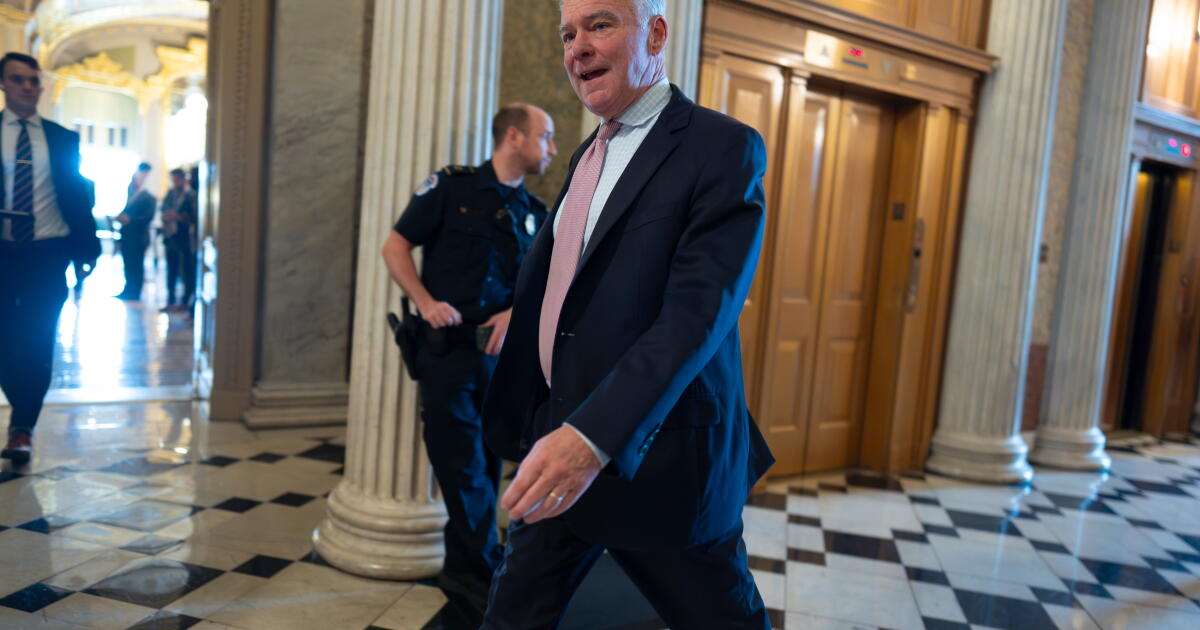
“They have been carrying water for this ridiculous and illegal war for months and months and months and not listening to their constituents,” said Sen. Tim Kaine (D-Va.), who pushed the war powers resolution forward.
About half of rural American voters believe the economy is worse off now than when Trump returned to office, according to a new survey from the Associated Press in partnership with KFF. The costs of groceries, gas and healthcare rank as top pain points for the rural voters.
“We’ve got to break the cycle,” said Sen. Thom Tillis (R-N.C.), who joined in voting yes.
Republican Sens. Susan Collins of Maine, Lisa Murkowski of Alaska and Rand Paul of Kentucky also voted for the resolution to end the war, as they have in many previous tallies, and Democratic Sen. John Fetterman voted against.
This was the 14th time the Senate has considered a war powers resolution since Trump launched the conflict Feb. 28.
War powers resolutions are largely political statements, without the full force of law, but stand among the sharper tools the House and Senate have to express disapproval of the White House, short of halting funds for Trump’s military actions. As resolutions, they do not go to the president’s desk for his signature.
As gas prices climb, Republicans start to question the war
Republicans in control of Congress have shied away from directly confronting Trump over the war, now stretching past the seven-month mark. But their unrest is surfacing as stubbornly high gas prices leave voters in a cash crunch back home.
Diesel costs, in particular, have almost doubled, topping $6 a gallon, according to AAA.
Just returning from a swing through Iowa, Kansas and Nebraska stumping for GOP candidates who are suddenly at risk in their elections, Sen. John Kennedy of Louisiana called on Trump to hold a prime-time address to the nation to explain the Iran war strategy and the end game.
“People are confused about the war and upset about the cost of living,” he said.
But he and others were not yet ready to vote against the war.
“My own view is that the focus right now needs to be on attacking the cost of living issues,” said Sen. Josh Hawley (R-Mo.), who opposes the war powers resolution and believes the president is acting within his authority to conduct the military action.
House Democratic Leader Hakeem Jeffries scoffed at the handful of Republicans now trying to distance themselves from what he called Trump’s failed economy. “Now all of a sudden they’re waking up,” he said.
Democrats keep pushing war powers votes in Congress
Earlier this month, the House for a third time approved a war powers resolution, this time with seven Republicans joining the Democrats, including two from battleground Iowa, Rep. Zach Nunn and Rep. Mariannette Miller Meeks, where affordability issues among rural voters are dominating the campaigns.
Senators, though, have rarely been able to confront Trump by passing a war powers resolution.
In June, the Senate approved a war powers resolution after four GOP senators joined Democrats, but Republicans abruptly reversed course the next day after Trump berated them during a private lunch over the outcome.
At the time, Sen. Bill Cassidy of Louisiana stood up to defend his vote only to end up in a shouting match with Trump. He later switched to oppose the war powers resolution after receiving a personal briefing from the White House.
Thursday’s vote was on a resolution that had passed the House in July with GOP support. Rep. Pramila Jayapal (D-Wash.) who authored the House resolution, said the Senate outcome was “a slap in the face to the millions of American people who want this war to end.”
Other options to halt the Iran war
As the war drags on, costing $43.5 billion so far, Congress is also seeking other ways to force Trump to rethink his military strategy in Iran.
Rep. Thomas Massie, the renegade Republican from Kentucky, pushed forward articles of impeachment against Secretary of Defense Pete Hegseth before the GOP leadership abruptly adjourned the House and sent lawmakers home to campaign for the election, avoiding any potential vote on the matter.
Lawmakers also have the power of the purse to curtail military spending, something Republicans have been reluctant to do but Democrats are sure to tackle if they win power in the midterm election. The White House’s request for an additional $87.6-billion funding package for the war and other needs has idled in Congress.
First created in the aftermath of the Vietnam War as a way to hold a president accountable for military actions, the war powers act has long posed a test of the balance of power between the executive and legislative branches of government.
While the Constitution says only Congress can declare war, the president as commander-in-chief is also able to engage the military. The war powers act seeks to provide clarity by requiring the president, within 60 days of any such action, to seek approval — or risk disapproval — from Congress.
Mascaro writes for the Associated Press. AP writers Joey Cappelletti and Mary Clare Jalonick contributed to this report.
In La Palma Park Stadium in Anaheim, a month before the Bay of Pigs invasion, 7,500 students and parents skipped school or work and gathered to learn about communist plans to take over the United States.
“Right now, we have a 50-50 chance of defeating the communist threat,” Herbert Philbrick, a former FBI agent, told the crowd on March 8, 1961. “Each day our chances grow less.”
Walter Knott, of berry-farm fame, sponsored the five-day “Christian Anti-Communist School” to help Orange County see the world that he saw, one where big government and liberalism led to Soviet domination.
The message stuck. Within the decade, Orange County would have 38 chapters of the conspiracy-minded, ultra-right-wing John Birch Society, which called Republican President Dwight D. Eisenhower a “communist tool.” Knott and actor John Wayne were members, as was the county’s congressman.
The rightward mobilization during the suburban explosion of the 1960s gave Orange County a national reputation for hard-line conservatism with a crackpot edge — “nut country,” in the words of Fortune magazine.
The county’s deep pockets funded right-wing candidates and movements throughout the nation. At home it spawned popular but ultimately doomed measures such as the Briggs Initiative in 1978 to ban gays and lesbians from working in public schools, and Proposition 187 in 1994, which would have denied public services to immigrants in the country illegally.
The Republican Party reached its peak in the Reagan era and has been slowly losing its membership edge since 1990, as the diversity of Los Angeles and the world at large started to bleed through the so-called Orange Curtain.
Source: California Secretary of State
(Priya Krishnakumar / Los Angeles Times)
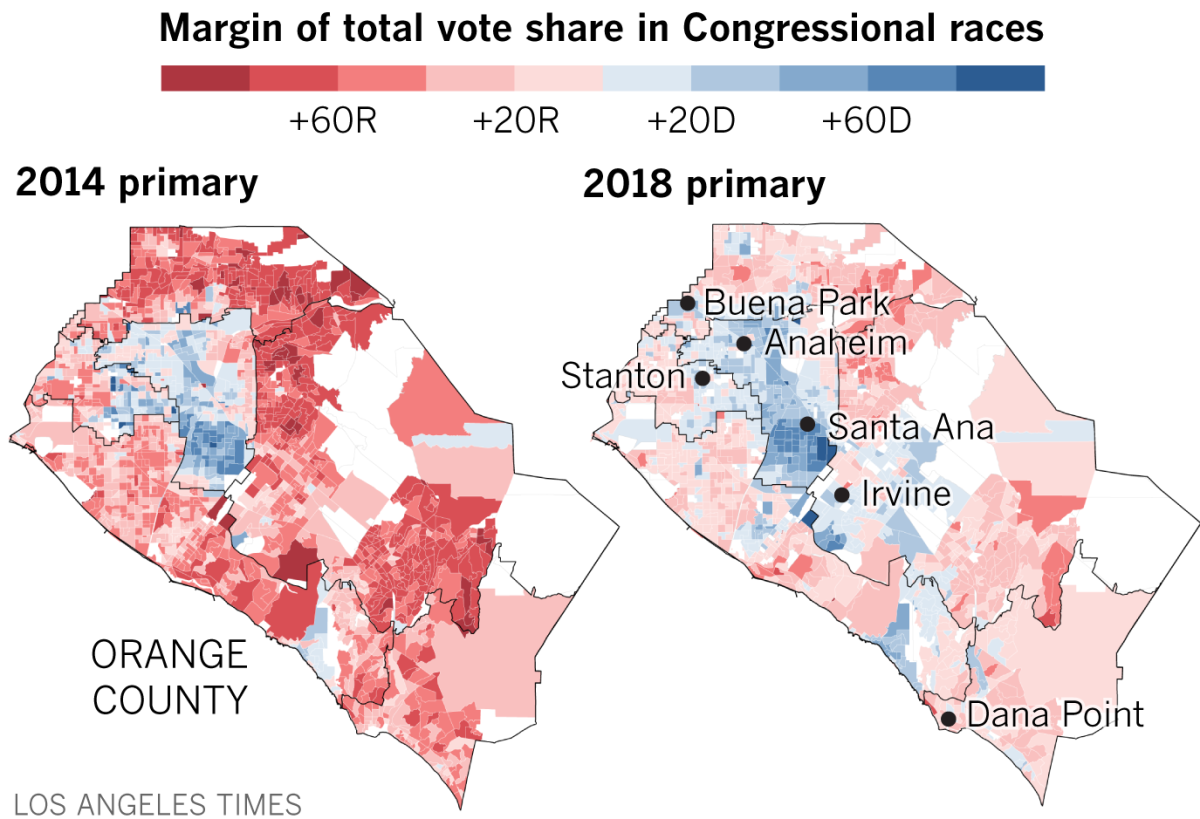
Registered Republicans today outnumber Democrats by only 2 percentage points, down from 22% at the peak, with a large contingent of self-declared independents positioned to swing elections either way. The GOP has a chance of losing four congressional seats in the county in Tuesday’s midterm election. If so, it would be the first time since the 1930s that Orange County would be without Republican representation in the House.
A GOP loss of even one or two seats would be significant, not as a turning point so much as a powerful sign of change — hastened by dislike for President Trump — in this one-time heart of American conservatism.
Source: Political Data, Inc.
(Priya Krishnakumar / Los Angeles Times)
::
Orange County seceded from its northwestern neighbor, Los Angeles, in 1889, led by fiercely independent ranchers, sheepherders, beekeepers, citrus growers and crop farmers who had bristled under the control of a rich city 30 miles up the rail line.
The county then was a constellation of small farm and dairy towns in the north and scattered resort towns along the coast. In the south, the basin tapered off into a narrowing valley between the Santa Ana Mountains and the coastal San Joaquin Hills, where sheep and cattle ranches had thrived since California was part of Spain and Mexico.
Americans had taken over the ranchos in the late 19th century after a devastating drought left many old landowners of Spanish ancestry, the Californios, broke.
Lewis Moulton was one of the Yankee migrants. He came from Boston in 1874 and grazed sheep on the open range from Oceanside to Long Beach. Family lore has it that natural gas seeps were so rich in some spots that, as he camped, he would light them to cook his breakfast.
After two decades of renting land, he and a Basque shepherd, John Pierre Daguerre, had enough money to buy Rancho Niguel, which they eventually expanded to 22,000 acres. It was rugged, isolated country, good mostly for grazing. The cheapest land was the steep part near the coast, between what would become Laguna Beach and Dana Point — about $15 an acre. Today, small fractions of an acre go for double-digit millions.
In the second half of the 20th century, these backwater ranchers and farmers, the Moulton family, the O’Neills, Floods, Irvines, Segerstroms, would physically and culturally shape Orange County into the suburban giant it is today.
But there was always an underclass that made their dreams work.
Tenant farmers — often with roots in Mexico, the Basque country or in California before the American conquest — rented spots on these ranches to graze and grow barley. Others toiled as hands for the landowners.
In the north, they lived in segregated barrios in Santa Ana, Westminster, Anaheim and Garden Grove — where their children attended separate “Mexican schools” until a federal appeals court ruled them unconstitutional in 1947. In the south, they made up smaller communities in El Toro and San Juan Capistrano.
Stephen Rios stands in the doorway of the adobe house in San Juan Capistrano built by his family in 1794.
(Mark Boster / For The Times)
“My tata got killed right there by the train when he was 93 years old,” Stephen Rios said of his grandfather, an American Indian named Mochanai, as he sat in his front garden across from the Mission San Juan Capistrano. “He was a vaquero, a well-known horse trainer.”
Rios’ family worked for the Moultons and O’Neills and lived in the adobe house built in 1794 for their ancestor Feliciano Rios, who came to California as a Spanish soldier and married an American Indian woman.
Rios, an attorney, inherited the home from his father and lives there today. His son’s bedroom has the ceiling boards that the famed bandito Joaquin Murrieta, a family friend known as the Robin Hood of El Dorado, would lift to hide in the attic in the 1850s. A flat-screen TV sits below them now.
The American Indian, Californio and Mexican residents of their dirt street — the oldest neighborhood in California — were conservative. “They loved their families, their church,” he said. “They loved their pieces of land. They were strong, religious independent people.”
Republicans reigned during the rural era. The land barons did not want labor organizers anywhere near their field hands.
When orange pickers walked out of the orchards in 1936, the strikers were arrested and beaten by police and mobs. The Times reported “old vigilante days were revived in the orchards of Orange County yesterday as one man lay near death and scores nursed injuries.”
Changes in Orange County’s 948 square miles — physical, demographic and political — have always rolled from north to south. While the Rios family was still living in the cowboy era, World War II brought rapid transformation to the northern part of the county.
The military needed more West Coast bases to fight the Japanese, and the open space between Long Beach and San Diego was perfect. The government built bases in Seal Beach, Los Alamitos, Santa Ana and El Toro.
Defense contractors and other big manufacturers followed: Hughes Aircraft, Rockwell, Ford Aeronutronic, Boeing, American Electronics, Beckman Instruments.
The farmers and ranchers became developers, or sold their land to other builders, creating vast tracts of homes across the northern end of the county from Huntington Beach to Fullerton. In this era of big cars and backyard barbecues, houses turned inward. Garages replaced porches and picture windows; neighborhoods were quiet.
The newcomers, many from the South and Midwest or white-flighters from Los Angeles, converged at church.
::
At its core, Orange County held a tension between Midwestern traditionalism and California’s drive for reinvention.
The midcentury suburbs in the north were libertarian-leaning enclaves, yet living on Washington defense spending, and listening to a sunny California-bred gospel of self-empowerment and prosperity.
An Iowan named Robert Schuller put out a newspaper ad in 1955, “Come as you are … In the family car!”
He preached from the roof of the snack bar at the Orange Drive-in theater, not about fire and brimstone, but about “possibility thinking” with catchphrases like “Turn your scars into stars.”
Robert Schuller, who delivered a new type of self-healing Gospel to the country, at the new Crystal Cathedral in 1980.
(Tony Barnard / Los Angeles Times)
Schuller’s congregation boomed, becoming one of the nation’s first megachurches. His “Hour of Power” television sermon beamed across the country. In 1980, he built a glass church longer than a football field, the Crystal Cathedral.
Orange County birthed hugely influential ministries that mixed God with conservative politics: Chuck Smith’s Calvary Chapel, Greg Laurie’s Harvest Crusade, Paul and Jan Crouch’s Trinity Broadcasting Network and Rick Warren’s Saddleback Church.
“The megachurches reinforced and marinated the conservatism coming out of the defense plants,” said Fred Smoller, associate professor of political science at Chapman University.
Orange County’s open space and space-age technology, coupled with fervent entrepreneurship and an-edge-of-the-continent mentality, let tinkerers and visionaries experiment with minimal regulation.
This was a suburban county that, like no other, reached deep into popular culture.
Knott’s Berry Farm was the nation’s first theme park. Disneyland became one of the world’s biggest destinations. The ministries reached millions. South Coast Plaza shopping mall would draw more people from around the world than Disneyland. The Irvine ranch grew into the largest planned city in America. Leisure World became the first retirement community.
Leisure World resident Jerry Wyss enjoys the pool in 1999.
(Mark Boster / Los Angeles Times)
In new coastal towns such as Dana Point and San Clemente, Hobie Alter, Gordon “Grubby” Clark and John Severson (living next door to Orange County native Richard Nixon in his “Western White House”) helped create a whole new culture around an ancient Polynesian sport that would become a multibillion-dollar surf industry.
In Laguna Beach, Tom Morey, a Douglas Aircraft composites engineer, invented the bodyboard. In Anaheim, the Van Doren brothers opened the first Vans store.
And the likes of Knott and Anaheim’s Carl Karcher, the founder of Carl’s Jr., would help give America a new brand of conservatism, with their friend John Wayne in Newport Beach to embody it.
With the Cold War at its peak in the 1960s, families in Orange County, so many of them in the military or defense industry, heeded their call.
“At living room bridge clubs, at backyard barbecues, and at kitchen coffee klatches, the middle-class men and women of Orange County ‘awakened’ to what they perceived as the threats of communism and liberalism,” wrote Lisa McGirr, a professor of history at Harvard, in “Suburban Warriors: The Origins of the New American Right.” “They became the cutting edge of the conservative movement in the 1960s.”
“The lack of a large organized working class and the near absence of racial minorities made it likely that Orange County’s political rainbow would consist of relatively few colors.”
The quiet homogeneity of the walled and gated communities allowed politicians to exploit fears of the outsider — whether they be African Americans from Los Angeles, immigrants from Mexico, or gays, Muslims and Koreans.
“The anti-minority stuff accelerated political careers here,” said Smoller, the political scientist. “We have a history of sending some real oddballs to Congress.”
An early one was Rep. James Utt, who in 1963 warned about the United Nations training “a large contingent of barefooted Africans” in Georgia to take over the country.
Cementing this conservatism: its daily newspaper, the Register, and its libertarian owner Raymond C. Hoiles. He had once waged war against a measure to improve mental health care in Alaska because he said it was a communist plot to brainwash Americans in concentration camps.
In 1964, Pat Donnelly, a young aerospace engineer working at McDonnell Douglas, bought a small home in Buena Park for $18,500. His neighbor’s first admonition to him: They must help ensure no blacks, Mexicans or Catholics moved in.
Donnelly was a Catholic, and even worse, a union-card-carrying Democrat who once played guitar and banjo in a touring folk band. He and his wife had two girls and joined the St. Pius V Church on Orangethorpe Avenue and started a choir. With his own slice of suburbia, he became more concerned about taxes and grew more conservative.
“I didn’t like some of the stuff I was seeing in the cities, the drugs and crime. It seemed like people were abusing welfare. I was paying for that.”
He switched parties and never looked back.
After Orange County’s favorite candidate Barry Goldwater lost to President Lyndon B. Johnson in 1964, Republican rainmakers turned their attention to Reagan’s run for governor. His first political fundraiser was at a home in Anaheim, and the county would nurture his ambitions the rest of his career.
By the 1970s, developers had reached deep into south Orange County. The Irvine Co. had wound down its cattle operations and was parceling out its 185 square miles of land. Some 1,500 acres near Newport Beach would become UC Irvine. The company developed a master plan for a city to grow around the university, which would incorporate in 1971.
The Moultons sold their land soon after to developers who would build Laguna Hills, Laguna Woods, Laguna Niguel and Aliso Viejo. In their yards, homeowners would find rattlesnakes that wandered out of the wild canyons and steep hillsides between subdivisions.
To the east and south, the O’Neills’ vast scrubby land would give way to even newer, posher cities such as Rancho Santa Margarita, Ladera Ranch and the community of Coto de Caza — the setting for the “Real Housewives of Orange County.”
With all this construction, Stephen Rios’ 225-year-old adobe home is hemmed in by suburbia.
The “Los Rios District” is now on the National Register of Historic Places and is highly sought-after real estate for its quaint atmosphere.
Most of the old Californio families sold and moved on.
“Everyone else wants to live here now,” Rios said.
Jared Mathis, left, and Scott T. Barnes stand off the trail in the Aliso and Wood Canyon Wilderness looking over the 22,000 acres that their great-grandparents bought in the 1890s.
(Mark Boster / For The Times)
Lewis Moulton’s great-grandson, Jared Mathis, came back from a job back east to Laguna Hills to manage the family’s remaining holdings. A few years ago, he took his dad — who moved away in the 1970s — for a drive to look at the old ranch where he grew up.
But his father couldn’t get his bearings. All the landmarks were gone, the hills terraced, new trees and houses blocked once wide views. “They say they moved more dirt building Aliso Viejo than they did digging the Panama Canal,” Mathis said.
Mathis drove his father to the ridgeline of Laguna Beach. From there, you could see the whole ranch area, smell the laurel sumac in Aliso Canyon, glimpse some old corrals in the distance, get a grip of the topography. The white striations of terraced neighborhoods faded in the haze. The twin peaks of Modjeska and Santiago, called Old Saddleback, framed the view, as they did in most of the county, one thing that never changed.
“He could see where they had the old roundups,” he said. “That was a powerful image for him.”
As development moved south, the older, northern parts of the county lost some of their luster. The affluent white Republicans drifted to the shinier places depicted in shows such as “The O.C.”
The explosion in South County home construction created thousands of jobs. “The people building all of those houses were Latino,” said Smoller, the political science professor. Like the old tenant farmers, they helped families such as the Irvines realize their dreams.
Thousands of other Latinos would follow to work in service jobs in these wealthy new areas.
The humming economy overall and good schools also lured professional and middle-class Latinos to the northern neighborhoods that Anglos were leaving in their migration south.
In Santa Ana in the 1970s, the population of Latinos went from 40,000 to 90,000. Today, Latinos account for 78% of Santa Ana’s population. Northwest Orange County looks a lot like Southeast L.A. County. La Habra is 57% Latino; Anaheim, 52%; Buena Park, 40%; Garden Grove, 37%.
The other big factor that brought demographic change was seeded 53 years ago, when the federal government removed racist quotas on immigrants from Asia, and Greater Los Angeles became a major destination for Koreans and Chinese.
In 1975, after Saigon fell, 50,000 South Vietnamese landed in nearby Camp Pendleton, and conservative Orange County stepped up to take the anti-communist refugees.
The Register called on churches and citizens to sponsor these newcomers. They were put up in apartments in neglected parts of Westminster and Garden Grove still surrounded by bean fields.
Soon the fields and dilapidated commercial strips gave way to bustling places such as Saigon Market and Hoa Binh Market, ushering in a wave of new Vietnamese businesses that would revitalize the area.
Frank Jao started off in America selling Kirby vacuum cleaners in Whittier. Within a year, he moved to Garden Grove, became a real estate agent, then developer, first building a shopping mall in Westminster with the help of Chinese investors.
So many Vietnamese storefronts were opening in Westminster, changing its look so rapidly, that more than 100 residents signed a petition calling for the city to stop issuing business licenses. It was an ugly time.
“Anyone driving on Bolsa would more than occasionally be confronted by drivers who rolled down their windows and asked us to roll down ours, and they’d give us the middle finger,” recalled Jao, now 70. “When we’d go to work in the morning, we’d find the windows shot out by BB guns.”
His buildings became the core of Little Saigon, notably its landmark Asian Garden Mall. His company built $400 million worth of shopping centers and apartment buildings throughout Orange County and beyond.
Upscale Chinese families took to Irvine. Many had left China because of the lack of opportunities for their children to attend college, and this master-planned community, built around UC Irvine, was a huge draw, as it was to moderately affluent Koreans, Iranians and Latinos. Irvine is nearly 40% Asian now.
Koreans had begun trickling in from Los Angeles during the 1980s, seeking better schools. The 1992 Los Angeles riots, in which many Korean store owners lost their businesses, sped up the flow. They often stuck close together, moving into specific neighborhoods in Garden Grove, Fullerton and Buena Park.
The Asian influx has also contributed to the reordering of politics in once reliably Republican Orange County.
As a whole, Asian Americans are more likely to register as “no party preference” and vote based on specific issues, not party, said Karthick Ramakrishnan, a professor of political science and public policy at UC Riverside. They leaned Republican during the Reagan era and well into the 1990s while subsequent generations moved to the left.
“About one-third of Asian Americans voted for Clinton in 1992,” Ramakrishnan said, “but two-thirds voted for Obama in 2008.”
He said in the last five years strong GOP outreach to the community in Orange County — and encouragement of Asian Americans to run for office — has brought many back to the party. But Ramakrishnan said too many factors are at play to say how they will vote on Tuesday. An example: They don’t like Trump’s anti-immigrant rhetoric, but Vietnamese, Taiwanese and Koreans like his confrontational stance toward China.
In Buena Park, Pat Donnelly, still a Republican, met a Korean American estate attorney named Sunny Park — a Democrat — at his Lion’s Club. He came to realize she had values he admired: honesty, a family focus, strong work ethic. Now he’s campaigning for her as she runs for City Council.
Park had followed her aging Korean clients from Los Angeles, moving into the affluent and increasingly Korean Bellehurst neighborhood. When she knocks on doors, many white people have offered support. But some have grumbled “No Koreans” and shut the door in her face.
A couple weeks ago, she started seeing campaign signs that said “No Sunny Park, Carpetbagger.”
She says the message that sends the Korean community is that she — and by extension they — are not from here and they shouldn’t try to take part in politics.
The political dynamic in Orange County is not so much a rising blue tide, but an ebbing red one. Since 1999, registered Democrats rose by less than 2 percentage points to 33.6%, while Republicans have fallen 14 points to 35.6% of voters. The wave is of independent voters who increased in numbers nearly as much as the Republicans fell.
A majority of Latinos vote Democrat, and growth in their community has buoyed the party. While they tend to be more socially conservative, they favor more lenient immigration policies, social programs that help the poor, strong unions and high minimum wages.
Historically, turnout has not matched their share of the population, but some Republican strategists fear Trump’s derogatory comments about Mexican and Central American immigrants might motivate them this year.
In 1996, the anti-immigrant rhetoric surrounding Proposition 187 helped end the ultra-right Orange County Republican Bob Dornan’s political career, and put Democrat Loretta Sanchez in Congress.
Just like the development, the diversity and Democratic edge are pushing south in this county of 3.2 million people.
In 2002, Democrats outnumbered Republicans only in Santa Ana, Buena Park and Stanton. Now they do in 11 cities reaching down to Irvine.
In Laguna Niguel, Candy Antone, 47, said Democrats such as her essentially lived in the closet until recently. She would go quiet when a Republican friend or neighbor would go on a political rant. “You just had to bite your lip,” she said.
But Trump is repelling even many Republicans here. “Democrats are coming out of the woodwork,” Antone said. “People we’ve known for years, we’re just finding out they’re Democrats.”