What are the end goals of Iran-US negotiations? | US-Israel war on Iran
In an exclusive interview, Professor and political analyst Mahjoub Zweiri breaks down what intentions behind US-Iran talks will result in.
Published On 21 Jun 2026
In an exclusive interview, Professor and political analyst Mahjoub Zweiri breaks down what intentions behind US-Iran talks will result in.
Published On 21 Jun 202621 Jun 2026
Share


Yamal makes a goal-scoring return for Spain as European champions get their World Cup campaign back on track.
Inspired by Lamine Yamal, Spain strolled to a 4-0 win over Saudi Arabia in Group H, as Mikel Oyarzabal restored his reputation with two goals and Luis de la Fuente’s side found their groove after an underwhelming World Cup opener.
Yamal opened the scoring in the 10th minute on Sunday and Oyarzabal, who failed to register a touch in the opening half hour in Monday’s scoreless draw with Cape Verde, scored twice in quick succession as Spain had the game wrapped up by half-time.
An own goal shortly after the interval failed to reopen the floodgates, as Spain used the opportunity to make changes and rest their scorers.
De la Fuente celebrated his 65th birthday in style, and Yamal, whose only football in the last two months came as a substitute against Cape Verde, sparked life into the team that returned to Atlanta Stadium.
A huge cheer greeted Yamal’s first touch, twisting and turning his marker before playing a teasing cross that was cleared by Abdulelah Al-Amri, the scorer of Saudi Arabia’s goal in their 1-1 match with Uruguay.
The opening goal came with Oyarzabal sending an inviting ball across the box, and Yamal being there to slide in at the back post and score his first World Cup goal.
Having toiled in vain in their opening game, the goal relaxed Spain, who began to carve open the Saudi defence at will, and the second goal came from a corner.
Dani Olmo sent the ball back into the mix which the Saudis failed to clear and Aymeric Laporte nodded down to Oyarzabal, who bundled the ball into the net.
Three minutes later, Spain were in again with a beautifully worked goal. Pedro Porro floated a pass into the area and the ball never touched the ground until it found the net.
Marc Cucurella’s hooked pass found Olmo, who headed into the six-yard box for Oyarzabal to tap it in on the volley, as the striker proved that given the right service, he is Spain’s man to deliver.
Spain replaced Yamal and Oyarzabal for the second half, but picked up where they left off when the Saudi goalkeeper blocked Cucurella’s volley from a corner and the ball ricocheted off defender Hassan Al-Tambakti and into the net.
The European champions continued to create chances, but understandably took their foot off the gas on a day when even Vozinha, Cape Verde’s 40-year-old hero keeper, would have struggled against this version of Spain, who look back to their best.
Spain advance to four points in the standings, while Saudi Arabia stay on one after two games each. The other teams in the group, Cape Verde and Uruguay, meet later on Sunday in Miami.
Oyarzabal said he was happy to get the win and to have given his own performance after criticism of how he played against Cape Verde.
“It’s not about proving myself. I’ve always said I feel loved by my teammates, the coach, the staff day to day. That’s what counts for me,” he told the media.
“People will talk outside. We know how the football world works, but we have to stay relaxed.”
Yamal said it was a “dream” to score in a World Cup.
“I watched the last World Cup from a classroom, so being able to score here with my mum and my family in the stands is a dream come true,” he said.
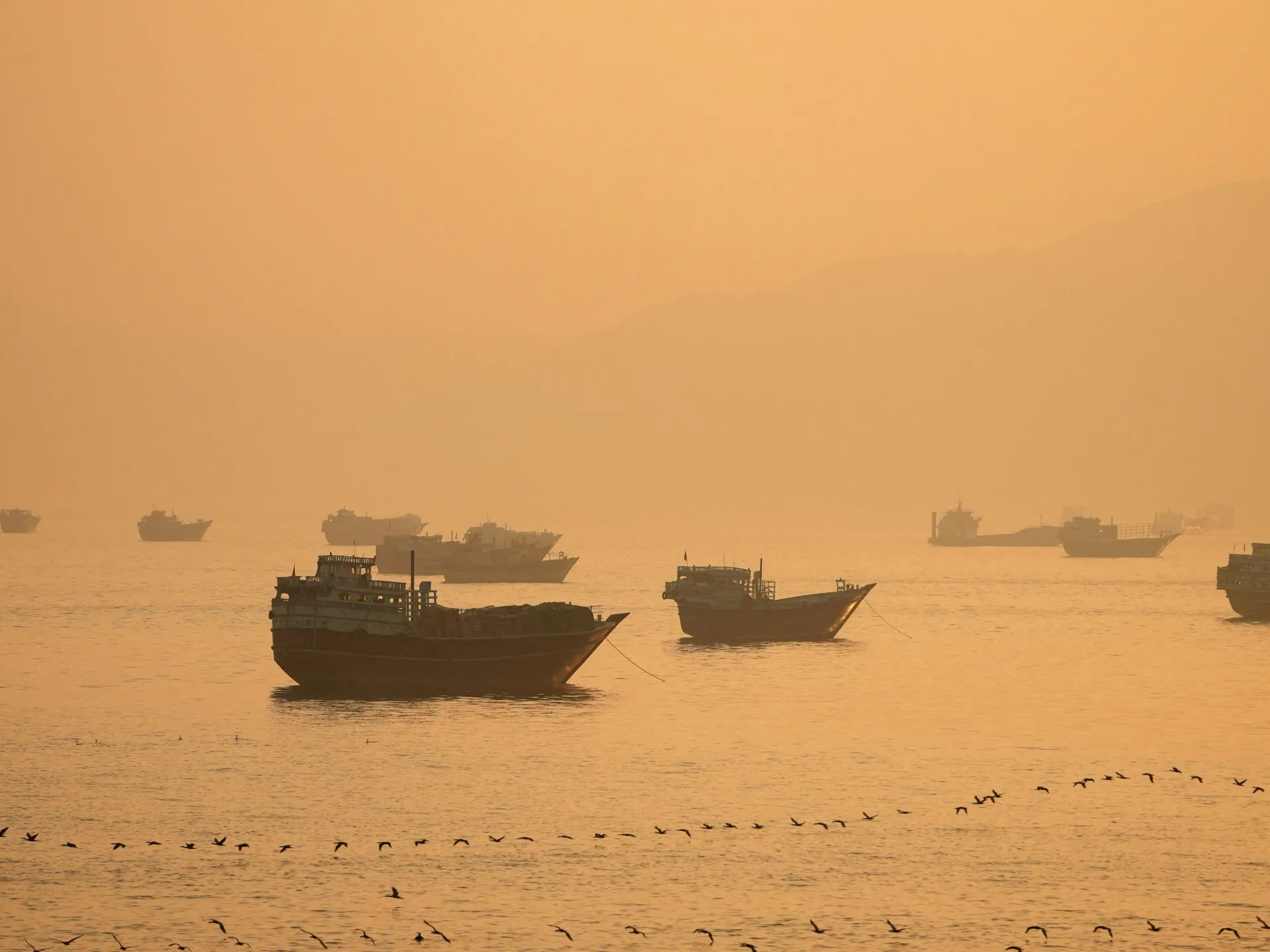
Iranian armed forces say they’ve closed the Strait of Hormuz after Israeli attacks on Lebanon – just days after an agreement with the US reopen it.
Disruption to the crucial waterway has had a huge economic impact worldwide.
list of 4 itemsend of list
So, what happens next?
Presenter: Tom McRae
Guests:
Ian Ralby — Senior Fellow at the Center for Maritime Strategy and Associate Fellow with the International Law Programme at Chatham House
Mehran Kamrava — Professor of Government at Georgetown University in Qatar and Head of the Iranian Studies Unit at the Arab Center for Research and Policy Studies
Stavros Karamperidis — Associate Professor in Maritime Economics and Head of the Maritime Transport Research Group at the University of Plymouth
Published On 21 Jun 202621 Jun 2026
Share
His release comes after journalist Mousa al-Omar dropped a complaint over online criticism.

Published On 21 Jun 202621 Jun 2026
British Syrian activist Hassan Akkad has been released from a prison in Damascus after four days detention for alleged criticism of public figures.
Akkad was taken into custody from a cafe in the al-Maliki neighbourhood of Damascus on Wednesday at about 9:45pm local time (18:45 GMT), a statement by his organisation said on Friday.
list of 4 itemsend of list
Akkad is the founder of the “Give Us the Money That You Owe!” campaign, which tracks large financial commitments made by public figures during a donation drive to fund Syria’s reconstruction.
His detention followed a legal complaint filed by Syrian journalist and presenter Mousa al-Omar in relation to “Hassan’s social media activities and public comments” after Akkad criticised al-Omar for allegedly failing to deliver on his financial pledges during the donations campaign.
Public Prosecutor Judge Hossam Khattab confirmed last week that Akkad had been detained due to warrants issued against him for failing to present himself to the Cybercrime Control Division in relation to al-Omar’s complaint. Khattab also said other plaintiffs had filed cases against Akkad for slander and defamation.
![British Syrian activist Hassan Akkad embraces a supporter after his release from detention, in an image provided by his "Give Us the Money That You Owe!" campaign [Handout/Al Jazeera]](https://i0.wp.com/occasionaldigest.com/wp-content/uploads/2026/06/PHOTO-2026-06-21-18-55-43-1782057625.jpg?w=640&ssl=1)
The activist’s release on Sunday came after al-Omar told Al Jazeera that he had instructed his lawyer to withdraw the complaint against Akkad, and said that everything pledged to the campaign had been paid.
On Sunday, al-Omar again posted on X that he had withdrawn the complaint against Akkad.
“My legal representative dropped the right and the lawsuit against my brother Hassan this morning and pardoned him for the sake of Almighty God … I was saddened by what he brought upon himself, and I wish him success in his social media activities and I will always be a supporter of him,” he wrote in Arabic.
Akkad, who is also a filmmaker, was imprisoned twice by President Bashar al-Assad’s regime for documenting anti-government protests in 2011.
After fleeing Syria, he stayed in the Middle East before making an 87-day journey across Europe to reach the UK in September 2015.
Video of his gruelling trip was included in the documentary series, Exodus: Our Journey to Europe, which went on to win a British Academy of Film and Television Arts (BAFTA) Award.
On June 14, the United States and Iran agreed to a framework to end their war. The Strait of Hormuz is to reopen, the bombing of Lebanon is to end and – most importantly – the killing is to stop. After more than 100 days of war that killed thousands, including Iran’s most senior leaders, and pushed the world economy to the brink, even a fragile truce feels like first light.
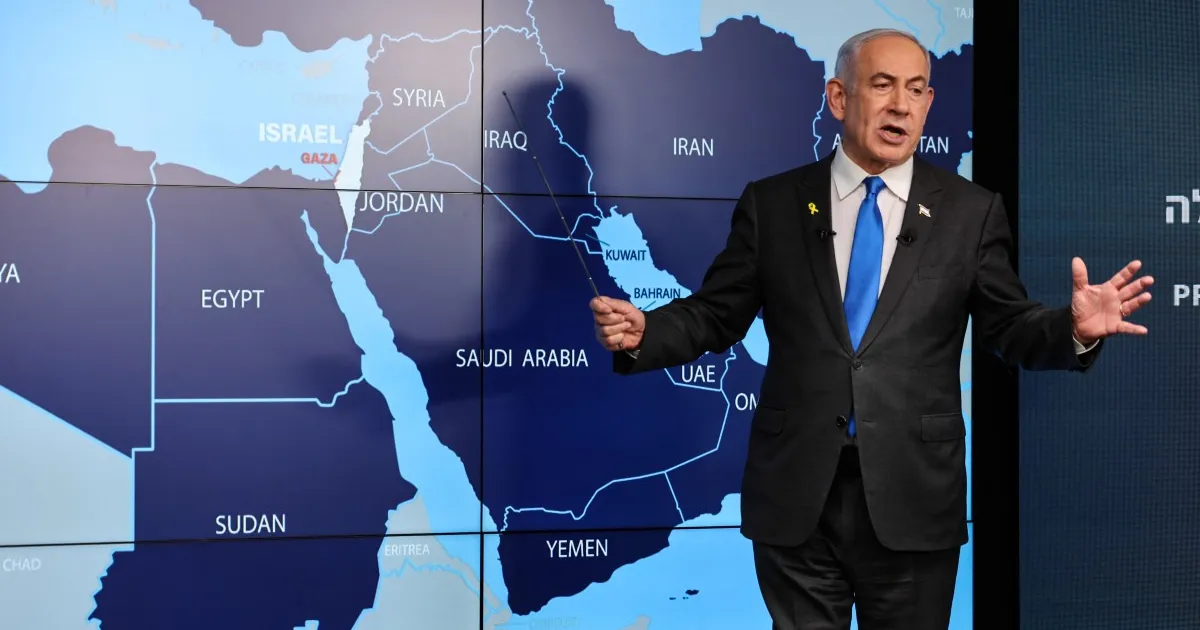
Let us welcome it, but also let us understand it. To grasp why this war happened, and the string of wars before it, we must name their common cause. That cause is “Greater Israel” – not the country of Israel but an idea of it – a terrible one. The idea of “Greater Israel” has been the cause of wars in Iraq, Gaza, Lebanon, Syria and Iran.
It holds that Israel should stretch over all of historic Palestine – from the Jordan River to the Mediterranean Sea – and to parts of neighbouring countries as well. According to United States Ambassador to Israel Mike Huckabee, a fundamentalist Protestant whose geopolitical compass is set by biblical texts from 500 BC, “Greater Israel” stretches from the Nile to the Euphrates. Last summer, Israeli Prime Minister Benjamin Netanyahu professed to be “very” attached to a vision of “Greater Israel” that, he said, takes in the Palestinian territories and neighbouring Arab lands.
This absurd and dangerous doctrine has two parents. The first are secular hardliners like Netanyahu who say that Israel must control all the land from the river to the sea to be safe, and damn the eight million Palestinians in the way.
The second is the Jewish supremacist creed of Israeli Finance Minister Bezalel Smotrich and National Security Minister Itamar Ben-Gvir that God gave the land to the Jews alone: There is, in Smotrich’s words, “no such thing as a Palestinian”. Asked recently how Israel should answer its collapsing global standing, Smotrich vowed Israel would not relinquish military control of the West Bank, Gaza, Lebanese or Syrian territory: “We won’t commit suicide to make them happy.”
“Greater Israel” is paranoia, megalomania and religious zeal braided into a single programme. The doctrine should have been repudiated on its first airing decades ago. Instead, it has driven Israel’s foreign and military doctrine for three decades – and has survived until today because Netanyahu has taken the US for a ride.
He has done it with two American constituencies: Jewish Zionists who love Israel and will forgive it anything and Christian Zionists who love the prophecy of the End Times and the Second Coming of Christ more than they love any living Palestinian or, for that matter, any living Israeli.
Delusion has led on to delusion, and the road has run from one war to the next. We are 30 years into this fiasco now.
The war on Iran was simply the latest “Greater Israel” fantasy. The government of 90 million people was to be toppled in a single, glorious day. Of course, it did not happen. Israeli and American bombs killed Iran’s leaders on February 28, but that did not deliver the promised collapse. It resulted instead in thousands of dead, a choked Strait of Hormuz and a global oil shock.
We have seen this film before. The Israel-US plan to bring down President Bashar al-Assad in Syria was also meant to be quick, one or two years at the most. Instead came a dozen years of carnage, fed by a covert war armed and financed by the CIA with Israel’s ardent backing. The result was an ancient country reduced to rubble. The promised one-day victories always become decade-long graveyards.
US President Donald Trump has been battered by joining the “Greater Israel” delusion, and he knows it. The new agreement with Iran is his escape valve, a way out of a fatuous war that was never his to win.
That is precisely why Israel’s “Greater Israel” politicians are trying to strangle the new agreement in the cradle, for peace with Iran is a defeat for “Greater Israel”. Even after the deal was sealed, Israel has continued to bomb Lebanon, killing 47 people in a single day on Friday and another 32 on Saturday hours after a Lebanon-Israel ceasefire took effect.
Here is the deeper truth: “Greater Israel” is not saving Israel. It is killing it. The friction now visible between Trump and Netanyahu is only the surface. Beneath it lies the collapse of Israel’s standing throughout the world. According to a recent Pew opinion survey, the world now holds an overwhelmingly unfavourable view of Israel. In the US, Israel’s indispensable patron, six in 10 adults view it unfavourably.
A state that makes itself hated by the world, and by its only protector, is not pursuing security. It is threatening its own survival to feed a delusion.
So the way to peace in West Asia is to stop “Greater Israel”. End the war on Iran, stop the genocide in Gaza and halt the strangulation of the West Bank. Most importantly, do the thing the doctrine forbids, which is to create the State of Palestine as the 194th United Nations member state alongside the State of Israel on the 1967 lines with genuine security for both countries and a regional framework to guarantee it, which should include Israel’s withdrawal from Lebanon and Syria.
The Iran ceasefire makes the case in miniature: It was won not on the battlefield but through mediation. It became possible when Washington decided it wanted peace more than it wanted “Greater Israel’s” war.
Israel can survive, but not as “Greater Israel”, a disastrous idea that has marched it and the US from one war to the next.
The glimmer of hope today is real. Whether it becomes a true dawn depends on whether the US finally lets Palestine be born, and thereby lets Israel live. The Arab world and Iran need to keep insisting to the US that breaking with “Greater Israel” is the only path to lasting peace.
The views expressed in this article are the authors’ own and do not necessarily reflect Al Jazeera’s editorial policy.

The chief of the White House World Cup task force says it’s “pretty amazing” Iran’s football team has been given visas for the tournament. Andrew Giuliani defended the US’s treatment of the team, which has been forced to base itself in Mexico and fly in and out for matches.
Published On 21 Jun 202621 Jun 2026
Share
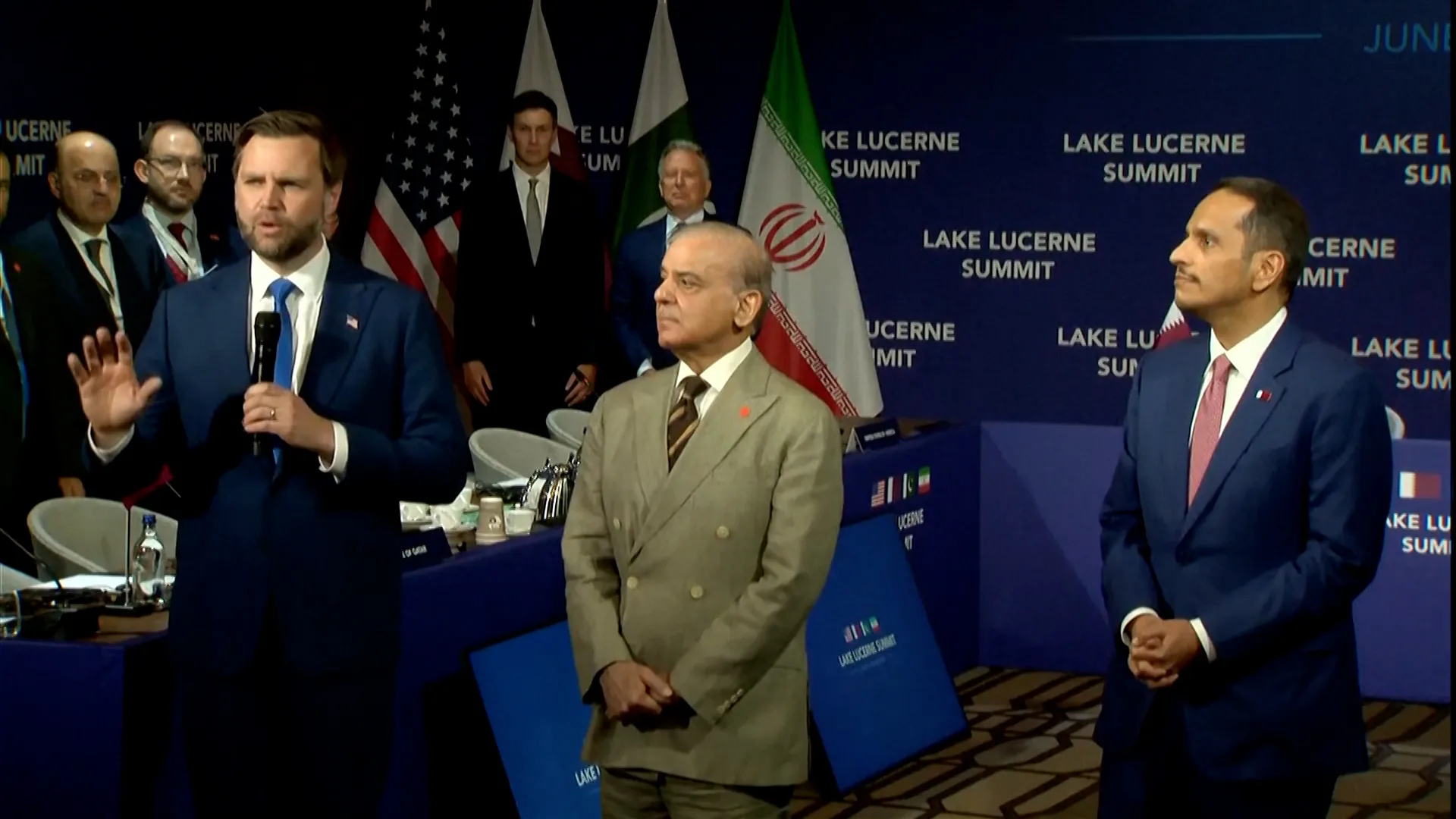
Iranian and US officials are set for high stakes talks in Switzerland aimed at reinforcing the Memorandum of Understanding framework. Al Jazeera’s Osama Bin Javaid says intense diplomatic efforts have kept negotiations on track, but key disputes remain unresolved.
Published On 21 Jun 202621 Jun 2026
Share
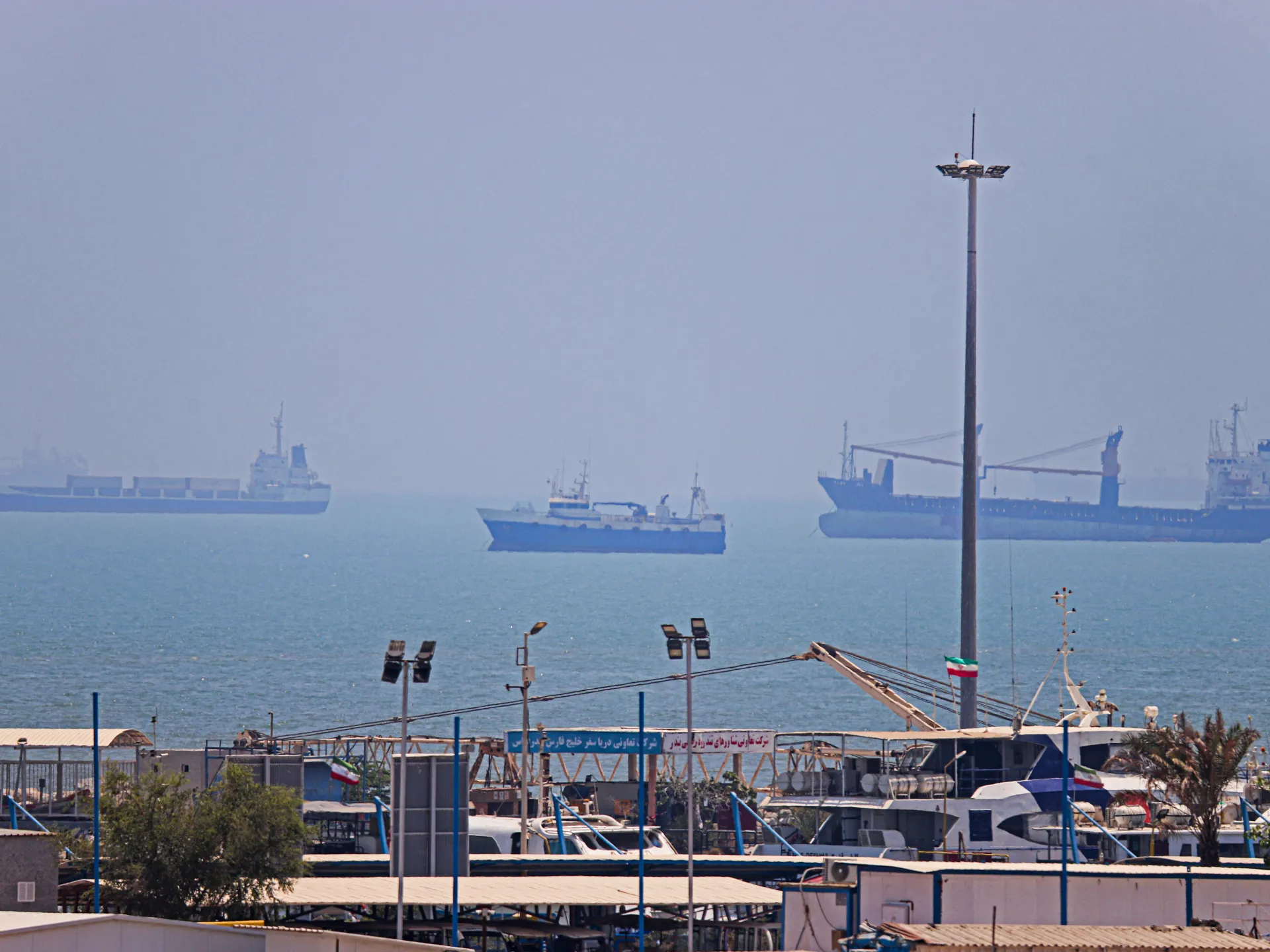
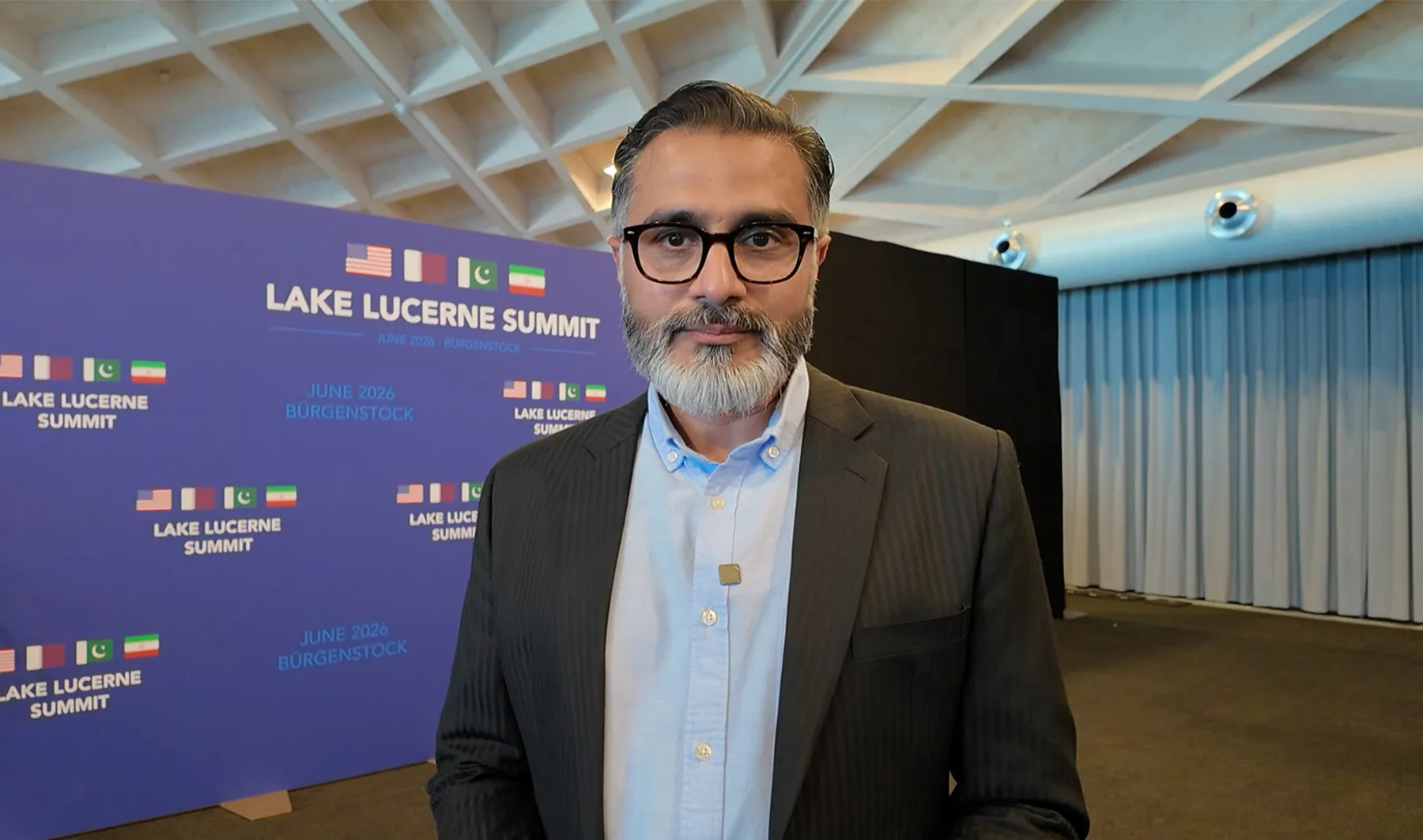
Lebanon to top the agenda as US and Iran to hold talks in Switzerland’s Burgenstock mediated by Qatar and Pakistan.
Published On 21 Jun 202621 Jun 2026
United States Vice President JD Vance has arrived in Switzerland for talks with Iran days after they signed a memorandum of understanding (MoU) aimed at ending the US-Israel war on Iran, which had sent oil prices soaring above $100 per barrel and rattled international markets.
The latest round of talks mediated by Pakistan and Qatar is scheduled on Sunday as Israel has intensified attacks on Lebanon, killing dozens of people on Saturday.
list of 4 itemsend of list
Iran’s Islamic Revolutionary Guard Corps (IRGC) announced on Saturday that it was closing the Strait of Hormuz, accusing Israel of violating the ceasefire in Lebanon. The Iranian delegation, including parliament Speaker Mohammad Bagher Ghalibaf and Foreign Minister Abbas Araghchi, has also arrived in Switzerland.
Here’s what we know about the conflict, which has entered its 114th day:

‘If he starts … or if he gets substituted, it’s fine – it is his role as a player,’ Egypt coach Hossam Hassan says.
Published On 21 Jun 202621 Jun 2026
Egypt coach Hossam Hassan has dismissed talk of unrest involving talisman Mohamed Salah, insisting there were no issues within the squad as they prepare to face New Zealand in their crucial World Cup Group G match at BC Place, Vancouver.
“Salah is an important player for our squad, and the 26 players who are here with me are very important,” Hassan told reporters on Sunday.
“Every player who has worked with me knows I deal with them in a professional manner. I do not have favourites.”
Salah, 34, scored nine goals in the qualifying campaign and provided an assist for Emam Ashour in their opener with Belgium. He was substituted in the 76th minute of that 1-1 draw in Seattle, with highly-rated teenager Hamza Abdelkarim coming on.

New Zealand also opened their campaign by sharing the points in a 2-2 draw with Iran in Los Angeles, leaving the group finely poised ahead of Sunday’s encounter.
Hassan insisted all was well in the Egyptian camp.
“Salah is a great player who helps his teammates. He has a lot of discipline and is a role model,” he said.
“If he starts … or if he gets substituted, it’s fine. It is his role as a player. Everyone knows that I am working for the benefit of the team and the national side.
“Rumours are being spread about stars, about players, about teams. But Salah is someone who is very disciplined,” he added.
“He trains with us. He’s the first player that would also say yes to my decisions as a technical director. So I think he will be very positive tomorrow.”
Egypt and New Zealand are both targeting their first-ever World Cup win to boost their chances of reaching the knockout stage. The Egyptians are appearing in their fourth finals.
“We want to present something very positive,” Hassan said.
“We want to show that we have talent, not as something new, but as something that the African national squads have always had as a tradition throughout generations of footballers in Africa, for us and for international football.
“We drew in the first match, and we want to win and secure these points. This is our ambition for tomorrow. This is the ambition of the Egyptian people, for Egyptian football and for African football as well. We are representing all of these people, and we really hope to perform.”
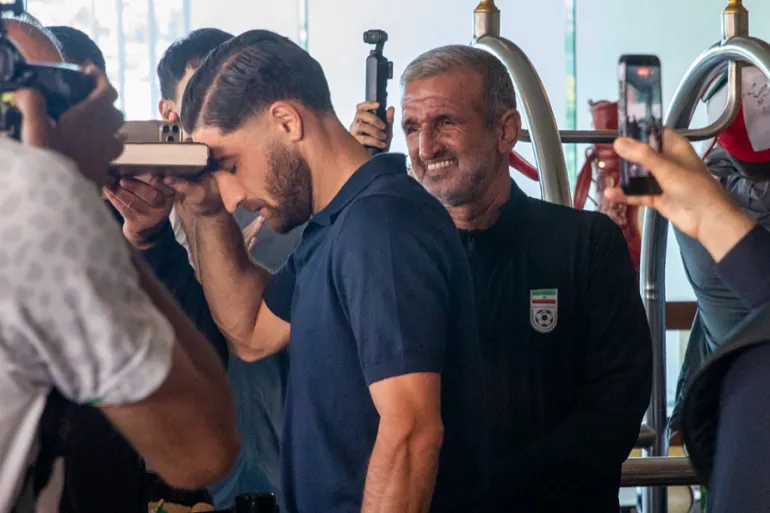
The United States will not ease the travel restrictions on the Iranian team for their World Cup matches in Los Angeles and Seattle despite the team saying they would lodge a complaint with FIFA, the cohost nation’s top tournament official has confirmed.
The US will continue to assess the Iran squad’s travel arrangements, but for now the original plan remains in place, Andrew Giuliani, executive director of the White House Task Force for the tournament, told the Reuters news agency on Saturday.
Iran are unhappy at restrictions that mean they can only travel to venues within 24 hours of their fixtures and must depart back to their training base in Tijuana, Mexico, directly after each game, with coach Amir Ghalenoei suggesting his side were “the most oppressed team in the whole World Cup”.
The Iranian delegation left the US hours after the full-time whistle at their first World Cup match against New Zealand last week.
The Group G match ended at about 8pm local time (03:00 GMT), and Iran returned to their base camp in Mexico within a few hours, prompting criticism of the US handling of their visas as the team did not get a day to recover at their hotel.
Ghalenoei said the team had expected to spend the night in California to maximise the normal recovery process after their opening game.
The US faced further pushback as Iran winger Mehdi Torabi’s entry visa expired after the first game. Team officials confirmed Tuesday afternoon that they had secured him a new, multiple-entry visa allowing him to travel into the US for future matches.
“This issue has been resolved,” the US Department of State said.
The same travel protocol will be in place for Iran’s fixture against Belgium on Sunday.
The Iranian team was due to arrive in Los Angeles on Saturday evening, about 24 hours before kickoff time for their match.

Giuliani, however, says the situation is fluid and they will discuss what measures will be in place for Iran’s third game against Egypt in Seattle on Friday.
“The situation is dynamic,” Giuliani said in Houston. “We have a plan right now. Tomorrow afternoon [after the match against Belgium], they will take the 27-minute flight back to Tijuana.
“We will see how it goes for match two, and then there will be discussions the day after in terms of what it looks like for match three in Seattle.”
Giuliani defended the measures in place and said the pre-tournament change in training bases for the side from Tucson to Tijuana had shortened Iran’s travel time.
“The shift from Tucson to Tijuana, I think, was good for everybody involved. Certainly it reduces their travel time to Los Angeles too,” he said.
“Their flight is an hour shorter than it would be from Tucson. And we’re happy with the way that things went for match one in Los Angeles.
“I would just point to the fact that all players have received visas. All the coaches have received visas. There are some team officials that have not received visas, and that’s because we’ve seen some derogatory information on them, and this is the balance that we talk about.”
Giuliani said the goal has always been to protect the interests of the US and the international visitors at the World Cup.
“We want to make sure we have this incredible soccer tournament, where people are welcome and enjoy the World Cup, while also making sure that we are not just protecting American citizens, but we’re also protecting all those international visitors that are coming here,” he said.
He revealed that no threats to the tournament had been identified, but that officials remain vigilant.
“What I can tell you is our intelligence community has tripled down on this since the beginning of this year,” he said. “We’re in discussions every hour on it. But there have been no credible threats at this moment.”
Giuliani has been pleased with the opening 10 days of the World Cup.
“Things are going as planned,” he said. “It’s been fantastic to see the great play on the pitch, that seems to be the majority of the conversation, which has been fantastic.”
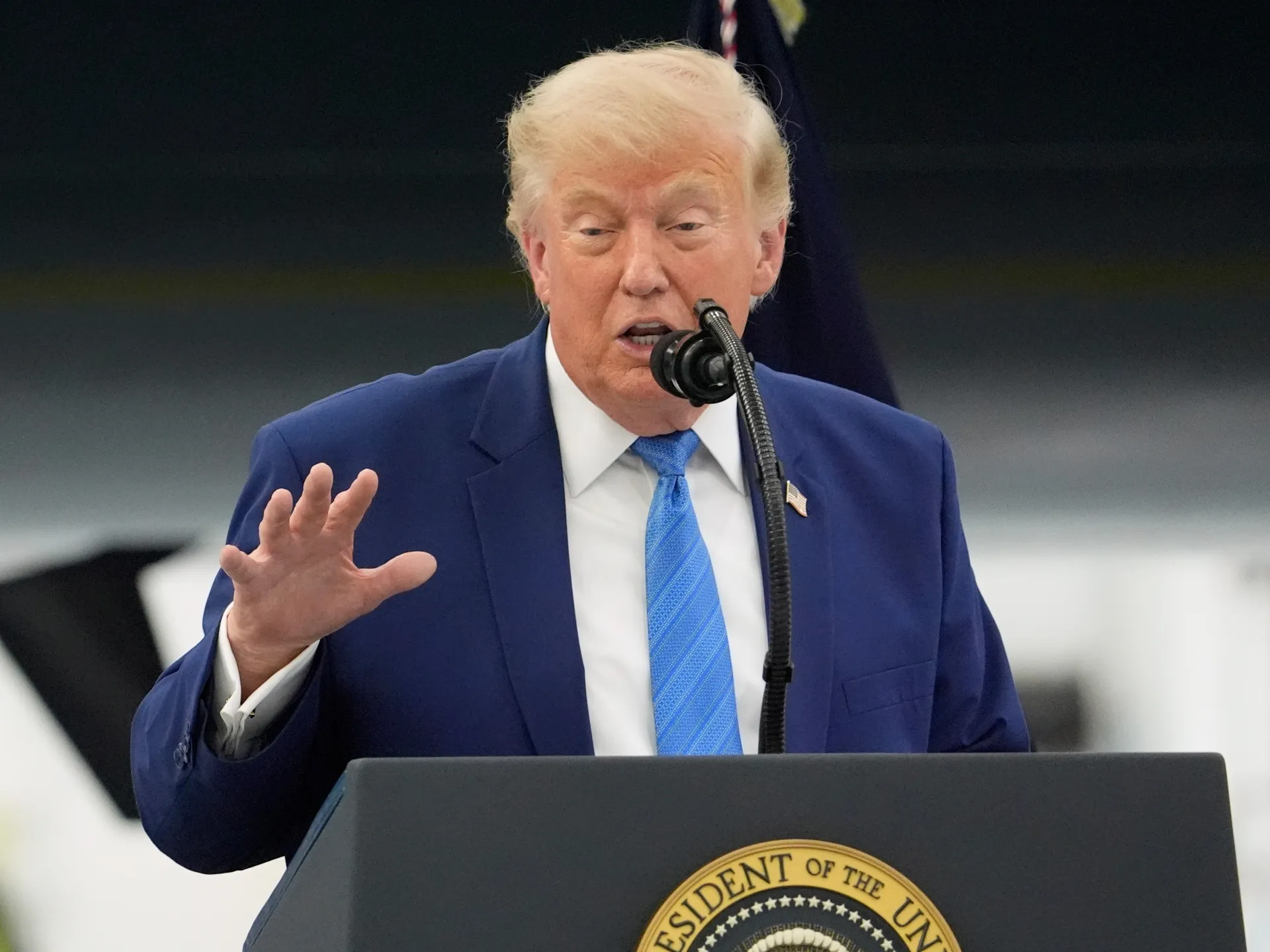
United States President Donald Trump has pledged there will be no tolls for passage through the Strait of Hormuz, unless they are collected by his own country.
Trump’s statement, made in a Saturday afternoon post on Truth Social, is the latest sign that a recently signed memorandum of understanding (MOU) may be unravelling.
list of 3 itemsend of list
“There will be NO TOLLS in the Hormuz Strait for 60 days during the Cease Fire Period, and there will be NO TOLLS after the 60 day period has expired,” Trump wrote, “unless they are imposed by and for the United States of America.”
Since the US and Israel launched a war against Iran on February 28, Iran has successfully used the Strait of Hormuz as a pressure point, closing the strategic waterway to traffic.
But under the terms of Wednesday’s ceasefire memorandum, the strait is supposed to reopen for an interim period of 60 days. During that time, Iran is barred from charging vessels for passage.
On Saturday, however, Iran’s joint military command said it had closed the Strait of Hormuz, citing a “clear breach” of the memorandum’s commitments.
US Central Command (CENTCOM), the agency that oversees military operations in the region, denied that report and maintained that the traffic continues to flow through the waterway.
The Strait of Hormuz has long been a flashpoint in the conflict between the US and Iran. Nearly 20 percent of the world’s oil and natural gas is transported through the strait, as well as about 30 percent of the global fertiliser trade.
Closure of the strait has caused global fuel costs to soar and has tested agricultural sectors across the world.
Trump had responded to Iran’s chokehold over the strait by imposing a US naval blockade on Iran’s ports in the region.
But that naval blockade was lifted under the terms of Wednesday’s memorandum. The deal also paused fighting on all fronts in the regional conflict, including in Lebanon.
The memorandum, though, was not intended as a long-term deal. It serves as a launching point for negotiations on key issues, including the future of Iran’s nuclear programme.
Several points of divergence also went unaddressed in the memorandum. Nowhere does the memo say that future tolls cannot be collected from the strait after the 60-day period expires.
Before the war, there was no charge for passage through the strait. Trump himself said in an interview with The New York Times that the waterway should remain “permanently toll-free”.
But he appeared to reverse course in Saturday’s post, once again floating the possibility that the US could extract tolls in the strait, while barring Iran from doing so.
No fees should be levied, Trump wrote, “unless they are imposed by and for the United States of America, should the deal not be completed”.
He explained that such a charge would compensate the US “for services rendered as the Guardian Angel to the countries of the Middle East for purposes of both past, present, and future reimbursement of costs”.
Trump used similar language in his New York Times interview earlier this week, floating the US becoming “the guardian of the Middle East” in exchange for 20 percent of its revenue.
Saturday’s post is not the first time Trump has mused about the US imposing tolls in the strait, either.
In April, for instance, he discussed the idea with reporters, saying, “What about us charging tolls? I’d rather do that than let them have them. Why shouldn’t we? We’re the winner. We won.”
There has been no indication that Trump’s plans have been officially presented to countries in the region, many of whom have struck a careful balance in their dealings with both the US and Iran during the war.
Iranian officials, meanwhile, have repeatedly said they will not rule out imposing tolls in the strait, framing the issue as a matter of sovereignty and regional negotiation. The strait sits between Iran and Oman.
Further discussions are expected on the matter in the coming weeks.
But such negotiations have been thrown into jeopardy amid ongoing Israeli military operations in Lebanon, which threaten to violate Wednesday’s ceasefire memorandum.
Iran claimed that Saturday’s closure of the strait was a result of new Israeli attacks in southern Lebanon, which killed dozens of people after the ceasefire was announced.
Iranian officials have also said that any upcoming talks should focus on proper implementation of the initial memorandum, and that the 60-day negotiating period stipulated in Wednesday’s deal would begin after that was settled.
Pakistan, a top mediator between the US and Iran, has said that follow-up talks are set to begin in Switzerland on Sunday.
Switzerland’s Federal Department of Foreign Affairs has confirmed that an Iranian delegation, led by parliamentary Speaker Mohammad Bagher Ghalibaf and Foreign Minister Abbas Araghchi, has already arrived for the negotiations.
On the US side, Trump’s son-in-law Jared Kushner, special envoy Steve Witkoff and Vice President JD Vance are expected to attend.
Vance departed for Switzerland late Saturday.
Analyst Alexandru Hudisteanu warns that Iran’s overuse of Strait of Hormuz as leverage could transform the strategic chokepoint from a deterrence tool into an instrument of extortion, potentially turning the country into an international pariah.
Published On 20 Jun 202620 Jun 2026
Share

Pakistan says talks between the United States and Iran which were postponed on Friday will begin in Switzerland on Sunday, as Tehran announced it was again closing the Strait of Hormuz because of continued Israeli attacks in Lebanon.
Iran’s foreign ministry spokesman, Esmail Baghaei, confirmed on Saturday that an Iranian delegation, including Parliament Speaker, Mohammad Bagher Ghalibaf, Foreign Minister, Abbas Araghchi and other senior officials, was heading to Switzerland.
list of 3 itemsend of list
In Washington, Vice President JD Vance confirmed that the top US negotiators Jared Kushner and Steve Witkoff were already in Switzerland working through technical details of anticipated negotiations on Iran’s nuclear programme.
Vance told Fox News that he expects to leave for Switzerland “sometime in the next couple of days” but acknowledged that “it’s always a delicate coordination dance.”
The planned meeting on Sunday will start technical-level negotiations towards a final US-Iran deal. That is after both sides signed a memorandum of understanding (MoU) earlier in the week declaring a permanent end to “military operations on all fronts”, including in Lebanon.
The MoU stipulates that a final deal should be reached within 60 days, “extendable with mutual consent”.
But even getting to the negotiating table following the MoU proved difficult. A round of talks originally planned for Friday was pushed back after Iran failed to send its delegation, as deadly Israeli strikes persisted in Lebanon.
Although Israel agreed to a renewed ceasefire with Hezbollah on Friday, its attacks in Lebanon continued into Saturday, killing at least 32 people, according to Lebanon’s civil defence and state media reports.
On Friday, Israeli attacks killed 83 people and wounded 141, Lebanon’s health ministry said.
Iran’s Islamic Revolutionary Guard Corps (IRGC) on Saturday announced it was re-imposing restrictions on the Strait of Hormuz over Israeli “crimes” in Lebanon and what it called a US violation of commitments to establish a ceasefire.
It warned ship crews not to approach the strategic waterway, saying their security would be at risk if they do.
Mohammad Mokhber, an adviser to Iran’s supreme leader, warned that the flow of energy in the Middle East would halt so long as the US-Iran agreement “remains only on paper”.
The US military said its forces were still operating in the “general area” of the Strait of Hormuz and “remain present and vigilant” to make sure “all aspects of the agreement with Iran are adhered to”. It said 55 commercial vessels had transited the strait on Saturday and that safe passage was still “intact”.
According to Pakistan’s foreign ministry, Pakistani and Qatari mediators will join the US-Iran talks on Sunday in the Swiss mountain resort of Burgenstock.
Reporting from there, Al Jazeera’s Osama bin Javaid said there has been a flurry of behind-the-scenes diplomatic activity ahead of the formal negotiations, with Qatar’s Prime Minister, Sheikh Mohammed bin Abdulrahman bin Jassim Al Thani, already holding meetings. Pakistan’s Foreign Minister, Ishaq Dar, has been holding talks in Egypt and Pakistan’s Interior Minister, Mohsin Naqvi, travelled to Iran.
Iranian foreign ministry spokesman Baghaei has signalled that progress may be scarce until Iran feels the US is living up to its end of the interim deal.
In comments broadcast by Iran’s IRIB, Baghaei said Iran “must naturally be very firm and serious in demanding fulfilment of obligations” considering the US’s past “failure to honour commitments”.
Al Jazeera’s James Bays, reporting from Burgenstock, said there are indications “things are moving backwards from when the MoU was signed”, citing Israel’s continued bombardment of southern Lebanon.
“The Iranians see this as a serious breach of the MoU,” he said. “Their first sanction was by not coming here. They have now utilised their best weapon by closing the Strait of Hormuz.
“Iran believes this tactic will help get things back on track with regard to southern Lebanon,” added Bays.
Iran has said it remains committed to implementing the MoU signed with the United States. However, Tehran warned that it would take reciprocal measures if Washington fails to honour its obligations under the agreement.
Published On 20 Jun 202620 Jun 2026
Share
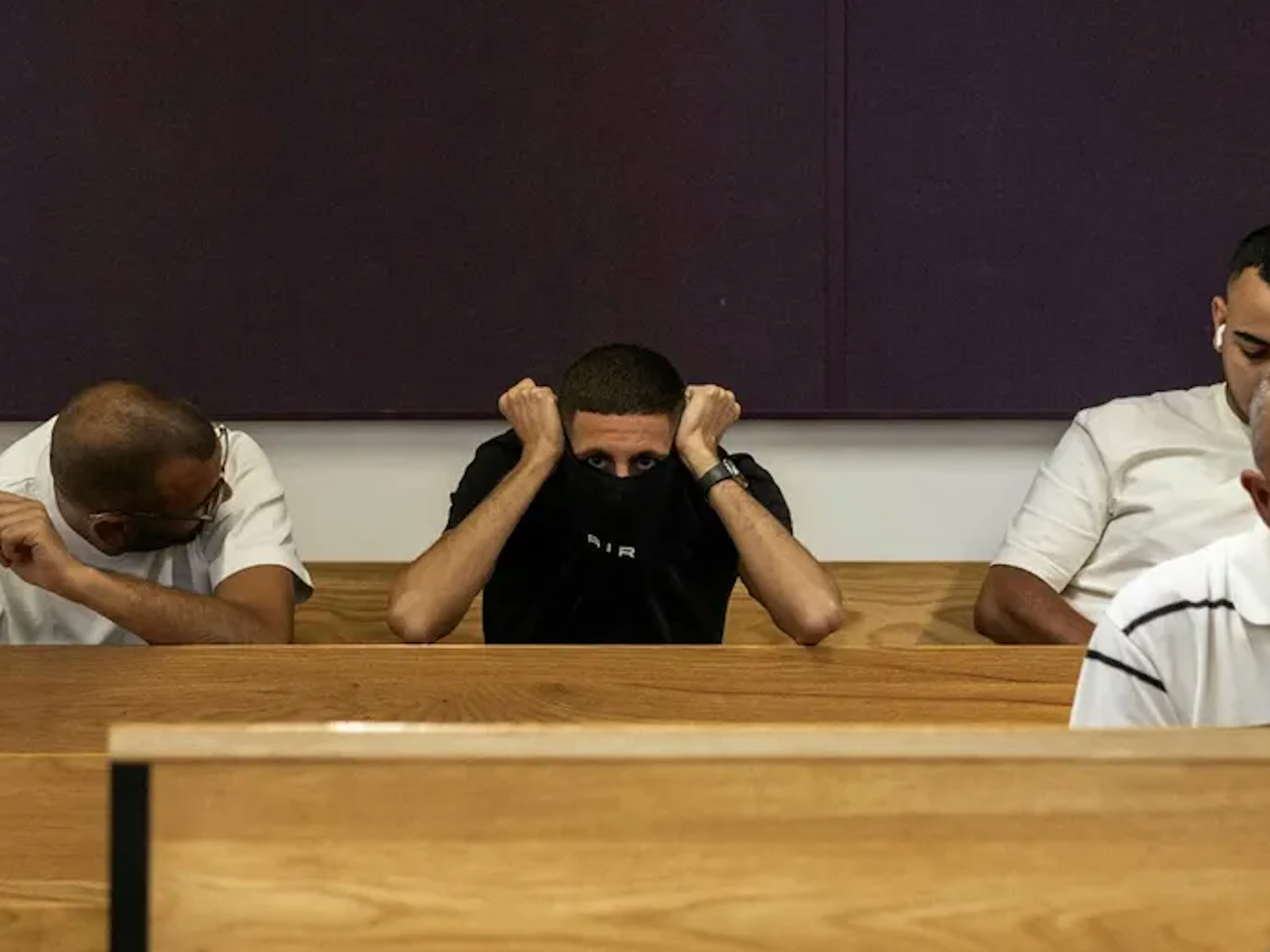
An Israeli court has convicted seven men over the 2021 lynching of Sa’id Moussa, ending a five-year trial. Moussa was dragged from his car and beaten unconscious by a mob during the May 2021 riots.
Published On 20 Jun 202620 Jun 2026
Share
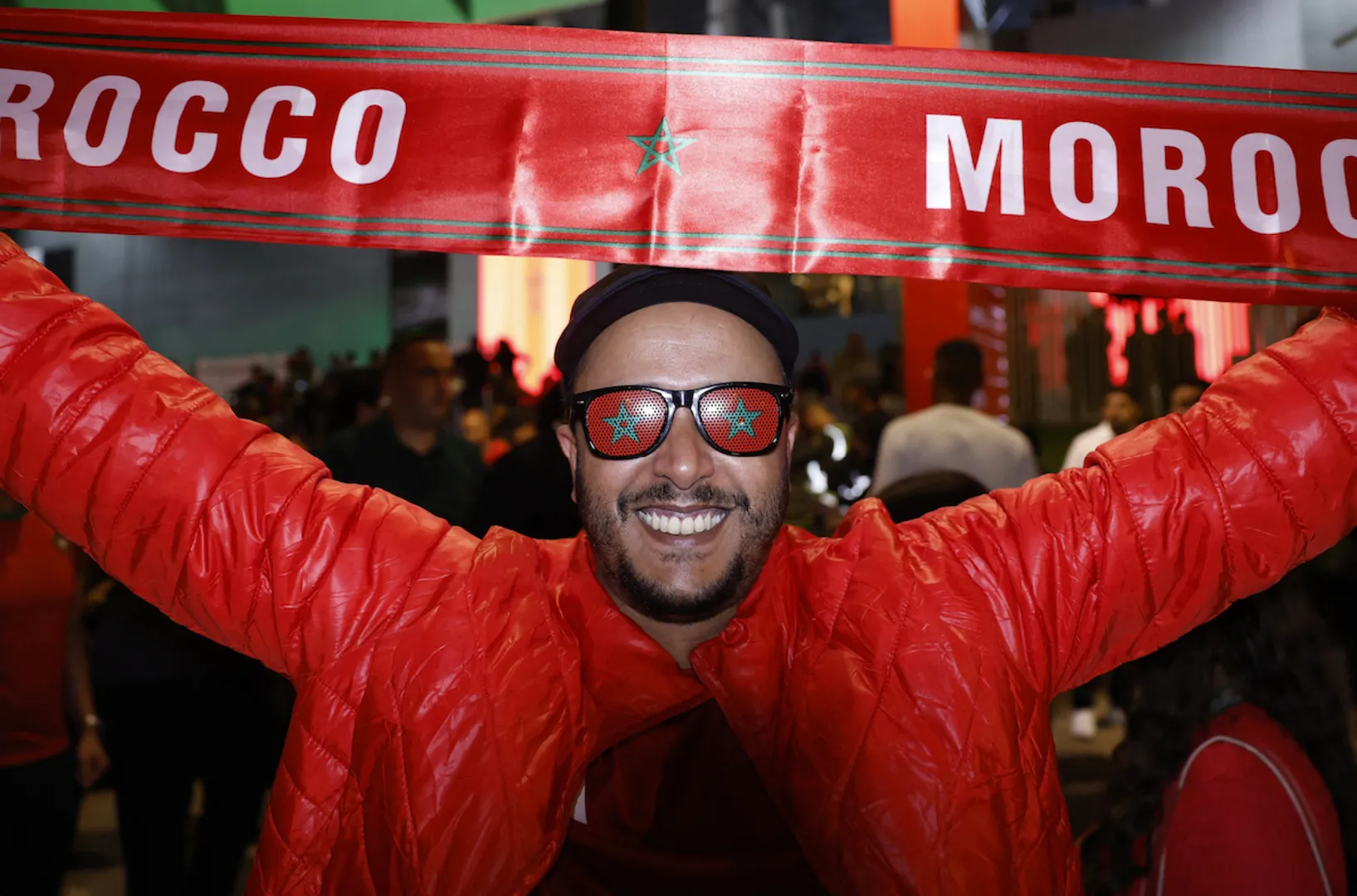
This is what Morocco’s fans are saying after winning their first match at the 2026 World Cup.
Source link
Khalil spent more than two decades protecting the nests of endangered turtle species in southern Lebanon.
Published On 20 Jun 202620 Jun 2026
Lebanese marine ecologist Mona Khalil, who was severely wounded after an Israeli strike hit her home near Tyre last week, has died, according to local reports.
Khalil, 77, succumbed to her wounds on Friday, the same day Israel escalated air attacks on southern Lebanon, killing at least 50 people and injuring dozens despite the risk posed to a fragile peace deal between Iran and the United States.
list of 4 itemsend of list
“It is with deep sadness that we mourn the passing of Mona Khalil today,” environmental group Live Love Tyre said in a Facebook statement on Friday.
“She will be remembered through an incredible legacy. Through it all, Mona chose to stay and care for the turtles of Live Love Tyre. Her life was selfless and impactful.”
Khalil was born in Lagos, Nigeria, in 1949. She spent several years abroad before moving to southern Lebanon.
A fleeting encounter with a turtle which had emerged from the ocean to lay its eggs on al-Mansouri beach near Tyre in 1999 propelled her on a lifelong journey devoted to animals.
She went on to dedicate decades to protecting the nesting sites of endangered loggerhead and green sea turtles on Lebanon’s southern coast.
Both species are highly threatened by coastal development, plastic pollution, fishing nets, and light pollution and are at risk of becoming extinct in the eastern Mediterranean.
In 2000, Khalil helped establish the Orange House, an eco-tourism project situated at al-Mansouri beach. She also helped document marine life in southern Lebanon and advocated for wildlife and against the pollution of Lebanon’s coastline.
“You have left us yet you remain within us – we, your children,” journalist and volunteer Fadia Joumaa, who worked closely with Khalil, said in a tribute shared on Facebook.
Khalil’s death “is a loss for all of Lebanon… not just for us. A loss for the life you guarded so faithfully,” she said.
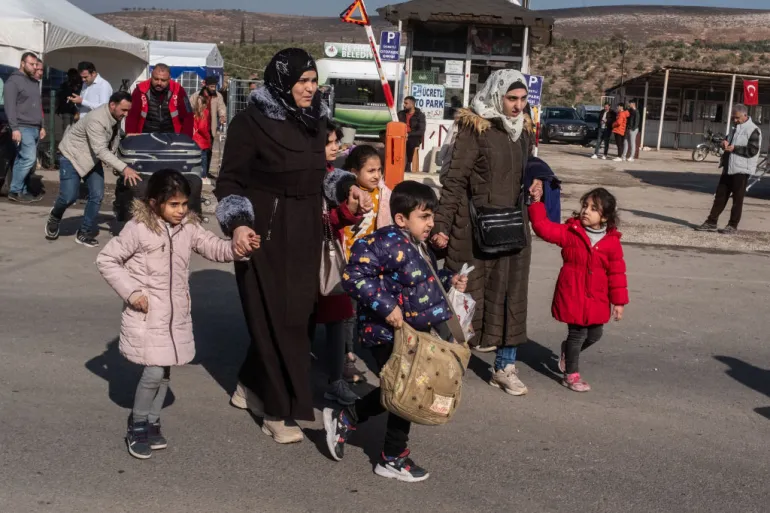
Approximately 1.3 million Syrians returned from abroad in 2025, nearly three times the figure recorded the previous year, while a further two million internally displaced Syrians went back home, cutting the global Syrian refugee population from 6 million to 4.9 million.
On December 8, 2024, the al-Assad dynasty, which lasted 54 years, was removed from power by a rebel offensive.
The 14-year-long war led to one of the world’s largest migration crises, with some 6.8 million Syrians, about a third of the population, fleeing the country at the war’s peak in 2021, seeking refuge wherever they could find it.
More than half of these refugees, about 3.74 million, settled in neighbouring Turkiye, while 840,000 found refuge in Lebanon and 672,000 in Jordan.
Hiam told Al Jazeera she returned to Syria with her family after more than a decade of living in a host country. “The reason that pushed us to return was the high cost of living we were facing in the host country. We stayed there for 12 years, and it was a great hardship for us as refugees.”
We returned to Syria, thank God, but in the beginning it was difficult because we didn’t find homes or anything. Syria now is completely different from when we left. The return was very difficult at first – the scene was very hard for me.
“But thank God, I became stronger. The first period was very difficult, and at the beginning, it was hard to cope,” Hiam explained.

According to UNHCR data, some 556,00 Syrians returned from neighbouring Turkiye, 465,000 from Lebanon and 256,000 from Jordan.
More than seven in 10 returnees have reported improvements in security and freedom of movement in Syria, according to the UNHCR. Almost three-quarters of Syrian refugees abroad have also said they would eventually like to return home.
Returns in 2026 reached 549,800 by mid-May, driven by deteriorating conditions in Lebanon.


Published On 20 Jun 202620 Jun 2026
Ismael Saibari scored the fastest goal of the World Cup 2026 so far after just 71 seconds as Morocco beat Scotland 1-0 to close in on a place in the knockout rounds.
Saibari scored in Morocco’s opening 1-1 draw with Brazil last weekend, and his clinical finish with just over a minute gone settled a hard-fought, physical contest at Boston Stadium on Friday.
A crowd of 64,146 fans turned up at the venue in Massachusetts, United States.
The 25-year-old, who was born in Spain and raised in Belgium, is reportedly on the brink of a $63m transfer from Dutch champions PSV Eindhoven to Bayern Munich.
The quality of his strike past goalkeeper Angus Gunn showed why he is attracting such interest, and it was telling that Scotland lacked the same quality in the opposition box — that helps explain why Morocco are ranked fifth in the world, and Scotland 40th.
With four points from two games, Morocco are now primed to advance to the last 32 as they aim to at least match their historic run to the semifinals in Qatar in 2022.
However, it was a sobering evening for Scotland and their army of fans who have taken over Boston during this World Cup, as their team never really tested Morocco goalkeeper Yassine Bounou.
The laboured 1-0 win over Haiti in their opening game at the same stadium last weekend — which was their first victory at a World Cup since 1990 — gave them a platform to build on and reason to believe they can progress beyond the group stage at a World Cup for the very first time.
Another win here would have secured progress from Group C, but their chances of going further remain up in the air going into their next match against Brazil in Miami next Wednesday.
Moroccan coach Mohamed Ouahbi went with an unchanged starting lineup here following the Brazil clash, but opposite number Steve Clarke made three changes.
Clarke sought to reinforce his defence, meaning striker Lawrence Shankland dropped out as defender Kieran Tierney came into the side to make a back five.
But that was of little use as Morocco went ahead practically from kickoff.
The assist came from Real Madrid’s Brahim Diaz, and Grant Hanley played Saibari onside as the latter latched onto the ball over the top, controlled it and rifled high into the net.

Morocco, who defeated Scotland 3-0 when the teams met at the 1998 World Cup, threatened to overrun their opponents every time they got forward but were wasteful, with Bilal El Khannouss squandering a good chance on 36 minutes.
Scotland were as stodgy in attack as they have been for a long time, and it took until first-half stoppage time for them to create anything dangerous.
That was a cross whipped in from the left by skipper Andy Robertson that John McGinn was unable to make anything of, and the opening period ended without Bounou needing to make a save.
Morocco hit the woodwork five minutes into the second half as Saibari met a cutback by El Khannouss, and his attempt was deflected onto the bar by Jack Hendry.
Moments later, Gunn made a fine stop to keep out an El Khannouss header from a corner taken by Hakimi, who was regularly booed by the crowd.
Morocco nevertheless seemed content to see the game out and soak up what Scotland could throw at them.
Ryan Christie fired over on 64 minutes after being teed up by Scott McTominay, who hit the side-netting late on, but a Scotland goal proved elusive.
Morocco face Haiti in Atlanta on Wednesday, while Scotland face Brazil in Miami.

Morocco’s captain Achraf Hakimi was named in the starting lineup hours after it was confirmed he must stand trial in France on rape charges.
Loud boos rang out from the Scottish fans when Hakimi’s name was read out and every time he touched the ball during the game.
The Paris Saint-Germain (PSG) defender said in a statement earlier in the day that he faced trial on a rape charge and welcomed the opportunity to put across his point of view.
Hakimi had appealed his referral to a criminal court.
French media reported earlier that the Versailles appeals court had rejected the appeal, paving the way for his trial in a criminal court at some point in the future.
“Today, a story that isn’t mine is being told at the expense of my family, my life, and above all, the truth. Sometimes I feel like I’ve become an easy target,” Hakimi wrote in a post on the social media platform X.
“I’ve been waiting for this trial since day one. And now I’m looking forward to it. Finally, I’ll be able to speak out.”

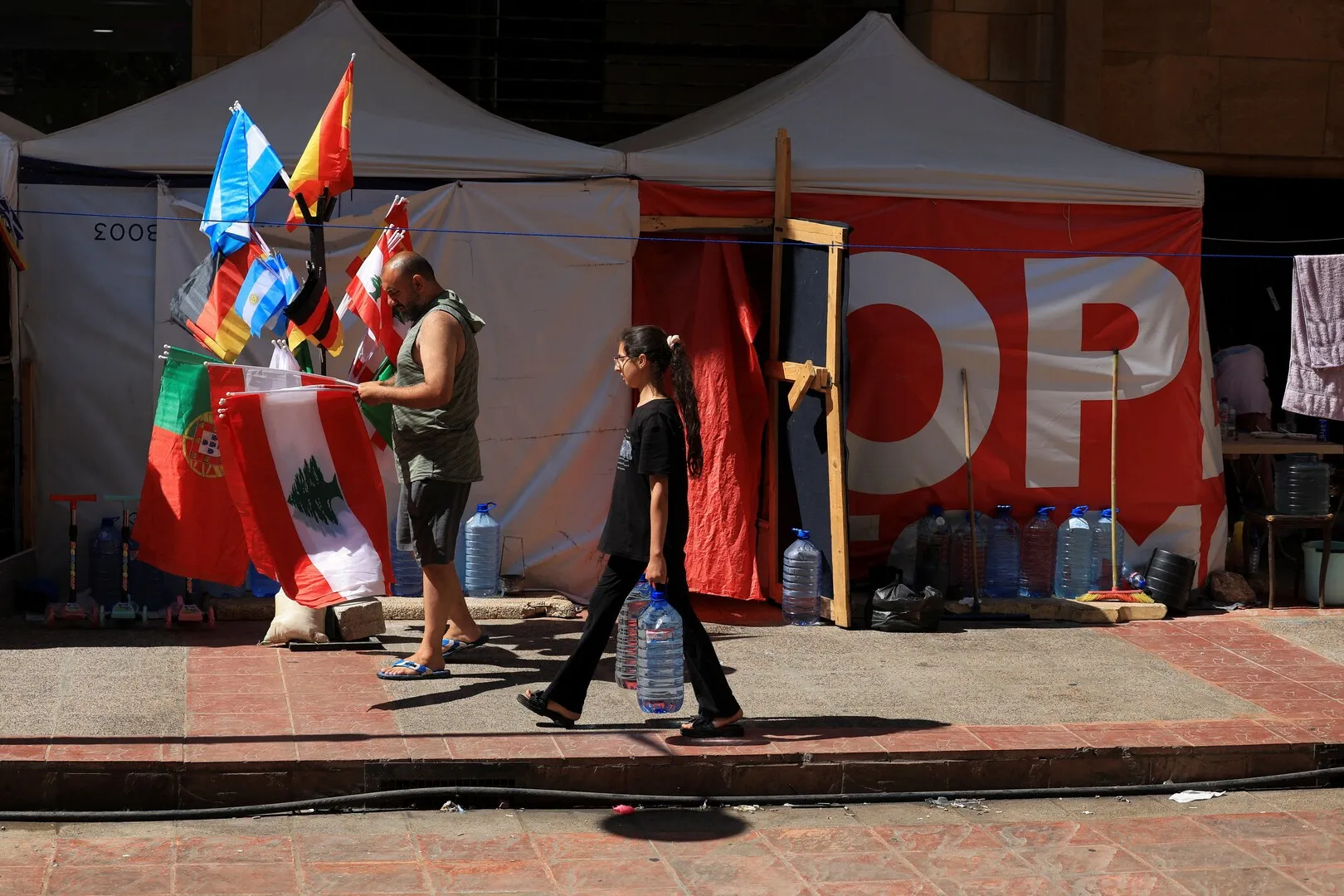
As Israel’s war on Lebanon rages, hundreds gather in Rmeileh by Sidon Gate to watch the 2026 World Cup. Organised by influencer Bilal Haddad, the fan zone offers food trucks, shisha and family activities, giving people a rare chance to relax. Al Jazeera’s Justin Salhani went to check it out.
Published On 20 Jun 202620 Jun 2026
Share
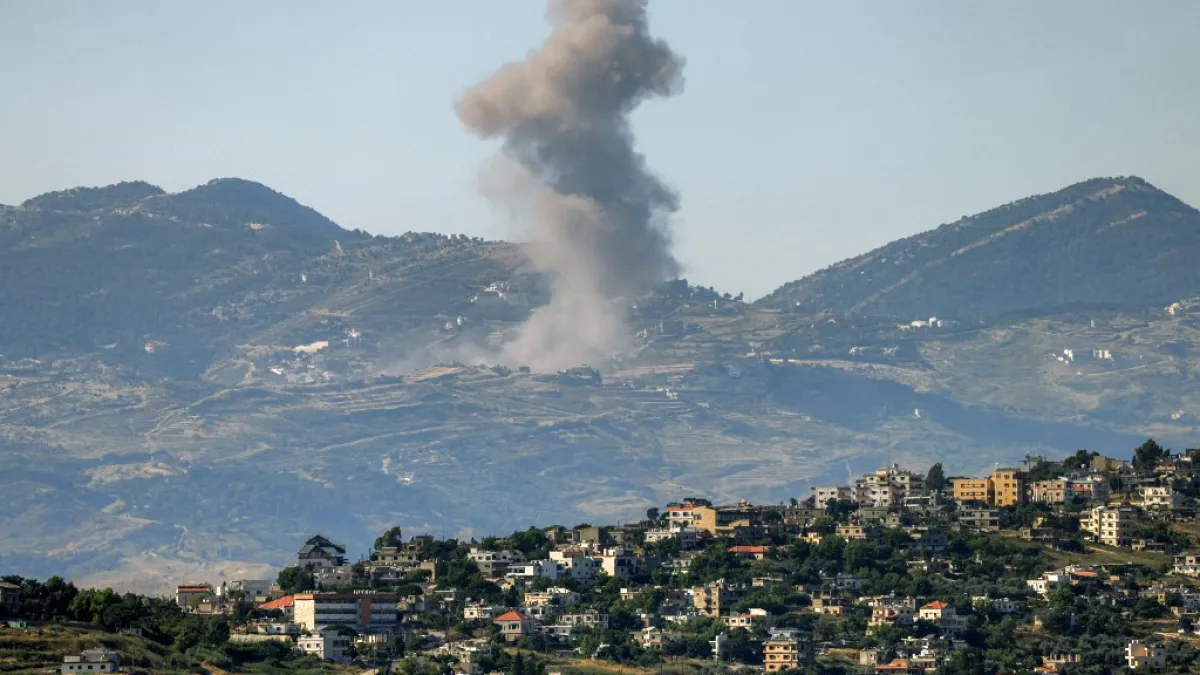
Iranian deputy foreign minister says Iran ‘ready to move forward’ on diplomacy with US, but war must end on all fronts.
Published On 20 Jun 202620 Jun 2026
Share
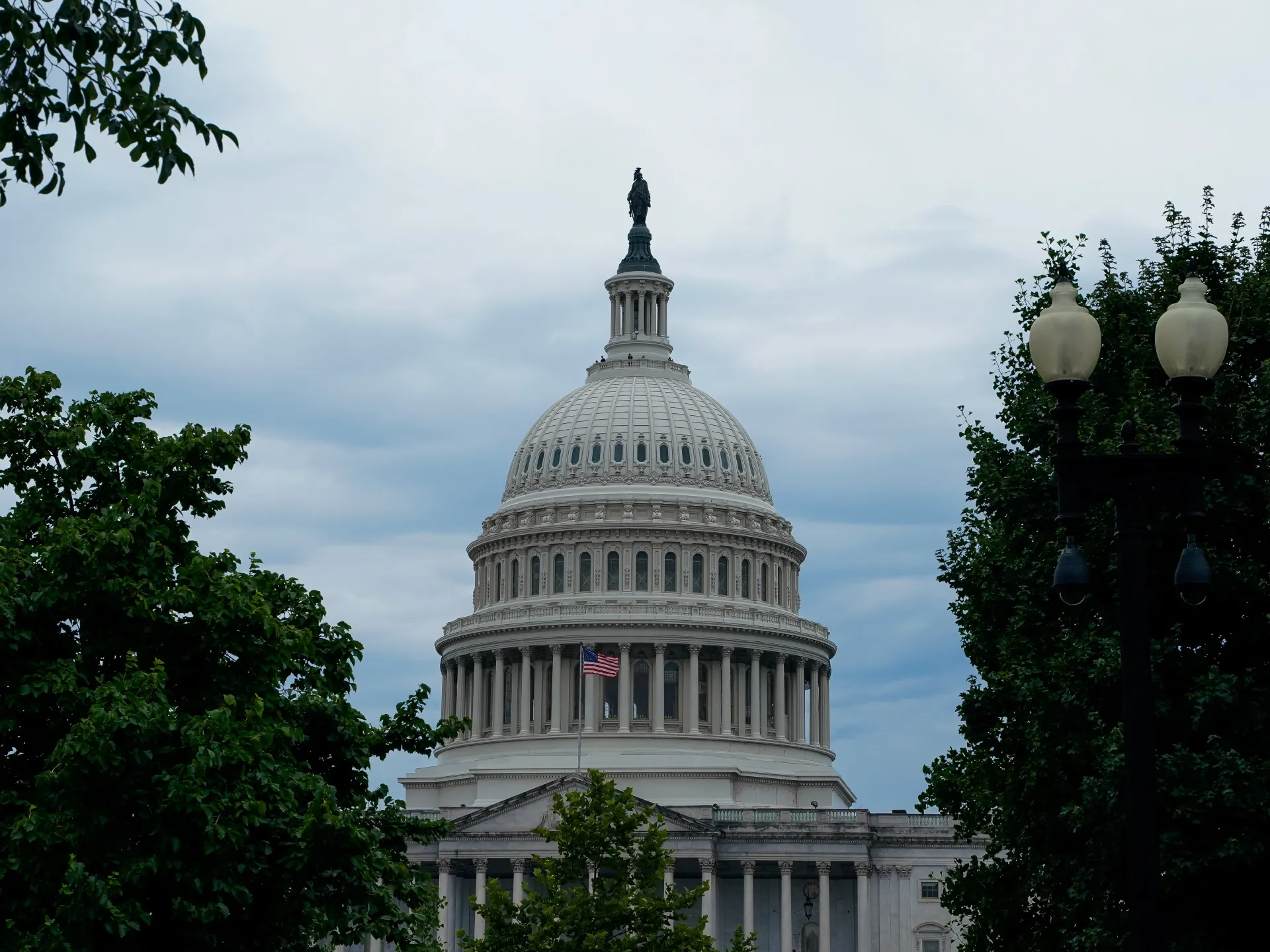
Lawmakers and pro-Israel groups have issued calls for United States President Donald Trump to ask Congress to review a recent memorandum of understanding (MoU) designed to end the US-Israeli war with Iran.
They cite the Iran Nuclear Agreement Review Act (INARA) as a precedent. Passed in 2015, the law says any agreements with Iran related to its nuclear programme must be submitted to Congress for review and a possible vote of disapproval.
list of 3 itemsend of list
The act came into effect when former US President Barack Obama was negotiating the now-defunct Joint Comprehensive Plan of Action (JCPOA) with Iran, and it remains on the books today.
US Senator Lindsey Graham was among the first lawmakers to invoke the act after this week’s memo was announced.
“Under our law, any nuclear deal with Iran will be sent to Congress for review and a vote. I look forward to reviewing the final product,” Graham, a longtime Iran hawk, wrote in a social media post on Sunday.
Critics, including some Democrats and pro-peace groups, have questioned the newfound interest in Congress asserting its powers, after Republicans repeatedly flouted the legislature’s authority during the war itself.
Some see the push as an effort to give the memorandum greater legitimacy, as Trump comes under fire for its terms. Others question whether Iran hawks are invoking INARA to push for a return to war.
Here’s what to know about the debate:
INARA creates requirements for any agreement between the US and Iran “related to the nuclear program of Iran”, no matter “the form it takes” or whether the agreement is legally binding.
Ahead of its passage in 2015, it was championed by bipartisan opponents of the JCPOA. That deal, which saw Tehran curtail its nuclear programme and submit to regular inspections in exchange for sanctions relief, was subsequently subject to provisions of the law.
The law requires the president to submit the text of any agreement he strikes with Iran to Congress within five days, along with any related materials. That triggers a 30-day approval period.
During that period, members of Congress can choose to pass a joint resolution of disapproval to scuttle the deal.
Still, such a resolution would be subject to the presidential veto. A successful disapproval resolution would therefore require a two-third majority from both chambers to override any vetoes, an extremely high bar.
During the congressional review period, the president “may not waive, suspend, reduce, provide relief from, or otherwise limit the application of statutory sanctions with respect to Iran under any provision of law or refrain from applying any such sanctions pursuant to [the] agreement”, the law states.
Those terms could limit this week’s memorandum, as it includes sanctions relief for Iran.
Trump has suggested he was open to sending the US-Iran memorandum to Congress, telling reporters earlier this week: “I like the idea. I mean, who wouldn’t approve it?”
But his administration has not yet done so. Administration officials have also not articulated a stance on whether or not they believes the memo is subject to the law. Trump, after all, has frequently denied needing congressional approval for his actions against Iran.
This week’s memorandum opens the Strait of Hormuz, lifts the US blockade on Iran’s ports, and halts fighting on all fronts, including in Lebanon.
It also immediately lifts US sanctions on Iran’s fossil fuel industry, while launching negotiations on the future of Iran’s nuclear programme, among other issues.
As part of the deal, both countries agree to maintain their nuclear “status quo” during ongoing negotiations, and Iran commits to diluting its highly enriched uranium “on site”, with details to be determined during the negotiations.
While Trump has yet to acknowledge INARA’s authority, legal experts from across the ideological spectrum have argued that his memorandum is subject to the law.
Tess Bridgeman, a legal adviser for the Obama White House, wrote that the law applies to “this new MoU, and any future final agreement that might be negotiated in the coming months”.
But in an article published in the policy forum Just Security, she argues that INARA should be repealed, so as to not impede the ongoing diplomacy.
“INARA was never an appropriate way for Congress to engage on Iran’s nuclear program, and that is even more true today,” Bridgeman wrote.
Jack Goldsmith, a Harvard Law School professor and fellow at the conservative American Enterprise Institute, also believes that the memorandum should trigger an INARA review.
He also notes that Trump’s commitment to “immediately” lift sanctions on Iran’s oil industry appears to run afoul of INARA.
“I don’t think the president has the authority under domestic law to issue these waivers,” Goldsmith wrote on the Executive Functions website.
Still, he anticipates that neither Congress nor the judicial branch will confront Trump over the issue.
Trump’s second term has been defined by a broad interpretation of presidential power.
His administration has previously flouted the US Constitution’s provision that Congress alone has the power to declare war.
Trump has maintained that Iran represented an “imminent threat” to the US, which allowed him to launch defensive strikes without congressional approval.
Administration officials have also argued that the president is not beholden to the legal requirement that he gain congressional approval within 60 days of launching an attack. The war, which started on February 28, has lasted nearly three and a half months.
In an interview with the news outlet Axios on Thursday, Trump mused that the war taught him there are “no limits” to his power as president.
It remains unclear if Trump will change course and embrace the congressional collaboration required for diplomacy under INARA.
In her article, Bridgeman argued that Trump could flout the law in whole or in part, particularly when it comes to the immediate sanctions relief, because his party controls Congress.
Goldsmith, meanwhile, pointed out that the administration could also try to argue that the memorandum only sets out terms to reach an eventual agreement and is not an agreement itself.
While Goldsmith believes that argument is faulty, he noted that “it’s doubtful that any institution will make the president comply with INARA”.
Several pro-Israel groups, including The Jewish Institute for National Security of America (JINSA) and the American Israel Public Affairs Committee (AIPAC), have been among the loudest voices calling for congressional involvement in the deal.
Since the outset of the war, JINSA defended Trump’s claims that Iran represented an “imminent threat” to the US, thereby granting him authority to attack without congressional approval.
However, the group also called on Congress to pass an Authorisation for the Use of Military Force (AUMF) to bolster his actions.
Congress, however, has repeatedly sought and failed to re-assert over its authority to send the US to war.
Since February, several war powers resolutions have been introduced to halt US action against Iran and force Trump to engage with Congress.
Initially, several Democrats backed by AIPAC, including Senator John Fetterman, Representative Jared Moskowitz and Representative Josh Gottheimer, broke from the party to oppose those efforts.
Moskowitz and Gottheimer eventually shifted their stances in March to vote in favour of one of the resolutions. But Congress has yet to pass a bill with enough votes to overcome an eventual Trump veto.
Meanwhile, Republicans in both the House and Senate chose to ignore a 60-day deadline in May that legally required Trump to get congressional approval for continued military operations — or stop fighting.
In a statement on Friday, Democratic Senator Chris Van Hollen characterised the Republican embrace of INARA as evidence of hypocrisy.
“Republican senators who were AWOL [absent without leave] regarding their constitutional duties around STARTING the war against Iran all of a sudden demand that Congress play a role in STOPPING the war,” he wrote.
“A whole lot of warmongering going on.”