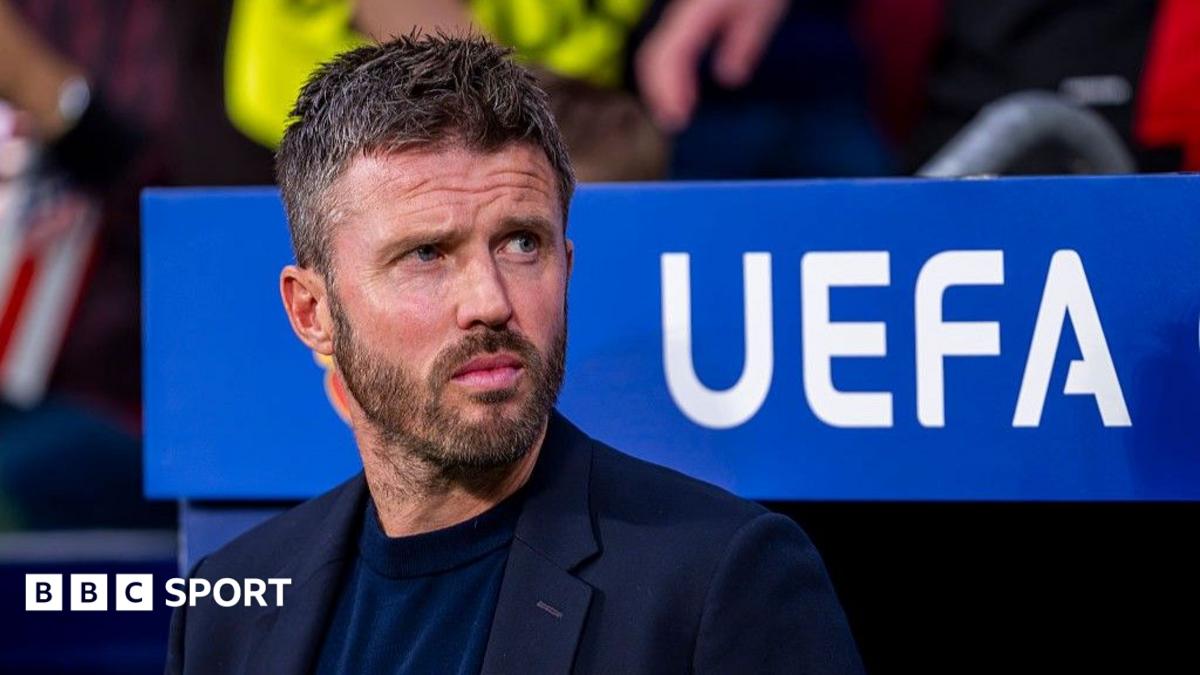
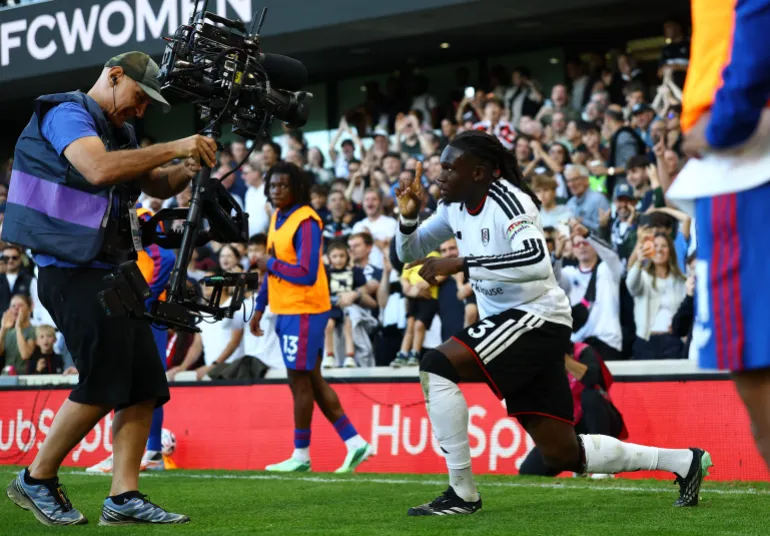
Manchester United head coach Michael Carrick says he is “telling the truth” when he says the club have moved on from Lisandro Martinez’s explosive post-match comments this week.
Carrick’s close friend and team-mate Wayne Rooney led the condemnation of Martinez, saying the Argentine defender could “rip the dressing room apart” with his attack on United’s hierarchy after the 2-0 Champions League defeat by Atletico Madrid.
Former United skippers Roy Keane and Gary Neville have also had their say, among a huge amount of analysis.
“There’s a lot of people who say a lot of things – ex-pros or not ex-pros – it doesn’t necessarily mean they understand what is going on here,” said Carrick in his pre-match media conference at United’s Carrington training ground.
“Just because people talk on the outside doesn’t mean that is the truth. I am telling you the truth. The squad today was in a fantastic place, better than I have seen it for a while. That is it, plain and simple. We are living it every day and know what it feels like.
“We are emotional and care a lot. Sometimes someone says something that maybe you shouldn’t say at that certain time, but it doesn’t distract us from what we are creating here and the environment and spirit within the group.
“It [the squad] is not affected, I am telling you.”
Carrick confirmed Martinez would be “part of the squad” for Sunday’s Premier League trip to Leeds at Elland Road (14:00 BST).
McArdle has shown throughout his tenure so far that he is keen to expand Northern Ireland’s squad depth and gave four players their debuts during the Portugal double header.
One of those debutants, Elmore, scored Northern Ireland’s only goal of the tie and became the second player to score on her debut under McArdle after Emily Cassap netted during the 2-1 defeat by Switzerland in June.
“I’m delighted for Kess,” McArdle continued.
“I knew she could bring that, and it’s just great that she has had that impact in Larne and also got the reward with a goal tonight.
“She’s going to add so much to the group moving forward, but so will a lot of the debutants this week, which was exciting.”
It has been a challenging window for McArdle’s side with key players such as captain Simone Magill and the experienced Laura Rafferty, Nadene Caldwell and Caragh Hamilton missing.
However, the Scot still thinks the side have set “a real enthusiastic marker” down during the tough Portugal tie.
“There have been those moments that have went against us, moments of misfortune. We’re playing a risky style of football,” he continued.
“We were on the front foot from the first whistle, and I couldn’t be prouder of the girls. This is a real enthusiastic marker for moving forward. This is getting closer to the identity that I would like for us moving forward.
“We want more energy, we want more mobility, and we want to be a lot more versatile as well. I’m really proud but also really frustrated with the scoreline.”
It has been five years since Michael Che’s last stand-up special. Of course, he has a good excuse, being busy much of the year co-writing and performing “Weekend Update” on “Saturday Night Live,” and he also wrote and starred in two series of his acclaimed sketch comedy show, “That Damn Michael Che.”
But he feels more like himself on the stage, he said in a recent interview. “I really miss stand-up when I’m not doing it because I can really let loose on stage and say all the words I want,” he says.
In his new Netflix hour, with the pointed title, “Michael Che: Shot in Minnesota,” he wastes no time in getting into it, opening with a series of jokes saying a lot of words about Charlie Kirk’s murder: He believes that it happened because “straight white conservative Christian men are being silenced.”
He clearly loves poking at people’s sensitive spots. His favorite joke, he says onstage, is, “Men want anal sex the way women want a sensitive man. It just sounds nice… until you see them crying.”
He talks about race (“I don’t care what color you are — if you’re rich, you’re white”) and goes after President Trump and people who try to police language, but he also talks up how much fun he had at a Pride parade and about growing up poor, with his mother cleaning houses to help make ends meet. In our interview done via Zoom (without a camera on) while he was stuck in traffic on the way to 30 Rockefeller Center and then in an elevator and then in the SNL offices, he discussed it all.
This interview has been edited for length and clarity.
Did anyone in your family shape your humor and your storytelling?
My family has a different kind of humor. It’s a little meaner, if I’m being honest with you.
I’d like to see Thanksgiving at your house.
A lot of people would. It’s kind of crazy.
But the one person was my grandfather who was a pastor. He knew how to hold court and tell a story and he was a funny guy. He could be silly or absurd or dry. So maybe there’s a lot of him in what I do. But he did it week after week with different material.
Speaking of week after week, which is closer to your real self, the “Weekend Update” persona or your stand-up persona?
The stand-up is the most me; “Update” is a job and it’s a character. On stage you get to hear more nuances — on “Weekend Update” it’s a short segment, and I’m splitting time with Colin and guests. There are more needs being met than just mine. I say that respectfully, but there are things we have to touch on that I wouldn’t in my personal work and there are things other people write so it’s never all me.
I can listen, I can build, I can take you on a journey, I can make you think this is a bad joke, but it’s actually a good joke. I can make you think it’s a dirty joke, but it’s a clean joke.
I miss doing stand-up full time, but maybe that’s only because I don’t do it full time. But maybe if I did it full time, I’d miss doing it part time. Getting this hour together for the special, Lorne [Michaels, SNL’s iconic boss] was nice enough to let me go on the road even during show weeks, and he didn’t ask as much of me this past season. He was really kind, and I really appreciate it.
Colin Jost, left, and Michael Che on “Weekend Update” on “Saturday Night Live” on Saturday, March 11, 2023. Che has been doing “Weekend Update” for 12 years, as has Jost.
(Will Heath / NBC)
Your stand-up persona is definitely more thoughtful and open-minded than your “Weekend Update” one. Are you conscious of revealing yourself onstage or just thinking about what’s funny?
They tell you in the criminal world that the longer you talk to the police the more chances there are you’re going to reveal something. And I feel like it’s true for comedy, too. A lot of the stuff that I do is just thoughts that we haven’t said out loud and explored yet. I start with the thought, and if I can get a joke, a one liner out of the thought, that’s then I start to explore it onstage. I only write one line because I can’t write in a vacuum. I need to be able to listen to see what an audience gives me; otherwise, I only know how it makes me feel.
You open this special with that riff on Charlie Kirk’s murder. Your audience is not filled with Turning Point members, but people still may be hesitant to laugh. Are you starting there to challenge yourself or challenge your audience, or is it just because you think it’s funny?
I think all three of those things can be true. Those jokes are funny, but it is hard to laugh at. That’s the sort of feat I seek to pull off, to make people laugh about things that they’re not necessarily expecting to hear without being gross and gratuitous. I did those jokes on Shane Gillis’ show and his audience reacted favorably.
None of this is to make any kind of larger point other than I want you to laugh at the things that horrify you. It’s just horrifying on the surface so people think you can’t make a joke about it. People are afraid of the attempt. And I say, “Well, what about this one?” I do like that.
Then you move on to the R-word and the N-word. Are you simply pushing buttons for laughs or pushing people to think about their own biases and preconceptions about language and their political sensibilities?
I don’t want to let words dictate my next emotions. I want you to put the responsibility of self-control on yourself. People are going to say nasty things literally just to get a rise out of you, and it’s up to you to decide how you’re going to handle that. Also, I’m trying to be consistent. If I start with jokes about Charlie Kirk, but then somebody wants to call me the N-word, I can’t say, “Well, that’s crossing the line.” Right now there ain’t no more lines. We’re in a culture war and bombs are going to fly. So let’s see who’s got the stomach for it.
When you refer to a guy buying you drinks in a bar as “visibly gay,” the audience gets uncomfortably quiet in a way. How do you feel when they hush over a line like that?
With a lot of these jokes it’s like dribbling a football, you just don’t know where it’s going to land. But I like putting people on their heels and being a Black comic of my generation, they expect the joke to go one way because they’ve heard the jokes that come from others so they’re apprehensive. I expect them to be apprehensive and then talk them through it. When the joke lands differently with a punchline they’re not expecting, they’re pleasantly surprised.
The basketball memorabilia ranks as the second-largest sale in history among game-worn sports jerseys.
By Reuters and The Associated Press
Published On 13 Oct 202613 Oct 2026
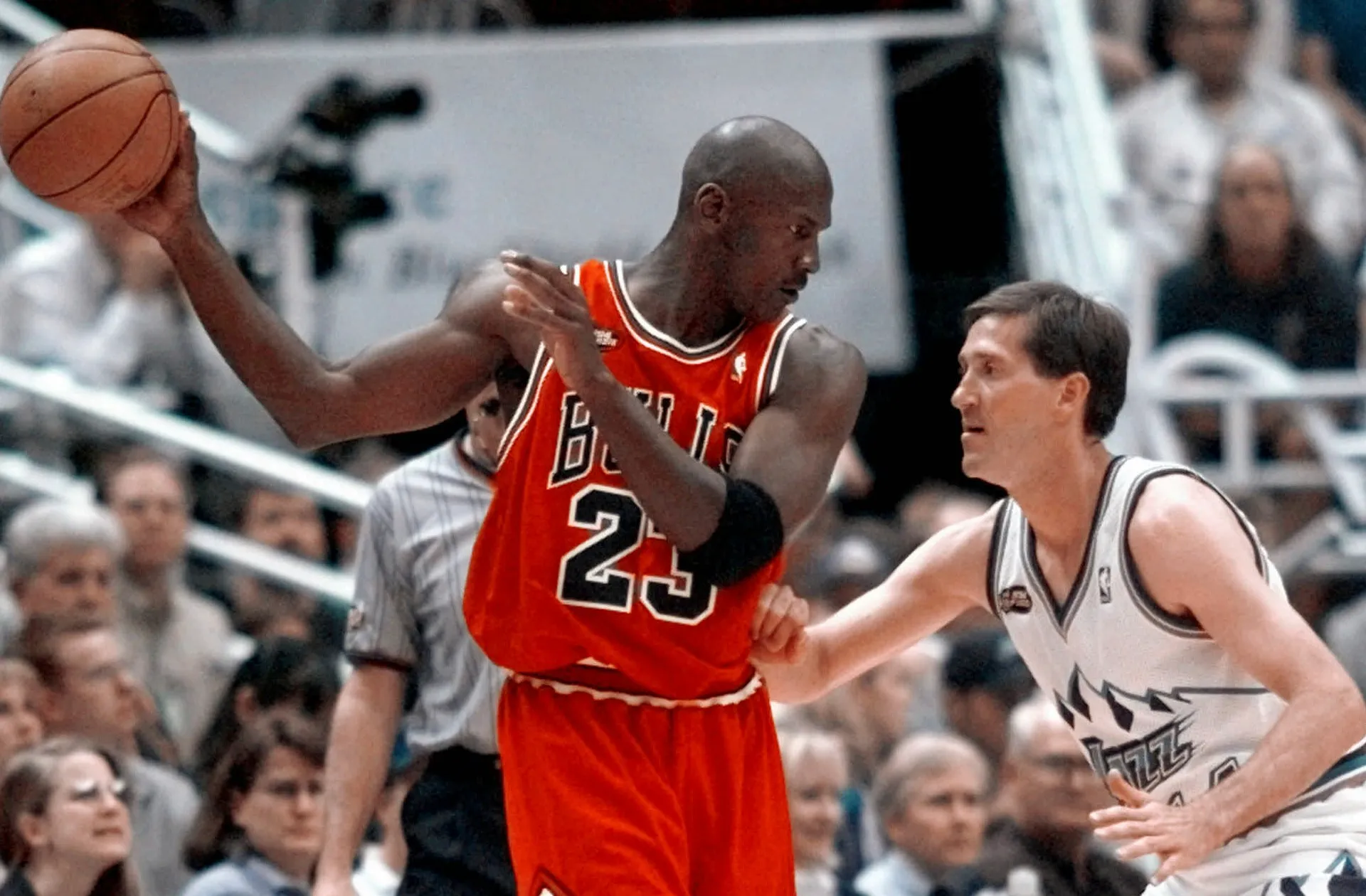
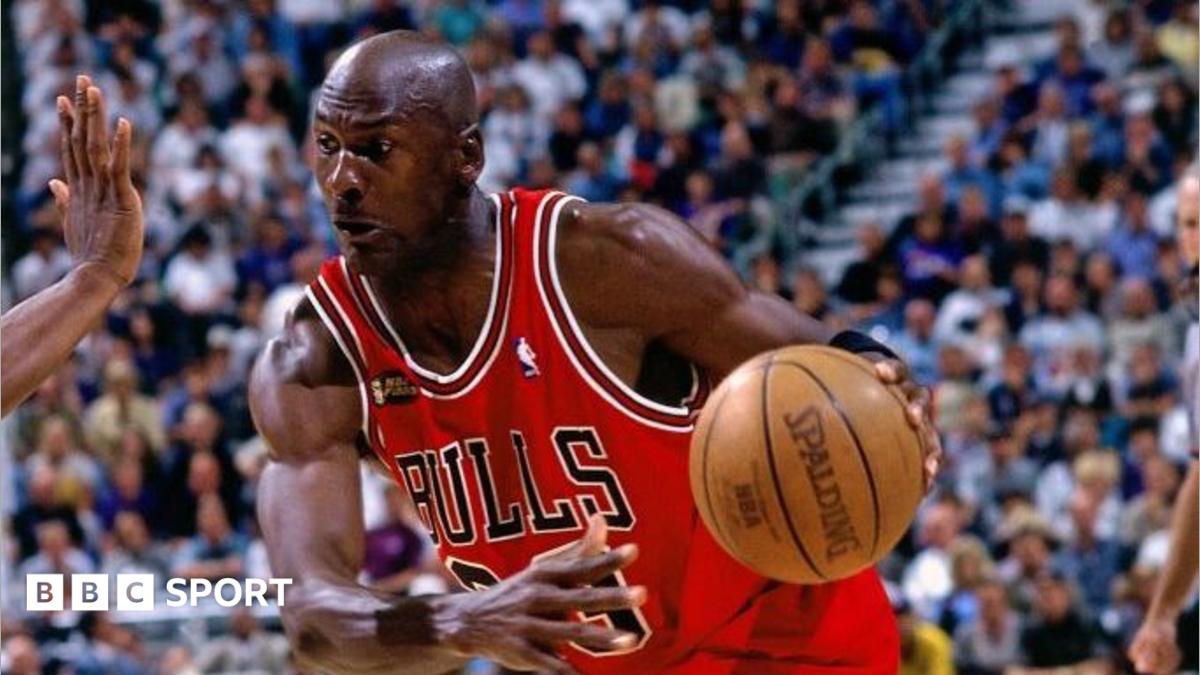
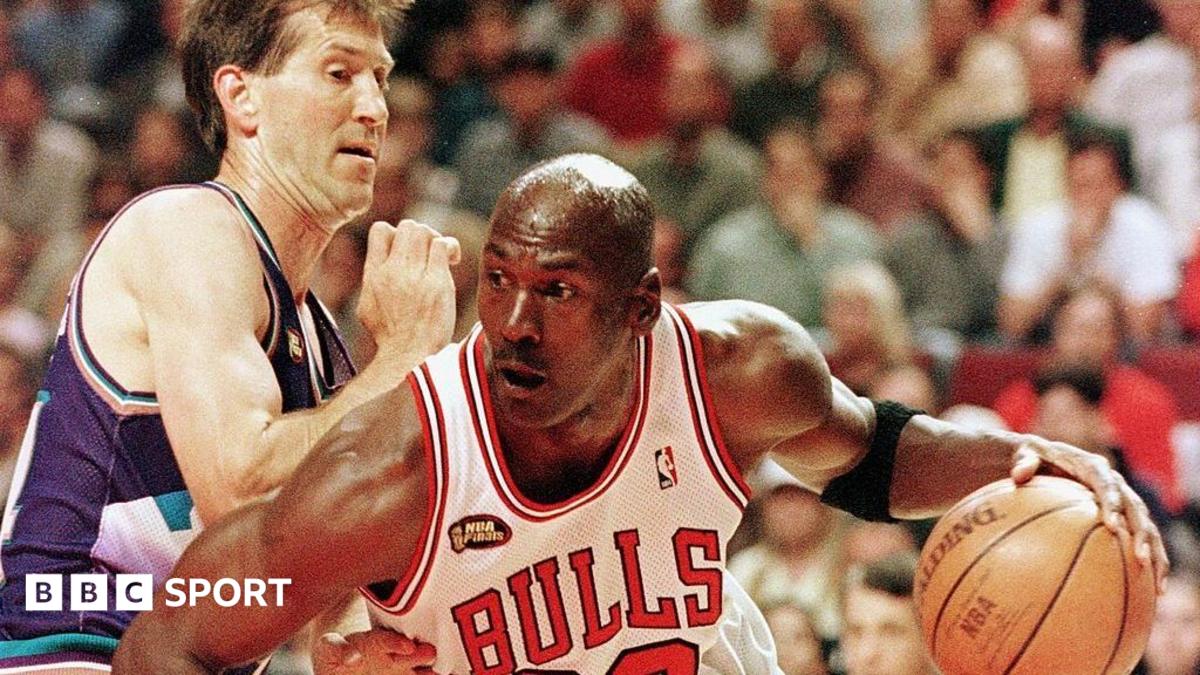
The jersey Michael Jordan wore during Game 2 of the “Last Dance” 1998 NBA Finals has sold for a record $14m.
Hunt Auctions announced on Monday that the game-worn, autographed Chicago Bulls jersey was bought by Miami real estate investor Ron Firman in a private sale.
It is the highest price ever paid for a piece of basketball memorabilia and, according to the auction house, the newly sold Jordan jersey ranks as the second-largest sale in history among game-worn sports jerseys.
The New York Yankees jersey worn by Babe Ruth in Game 3 of the 1932 World Series – during which Ruth called his shot before a home run – went for $24.12m in 2024.
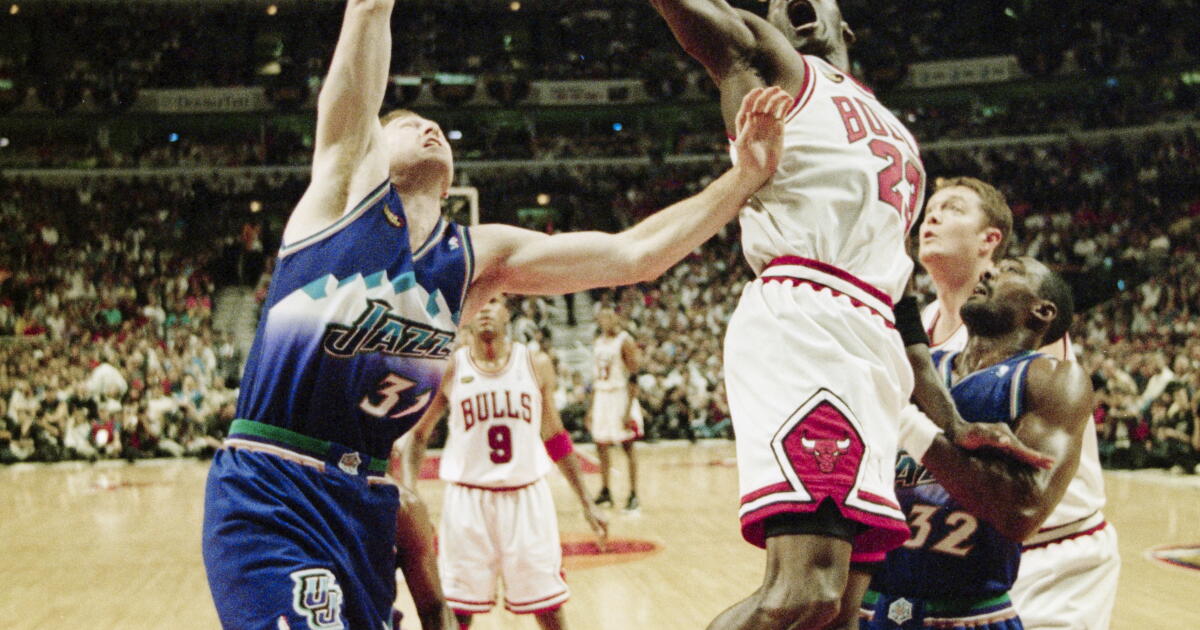
Jordan and the Bulls defeated the Utah Jazz in six games to win the 1998 championship, the sixth and final title of his career in Chicago.
Game 2, played on June 5, 1998, in Salt Lake City, saw Chicago even the series 1-1, largely thanks to a dominant performance by its superstar guard.
Jordan put up 37 points, five rebounds, and three assists in a 93-88 victory. He would go on to collect his sixth and final Finals Most Valuable Player (MVP) award, two more than anyone else in NBA history, nine days later.
The wildly popular “Last Dance” documentary, released in 2020, was centred around that 1997-98 Bulls season.
“The record-setting price achieved for the related Michael Jordan jersey is yet another corroborative result as to the significance of Jordan within the industry and popular culture. This remarkable garment bore witness to one of Jordan’s most hallowed NBA Finals appearances as part of his ‘Last Dance’ season to complete his illustrious career,” David Hunt, president of Hunt Auctions, said in a statement.
“While Michael Jordan’s importance within the sports memorabilia marketplace has long been established, it has now escalated to an elite asset class more typically reserved for iconic works of art. We are very pleased to have been able to facilitate this historic sale which serves as another benchmark for our industry.”
This sale becomes at least the third time a Jordan jersey from that 1998 Finals has fetched at least $10m. A jersey from Game 1 was sold at auction for about $10.1m in 2022, and a jersey from Game 3 was auctioned last month for about $12.3m via an auction in September.
“Michael Jordan was an incredibly talented player who is admired around the world,” Firman said in a news release distributed by the auction house. “I’m very excited about the purchase.”
The jersey that Firman bought was originally bought from the Bulls by a private collector in 2003, Hunt said, adding that it “has remained within a succinct chain of custody, having only changed hands once from the original purchaser”.
Just about anything related to the 1998 Finals and Jordan’s final season with the Bulls has been the subject of huge interest in the collector space. In 2023, a pair of Air Jordan sneakers that he wore in Game 2 against the Jazz was sold by Sotheby’s for $2.2m, touted at the time as “a new world record for the most valuable sneakers ever sold”.
An autographed Chicago Bulls jersey worn by Michael Jordan during Game 2 of the 1998 NBA Finals was privately sold to a Miami real estate investor for $14 million, an auction house announced Monday. The price is believed to be the highest ever paid for basketball memorabilia.
A game-worn red road jersey was purchased by Ron Firman, according to Philadelphia-based Hunt Auctions. Jordan wore it June 5, 1998, while scoring 37 points in the Bulls’ victory over the Utah Jazz. The Bulls went on to win the series in six games, giving Jordan his sixth and final championship.
This is the third Jordan jersey from the 1998 Finals that has sold for more than $10 million. Jordan’s Game 3 white home jersey was auctioned in September for $12.26 million and his Game 1 red road jersey was sold at auction for $10.09 million in 2022.
“While Michael Jordan’s importance within the sports memorabilia marketplace has long been established, it has now escalated to an elite asset class more typically reserved for iconic works of art,” said David Hunt, president of Hunt Auctions, in a statement.
Firman’s X account describes him as a “Commercial Real Estate Co. Principal. Partner in private co. who’s trading is comparable to a hedge fund’s. Rare Vintage Sports Memorabilia Collector.”
His most recent post came Nov. 29, 2022, and features a signed photo of Joe DiMaggio belting a single in the seventh inning of the 42st consecutive game he recorded a hit in 1941, setting an American League record. DiMaggio extended the streak to 56 games, a Major League record that still stands.
Firman also recently set a record by spending $3 million for a 1951 Mickey Mantle first-generation photo used as the basis for Mantle’s celebrated 1952 Topps rookie card. Now Firman owns another piece of legendary memorabilia. The Bulls’ 1997-98 season was the subject of the “Last Dance” documentary series released in 2020.
“Michael Jordan was an incredibly talented player who is admired around the world,” Firman said in a statement distributed by Hunt Auctions. “I’m very excited about the purchase.”
The only game-worn jersey publicly to fetch more than $14 million was worn by Babe Ruth when he supposedly called his shot before hitting a home run against the Chicago Cubs at Wrigley Field in Game 3 of the 1932 World Series. That jersey sold for $24.12 million in 2024 at Heritage Auctions, setting a world record for the most expensive piece of sports memorabilia. It appreciated more than 25 times from the $940,000 it went for in 2005.
“In our opinion, and 36 years of market experience, Babe Ruth and Michael Jordan stand above all others in the history of American sports,” Hunt said. “The record-setting price achieved for the related Michael Jordan jersey is yet another corroborative result as to the significance of Jordan within the industry and popular culture.”
A Michael Jordan jersey from his ‘Last Dance’ season has sold for $14m (£10.6m), a record for a piece of basketball memorabilia.
Jordan wore the Chicago Bulls jersey during game two of the 1998 NBA Finals and has autographed it too.
He scored a game-high 37 points that evening before ending his last season with the Bulls with a 4-2 series win for his sixth and final NBA Championship. He was named the Finals’ Most Valuable Player in all six.
The only item of sports memorabilia that has cost more is the jersey worn by baseball legend Babe Ruth when he “called the shot” during the 1932 World Series, which was sold for $24.1m (£18.2m) in 2024.
The previous high for a basketball item was a card featuring Jordan and Kobe Bryant from 2007-08 which sold for $12.9m (£9.8m) last year.
The previous record for a piece of game-worn Jordan memorabilia was set just two weeks ago when his jersey from game three of the 1998 Finals, which is not autographed, sold via auction for $12.3m (£9.3m).
The latest purchase was made by Miami real estate investor Ron Firman in a private sale through Hunt Auctions.
David Hunt, president of Hunt Auctions, said in a statement: “While Michael Jordan’s importance within the sports memorabilia marketplace has long been established, it has now escalated to an elite asset class more typically reserved for iconic works of art.”
The Swedish academy says the academics’ models are ‘now used by central banks and governments around the world’.
Published On 12 Oct 202612 Oct 2026
The 2026 Nobel Prize in Economic Sciences has been awarded to US academics Robert Hall and Michael Woodford for their work on how monetary and fiscal policy can help stabilise fluctuations in the economy, according to the Royal Swedish Academy of Sciences.
The winners of the prestigious award, formally known as the Sveriges Riksbank Prize in Economic Sciences in Memory of Alfred Nobel and the final prize to be given out this year, were announced on Monday.
Recommended Stories
list of 4 itemsend of list
The two laureates developed new macroeconomic models that improve people’s ability to implement effective stabilisation policies, enabling fiscal and monetary policy measures that can reduce damaging swings in the economy.
“The laureates’ work has provided us with a stable theoretical foundation for the models that are now used by central banks and governments around the world,” John Hassler, chair of the Committee for the Prize in Economic Sciences, said in a statement.
“With them, we are better equipped to deal with shocks in the economy, such as energy crises or sudden changes in how much households consume.”
During the oil crises in the 1970s, the existing Keynesian models used to determine when and how measures should be implemented to tackle recessions or other economic fluctuations stopped working. Hall and Woodford then developed new tools to understand what policy responses could be the most effective.
“Rather than basing the models on statistical links between macroeconomic variables, such as inflation, production and consumption, they chose to build them on a microeconomic foundation,” the academy said. “This encompasses an understanding of how the total mass of individual households and businesses affect the economy through their actions.”
The economics prize, first awarded in 1969, is not part of the five original awards created in the 1895 will of industrialist and dynamite inventor Alfred Nobel, but was instead established by Sweden’s central bank.
The majority of previous laureates have been from the United States. Only three women have ever won, most recently Claudia Goldin in 2023 for her work on how gender has affected pay and employment over time in the US.
Last year’s winners – Joel Mokyr, Philippe Aghion and Peter Howitt – won for their work on “creative destruction” and how new technology and production methods can boost growth and living standards.
Like the other Nobel awards, the economics prize consists of a diploma, a gold medal, and a $1.2m cheque.
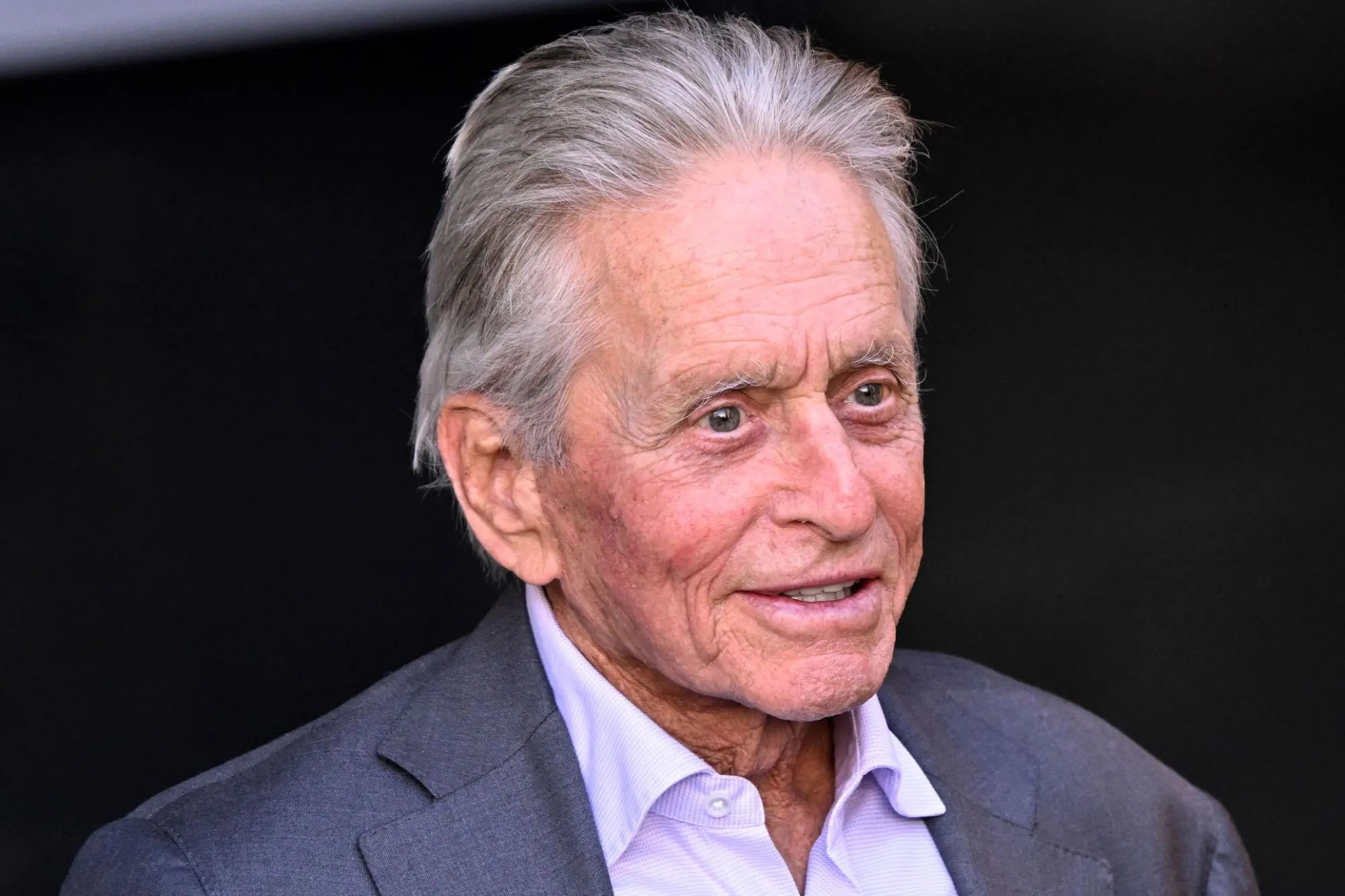
Movie stars are an endangered species. They still exist, sure. Their beautiful faces still fill 50-foot screens, beaming down on us. Yet, there is a shortage of, say, Michael Douglas. A man who, over the span of decades, played an American president, a troubled detective, and a Wall Street tycoon so convincingly that the FBI recruited the actor to do a PSA for investment bankers about the perils of financial fraud.
On the Shelf
One Helluva Ride
By Michael Douglas Grand Central Publishing: 496 pages, $35
If you buy books linked on our site, The Times may earn a commission from Bookshop.org, whose fees support independent bookstores.
The night before I meet Michael Douglas on Zoom, I have a hard time sleeping. I want to be well-rested before I meet the leading man — perhaps one of the last leading men from an era in Hollywood that felt limitless. What do I mean by that? He’ll tell you. His new memoir details his movie-making career as a prolific producer and actor, along with his affair with his “Romancing the Stone” co-star Kathleen Turner, mudslides in Mexico, snorting cocaine with O.J. Simpson, encounters with Princess Diana and screaming matches with Paul Verhoeven that end in blood. In short: the life of a movie star.
“People say to me: Michael Douglas. When I see your name, I don’t know what I’m going to get, but I know it’s going to be good,” Michael Douglas says.
(David Urbanke / For The Times)
Halfway through our conversation, something unanticipated happens: Douglas reveals that he doesn’t quite see himself as a movie star. After gentle pushback, he elaborates. Instead, Douglas sees himself as a chameleon.
“People say to me: Michael Douglas. When I see your name, I don’t know what I’m going to get, but I know it’s going to be good,” he says.
He’s speaking from his home in New York. Behind him is a moody 18th-century Orientalist painting, its scene too indistinct for me to make out. His smiling face — which, like most American moviegoers, I had watched 50 feet tall in the dark — glows with warmth even on my laptop screen. It seems abnormal even to witness him in miniature.
To be clear: Michael Douglas is a movie star, whether or not he wants to cop to it over Zoom. It’s in his blood. His father, Kirk Douglas — born Issur Danielovitch to Russian Jewish immigrant parents — was a legendary actor whose shadow Douglas struggled to escape, as he details in the early chapters of his memoir. He spent his childhood on movie sets, watching his father spar with iconic directors like Stanley Kubrick. Michael Douglas was subject to violent and angry outbursts as well. “Dad’s volatility kept us on edge,” he writes. He felt suffocated by his father’s legacy, often hoping to shake the title of “Kirk Douglas’ son.”
Early in his career, Douglas left his starring role on TV’s “The Streets of San Francisco” after producing his first film, “One Flew Over the Cuckoo’s Nest,” which became a breakout success. On that film, he had to deliver the shattering news to his father that he was too old to play the lead — essentially, firing his father from his dream role. It was a betrayal. Instead, the role went to Jack Nicholson, who would later win an Academy Award for his humanizing portrayal of Randle McMurphy. The film won multiple Academy Awards, launching Douglas’ career as a heavyweight producer and later an actor. Escaping the shadow of being Kirk Douglas’ son has been a lifelong battle for the actor.
(Grand Central Publishing)
Occasionally, inheritance can be a burden. In his own life, Douglas details how he was a distracted father and husband who lost sight of his son, Cameron Douglas. During Cameron’s childhood, Douglas was elsewhere — on location in the Mexican jungle in “Romancing the Stone,” then a disastrous film production in Morocco for “Jewel of the Nile” that included a fatal plane crash that resulted in three crew members’ deaths. To cope with the breakneck pace of show business, Douglas sought refuge in women, cocaine and work.
Cameron’s troubled youth reached a crescendo when he was sentenced to five years in federal prison for drug smuggling, with an additional sentence for drug possession in prison — serving seven years in the end. It was enormously painful for Douglas, who also struggled with addiction, and had sought out treatment to provide an example to his son.
In a late chapter, he recalls confiding in Rob Reiner, who also had a son who struggled with addiction issues. In the memoir, Douglas addresses the killing of Rob and Michelle Reiner in December 2025; their son Nick has been charged with murder. “We both had sons with serious drug issues and we both, at times, had been at the end of our rope,” Douglas writes. “It was a heartbreaking confessional for us, but I know we gave each other some measure of comfort during the hard times.”
Why trudge through movie history, turning over every stone and every wound, in a nearly 500-page memoir? Because, according to Douglas, it’s time.
“Your 80s may be a good time to share,” the actor says, who recently turned 82. “People interested in movies, we give them a certain insight into the process, and maybe they could learn something. For others, it’s just gossip.” His battle with Stage 4 oral cancer brought the contours of his life into stark relief, sharpened by seven weeks of radiation and chemotherapy. His official diagnosis was tongue cancer, but he told the public he had throat cancer, hoping to stall speculation in the press about the possibility of disfigurement — and, more specifically, the prospect of losing his tongue. It was isolating, and Shane Salerno — the memoir’s co-author — stayed by Douglas’ side.
Michael Douglas.
(David Urbanke / For The Times)
As much as Douglas’ memoir, “One Helluva Ride,” is a revealing and delightful account of a life in show business, it is also a love letter to California — a place where Douglas spent much of his adult life, beginning at UC Santa Barbara. The college travel brochure read: campus by the sea. “I remember the cover of it was a guy walking down the beach with a surfboard, two girls in two-piece bathing suits. In 1963, I never saw a two-piece bathing suit back east.” He was sold.
The California years made an impression. Douglas is still, at heart, a hippie. Raised in stiff East Coast prep culture, he was reborn in the California sunshine. “I transferred into becoming a hippie, influenced by the Maharishi Mahesh Yogi, hallucinatory drugs, and the world that existed in the early ‘60s in San Francisco.”
Strangely, Douglas argued that some of the utopic sentiments of the 1960s are returning. “People are beginning to look back at that time, and realize how important family is — cooperation, sharing,” he says. “Socialism is not a four-letter word or something that’s terrible. There are other things to pursue in life other than just making money.”
“Your 80s may be a good time to share,” Michael Douglas says.
(David Urbanke / For The Times)
Like the characters he portrayed, Douglas is far from perfect. He admits that he struggled — in his first marriage, and later as a father. After marrying Diandra Luker, Douglas was unfaithful, having relationships with co-stars, most notably Turner on the set of “Romancing the Stone” in the Mexican jungle. The two denied the relationship for years. Now, with Turner’s blessing, Douglas writes about their involvement in his memoir.
Before Turner, there was Diane Thomas, the film’s waitress-turned-screenwriter, with whom Douglas had an affair. Thomas’ life was tragically cut short in a car accident involving a Porsche that Douglas had gifted her.
Then there were the rumors. On the set of “Basic Instinct,” some speculated that Douglas and Sharon Stone were having an affair. They weren’t, he explains. Douglas was instead locked in a power struggle with director Verhoeven, who, during one particularly heated argument with the actor, suffered a burst artery in his nose, turning the confrontation into a bloody scene. Douglas, meanwhile, was involved with another co-star, Jeanne Tripplehorn. “They were so focused on a possible relationship between Sharon and me, they missed the real relationship happening between me and Jeanne,” he writes.
When he and his current wife, actor Catherine Zeta-Jones, made it official, Douglas went to the other room to make breakup calls to five other women. (By this point in the memoir, Douglas has enough goodwill to pass this off as charming.) “From the moment I met Catherine, and we formed our family, I was a new man,” he writes.
The memoir enshrines Douglas’ petty show-business grievances too: a repaired grudge against David Letterman, a TV co-star who stole his longtime girlfriend, and a bouquet sent to Julia Roberts to apologize for his drunken buffoonery. In Douglas’ words: “There’s two or three people that I share my hostilities with.” He clashed with Brian De Palma, who was originally attached to direct “Fatal Attraction” and tried to have Douglas fired. De Palma underestimated Douglas and was replaced by Adrian Lyne. Years later, De Palma apologized, but Douglas rejected it.
It is impossible to tell the story of Douglas’ career without the women he encountered. The films he championed helped establish a new type of female lead — in all their powerful, morally ambiguous and deranged glory. “An actress was not allowed to play a villain,” he says. In “One Flew Over the Cuckoo’s Nest,” the actor struggled to cast Nurse Ratched. “A whole number of leading actresses turned that part down until we found Louise Fletcher, who went on to win an Oscar.”
For Glenn Close, Sharon Stone and Kathleen Turner, acting opposite Michael Douglas was transformative. After her role as a murderous, sex-crazed bisexual in “Basic Instinct,” Stone became one of the biggest stars of the 1990s and earned an Oscar nomination for Martin Scorsese’s “Casino.” Close‘s portrayal of the mistress-turned-lovesick psychopath in “Fatal Attraction” earned the actor her first lead Oscar nomination after three supporting nods. Turner went from being primarily known as the sexy femme fatale of “Body Heat” to a Golden Globe-winning star with box-office clout after her collaboration with Douglas. Sure, she sued him, too, but their friendship survived.
However, it wasn’t until his role as Gordon Gekko, the fast-talking, impulsive tycoon in 1987’s “Wall Street,” that Douglas was in full force, winning an Academy Award for lead actor. Directed by Vietnam veteran Oliver Stone, Douglas delivered an unforgettable performance about the dangers of unchecked capitalism and greed. At an early New York screening, Douglas recalls Wall Street traders being stunned by the film’s stinging accuracy. “A lot of the Wall Street characters were there, very cocky at the time; they all were shocked because we caught them.”
To his surprise, Wall Street financiers approached him on the street to praise Gekko — anointing him as their hero. “I said, ‘I was the villain.’ ‘No, no, no,’” he said. “So it showed me a lot.”
It speaks to Douglas’ gifts as an actor that he could transcend the caricature of white male entitlement he portrayed with such precision. In “Falling Down,” filmed during the 1992 uprising triggered by the Rodney King verdict, Douglas plays an unemployed defense worker, a man so consumed by disillusionment and blinded by his own sense of victimhood that he cannot recognize the harm he inflicts on others. The character would prove eerily prescient, anticipating an archetype that would take shape in the decades to come. An entire generation mistaking the actor’s brilliance as an invitation.
Perhaps that is the strange thing about being a movie star: Audiences decide who you are, and what you mean to them. For a chameleon, an actor who spent a lifetime resisting other people’s definitions of him, that might be the ultimate paradox.
As our conversation winds down, I remind him of his immense contributions to filmmaking, through producing and acting. It seems redundant, but I say it anyway. His response is polite.
“Quirky,” he said. “‘Falling Down,’ ‘The War of the Roses’ — I love those quirky films.”
“I’m proud of my movies,” he says. “I’m very proud of my movies.”
Connors is a culture journalist in L.A. She covers books, food, entertainment and offbeat Los Angeles. She’s currently at work on a book of essays about tourism in all its forms.
Michael Kearns, a trailblazing AIDS activist and author credited as the first out gay actor, has died. He was 76.
Filmmaker and professor Roland Palencia confirmed the actor’s death on social media, writing that Kearns had died Monday evening after feeling unwell and calling the paramedics on Sunday. Palencia said that the actor had been in and out of emergency rooms more than five times in the last few months.
“Michael Kearns was a friend, mentor, neighbor, and my movie buddy,” Palencia wrote. “For the past year, we watched an average of a movie a month. Our favorite theater was the Vista Theater in Los Feliz, with a larger-than-life screen and within walking distance of where we both lived. Our favorite film this year was ‘The History of Sound.’
“It is a strange feeling to know we will not see the living Michael again, who spoke in hyperbolic, superlative tones. For him, nothing in life was small enough; everything had magnified significance. He himself and his legacy are larger than life,” he continued. “I will miss him deeply. Our next movie was going to be ‘La Bola Negra,’ a film based on Federico García Lorca’s first openly gay play, the Spanish playwright [was] killed in 1936 by the fascist Francisco Franco army. Michael was our Los Angeles García Lorca.”
Born Jan. 8, 1950, and raised in St. Louis, Kearns felt odd from an early age.
“I couldn’t throw a ball particularly well. I didn’t excel in sports,” he told talk show host Sheila Kuehl during a 1998 appearance on “Get Used to It.”
“But one day I was put in the school play, and I excelled. Suddenly I realized I could entertain, and from that moment on it was just like this realization, ‘Oh my God, here is something that I can do, I have found it,’ and I was only 8 years old. From that moment on, to this very moment, I’ve never ever veered from that path.”
Kearns realized along the way that his path to stardom wouldn’t be so simple. He had initially been drawn to the theater as a means to escape his home life, and himself, but he ultimately found the craft inspired the opposite: “As I got into my 20s, coinciding with an awakening of other areas of my life — spiritual, sexuality — I found that the theater and being an actor was more of a way to truly connect with who I was as a person,” he told Kuehl.
Around this time, Kearns made his way to Chicago, where he studied acting at the original Goodman School of Drama, which became the Theatre School at DePaul University, and graduated in 1972. It was here that Kearns got his first taste of casting bias, and realized that he was facing a real dilemma: Did he want to be gay or did he want to become a commercially successful actor?
“In spite of the fact that most of the teachers were gay or lesbian, they had that Hollywood philosophy that if they knew you to be a homosexual, you were not as eligible to play heterosexuals,” he continued. “By that point I was out, out, out. I mean, there was no way I was going to alter my offstage behavior to please anyone.”
Kearns acted across film and television from the 1970s through the aughts, including roles in “Body Double,” “Nine Lives,” “Street Asylum” and “Beverly Hills, 90210.” During an era when it could be dangerous to be queer, the actor was out, and in 1991, he made television history when he shared that he was HIV positive on NBC’s “A Closer Look,” and the next day, “Entertainment Tonight.” The following year, he appeared on a segment of ABC’s dramedy series “Life Goes On” and played a character with HIV.
In 1975, Kearns used his acting chops to pull off a literary stunt in which he posed, both in nude photographs and in extensive interviews, as author Grant Tracy Saxon, a pen name for TV writer Thom Racina who penned “The Happy Hustler,” a faux memoir (it was actually fictionalized erotica) about a high-priced male sex worker. Years later, Kearns became an author himself and published five theater books including “T-Cells & Sympathy” and “Acting = Life,” which were nominated for Lambda Literary Awards.
The actor’s first major theater role in Los Angeles was in Tom Eyen’s comedy “The Dirtiest Show in Town” in 1972. Perhaps his most celebrated performance was playing the title role in Charles Ludlam’s “Camille” at Highways Performance Space in 1993. He also acted in James Carroll Pickett’s “Dream Man,” in 1985 and toured with the production internationally.
Kearns, who considered himself “a political creature as well as an actor,” also garnered acclaim for his solo theater works, which were inspired by the AIDS epidemic and his grief surrounding the too-frequent death of his friends. “Intimacies” and “More Intimacies,” in which he played a dozen diverse characters with AIDS, as well as solo pieces “Rock” and “Going In: Once Upon a Time in South Africa,” made Kearns feel that he had found new purpose and depth in his work.
“Somewhere in that time, I became an artist,” Kearns told The Times in 1994. “Whatever that pain, that loss, that tragedy was, I managed to spin it like an alchemist into something passionate. And it’s been increasingly so since.”
In 1992, he married his husband, Philip Juwig, who died the same year. Bereft, Kearns spent three years thinking, “What now?” and kept coming back to the same thing: He wanted to be a dad. In 1995 he adopted a baby girl, Tia Katherine Kearns, whom he named after his grandmother.
In 2017, he interviewed his daughter for the summer issue of Honeysuckle Magazine about her identity as a Black woman, her work as an artist and her unique upbringing. She said that she attended a progressive school and didn’t feel judged, noting, “they doted on my dad because he had a skill set that other dads didn’t; for school fundraisers; he could climb a ladder and decorate with panache.”
Later in the interview, she revealed that she had her dad’s passion for political activism.
“I think my political consciousness was formed early on,” she said. “I think it would have been impossible for me not to have an awareness of the world and political climate with a dad who is an openly gay actor and activist. Your openness and courage forced me to be honest with myself and the world I live in.”
Kearns gushed in a 2015 interview that his dream creative collaboration would be directing a project written by his daughter that explored race.
In the last couple of decades, the social justice crusader worked with Angelenos to develop their own voices through writing workshops. He also served as an artistic associate at the Skylight Theatre in Los Angeles, artist-in-residence at Housing Works, and artistic director of QueerWise, a Spoken Word collective he founded in 2012.
Kearns was widely recognized for his work, including the Robert Chesley Playwrighting Award (2005), honoring lifetime achievement in LGBTQ+ theater, and a COLA Fellowship (2005) from the city of Los Angeles Cultural Affairs Department to fund major new creative works. His acting career was highlighted by a Drama-Logue Award and a Los Angeles Drama Critics Circle Award nomination for his lead role in “Camille.” Additionally, his national advocacy earned him the Victory Award (1999) from the Gay & Lesbian Victory Fund, alongside honors from the ACLU of Southern California (1987).
FANS of Michael Jackson will be looking at the competition and hoping to beat it when his latest memorabilia goes under the hammer.
The late King of Pop’s original Thriller jacket and Motown 25 glove are being put up for Auction in Abu Dhabi.
The leather jacket worn by Michael Jackson in his Thriller video is set to be a monster hit at auctionCredit: AlamyEstimates for the jacket up for auction are only available upon request by interested biddersCredit: Julien’s Action
On December 7, the iconic garments will headline Julien’s Auctions’ Fashion Legacy Evening Sale.
Created by Deborah Nadoolman Landis, the red leather jacket was one of two created for Michael’s 1983 video – with the other shredded for the zombie scenes and now on display at the Rock and Roll Hall of Fame.
Sign up for the Showbiz newsletter
Thank you!
Estimates for the jacket up for auction are only available upon request by interested bidders. It last sold in 2011 for almost £1.4million.
Michael wore the white rhinestone glove, tipped to fetch £700,000, the same year at the taping of Motown 25: Yesterday, Today, Forever.
The 32,000 items linked with the King of Pop were being sold as a single lot in a private online auction on behalf of an anonymous owner.
The collection was originally intended for a museum in Los Angeles, but plans fell through and it was auctioned through House of Consultants.
The owner said: “This is a rare opportunity to buy cultural heritage from the most influential artist of the century.”
Michael wore these white rhinestone glove, tipped to fetch £700,000, the same year at the taping of Motown 25: Yesterday, Today, ForeverCredit: Cover ImagesOn December 7, the iconic garments will headline Julien’s Auctions’ Fashion Legacy Evening SaleCredit: Getty
A new Pixar animated film, the sequel to Lionsgate’s “Michael” and a large crop of indie projects are among the latest films to be awarded a California tax credit for in-state production.
In total, 35 films — including 28 independent projects — received production incentives in the latest round of incentives.
Together, the projects are expected to contribute more than $1 billion in direct production spending in-state and hire more than 5,400 cast and crew members and more than 24,800 background actors, the California Film Commission said Wednesday.
“California is the home of entertainment, full stop,” Gov. Gavin Newsom said in a statement. “We’re not just protecting that legacy; we’re investing in its future.”
Pixar received the largest credit ($40.1 million) for an untitled animated film, followed by Lionsgate, which was awarded $30.8 million for the sequel to “Michael,” the film based on the life of Michael Jackson. Paramount Pictures got $29.3 million for an untitled crime thriller.
The latest round of tax credit awards comes less than a month after Newsom signed a bill to create the state’s first post-production incentive. Industry editors, sound mixers, visual effects artists and composers had said such a credit was necessary to lure jobs back from overseas.
On a national level, a bipartisan coalition of lawmakers is pushing to create a federal tax credit for film and TV. The bill is expected to be introduced in Congress in early November and backers are aiming to get it passed by Dec. 11, when the current Congress ends. If passed, the credit would take effect in 2027 and would be stackable with states’ production incentives.
THIS is the heartbreaking last picture of Michael Flatley’s beloved wife, Niamh O’Brien, in public meeting the Pope months before her death.
The 52-year-old died earlier today following “a period of illness” leaving the Lord of the Dance star devastated.
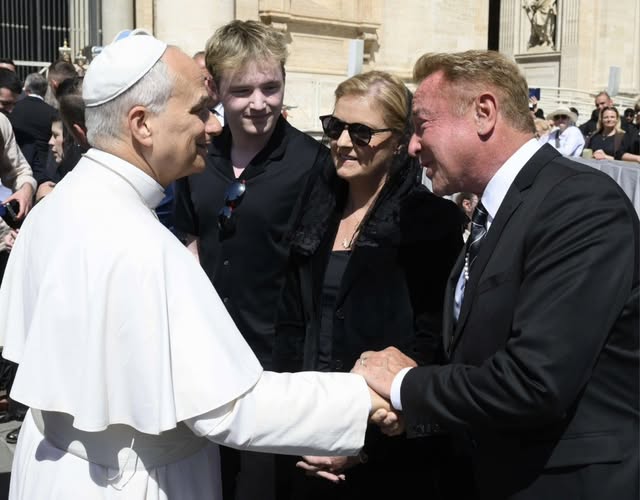
Niamh O’Brien was last seen during a meeting with the Pope in MayCredit: Vatican MediaNiamh died after a ‘period of illness’, a representative saidCredit: Getty
The mum-of-one passed away peacefully at the Beacon Hospital in Dublin, a representative said.
She was last pictured in public meeting then-incoming Pope Leo XIV on April 29 with her husband.
Sign up for the Showbiz newsletter
Thank you!
The pair travelled to the Vatican to meet the Shepherd of the Flock with their son, Michael St James.
Flatley was inspired by the visit where he kissed the Pope’s ring and had his “cherished” rosary beads blessed by the pontiff.
And classy Niamh donned an all black outfit for the occasion where she was seen smiling alongside her husband.
Michael St James had also opted for a black monochrome look and was pictured standing beside his beloved mum.
The happy pair were both smiling as Flatley exchanged words and shook hands with the pontiff.
Flatley later said: “It was an incredible honour to meet His Holiness.
“I am so moved. I didn’t think I’d ever have that opportunity.”
He also spoke about his own Catholic faith, having grown up to a working- class Irish immigrant father on the south side of Chicago.
He said: “My parents were hard-working Irish Catholic people. And we went to Mass every Sunday and we worked every day, just the way we were brought up.
“It’s my honor and my joy to carry on their traditions and spread as much joy as I can.
“Jesus Christ gave me every opportunity to become a great dancer and to travel the world and meet the world leaders, but my greatest day was today, meeting the Holy Father and God’s representative on earth.”
The Lord of the Dance also extended an invite to Ireland to Pope Leo on behalf of the Irish people.
Flatley paid tribute to his late wife earlier tonight in a heartbreaking social media post.
He said: “My heart is broken. I have lost my beautiful wife, Niamh, and my best friend.
“My gorgeous bride of twenty years has gone to the Lord in Heaven.
“She was the most loving mother, wife and person, and our lives will never be the same without her.
“Thank you for all the love and kindness you have shown us. Please keep Niamh, Michael St James, and our family in your thoughts and prayers.”
And a representative said: “The Flatley and O’Brien families are devastated by Niamh’s sudden passing and have asked that their privacy be respected as they come to terms with this heartbreaking loss.
“They express their sincere gratitude to the doctors, nurses and staff at Beacon Hospital who cared for Niamh over the past few weeks, and to everyone who has offered their kindness and support to the family.”
Niamh’s funeral details will be announced in due course, a spokesperson has said.
MICHAEL Douglas has denied he’s a sex addict and said he was a “healthy product of the Sixties” after his affair revelation with Kathleen Turner.
The actor, 82, confessed to having a relationship with Kathleen as they filmed their 1984 action flick Romancing The Stone.
Michael Douglas has denied he’s a ‘sex addict’ in his new bookCredit: GettyThe actor revealed he had an affair with Kathleen Turner when he was married to his first wifeCredit: DHUB_Search_Shutterstock_Editorial_NUK
At the time, Michael was married to his first wife Diandra Luker.
The Basic Instinct star opened up about his colourful love life and insisted he was not a “sex addict” despite his multiple flings.
Sign up for the Showbiz newsletter
Thank you!
Speaking to The Times, he was asked if he ever wondered why he had slept with so many women.
Michael replied: “I don’t know if I slept with so many women, I don’t see it that way. No, not me, no. I was a healthy product of the Sixties.”
The actor insisted he was ‘ a healthy product of the Sixties’Credit: DHUB_Search_Shutterstock_Editorial_NUKThe Wall Street star is now smitten and happily married to Catherine Zeta JonesCredit: AFP
He added: “My curiosity is why, of all countries, of all the press that I do, why are the Brits so consumed with the issues of sex?”
In the nineties, it was reported that Michael had entered rehab for a sex addiction.
But Michael has said in an excerpt from his upcoming memoir One Helluva Ride: “I was never a ***ing sex addict.”
Shared by People, Michael dished about his extramarital romance with Kathleen.
Michael penned: “Kathleen was smart, funny, and sexy with a deep, sultry voice that became her signature.
“I instantly liked her, and we were immediately attracted to each other.”
Michael then claimed that his marriage to Diandra “was in a bad place” and that he had been having an affair with Romancing The Stone screenwriter Diane Thomas prior to meeting Kathleen.
In the book, he described himself as “technically married, but separated” as he had an affair with Kathleen.
He noted that audiences spotted their chemistry, and they were forced to deny everything and put it down to them both being “terrible flirts” due to him being married.
“It was a lie meant to protect my wife and son, a lie we told the world for 40 years.”
In his book, Michael confessed: “The truth is that during the production of Romancing the Stone, Kathleen and I fell hard for each other and began a relationship.”
He said that their relationship “grew naturally” and noted how much they respected and cared for one another, “and how attracted we were to each other”.
Michael added: “Like every other guy in the world at the time, I was knocked sideways by Kathleen….”
They continued their romance until it fizzled out when his wife visited on set and made it clear to Kathleen they were still married.
Diandra warned her off and Kathleen “didn’t want to interfere”.
Although their romantic relationship was over, they continued to star in movies together until 1989.
His first marriage to film producer Diandra Luker lasted from 1977 to 2000.
After 18 years together, Diandra filed for divorce in 1995, leading to a protracted legal separation which was finalised in 2000.
Michael is now smitten and happily married to Catherine Zeta Jones.
Catherine and Michael first met in August 1998 at the Deauville American Film Festival in France.
Brown’s two goals were just reward for a player who has been quietly impressive for far longer than this campaign, and he was part of a back-five which stood out in what was a third consecutive clean sheet.
Brodie Spencer and Terry Devlin were drafted in at the full-back positions and both impressed, but Brown’s centre-back partners McConville and Tom Atcheson really shone.
Norwich City defender McConville, 21, commanded his area well and, as well as an assist for Brown, he also allowed the ball to trickle over the line when he could have touched home for the third goal instead of his team-mate.
Atcheson, himself only 20 and playing for Blackburn Rovers in the Championship, made his Northern Ireland debut in Wales in March, but showed composure beyond his years.
O’Neill said both players were “terrific” as he told BBC Sport: “They have no ceiling, to be honest.
“They are both playing in the Championship at the minute but they are ready to go to the next level.
“They will make mistakes at times and we’ve put a lot on them in terms of the physicality. The two of them were brilliant.”
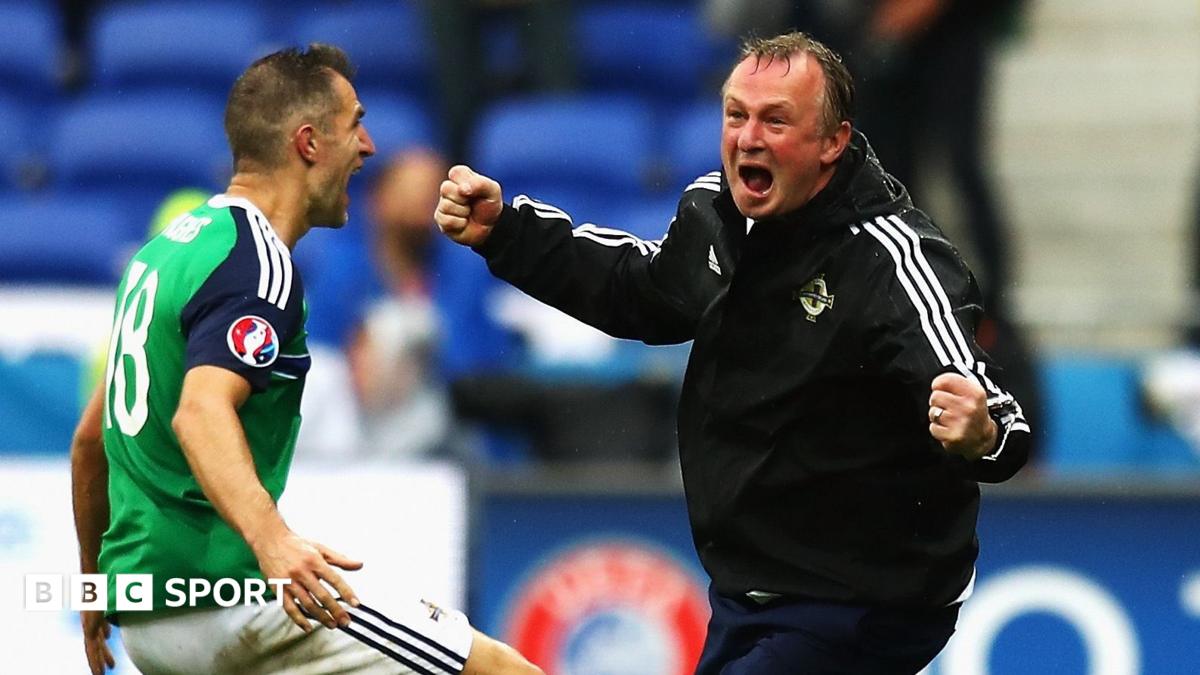
O’Neill was also delighted for Brown, who said he had “really grown” into a senior role in the absence of injured Sunderland defender Dan Ballard.
“Three 90 minutes at this level is tough,” said O’Neill of the 28-year-old.
“He plays his club football in League One and he’s a better player than that.
“He brings a lot to the team. He was our most senior player tonight and he has really grown into that.”
The ultimate aim for O’Neill is to lead his young squad to a first major tournament since 2016 when the next Euros roll around in 2028.
Their return to the second tier in the Nations League has been successful so far, with Charles scoring a 99th-minute winner in Georgia before the team showed their character with a goalless draw at home to Hungary.
The players definitely looked tired in the closing stages of the draw, which can be put down to the 5000-mile return trip to Tbilisi, but they held their own against Dominik Szoboszlai’s side.
Before that, Northern Ireland had kept Paris Saint-Germain winger Khvicha Kvaratskhelia quiet in the opener.
While Ukraine do not have the individual star power of the other teams in League B2, O’Neill knows they are still a dangerous side.
He described them as favourites on Friday night, and pointed to the fact that manager Andrea Maldera had made 10 changes between their opening 1-0 win in Hungary and the goalless draw with Georgia in their second game.
“Ukraine’s strength is in their collective as a team, rather than what we faced against Georgia with Kvaratskhelia and Hungary with Szoboszlai, who are top European players.
“I think that Ukraine have many players that have potential to be on that level and go to the big, big clubs in Europe.
“We haven’t highlighted any one individual, but we’ve looked very closely at how they play, with the ball and without the ball, and I believe their strength is in the collective of the team.”
A Michael Jordan jersey from his ‘Last Dance’ season has sold for $12.3m (£9.3m), a record for a piece of Jordan memorabilia.
The jersey was worn in game three of the 1998 NBA Finals in his last season with the Chicago Bulls.
Jordan helped the Bulls win the series 4-2 for his sixth and final NBA Championship. He was named Finals’ Most Valuable Player in all six.
The previous record for a piece of Jordan memorabilia was $10.1m (£7.6m) for his jersey from game one of the 1998 Finals.
The jersey was put up for sale by entrepreneur Ryan Gough and sold at Joopiter, Pharrell Williams’ digital auction house, which gave it an estimated price of $10-15m (£7.5-£11.3m).
Jordan’s 1997 Ferrari 550 Maranello was sold for $2.7m (£2m), four times the auction record for that model.
“Few objects in the history of sport embody greatness as completely as Michael Jordan’s game three jersey from the 1998 NBA Finals,” Joopiter said in the auction posting.
“Worn during the Last Dance… it marks the culmination of an era that transformed basketball into a global cultural phenomenon.
“Today it stands among the most important game-worn sports artifacts ever to come to market.”
The record price for a piece of game-worn sports memorabilia is the jersey worn by baseball legend Babe Ruth when he “called the shot” during the 1932 World Series, which was sold for $24.1m (£18.2m) in 2024.
Chances were at a premium at Windsor Park as both defences came out on top.
Patrick Kelly hit the crossbar in the first half for Northern Ireland, and Isaac Price had an effort beaten away by Balazs Toth.
After Dan Ballard controversially conceded a penalty in Georgia, Shea Charles also had a penalty appeal waved away in the lead-up to the Kelly chance for a similar incident.
While O’Neill said he had yet to see it back, he did quip that “the referee never seems to make the walk for us to the side of the pitch. It never seems to happen for us.”
The threat of Liverpool midfielder Dominik Szoboszlai was largely nullified throughout the game as Hungary, like Northern Ireland, struggled to create any clear-cut chances.
The only save that Pierce Charles had to make in goal was when a lethargic clearance led to Alex Toth shooting towards goal in the closing stages, but the QPR stopper was otherwise untroubled.
After a 5,000-mile trip from Georgia in their opening game, Northern Ireland had to quickly reset and O’Neill admitted he saw “two tired teams” at the end of the game.
“I think our preparation, our first game in terms of being away from home and everything, was more difficult.
“I felt like Hungary got a little bit stronger towards the end.”
EXCLUSIVE: on his latest TV travelogue Michael Palin is in the Phillippines, but he draws the line at one recycled food type in a poverty stricken area and spoke to the Mirror about his experiences.
Michael Palin says the chicken dish was “a bridge too far” for him to eat in the morning of filming
Michael Palin says he had to turn down a food dish in the Phillippines as it was a “bridge too far” for him. The former Monty Python star, 83, normally tries lots of the local cuisine on his travelogues.
But in new Channel 5 series Michael Palin In The Philippines he was surprised by one thing on the menu known as Pagpag. Michael was told that it was recycled chicken which they took after people ate it.
He explains in the programme: “I’ve never seen anything that illustrates poverty quite as clearly as half-eaten fried chicken, which has been taken from the bins of fast food restaurants and then re-cooked. So this is ultimate food recycling. Food that’s already been on someone’s plate has been left behind, and this nice lady goes and collects it. Seeing this, I’m starting to understand why so many people are angry about the inequalities here.”
Speaking to the Mirror about his experiences in the Philippines, Michael admitted he was intrigued by the snack, but not enough to try it.
He said: “It was a bridge too far for me, certainly. Yeah. But it was interesting. The lady who was selling it again, she wasn’t conning anybody. She wasn’t a gangster or something like that showing off. She was a middle-aged woman. She was obviously a pillar of the community. People trusted her, and she’d been recycling these food for years and years, and no one seems to have died.
“I’ve eaten everything on my journeys, but I couldn’t eat recycled food. I’m afraid at that time of the day.”
The food was for sale in an area of poverty called Tondo and on the morning he was there Michael learned that the seller and friends had gone to fast food outlets the night before.
He added: “Any meat that had been thrown away, they brought it back, scraped it off the bone, cleaned it all up, and reboiled it, so everything was sort of officially hygienic, and then sold it the next the next day as little sort of delicacies.”
Elsewhere on his trip Michael gets up to all sorts of other adventures, including travelling through underground rivers and swimming with thousands of sardines in Moalboal.
Under military escort, Michael explores the extraordinary and haunting remains of the destroyed city of Marawi, and on the island of Jolo he meets a member of the terrorist group, Abu Sayyaf.
He said the trip, filmed last year when he was still 82, made him feel young at heart and told the Mirror: “When I actually did the Philippines show. There’s no special sort of conditions because of my age or something like that. I just did it like I used to travel, and it’s extraordinary how your body or your mind can help your body to carry on. And physically, I didn’t feel the strain of the Philippines journey until I came home, and it was a long flight, 16 and a half hours to get to Manila from London, and that’s what really wears you out. It’s the airports and the long flights.
“Time in the Philippines was rejuvenating. I felt great, you know. And I thought to myself, I’ll check on my passport that I really am 82.”
* Michael Palin in the Philippines – starts Monday, September 28 at 9pm, Watch|stream on 5.
Michael Carrick has struck a defiant tone after Manchester United equalled their worst start to a Premier League season, but a woeful 1-1 draw at Fulham left the beleaguered boss under mounting pressure.
Trailing to Lisandro Martinez’s farcical own goal, United were just moments away from a third successive defeat on another dispiriting afternoon for Carrick on Sunday.
Recommended Stories
list of 4 itemsend of list
Matheus Cunha’s deflected 89th-minute equaliser spared United from new humiliation.
But escaping with a barely deserved point against a winless side placed second-from-bottom of the Premier League was hardly cause for celebration.
With only one win so far this season, United have matched their lowest points total after five matches in the Premier League era.
Sitting in 12th place with five points, Carrick’s men equalled the mark set by Louis van Gaal’s United in 2014-15, when they went on to finish fourth.
The statistics are damning enough in their own right, but the eye test during their moribund performance at Craven Cottage provided an even more insightful look at what ails United.
Lacking a cutting edge in attack, bereft of defensive organisation and, in the words of Cunha, short of energy and drive until they fell behind, this was the kind of flawed display that has scarred so many United seasons since their last title in 2013.
Carrick was expected to build on last season’s climb to a third-place finish during his spell as interim boss.
But having hauled United from the wreckage of Ruben Amorim’s self-destructive reign, Carrick is in danger of losing his way in his first season as permanent boss.
A wretched 2-0 defeat at promoted Hull on the opening weekend set alarm bells ringing among the United faithful.
Beaten in the Manchester derby by an Erling Haaland goal that should have been disallowed last weekend, United then blew a two-goal lead at home for the first time in 50 years in a League Cup meltdown against Brighton.
‘Fine margins’
Already 10 points behind leaders City, Carrick’s team were so underwhelming against Fulham that even one of the manager’s former teammates took a swipe at United.
Commenting on the match for Sky Sports, ex-United defender Gary Neville was scathing in his assessment of their performance at the start of the second half.
“I’ve watched Man United since the age of five and that’s the worst 15 minutes I’ve ever seen. Absolutely pathetic,” Neville said.
The 51-year-old added: “I’ve never seen such a lack of effort. What must Carrick be thinking?”
Carrick does not have the confrontational personality of some of his United predecessors, but he tried his best to quiet the noise as he searched for reasons for optimism.
“It’s not been ideal. It was always going to come at some point, and it’s come at the start of the season,” he said.
“On the other side of it, at Everton, a 25-yard shot, top corner for their equaliser. The City goal that’s not a goal. Today, own goal, that’s one of them things.
“It’s pretty fine margins that have flipped it. I know we can do better; we need to do better at certain things.
“But I’m not despondent because I think we’ve shown some good signs as well.”
Carrick has three weeks to stew on United’s miserable start during an extended international break.
Questions about United’s transfer policy and fitness regime are growing louder.
Calvin Bassey celebrates Fulham’s first goal, an own goal scored by Manchester United’s Lisandro Martinez [Peter Cziborra/Action Images via Reuters]
‘We’ll get back to winning’
The 45-year-old must come up with answers before they return to action with a crucial clash against bottom-of-the-table Tottenham on October 10.
Losing to Roberto De Zerbi’s side would be a huge blow to Carrick’s hopes of turning the tide, especially with tricky trips to Atletico Madrid and Leeds looming after Tottenham visit Old Trafford.
But Carrick is putting his faith in United’s players absorbing the lessons from their painful start.
“You learn about each other, they learn about me, I learn about the individual and as a team, how we respond, what our reaction is,” he said.
“That’s part of growing as a group. You have to go through certain things to get to the end of it.”
Carrick said he had “mixed” reactions to the match but was focusing on the positives and bouncing back after this “first chapter”.
“There are parts we can do better. The way we responded to going down was really pleasing, the boys were really positive and played with good purpose,” Carrick said in a post-match interview.
“I’m convinced we’ll have a good season. We’re having a spell that feels bigger than it actually is to the outside. We’ll get back to winning football matches and we’ll be all right.”
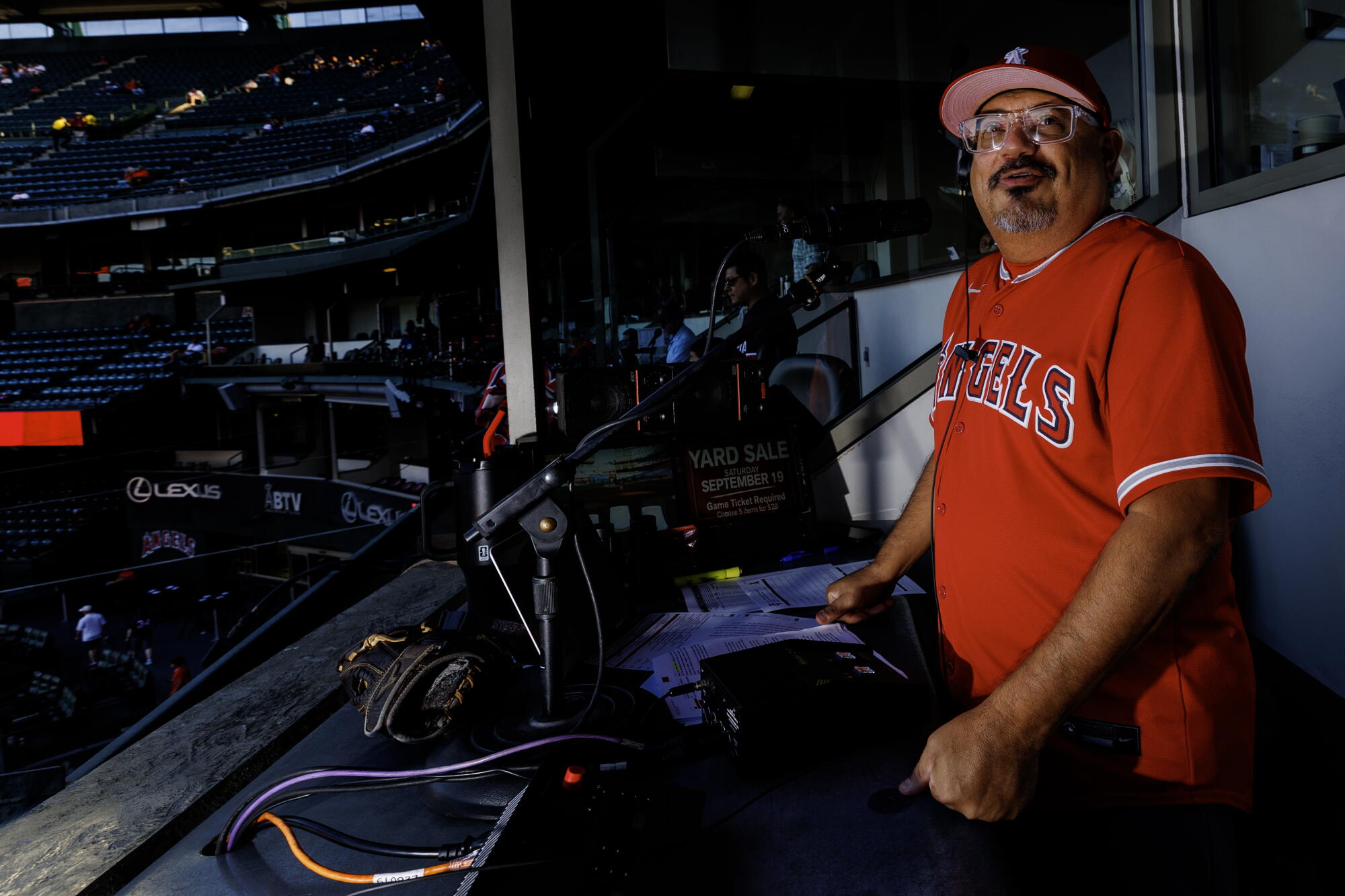
You’ve probably never seen Michael Araujo, but if you’ve attended an Angels game since 2013, you’ve definitely heard him.
On Sunday, Araujo will work the final game of his 14th season as the Angels’ public address announcer. During that time he has started more home games than Mike Trout and finished hundreds more than any reliever to come out of the bullpen.
Yet for most fans, his voice has been little more than background noise, an acapella Muzak that only gets noticed when Araujo makes a mistake.
And mistakes just don’t happen, said Davin Maske, the Angels’ director of entertainment and production.
“I don’t remember any,” said Maske, Araujo’s boss. “There isn’t that one major mistake since I’ve been here that I could recall.”
Araujo, who is also the stadium voice for the Galaxy, has worked Gold Cup and Copa América soccer matches, eight World Cup games and the 2003 Women’s World Cup final. But the Angels’ gig is his dream job and he passed 1,000 games as the team’s PA announcer last month.
“He loves sports,” said his wife Kathryn Casey. “He really does enjoy being there and being part of it because he’s a huge fan. It’s not just a job.”
It is a job that comes with high expectations, though. Because if the broadcasts of the late Vin Scully were the soundtrack for baseball fans in Southern California, for people of a certain age, the booming baritone of John Ramsey will forever be the template for what a PA announcer should sound like.
Ramsey, who died in 1990, was the original PA voice of the Angels, as well as the Dodgers, Kings, Lakers and L.A. Raiders. He also did the Rams and USC football with a calm, articulate and authoritative delivery that was so powerful, it had its own echo.
“Would you all please rise (rise, rise, rise) and honor America in the singing of our national anthem (anthem, anthem, anthem).”
It was like being spoken to by God, an impression aided by the fact that Ramsey, hidden in a small booth near the press box, was heard but never seen.
“That’s not me, Araujo said. “So I try not to emulate that.”
Angels public address announcer Michael Araujo overlooks the field in his booth before a game against the Minnesota Twins on September 17.
(Gina Ferazzi / Los Angeles Times)
Still, like Ramsey, Araujo’s gift is his voice. And though his delivery isn’t nearly as deep and commanding as Ramsey’s, it is unique in that it has a distinct, enthusiastic lilt, one he’s been able to maintain through what will likely be the Angels’ first 100-loss season.
“I try to bring the energy,” he said.
“It’s all about riding your vibes,” Maske added. That’s why Araujo’s perch on the club level behind home plate is exposed to the crowd rather than enclosed, like the booths to his right used by the radio and TV broadcasters. The idea is to feed off the fans, not lock them out.
“Baseball is gnarly. It’s repetitive. It’s a sport that’s inherently, at times, very boring,” Maske said. “So you’ve got to find those little moments to make it entertaining.
“It’s not NFL. It’s not the NBA. It’s baseball. Mike’s good at kind of finding that balance of excitement and traditionalism.”
And the excitement, even at the end of a blowout loss, is genuine, he said.
“The Angels were my team growing up, so the Angels was my dream job,” said Araujo, a former season-ticket holder. “I’ve been very fortunate.”
“I want to get paid to watch sports and that’s it,” he continued. “So whatever I’ve got to do to be invaluable so that I stay there, that’s kind of my mission.”
It’s not a mission that pays much, however, with most PA announcers across the majors earning between $100-$500 a game to announce each hitter as he comes to plate, read commercial copy between innings and, in Araujo’s case at least, to handle the play-by-play for the cartoon races that run on the scoreboard late in the game.
“It’s fun money,” said Casey who, like Araujo, is a teacher as well as the clock operator at Galaxy games, where she works alongside her husband. “We use it for travel.”
The job is one Araujo stumbled into. Despite a rich voice and a lifelong passion for sports, pairing the two was something that just happened, not something that was planned.
A teacher at an alternative-education high school in La Puente, Araujo, 54, has worked for the Galaxy since the MLS team’s second game in 1996, filling a number of roles from glorified errand boy to assistant game-day producer. That last job required him to stand behind the PA announcer and relay silent cues, and since he knew the gig, Araujo was handed a microphone and asked to fill in a few times during absences, sick days and other emergencies.
The biggest emergency came when Victor Villalba, the Galaxy’s regular announcer, left in the middle of a season to join the Dallas Cowboys radio team. Araujo was the natural choice to finish out the year and he’s been there ever since.
“That was 2002,” he said. “So I’m in my 25th season.”
It was similar desperation that led to his job with the Angels. When David Courtney, who had been with the team for nearly two decades, died at 56 two months after the 2012 season, the Angels began asking around for a replacement and Araujo’s name was the one they heard most frequently. So he was invited to spring training the following year to audition and he beat out two others to claim the job.
On game days Araujo gets to the ballpark about 2½ hours before first pitch, pausing in the parking lot to pull on an Angels cap and jersey with his name on the back. If the team wins, he’ll wear the same jersey the next day; if not, he’ll rotate through a closet of red, white, gray and City Connect jerseys.
Araujo’s only other tools are a microphone and a laptop, on which he’s installed an interactive software program he created that tracks the lineups of both teams. He can also call up pronunciation guides for players on all 30 major league teams, though he’s found the radio broadcasters for the visiting clubs are often more helpful.
Angels public address announcer Michael Araujo has worked more than 1,000 games at Angel Stadium and has been the Galaxy’s public address announcer since 2002.
(Gina Ferazzi / Los Angeles Times)
His cramped work space, about 90 feet from the field, has enough room for two green vinyl chairs, though Araujo prefers to stand when he’s working. And unlike many people whose vocal chords are their livelihood, Araujo says he has few ritualistic habits to protect his voice.
“In my bag I have a gazillion cough drops; a couple of different kinds, some with honey,” he said. “I definitely wouldn’t do anything carbonated before a game. Makes you burp and all that kind of stuff.”
Araujo is one of three Latino PA announcers in the majors, alongside Marysol Castro, who works for the New York Mets, and Frank Fernandez of the Miami Marlins. Given that 30% of big-league players are from Latin America, the fact that just 10% of the PA announcers are Latino is something Araujo said he thinks about during Hispanic Heritage Month.
“Did I grow up in Boyle Heights or anything like that? No, I’m no poster child or miracle story or anything like that,” said Araujo, who was raised middle class in La Verne, where his father, a sheriff’s deputy, and mother, a nurse, often spoke to one another in Spanish.
“We are here in 2026 and it’s not a little more prevalent. It can be an aspiration to any kid, even one of my students, that bigger things are possible.”
For a PA announcer, it turns out, there are times when it’s important to be heard and seen.