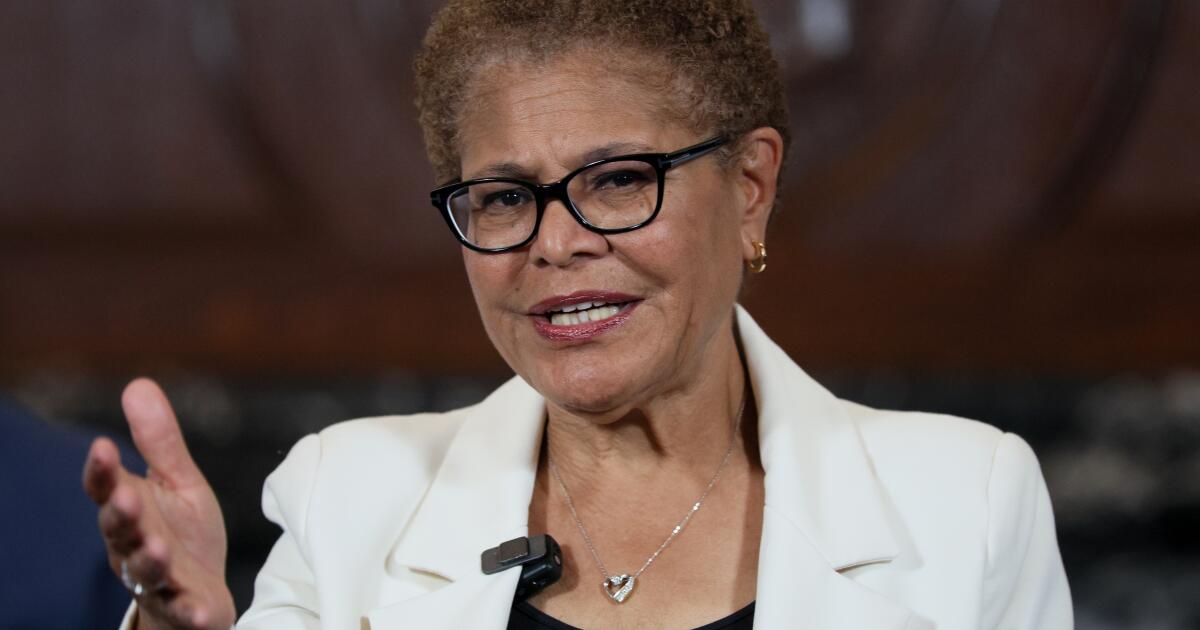
Mayor Karen Bass’ press relations office communicates through WhatsApp messages that auto-delete every 24 hours, potentially shielding the messages from public records requests, according to three sources familiar with the office.
The press office is under scrutiny over its use of an unpaid consultant as a spokesperson for the first half of the year. Just weeks after the consultant, Yusef Robb, ceased working as a spokesperson for the city, he took a job doing crisis communications for Lineage, whose cold food storage facility in Boyle Heights caught fire last month, spreading smoke and foul odors. Robb continued to work for Bass as an informal advisor until The Times and other outlets reported his dual roles.
Even though he was no longer a spokesperson, Robb remained in several WhatsApp group channels with mayoral press staffers, all set to auto-delete, until at least a week after he started working for Lineage, said two sources, who requested anonymity for fear of professional repercussions. L.A. Material first reported Robb’s presence in the channels.
The Times has filed a public records request for all messages that Robb received or sent to the mayor or her press office between June 1 and July 10, including WhatsApp messages. The city administrative code requires records to be retained for at least two years.
The Bass administration declined to comment on the press office’s use of disappearing messages on WhatsApp.
Bass herself has also communicated through disappearing messages.
In response to a public records request from The Times for Bass’ texts in the aftermath of the January 2025 Palisades fire, her office initially declined to turn over any messages. City lawyer David Michaelson told The Times that “texts are ephemeral types of electronic communication” that aren’t subject to the city record retention requirement.
He also said Bass’ phone was “set not to save text messages.”
The city ultimately recovered more than 100 messages to and from Bass during that period and released them to The Times.
The Times still sued the city, alleging that it unlawfully withheld and deleted the mayor’s text messages and other public records from the catastrophic wildfire.
“Their contention is they don’t have to retain them, and our contention is they do,” said Kelly Aviles, outside counsel for The Times in the lawsuit, in an interview Thursday.
In a court filing, attorneys representing the city argued that keeping work-related messages for up to two years was “absurdly impractical.”
“The Times’ proposed rule requires a degree of intrusion into City employees’ personal sphere that is, at the very least, offensive if not violative of California and federal constitutional rights,” wrote Reuben Camper Cahn, an attorney for the city.
In the past, some city employees communicated with each other each other through Google Chat messages that auto-deleted after a day.
In January 2025, the city stopped that practice and required that Google Chats be saved “indefinitely.”
Retention of messages has also been an issue in the federal government, with Secretary of State Marco Rubio setting some of his Signal chats to auto-delete.