Menopause

‘I used holidays to help me beat the menopause – it’s taken 70 trips’

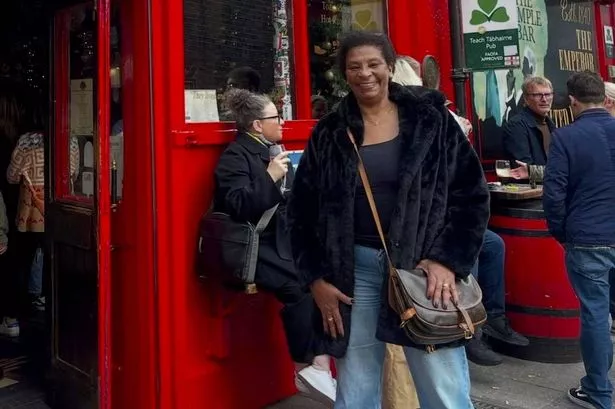
Jailza Gatehouse, 60, from Hemel Hempstead says the side effects of the menopause improved after she started taking ‘extreme day trips’, and now she has embarked on 70

A woman who began embarking on ‘extreme day trips’ to tackle menopause -related insomnia has now completed 70 such journeys in just 12 months.

Jailza Gatehouse, 60, embarked on her first EDT last October – a distinctive travel approach involving stays of no more than 24 hours. The mother-of-two from Hemel Hempstead, Hertfordshire, admits she had been observing others’ adventures in an online community for some time, never imagining she would attempt one herself.

Yet once she began, Jailza discovered she was hooked, and has since undertaken 70 EDTs, exploring every European nation except Russia and Ukraine. The Brazilian-born mum reveals that sleepless nights brought on by the menopause prompted her to take action, believing there had to be a more productive use of her time than lying awake in bed.

Since beginning these expeditions, she reports sleeping soundly, as the extensive travel leaves her thoroughly exhausted.

READ MORE: I went to beautiful UK seaside village where rent is £480-a-month for beachfront cottagesREAD MORE: I’ve been everywhere twice – avoid these three European cities where locals hate you

She said: “With my menopause I could never sleep. I would wake up at one in the morning. Menopause used to take over my life. With EDTs, instead of waking up and doing nothing, I go to the airport. And because you walk so much and get so tired I sleep. Now when I am up I go and see the world.

“EDTs changed my life. Menopause was driving me mad. I am taking a short break now for Christmas and already I can’t sleep again. I had to book another one.”

Jailza’s maiden voyage was to Dublin on October 4 last year, as it was just an hour away and still within the UK, costing only £17.99 each way. She admitted that initially she felt extremely nervous, having always harboured concerns about her safety abroad, but those fears have since disappeared.

She explained: “I was in the group for a while but I just read the posts. I thought ‘that’s not me I could never go anywhere by myself.’ After I did my first one I just couldn’t stop. The EDTs brought me back to life. Because I don’t work I was bored, my life was boring. I needed to do something, I just didn’t know what.

“In the past I have said to my husband that we should visit places, and he always said that they don’t like black people there. My mind was always like that, I couldn’t go anywhere because they wouldn’t like black people. When I was on my way to Dublin I remember panicking. I felt so paranoid. I wanted to cry. But when I got there it was nothing like I had thought. It brought my confidence back. EDTs are becoming my therapy.”

Jailza, who invariably travels alone, says her favourite destinations include Italy, Greece, Barcelona, and Budapest, citing her passion for architecture.

The mother hasn’t revisited any destination yet, though certain cities like Prague have captured her heart enough to warrant a return trip. The adventurous traveller has even ventured to Transnistria, an unrecognised state sandwiched between Moldova and Ukraine which appears on the government’s ‘do not travel’ list, describing it as “amazing.”

Jailza hasn’t kept track of her total spending, but admits she rarely secures bargains as she books her journeys last minute, explaining “if I want to go then I go.” Her travel advice includes thoroughly researching your destination, avoiding the front seat in taxis, and not hesitating to ask locals for information.

Her packing essentials consist of two power banks, a brolly, spare socks, and an extra top in case of spillages.

She added: “In the beginning people thought I was crazy. But now they have seen that I can do it, they are all starting to go too. Don’t hold yourself back. Just do it. I have had the best year of my life. After that first trip I have never been scared anywhere.”

Jailza shows no signs of slowing down, with a trip to Marseille in France scheduled for next week, and further visits to Milan and Krakow already in the diary. Looking ahead, she’s keen to expand her horizons further afield, even if it means abandoning her 24-hour time restriction.
Source link

Can Seasonal Affective Disorder Make Menopause Worse?

Seasons change, and so do people, but have you ever considered that these changes might be related? Specifically, have you ever considered how Seasonal Affective Disorder (SAD) could influence a naturally transitional period for women, namely, menopause?

This intersection between physiological change and climatic variation is intriguing and complex, yet it seems to remain relatively unexplored. This article analyzes how these two seemingly unrelated experiences can intertwine, leading to exacerbated physical and psychological symptoms in women.

This guide explores the intricate link it has with mental health, and how a seasonally influenced disorder like SAD might amplify the effect. Learn about the relationship between menopause and Seasonal Affective Disorder and how MENO vaginal moisture capsules and other lifestyle changes can help you get relief.

What Is Menopause?

Signaling the end of menstruation, menopause is a natural life stage that happens when a woman’s ovaries stop producing the hormones estrogen and progesterone, typically around her early 50s. Before that, women experience perimenopause, a phase marked by changes in the menstrual cycle and hormone fluctuations.

With this biological shift comes a range of symptoms and effects. The symptoms range from the infamous hot flashes and night sweats to sleep troubles and mood changes.

One underdiscussed symptom is the change in vaginal moisture. Estrogen levels drop, and the body’s landscape adapts, leading to thinner, drier, and less elastic vaginal walls. While frustrating and uncomfortable, it’s a reality for many women.

Mental well-being often becomes another pivotal arena affected by this life stage. The diminished levels of estrogen affect the production of serotonin, which plays a crucial role in regulating mood, appetite, and sleep. Meaning, the hormonal shifts of menopause don’t just affect the physical body, but they also have a direct impact on a woman’s mental health.

Seasonal Affective Disorder (SAD) is a type of depression that is related to the changes in seasons, typically starting in the fall and continuing into the winter months. The reduced sunlight can disrupt your body’s internal clock, leading to feelings of depression.

With mood swings already being a roller-coaster experience during menopause due to hormonal changes, adding SAD to the mix is like adding fuel to the fire — it complicates and possibly exacerbates the psychological symptoms of menopause. Seems like a biting winter wind and hot flashes aren’t the best combination, right?

The Impact of Seasonal Affective Disorder on Menopause

When SAD swoops in with its depressive symptoms during those tough winters, it can add extra layers onto the already fluctuating mental status associated with menopause. The increased feeling of depression and anxiety brought on by SAD can heighten irritability and induce more frequent mood swings and sleep problems caused by menopause.

What’s more, research shows that SAD can exaggerate physical menopause symptoms as well. Lower estrogen levels lead to reduced vaginal moisture, and sex might become painful due to vaginal dryness. With the added weight of SAD, reduced mood and increased anxiety can magnify these symptoms.

Coping Mechanisms and Treatments

Given the tricky interplay between menopause and Seasonal Affective Disorder, it becomes vital to adopt a dual approach to treatment. Think of it as multi-tasking for your wellness.

For SAD, light therapy becomes a ray of hope (quite literally!). This involves sitting a few feet from a special lamp that emits bright, natural-looking light. Other measures, such as maintaining a healthy lifestyle, staying physically active, and ensuring a strong social support network, also aid in managing SAD.

For menopause, various remedies can be considered based on the severity of symptoms. Ranging from hormone replacement therapy (HRT) to non-hormonal options like certain antidepressant medications, the choice depends on individual comfort and requirements.

Particularly for vaginal dryness, certain moisturizers, lubricants, or menopause supplements can help restore moisture and elasticity in most women. This can go a long way to restoring confidence and comfort, even with seasonal depression.

Managing Menopause and Seasonal Affective Disorder

Although an unlikely pair, Seasonal Affective Disorder and menopause can be an unwelcome duet in many women’s lives. The physical trials of menopause, amplified by the emotional dips of SAD, can feel like an uphill battle. By understanding the intimate relationship these conditions share, you can ready your tools and strategies to manage them effectively.

Talk to your health care providers about your physical and emotional changes during menopause, and normalize discussing vaginal health just as much as mental health. Raise your voices, ask the right questions, and don’t let your sunshine get eclipsed by the winter blues. After all, only when you brave the storm can you find your rainbow.

Source link

BBC Sport’s Gabby Logan ‘put in her place’ by daughter after sharing her dreams

Gabby Logan has been a mainstay of the BBC Sport presenting team for many years, but she was given a reality check by her daughter when she tried to push her into certain sports

Few individuals could be better suited to front BBC Sport than self-proclaimed sports fanatic Gabby Logan.

Gabby, who competed for Wales in rhythmic gymnastics at the 1990 Commonwealth Games, has remained a familiar face for decades through her contributions to ITV and BBC, presenting World Cups, Olympic Games, Six Nations and countless other sporting occasions.

Following Gary Lineker’s exit from the corporation’s premier football programme, Match of the Day, she has joined the presenting roster tipped to succeed him. However, Gabby was decisively “put in her place” by her daughter Lois when she tried to guide her towards the sports she herself was most passionate about.

She explained to The Telegraph: “I always used to say to Lois, when she first got into horses at the age of nine: ‘Oh, if you played golf, I would play with you every night. If you played tennis, I’d play with you all the time.’

“And she’s like: ‘Mummy, those are your dreams, not mine.’ So I was very much put in my place… I used to tell Clare Balding that I’d had her love child.”

Gabby’s Clare Balding reference proved rather fitting.

Now aged 20, Lois works as a show jumper and recently took part in her first horse race as a jockey.

Lois’s twin brother Reuben has also inherited the family’s athletic streak, featuring as a back-row forward for Sale Sharks.

As a mum, Gabby admits she finds it challenging watching both her children pursue physically demanding and potentially dangerous sports. “They’ve not made it easy for me, have they?” she quipped.

“Or for Kenny, in terms of a nice, sedate sport – something a little less frenetic and potentially fraught with danger.

“Still, for me it was important that they had a passion and did something they wanted to do in life, and they both love sport.”

Reuben may have regretted his choice to go into professional rugby on one particular occasion, though.

One of his regular gym sessions at the club turned into a toe-curlingly embarrassing experience when one of his mum’s podcasts was played over the PA system.

It happened to be the episode in which Gabby, 50, was discussing changes in her sex life since her husband – former rugby international Kenny Logan – had his prostate removed following a cancer diagnosis in 2022.

Gabby has been outspoken about reconnecting with intimacy after menopause. She told The Sun: “Taking HRT saw my libido returning. I started with a very small dose of oestrogen and testosterone gels, and progesterone in tablet form. I noticed massive changes within a few weeks. It was a lovely feeling – like myself again.

“My libido came back within about a week. I felt a massive improvement there, and that was important to me and also to Kenny. Once I was on HRT and my libido returned, our sex life was back on track – even to the extent of having daytime sex. There are plus points to becoming empty nesters!”

Source link